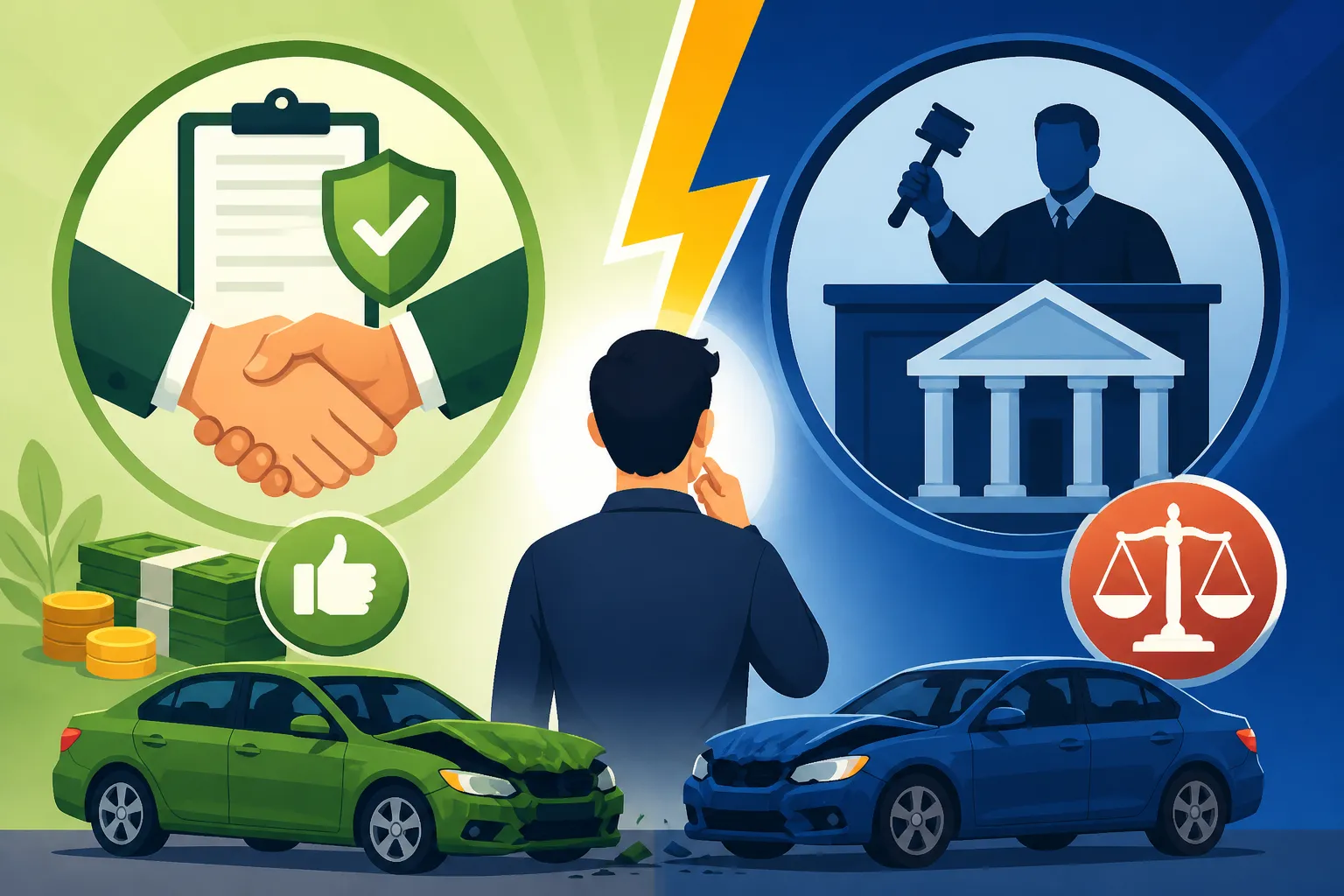
Settlement vs Lawsuit: Which Is Better?
Getting into a car accident is incredibly stressful, and when you're dealing with injuries, vehicle damage, and the sheer shock of it all, the last thing you want to worry about is navigating the confusing world of insurance claims and legal jargon. Many people find themselves at a crossroads, wondering whether it's better to try and settle their claim directly with the insurance company or if they need to prepare for a full-blown lawsuit. This guide is here to break down the differences between a car accident settlement and a lawsuit, helping you understand the pros, cons, and when each approach might be the right one for your unique situation.
Understanding Car Accident Settlements
When you've been in an accident, the first path many people consider is a settlement. This often seems like the quickest and least complicated route, and in many cases, it can be. But what does "settlement" actually mean in the context of a car accident claim, and what are the real benefits and drawbacks?
What Exactly Is a Settlement?
At its heart, a car accident settlement is a formal agreement between you, as the injured party, and the at-fault driver's insurance company (or sometimes your own, depending on the circumstances). In this agreement, the insurance company agrees to pay you a specific sum of money to compensate you for your damages, and in return, you agree to release them and their policyholder from any further liability related to that accident. It's essentially a negotiated compromise where both sides come to an acceptable financial resolution without needing a court to decide.
Think of it like this: the insurance company wants to resolve the claim as cheaply and efficiently as possible, and you want fair compensation for your medical bills, lost wages, and pain and suffering. A settlement is the sweet spot where those two desires intersect. It’s a way to avoid the uncertainty and expense of a trial, bringing a sense of closure to a difficult chapter. Often, the bulk of car accident claims resolve this way, long before a courtroom ever enters the picture.
The Pros of Settling Your Claim
There are several compelling reasons why a settlement is often the preferred outcome for both accident victims and insurance companies. When you're trying to heal and get your life back on track, predictability and speed can be incredibly valuable.
First and foremost, speed and efficiency are major advantages. Lawsuits can drag on for years, consuming your time and emotional energy. A settlement, particularly if negotiated early in the process, can often be reached in a matter of months, sometimes even weeks, depending on the complexity of your injuries and the cooperation of the insurance company. This means you get your compensation sooner, which can be crucial for covering ongoing medical expenses or lost income. You don't want to be waiting indefinitely when you have bills piling up.
Another significant benefit is certainty of outcome. When you go to trial, there's always a risk that a jury might not rule in your favor, or they might award you less compensation than you hoped for. With a settlement, you know exactly how much money you'll receive. This eliminates the "what if" factor and allows you to plan your financial recovery with confidence. This certainty is a huge relief for many people who are already dealing with so much post-accident stress.
Finally, settlements offer a greater degree of privacy. Court cases are public record, meaning details about your accident, injuries, and financial compensation can become accessible to anyone. For many, maintaining personal privacy during such a vulnerable time is important. A settlement, on the other hand, is a private agreement between the parties involved, keeping sensitive information out of the public eye.
The Cons and Potential Downsides of a Settlement
While settlements offer many advantages, they aren't without their drawbacks. It's crucial to understand these potential downsides to make an informed decision about your claim. Sometimes, what seems like a quick solution might not fully serve your long-term needs.
One of the biggest concerns with settling is the possibility of undervaluation of your claim. Insurance companies are businesses, and their goal is to pay out as little as possible. If you don't have a clear understanding of the full extent of your damages—including future medical costs, long-term lost earning capacity, and the true value of your pain and suffering—you might accept an offer that is far less than what you deserve. This is especially true if you're dealing with injuries that have delayed symptoms after a car accident, which might not be immediately apparent. Once you sign a settlement agreement, you generally cannot go back and ask for more money, even if new complications arise.
Another potential con is the pressure to settle quickly. Adjusters might contact you shortly after the accident with an offer, sometimes even before you've fully assessed your injuries or spoken with a doctor. This pressure can be overwhelming, especially when you're feeling vulnerable. It's easy to be swayed by the promise of fast money, but it's vital to remember that a hasty settlement could compromise your ability to recover adequately for all your damages. It’s usually a good idea to speak with an attorney before making any commitments.
Finally, while settlements offer certainty, they also represent a compromise. You might not get every single dollar you feel you're entitled to. The settlement amount is a result of negotiation, meaning both sides typically give a little to reach an agreement. If your case has very strong liability against the other driver and significant damages, you might feel that a settlement doesn't fully capture the total value of your claim, especially if the insurance company is unwilling to offer a fair amount. This leads many people to consider what happens if you can't agree on a settlement.
Understanding Car Accident Lawsuits
When a settlement can't be reached or isn't appropriate for the complexities of your case, a car accident lawsuit becomes the next consideration. This path involves the formal legal system and can be a daunting prospect for many, but it also offers opportunities that settlements do not.
When a Lawsuit Becomes Necessary
A lawsuit isn't usually the first choice, but it often becomes a vital tool when other avenues fail or when the stakes are particularly high. There are specific circumstances where pursuing litigation is not just an option, but often the most prudent course of action to protect your rights and ensure fair compensation.
One of the primary reasons a lawsuit is filed is when negotiations with the insurance company break down. You might have made a reasonable demand for your damages, but the insurer refuses to offer a fair settlement. This often happens if there's a dispute over who is at fault in a car accident or if the insurance company disputes the severity or causation of your injuries. When they're simply unwilling to negotiate in good faith, filing a lawsuit signals your seriousness and can sometimes even prompt them to come back to the table with a more reasonable offer.
Another critical scenario is when serious injuries and high damages are involved. For instance, if you've suffered a traumatic brain injury (TBI), a spinal cord injury, or other life-altering harm, your future medical expenses and long-term care needs could be astronomical. In such complex cases, accurately calculating the total value of your claim can be difficult, and insurance companies are often reluctant to offer a sum that fully covers these extensive future costs without the push of litigation. A lawsuit allows for a thorough investigation and presentation of all damages, including economic vs non-economic damages.
Lastly, a lawsuit may be necessary when there are complex liability issues or multiple parties involved. Imagine a multi-car pileup or an accident involving commercial vehicles where multiple insurers and corporate entities might share responsibility. Untangling these complex scenarios often requires legal discovery processes that are only available through a lawsuit, allowing your legal team to gather critical evidence and expert testimony to build a robust case.
The Advantages of Going to Court
While the thought of a lawsuit can be intimidating, there are distinct advantages to pursuing your car accident claim through the court system, especially in certain situations. These benefits often center around the potential for greater recovery and a definitive resolution.
One significant advantage is the potential for higher compensation. While settlements involve compromise, a jury verdict can award you the full amount of damages proven at trial, including substantial pain and suffering damages, and in rare cases, even punitive damages if the at-fault driver's conduct was particularly egregious. If your case is strong, with clear liability and undeniable, severe injuries, a jury might award you significantly more than what an insurance company was willing to offer in a settlement. This can be especially true if the insurance company has been acting in bad faith or making extremely low offers.
A lawsuit also provides a formal discovery process where both sides are legally compelled to exchange information and evidence. This means your attorney can depose witnesses, request documents, and gather expert testimony that might not be accessible during settlement negotiations. This process can uncover critical evidence that strengthens your case, giving you a clearer picture of the other side's weaknesses and solidifying your own arguments. This thoroughness is often essential for complex cases, especially those with significant medical aspects.
Furthermore, pursuing a lawsuit can sometimes force a fair settlement. Many cases that go to trial actually settle before a verdict is reached. The act of filing a lawsuit and engaging in discovery can prompt the insurance company to take your claim more seriously. Faced with the mounting costs and uncertainty of a trial, they might become more willing to offer a reasonable settlement to avoid the risks associated with a jury decision. This strategic pressure is a key reason why your attorney might recommend litigation, even with the hope of settling down the line. To learn more about this process, you can explore How a Car Accident Lawsuit Works (If You Don't Settle).
The Realities and Risks of Litigation
Going to court is a serious undertaking with its own set of challenges and risks that you need to be fully aware of. It's not a path to be taken lightly, and understanding these realities is crucial before committing to a lawsuit.
The most significant reality is the time commitment involved. As mentioned, car accident lawsuits can take a long time – often several years – to resolve. This extended timeline means a longer wait for compensation, which can be financially and emotionally draining. You'll spend time attending depositions, hearings, and potentially a full trial, all while trying to manage your recovery. This prolonged process can add a tremendous amount of stress to an already difficult situation. You should understand how long does a car accident lawsuit take? before embarking on this path.
Another major consideration is the financial cost of litigation. While many personal injury lawyers work on a contingency fee basis (meaning they only get paid if you win), there are still significant costs associated with preparing a case for trial. These can include court filing fees, deposition costs, expert witness fees, and the cost of gathering evidence. If you lose your case, you might be responsible for some of these expenses. Even if you win, these costs are typically deducted from your settlement or award, reducing your net recovery.
Finally, there's the uncertainty and stress of trial. Even with a strong case, there are no guarantees when it comes to a jury verdict. Juries can be unpredictable, and the outcome of a trial depends on many factors, including how effectively your evidence is presented, the credibility of witnesses, and even the biases of individual jurors. The emotional toll of testifying in court and reliving the details of your accident and injuries can also be substantial. It's a high-stakes gamble, and you need to be prepared for the possibility that the outcome might not be what you hoped for, as well as considering what happens if you reject a settlement and go to trial.
Key Differences and Factors to Consider
When weighing a settlement against a lawsuit, it's essential to understand the fundamental distinctions between the two paths. These differences directly impact everything from your timeline to your potential financial recovery and personal experience.
Time Commitment and Speed
The starkest difference between a settlement and a lawsuit often comes down to how quickly your claim can be resolved. This factor alone can significantly influence your decision, especially if you're facing immediate financial pressure.
A settlement is generally the faster route. Many car accident claims, particularly those with clear liability and injuries that resolve within a few months, can settle relatively quickly. Once all your medical treatment is complete and your damages are fully calculated, your attorney can send a demand letter to the insurance company. Negotiations might last weeks or a few months, and if an agreement is reached, you could receive your compensation shortly thereafter. This expedited timeline provides quicker access to funds to pay for medical bills, car repairs, and lost income, alleviating immediate financial burdens. For more insights, you might want to read about how long does a car accident settlement take?.
Lawsuits, on the other hand, are a significantly longer process. From the moment a lawsuit is filed, you're entering a formal legal system governed by rules, procedures, and court schedules. This involves discovery (exchanging information and evidence), depositions, motions, and potentially a trial. Depending on the complexity of the case, the court's calendar, and the willingness of the parties to engage in extended legal battles, a lawsuit can easily take one to three years, or even longer, to reach a final resolution. This prolonged timeline means a much longer wait for any potential compensation, which can be incredibly challenging for accident victims.
Cost Implications
The financial aspect is another critical differentiator. While both options involve costs, how and when those costs are incurred can vary significantly. Understanding these implications is crucial for assessing your net recovery.
For settlements, the costs are generally lower and more predictable. Your attorney will work on a contingency fee basis, meaning their fee is a percentage of your final settlement. Other costs, such as medical record retrieval, police report fees, and postage, are typically minimal. Since the case doesn't go through the full litigation process, you avoid expensive court fees, expert witness costs, and extensive deposition expenses. This means a larger portion of your settlement goes directly to you.
With lawsuits, the costs escalate dramatically. While attorneys still typically work on contingency, the expenses of litigation can be substantial. These include court filing fees, fees for serving legal documents, extensive deposition costs (court reporter, videographer), expert witness fees (medical experts, accident reconstructionists, vocational experts, which can run into tens of thousands of dollars), and trial preparation expenses. These costs are usually advanced by your attorney but are ultimately deducted from any verdict or settlement you receive. If the case goes to trial, these costs can significantly reduce your net payout. It's important to have a clear understanding of How much does a car accident lawyer cost? before proceeding with litigation.
Control Over the Outcome
The degree of control you maintain over the resolution of your claim is another key factor differentiating settlements from lawsuits. This can be important for your peace of mind and satisfaction with the final result.
When you pursue a settlement, you and your attorney have a great deal of control over the outcome. You are directly involved in the negotiation process, and ultimately, you have the final say on whether to accept or reject a settlement offer. This empowers you to make a decision that you feel is fair and that aligns with your recovery needs, avoiding the uncertainty of a third party (a judge or jury) making the decision for you. Your lawyer will advise you on whether you should accept the first settlement offer, but the choice is yours.
In a lawsuit, while you are the plaintiff, you surrender a significant amount of control to the legal process and, ultimately, to the court. While your attorney will represent your best interests, a judge will preside over the proceedings, make rulings on evidence, and instruct the jury. If the case goes to trial, a jury will decide on liability and the amount of damages, an outcome that is inherently unpredictable. Even if you want to settle during litigation, the other party must also agree, and their willingness might be influenced by factors outside your control, such as court deadlines or their own risk assessment.
Privacy and Public Record
The level of confidentiality associated with your claim's resolution can be a crucial consideration for many individuals who prefer to keep their personal and financial affairs private.
A settlement is a private agreement. The terms of the settlement, including the amount of compensation you receive, are typically confidential. This means the details of your accident, your injuries, and the financial resolution do not become part of the public record. For many accident victims, maintaining this privacy during a sensitive and often traumatic time is a significant advantage. It allows for a discrete resolution without public scrutiny.
In contrast, lawsuits are a matter of public record. Once a complaint is filed with the court, it becomes a public document. Court proceedings, including motions, hearings, and trial transcripts, are also generally accessible to the public. This means that details about your injuries, medical history, financial losses, and personal testimony could become publicly available. For individuals who value their privacy, the public nature of a lawsuit can be a notable drawback, as it exposes personal information to a broader audience.
| Feature | Settlement | Lawsuit |
|---|---|---|
| Speed | Generally faster (weeks to months) | Significantly slower (1-3+ years) |
| Cost | Lower, more predictable (contingency fee + minimal expenses) | Higher, less predictable (contingency fee + substantial litigation costs) |
| Control | More control over accepting/rejecting offer | Less control; judge/jury decides outcome |
| Certainty | Known outcome (agreed-upon amount) | Uncertain outcome (jury verdict is unpredictable) |
| Privacy | Private agreement; terms are confidential | Public record; court documents & proceedings are accessible |
| Potential Recovery | Negotiated compromise | Potential for higher award, but also for zero recovery |
| Stress Level | Generally lower | Generally higher due to prolonged process & uncertainty |
When to Choose Which Path
Deciding whether to pursue a settlement or a lawsuit is one of the most significant decisions you'll face after a car accident. There's no one-size-fits-all answer; the best path depends entirely on the unique circumstances of your case, the severity of your injuries, and your personal priorities.
Ideal Scenarios for Settlement
Settlements are the most common resolution for car accident claims, and for good reason. They are often the most practical and efficient choice for many individuals seeking fair compensation without the prolonged stress of litigation.
One of the most ideal scenarios for a settlement is when liability is clear and undisputed. If the other driver was clearly at fault, perhaps for a rear-end collision where you were stopped, and there's ample evidence to prove it (like a police report, witness statements, or dashcam footage), the insurance company is often more willing to negotiate a fair settlement. In such cases, taking the claim to trial might not significantly increase your compensation and would only prolong the process. This clarity makes it easier to agree on how fault is determined in a car accident.
Another perfect fit for settlement is when your injuries are not catastrophic and have a predictable recovery timeline. For instance, if you've suffered a whiplash injury that resolves within a few months, or a minor fracture that heals completely, calculating your medical expenses, lost wages, and pain and suffering is relatively straightforward. Once you reach maximum medical improvement (MMI), your attorney can present a solid demand for these damages. Continuing treatment and knowing the full extent of your injuries is key to a fair settlement.
Finally, settlements are excellent for those who prioritize speed, certainty, and minimal stress. If you need compensation quickly to cover your bills, want to avoid the emotional toll of a court battle, and prefer a guaranteed outcome over the gamble of a trial, a settlement is likely your best option. It provides closure and allows you to move forward with your life without the lingering uncertainty of litigation. A qualified car accident lawyer can help you negotiate effectively to maximize your car accident settlement.
When a Lawsuit Might Be Your Best Bet
While settlements are often preferable, there are definite circumstances where pursuing a lawsuit isn't just an option, but a strategic necessity to protect your interests and secure the compensation you truly deserve.
A lawsuit often becomes essential when you've sustained severe, long-term, or catastrophic injuries. Think about cases involving spinal cord injuries, severe traumatic brain injuries, permanent disability, or extensive scarring. These types of injuries result in massive medical bills, future care needs, lost earning capacity for years or even a lifetime, and immense pain and suffering. Insurance companies are notoriously reluctant to offer settlement amounts that truly reflect the full, long-term impact of such severe injuries without the pressure of a potential trial. In these cases, a lawsuit allows for comprehensive expert testimony and detailed projections of future damages.
Another compelling reason for a lawsuit is when the insurance company is acting in bad faith or refuses to make a fair offer. Sometimes, despite clear liability and significant damages, an insurance company might offer an unreasonably low settlement, deny your claim without justification, or drag their feet on negotiations. When you encounter this kind of stonewalling, filing a lawsuit demonstrates your commitment to pursuing justice and often prompts the insurer to re-evaluate their position. Your attorney can leverage the threat of trial to push them toward a more reasonable settlement. It’s critical to know what to do if an insurance company denies your claim.
Lastly, if there are complex legal issues or disputed liability, a lawsuit can be the best way to resolve the dispute. For example, if both drivers are partially at fault (depending on your state's comparative negligence laws), or if there's a disagreement about the sequence of events leading to the accident, a court may be needed to formally establish the facts and assign fault. The discovery process within a lawsuit allows your attorney to gather all necessary evidence, depose witnesses, and present a compelling argument to a judge or jury who can then make an impartial decision. This process ensures that complicated issues like comparative vs contributory negligence explained are properly adjudicated. If you find yourself in such a scenario, searching for resources like LegalMatch to connect with experienced attorneys can be incredibly helpful in understanding your options.
The Role of a Car Accident Lawyer
No matter which path you end up taking, having an experienced car accident lawyer by your side is almost always beneficial. Their expertise can significantly impact the outcome of your claim, whether you're aiming for a settlement or preparing for court.
How Lawyers Facilitate Settlements
Many people believe that settlements are straightforward enough to handle on their own, but an attorney brings invaluable skills and knowledge that can drastically improve your chances of a fair and maximized recovery. They act as your advocate, allowing you to focus on healing.
First, your attorney will accurately assess the full value of your claim. This isn't just about current medical bills; it involves understanding future medical needs, lost wages, diminished earning capacity, and the often-overlooked value of pain and suffering. Without legal expertise, it's easy to undervalue your claim and accept an offer that barely covers your immediate expenses. A lawyer knows how car accident settlements are calculated and will compile all the necessary documentation, including medical records, bills, and wage statements, to present a comprehensive demand.
Second, an attorney handles all communication and negotiation with the insurance company. Dealing with adjusters can be stressful and confusing, and they are trained to minimize payouts. Your lawyer acts as a buffer, protecting you from aggressive tactics and ensuring you don't inadvertently say anything that could harm your claim. They have extensive experience negotiating with various insurance providers like GEICO, State Farm, and Progressive, and they know the tactics these companies use. They will tirelessly negotiate on your behalf to counter lowball offers and push for a settlement that truly reflects your damages. For a deeper dive into this, you might explore how to negotiate a car accident settlement.
Finally, a lawyer understands the legal intricacies and potential pitfalls of the settlement process. They ensure that all paperwork is correctly filed, deadlines are met (especially regarding the statute of limitations for car accidents by state), and that the final settlement agreement legally protects your rights and prevents future claims related to the same accident. Their guidance ensures you don't miss any critical steps or sign away your rights unknowingly, giving you peace of mind throughout the process.
A Lawyer's Role in Litigation
If your case proceeds to a lawsuit, a car accident lawyer becomes an indispensable ally. Their expertise in litigation is what truly guides your case through the complexities of the court system, maximizing your chances of success.
One of the primary roles of a lawyer in litigation is navigating the intricate court procedures and rules of evidence. The legal system is incredibly complex, filled with strict deadlines, specific filing requirements, and evidentiary rules that can be overwhelming for a layperson. Your attorney understands these rules implicitly, ensuring that all legal documents are properly prepared and submitted, evidence is admissible, and arguments are presented effectively. They will manage everything from filing the initial complaint to preparing for trial.
Furthermore, your lawyer will be responsible for conducting thorough discovery and building a robust case. This involves depositions of witnesses and experts, issuing interrogatories (written questions) and requests for production of documents, and meticulously gathering all evidence necessary to prove liability and damages. They will interview witnesses, consult with accident reconstructionists, and work with medical experts to paint a clear picture of the accident's impact on your life. This meticulous preparation is crucial for a strong presentation in court.
Ultimately, if your case goes to trial, your attorney will represent you vigorously in the courtroom. This includes selecting a jury, delivering opening and closing statements, cross-examining opposing witnesses, presenting your evidence, and arguing your case before a judge and jury. Their courtroom experience, persuasive speaking skills, and ability to think on their feet are paramount to securing a favorable verdict. Even within litigation, your lawyer will continually assess opportunities for settlement, as many cases ultimately settle before a verdict is reached, demonstrating that a lawsuit can also be a strategic move towards a better settlement. If you're wondering, "Do you need a lawyer for a car accident?", the answer is almost always yes, especially if litigation is a possibility.
Disclaimer
Please remember that this information is for educational and informational purposes only and does not constitute legal advice. Every car accident claim is unique, and the best course of action depends heavily on the specific details of your situation and the laws of your state. It is always recommended to consult with a qualified car accident attorney to discuss your individual case and receive personalized legal guidance.