Who Is at Fault in a Parking Lot Accident in Texas?
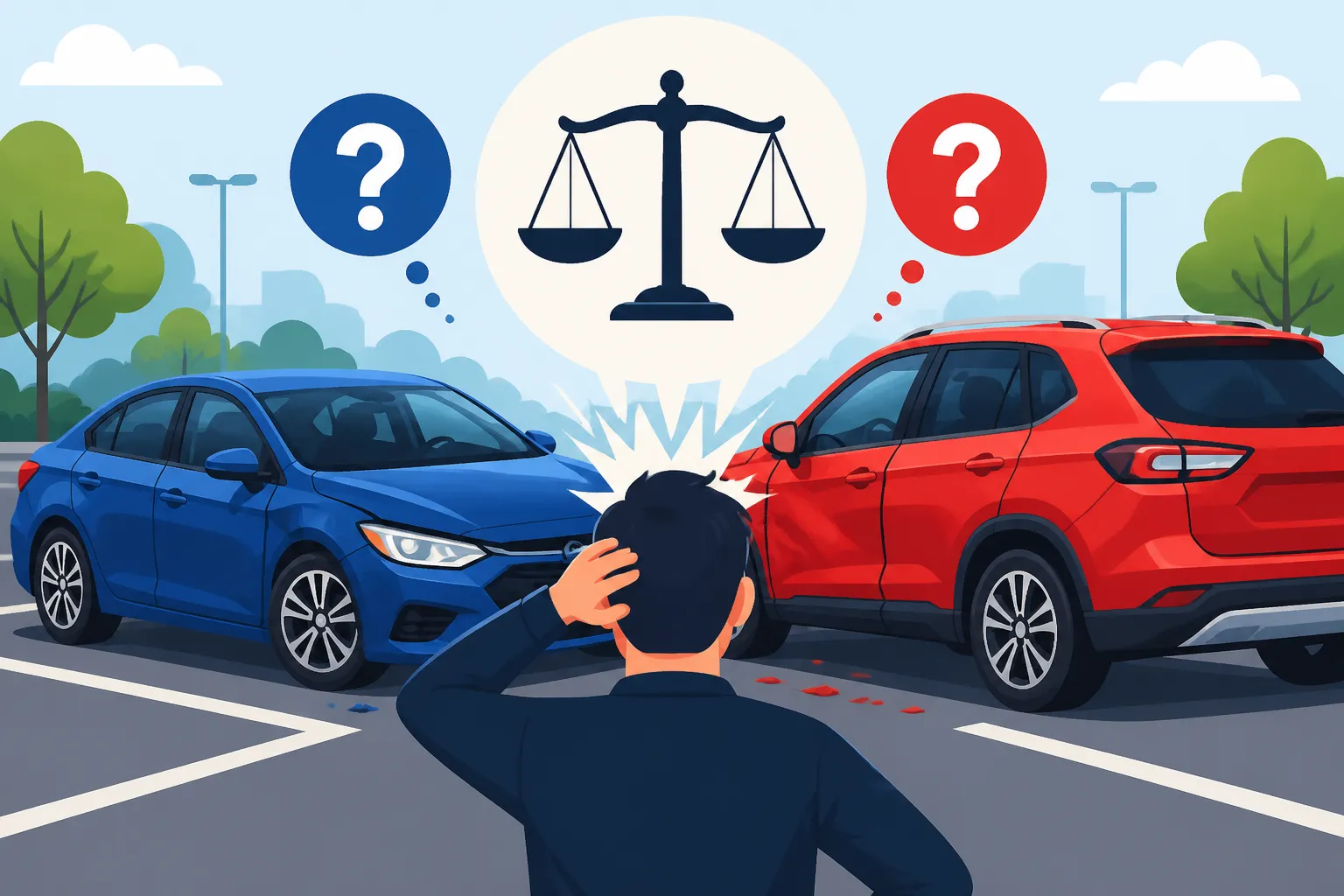
It’s an experience almost every driver in Texas dreads but few escape: that sickening crunch or scrape in a parking lot. You think you’re in a safe, slow-speed environment, but suddenly you’re dealing with bent fenders, chipped paint, and the absolute headache of figuring out who is to blame. This guide will walk you through the nuances of determining fault in a parking lot accident specifically within the state of Texas, helping you understand your rights and responsibilities when these frustrating incidents occur.
Understanding Texas Fault Laws in Parking Lot Accidents
Texas operates under an "at-fault" system, which means that the driver determined to be primarily responsible for causing an accident is liable for the damages. This system is crucial to understand when you're dealing with anything from a fender bender to a more serious collision, even in a parking lot. Unlike some no-fault states, where your own insurance covers your initial medical bills regardless of who caused the crash, in Texas, the at-fault driver's insurance is expected to cover the damages incurred by the other party.
The complexities don't end there, though. Texas also adheres to a modified comparative negligence rule, often called the "51% bar" rule. This means that if you are found to be 51% or more at fault for an accident, you cannot recover any damages from the other driver. If you are 50% or less at fault, you can still recover damages, but your compensation will be reduced by your percentage of fault. For example, if you sustained $10,000 in damages but were found 20% at fault, you would only be able to recover $8,000. This rule becomes incredibly important in parking lot scenarios where fault can often be shared or disputed. Understanding how fault is determined in a car accident is paramount in these situations.
What Constitutes a Parking Lot Accident?
A parking lot accident, at its core, is any collision that occurs within the confines of a parking facility, whether it's a bustling mall parking lot, a quiet grocery store lot, or even a smaller business's private lot. These incidents often differ from accidents on public roads due to lower speeds, unique right-of-way rules, and sometimes, a lack of official road markings. The environment itself, with its myriad blind spots from parked cars, pedestrians, and tight maneuvering spaces, contributes to their common occurrence.
Often, people tend to dismiss parking lot accidents as "minor," but the damage can still be significant, both to your vehicle and, surprisingly, to your body. Whiplash from a car accident, for instance, isn't exclusive to high-speed highway collisions; a sudden jolt from even a low-speed impact can cause it. Additionally, while police are usually called for major road accidents, they might not respond to every parking lot ding, especially if no one is injured and the damage appears minimal. This means you often have to take more initiative in gathering evidence and documenting the scene yourself.
The Role of Right-of-Way in Parking Lots
Determining fault in a parking lot accident hinges significantly on understanding right-of-way, which isn't always as clear-cut as it is on public streets. While standard traffic laws technically apply in most parking lots, the practical application can be a bit murkier. Generally, vehicles in through lanes (the main lanes leading in and out of the parking lot) have the right-of-way over vehicles exiting parking spots or traversing parking aisles (the lanes between rows of parked cars).
However, even in designated "through lanes" within a large commercial parking area like those at Dallas's NorthPark Center, drivers still have a duty to operate their vehicles safely and pay attention. Just because you have the right-of-way doesn't mean you can disregard other vehicles or pedestrians. It's a mutual responsibility. When both drivers are to blame, Texas's modified comparative negligence rules come into play, highlighting the importance of careful driving even when you believe you have the right-of-way.
Common Parking Lot Accident Scenarios and Fault Determination
Parking lots are a maze of potential collisions, each with its own set of contributing factors to fault. Knowing what to expect in specific scenarios can help you understand who is typically held responsible under Texas law.
Backing Out of a Parking Spot
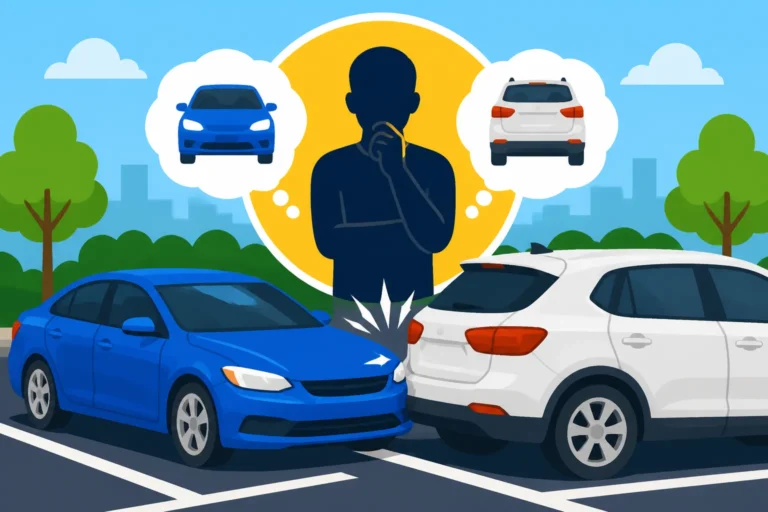
This is perhaps the most common type of parking lot accident. You're reversing, trying to navigate around those giant SUVs, and suddenly, bam! You hit a car driving down the aisle. Generally, the driver backing out of a parking space is presumed to be at fault. This is because they are considered to be making a non-standard maneuver and have a greater duty to yield to traffic in the main parking aisle.
However, it's not always 100% clear-cut. If the driver in the aisle was speeding excessively, driving recklessly, or distracted (e.g., texting), they could share some of the fault. Imagine you’re backing out of a spot at The Galleria in Houston, slowly and carefully, signal on, and another driver comes whipping around the corner of a parking row at 25 MPH, far exceeding the typical safe speed for a parking lot. In such a case, their speed and negligence would definitely be considered when determining who is at fault when both drivers are to blame. Witnesses or security camera footage become vital in these situations to establish the full context of the accident.
Collisions in Parking Aisles and Lanes
These accidents typically involve two vehicles moving within the parking lot's lanes. The determination of fault here often mirrors rules for road accidents, but with a few parking lot-specific twists.
Moving in the Main Through Lanes
If an accident occurs in the primary access lanes that lead to and from the street, the rules often align with standard traffic laws. Drivers must obey stop signs, yield signs, and marked speed limits. For example, if a driver blows through a stop sign within a main parking lot thoroughfare at the Alamodome in San Antonio and hits another vehicle, they would almost certainly be at fault. The concepts of proximate cause in a car accident claim are highly relevant here, as the direct cause of the accident (running the stop sign) establishes primary fault.
Collisions in Parking Rows (Between Parked Cars)
These are the narrower lanes between rows of parked cars. Here, the situation is a bit more nuanced. Generally, the driver proceeding straight through the parking row has the right-of-way over a driver attempting to exit a parking space or turn into another row. However, if two vehicles are simultaneously backing out of opposite parking spots and collide, fault can be shared. Often, insurance companies will split fault 50/50 in such symmetrical backing-out collisions, unless one driver can prove the other was backing out more aggressively or failing to look.
Accidents Involving Parked Cars
This scenario is frustrating because you return to your vehicle only to find damage, often without the other driver present. However, sometimes you might be the one who scrapes a parked car while maneuvering.
Hitting a Parked Car
If you hit a legally parked car, you are almost always at fault. Even if the parked car was slightly over the line, your responsibility as the moving vehicle is to operate safely and avoid obstructions. Texas law dictates that you must attempt to locate the owner and leave a note with your information if you cannot. If you leave the scene without providing information, it could be considered a hit-and-run. In Texas, a hit-and-run can lead to serious consequences, including criminal charges, and will certainly make your insurance claim process much more difficult.
Being Hit by Another Driver
If your parked car is hit, the other driver is responsible. The challenge here is proving it, especially if they didn't leave a note. This is where security cameras, witness accounts, and even paint transfers can be crucial evidence. Many modern parking lots, especially at large retailers like Walmart or Target, have extensive surveillance systems. Requesting footage quickly can be key to identifying the at-fault driver. Your insurance company will be instrumental in helping you track down the responsible party or initiating an uninsured motorist claim if they cannot be found.
Steps to Take After a Parking Lot Accident in Texas
Even though parking lot accidents often feel minor, how you handle the immediate aftermath can significantly impact the fault determination and your insurance claim. Don't just exchange pleasantries and drive off.
Stop and Assess the Situation
First and foremost, stop your vehicle and assess if anyone is injured. Even if the impact felt minor, occupants can sustain injuries, especially common car accident injuries like whiplash. Check on yourself, your passengers, and anyone in the other vehicle. Your immediate priority should always be safety and well-being. Move your vehicle to a safer location if possible, but only if it's clear to do so without further risk.
Gather Crucial Information and Evidence
This step is absolutely critical, especially since police reports may not always be generated for minor parking lot collisions. The more evidence you have, the clearer the picture will be for insurance companies.
- Exchange Information: Get the other driver's name, contact information, insurance company and policy number, and vehicle information (make, model, license plate).
- Document the Scene: Take photos and videos with your smartphone. Get wide shots of the entire parking lot, showing the position of the vehicles, nearby landmarks, and traffic signs. Then, get close-up photos of the damage to both vehicles. Capture details like skid marks, debris, and the general condition of the lot. Documenting the car accident scene is essential for your claim.
- Seek Witnesses: Look around for anyone who might have seen the accident. Obtain their names and contact information. An objective witness statement can be invaluable, especially if fault is disputed.
- Note Specifics: Write down the date, time, and exact location (e.g., "Row C, near the entrance of H-E-B on Burnet Road in Austin").
| Parking Lot Scenario | Typical At-Fault Party in Texas | Key Evidence to Collect |
|---|---|---|
| Backing Out of Space | Driver backing out | Photos of positions, witness statements, dashcam footage, if available |
| Two Cars Backing Out | Shared fault (often 50/50) | Photos showing angle of impact, witness statements, security camera footage |
| Driver Hits Parked Car | Moving driver | Photos of both vehicles, witness statements, security camera footage |
| Collision in Main Lane | Driver violating right-of-way (e.g., running stop sign) | Photos of signs, vehicle positions, witness statements, police report (if applicable) |
| Collision in Parking Aisle | Driver turning/exiting into aisle, unless other driver was reckless | Photos of vehicle positions, witness statements, security camera footage |
| Distracted Driver | Distracted driver | Witness accounts, phone records (if discoverable), police report (if applicable) |
| Speeding Driver | Speeding driver | Witness statements, security camera footage, accident reconstruction (for serious cases) |
Report to Your Insurance Company
Even if you believe the other driver is entirely at fault, you should still report the accident to your own insurance company. They can guide you through the claims process and protect your interests. They will also be the ones to initiate the process of filing a claim with the other driver's insurance. Be factual and honest, but avoid admitting fault. Remember, insurance companies determine who is at fault based on the evidence presented.
Dealing with Insurance and Disputed Fault
This is where the rubber meets the road, so to speak. Insurance companies will investigate the accident to determine fault.
The Insurance Investigation Process
Once you've reported the accident, both your insurance company and the other driver's insurer will likely begin their investigation. This involves reviewing the evidence you collected, potentially speaking with witnesses, and assessing vehicle damage. If there's a police report, they'll review that too, although police reports and car accident fault aren't always definitive. The insurance adjuster's primary role is to establish the sequence of events and assign a percentage of fault to each party involved.
In Texas, because of the "at-fault" nature and modified comparative negligence, the insurance company's fault determination is extremely important. If they decide you are, for example, 60% at fault for hitting another car while backing out, you won't be able to recover anything for your damages. This is why thorough documentation from the scene is so crucial.
What if Fault is Disputed?
It's common for drivers to disagree on who caused a parking lot accident. Maybe both drivers were backing out at the same time, or one claims the other was speeding. When fault is disputed, the insurance companies will try to negotiate a resolution. They might assign a split fault (e.g., 70/30, 50/50). If you disagree with their assessment, you have options.
First, provide any additional evidence you have. Did you get more photos? Was there another witness you forgot to mention? Second, if you feel strongly that you are being unfairly blamed, especially if injuries or significant damages are involved, it might be time to consider consulting with a car accident lawyer. An attorney can help you understand your rights and how to appeal a denied car accident claim or challenge an unfavorable fault determination. They can be invaluable in proving the other driver was at fault.
Final Considerations for Texas Drivers
Parking lot accidents can be frustrating, inconvenient, and sometimes surprisingly costly. But understanding Texas's fault laws, knowing how specific parking lot scenarios typically play out, and collecting solid evidence can significantly reduce your stress and improve your outcome.
Always remember that even in a parking lot, safety should be your top priority. Drive defensively, be aware of your surroundings, and never assume another driver sees you. If an accident does happen, stay calm, follow the steps outlined, and protect your interests by documenting everything. For more complex situations or significant injuries, don't hesitate to seek professional legal advice, as a lawyer can help navigate the intricacies of the claims process and ensure you receive fair compensation for your damages.
Disclaimer
Please note that this article provides general information and guidance regarding fault in parking lot accidents in Texas. It is not intended as legal advice. Every accident is unique, and the determination of fault can depend on many specific factors. For advice pertaining to your individual situation, you should consult with a qualified legal professional or your insurance provider.