How to File a Hit-and-Run Insurance Claim
Experiencing a hit-and-run accident can be incredibly jarring, leaving you shaken, frustrated, and often wondering who on earth is going to pay for the damage or your medical bills. It’s a uniquely unfair situation because the at-fault driver has simply vanished, leaving you to pick up the pieces. This guide will walk you through the precise steps to file a hit-and-run insurance claim, ensuring you understand your options and can navigate this challenging process effectively.
The Immediate Aftermath of a Hit-and-Run Accident
When a driver hits your vehicle and speeds off without stopping, it's a gut-wrenching moment. You're left reeling, often with a mix of shock, anger, and confusion. Your first reactions are crucial, not just for your safety, but also for setting the foundation for any potential insurance claim. Don't let the adrenaline blur these essential steps.
Prioritizing Safety and Seeking Medical Attention
Even if you feel okay after a hit-and-run, your absolute first priority must be your personal safety and well-being. Pull your vehicle over to a safe location if it's movable and you haven't already. Get out of traffic, turn on your hazard lights, and take a deep breath. Sometimes, in the heat of the moment, people can overlook injuries, or symptoms might be delayed. You might be experiencing whiplash, a minor concussion, or other soft tissue injuries that don't manifest immediately.
It’s always a good idea to seek medical attention, even if it's just a quick check-up with your primary care physician or an urgent care clinic. This isn't just about your health; it also creates a vital record of your condition immediately following the incident. This medical documentation is invaluable if you later discover more serious injuries or need to make a claim for bodily harm. Remember, proving injuries in a car accident claim is far easier with contemporaneous medical records.
Gathering Initial Information and Evidence
This can feel daunting when the other driver is nowhere to be found, but you still have a crucial role to play in gathering evidence. Start by looking around for anything that might help identify the fleeing vehicle. Did you catch a glimpse of the make, model, color, or even a partial license plate number? Were there any distinguishing features, like bumper stickers, unique rims, or specific damage? Every detail, no matter how small, could be a lead for law enforcement.
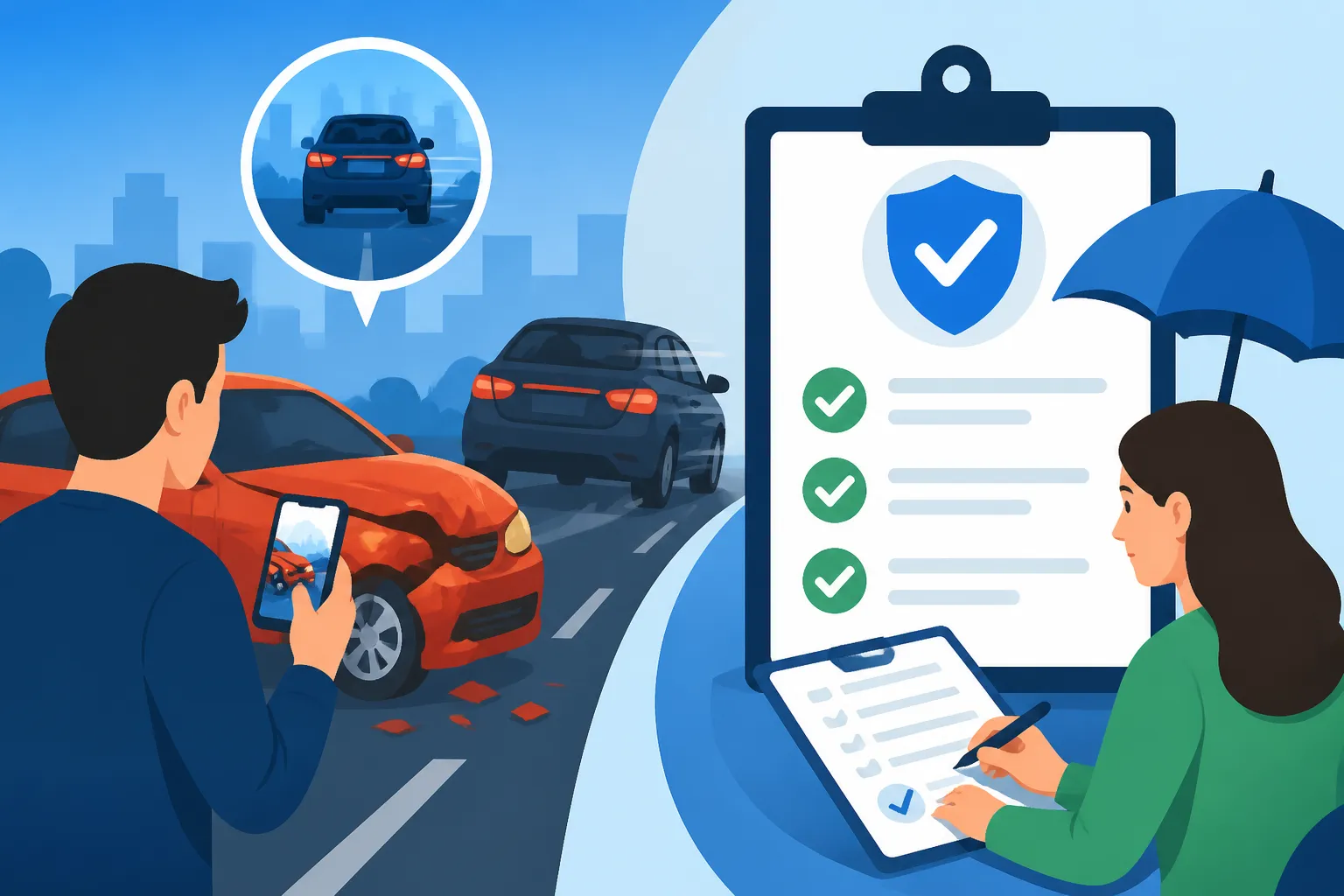
Beyond the other vehicle, focus on your surroundings. Take photos and videos of your damaged vehicle from multiple angles, showing the extent of the impact. Document the accident scene itself – skid marks, debris, road conditions, and any traffic signs or signals nearby. If there were any witnesses, like someone walking their dog or waiting at a bus stop, try to get their contact information. Even if they only saw the vehicle speed away, their testimony can corroborate your account. For more detailed guidance on documenting the scene, refer to our article on What to Do After a Hit-and-Run.
Reporting the Hit-and-Run to Law Enforcement
This step is non-negotiable for a hit-and-run claim. You must report the incident to the police as soon as possible. In many states, it's a legal requirement to report any accident involving property damage or injury, especially if the other party leaves the scene. Dial 911 if it's an emergency, or your local police department's non-emergency line if the immediate danger has passed.
When the officers arrive, give them a clear, factual account of what happened. Provide any details you collected about the fleeing vehicle or witnesses. The police will typically generate an official accident report, which is absolutely critical for your insurance claim. Without a police report confirming the hit-and-run, your insurance company might be hesitant to process your claim, or at least it will make the process significantly harder. The police report serves as official, unbiased verification that the incident occurred as you described.
Understanding Your Insurance Coverage for Hit-and-Run Claims
Navigating the aftermath of a hit-and-run means delving into the specifics of your own auto insurance policy. Since the at-fault driver is gone, you're relying solely on your coverage to pay for damages and injuries. This is where understanding your policy becomes paramount, as not all coverages apply equally to every situation.
Uninsured Motorist (UMPD) Coverage Explained
Uninsured Motorist Property Damage (UMPD) is the hero of many hit-and-run scenarios, often alongside Uninsured Motorist Bodily Injury (UMBI) coverage. This type of coverage is specifically designed to protect you when the at-fault driver either has no insurance or, as in a hit-and-run, cannot be identified. If you live in a state like California, for example, Uninsured Motorist coverage is not mandatory but highly recommended due to the number of uninsured drivers. In other states, like New York or Illinois, UM/UIM coverage is a required part of every policy.
UMPD coverage typically covers the damage to your vehicle resulting from the hit-and-run. Some policies may even include a lower deductible for UMPD claims compared to collision claims. UMBI coverage, on the other hand, steps in to cover your medical expenses, lost wages, and pain and suffering if you or your passengers were injured. This is vital because, without the other driver, there's no third-party insurance to file against. Our article on What to Do If the Other Driver Has No Insurance provides more insights into situations where the at-fault party is unidentifiable or uninsured.
Collision Coverage and Its Role
If you don't have Uninsured Motorist Property Damage coverage, or if your UMPD limits aren't sufficient, your collision coverage will usually be your next line of defense for vehicle damage. Collision coverage pays for the damage to your own car regardless of who was at fault, or even if the other driver can't be found. It covers things like hitting another car, an object like a tree, or rolling your car.
The key difference with collision coverage compared to UMPD in a hit-and-run is usually the deductible. Collision deductibles are often higher, and filing a collision claim will almost always lead to you paying that deductible out of pocket. For example, if your deductible is $1,000 and the damage to your car is $3,000, your insurance will pay $2,000, and you'll be responsible for the rest. However, without collision coverage, you would be left footing the entire repair bill yourself. This coverage is absolutely essential for comprehensive protection.
Deciphering Deductibles and Payouts
Understanding deductibles is crucial for any insurance claim, especially with a hit-and-run. A deductible is the amount of money you have to pay out of pocket before your insurance coverage kicks in. For a hit-and-run, depending on your state and policy, you might use your UMPD coverage, which often has a zero deductible or a very low one (e.g., $250). Alternatively, if you're using your standard collision coverage, your deductible might be higher, perhaps $500 or $1,000. It’s always best to check your specific policy details or speak directly with your insurance agent to confirm what your deductible will be for a hit-and-run incident.
When it comes to payouts, your insurance company will assess the damage to your vehicle, either through photos you provide or by sending an adjuster to inspect it. They'll determine the cost of repairs or, if the damage is extensive, whether your car is a "total loss." If it's totaled, they'll pay you the actual cash value (ACV) of your vehicle, minus your deductible. For injuries, they'll evaluate your medical bills, lost wages, and other related expenses covered under your UMBI policy. Understanding how car accident insurance claims work can help set your expectations for the payout process.
Here's a quick comparison of coverages often involved in hit-and-run claims:
| Coverage Type | What It Covers | Deductible (Typical) | When It's Used |
|---|---|---|---|
| Uninsured Motorist Property Damage (UMPD) | Damage to your vehicle | $0 – $250 | Hit-and-run where other driver is unknown/uninsured |
| Uninsured Motorist Bodily Injury (UMBI) | Your medical bills, lost wages, pain & suffering | $0 | Injuries from a hit-and-run where other driver is unknown/uninsured |
| Collision Coverage | Damage to your vehicle | $500 – $1,000+ | Hit-and-run if UMPD is unavailable or insufficient |
| Personal Injury Protection (PIP) / Medical Payments (MedPay) | Your and your passengers' medical bills, lost wages (PIP) | $0 – $1,000+ (PIP) | Your medical costs regardless of fault (in certain states) |
The Step-by-Step Process of Filing Your Claim
Once the initial shock wears off and you've taken care of safety and police reporting, the next critical phase is actively filing your insurance claim. This isn't just a phone call; it's a systematic process that requires diligence and clear communication with your insurer.
Notifying Your Insurance Company
As soon as you've reported the accident to the police, your next call should be to your own insurance company. Don't delay this step; many policies require you to notify them within a specific timeframe after an accident. When you call, clearly state that you were involved in a hit-and-run accident. Provide them with all the details you've gathered: the police report number, any information about the fleeing vehicle, witness contacts, and the extent of the damage to your car.
The insurance company will open a claim and assign a claim number and usually an adjuster. Be prepared to answer questions about the incident, but stick to the facts and avoid speculating or admitting fault (which isn't really an issue in a hit-and-run, but it's a good habit to maintain). They might also ask if you’ve been injured and if you've sought medical attention. Being prompt and thorough in your initial notification sets a positive tone for the rest of your claim process.
Documenting Your Damages and Injuries
Thorough documentation is the bedrock of a strong insurance claim. For your vehicle, this means providing your insurance company with all the photos and videos you took at the scene. If you haven't already, take more detailed pictures of the damage once your car is in a safe location. Your insurer will likely want to send their own appraiser or ask you to take your car to an approved repair shop for an estimate. Keep all repair estimates, receipts for towing, or rental car expenses.
For any injuries, documentation is even more critical. Provide your insurance company with copies of all medical records, including initial reports from emergency services, doctor's notes, diagnostic test results (X-rays, MRIs), physical therapy records, and medication receipts. Keep a detailed log of all your medical appointments, treatments, and any out-of-pocket expenses. If you've missed work due to your injuries, gather pay stubs or a letter from your employer confirming your lost wages. This information is essential for your property damage vs. bodily injury claims. Even if symptoms are delayed, ensure you see a doctor as soon as they appear, as delayed injury symptoms after a car accident can still be claimed with proper documentation.
Cooperating with the Insurance Investigation
Once you've filed your claim, your insurance company will conduct its own investigation. This usually involves their adjuster reviewing the police report, examining your vehicle's damage, and potentially speaking with you further about the incident. They may also review any medical documentation you've submitted. It's important to cooperate fully and promptly with their requests. Provide any additional information or documents they ask for in a timely manner.
However, remember to remain objective and factual. You might be asked to provide a recorded statement. While you should be honest, it's wise to be concise and stick to what you know for certain. Avoid guessing or speculating. The insurance adjuster's job is to assess the claim fairly but also to protect the company's interests, so a clear, factual account from your end is always best. Understanding how insurance companies determine who is at fault, even in hit-and-runs, can help you navigate these conversations.
Common Challenges and How to Overcome Them
Even with all your ducks in a row, a hit-and-run claim can present unique challenges. The absence of an identifiable at-fault driver means your own insurance company is effectively paying out the claim, which can sometimes lead to more scrutiny than a typical two-party accident.
Dealing with a Denied Claim or Lowball Offer
It can be incredibly disheartening to have your claim denied or receive an offer that doesn't even come close to covering your damages and medical bills. If your claim is denied, the first step is to understand why. Your insurance company must provide a reason for the denial. It could be something as simple as missing documentation (like a police report) or an issue with your policy's coverage limits. For example, if you only have liability insurance, you won't have coverage for your own vehicle damage in a hit-and-run.
If you believe the denial is unfair or the offer is too low, don't give up. Gather all your documentation, review your policy carefully, and write a formal appeal letter to your insurance company. Clearly state why you believe their decision is incorrect and provide supporting evidence. Sometimes, it takes persistent communication and a clear presentation of facts to get them to reconsider. You can also explore options on What to Do If an Insurance Company Denies Your Claim or How to Deal With a Lowball Insurance Offer for specific strategies.
When to Consider Legal Counsel
While not every hit-and-run claim requires a lawyer, there are situations where legal counsel can be invaluable. If you've suffered serious injuries, if your insurance company is denying your claim unfairly, or if the settlement offer is insufficient to cover your losses, consulting a personal injury attorney is a wise move. An attorney can help you understand the full value of your claim, negotiate with your insurance company on your behalf, and ensure all deadlines are met.
They can also help investigate the hit-and-run further, potentially uncovering evidence you might have missed or utilizing resources to identify the fleeing driver. In complex cases involving significant medical expenses or long-term recovery, an attorney can be the advocate you need to navigate the legal complexities and maximize your car accident settlement. Our article Do You Need a Lawyer for a Car Accident? offers a more in-depth look at when legal representation is beneficial.
Long-Term Impacts and Proactive Measures
Beyond the immediate financial and physical recovery, a hit-and-run can leave lasting emotional scars. The feeling of vulnerability and injustice can linger. It's important to acknowledge these feelings and seek support if needed, whether through friends, family, or professional counseling.
Looking forward, consider proactively reviewing your insurance policy. After a hit-and-run, many people realize they might be underinsured. Is your Uninsured Motorist coverage sufficient to protect you and your loved ones? Are your deductibles manageable? Sometimes, paying a little more for better coverage can save you a world of headache and financial strain down the road. While it's impossible to completely prevent future hit-and-runs, having adequate insurance is the best way to mitigate their financial impact on you.
Preventing Future Hit-and-Runs and Protecting Yourself
While you can't control another driver's actions, there are certainly steps you can take to minimize your risk of being involved in any accident, and specific actions to protect yourself in the unfortunate event of a hit-and-run. Being a proactive driver and an informed policyholder are your best defenses.
Defensive Driving Techniques
One of the most effective ways to avoid any type of accident, including a hit-and-run, is to practice defensive driving. This means constantly being aware of your surroundings, anticipating potential hazards, and maintaining safe following distances. For example, if you're on a multi-lane highway, being aware of a driver veering between lanes haphazardly allows you to create space, reducing the chance of a lane-change accident that could turn into a hit-and-run if that driver panics.
Avoid distractions like cell phones, loud music, or eating while driving. Always use your turn signals, check your blind spots, and drive at appropriate speeds for the road and weather conditions. By being a vigilant and responsible driver, you significantly reduce the odds of being in a position where another driver could hit you and flee. Remember, sometimes avoiding the accident altogether is the best outcome, even if it means sacrificing your right-of-way to a reckless driver.
Dash Cams and Other Technology
In today's world, technology offers an extra layer of protection. Installing a dash cam in your vehicle can be an absolute game-changer in a hit-and-run scenario. A dash cam continuously records what happens in front of (and sometimes behind) your vehicle. If another driver hits you and flees, the dash cam footage could capture their license plate, the make and model of their car, and even a clear image of the driver. This evidence is incredibly powerful for law enforcement to identify the perpetrator and for your insurance claim.
Beyond dash cams, certain vehicles come equipped with advanced driver-assistance systems (ADAS) like collision warning, automatic emergency braking, or lane-keeping assist. While these don't prevent all accidents, they can significantly reduce the severity or help you avoid them altogether. Even something as simple as using a car tracking app on your phone could provide valuable location data if your car is struck while parked and then moved.
Reviewing and Updating Your Insurance Coverage
As mentioned earlier, a hit-and-run often highlights gaps in insurance coverage. Don't wait until after an accident to discover you're underinsured. Schedule a regular review of your auto insurance policy with your agent. Discuss your current coverage limits for Uninsured Motorist Bodily Injury and Property Damage. Consider increasing these limits if they are low, especially if you live in an area with a high rate of uninsured drivers or hit-and-runs.
Also, evaluate your deductibles. While a higher deductible can save you money on premiums, it means more out-of-pocket expenses if you have to file a claim. Find a balance that fits your budget and your risk tolerance. Don't hesitate to ask your agent about specific scenarios, such as What Happens If You're Partially at Fault? in a complicated crash, or if your rates will go up after a hit-and-run claim (often, they don't, as you're not at fault, but it's good to confirm). Being proactive with your policy ensures you have the robust protection you need when unforeseen events, like a hit-and-run, occur.
Disclaimer
Please remember that this article provides general information and is not a substitute for professional legal advice or specific guidance from your insurance provider. Laws and insurance policies vary by state and individual circumstances. For personalized advice regarding your hit-and-run accident and claim, always consult with a qualified legal professional or your insurance agent.