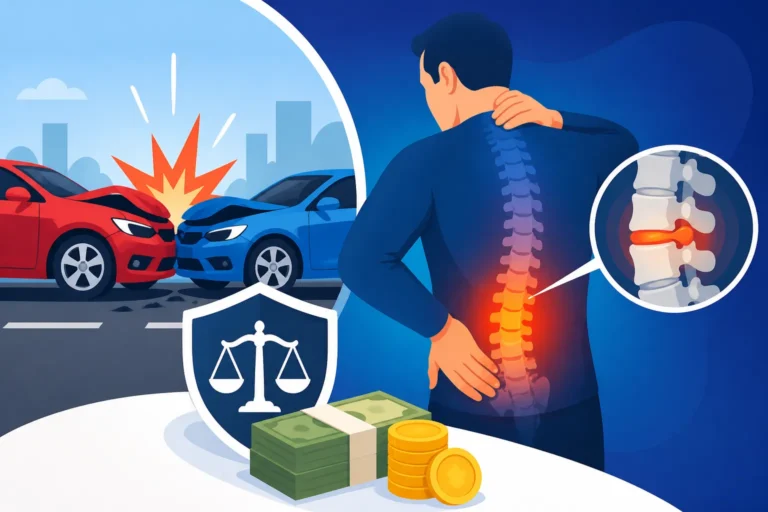
Average Settlement for a Lane-Change Accident
It’s incredibly frustrating when you’re driving along, minding your own business, and suddenly another vehicle swerves into your lane, causing an accident. You're left with a damaged car, potential injuries, and a mountain of questions, chief among them being: "What kind of settlement can I expect?" This guide aims to demystify the process of determining average settlements for lane-change accidents, helping you understand the factors involved and how to navigate your claim.
Understanding Lane-Change Accidents and Fault
Lane-change accidents often feel straightforward – someone moved over when they shouldn’t have. But in reality, determining fault can sometimes be more complex than it appears on the surface, directly impacting any potential settlement.
What Constitutes a Lane-Change Accident?
A lane-change accident occurs when one vehicle attempts to move from its current lane into an adjacent one and collides with another vehicle already occupying or attempting to occupy that same lane. This could involve a driver failing to check their blind spot, misjudging the speed or distance of other vehicles, or simply not signaling their intention to change lanes. These types of collisions are incredibly common, especially on busy highways and multi-lane roads. From a minor fender bender on a crowded freeway exit in Los Angeles to a more serious sideswipe on a rural interstate, the scenarios are endless, but the underlying cause remains the same: an unsafe lane change.
How Fault Is Typically Determined
In most lane-change accidents, the driver attempting the lane change is presumed to be at fault. This is because drivers have a legal responsibility to ensure the lane is clear before merging. They are expected to check their mirrors, look over their shoulder to check blind spots, and signal their intention. Failure to do any of these things can lead to a collision.
However, it's not always a cut-and-dried situation. There are instances where the other driver might share some responsibility. For example, if the vehicle already in the lane was speeding excessively, driving aggressively, or even attempting to accelerate into the changing vehicle’s blind spot to prevent the merge, a portion of the fault could be assigned to them. Dashcam footage, eyewitness testimonies, and physical evidence at the scene like skid marks and vehicle damage patterns become crucial in establishing the full picture. Understanding the specific nuances of who is at fault in a lane-change accident is foundational to your claim.
The Role of Comparative Negligence
Most states operate under some form of comparative negligence laws. This means that even if you are partially at fault for the accident, you may still be able to recover damages, though your compensation would be reduced by your percentage of fault. For example, if you were found 20% at fault because your headlights were out, but the other driver was 80% at fault for failing to yield during a lane change, your settlement would be reduced by 20%.
There are different types of comparative negligence, such as pure comparative negligence (where you can recover even if you're 99% at fault) and modified comparative negligence (where you might be barred from recovery if your fault exceeds a certain threshold, often 50% or 51%). This system ensures that the compensation reflects each party's contribution to the crash. If you find yourself in a situation where the other driver blames you, knowing how comparative fault reduces your settlement becomes critically important.
Factors Influencing Lane-Change Accident Settlements
When someone asks "How much is my car accident settlement worth?", especially after a lane-change accident, the answer is never a simple number. Settlements are highly individualized, built upon a multitude of factors unique to each case.
Injury Severity and Medical Treatment
The most significant factor influencing a settlement is the extent and nature of the injuries sustained. A minor rear-end fender bender resulting in a few days of whiplash will yield a vastly different settlement than a severe collision causing a herniated disc, traumatic brain injury, or broken bones. The costs associated with your medical treatment, including emergency room visits, hospital stays, surgeries, physical therapy, prescription medications, and even long-term care, form a large part of your economic damages.
The duration and type of treatment also play a role. Consistent medical documentation showing a clear link between the accident and your injuries, as well as a diligent commitment to your recovery plan, strengthens your claim for medical expenses. Insurance companies will scrutinize these records, so it's vital to seek prompt medical attention and follow your doctor's recommendations meticulously. For a comprehensive overview of potential injuries, you might want to look at our guide on common car accident injuries.
Property Damage
Beyond personal injuries, the damage to your vehicle is another key component of your settlement. This includes the cost of repairs, rental car expenses while your vehicle is being fixed, or the actual cash value of your vehicle if it's deemed a total loss. Photos of the damage, repair estimates, and mechanic statements are essential pieces of evidence.
If your car is totaled, the insurance company will calculate its actual cash value (ACV) based on its make, model, year, mileage, and condition prior to the accident. While you might feel your car was worth more, negotiating this value can be part of the settlement process. Always ensure you get multiple repair estimates and thoroughly document the state of your vehicle.
Lost Wages and Earning Capacity
If your injuries prevent you from working, either temporarily or permanently, you can claim compensation for lost wages. This includes the income you've already lost since the accident and any future income you are reasonably expected to lose due to your injuries. For those with salaried positions, calculating lost wages can be relatively straightforward. For self-employed individuals, freelancers, or those with fluctuating income, it can be more complex, requiring documentation like tax returns, invoices, and business records to prove your loss.
In severe cases where an injury leads to a permanent disability or significantly impacts your ability to perform your job, you might also claim for lost earning capacity. This looks at your potential future income had the accident not occurred, taking into account career advancement, promotions, and raises. It’s a sophisticated calculation, often requiring expert testimony from vocational rehabilitation specialists or economists.
Pain and Suffering
This is often the most subjective but significant component of a car accident settlement. Pain and suffering damages compensate you for the non-economic impacts of your injuries, such as physical pain, emotional distress, mental anguish, loss of enjoyment of life, and inconvenience. There’s no exact formula for calculating pain and suffering, but insurance companies and courts often use methods like the multiplier method or the per diem method.
The multiplier method typically takes your total economic damages (medical bills, lost wages) and multiplies them by a number between 1.5 and 5, depending on the severity and permanence of your injuries. A minor soft tissue injury might warrant a 1.5 multiplier, while a life-altering injury could see a multiplier of 4 or 5. Documenting your pain through journals, therapy sessions, and witness statements can help substantiate this claim. Our article on how pain and suffering is calculated offers more in-depth insight.
Insurance Policy Limits
No matter how severe your damages, your settlement will ultimately be constrained by the at-fault driver's insurance policy limits. If their policy only covers up to $25,000 for bodily injury per person, and your damages are $50,000, you might struggle to recover the full amount directly from their insurance.
In such scenarios, you might need to pursue a claim against your own uninsured/underinsured motorist (UM/UIM) coverage, if you have it. This coverage kicks in when the at-fault driver either has no insurance or insufficient insurance to cover your damages. Understanding these limits is crucial when negotiating a car accident settlement.
Calculating Potential Settlement Value
Trying to put a number on your car accident claim can feel like trying to hit a moving target. While there's no magic calculator, understanding how components are added up can give you a clearer picture.
Economic vs. Non-Economic Damages
Settlement calculations fundamentally divide into two categories: economic and non-economic damages.
- Economic Damages: These are quantifiable financial losses. Think receipts, bills, and wage statements. This includes:
- Medical expenses (past and future)
- Lost wages (past and future)
- Property damage (vehicle repair or replacement, rental car costs)
- Out-of-pocket expenses (transportation to appointments, assistive devices)
- Non-Economic Damages: These are subjective losses that don't come with a bill, but are very real. These often include:
- Pain and suffering (physical discomfort)
- Emotional distress (anxiety, depression, PTSD)
- Loss of enjoyment of life (inability to participate in hobbies, daily activities)
- Disfigurement or scarring
The goal of a settlement is to make the injured party "whole" again, as much as possible, by compensating them for both types of losses. For a deeper dive, check out our piece on economic vs non-economic damages explained.
Multiplier Method for Pain and Suffering
As mentioned earlier, the multiplier method is a common way to estimate non-economic damages. Here’s a simplified breakdown:
- Calculate Total Economic Damages: Add up all your medical bills, lost wages, and other direct financial losses.
- Determine a Multiplier: An insurance adjuster or attorney will assign a multiplier, typically between 1.5 and 5. This number reflects the severity, duration, and impact of your injuries. Factors like permanent disability, significant scarring, or prolonged recovery periods will push the multiplier higher.
- Multiply: Multiply your total economic damages by the chosen multiplier to arrive at an estimated figure for pain and suffering.
- Add Them Together: Your potential settlement then becomes the sum of your total economic damages and your estimated pain and suffering.
Example Scenario:
Let’s say you were involved in a lane-change accident in Sacramento. Your vehicle suffered $5,000 in damages, and you incurred $10,000 in medical bills for a neck sprain and physical therapy. You also missed two weeks of work, resulting in $2,000 in lost wages.
- Total Economic Damages: $5,000 (property) + $10,000 (medical) + $2,000 (lost wages) = $17,000
- Multiplier: For a moderate whiplash injury requiring therapy, an adjuster might use a 2.5 multiplier.
- Pain and Suffering: $17,000 x 2.5 = $42,500
- Total Estimated Settlement: $17,000 + $42,500 = $59,500
This is a simplified example, and many other factors can adjust this figure up or down. For instance, if you were found to be 10% at fault for the accident, this $59,500 would be reduced by 10% to $53,550. This demonstrates why understanding how car accident settlements are calculated is so critical.
Average Settlement Range for Lane-Change Accidents
It's common to wonder, "What's the average settlement for a lane-change accident?" The honest answer is that there isn't a single, definitive "average" figure because every accident is unique. However, we can discuss typical ranges and the factors that push a settlement towards the lower or higher end of the spectrum.
The Myth of a Single "Average"
When you search for "average settlement" online, you'll find various numbers, but these are often broad statistics that don't apply directly to your specific circumstances. A lane-change accident could involve a minor scrape with no injuries or a catastrophic collision leading to severe, life-altering trauma. These vastly different outcomes cannot be accurately represented by one average.
Instead, it's more helpful to think about settlement ranges based on the severity of injuries and damages. The "average" settlement will heavily depend on geographical location, specific state laws, and the jurisdiction where the accident occurred. For example, a minor accident in a large metropolitan area like Dallas, Texas, might see different compensation trends than a similar incident in a smaller community.
Typical Settlement Ranges by Severity
While specific numbers are challenging to provide without knowing the details of a case, here’s a general idea of how settlement values typically cluster for lane-change accidents:
- Minor Accidents (No/Minor Injuries, Minimal Property Damage):
- These often involve basic vehicle repairs, perhaps some soft tissue pain that resolves quickly.
- Settlement range: Typically a few thousand dollars up to $15,000-$20,000. This covers vehicle repairs, minor medical bills (e.g., ER visit, a few chiropractor sessions), and a small amount for pain and suffering.
- Moderate Accidents (Moderate Injuries, Significant Property Damage):
- These might include more pronounced whiplash, sprains, strains, or minor concussions that require ongoing physical therapy. Vehicle damage could be substantial, possibly leading to a totaled car.
- Settlement range: $20,000 to $75,000. This covers more extensive medical treatment, longer periods of lost wages, and a more significant amount for pain and suffering due to prolonged recovery.
- Severe Accidents (Serious Injuries, Totaled Vehicle):
- This category includes broken bones, herniated discs requiring surgery, severe concussions, internal injuries, or other significant trauma that results in long-term treatment, permanent impairment, or significant disruption to daily life.
- Settlement range: $75,000 to several hundred thousand dollars, or even more for truly catastrophic injuries. These cases involve substantial medical bills, significant lost earning capacity, and considerable compensation for pain, suffering, and loss of enjoyment of life.
It's important to remember these are illustrative ranges. Factors like clear liability, strong evidence, and the specific insurance policies involved will always sway the final figure. For comparison, you might find it useful to explore what constitutes the average settlement for a minor car accident.
To illustrate the range of variables, here's a table outlining potential settlement components in a lane-change accident:
| Component | Description | Impact on Settlement |
|---|---|---|
| Medical Expenses | ER visits, doctor appointments, surgery, physical therapy, medications. | Directly proportionate to injury severity and treatment duration. |
| Lost Wages | Income lost due to inability to work during recovery. | Calculated based on pre-accident earnings and duration of absence. |
| Property Damage | Cost of vehicle repairs or actual cash value if totaled. | Based on repair estimates or market value of the vehicle. |
| Pain and Suffering | Physical pain, emotional distress, loss of enjoyment of life. | Estimated using multiplier methods on economic damages, highly variable. |
| Future Expenses | Ongoing medical care, lost earning capacity, future therapy. | Significant for permanent or long-term injuries, requires expert testimony. |
| Shared Fault | Your percentage of responsibility for the accident. | Reduces total compensation by your assigned fault percentage. |
| Insurance Limits | Maximum coverage available from the at-fault driver's policy. | Hard cap on recovery from that specific policy. |
Steps to Maximize Your Lane-Change Accident Settlement
While the "average" settlement is elusive, there are concrete steps you can take to ensure you receive fair compensation for your lane-change accident. Proactive and diligent actions from the moment of the crash can significantly impact your claim's strength.
Document Everything at the Scene
The moments immediately following an accident are often chaotic and stressful, but they are critical for gathering evidence. First and foremost, after ensuring everyone's safety, you should always call the police, even for what seems like a minor collision. A police report and car accident fault documentation provide an official, objective account of the incident, which can be invaluable.
While waiting for law enforcement, take photographs and videos of everything: the position of the vehicles, damage to both cars, skid marks, road conditions, traffic signs, and any visible injuries. Exchange information with all parties involved, including names, contact details, insurance information, and license plate numbers. Also, get contact information for any witnesses. This diligent documentation process is a crucial step for what to do after a car accident. Without proper evidence, proving the other driver was at fault can become an uphill battle.
Seek Immediate Medical Attention
Even if you feel fine right after the accident, it is imperative to seek medical evaluation. Some injuries, like whiplash or concussions, have delayed injury symptoms after a car accident and may not manifest for hours or even days. A doctor can properly diagnose any injuries, even subtle ones, and create a record linking them directly to the accident. This medical documentation is paramount for your claim.
Delaying medical treatment can severely weaken your case, as the insurance company might argue that your injuries weren't caused by the accident but by something else that happened later. Consistent follow-up with your doctors, physical therapists, and specialists, along with adherence to their prescribed treatment plan, further strengthens the credibility of your injury claim and shows you are actively working towards recovery. Remember, how much more than medical bills will insurance pay often hinges on the clarity and consistency of your medical records.
Understand Your Insurance Claim Process
After a lane-change accident, you'll typically file a claim with the at-fault driver's insurance company (a third-party claim) or, depending on your state and policy, with your own insurance company (a first-party claim). Be prepared to provide details about the accident, your injuries, and property damage.
It's crucial to be cautious when dealing with insurance adjusters. They represent their company's interests, which might not always align with yours. Avoid giving recorded statements or signing any releases until you fully understand their implications, and ideally, after consulting with a legal professional. Insurance companies will often try to offer a quick, lowball settlement to close the case swiftly. Knowing how to deal with a lowball insurance offer is essential to protect your rights.
Consult with a Car Accident Lawyer
Navigating the complexities of car accident claims can be overwhelming, especially when you're also recovering from injuries. This is where a skilled car accident lawyer can be an invaluable asset. They understand the nuances of personal injury law, can accurately assess the full value of your claim, and negotiate with insurance companies on your behalf.
A lawyer can help you gather evidence, manage communications with insurance adjusters, ensure you meet all critical deadlines, and fight for the maximum compensation you deserve. They know how to account for all your damages, including future medical expenses and long-term lost earning capacity, which you might overlook. While hiring a lawyer might seem like an added expense, many work on a contingency fee basis, meaning they only get paid if you win your case. This makes legal representation accessible and can significantly increase your final settlement amount. If you're wondering when to hire a car accident lawyer, the answer is often as soon as possible after the incident.
Disclaimer
Please remember that this article provides general information and guidance regarding car accident settlements. It is not legal advice. Every accident is unique, and the information provided here may not apply to your specific situation. You should always consult with a qualified legal professional for advice tailored to your individual circumstances. Laws regarding car accidents and settlements vary significantly by state and jurisdiction.