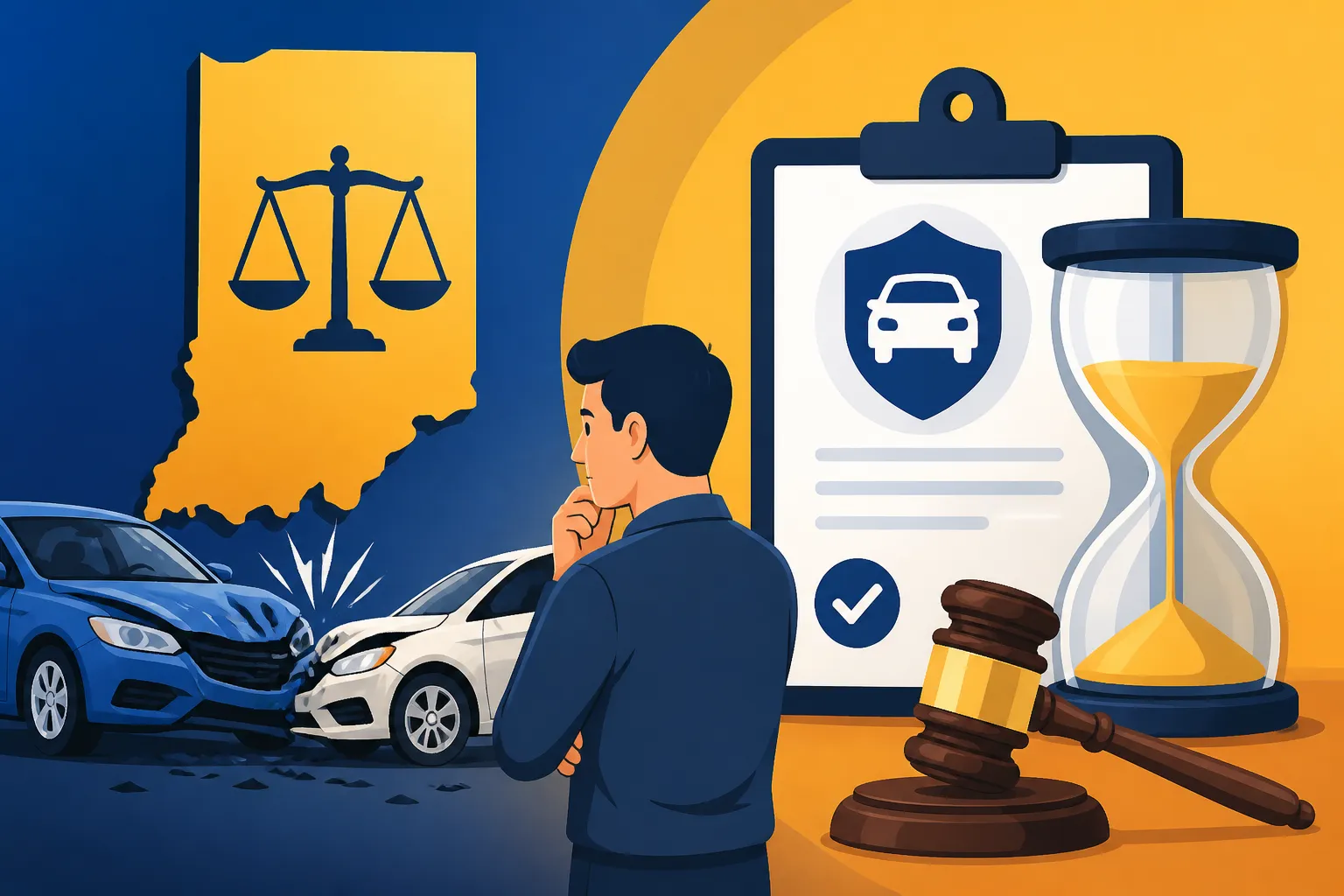
How Long Do You Have to Sue After a Car Accident in Indiana?
Navigating the aftermath of a car accident is incredibly stressful, filled with immediate concerns about your health, your vehicle, and countless questions about what to do next. Among these urgent worries often lurks the intimidating question of legal deadlines – specifically, how long you actually have to pursue a legal claim. If you've been in an accident in the Hoosier State, understanding how long you have to sue after a car accident in Indiana is absolutely crucial to protecting your rights and potential compensation. This guide will walk you through Indiana's specific timelines, common pitfalls, and what steps you can take.
Understanding Indiana's Car Accident Statute of Limitations
When you're dealing with injuries, pain, and the headache of vehicle repairs, the last thing you want to think about is legal jargon like "statute of limitations." But in the world of personal injury law, it's one of the most critical concepts you need to grasp. Simply put, the statute of limitations is a law that sets the maximum time you have to initiate legal proceedings from the date of an alleged offense or injury. Miss this deadline, and you could lose your right to ever file a lawsuit, no matter how strong your case.
The General Timeline for Personal Injury Claims in Indiana
For most car accident cases involving personal injury in Indiana, the law is quite clear: you generally have two years from the date of the accident to file a personal injury lawsuit in court. This isn't just a suggestion; it's a hard and fast rule set by Indiana Code § 34-11-2-4. If you were injured in a fender bender on October 1, 2023, your deadline to file a lawsuit would typically be October 1, 2025.
It's vital to understand that this "two-year clock" starts ticking from the moment the accident occurs. This period is dedicated to formalizing your claim in the court system, not just notifying your insurance company or starting negotiations. While it might seem like a long time, the investigative process, gathering medical records, and attempting to settle with insurance companies can quickly eat away at those 24 months. Many people find themselves in a bind because they assume that as long as they are talking to an insurance adjuster, their rights are protected. Unfortunately, that's a common and costly misconception.
Furthermore, this two-year window applies whether you suffered a minor whiplash or more severe injuries that required extensive treatment. The severity of your injuries doesn't change the deadline, only the potential value of your claim. This is why getting prompt medical attention and documenting all your injuries, no matter how minor they seem initially, is a critical first step. You can learn more about what to do in the immediate aftermath by reading our guide on What to Do After a Car Accident: Step-by-Step (2027).
Specifics for Property Damage Claims
While personal injuries often take center stage in accident claims, damage to your vehicle or other personal property is also a significant concern. The good news is that in Indiana, the statute of limitations for property damage claims arising from a car accident is generally the same as for personal injury claims: two years from the date of the accident. This means if your car was totaled in a collision, you have the same two-year window to file a lawsuit specifically for the cost of repairs or the diminished value of your vehicle.
This unified timeline simplifies things somewhat, as you don't typically have to track two separate deadlines for the same incident. However, it's worth noting that property damage claims are often resolved much faster than bodily injury claims, primarily because the extent of damage to a vehicle is usually easier and quicker to assess than the full scope of human injuries and recovery. Insurance companies might be quick to offer a settlement for your car, but this doesn't impact the ongoing personal injury timeline.
It's also important to distinguish between seeking compensation for property damage and personal injury. While they both share the same statute of limitations, they represent different types of damages you can claim. An early settlement for your vehicle does not necessarily mean your personal injury claim is resolved or that your two-year clock has stopped ticking for potential medical expenses, lost wages, and pain and suffering. Keeping these separate but parallel processes in mind is crucial for a comprehensive recovery.
Why the Deadline Matters So Much
The statute of limitations isn't just a technicality; it's a fundamental legal principle designed to ensure fairness and prevent stale claims from being brought forward decades after an event. For accident victims, however, it feels like an immense pressure, especially when you're still recovering and trying to make sense of everything. Missing this deadline has dire, irreversible consequences. Once the two-year period passes, the courthouse doors are effectively closed to your claim. You lose your legal right to sue the at-fault driver for any compensation, no matter how clear their fault or how severe your injuries.
Imagine a scenario where someone suffered a debilitating injury in an Indiana car accident, incurred hundreds of thousands in medical bills, and was unable to work for years. If they fail to file a lawsuit by the two-year mark because they were hoping for an insurance settlement, or simply didn't know the rule, their ability to seek justice and compensation through the courts is gone forever. The insurance company of the at-fault driver has no further legal obligation to pay, even if they were still negotiating your claim up until the deadline.
This is why understanding and respecting the statute of limitations is paramount. It serves as a stark reminder that while negotiating with insurance is often the first step, it is not a substitute for formal legal action when necessary. The looming deadline can also be a strategic tool for insurance companies, who might drag out negotiations, hoping you'll miss your window. This adds another layer of stress, but knowing the deadline empowers you to take action before it's too late. When dealing with these pressures, knowing What to Do If Your Claim Is Taking Too Long can be incredibly helpful.
Important Exceptions and Nuances to the Rule
While the two-year rule is the general standard, the law is rarely absolute. There are specific circumstances and types of claims that can alter this timeline. It’s critical to be aware of these exceptions, as they can either extend your deadline or, in some cases, drastically shorten it, adding layers of complexity to an already confusing situation.
Claims Involving Minors or Incapacitated Individuals
One of the most common exceptions to the standard two-year statute of limitations involves individuals who are minors at the time of the accident. In Indiana, if a child is injured in a car accident, the two-year clock typically doesn't start ticking until they turn 18. This means if a 10-year-old is injured, they would generally have until their 20th birthday to file a personal injury lawsuit. This legal principle is known as "tolling" the statute of limitations, essentially pausing the clock due to a legal disability.
This exception is designed to protect minors who are not legally able to bring a lawsuit on their own behalf. While a parent or guardian can file a lawsuit for the minor before they turn 18, the statute of limitations still typically extends until two years after their 18th birthday. This gives the injured party ample time to decide on legal action once they reach legal adulthood. However, it's often advisable for parents to consult with an attorney much sooner, especially if the injuries are severe, to ensure evidence is preserved and medical care is properly documented.
Similarly, if an individual is mentally incapacitated at the time of the accident and cannot understand their legal rights or make decisions, the statute of limitations might also be tolled. The exact conditions for "incapacity" are legally defined and usually require a court to declare someone incapacitated. If you believe this applies to your situation or a loved one's, it's imperative to seek legal counsel immediately to understand how these complex rules apply.
Claims Against Governmental Entities in Indiana
Here's where things get significantly more complex and the deadline becomes much, much shorter. If your car accident in Indiana involves a governmental entity—such as a city bus, a county-owned vehicle, or even if the accident was caused by a poorly maintained state highway—you are dealing with an entirely different set of rules. The Indiana Tort Claims Act (ITCA) governs claims against state and local governmental entities, and it imposes incredibly strict, significantly shorter notice requirements.
Under the ITCA, you must file a formal notice of your claim with the appropriate governmental agency within a very short timeframe. For claims against a state government entity, you generally have 270 days from the date of the loss to file a written notice. For claims against a political subdivision (like a city, county, or school district), that deadline is even shorter, typically 180 days. This is not the deadline to file a lawsuit, but merely to provide formal notice of your intent to pursue a claim. If you miss this initial notice period, you could forever lose your right to sue the government, even before the two-year personal injury statute of limitations is a concern.
These deadlines are unforgiving, and the specific entity you need to notify varies based on which governmental body is involved. For example, if you were hit by a city garbage truck in Indianapolis, you'd notify the City of Indianapolis. If it was an Indiana Department of Transportation (INDOT) vehicle, you'd notify the State. This makes these cases notoriously difficult to handle without legal assistance, as the complexity involved often trips up even seasoned individuals.
Wrongful Death Claims
When a car accident tragically results in a fatality, the legal claim shifts from personal injury to wrongful death. In Indiana, the statute of limitations for filing a wrongful death lawsuit is generally two years from the date of the individual's death. This might seem similar to the personal injury timeline, but there's a crucial distinction: the clock starts from the date of death, which may not always be the same as the date of the accident. For instance, if someone passes away weeks or months after an accident due to their injuries, the two-year period begins on the date of their passing, not the crash itself.
Wrongful death claims are brought by the personal representative of the deceased's estate on behalf of surviving family members (like a spouse, children, or parents) who have suffered financial and emotional losses. The damages sought in these cases can include funeral and burial expenses, medical bills incurred before death, loss of financial support, and loss of companionship. Understanding What Are Damages in a Car Accident Claim? can provide more context on the types of compensation sought.
These types of cases are emotionally taxing and legally intricate, involving specific legal procedures for establishing an estate and distributing any settlement or judgment. The stakes are incredibly high, and the legal nuances mean that consulting with an attorney experienced in Indiana wrongful death law is not just recommended, but essential to ensure the family's rights are protected and all potential avenues for compensation are explored.
Taking Action Before the Deadline Expires
Knowing the statute of limitations is half the battle; the other half is actively working within that timeframe to protect your interests. It’s common for people to get caught up in the day-to-day logistics of recovery and dealing with insurance, unknowingly letting critical legal deadlines slip by. Being proactive and understanding the distinction between an insurance claim and a legal lawsuit is paramount.
The Difference Between a Claim and a Lawsuit
One of the biggest misunderstandings people have after an accident is confusing an insurance claim with a lawsuit. When you call the other driver's insurance company (or your own) after an accident, you are initiating an insurance claim. This is a request for benefits or compensation directly from the insurance provider, and it often involves negotiations with an adjuster. Most car accident cases are resolved at this stage, through a settlement agreed upon by you (or your lawyer) and the insurance company.
A lawsuit, on the other hand, is a formal legal action filed in a civil court against the at-fault driver. This is what the statute of limitations directly applies to. Filing a lawsuit means you are formally asking a court to order the at-fault party to compensate you for your damages. While you can continue to negotiate with insurance companies right up until the deadline, these negotiations do not pause or extend the statute of limitations. If negotiations fail to yield a fair settlement, and the deadline is approaching, filing a lawsuit becomes your only option to preserve your right to pursue compensation.
Insurance adjusters are savvy. They know the statute of limitations for car accidents in Indiana, and some might deliberately prolong negotiations as the deadline approaches, hoping you'll miss it. If you're nearing the two-year mark and haven't reached a satisfactory agreement, that's a huge red flag that it's time to consider legal action. This proactive step ensures that even if you can't agree with the insurance company, you haven't lost your chance to seek justice. Understanding How Car Accident Insurance Claims Work is key to navigating this process.
Steps to Take to Protect Your Rights
Protecting your rights after an Indiana car accident involves a series of diligent steps, regardless of where you are in the two-year window. The earlier you start, the stronger your position will be if you need to file a lawsuit.
First and foremost, seek immediate medical attention after an accident, even if you feel fine. Many serious injuries, like whiplash or concussions, have delayed symptoms. Medical records are the backbone of any personal injury claim, directly linking your injuries to the accident. Without them, it becomes incredibly difficult to Prove Injuries in a Car Accident Claim.
Secondly, document everything. Take photos of the accident scene, vehicle damage, and your injuries. Keep a detailed journal of your pain, medical treatments, and how the injuries impact your daily life. Collect contact information for witnesses and get a copy of the police report. The more evidence you have, the better.
Finally, and perhaps most crucially, consult with a legal professional sooner rather than later. Even if you think your case is straightforward, an experienced car accident lawyer in Indiana can provide invaluable guidance, assess your claim's potential value, and ensure all deadlines are met. Websites like LegalMatch can connect you with qualified attorneys in your area who specialize in personal injury law, making it easier to find someone who understands Indiana's specific legal landscape. They can help you understand your options and the necessary steps to take long before the statute of limitations becomes an immediate threat.
The Role of a Car Accident Lawyer
A car accident lawyer serves as your most trusted advocate in the complex world of post-accident recovery and legal proceedings. Their role extends far beyond simply filing a lawsuit; they are instrumental in navigating the entire process, especially when considering the unforgiving nature of the statute of limitations.
An Indiana car accident attorney will begin by thoroughly investigating your accident, gathering all necessary evidence, including police reports, medical records, witness statements, and expert testimony. They will handle all communications with insurance companies, protecting you from adjusters who might try to get you to admit fault or accept a lowball offer. This is particularly important because anything you say to an adjuster can be used against you. You might find our article on Dealing With Insurance Adjusters After a Car Accident helpful in this regard.
Most importantly, your lawyer will meticulously track the statute of limitations for your specific case, taking into account any exceptions that might apply (like claims against government entities). If a fair settlement cannot be reached through negotiation, they will be prepared to file a lawsuit on your behalf well before the deadline, ensuring your legal rights are preserved. They will guide you through the intricacies of how a car accident lawsuit works, should it come to that. A service like LegalMatch can be an excellent starting point to find an attorney who is well-versed in Indiana personal injury law and can competently manage your case from start to finish, alleviating the immense pressure of tracking these critical deadlines yourself.
| Claim Type | Indiana Statute of Limitations (General) | Notes |
|---|---|---|
| Personal Injury | 2 years from date of accident | Applies to bodily injuries, pain and suffering, lost wages. |
| Property Damage | 2 years from date of accident | Applies to damage to your vehicle or other personal property. |
| Wrongful Death | 2 years from date of death | Applies if the accident resulted in a fatality; clock starts from date of death, not accident. |
| Claims Against Government | 180 or 270 days for notice | Shorter deadlines apply for notice (180 days for local, 270 days for state); much stricter requirements. |
| Minors/Incapacitated | 2 years from 18th birthday/capacity | Statute of limitations is "tolled" (paused) until the minor turns 18 or incapacitated person regains capacity. |
Disclaimer
Please remember that this information is for educational purposes only and not legal advice. Laws can change, and every accident case has unique circumstances. It is essential to consult with an experienced Indiana car accident attorney to discuss the specifics of your situation and understand the most current and applicable laws.