What to Do If Hit by an Uninsured Driver in Washington
Getting into a car accident is already a nightmare scenario, full of shock, confusion, and potential injuries. But imagine the sinking feeling when, amidst the chaos, you discover the other driver doesn't have insurance – especially in a state like Washington, where it feels like everyone should be covered. It's a frustrating, often terrifying situation that leaves you wondering how you'll ever recover your losses. This comprehensive guide is here to walk you through exactly what to do if you find yourself hit by an uninsured driver in Washington, detailing your options for getting the compensation you deserve.
Immediate Steps After an Accident with an Uninsured Driver
The moments right after a car accident are critical, and even more so when the other party lacks insurance. Your actions immediately following the crash can significantly impact your ability to recover damages later. Don't let the stress overwhelm you; focus on these key steps.
Prioritize Safety and Assess Injuries
First and foremost, your safety and the safety of anyone else involved must be your top priority. Move your vehicle to a safe location if possible, away from ongoing traffic, to prevent further accidents. If your car is too damaged to move, turn on your hazard lights.
Next, check yourself and your passengers for any injuries. Even if you don't feel immediate pain, adrenaline can mask symptoms. Look for visible cuts, bruises, or signs of impact. If anyone is seriously injured, call 911 immediately. Remember, even minor accidents can lead to significant injuries like whiplash or concussions, which might not show symptoms right away. It's always a good idea to seek medical attention promptly, even if you feel okay, as a visit to an urgent care clinic or your doctor can create a crucial record of your physical state post-accident, which is vital for any potential claim later on. Documenting these initial assessments, even a quick self-check, helps establish a timeline for any injuries that might surface.
Gather Information Meticulously
When the other driver is uninsured, the burden of proof often falls more heavily on you. This makes collecting thorough evidence at the scene absolutely paramount. Don't skip any steps here. Get the other driver's full name, contact information (phone number, email address), and physical address. Ask for their driver's license number. Even though they don't have insurance, you still need to know who they are.
Beyond the other driver, look for witnesses. Independent witnesses can be incredibly valuable in corroborating your account of the accident and can help to prove the other driver was at fault. Get their names and contact information. Use your smartphone to take as many photos and videos as possible. Capture the scene from multiple angles, showing the position of both vehicles, damage to both cars, any skid marks on the road, traffic signs, road conditions, and any visible injuries you or your passengers sustained. A wide shot can establish the context, while close-ups can highlight specific damage or details. If there are any businesses nearby, check if they have security cameras that might have captured the incident. This meticulous approach to gathering information is your first line of defense and critical to any claim you might file.
File a Police Report
Calling the police and getting an official accident report is non-negotiable when dealing with an uninsured driver, especially in Washington State. Even if the accident seems minor and no one appears seriously hurt, a police report provides an official, unbiased account of the incident. It documents important details such as the date, time, and location of the crash, the parties involved, witness statements, and, crucially, the fact that the other driver was uninsured.
A police report can confirm that an accident actually occurred and can offer an initial determination of fault. While a police report doesn't always determine who pays, it's a foundational piece of evidence that your insurance company will almost certainly require when you file an uninsured motorist claim. In Washington, if there's property damage exceeding $1,000 or any injury, drivers are generally required to report the accident to the police or the Washington State Department of Transportation within four days. Don't leave the scene without making sure the police are called and that a report will be filed. Ask for the report number so you can follow up and obtain a copy later.
Understanding Uninsured Motorist Coverage in Washington State
The thought of an uninsured driver can be terrifying, but here in Washington, you have a critical safety net: Uninsured Motorist (UM) and Underinsured Motorist (UIM) coverage. Understanding how this works is key to protecting yourself.
Washington's Uninsured Motorist Law
Washington is what's known as an "at-fault" state, meaning the driver who caused the accident is responsible for the damages. However, state law also requires insurance companies to offer Uninsured Motorist (UM) and Underinsured Motorist (UIM) coverage as part of your standard auto insurance policy. The only way you wouldn't have it is if you specifically rejected it in writing. This is a huge benefit for drivers in Washington because it directly addresses the problem of drivers who break the law by not carrying sufficient insurance.
This means that if you're hit by a driver who has no insurance at all (uninsured) or not enough insurance to cover your damages (underinsured), your own UM/UIM coverage steps in to cover what the at-fault driver's policy would have. It essentially acts as if the at-fault driver did have insurance, protecting you from their negligence. This applies to both bodily injury (UMBI) and property damage (UMPD), though the property damage component is often subject to a deductible, similar to collision coverage.
How UM/UIM Coverage Protects You
Your Uninsured Motorist (UM) and Underinsured Motorist (UIM) coverage is designed to mimic the liability coverage that the at-fault driver should have had. Let's break down how it protects you:
- Uninsured Motorist Bodily Injury (UMBI): This coverage pays for your medical expenses, lost wages, pain and suffering, and other injury-related costs if the at-fault driver has no insurance or cannot be identified (like in a hit-and-run). For example, if you sustain a severe back injury from a car accident caused by an uninsured driver, your UMBI coverage would cover your hospital bills, physical therapy, and even compensate you for your inability to work.
- Uninsured Motorist Property Damage (UMPD): This part of your coverage pays for the repairs to your vehicle (or its actual cash value if it's totaled) when the at-fault driver is uninsured. It usually kicks in after a deductible, which can vary by policy, but it's often lower than your standard collision deductible. For instance, if an uninsured driver rear-ends you in Seattle and causes $5,000 worth of damage to your car, your UMPD coverage would pay for the repairs, minus your deductible. This is crucial because without it, you'd be paying out of pocket or relying solely on your collision coverage, which might have a higher deductible.
Your UM/UIM coverage essentially allows you to file a claim with your own insurance company as if they were the at-fault driver's insurer. This eliminates the difficult process of trying to get compensation directly from an uninsured individual who likely doesn't have the assets to pay for your damages.
The Importance of Adequate Coverage
While Washington law requires insurers to offer UM/UIM, the default limits offered might not always be sufficient to cover severe injuries or extensive vehicle damage. Think about the potential costs: hospital stays, surgeries, long-term physical therapy, lost income, and the non-economic damages like pain and suffering. If your UM/UIM limits are too low, you could still end up paying out of pocket.
It's a really smart move to review your auto insurance policy regularly with your insurance agent. Discuss your UM/UIM limits and consider increasing them to match or exceed your bodily injury liability limits. For example, if you have $100,000 per person/$300,000 per accident in liability coverage, aim for similar limits for your UM/UIM. While it might slightly increase your premium, the peace of mind and financial protection it offers in the event of an accident with an uninsured driver is invaluable. It’s an investment in your financial security on the road.
Navigating the Claims Process with Your Own Insurer
Once you've taken the immediate post-accident steps, the next phase is to formally engage with your own insurance company. This is where your UM/UIM coverage comes into play, turning your insurance provider into the primary avenue for recovery.
Reporting the Accident to Your Insurance Company
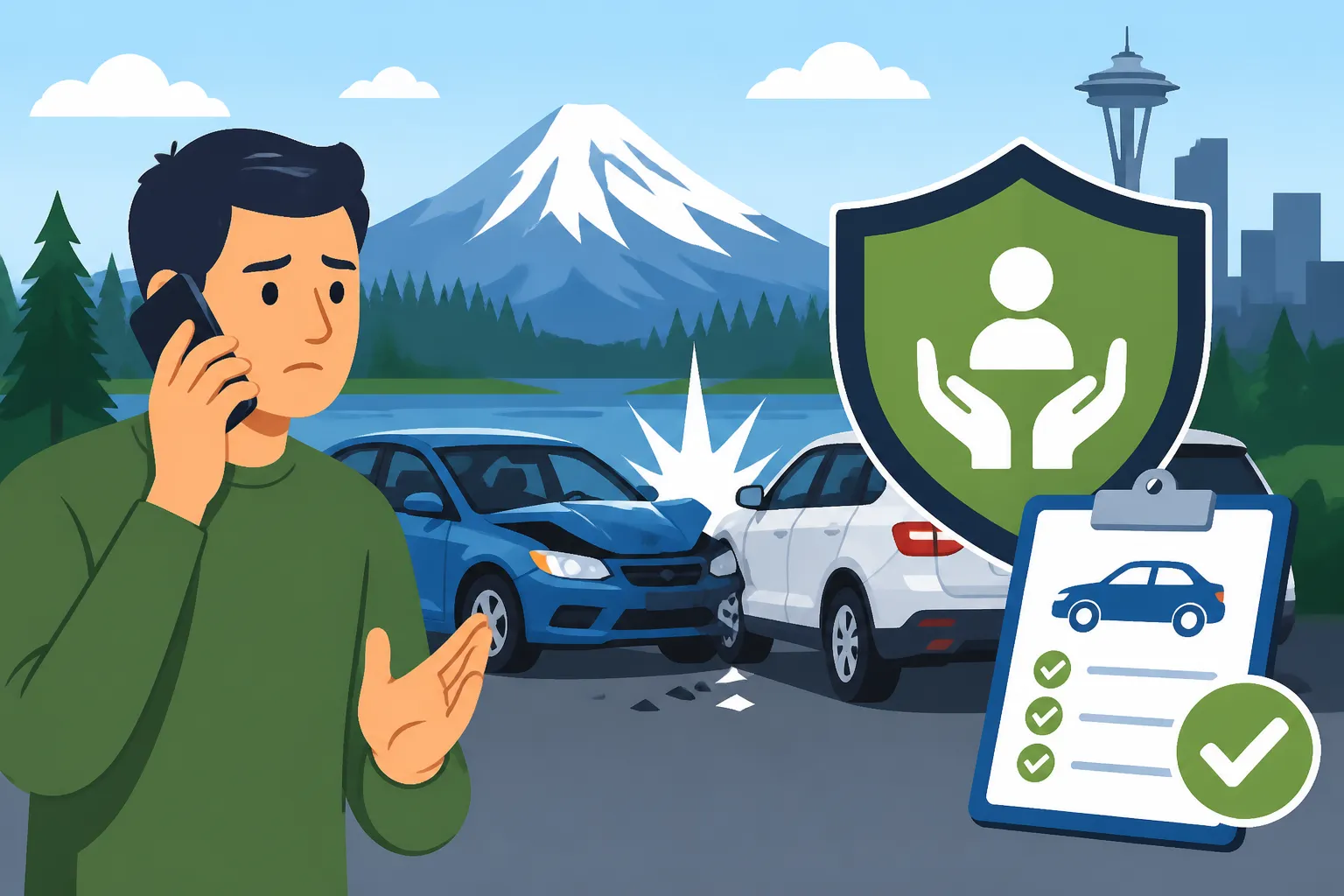
You might feel reluctant to call your own insurance company if you weren't at fault, but with an uninsured driver, it's absolutely necessary. You should report the accident as soon as possible, ideally within a few days of the incident. Most policies have specific timelines for reporting, and delaying could jeopardize your claim. When you call, be calm, factual, and provide all the information you collected at the scene: the other driver's details, witness contacts, police report number, and photos.
Explain clearly that the other driver was uninsured and that you intend to file a claim under your Uninsured Motorist (UM) coverage. Your insurer will assign a claims adjuster to your case. This adjuster's role is to investigate the accident, determine fault (even though it's technically your insurance investigating on your behalf, they still need to establish the other driver's fault to trigger UM coverage), and assess your damages. Be prepared to provide a detailed account of what happened, but stick to the facts and avoid speculation or admitting any fault.
Documenting Your Damages and Injuries
To support your UM claim, you'll need robust documentation for both your vehicle damage and any injuries you sustained.
- Vehicle Damage: Obtain repair estimates from reputable auto body shops. Get at least two, if possible, to show consistency or allow for comparison. If your vehicle is severely damaged, your insurer might deem it a total loss. In this case, they will calculate its actual cash value (ACV) before the accident. Make sure to keep all receipts related to towing, storage, or a rental car if your policy includes rental car reimbursement after an accident.
- Medical Injuries: This is perhaps the most critical part of your documentation. Every single medical visit, from the initial emergency room trip to ongoing physical therapy or specialist consultations, needs to be thoroughly recorded. Keep copies of all medical bills, doctor's notes, diagnostic test results (X-rays, MRIs), and prescription receipts. Maintain a journal detailing your pain levels, limitations, and how your injuries are affecting your daily life. This helps demonstrate the extent of your pain and suffering. Showing a clear link between the accident and your injuries is crucial for proving the other driver's negligence and its impact on you. Understanding common car accident injuries can help you articulate your symptoms to medical professionals and your insurer.
What to Expect During the Investigation
Once you've reported the claim, your insurance company will begin its investigation. Even though you're their policyholder, they will treat this somewhat like a third-party claim against the uninsured driver, using your UM coverage as the payout mechanism.
- Statements: You'll likely be asked to give a recorded statement. While you should cooperate, be mindful of what you say. Stick to the facts you know for certain.
- Evidence Review: The adjuster will review your photos, witness statements, the police report, and any other evidence you've provided.
- Medical Review: They will likely request access to your medical records. Provide only those relevant to the accident. Your medical records prove your injuries and their severity, directly impacting the value of your claim.
- Negotiation: After gathering all the information, your adjuster will make an offer for your damages. This is often where negotiation comes in, especially for pain and suffering. If you believe their offer is too low, be prepared to present additional evidence or arguments supporting a higher settlement. This stage can be complex, and some people choose to consult with a legal professional to help navigate these discussions and ensure they are not undervalued.
When to Consider Legal Action or Other Avenues
Even with UM/UIM coverage, there might be situations where you need to explore further options. This could be due to insufficient coverage, disputes with your own insurer, or the severity of your damages.
Pursuing a Personal Lawsuit Against the Uninsured Driver
It's a tough truth, but suing an uninsured driver directly can be challenging. While you have every right to file a personal lawsuit against the at-fault driver to recover your damages, the practical reality is that most uninsured drivers lack the significant assets or income to pay a large judgment. If they don't have insurance, they likely don't have much in the way of personal wealth either.
You might win a judgment in court, but then you're left with the task of collecting that money, which can be incredibly difficult, time-consuming, and expensive. This is why UM coverage is so vital – it bypasses this often fruitless pursuit by allowing you to recover from your own policy. However, in cases where your damages far exceed your UM limits, or if your insurance company denies your claim or offers an unreasonably low settlement, pursuing legal action against the at-fault driver (even if it's just to secure a judgment in case their financial situation improves in the future) might be an option to discuss with an attorney. Just be aware of the high hurdle of actually collecting any money.
Exploring Other Potential Recovery Sources
Don't put all your eggs in one basket. If you've been hit by an uninsured driver, or if your UM/UIM coverage isn't enough, consider these additional sources for recovery:
- Personal Injury Protection (PIP): In Washington, PIP is an optional coverage that pays for medical expenses and lost wages for you and your passengers, regardless of who was at fault. If you have PIP, it can be a primary source for covering immediate medical bills and lost income up to your policy limits, without waiting for fault to be determined or insurance companies to negotiate. This can be a huge relief for getting prompt treatment.
- MedPay (Medical Payments Coverage): Similar to PIP but typically only covers medical expenses, regardless of fault. It's another optional coverage that can help pay for your treatment up to its limits.
- Health Insurance: Your personal health insurance will cover your medical treatment, but remember that they will likely seek reimbursement from any car accident settlement you receive, through a process known as subrogation. Keep track of all health insurance payments and communications.
- Workers' Compensation: If you were driving for work when the accident occurred, your employer's workers' compensation insurance might cover your medical expenses and lost wages. This is an important avenue to explore if your accident falls under those circumstances.
Here's a quick overview of how these different coverages typically apply:
| Coverage Type | Purpose | Applies to Uninsured Driver Accidents? | Is it "No-Fault" (Pays Regardless of Fault)? |
|---|---|---|---|
| Uninsured Motorist (UM) | Covers your bodily injury and property damage when the at-fault driver has no insurance. | Yes | No (pays if other driver is at fault) |
| Underinsured Motorist (UIM) | Covers your damages when the at-fault driver's insurance isn't enough to cover your losses. | Yes | No (pays if other driver is at fault) |
| Personal Injury Protection (PIP) | Covers medical bills and lost wages for you/passengers, regardless of fault. | Yes | Yes |
| Medical Payments (MedPay) | Covers medical bills for you/passengers, regardless of fault. | Yes | Yes |
| Collision Coverage | Covers damage to your own vehicle, regardless of fault. | Yes (with deductible) | Yes |
| Health Insurance | Covers medical treatment for injuries. | Yes | Yes |
The Role of an Attorney in Uninsured Driver Cases
While you can try to handle an uninsured motorist claim on your own, having a qualified car accident lawyer can make a significant difference, especially in Washington. Insurance companies, even your own, are businesses, and their primary goal is to minimize payouts. An attorney acts as your advocate, protecting your interests.
A lawyer can:
- Interpret Your Policy: They understand the nuances of insurance policies and Washington state laws, ensuring you don't miss any critical deadlines or steps.
- Negotiate with Your Insurer: They are skilled negotiators who can push back against lowball offers and ensure your settlement accurately reflects the full extent of your damages, including pain and suffering.
- Gather Evidence: They can help you gather additional evidence, such as accident reconstruction reports or expert medical opinions, to strengthen your claim. They know how to prove the other driver was at fault.
- Navigate Complexities: If there's a dispute over fault, the extent of your injuries, or policy interpretation, an attorney can navigate these complexities. They can also advise on the statute of limitations for car accidents in Washington, ensuring your claim is filed within the legal timeframe.
- Pursue Other Avenues: If your UM limits are exhausted, they can advise whether it's financially viable to pursue a lawsuit against the uninsured driver directly or explore other recovery options.
- Minimize Your Stress: Dealing with an accident is stressful enough. Having legal representation allows you to focus on your recovery while they handle the arduous claims process.
Ultimately, whether you need a lawyer for a car accident, especially one involving an uninsured driver, often comes down to the severity of your injuries and the complexity of your claim. If you have significant injuries, a lawyer's expertise is almost always beneficial.
Disclaimer
Please remember that this information is intended for general guidance only and does not constitute legal advice. Car accident laws and insurance policies can be complex and vary based on individual circumstances. For personalized advice regarding your specific situation, it is always recommended to consult with a qualified legal professional or your insurance provider in Washington state.