Who Is at Fault in a Parking Lot Accident?
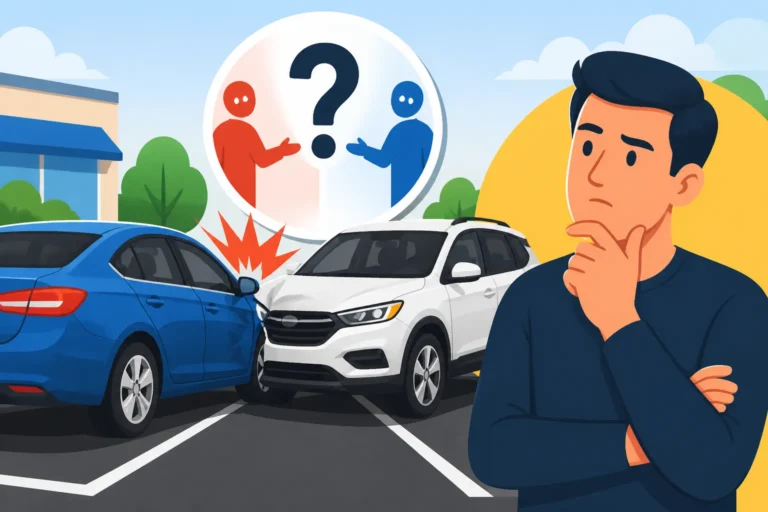
Parking lot fender benders are a special kind of frustrating, aren't they? You're just trying to grab groceries or pick up a prescription, and suddenly, bam! Not only is your vehicle damaged, but now you're left wondering who's actually on the hook. Unlike open roads with clear traffic laws, parking lots often feel like the Wild West, leaving many of us scratching our heads about how fault is determined. This guide is here to shed some light on the common scenarios and key factors insurance companies and legal professionals consider when assigning blame in those often-baffling parking lot mishaps.
Understanding the Unique Challenges of Parking Lot Accidents
Let's be real: parking lots are chaotic. They're bustling hubs of activity where drivers are often distracted by their shopping lists, passengers, or trying to snag that elusive prime spot near the entrance. Pedestrians weave through cars, shopping carts roam free, and the sheer volume of vehicles moving in and out of tight spaces creates a perfect storm for accidents. What makes them even more confusing is that the traditional rules of the road don't always apply neatly. Speed limits are usually low, but enforcement is minimal, and the "right-of-way" can feel more like a suggestion than a hard-and-fast rule. This unique environment is precisely why determining fault in a parking lot accident often requires a closer look at the specifics of the incident rather than just relying on standard traffic laws.
The Maze of Parking Lot Layouts
One of the biggest hurdles in assigning fault in a parking lot collision is the sheer variety of layouts. You might be in a sprawling Walmart lot with wide aisles, or navigating the cramped, multi-level structure of a downtown Target or a busy shopping mall. Some parking lots have clearly marked stop signs, yield signs, and designated through lanes, while others are a free-for-all with ambiguous markings, if any at all. This lack of consistent signage and clear traffic flow can lead to confusion, misunderstandings, and, unfortunately, accidents. Drivers often assume they have the right-of-way based on what feels right, rather than what’s legally mandated, contributing to many of these collisions. It's not uncommon for two drivers to genuinely believe they both had the right-of-way, making objective fault determination even more critical.
The Low-Speed, High-Impact Dilemma
While parking lot accidents typically occur at lower speeds compared to highway collisions, don't let that fool you into thinking they're always "minor." Even a slow-speed impact can result in significant property damage, like dented bumpers, scratched paint, or even structural damage to your vehicle's frame. More importantly, these seemingly innocuous bumps can still cause serious injuries to occupants. Whiplash, back strains, and other soft tissue injuries are quite common, even at 5-10 miles per hour. The sudden jolt can throw your body around, and the adrenaline rush might mask pain initially, leading to delayed injury symptoms after a car accident. Because of the potential for both property damage and personal injury, treating a parking lot accident with the same seriousness as any other collision is crucial, especially when it comes to documenting the scene and seeking medical attention.
Common Parking Lot Accident Scenarios and Fault
Let's dive into some of the most frequent types of parking lot collisions and how fault is typically assigned. It's not always as straightforward as it seems, but understanding the general principles can help you grasp the situation.
Backing Out of a Parking Space
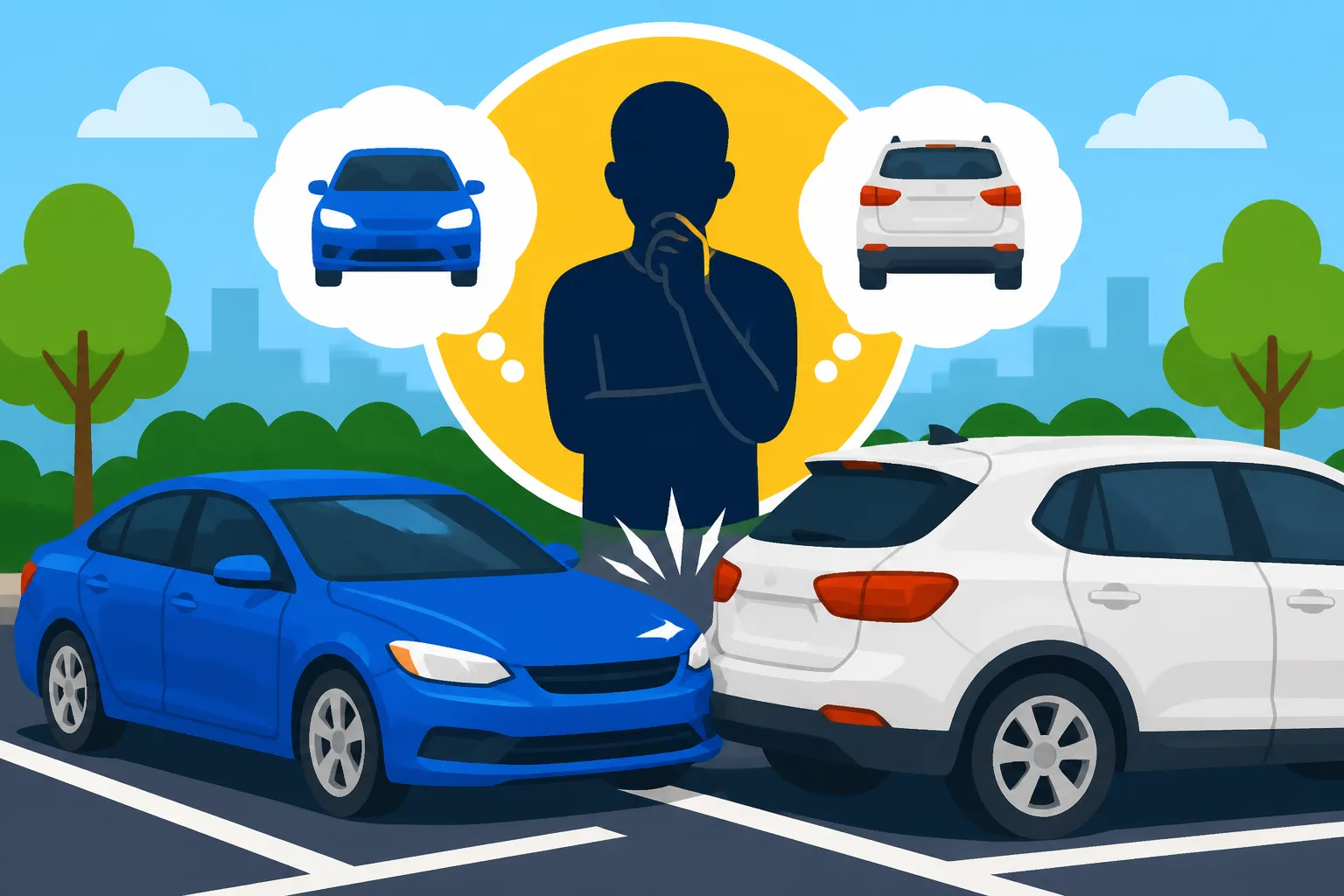
This is probably the most common parking lot accident, and it causes so much headache. You're slowly reversing, trying to get out of your spot, and suddenly another car appears, seemingly out of nowhere, or you hit a car that was passing by. Generally, the driver backing out of a parking space is presumed to be at fault. Why? Because when you're backing up, you have a greater responsibility to ensure the path is clear. This means looking over your shoulder, checking your mirrors, and even using a backup camera if your vehicle has one.
However, it's not always 100% black and white. If the other driver was speeding excessively through the parking lot lane, driving recklessly, or was distracted by their phone, they could share some of the fault. For example, if you were halfway out of your space and another driver came flying down the aisle without paying attention, hitting the side of your already-moving vehicle, there might be shared liability. Still, the primary burden of avoiding an accident when backing up usually falls on the driver in reverse. This principle is often similar to who is at fault when backing out of a driveway?, where the backing driver holds the greater responsibility.
Collisions in Parking Lot Lanes of Travel
These are the closest parking lot accidents come to resembling regular road collisions. You're driving down an aisle, heading towards an exit or another section of the lot, and another vehicle does something unexpected.
Collisions Involving Stop or Yield Signs
When a parking lot has clear stop signs or yield signs, the rules are pretty much the same as on a public road. If a driver runs a stop sign and collides with another vehicle that had the right-of-way, the driver who failed to stop is almost certainly at fault. The same goes for yield signs. If you fail to yield to traffic in a through lane or at an intersection marked with a yield sign, you'll be considered at fault if an accident occurs. These signs are there to regulate flow and, even in a private lot, carry significant weight in determining fault.
Changing Lanes or Turning Within the Lot
Just like on a highway, changing lanes or making turns in a parking lot requires caution. If you change lanes and strike another vehicle that was already in that lane, or if you make a wide turn and hit a car, you're generally at fault. Drivers have a duty to ensure that their maneuvers can be made safely without impacting other vehicles. This applies even more rigorously in the confined spaces of a parking lot where margins of error are much smaller. If you're wondering how fault works when changing lanes on the highway, many of the same principles apply here, just at lower speeds.
Stationary Object or Pedestrian Accidents
Sometimes, it's not another car that gets hit. It could be a shopping cart, a lamp post, or, tragically, a pedestrian.
Hitting a Stationary Object
If you hit a stationary object like a light pole, a shopping cart return, or a curb, you are almost always considered at fault. These objects don't move; it's the driver's responsibility to operate their vehicle safely and avoid them. Even if a shopping cart rolls into your path, if you had a reasonable opportunity to avoid it, you might still be held responsible for the damage. Of course, a rolling shopping cart hitting your car when you're parked is a different story, and in that case, the property owner (or the person responsible for the cart) might bear some liability.
Striking a Pedestrian
Accidents involving pedestrians in parking lots are particularly serious because pedestrians are incredibly vulnerable. In most cases, the driver of the vehicle will be found at fault for hitting a pedestrian, especially if the pedestrian was in a marked crosswalk or walking lawfully. Drivers have a heightened duty of care to watch out for pedestrians, especially in busy parking areas. However, there can be exceptions if a pedestrian acts recklessly, like darting out from between parked cars without looking, or running into the path of an oncoming vehicle. Even so, the legal system generally favors pedestrians in these situations, and a driver's negligence is often the primary focus.
Key Factors in Determining Fault in Parking Lot Accidents
Determining who is at fault in a car accident isn't always cut and dry, especially in the often-confusing environment of a parking lot. Insurance companies and legal professionals look at a variety of factors to piece together what happened and assign responsibility. It's not just about who hit whom, but how and why.
Traffic Laws and Right-of-Way
Even though parking lots are private property, many traffic laws still apply, or at least the principles behind them do. The concept of "right-of-way" is paramount. Drivers entering a main thoroughfare from a parking aisle usually must yield to traffic already in that thoroughfare. Similarly, drivers approaching a stop sign must stop, and those with a green light (if applicable) have the right-of-way. While speed limits are rarely enforced by police in private lots, driving at an unsafe speed for the conditions can be a clear indicator of negligence.
What complicates things is when there aren't clear markings. In such cases, common sense and the general duty of care become even more important. A driver proceeding straight through an aisle generally has the right-of-way over a vehicle backing out of a space or making a turn across multiple lanes. However, if that "straight-through" driver was speeding excessively or not paying attention, their fault percentage could increase. Understanding these nuances is key to determining who is at fault in a parking lot accident.
Driver Negligence and Distraction
Negligence is a huge factor in any accident, and parking lots are no exception. Negligent driving can include:
- Distracted driving: Texting, talking on the phone, looking at maps, or even being preoccupied with children or shopping lists.
- Failure to yield: Not giving way to another vehicle or pedestrian when required.
- Unsafe speed: Driving too fast for the conditions, even if below a posted speed limit (which are often very low in parking lots anyway).
- Ignoring signs or markings: Blowing through a stop sign or ignoring a one-way arrow.
- Improper lookout: Failing to adequately observe surroundings, especially when backing up or turning.
Consider a scenario where one driver is backing out slowly and carefully, constantly checking their mirrors and over their shoulder. Another driver, however, is speeding down the aisle, scrolling through their phone, and completely misses the reversing vehicle until it's too late. Even if the backing driver initiated the movement, the distracted driver's severe negligence might shift a significant portion of the blame onto them. This is often the case in a distracted driving (texting) accident.
Visibility and Obstructions
Parking lots are rife with visibility challenges. Large SUVs, vans, or even commercial trucks can block your view when you're backing out or trying to see oncoming traffic in a busy lane. Pillars in parking garages, overgrown landscaping, or even other vehicles parked illegally can create blind spots. While these obstructions don't excuse a driver from their duty of care, they are a factor in assessing how much fault can be reasonably assigned.
For instance, if you're backing out of a space and your view is completely obstructed by a large van parked illegally in the adjacent spot, and you slowly creep out only to be hit by a car that was also obscured, the insurance adjusters might consider the visibility issue. However, the expectation is still that you exercise extreme caution when your visibility is limited, perhaps by asking a passenger to help spot, or even getting out to look. Failing to take extra precautions when visibility is compromised can still lead to you being found at fault.
The Role of Evidence and Documentation
After any car accident, especially in a potentially confusing parking lot scenario, gathering as much evidence as possible is absolutely critical. Without solid documentation, it becomes a "he said, she said" situation, which can make things incredibly difficult when dealing with insurance companies.
Police Reports and Their Limitations
Many people assume you always need to call the police after an accident. While this is generally good advice, especially for serious crashes, it's a little different for parking lot incidents. In some jurisdictions, local police may not respond to accidents on private property unless there are serious injuries, suspected intoxication, or significant property damage that obstructs traffic flow. They might consider it a civil matter between the drivers and their insurance companies.
If the police do respond, they will typically create an accident report, which can be invaluable. This report will document details like the time and location, driver information, witness statements, and sometimes even a preliminary assessment of fault. However, if the police don't respond, or if they explicitly state they won't determine fault in their report, it doesn't mean you're out of luck. It just means you'll need to rely more heavily on other forms of evidence. This is where understanding what to do if there was no police report becomes crucial.
Gathering Critical Evidence at the Scene
If you're involved in a parking lot accident, and you're physically able to, treat it like any other collision.
- Take Photos and Videos: This is your absolute best friend. Get photos from multiple angles, showing the position of the vehicles, the damage, any relevant signs (stop signs, yield signs), skid marks, road conditions, and the overall parking lot layout. Capture photos of both vehicles' license plates, driver's licenses, and insurance cards. Get wide shots to show context and close-ups of damage. If there's a shopping cart involved or an obstruction, photograph it.
- Exchange Information: Get the other driver's name, contact information, insurance company name, policy number, and vehicle information. Don't forget their license plate number.
- Seek Witness Statements: If anyone saw the accident, get their contact information. A third-party account can be incredibly helpful, especially if there's a dispute over what happened.
- Look for Surveillance Footage: Many commercial parking lots, especially at major retailers like Kroger or Safeway, have surveillance cameras. Politely ask the store management if they have footage of the incident and how you might be able to obtain it. Act quickly, as footage can be overwritten.
A detailed record of the scene, especially photos, can make all the difference when your insurance company tries to piece together the narrative. It helps to prove the other driver was at fault or at least establish the conditions under which the accident occurred.
Insurance Company Investigations
Once you report the accident to your insurance company (which you absolutely should, even if it wasn't your fault), they will launch their own investigation. This often involves:
- Collecting your statement and the other driver's statement.
- Reviewing any police report.
- Examining photos and videos from the scene.
- Contacting witnesses.
- Assessing damage to both vehicles.
Their goal is to determine who is at fault in a car accident according to their policy terms and state laws. They will use all the evidence you provide to make this determination. The more comprehensive and clear your evidence is, the stronger your position will be.
Navigating the Insurance Claims Process
Dealing with the aftermath of a car accident is never fun, and parking lot incidents can add an extra layer of complexity. Once the initial shock wears off, you'll need to navigate the insurance claims process, which can feel daunting.
Reporting the Accident and Your Obligations
It's natural to hesitate, especially if you think the accident was minor or it happened in a parking lot where police didn't respond. However, it's almost always in your best interest to report the accident to your own insurance company, even if you believe the other driver is 100% at fault. This doesn't mean you're filing a claim against your policy, but rather informing them of the incident. Many insurance policies require you to report accidents within a certain timeframe, regardless of fault.
When you call your insurer, stick to the facts: what happened, where, when, and who was involved. Avoid speculating about fault or making statements that could be construed as an admission of fault. Just provide the objective details you collected at the scene. Your insurance company will then typically open a claim and begin their internal investigation, which often involves contacting the other driver's insurance company if they are involved. This is a critical step in how to file a car accident insurance claim effectively.
Dealing with Insurance Adjusters
After you report the incident, an insurance adjuster will be assigned to your case. This person's job is to investigate the claim and determine the company's liability and the amount of damages. When dealing with insurance adjusters after a car accident, remember they are working for their company's best interests, not necessarily yours.
- Be Polite but Firm: Provide the facts clearly and concisely.
- Do Not Speculate: If you don't know an answer, say so. Avoid guessing or offering opinions about what might have happened or who you think is at fault.
- Limit Recorded Statements: Be cautious about giving a recorded statement, especially to the other driver's insurance company. While you must cooperate with your own insurer, you are not legally obligated to give a recorded statement to the other side. A lawyer can advise you on this, as recorded statements can sometimes be used against you later.
- Provide Documentation: Send all the photos, videos, witness contact information, and any police report you collected. This solid evidence will strengthen your position.
- Document Everything: Keep a log of all communications, including dates, times, names of people you spoke with, and a summary of the conversation.
If the other driver's insurance company tries to blame you unfairly or offers a lowball settlement, having proper documentation and understanding your rights is crucial.
When Fault is Disputed or Shared
Sometimes, the insurance companies can't agree on who is at fault, or they determine that both drivers share some responsibility. This is incredibly common in parking lot accidents due to their ambiguous nature.
Understanding Comparative Negligence
Most states follow a comparative negligence system, which means that if you are partially at fault for an accident, your financial recovery (for damages and injuries) will be reduced by your percentage of fault. For example, if you sustained $10,000 in damages but were found 20% at fault, you would only be able to recover $8,000 from the other driver's insurance.
There are different types of comparative negligence:
- Pure Comparative Negligence: You can recover damages even if you are mostly at fault (e.g., 99% at fault), but your recovery is reduced by your fault percentage.
- Modified Comparative Negligence (50% or 51% Bar Rule): You can only recover damages if your fault is below a certain threshold (usually 50% or 51%). If you are at or above that threshold, you recover nothing.
Knowing your state's specific laws on comparative negligence is vital, as it can significantly impact your claim. This is especially important when considering what happens if you're partially at fault.
How Shared Fault Impacts Your Claim
If both drivers are found to be partially at fault, it means your settlement could be reduced. Let's say you were backing out, and the other driver was speeding. An adjuster might determine you were 60% at fault for backing unsafely, and they were 40% at fault for speeding. In a 51% modified comparative negligence state like Texas, you would recover nothing because your fault exceeds the 50% threshold. However, in a pure comparative negligence state like California, you'd recover 40% of your damages.
This is why having a clear understanding of the accident details and strong evidence is so important. If you feel that fault is being unfairly assigned, you may need to escalate your claim or consider seeking legal advice. Can you still get paid if you're partly at fault? The answer depends on your state's laws and your percentage of blame.
Practical Steps to Take After a Parking Lot Accident
No one ever plans for a parking lot accident, but knowing what to do in the moment can save you a lot of grief and money down the road. Being prepared can make the entire claims process much smoother.
Prioritize Safety and Check for Injuries
The very first thing you should do, even in a seemingly minor parking lot bump, is to ensure everyone's safety.
- Assess for Injuries: Immediately check yourself and your passengers for any injuries. Even if you don't feel pain right away, some injuries, like whiplash or a concussion, might have delayed symptoms. If anyone is injured, call 911 immediately.
- Move to a Safe Spot: If possible and safe to do so, move your vehicles to an empty parking space or a less trafficked area of the lot. This prevents further collisions and keeps you out of harm's way. If the vehicles are too damaged to move, turn on your hazard lights.
- Stay Calm: It's easy to get flustered, but staying calm helps you think clearly and make rational decisions.
Remember that even a slight jolt can cause injuries, and sometimes you don't feel them until hours or days later. Always prioritize your health and safety.
Document the Scene Thoroughly
As discussed earlier, documentation is paramount. Don't skip these steps, no matter how minor the accident seems.
- Photos and Video: Use your smartphone to take dozens of photos and videos. Capture wide shots of the entire scene, showing both vehicles' positions relative to each other and any surrounding elements (signs, parked cars, lane markers). Get close-ups of all damage to both vehicles. Photograph license plates, insurance cards, and driver's licenses. If there are any contributing factors like poor visibility, debris, or skid marks, document those too.
- Witness Information: Ask anyone who saw the accident for their name and contact number. Their unbiased perspective can be critical.
- Exchange Information: Get the other driver's full name, phone number, email, insurance company name, policy number, and vehicle year, make, model, and license plate number. Do not accept vague promises to "text it later." Get it all on the spot.
This detailed evidence forms the backbone of your claim and helps establish exactly what happened, which is key when trying to figure out how insurance companies determine who is at fault.
Report to Your Insurance Company
Even if the accident seems minor, or you're confident the other driver is at fault, inform your own insurance company as soon as reasonably possible.
- Don't Delay: Most policies have reporting requirements, and delaying could complicate your claim.
- Stick to Facts: When speaking with your insurer, provide factual details. Avoid making assumptions or admitting fault. Simply state what you observed.
- Provide Documentation: Share all the photos, videos, and witness contact information you collected. The more evidence you have, the better equipped your adjuster will be to advocate on your behalf.
It's tempting to think you can handle it directly with the other driver, especially in a parking lot, but involving your insurance company ensures that you have proper support and documentation should any issues arise later.
| Parking Lot Scenario | Typical Fault Assessment | Key Considerations for Shifting Fault |
|---|---|---|
| Backing Out of Space | Driver backing out is generally at fault. | Other driver speeding, distracted, or failing to yield to established movement. |
| Lane of Travel Collision | Driver changing lanes or turning unsafely is at fault. | Other driver speeding, distracted, or ignoring signs/right-of-way. |
| Stop Sign Violation | Driver who ran the stop sign is at fault. | Extremely rare for fault to shift if a stop sign was clearly present and ignored. |
| Pedestrian Accident | Driver is typically at fault due to high duty of care. | Pedestrian darting out recklessly, ignoring crosswalks, or intoxicated. |
| Head-on in Aisle | Often shared fault, as both drivers should be attentive and yield. | One driver clearly in wrong lane, speeding, or severely distracted. |
| Hitting Parked Car | Driver who hit the parked car is 100% at fault. | Extremely rare; a parked car cannot be at fault. |
When to Consider Legal Advice
While many parking lot accidents are minor and resolved relatively easily through insurance claims, there are times when seeking legal counsel is a wise decision. Don't hesitate to reach out to a car accident lawyer if you find yourself in any of these situations.
Significant Injuries or Damages
If you or your passengers sustained more than just minor bumps and bruises, or if your vehicle suffered extensive damage, a lawyer can be incredibly helpful. Serious injuries like whiplash, herniated discs, broken bones, or concussions often involve complex medical treatments, ongoing therapy, and significant medical bills. An attorney can help you understand the full value of your claim, including not only economic damages like medical expenses and lost wages, but also non-economic damages like pain and suffering. They can also ensure that all potential damages are considered, including future medical expenses.
Similarly, if your vehicle is totaled or requires extensive repairs, a lawyer can assist in negotiating with insurance companies to ensure you receive a fair settlement that covers the true cost of your losses. This is particularly important when dealing with the tricky calculations involved in how car accident settlements are calculated.
Disputed Fault or Unfair Blame
It's not uncommon for parking lot accidents to involve disputes over who is actually at fault. If the other driver, or their insurance company, is trying to unfairly blame you for an accident you believe was not your fault, a lawyer can step in. They can gather additional evidence, interview witnesses, analyze police reports (or the lack thereof), and present a strong case on your behalf. They understand the nuances of comparative negligence laws and how to fight back against unfair accusations. If you're being unfairly blamed by an insurance company, an attorney can be a powerful advocate.
Dealing with Uninsured or Uncooperative Drivers
What if the other driver doesn't have insurance? Or what if they simply refuse to cooperate, won't provide their information, or outright disappear? These situations can be incredibly frustrating and complicated. An attorney can help you explore your options, such as filing a claim under your own uninsured motorist coverage (if you have it) or pursuing legal action against the at-fault driver. They know the legal avenues available to you even when the other party is uncooperative or financially limited.
The Insurance Company Offers a Low Settlement
Insurance companies are businesses, and their primary goal is to minimize payouts. It's not uncommon for them to offer an initial settlement that is far less than what your claim is truly worth, especially if you have significant injuries or damages. If you receive an offer that feels too low, or if you're unsure if it adequately covers all your current and future expenses, don't accept it immediately. A car accident lawyer can review the offer, assess the true value of your claim, and negotiate with the insurance company on your behalf to secure a fair settlement. They understand how much is my car accident settlement worth? and how to negotiate effectively.
Remember, most personal injury lawyers work on a contingency fee basis, meaning you don't pay upfront fees, and they only get paid if they win your case. This makes legal representation accessible even if you're concerned about the cost.
Disclaimer
Please remember that this article provides general information and guidance regarding car accident claims and fault determination in parking lot accidents. It is not intended as legal advice. Every accident is unique, and the laws governing fault and personal injury claims vary by state and specific circumstances. For personalized advice regarding your situation, it is always recommended to consult with a qualified legal professional in your jurisdiction.