Who Is at Fault When Backing Out of a Driveway?
Backing out of a driveway can feel like a simple, everyday maneuver, but it’s actually one of the trickiest situations on the road, often leading to frustrating fender benders and heated arguments about who is to blame. The sheer lack of visibility, combined with the unpredictable nature of traffic and pedestrians, means these accidents are far more common than you might think. This guide will meticulously break down how fault is typically assigned in these tricky scenarios, giving you a clear understanding of your rights and responsibilities.
The General Rule of Backing Accidents
When an accident happens while someone is backing up, the general rule of thumb is often quite straightforward: the driver who is reversing usually bears the primary responsibility. This isn't just an arbitrary rule; it's rooted in the principle that backing up is inherently more hazardous than driving forward, demanding extra caution from the driver. Think about it: you're often backing into a blind spot, relying on small mirrors and perhaps a rearview camera, which don't give you a full picture of the world around you.
Driver Backing Up Holds Primary Responsibility
The reason the backing driver often shoulders the bulk of the blame comes down to what's legally known as the "duty of care." Every driver has a responsibility to operate their vehicle safely and avoid causing harm to others. When you're backing out of a driveway, your ability to see what's coming is significantly diminished compared to a driver proceeding down the street. You have limited visibility, often obstructed by parked cars, fences, bushes, or even just the architecture of your own home. This means you have a much higher duty to ensure the path is clear before, and during, your maneuver.
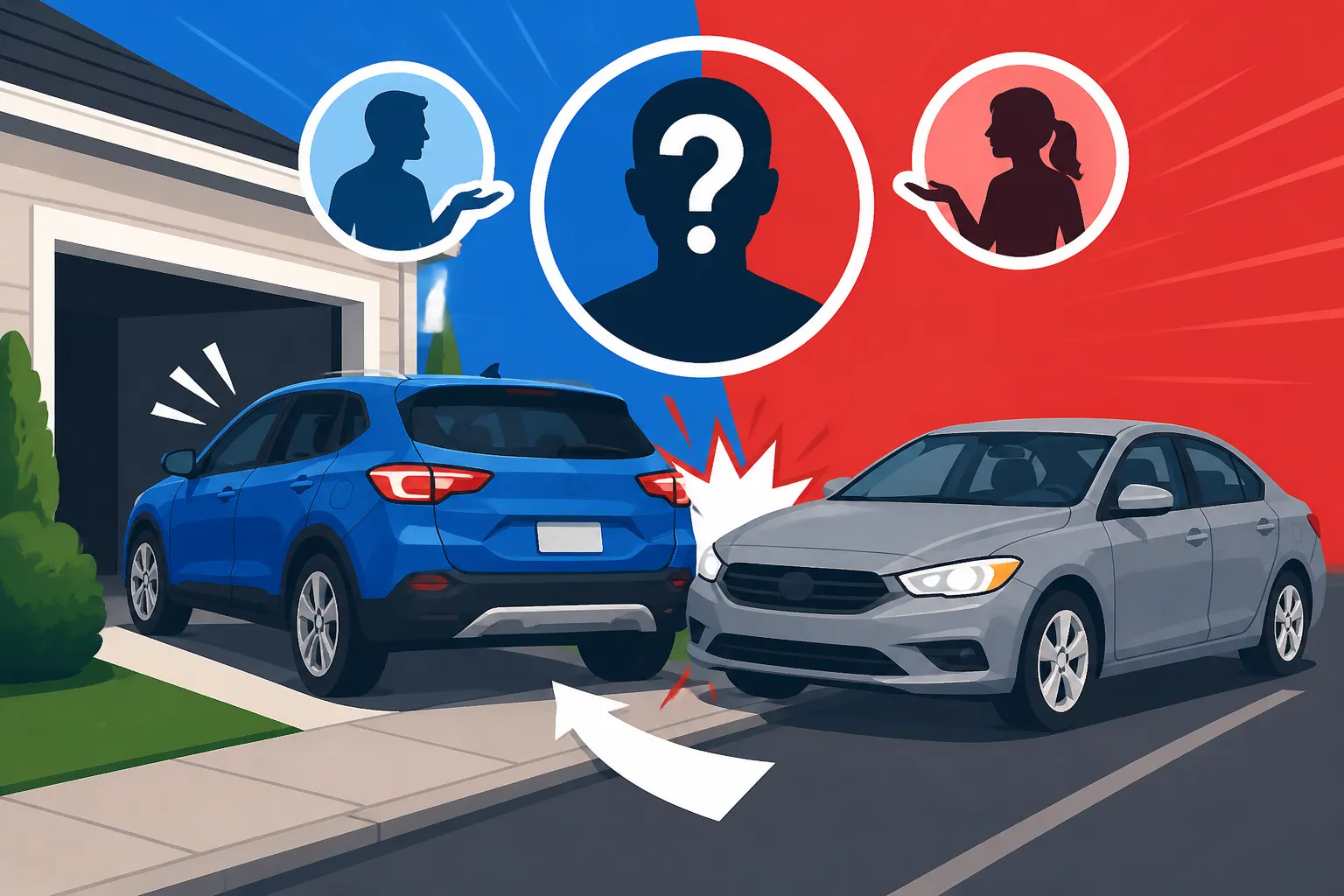
Consider a scenario in a quiet suburban neighborhood in, say, Scottsdale, Arizona. You're trying to back your SUV out of your driveway. You quickly glance in your side mirrors and rearview mirror, perhaps even a quick look at your backup camera, and then start to slowly reverse. Suddenly, a car appears seemingly out of nowhere and a collision occurs. Even if that other car was traveling at a reasonable speed, the expectation is that you, as the backing driver, should have waited until the path was entirely clear. The law presumes that if you hit something while backing up, you failed in your duty to ensure the path was safe. This presumption is a significant hurdle to overcome if you're the one who was backing up.
Duty to Yield to Oncoming Traffic
Another critical aspect of the backing-out scenario is the fundamental duty to yield. Drivers backing out of a private driveway onto a public road are legally required to yield to all traffic, whether that's vehicles, pedestrians, or cyclists, already using that public thoroughfare. This is a pretty universal traffic law, upheld in nearly every state across the U.S., from the bustling streets of Los Angeles, California, to the quieter country roads of upstate New York. The public road or sidewalk has the right of way, period.
This rule means that even if a vehicle on the main road is going slightly faster than the speed limit, or a pedestrian is jaywalking, the backing driver still has an obligation to avoid an accident. It's a high bar, but it makes sense from a safety perspective: public roads are for continuous flow, and private driveways are for ingress and egress. If you're emerging from a private space, you must not disrupt that flow or endanger anyone already in motion on the public way. This applies not just to cars, but also to kids on bikes, people walking their dogs, or even someone jogging past your driveway.
Factors That Can Shift or Share Fault
While the driver backing up typically shoulders the primary fault, the world of car accidents is rarely black and white. There are specific circumstances and actions by the other parties involved that can significantly shift or, at the very least, share the responsibility for the collision. Understanding these nuances is crucial, as they can directly impact your claim and potential settlement. It's not uncommon for situations like these to lead to disputes where each driver claims the other was more negligent. If you find yourself in a situation where fault is being disputed, it’s helpful to understand how different factors can contribute to the final determination of who is at fault in a car accident.
Speeding or Reckless Driving by the Oncoming Driver
Imagine you are carefully inching your car out of your driveway in Portland, Oregon. You've checked your mirrors, looked over your shoulder, and are slowly entering the street. Suddenly, a car comes flying down the road, going significantly over the posted speed limit, and smashes into the side of your vehicle. In this instance, while you were backing up, the excessive speed and potentially reckless driving of the oncoming driver could certainly shift some of the fault their way.
If the other driver was traveling at such an unreasonable speed that they couldn't react to your vehicle, even if you were partially in their path, their negligence contributed to the crash. Proof of their excessive speed, perhaps from a witness, traffic camera, or even skid marks indicating hard braking, could establish that they shared responsibility. An accident reconstruction expert might even be able to determine that had they been traveling at the legal speed, they would have had ample time to stop or swerve, avoiding the collision entirely.
Distracted Driving by Either Party
In our increasingly connected world, distracted driving is a significant contributor to accidents, and backing out of a driveway is no exception. If either the driver backing up or the oncoming driver was distracted, it could alter the fault assessment. A driver engrossed in a phone call, texting, eating, or even reaching for something on the floor is not giving their full attention to the road, and this negligence can be a powerful factor in determining liability.
For example, if you were backing out of your driveway in Dallas, Texas, and the oncoming driver was looking down at their phone instead of the road, they might be found partially at fault. Similarly, if you were the backing driver, and you were preoccupied with trying to silence a crying baby in the back seat or fiddling with your navigation system, and that distraction led to you missing an oncoming vehicle, your distraction could be a factor in your level of fault. Proving distracted driving often requires witness testimony, phone records (though hard to obtain without a subpoena), or even admissions from the at-fault driver.
Improper Parking or Stopping on the Roadway
Sometimes, the environment itself contributes to the accident, especially if another vehicle has created an obstruction. If a vehicle is improperly parked or stopped on the roadway in a way that obstructs the backing driver's view, or even blocks a significant portion of the driveway exit, it could contribute to shared fault. This is a common scenario in urban areas or residential streets where parking can be tight.
Consider a scenario where a large delivery truck, perhaps from a well-known service like FedEx or UPS, is parked illegally directly across from your driveway, or even partially blocking it. This giant obstacle makes it virtually impossible for you to see oncoming traffic when backing out. If an accident occurs because of this obscured view, the illegally parked vehicle, or its owner, might bear some degree of fault for creating a hazardous condition. While you, the backing driver, still have a duty to proceed with extreme caution, the obstructing vehicle introduced an unreasonable risk that wouldn't have otherwise existed.
Failure to Signal or Use Hazard Lights
While less common for a simple driveway egress, certain signaling failures can play a role. If the oncoming driver was planning to turn into the backing driver's driveway or a neighboring one and failed to use their turn signal, creating confusion or a false sense of a clear road, they might bear some partial fault. For instance, if you're backing out and see a car approaching, but it appears to be going straight, you might proceed. If that car then suddenly turns into your path without signaling, that driver's negligence is a factor.
Similarly, if the backing driver was attempting to perform a more complex maneuver, like backing into a parking space on the street after exiting the driveway, and failed to use hazard lights or turn signals to indicate their intentions, their negligence could contribute. However, for a straightforward backing-out-of-driveway collision with an oncoming vehicle, the lack of an oncoming signal is usually a more impactful consideration for shifting partial fault.
Evidence Collection for Backing Out of a Driveway Accidents
After any car accident, especially one involving the often-disputed circumstances of backing out of a driveway, gathering solid evidence is absolutely critical. Without it, your claim becomes a "he said, she said" situation, which rarely works in your favor when dealing with insurance companies. The more detailed and objective information you can provide, the stronger your position will be, whether you're trying to prove the other driver's fault or minimize your own. This is where the initial moments after a collision can truly make or break your ability to recover damages.
Importance of Witness Statements and Contact Information
Independent witnesses can be absolute game-changers in backing-out-of-driveway accidents. Since these incidents often involve unique angles and blind spots, what one driver sees can be very different from another's perspective. An unbiased third party, someone who saw the event unfold but isn't involved, can provide invaluable testimony. Their account can corroborate your version of events, contradict the other driver's claims, or shed light on details you might have missed in the shock of the moment.
Think about it: a neighbor gardening nearby, a delivery driver passing by, or even someone sitting at a bus stop across the street could have witnessed the collision. If possible, always try to speak to anyone who might have seen what happened. Get their full name, phone number, and email address. Politely ask them for a brief, objective statement of what they observed. Don't pressure them to take sides; just ask them to describe what they saw. Even a simple "The black sedan was definitely speeding" or "The white van had already cleared the driveway when the truck hit it" can be incredibly powerful. This kind of information can be crucial in proving how fault is determined in a car accident.
Photographic and Video Evidence
In today's world, photographic and video evidence is arguably the most compelling form of proof you can collect. Nearly everyone has a smartphone with a camera, and you should use it immediately after an accident, provided it's safe to do so. Start by taking wide shots that show the overall scene, including both vehicles' final resting positions relative to the driveway, roadway, and any nearby landmarks like mailboxes, trees, or street signs. Then, get closer shots of the damage to both vehicles.
Don't just focus on the impact area; photograph any scrapes, dents, or broken components. Capture skid marks on the pavement, if present, as they can indicate speed or braking. Pay attention to road conditions—is it wet? Are there any potholes? Also, look for any traffic signs, yield signs, or speed limit signs in the vicinity that might be relevant. Beyond your phone, consider external sources. Does your home have a security camera that points towards the driveway or street? Do any nearby businesses have surveillance cameras? Many modern vehicles, including commercial trucks and even personal cars, are equipped with dashcams that could have captured the entire incident. Promptly inquiring about such footage could provide irrefutable proof. For more details on this, you might find information on How to Prove the Other Driver Was at Fault useful.
Police Reports and Insurance Adjuster Investigations
Immediately after an accident, especially one involving injuries or significant property damage, it's wise to call the police. A police report, while not always definitively assigning fault, serves as an official record of the accident. It will document key details like the date, time, location, involved parties, vehicle information, and often includes officer observations of the scene, diagrams, and witness statements. This report can be a vital document for your insurance claim, providing an objective snapshot of the scene. However, remember that Police Reports and Car Accident Fault don't always fully determine who is to blame, but they are a strong piece of the puzzle.
Once you file a claim, insurance adjusters from both sides will launch their own investigations. They will review the police report, examine photos, interview drivers and witnesses, and potentially even visit the scene. Their job is to piece together what happened and assign fault based on their company's guidelines and state traffic laws. It's important to be honest and factual when speaking with your own insurance company. When dealing with the other driver's insurance adjuster, however, be cautious. They are not on your side and are looking for reasons to minimize their payout. Stick to the facts and avoid speculating or admitting fault. Understanding How Insurance Companies Determine Who Is at Fault can give you an edge in these conversations.
Understanding Comparative and Contributory Negligence
One of the most complex aspects of car accident claims, especially in scenarios like backing out of a driveway where fault can often be shared, is understanding how different states handle shared responsibility. It's rarely a simple "you're 100% at fault" or "they're 100% at fault" scenario, and your ability to recover damages can drastically change depending on where the accident occurred and what percentage of fault is assigned to each party. This concept is central to nearly every car accident claim in the United States.
How Shared Fault Impacts Your Claim
When an accident isn't clearly one driver's fault, the legal system often recognizes that both parties might have contributed to the collision through their own negligence. This is where the concept of "shared fault" comes into play. If you're deemed partially responsible for an accident, it directly affects the amount of compensation you can recover for your injuries and damages. For instance, if you suffer $10,000 in damages (medical bills, lost wages, vehicle repair) but are found to be 20% at fault, your recoverable amount will be reduced by 20%, meaning you'd only receive $8,000.
This can be a tough pill to swallow, especially if you feel the other driver was primarily to blame. However, it's a realistic outcome in many backing-out-of-driveway accidents where both drivers might have made small errors. Perhaps you didn't check your blind spot quite thoroughly enough, and the oncoming driver was going slightly over the speed limit. Both actions contribute. It’s important to realize that What Happens If You're Partially at Fault? can mean a significant reduction in your settlement, so understanding how this is calculated is key. You can also explore more about How Comparative Fault Reduces Your Settlement for a deeper dive.
Pure Comparative Negligence States
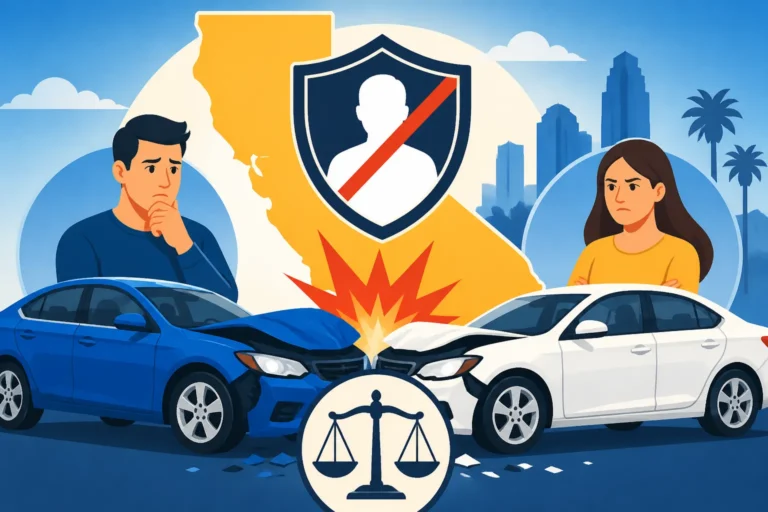
In states that follow a "pure comparative negligence" system, you can recover damages even if you are mostly at fault for an accident. The core principle here is that your recovery is simply reduced by your percentage of fault. There's no bar or cutoff that prevents you from recovering any compensation, regardless of how negligent you were. This means that even if you were found 90% at fault for the accident, you could still theoretically recover 10% of your total damages from the other party.
For example, in California, a pure comparative negligence state, if you're backing out of your driveway and are determined to be 70% at fault, but you sustained $10,000 in damages, you could still recover $3,000 from the other driver's insurance. This system aims to ensure that no party escapes financial responsibility entirely for their contribution to the accident. Other states like Florida and New York also operate under pure comparative negligence rules. You can learn more about this system by looking into Pure Comparative Negligence States Explained.
Modified Comparative Negligence States (50% vs 51% Bar)
The majority of U.S. states use some form of "modified comparative negligence." This system is a bit more complex than pure comparative negligence because it introduces a threshold for recovery. If your percentage of fault meets or exceeds a certain point, you might be barred from recovering any damages at all. There are two main variations:
- The 50% Bar Rule: In these states (e.g., Texas, Ohio, and North Carolina), you can only recover damages if your fault is 49% or less. If you are found to be 50% or more at fault, you get nothing. So, if you're deemed 50% at fault for backing out of your driveway and the other driver is 50% at fault, you would both walk away with no recovery for your own damages.
- The 51% Bar Rule: This system is slightly more lenient. In these states (e.g., Georgia, Illinois, and Pennsylvania), you can recover damages as long as your fault is 50% or less. If you are found to be 51% or more at fault, you are barred from recovery. So, if you're 50% at fault, you can still recover 50% of your damages, but if you're 51% at fault, your claim is extinguished.
Understanding which rule applies in your state is absolutely critical, as it can drastically change the outcome of your claim. A detailed exploration of Modified Comparative Negligence (50% vs 51% Bar) can provide further clarity on these thresholds.
Contributory Negligence States
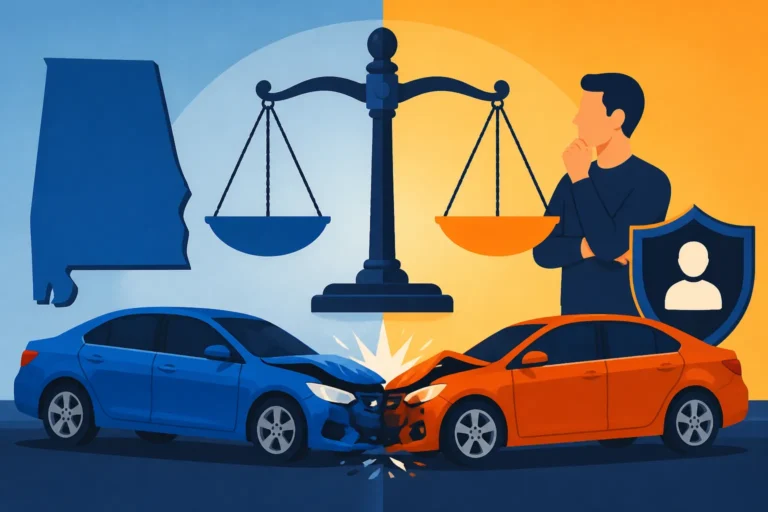
On the opposite end of the spectrum from pure comparative negligence are the few states that still adhere to "contributory negligence." This system is by far the harshest for anyone found even slightly at fault. In these states, if you are found to be even 1% responsible for the accident, you are completely barred from recovering any compensation from the other party, regardless of how severe your injuries or damages might be.
Imagine you're backing out of your driveway in Maryland, a contributory negligence state. Even if the other driver was speeding excessively and texting, if an investigation determines you failed to check your mirror for one extra second, making you just 5% at fault, you would receive nothing for your damages. This rule is extremely strict and can lead to very unfair outcomes for accident victims who bear only a tiny fraction of the responsibility. Only a handful of jurisdictions, including Alabama, Maryland, North Carolina, Virginia, and Washington D.C., still follow this antiquated system. For a comprehensive overview, check out Contributory Negligence States (Where 1% Fault Bars Recovery).
Dealing with Insurance Companies and Legal Steps
Navigating the aftermath of a car accident, especially one involving the complexities of backing out of a driveway, often means stepping into the confusing world of insurance claims and potentially legal proceedings. It can feel overwhelming, like everyone is speaking a different language and every step is a trap. Understanding how to interact with insurance companies and when to seek professional legal help is paramount to protecting your rights and ensuring you receive fair compensation.
Reporting the Accident and Initial Contact
After an accident, one of the first and most critical steps is to report it promptly. Even if you think the accident was minor or that you might be at fault, you must inform your insurance company. Many policies require you to report accidents within a specific timeframe. Failing to do so could jeopardize your coverage. When you call your insurer, be factual and stick to what you know for sure. Avoid speculating, exaggerating, or admitting fault. Simply provide the basic details of the incident: date, time, location, the other driver's information, and a brief description of what happened.
When the other driver's insurance company contacts you, remember that their primary goal is to protect their client and minimize their payout. They are not looking out for your best interests. You are generally not obligated to give them a recorded statement. If they press you, politely decline and state that you will only communicate through your attorney or your own insurance company. Anything you say to them, even a seemingly innocent comment, could be used against you later to diminish your claim. For a detailed guide on initiating this process, see How to File a Car Accident Insurance Claim.
Negotiating with Adjusters
Once claims are filed, you'll be dealing with insurance adjusters. These individuals are trained professionals whose job is to investigate the claim and then offer a settlement. Their initial offer, especially from the at-fault driver's insurer, is often a lowball offer, designed to test your knowledge and willingness to accept less. This is where patience, strong documentation, and a firm understanding of your damages come into play.
You'll need to provide all your evidence: police reports, photographs, witness statements, medical bills, proof of lost wages, and any repair estimates for your vehicle. Clearly articulate all your losses, both economic (like medical costs and property damage) and non-economic (like pain and suffering). Be prepared to counter their offers with well-supported arguments. If your initial attempts at negotiation aren't yielding a fair offer, it might be a strong indicator that you need to rethink your strategy. Learning to deal with these professionals can be tricky, so refer to Dealing With Insurance Adjusters After a Car Accident for more insights.
When to Seek Legal Counsel
While you can try to handle a car accident claim on your own, especially if it's a very minor fender bender with no injuries, there are many situations where hiring a car accident lawyer becomes not just advisable, but essential. If you've suffered anything more than minor bumps and bruises, if medical treatment is ongoing, or if you've missed time from work, a lawyer can help ensure all your damages are properly accounted for and pursued.
Furthermore, if fault is disputed—which is very common in backing-out-of-driveway accidents—a lawyer can be an invaluable advocate. They understand the complexities of comparative and contributory negligence laws in your specific state, know how to gather critical evidence (like traffic camera footage or expert witness testimony), and are skilled in negotiating with insurance companies. If the insurance company is blaming you unfairly, offering a low settlement, or simply being unresponsive, a legal professional can step in, protect your rights, and often secure a much higher settlement than you could achieve on your own. Deciding Do You Need a Lawyer for a Car Accident? is a big step, but often a necessary one to protect your interests.
Here's a quick overview of fault in backing out of a driveway accidents:
| Scenario | Typical Fault Assignment (Backing Driver vs. Oncoming Driver) | Key Factors | Potential for Shared Fault |
|---|---|---|---|
| Backing Driver Hits Oncoming Vehicle | Primarily Backing Driver | Duty to yield, limited visibility, lack of caution | High |
| Backing Driver Hits Pedestrian/Cyclist | Primarily Backing Driver | Duty to yield, pedestrian right of way, blind spots | Low |
| Oncoming Driver Speeding Excessively | Shared Fault (Backing Driver still has some) | Oncoming driver's negligence contributes significantly | High |
| Oncoming Driver Distracted | Shared Fault (Backing Driver still has some) | Oncoming driver's failure to pay attention | High |
| Backing Driver Distracted | Primarily Backing Driver | Failure to maintain attention | Low |
| Illegal Parking Obscures View | Shared Fault (Backing Driver still has some) | Third party created hazardous condition | Moderate |
| Oncoming Driver Fails to Signal Turn | Shared Fault (Backing Driver still has some) | Misleading actions by oncoming driver | Moderate |
Disclaimer
Please remember that this article provides general information and guidance regarding car accident claims and fault determination when backing out of a driveway. Laws vary by state, and the specifics of any accident can significantly alter fault assignments. This content should not be considered legal advice. For personalized advice regarding your specific situation, it is always recommended to consult with a qualified legal professional in your jurisdiction.