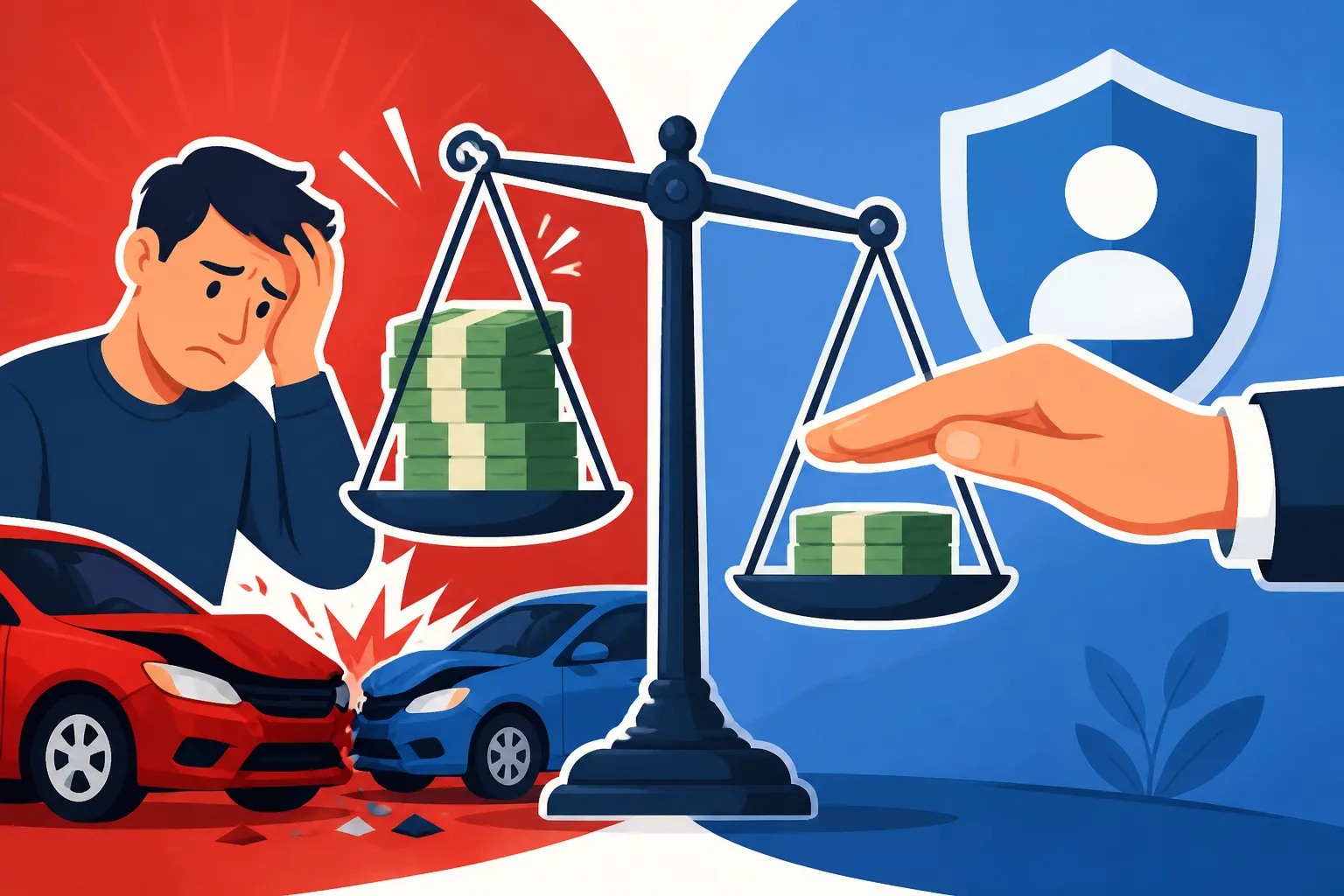
How Comparative Fault Reduces Your Settlement
Getting into a car accident is stressful enough, but discovering that your financial recovery might be cut short because you're deemed partially responsible can feel like a punch to the gut. It's a common and incredibly frustrating scenario where even if the other driver was clearly at fault, your settlement could be significantly reduced. This guide will meticulously unpack how comparative fault works and precisely how it can diminish the compensation you receive for your injuries and damages.
Understanding Comparative Fault at Its Core
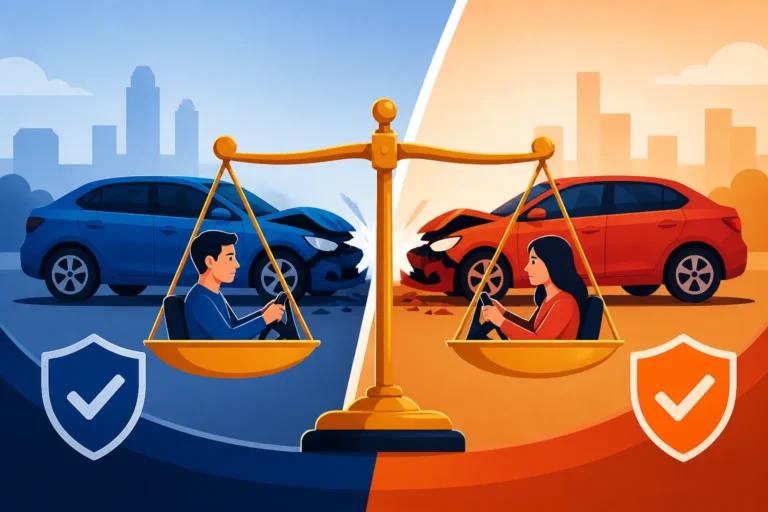
When a car accident happens, it's natural to immediately point fingers, especially if you feel you were completely innocent. However, the legal and insurance systems often see things through a more nuanced lens, recognizing that sometimes, multiple parties contribute to a crash. This concept of shared responsibility is what we call comparative fault, and it's absolutely crucial to grasp because it directly impacts your ability to recover damages.
What "Fault" Really Means in an Accident
In the aftermath of a collision, the concept of "fault" can feel very subjective. To you, it might be clear as day that the other driver ran a stop sign or swerved into your lane. But from a legal and insurance perspective, fault isn't always a simple, binary "yes" or "no" answer. It's about determining whose actions, or inactions, contributed to the accident and to what extent. This assessment involves looking at traffic laws, driver behavior, and even environmental factors. A police report might offer an initial assessment, but it's not the final word, and insurance companies will conduct their own investigation to assign a percentage of blame.
For instance, you might have been hit by a driver who was speeding, but if you were also slightly over the speed limit, or perhaps had a burnt-out taillight, an insurance adjuster might try to argue that you bear some small percentage of the blame. This isn't about excusing the other driver's primary negligence, but rather about assessing all contributing factors. The goal is to figure out who is at fault in a car accident and, more importantly for your claim, how much each party contributed to the incident. This can often lead to disputes, making it vital to understand the nuances of how fault is determined in a car accident.
The Spectrum of Comparative Negligence Systems
The legal framework for handling shared fault varies significantly from state to state across the U.S. These frameworks are generally known as comparative negligence laws, and they come in a few distinct flavors. It's not a one-size-fits-all situation, and understanding which system applies in your state can make all the difference to your potential settlement.
First, there's Pure Comparative Negligence. In states that follow this rule, you can recover damages even if you are mostly at fault for an accident. For example, if you are 90% at fault, you could still recover 10% of your damages from the other driver. It sounds almost too good to be true, and while it allows for some recovery, that recovery will be substantially reduced. States like California, Florida, and New York operate under pure comparative negligence principles.
Then, we have Modified Comparative Negligence, which is the most common system. This category is further divided into two types: the "50% Bar" rule and the "51% Bar" rule. In states with the 50% Bar, you can only recover damages if your percentage of fault is 49% or less. If you are found to be 50% or more at fault, you receive nothing. Think of it as a hard cut-off. States like Texas, Ohio, and North Carolina follow this rule.
Similarly, states with the 51% Bar allow you to recover damages as long as your fault is 50% or less. If you are found to be 51% or more at fault, you are barred from receiving any compensation. Arizona, Georgia, and Colorado are examples of states using this system. The difference between 50% and 51% might seem small, but it can literally be the difference between getting a settlement and getting nothing at all. To really dig into these specific differences, it's helpful to look at Modified Comparative Negligence (50% vs 51% Bar) in detail.
Finally, just for contrast, it’s worth noting that a few states still adhere to Contributory Negligence laws. Under this outdated and very harsh system, if you are found to be even 1% at fault for the accident, you are completely barred from recovering any damages whatsoever. This is an extremely strict rule, and only a handful of states, such as Alabama, Maryland, North Carolina, and Virginia, still maintain it. The intricacies of these different systems are often explained in resources comparing Comparative vs Contributory Negligence Explained.
How Your Percentage of Fault Directly Impacts Your Payout
This is where the rubber meets the road, or rather, where the assigned percentage of fault directly impacts the dollar amount you might receive. It's not just an abstract number; it's a very real factor that can shrink your settlement significantly, sometimes to nothing at all, depending on the state you're in.
The Direct Dollar-for-Dollar Reduction
The most straightforward way comparative fault reduces your settlement is through a proportional reduction of your total damages. If you are assigned a certain percentage of fault, that same percentage is deducted from your overall compensation. This applies across the board to all categories of damages you might be claiming.
Let's imagine a scenario: you're involved in a car accident, and the total value of your damages – including medical bills, lost wages, vehicle repair costs, and pain and suffering – is determined to be $50,000. However, after an investigation, the insurance company (or a jury, if the case goes to trial) decides that you were 20% at fault for the collision. Under comparative fault rules, your $50,000 settlement will be reduced by 20%. So, instead of receiving the full $50,000, you would only be eligible for $40,000. That's a $10,000 reduction directly attributable to your partial fault.
This reduction isn't limited to just your economic damages, like property damage and medical bills. It also applies to non-economic damages, such as the pain and suffering you endured. For example, if your pain and suffering was valued at $20,000 and you were 20% at fault, that portion of your claim would also be reduced by 20%, leaving you with $16,000 for pain and suffering. This direct reduction is a critical reason why disputes over fault percentages can become so contentious. Every percentage point matters, translating directly into real money from your potential recovery.
The "Bar to Recovery" in Modified Comparative Fault States
While the direct dollar-for-dollar reduction applies in all comparative negligence states (including pure comparative fault states), the modified comparative negligence systems introduce an additional, even more severe, consequence: the "bar to recovery." This means that if your fault crosses a certain threshold, you might not be able to recover any damages at all, regardless of the other driver's significant negligence.
Consider a state like Texas, which follows the 50% Bar rule. If you're involved in an accident and your total damages are $75,000, but an investigation determines you were 50% at fault, you would be completely barred from recovering any damages from the other driver. Even if the other driver was also 50% at fault and caused substantial damage, your claim would be denied. The 50% threshold is an absolute brick wall; once you hit or exceed it, your right to compensation vanishes. This is a tough pill to swallow, especially when you feel the other driver was equally, if not more, responsible.
Now, let's look at a 51% Bar state, like Arizona. If you're again facing $75,000 in damages, and the fault is assessed as 50% yours and 50% the other driver's, you would still be able to recover half of your damages ($37,500). The crucial difference is that if your fault were determined to be just one percentage point higher—say, 51%—then you would be completely barred from any recovery. This distinction is incredibly important for car accident victims, as that single percentage point can mean the difference between getting a significant settlement and walking away with nothing. Understanding these thresholds is essential for knowing can you still get paid if you're partly at fault.
Here's a quick overview of how different comparative fault systems might impact a hypothetical $10,000 settlement:
| Your Fault Percentage | Pure Comparative Negligence (e.g., CA, FL) | Modified Comparative Negligence (51% Bar – e.g., AZ, GA) | Modified Comparative Negligence (50% Bar – e.g., TX, OH) | Contributory Negligence (e.g., AL, MD) |
|---|---|---|---|---|
| 10% | $9,000 | $9,000 | $9,000 | $0 (barred) |
| 25% | $7,500 | $7,500 | $7,500 | $0 (barred) |
| 40% | $6,000 | $6,000 | $6,000 | $0 (barred) |
| 49% | $5,100 | $5,100 | $5,100 | $0 (barred) |
| 50% | $5,000 | $5,000 | $0 (barred) | $0 (barred) |
| 51% | $4,900 | $0 (barred) | $0 (barred) | $0 (barred) |
| 75% | $2,500 | $0 (barred) | $0 (barred) | $0 (barred) |
| 90% | $1,000 | $0 (barred) | $0 (barred) | $0 (barred) |
As you can clearly see from the table, how comparative fault reduces your settlement isn't a simple calculation; it's a rule-based system that can drastically alter your financial recovery based on your state's specific laws.
The Role of Evidence in Determining Your Fault Percentage
When it comes to assigning fault percentages, it's rarely a matter of guesswork. Insurance companies, and ultimately courts, rely heavily on evidence to reconstruct the accident and attribute responsibility. This makes the actions you take immediately after a crash, and throughout your claim process, absolutely critical.
Gathering Evidence to Protect Your Claim
The moments immediately following a car accident are often chaotic and stressful, but they are also a golden opportunity to collect crucial evidence. The more thorough you are in documenting the scene, your injuries, and the other party's information, the stronger your position will be when fault percentages are being debated. This is a vital step in how to prove the other driver was at fault.
First, take photos and videos of everything: the position of the vehicles, damage to both cars, skid marks, road conditions, traffic signs or signals, and any relevant surroundings like construction zones or trees obstructing views. Don't forget to photograph your injuries as well, even if they seem minor at the time. A picture truly is worth a thousand words, especially when an insurance adjuster is trying to visualize the scene weeks later.
Next, collect contact information from all involved drivers and passengers, as well as any witnesses. Witness statements, even brief ones, can provide an objective account of what happened. Ask them if they would be willing to provide a written statement or speak with your insurance company later.
Always call the police to the scene, especially if there are injuries or significant property damage. A police report can offer an initial, unbiased assessment of the accident, identify any traffic violations, and document crucial details that might be forgotten later. While a police report doesn't definitively determine fault for insurance purposes, it carries significant weight and can be an invaluable piece of evidence. This is especially true when considering the role of Police Reports and Car Accident Fault.
Finally, seek medical attention immediately, even if you feel okay. Some injuries, like whiplash or concussions, have delayed symptoms. Medical records provide objective proof of your injuries and link them directly to the accident, making it harder for the insurance company to argue that your injuries were pre-existing or unrelated. All of this meticulously gathered information will be used to protect your claim from unfair fault assignments.
How Insurance Companies Determine Who Is at Fault
It’s often a mystery to accident victims exactly how insurance companies arrive at their fault determinations. It can feel arbitrary, or even biased. However, there's a process, and understanding it can help you anticipate their arguments and prepare your own case. Ultimately, how insurance companies determine who is at fault involves a comprehensive review of all available data.
Insurance adjusters act as investigators. They start by reviewing the police report for details about the accident, including diagrams, citations issued, and officer observations. They will then scrutinize witness statements for consistent accounts and any discrepancies. Vehicle damage is also a huge clue; the location and type of damage can often indicate the angle and force of impact, which helps reconstruct the collision. For example, damage to the rear of your vehicle usually points to the other driver being at fault in a Rear-End Collision Fault: Who Is Responsible?
Furthermore, adjusters consider traffic laws. Was anyone speeding, failing to yield, running a red light, or making an illegal turn? Violations of traffic laws are strong indicators of fault. They might also look at photos and videos you or others took at the scene. In more complex cases, especially those involving significant injuries or multi-car pileups, they might even consult accident reconstruction experts who use scientific methods to determine vehicle speeds, points of impact, and driver actions.
It’s also important to remember that insurance companies, by their nature, are businesses. They are often incentivized to pay out as little as possible. This means they will actively look for ways to assign some percentage of fault to you, even if it's minor, because even a small percentage can reduce their payout significantly, especially in states with modified comparative negligence. This is why having robust evidence and potentially legal representation is so critical.
Navigating the Challenges of Shared Fault Claims
Dealing with the aftermath of an accident is tough enough. Add in the complication of shared fault, and the process can become incredibly frustrating and complex. It’s a situation where your voice might feel unheard, and the system seems stacked against you.
When the Other Driver Blames You Unfairly
One of the most infuriating aspects of a car accident claim, especially when fault is in question, is when the other driver or their insurance company tries to pin the blame on you, even when you know it's unjustified. It feels like an unfair attack, a dishonest attempt to shift responsibility. This often happens because the other party is also trying to minimize their own liability or even avoid a rate hike.
For instance, you might be at a stop sign, waiting patiently, and another car rear-ends you. Simple, right? Clearly, they were distracted or following too closely. Yet, their insurance company might try to argue that you stopped too abruptly, or that your brake lights weren't working. These attempts to deflect blame are common tactics. It’s a classic example of what happens if the other driver blames you.
The key to combating unfair blame is, again, objective evidence. Your word against theirs often won't be enough. If you have dashcam footage, independent witness statements, or a detailed police report clearly outlining their fault, it becomes much harder for them to successfully argue that you contributed to the accident. Without this kind of objective proof, you could find yourself unfairly assigned a percentage of fault, which, as we've discussed, will directly reduce your settlement. This is why documenting everything at the scene is so crucial – it's your shield against these unfair accusations.
Negotiation Strategies When Fault Is Disputed
When comparative fault enters the picture, negotiating a settlement becomes significantly more challenging. It’s no longer just about the value of your damages; it's also about convincing the insurance company that their assessment of your fault percentage is wrong, or at least too high. This often feels like an uphill battle, especially if you're not experienced in these kinds of discussions.
The first step in negotiation is to understand their fault assessment. Ask for a clear explanation of why they believe you are partly at fault and what evidence they are using to support that claim. This helps you identify weaknesses in their argument or areas where you can present counter-evidence. If they say you were 30% at fault because they claim you failed to signal a lane change, but you have a witness who saw you signal, that's a direct point of contention you can use.
Next, present your counter-evidence forcefully and clearly. Reiterate the facts that support your lack of fault or minimize your contribution. This includes your photos, witness statements, medical records demonstrating the severity of your injuries (making it harder for them to lowball overall damages), and any relevant traffic laws that the other driver violated. It's about building a compelling narrative that shifts the balance of fault in your favor.
Finally, and perhaps most importantly, don't be afraid to walk away from a lowball offer. Insurance companies expect you to negotiate. If you accept their first offer, especially one based on a high fault percentage for you, you're leaving money on the table. This is where the expertise of a personal injury attorney truly shines. They are seasoned negotiators who understand how to counter a low settlement offer, how to present evidence effectively, and how to push back against unfair fault assignments. They can argue on your behalf, often leveraging their knowledge of legal precedents and the threat of litigation to secure a more favorable outcome. When fault is disputed, an attorney can be your strongest advocate in ensuring your how comparative fault reduces your settlement is minimized.
Understanding Specific State Laws
As we've touched upon, the specific state where your accident occurred dictates the comparative fault rules that will apply to your case. This geographical difference can have monumental implications for your financial recovery. What might be a complete bar to recovery in one state could still result in a partial settlement in another.
A Look at Pure Comparative Negligence States
In states that operate under pure comparative negligence, the system is designed to allow some recovery for damages, regardless of how much fault is assigned to you, as long as the other party bears some fault as well. This system prioritizes proportional justice, ensuring that each party is financially responsible only for their share of the accident.
Consider California, a pure comparative negligence state. Let's say you were involved in a serious intersection accident, and your total damages, including medical expenses, lost wages, and pain and suffering, come out to $100,000. However, the investigation concludes that you contributed to the accident by, perhaps, slightly rolling through a stop sign before being T-boned by a speeding driver. The jury determines you were 60% at fault, while the other driver was 40% at fault. Even with this high percentage of fault on your part, California law allows you to recover 40% of your damages from the other driver. In this scenario, you would still receive $40,000. This system allows for recovery even when you are mostly to blame, unlike modified comparative negligence states. Other states like Florida and New York follow similar pure comparative negligence principles, meaning that while your recovery will be reduced by your percentage of fault, it won't be entirely eliminated unless you're found 100% at fault.
Modified Comparative Negligence States Examples
The vast majority of U.S. states use some form of modified comparative negligence, which introduces a critical threshold for recovery. These states have decided that at a certain point of shared blame, an injured party should no longer be able to claim damages from others.
Let's examine states with the 50% Bar rule. In places like Texas or Ohio, if you are found to be 50% or more at fault for an accident, you cannot recover any damages. Imagine you have $80,000 in damages from an accident, and the insurance company determines you were 50% responsible for the collision, perhaps because you were both merging into the same lane without proper signaling. Under Texas law, your claim would be completely barred, and you would receive $0. This is a crucial distinction that can leave victims in a very difficult financial position. You can read more about it specifically in Comparative Negligence Laws in Texas.
Now, consider states with the 51% Bar rule, such as Arizona or Georgia. Here, you can recover damages as long as your fault is 50% or less. If your damages are $80,000, and you are found to be 50% at fault, you would still be eligible to recover $40,000 (50% of your damages). However, if that fault percentage tips to 51% or higher, your claim is entirely barred, and you would receive nothing. This subtle but significant difference – one percentage point – can completely alter the outcome of your car accident claim. Knowing the specific laws, such as Comparative Negligence Laws in Arizona, for your state is not just helpful, it's absolutely essential for anyone involved in a car accident.
Practical Steps to Take If You're Partly at Fault
Even if you suspect or are told you bear some responsibility for an accident, all hope for compensation is not lost. Taking specific, proactive steps can significantly protect your right to a settlement, or at least minimize the reduction due to comparative fault. You might be wondering, "What happens if you're partially at fault?" These steps are your answer.
Documenting Everything Meticulously
We've talked about documentation before, but it bears repeating, especially when comparative fault is on the table. When your potential recovery is on the line because of shared blame, meticulous documentation becomes your most powerful tool. It helps both to minimize the percentage of fault assigned to you and to maximize the value of the damages that remain recoverable.
Think of it as building your case brick by brick. Every photograph, every piece of paper, every medical record contributes to the foundation. This includes not just accident scene photos but also ongoing photos of your injuries as they heal (or don't heal). Keep a detailed journal of your pain levels, doctors' appointments, medications, and how your injuries impact your daily life. This personal account can be invaluable in establishing pain and suffering damages, which are often heavily scrutinized by insurance companies.
Furthermore, keep detailed records of all your expenses: medical bills, prescription costs, physical therapy invoices, receipts for rental cars, and records of any lost wages or missed work. Even seemingly small expenses add up. The more thoroughly you document these things, the harder it is for an insurance adjuster to dispute the total value of your claim. Comprehensive documentation paints a complete picture of your losses, making it more challenging for the insurer to lowball your settlement, even with a fault reduction.
Seeking Legal Counsel
Perhaps the single most effective step you can take if you are involved in an accident where comparative fault is a factor is to seek legal counsel. Many people hesitate to hire a lawyer, especially for what seems like a straightforward accident, but when fault is disputed or shared, an attorney becomes an invaluable advocate.
An experienced car accident lawyer understands the intricacies of comparative negligence laws in your specific state. They know how insurance companies operate, what tactics they use to assign fault, and how to effectively challenge those assessments. They can gather and analyze evidence, interview witnesses, consult with accident reconstruction specialists if necessary, and build a compelling case to minimize your assigned fault percentage. This could mean the difference between receiving a substantial settlement and getting nothing at all, particularly in modified comparative negligence states.
Beyond just fault determination, a lawyer is also adept at negotiating with insurance adjusters. They know how to accurately value your damages, including future medical expenses and long-term pain and suffering, and they will fight to ensure you receive fair compensation. If negotiations fail, they are prepared to take your case to court. For many, the idea of going up against a large insurance company alone, especially while recovering from injuries, is daunting. A lawyer removes that burden, allowing you to focus on your recovery while they handle the complex legal battle. The question of Do You Need a Lawyer for a Car Accident? (2026) becomes particularly pertinent when comparative fault is a significant issue.
Disclaimer
Please remember that this information is for educational purposes only and does not constitute legal advice. Car accident laws are complex and vary by jurisdiction. You should always consult with a qualified legal professional for advice regarding your specific situation.