Is North Carolina a No-Fault State?
Dealing with the aftermath of a car accident is stressful enough, but then you're hit with a barrage of confusing legal and insurance terms. One question that often pops up is whether your state operates under "no-fault" laws, and for those in the Tar Heel State, figuring out if North Carolina is a no-fault state can feel like deciphering a secret code. This guide is here to untangle the complexities and give you a clear understanding of how car accident claims and liability work in North Carolina.
What Exactly is a No-Fault State Anyway?
Before we dive into North Carolina's specific rules, it's really important to understand what "no-fault" even means. This term gets thrown around a lot, and it can be incredibly confusing if you're not familiar with the different systems states use to handle car accident claims. Essentially, a no-fault system is designed to streamline the recovery process after a crash, at least in theory, by having each driver's own insurance company pay for their initial medical expenses and lost wages, regardless of who was actually at fault for the accident.
The Philosophy Behind No-Fault Insurance
The core idea behind no-fault insurance is to reduce litigation and ensure that accident victims receive prompt medical care and compensation for immediate financial losses without having to wait for a fault determination. Imagine a fender bender on a busy street in Charlotte. In a pure no-fault system, both drivers involved would typically file claims with their own insurance providers for their medical bills and a portion of their lost income, even if one driver clearly ran a red light. The argument is that this speeds up the process, keeps minor claims out of court, and reduces the overall burden on the legal system. It sounds good on paper, doesn't it? Less arguing, quicker payouts.
However, it's not a free-for-all. Most no-fault states still allow injured parties to step outside the no-fault system and pursue a claim against the at-fault driver if their injuries meet a certain threshold, often defined by the severity of the injury or the cost of medical treatment. This is known as a "tort threshold." For example, in a state like Florida, which is a no-fault state, you would typically rely on your Personal Injury Protection (PIP) coverage first. But if your injuries are serious enough, you can still pursue a claim against the at-fault driver. The idea is to reserve the more complex and time-consuming fault-based claims for truly serious injuries. If you're curious about how this contrasts with other systems, you might want to learn more about What Is a No-Fault State? And Which States Are No-Fault.
How a No-Fault System Works for Drivers
If you live in a no-fault state, your primary source of recovery for medical bills and lost wages after a car accident is usually your own Personal Injury Protection (PIP) coverage. This is a mandatory component of insurance in these states. So, if you're in a crash, you'd contact your own insurance company, and they would pay for your immediate medical expenses and potentially a percentage of any income you lost because of your injuries, up to your policy limits. Property damage, like repairs to your car, is generally handled under the traditional "at-fault" rules, meaning the at-fault driver's property damage liability insurance would cover the damage to your vehicle.
The benefit here, proponents argue, is that it removes the blame game from the initial stages of recovery. You don't have to wait for an investigation to determine fault before you can start receiving treatment for your injuries. This can be a huge relief if you're facing immediate medical bills and can't work. However, the downside is that your ability to sue the at-fault driver for pain and suffering or other non-economic damages might be limited unless your injuries pass that aforementioned "tort threshold." For many drivers, this system can be both a blessing and a curse, depending on the severity of their accident.
North Carolina's Car Accident Liability Rules
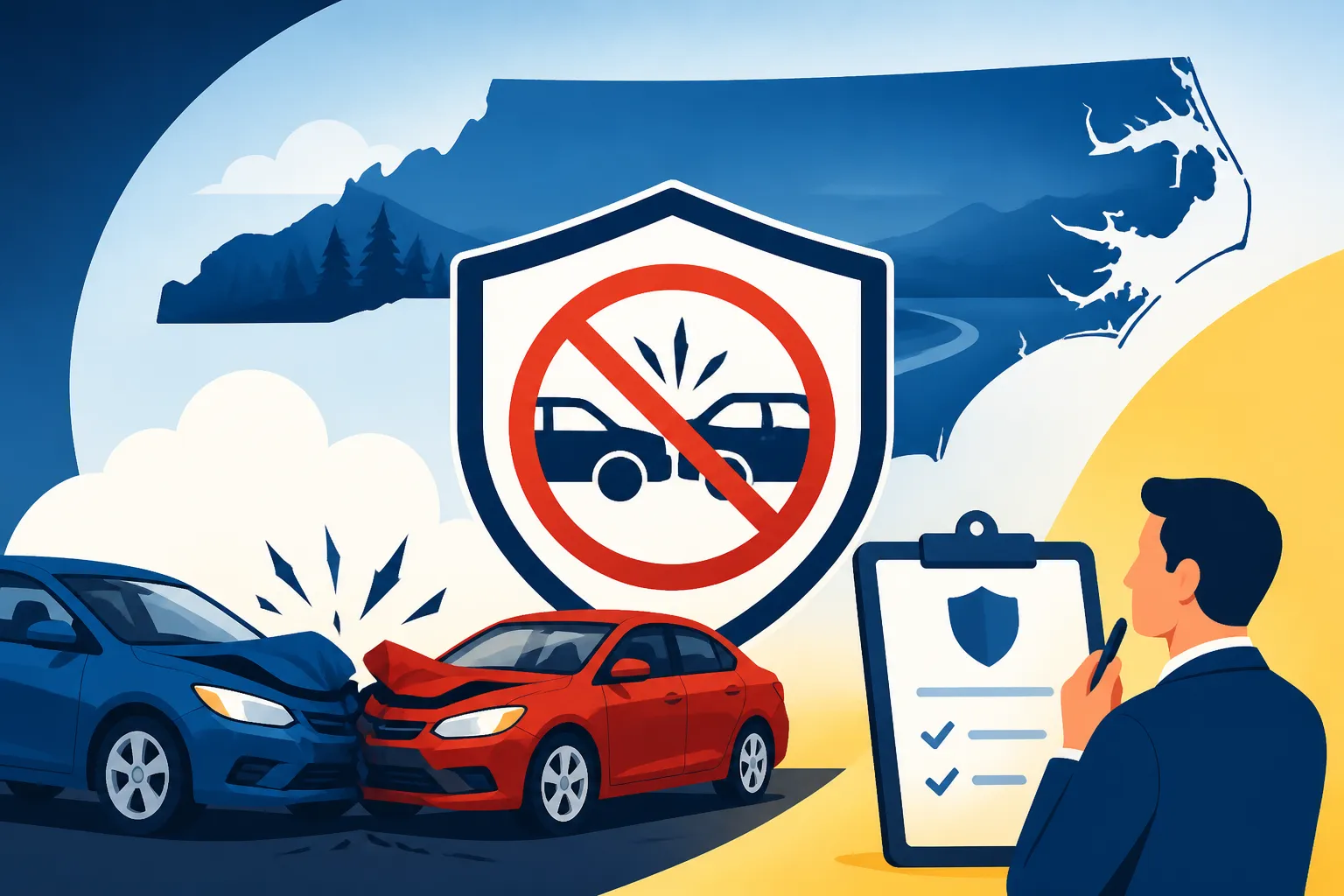
So, let's cut to the chase: Is North Carolina a no-fault state? The answer, unequivocally, is no. North Carolina operates under an "at-fault" or "tort" system when it comes to car accidents. This is a fundamental difference that impacts everything from how you file a claim to who ultimately pays for your damages. For drivers in places like Raleigh, Greensboro, or Wilmington, understanding this distinction is absolutely critical when you're involved in a collision.
Understanding North Carolina's "At-Fault" System
In an at-fault state like North Carolina, the driver who is determined to be responsible for causing the accident is financially liable for the damages and injuries suffered by the other parties. This means that if someone else causes a crash, their insurance company is generally responsible for paying for your medical bills, lost wages, vehicle repairs, and other damages. Conversely, if you are found to be at fault, your liability insurance would cover the damages to the other driver's vehicle and their injuries, up to your policy limits. This system places a heavy emphasis on investigating and determining who is to blame for the collision.
This is a stark contrast to the no-fault system we just discussed. Instead of your own insurance paying for your medical expenses upfront regardless of fault, you'll be pursuing compensation from the at-fault driver's insurance provider. This often requires proving that the other driver's negligence directly led to the accident and your subsequent injuries and losses. The process of proving fault can sometimes be complicated and contentious, especially when the other driver or their insurance company disputes your version of events. It's not always as simple as it seems, and sometimes the question of Who Is at Fault in a Car Accident? can become a heated debate.
What "At-Fault" Means for Your Insurance Claim
When you're in an accident in North Carolina, the first crucial step after ensuring everyone's safety and exchanging information is usually to report the incident to the police and your insurance company. Since North Carolina is an at-fault state, your focus will likely shift to demonstrating that the other driver was negligent. This means collecting evidence at the scene, such as photos, witness statements, and police reports. Your own insurance company might assist you in gathering this evidence, especially if you have collision coverage, but ultimately, it's the at-fault driver's insurance that's on the hook for your damages.
This setup means that filing a claim can become a third-party process, where you are making a claim against the other driver's insurance. This can be a slower, more involved process than a first-party claim within a no-fault system. You'll need to submit documentation of your medical treatments, lost income, and property damage to the at-fault driver's insurer. Be prepared for their adjusters to thoroughly investigate the claim, as they are looking to protect their policyholder and minimize their payout. This often involves careful documentation and negotiation. Understanding How Car Accident Insurance Claims Work in this context is essential for protecting your rights and ensuring you receive fair compensation.
The Crucial Role of Contributory Negligence in North Carolina
Here's where things get really challenging and often incredibly frustrating for accident victims in North Carolina: the doctrine of contributory negligence. This specific legal rule is a game-changer in how car accident claims are handled and can single-handedly bar you from recovering any compensation, even if the other driver was mostly to blame. It's one of the harshest negligence laws in the country, and it's something every North Carolina driver absolutely needs to understand.
Unpacking the Harsh Reality of Contributory Negligence
North Carolina is one of only a handful of states that still adheres to the pure doctrine of contributory negligence. What does this mean in plain language? It means that if you are found to be even 1% at fault for a car accident, you are completely barred from recovering any damages from the other driver, regardless of how negligent they were. Yes, you read that right. Even if the other driver was 99% responsible, if you contributed in any small way to the collision, you could walk away with nothing.
Imagine you're driving in Asheville. Someone blows through a stop sign and T-bones your car, causing significant injuries. However, during the investigation, it comes out that you were driving 5 miles per hour over the speed limit. In a contributory negligence state like North Carolina, that minor infraction, that 5 mph over the limit, could be enough to deny you compensation entirely. It's an incredibly stringent rule that leaves very little room for error on the part of the injured party. This is a stark contrast to the more common comparative negligence systems, which allow for recovery even if you share some fault, albeit reduced by your percentage of blame. Many people find this rule deeply unfair, and it often leads to disputes where insurance companies try to pin even a tiny bit of blame on the injured party. For a deeper dive, read about Comparative vs Contributory Negligence Explained.
Real-World Scenarios and Its Impact on Your Recovery
The impact of contributory negligence can be devastating for accident victims. It places an immense burden on the injured party to prove that they were completely free of any negligence that contributed to the accident. Insurance companies are well aware of this rule, and their adjusters will often look for any possible way to argue that you, too, were partially at fault. This could be anything from a slight lane deviation, not wearing your seatbelt correctly, or even failing to react quickly enough, in their eyes.
Consider a scenario where you're involved in a Rear-End Collision Fault: Who Is Responsible?. Typically, the rear driver is at fault. But what if the insurance company for the rear driver argues that your brake lights weren't working perfectly, or that you stopped too suddenly? Even if their driver was texting and driving and slammed into you at full speed, if they can prove you had any contributory negligence, your claim for damages could be wiped out. This is why having strong evidence and understanding your rights is so important in North Carolina. The financial implications can be enormous, leaving you responsible for your own medical bills, lost wages, and car repair costs, even if the other driver was clearly the primary cause of the crash. Knowing How Contributory Negligence Works in North Carolina is not just academic; it's vital for your financial future after an accident.
Here's a quick comparison of negligence systems:
| Feature | At-Fault (e.g., North Carolina) | Pure Comparative Negligence (e.g., California) | Modified Comparative Negligence (50% Bar) (e.g., Texas) | Modified Comparative Negligence (51% Bar) (e.g., Georgia) | No-Fault (e.g., Florida) |
|---|---|---|---|---|---|
| Initial Medical Bills | At-fault driver's insurance, or own health insurance | At-fault driver's insurance, or own health insurance | At-fault driver's insurance, or own health insurance | At-fault driver's insurance, or own health insurance | Own PIP (Personal Injury Protection) insurance |
| Property Damage | At-fault driver's insurance | At-fault driver's insurance | At-fault driver's insurance | At-fault driver's insurance | At-fault driver's insurance |
| Recovery if Partly at Fault | NO (if 1% or more at fault) | Yes, reduced by percentage of fault | Yes, if 50% or less at fault | Yes, if 50% or less at fault | Limited to own PIP, unless "serious injury" threshold met |
| Lawsuit for Pain & Suffering | Yes, if 0% at fault | Yes, reduced by percentage of fault | Yes, if 50% or less at fault | Yes, if 50% or less at fault | Yes, if "serious injury" threshold met |
Steps to Take After an Accident in an At-Fault State Like North Carolina
Given North Carolina's at-fault system and particularly the strict contributory negligence rule, what you do immediately after an accident and in the following days and weeks is critically important. Your actions can significantly impact your ability to recover compensation. Don't underestimate the importance of thoroughness and careful documentation.
Documenting the Scene and Gathering Evidence
The moment after a crash, once you've checked for injuries and moved to a safe spot, your priority shifts to documentation. This isn't just about reporting the incident; it's about building your case to prove the other driver's fault and your complete lack of contributory negligence. Call the police, even for minor accidents, as a police report can be vital evidence in determining How Fault Is Determined in a Car Accident. If a police officer does not complete a report, you may have to deal with the complexities of What If There Was No Police Report?.
Take photographs and videos of everything: the position of the vehicles, damage from multiple angles, skid marks, road conditions, traffic signs, debris, and any visible injuries. Get contact information from witnesses, as their unbiased accounts can be invaluable. Exchange insurance and contact information with the other driver. Make notes about the time, date, location, weather, and anything the other driver said about the accident. Remember, anything you say or do could be used by an insurance company to argue contributory negligence, so be polite but stick to the facts and avoid admitting fault. This meticulous approach to documenting can make all the difference when pursuing your claim. You can find a comprehensive guide on What to Do After a Car Accident: Step-by-Step (2027) for more details.
Dealing with Insurance Companies and Legal Ramifications
After documenting the scene and seeking any necessary medical attention, the next step is to notify your own insurance company. Even though you'll be making a third-party claim against the at-fault driver's insurance, your policy may require you to report the accident promptly. When dealing with the other driver's insurance company, remember that their primary goal is to protect their policyholder and minimize their payout. Be cautious about giving recorded statements or signing anything without understanding its implications, especially since any perceived admission of fault, however small, could tank your claim under North Carolina's contributory negligence rule.
It's often a very good idea to consult with a personal injury attorney in North Carolina as soon as possible after an accident, especially if there are injuries involved. They can help you navigate the complexities of the at-fault system and, crucially, understand the ins and outs of contributory negligence. An attorney can help you gather evidence, communicate with insurance adjusters, and build a strong case to prove the other driver's sole fault. They can also advise you on whether you need to sue to protect your rights, especially if the insurance company unfairly blames you. Consider reading Do You Need a Lawyer for a Car Accident? (2026) to help you decide if legal representation is right for your situation. Without legal guidance, many people find themselves overwhelmed and unable to effectively counter the tactics employed by insurance companies looking to deny claims based on contributory negligence.
Disclaimer
Please remember that this information is intended for general guidance and informational purposes only, and does not constitute legal advice. Car accident laws are complex and can vary based on specific circumstances and changes in legislation. It is always recommended to consult with a qualified legal professional for advice tailored to your individual situation.