Who Is at Fault in a Multi-Car Pileup?
Being caught in a multi-car pileup is one of the most terrifying and disorienting experiences imaginable on the road. One moment you're driving along, and the next, your world is a cacophony of screeching tires, shattering glass, and twisted metal, often leaving you wondering what just happened and, more importantly, who is at fault in a multi-car pileup? The complexity of these accidents makes determining responsibility a serious challenge, both emotionally and legally. This guide aims to unravel the intricacies of fault determination in multi-car pileups, offering clarity and practical insights into a truly overwhelming situation.
Understanding Multi-Car Pileups
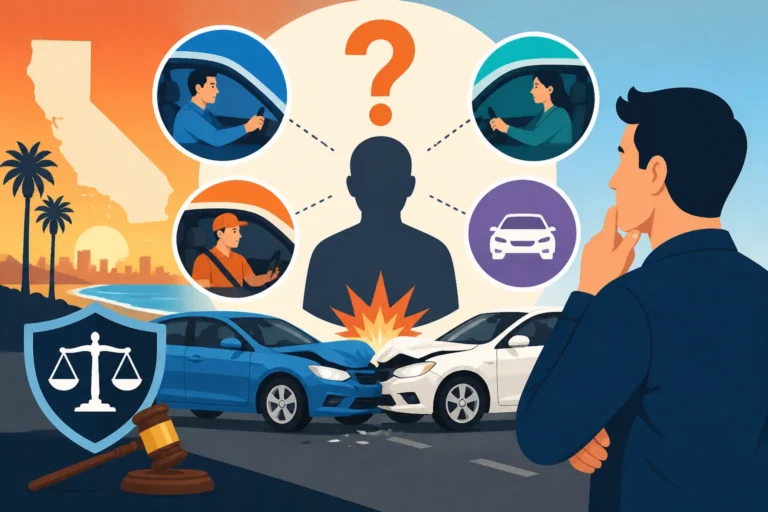
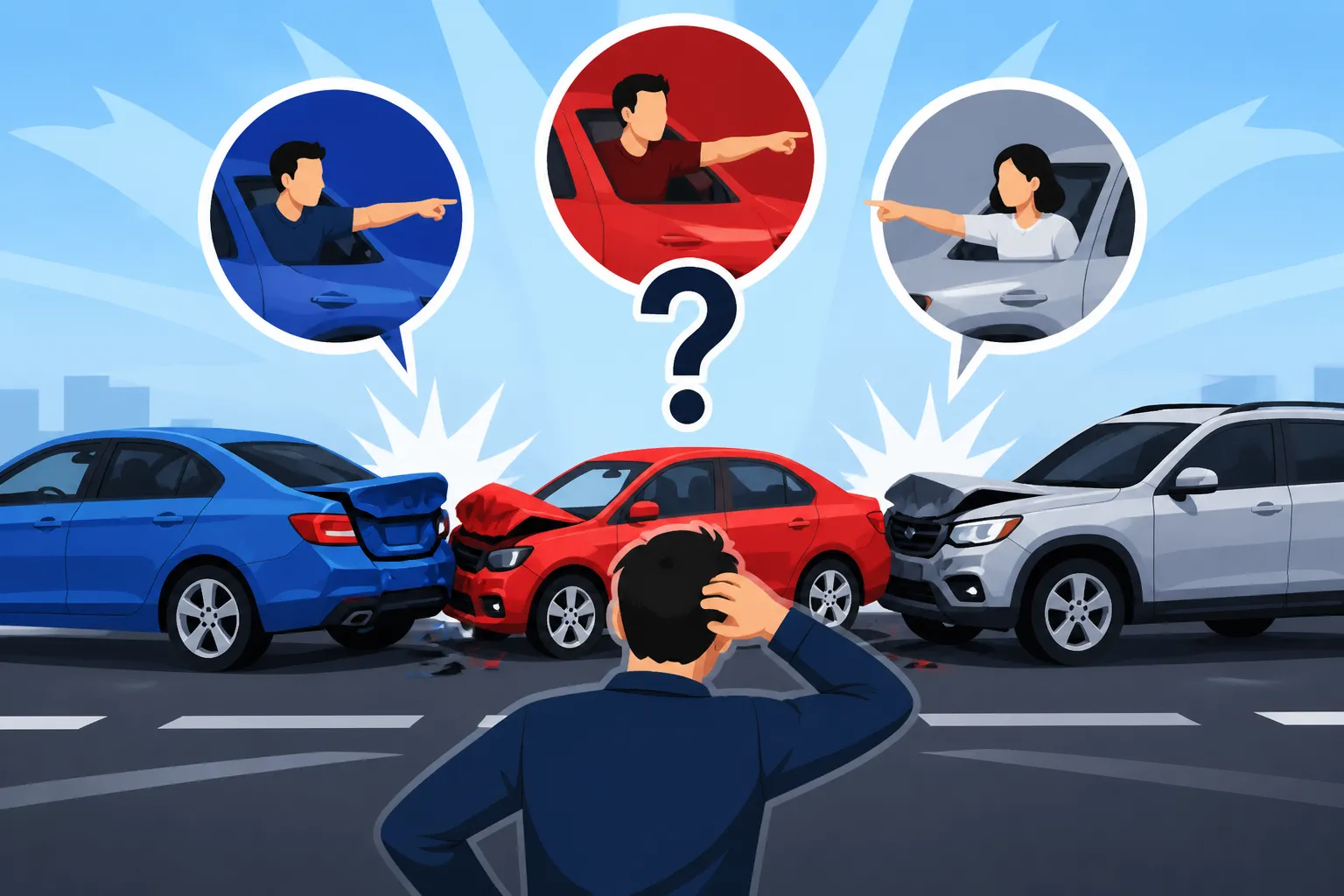
Multi-car pileups aren't just a few fender-benders lined up; they're often chaotic, high-impact events involving three or more vehicles, frequently occurring on highways or busy roadways. The sheer number of vehicles and impacts makes them inherently more complicated than a simple two-car collision. It's not uncommon for multiple drivers to feel like they were victims, while various external factors might have played a role, making the question of liability incredibly murky.
The Nature of Chain Reactions
Imagine a set of dominoes falling. One push at the beginning can send ripples through the entire line. A multi-car pileup often works similarly, where an initial impact or sudden maneuver triggers a chain reaction. For instance, a distracted driver might rear-end the car in front, causing that car to be pushed into the next, and so on. Or, a sudden brake by one vehicle in heavy traffic might lead to a series of rear-end collisions as following drivers struggle to stop in time. The difficulty lies in identifying that initial "push" and understanding how each subsequent impact contributed to the overall damage and injury.
The problem is, these aren't neat, linear events. Sometimes, a car might be hit, spin out, and then be hit again by a completely different vehicle, perhaps even from a different direction. This "domino effect" makes it incredibly challenging to disentangle the sequence of events and assign blame accurately. It's not always about the very first car that stopped or the very last car that hit. Understanding the full picture often requires an investigation into the entire timeline of the accident, from the first critical event to the final resting places of all involved vehicles.
Immediate Chaos and Information Gathering
In the immediate aftermath of a multi-car pileup, chaos reigns supreme. People are often in shock, cars are damaged, and the scene can be quite dangerous. Collecting accurate information in such an environment is incredibly difficult. Drivers might be too dazed or injured to recall events clearly, and the sheer number of vehicles involved means there are many perspectives, not all of them perfectly aligned. The initial moments are crucial, but often overlooked due to the stress and panic.
Beyond the human element, the physical evidence can also be scattered or obscured. Skid marks might be overlapping, debris could be everywhere, and the final positions of vehicles might not accurately reflect their impact points. This makes it challenging for even experienced first responders to get a clear initial picture. It highlights why it's so important for anyone involved to try and gather what information they can safely, even if it's just mental notes of vehicle positions or license plate numbers. The more detail, the better, even if it feels overwhelming at the time.
How Fault Is Determined in Complex Accidents
Pinpointing fault in a multi-car pileup is rarely straightforward. Unlike a simple rear-end collision where the trailing driver is almost always at fault, a pileup involves multiple variables, multiple drivers, and often multiple impacts. Investigators and insurance companies must sift through a mountain of evidence to piece together the narrative and assign responsibility fairly. This process often feels like solving a complex puzzle with missing pieces for those involved, adding to the frustration and uncertainty.
Police Investigations and Accident Reports
When law enforcement arrives at the scene of a multi-car pileup, their primary role is to secure the area, ensure safety, and tend to any injuries. Beyond that, they begin a preliminary investigation to gather facts for an official police report. This report is a critical piece of evidence for insurance companies and legal teams. Officers will interview drivers and witnesses, note the positions of vehicles, collect debris, and look for factors like skid marks, weather conditions, and road hazards. They'll also try to establish the sequence of events and identify any potential traffic violations.
However, it's important to understand that a police report's determination of fault isn't always the final word. While highly influential, it represents the officer's initial assessment based on the evidence available at the scene. Sometimes, due to the complexity, an officer might not assign fault definitively, or their initial assessment might be challenged later with more detailed evidence. Nevertheless, the accuracy and detail in this report are paramount. You can learn more about how police reports contribute by reading our guide on Police Reports and Car Accident Fault.
Eyewitness Accounts and Dashcam Footage
In a multi-car pileup, independent eyewitness accounts can be invaluable. Drivers involved often have a limited perspective of the entire scene, focused primarily on their immediate surroundings. A disinterested third-party witness who saw the initial trigger event or a specific sequence of impacts can provide crucial details that corroborate or contradict a driver's statement. Collecting contact information for any witnesses at the scene, if it's safe to do so, is always a wise step.
Furthermore, with the increasing prevalence of dash cameras in vehicles, video footage has become a game-changer in accident investigations. A dashcam can provide an objective, undeniable record of exactly what happened, including who initiated the collision, vehicle speeds, and immediate reactions. If you or another driver involved has dashcam footage, it can significantly clarify the sequence of events and help determine Who Is at Fault in a Car Accident? Complete Guide (2026). Without such objective evidence, piecing together the events relies heavily on potentially conflicting statements.
Role of Accident Reconstruction Specialists
For particularly complex multi-car pileups, especially those involving serious injuries or fatalities, insurance companies or legal teams may enlist accident reconstruction specialists. These experts use scientific principles, physics, and advanced technology to analyze every piece of available evidence – from vehicle damage and skid marks to black box data and witness statements – to create a detailed simulation or diagram of the accident. They can calculate speeds, impact angles, and trajectories, providing a clear picture of how the collision unfolded.
Their findings can be instrumental in accurately assigning fault, especially when multiple parties deny responsibility or when the sequence of events is highly contested. This level of investigation goes far beyond what an initial police report can provide, offering an in-depth, scientifically backed analysis. While not common for every minor incident, for pileups with significant damage or injuries, an accident reconstructionist's report can be the deciding factor in determining liability.
Common Scenarios and Contributing Factors
Multi-car pileups are rarely caused by a single, isolated factor. Instead, they typically result from a combination of driver error, environmental conditions, and sometimes even vehicle malfunctions. Understanding these common contributing factors can help shed light on how fault might be assigned, as identifying the initial cause is paramount to untangling the subsequent chaos.
Distracted Driving and Speeding
In today's fast-paced world, distracted driving is a rampant problem, and it's a leading cause of multi-car pileups. A driver checking their phone, adjusting the radio, or even engaging in a heated conversation can miss crucial moments on the road – a sudden stop ahead, a car swerving, or a hazard appearing. That momentary lapse in attention can initiate a chain reaction when they fail to react in time, hitting the car in front, and setting off a domino effect. Their initial negligence can be identified as the proximate cause, making them primarily responsible.
Similarly, speeding significantly reduces a driver's reaction time and increases stopping distance, making it nearly impossible to avoid a sudden obstacle or slow traffic ahead. When a speeding driver can't stop, they slam into the car in front, potentially pushing it into others or causing multiple vehicles to swerve erratically to avoid the impact, leading to further collisions. Even if other drivers also contribute to the pileup, the driver traveling at an unsafe speed often carries a significant portion of the blame for initiating or exacerbating the severity of the incident.
Inclement Weather and Road Conditions
Adverse weather conditions are a huge culprit in multi-car pileups, particularly on major highways. Fog can drastically reduce visibility, making it impossible to see stopped or slow traffic until it's too late. Heavy rain, snow, or ice can turn a normal road into a skating rink, severely reducing traction and making braking or steering incredibly difficult. In these situations, even drivers traveling at the speed limit might not be able to stop in time, leading to a series of rear-end crashes.
While weather is an undeniable factor, drivers still have a responsibility to adjust their driving to the conditions. Failing to reduce speed, increase following distance, or turn on headlights in fog or rain can be considered negligent. For example, if a driver continues to travel at 70 mph in heavy fog on I-5 in California, and initiates a pileup, they would likely be found at fault for not exercising due care. The responsibility for Who Is at Fault in Bad Weather (Rain, Snow, Ice)? often rests on those who fail to adapt their driving, even if the conditions themselves are challenging.
Driver Impairment and Mechanical Failure
Driver impairment, whether due to alcohol, drugs, or extreme fatigue, dramatically affects reaction time, judgment, and coordination. An impaired driver is far more likely to make a critical error, such as drifting into another lane, failing to brake, or reacting too slowly to a traffic change, thereby triggering a multi-car pileup. Evidence of impairment, such as a DUI charge, immediately places a significant portion of the fault on that driver, often leading to severe legal and financial consequences.
Less common but still possible, mechanical failure can also contribute to pileups. Imagine a vehicle's brakes suddenly failing, causing it to crash into a line of cars. If the mechanical failure was due to a manufacturing defect or improper maintenance by a third party (e.g., a mechanic), the fault could shift from the driver to the manufacturer or maintenance provider. However, if the driver was aware of a known issue and failed to address it, some fault might still fall on them. Proving mechanical failure can be complex, often requiring expert vehicle inspections and maintenance records.
The Legal Framework: Comparative and Contributory Negligence
One of the most crucial aspects of determining fault in a multi-car pileup, especially when multiple drivers bear some responsibility, is understanding the state's negligence laws. Not all states approach shared fault the same way, and this can significantly impact your ability to recover compensation for damages and injuries. This legal framework dictates whether you can still get paid if you're partly at fault.
States with Pure Comparative Negligence
In states that follow pure comparative negligence, you can recover damages even if you are found to be mostly at fault for the accident. Your compensation will simply be reduced by your percentage of fault. For example, if you are found 80% at fault in a pileup, but suffered $100,000 in damages, you could still recover $20,000 from the other at-fault parties. This system aims to ensure that no party is completely barred from recovery just because they contributed to the accident in some way.
States like California, Florida, and New York operate under pure comparative negligence rules. This can be particularly relevant in multi-car pileups where it's very easy for multiple drivers, including yourself, to have contributed to the overall incident. Even if you were not the primary instigator, perhaps you were following too closely, or didn't react as quickly as you should have. The pure comparative system means that even if you're deemed partially responsible, you still have a path to recover some of your losses. To delve deeper into this, check out our article on Pure Comparative Negligence States Explained.
Modified Comparative Negligence Rules
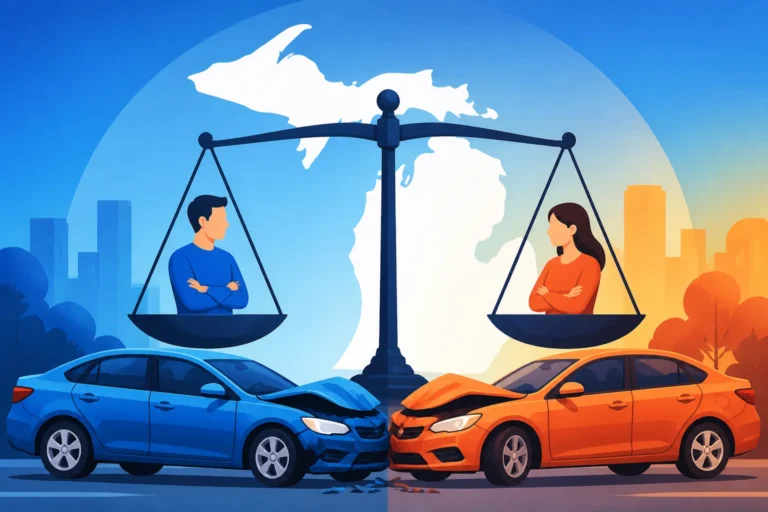
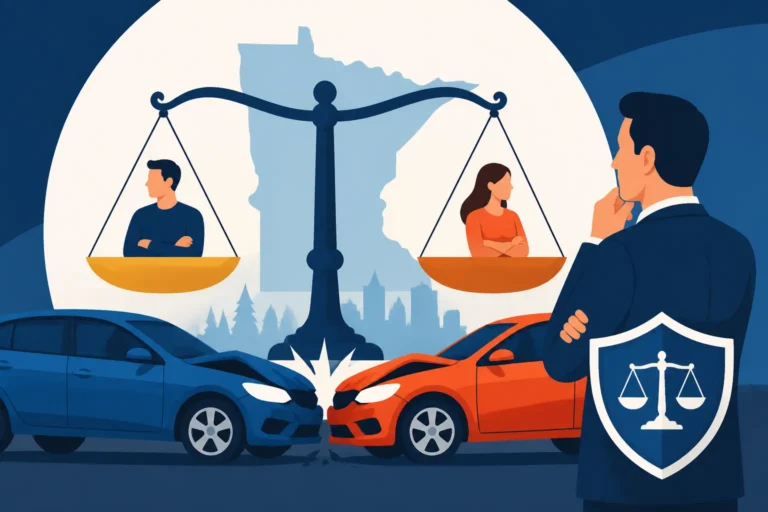
Most states adhere to a system of modified comparative negligence, which has a crucial threshold for recovery. There are two main types: the "50% Bar Rule" and the "51% Bar Rule."
- 50% Bar Rule: In these states (e.g., New Mexico, Colorado, Wisconsin), you can recover damages as long as your percentage of fault is 49% or less. If you are found to be 50% or more at fault, you are completely barred from recovering any compensation.
- 51% Bar Rule: In these states (e.g., Texas, Georgia, Ohio), you can recover damages as long as your percentage of fault is 50% or less. If you are found to be 51% or more at fault, you cannot recover any compensation from other parties.
This distinction is incredibly important in a multi-car pileup. If you're involved in a collision in a 51% bar state and an insurance adjuster determines you were 51% responsible for the pileup, you could walk away with nothing, regardless of how severe your injuries or damages are. This system highlights why establishing your degree of fault, or lack thereof, is so critical. Our guide on Modified Comparative Negligence (50% vs 51% Bar) provides more detail on how these nuances work.
Strict Contributory Negligence States
A handful of states still follow the strict old rule of contributory negligence. In these states (Alabama, Maryland, North Carolina, Virginia, and Washington D.C.), if you are found to be even 1% at fault for the accident, you are completely barred from recovering any damages from the other parties. This is an incredibly harsh rule and makes multi-car pileups in these jurisdictions particularly challenging for victims, as it's often hard to prove you had absolutely no fault whatsoever in a complex chain reaction.
For example, if you're involved in a ten-car pileup in Maryland, and an investigation finds that while another driver clearly caused the initial impact, you were following just a little too closely to the car in front of you, assigning you a mere 5% fault would mean you get nothing. This unforgiving legal standard underscores the immense difficulty of recovering compensation in a multi-car pileup in these states if you cannot demonstrate 0% fault. For more insight into how this works, see our article on Contributory Negligence States (Where 1% Fault Bars Recovery).
Here's a table summarizing the different negligence rules across various states:
| Type of Negligence | Description | Example States |
|---|---|---|
| Pure Comparative | You can recover damages even if you are more than 50% at fault. Your compensation is reduced by your percentage of fault. For instance, if you're 80% at fault with $10,000 in damages, you could still recover $2,000. | California, Florida, New York, Alaska, Arizona, Kentucky, Louisiana, Mississippi, Missouri, New Mexico, Rhode Island, South Dakota, Washington |
| Modified (50% Bar) | You can recover damages only if you are 49% or less at fault. If you are 50% or more at fault, you cannot recover any compensation. | Colorado, Idaho, Kansas, Maine, Massachusetts, Montana, Nebraska, Nevada, New Hampshire, New Jersey, North Dakota, Oklahoma, Oregon, Pennsylvania, South Carolina, Utah, West Virginia, Wisconsin, Wyoming |
| Modified (51% Bar) | You can recover damages only if you are 50% or less at fault. If you are 51% or more at fault, you cannot recover any compensation. | Arkansas, Connecticut, Delaware, Georgia, Hawaii, Illinois, Indiana, Iowa, Michigan, Minnesota, Ohio, Tennessee, Texas, Vermont |
| Contributory | If you are found to be even 1% at fault, you are completely barred from recovering any damages. This is the strictest rule. | Alabama, Maryland, North Carolina, Virginia, Washington D.C. |
Insurance Claims in a Multi-Car Pileup
Filing an insurance claim after a multi-car pileup can feel like a bureaucratic nightmare. With multiple drivers, multiple vehicles, and often multiple insurance companies involved, the process becomes incredibly complex. You're not just dealing with your own insurer; you're potentially interacting with several others, each trying to protect their bottom line.
Dealing with Multiple Insurance Companies
In a multi-car pileup, you might be interacting with your own insurance company (first-party claim) and potentially several other drivers' insurance companies (third-party claims). Each insurer will conduct its own investigation, often focusing on minimizing their client's fault and maximizing the fault of others. This can lead to a prolonged negotiation process where different insurers point fingers at each other, creating significant delays and frustration for those seeking compensation.
For example, if you're in a four-car pileup and your car is the second in line, your insurer might argue that the first car stopped too suddenly and the third car hit you too hard, pushing you forward. The third car's insurer, meanwhile, might claim you stopped too abruptly, or that the fourth car caused the significant damage. This back-and-forth is typical, and it's why having thorough documentation and potentially legal representation becomes even more crucial. Understanding How Insurance Companies Determine Who Is at Fault can help you anticipate some of these challenges.
Uninsured and Underinsured Motorist Coverage
A common concern in multi-car pileups is what happens if one of the at-fault drivers doesn't have insurance or has insufficient coverage to pay for the damages they caused. This is where your uninsured motorist (UM) and underinsured motorist (UIM) coverage becomes incredibly important. UM coverage protects you if you're hit by a driver with no insurance, while UIM coverage kicks in if the at-fault driver's insurance limits are too low to cover your expenses.
In a pileup, it's not uncommon for multiple drivers to be found partially at fault. If one of those at-fault drivers is uninsured or underinsured, your UM/UIM policy can help cover your medical bills, lost wages, and property damage up to your policy limits. Without this coverage, recovering damages from such a driver can be extremely difficult, if not impossible. It's a critical safety net in complex accident scenarios like multi-car pileups.
Property Damage vs. Bodily Injury Claims
Car accident claims generally involve two main components: property damage and bodily injury. Property damage claims cover the cost to repair or replace your vehicle and any other personal property damaged in the accident. These claims are often simpler to resolve as the cost of repairs or the actual cash value of the vehicle is more easily quantifiable.
Bodily injury claims, however, are far more complex. They cover medical expenses, lost wages, pain and suffering, and other non-economic damages resulting from your injuries. In a multi-car pileup, injuries can range from whiplash and soft tissue damage to severe fractures and traumatic brain injuries. Proving the extent of your injuries and their direct link to the pileup, especially when multiple impacts occurred, requires extensive medical documentation and often expert testimony. It's often the bodily injury portion of the claim that truly inflates the overall value of a settlement. Our guide on Common Car Accident Injuries: Complete Guide (2026) can provide more context on the types of injuries you might encounter.
What to Do If You're Involved in a Pileup
Being in a multi-car pileup is terrifying, and in the aftermath, it's easy to feel overwhelmed and unsure of what steps to take. However, your actions immediately following the accident can significantly impact your safety, health, and future claim. Prioritizing certain actions can make a substantial difference in navigating the complexities that lie ahead.
Prioritizing Safety and Seeking Medical Attention
First and foremost, assess your own safety and that of any passengers. If your vehicle is in a dangerous position (e.g., in the middle of a live lane of traffic), and it's safe to do so, try to move it to the shoulder or a safer location. Turn on your hazard lights. If you're unable to move, stay in your vehicle with your seatbelt on, and call for help. Once you're out of immediate danger, check on others if you can do so without putting yourself at further risk.
Even if you feel fine, it's crucial to seek medical attention as soon as possible. Adrenaline can mask pain and symptoms, and some injuries, like whiplash or concussions, might not manifest for hours or even days after the accident. A medical evaluation not only ensures your well-being but also creates an official record of your injuries, which is vital for any future insurance claim. Delaying medical care can be used by insurance companies to argue that your injuries were not caused by the accident. This is an essential step covered in our comprehensive guide, What to Do After a Car Accident: Step-by-Step (2026).
Documenting the Scene and Gathering Information
Once safety is secured and immediate medical needs are addressed, the next crucial step is to document everything you can. Use your phone to take numerous photos and videos of the accident scene: vehicle damage (your car and others), the final resting positions of all vehicles, skid marks, road conditions, traffic signs, and any visible injuries. The more visual evidence you have, the better.
Exchange information with every driver involved if possible. This includes names, contact details, driver's license numbers, insurance policy information, and vehicle license plate numbers. Also, ask for contact information from any eyewitnesses who stopped. Do not admit fault or apologize, as this can be used against you later. Even saying "I'm so sorry this happened" can be twisted into an admission of guilt by an insurance company. Focus solely on fact-finding.
The Importance of Legal Consultation
Given the labyrinthine nature of multi-car pileups, it is almost always advisable to consult with an experienced car accident attorney. With multiple parties, conflicting accounts, and various insurance companies involved, an attorney can navigate the complexities of fault determination, deal with aggressive adjusters, and ensure your rights are protected. They can help gather evidence, consult with accident reconstructionists if necessary, and negotiate on your behalf to maximize your compensation.
Trying to handle a multi-car pileup claim on your own can be incredibly stressful and may result in you receiving significantly less compensation than you deserve, especially if you're up against multiple insurance company lawyers. An attorney understands the nuances of How Comparative Fault Reduces Your Settlement and can protect you from making statements that could jeopardize your claim. Even a free consultation can provide invaluable guidance. To learn more about when professional legal help is needed, read Do You Need a Lawyer for a Car Accident? (2026).
Disclaimer
Please remember that this article provides general information and is not legal advice. Every car accident case is unique, and the information presented here may not apply to your specific situation. For personalized advice, you should consult with a qualified legal professional in your jurisdiction.