Police Reports and Car Accident Fault
Getting into a car accident is one of those experiences that can turn your whole day upside down, leaving you shaken, confused, and worried about what comes next. Among the many anxieties that immediately surface, understanding who is at fault and how that will impact your ability to recover damages is usually right at the top of the list. Often, your first interaction with the official process involves law enforcement, and for many, the police report feels like the ultimate, unassailable truth. But what exactly is a police report, how much weight does it really carry, and can it truly make or break your car accident claim? This comprehensive guide will peel back the layers, offering a realistic look at the critical role police reports play in determining fault and navigating the aftermath of an accident.
Understanding the Initial Police Response to a Car Accident
When you've just been in an accident, especially one that's left your car dented and you feeling a bit rattled, the sight of flashing lights can be both a relief and a source of apprehension. It signifies the official start of documenting what happened, but it also means navigating a process you might not be entirely familiar with.
When Law Enforcement Gets Involved
Not every fender-bender warrants a full police investigation, and that's something many people don't realize until it happens to them. Generally, police are more likely to respond and file a detailed report if there are significant injuries, substantial property damage, or if traffic laws were clearly violated. In some states, there's even a legal requirement to report an accident to the police if the damage exceeds a certain monetary threshold, or if anyone is injured, no matter how minor. For instance, in a bustling city like Los Angeles, if you have a minor scrape in a parking lot with no injuries, the police might simply advise you to exchange information and file a report online. However, if that same accident involves an injured pedestrian or a vehicle that's too damaged to drive, you can bet law enforcement will be on the scene, lights and sirens included.
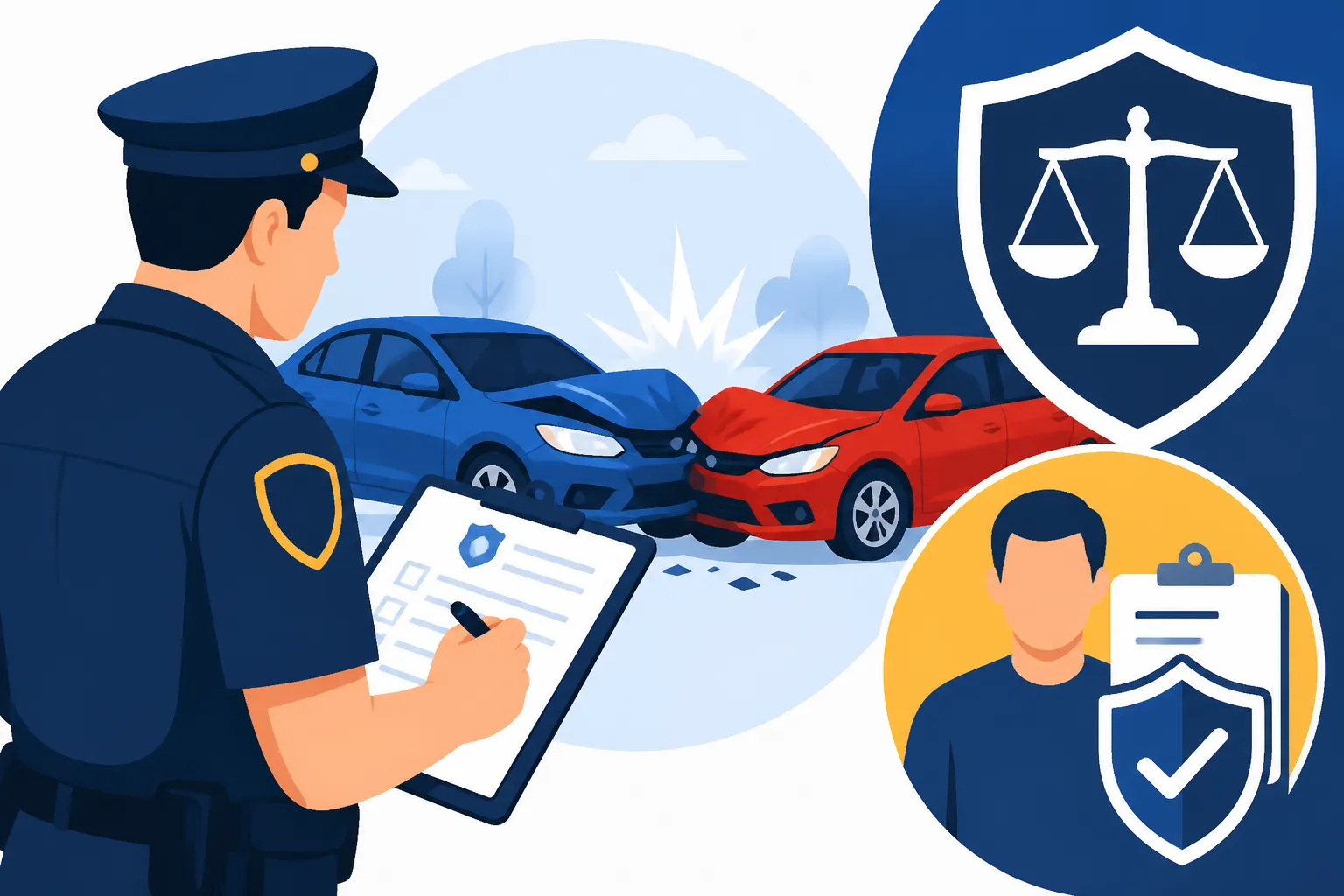
The immediate priorities for responding officers are always safety and medical attention. They'll first secure the scene, often by setting up flares or cones, to prevent further accidents. Then, they'll check on the occupants of all involved vehicles and any witnesses, making sure emergency medical services are called for anyone who needs it. After that, they'll start directing traffic, if necessary, to keep the flow moving and ensure the area is safe for everyone involved and for other drivers passing by. It's a hectic environment, and the officers are juggling multiple tasks, all while trying to piece together a coherent story from what's often a chaotic scene.
The Information Collection Process at the Scene
Once the immediate safety concerns are addressed, the officers shift their focus to gathering facts, which is where the real groundwork for the police report begins. They'll methodically interview all drivers involved, asking for their version of events. This is a critical moment, and how you articulate what happened can have lasting implications. Officers will also speak to any witnesses who stopped, collecting their contact information and statements. Beyond verbal accounts, they'll meticulously examine the physical evidence at the scene. This includes looking at the points of impact on the vehicles, searching for skid marks on the pavement, noting the presence and location of any debris (like shattered glass or plastic pieces), and observing road conditions such as rain, ice, or potholes.
They'll also record details about the environment, like whether it was day or night, if streetlights were present, and what the visibility was like. For example, if two cars collide at an intersection, the officer will check for traffic signals, stop signs, or yield signs and note their operational status. All of this information, from the smallest piece of shattered taillight to the expansive skid marks, helps the officer reconstruct the sequence of events and develop an initial understanding of How Fault Is Determined in a Car Accident. They'll collect your driver's license, vehicle registration, and insurance information from all parties involved, cross-referencing names and vehicle details to ensure accuracy. It's a whirlwind of activity, and it’s crucial for you to remain calm, cooperative, and accurate in your statements without admitting fault.
What Goes Into a Police Report? Key Components Explained
Many people view a police report as a simple narrative of an accident, but in reality, it's a structured document packed with specific data points and observations. Understanding what typically makes it into one of these reports can help you appreciate its role and limitations in a car accident claim.
Essential Data Points and Incident Details
A police report is far more than just a summary; it’s a detailed log of the accident. At its core, it includes all the essential identifying information: the precise date and time of the incident, the exact street address or intersection where it occurred, and details about the weather conditions at that moment – was it raining, snowing, clear, or foggy? It will list all the parties involved, including drivers, passengers, and pedestrians, complete with their names, contact information, and insurance policy details. The vehicles themselves are described in detail, noting their make, model, year, license plate number, and registered owner. If any citations were issued to any of the drivers for traffic violations, those will also be clearly noted in this section.
Think of it like a puzzle: each of these data points is a piece, and the officer’s job is to collect as many as possible to form a complete picture. For instance, knowing that an accident happened at 2:00 AM on a dimly lit stretch of Highway 101 during a heavy rainstorm paints a very different picture than one occurring at noon on a clear, sunny day in a residential neighborhood. These objective facts provide the unarguable foundation upon which any further investigation, whether by insurance adjusters or attorneys, will be built. They ensure that everyone discussing the accident is working from the same baseline understanding of the concrete circumstances.
Officer's Observations and Diagram
One of the most valuable aspects of a police report is the responding officer’s objective observations of the scene. Unlike the involved drivers or even witnesses, an officer arrives with a fresh, neutral perspective, trained to look for specific physical evidence that tells a story. They'll meticulously document things like the final resting positions of all vehicles, whether they came to a stop in the roadway, on the shoulder, or in a ditch. The report will often describe the nature and extent of the vehicle damage, noting if it was a rear-end collision, a T-bone, or a sideswipe. Crucially, they'll look for and measure skid marks, which can indicate vehicle speed, braking distance, and even the direction of travel just before impact. They'll also note the location of any debris, such as broken glass, plastic, or leaked fluids, as these can pinpoint the exact area of impact.
Many police reports also include a hand-drawn diagram or a computer-generated schematic of the accident scene. This visual representation can be incredibly powerful, showing the roadways, traffic control devices, and the positions of vehicles and other objects. For example, a diagram might show a car having crossed a double yellow line, or a vehicle positioned in a way that suggests it was broadsided at an intersection. This visual evidence can often clarify complex situations far better than words alone, providing an impartial, documented snapshot of the scene that can be invaluable later on when proving How to Prove the Other Driver Was at Fault. While the officer's interpretation may be open to discussion, the physical facts they observe and diagram are generally considered strong evidence.
Witness Statements and Driver Accounts
Perhaps the most human element of a police report comes from the statements provided by those directly involved: the drivers and any eyewitnesses. Officers will typically interview each driver separately, asking them to describe what happened from their perspective. It's common for these accounts to differ, sometimes significantly, especially when emotions are running high or memories are hazy. The officer will record these statements, noting any discrepancies or points of agreement. They'll also gather contact information and statements from independent witnesses – people who saw the accident unfold but were not involved. These third-party accounts can be particularly persuasive because they are usually seen as less biased than the drivers' own versions.
However, it's important to remember that human memory can be fallible, and even well-meaning witnesses can misinterpret events or recall details inaccurately. The officer's role is to collect these different perspectives, not necessarily to immediately reconcile them. The report will simply state what each person said. For example, Driver A might claim they had a green light, while Driver B insists their light was green. The officer will note both statements, and if there's no camera footage or independent witness to confirm, this becomes a point of contention. While statements are crucial, it’s the officer’s job to weigh them against the physical evidence and traffic laws to form a preliminary opinion of fault, which we’ll delve into next.
How Police Officers Determine Fault at the Scene
The moment an officer arrives at an accident scene, one of their primary tasks is to figure out what happened and, often, who was responsible. This isn't just about assigning blame; it's about understanding the sequence of events and identifying any traffic violations that contributed to the collision.
The Role of Traffic Laws and Violations
Traffic laws are the rulebook of the road, designed to ensure safe and orderly travel. When an accident occurs, officers naturally look to see if any of these rules were broken. If a driver was speeding, ran a red light, failed to yield the right-of-way, or made an illegal turn, these actions are direct violations of traffic laws and often point towards fault. For example, if a driver turns left in front of oncoming traffic without a protected left-turn signal and causes a collision, the officer will almost certainly issue a citation for failure to yield. That citation, recorded directly in the police report, serves as a strong indication that the driver who received it was primarily at fault for the accident.
It's important to understand that while a citation strongly suggests fault, it's not always the definitive legal ruling on fault for an insurance claim. A driver might contest the citation in court and even get it dismissed. However, in the immediate aftermath, the issuance of a citation in the police report provides a very clear signal to insurance companies about the officer's preliminary assessment. Conversely, if no citation is issued, it doesn't automatically mean no one was at fault; it simply means the officer didn't observe a clear-cut traffic violation that they felt warranted legal action at that moment. The connection between a specific traffic violation and the cause of the accident is a key piece of the puzzle officers use to establish fault.
Evidence-Based Assessment and Narrative
Beyond just looking for traffic violations, officers combine all the information they gather to construct a cohesive narrative of the accident. This involves piecing together the physical evidence—like skid marks, points of impact, and debris fields—with the statements from drivers and witnesses. They analyze how the vehicles moved before, during, and after impact, using their training to deduce the most probable sequence of events. For instance, deep, long skid marks from one vehicle that end just before the point of impact, coupled with minimal damage to the front of that vehicle but extensive side damage to another, might lead an officer to conclude that the first vehicle braked hard but couldn't avoid hitting the second, which perhaps ran a stop sign.
The officer's final narrative in the police report often includes an "opinion" of fault. This is their professional conclusion based on all the evidence and facts they've collected and analyzed at the scene. While this opinion isn't a legal declaration of guilt, it carries significant weight. It's the officer's best judgment of who caused the accident based on their immediate, on-site investigation. For example, a report might state, "Driver A failed to stop at a posted stop sign, causing a collision with Vehicle B." This narrative, backed by the physical evidence and witness accounts, forms the core of the officer's determination. While this initial assessment by law enforcement is a powerful piece of information, it’s worth noting that it’s not the only factor insurance companies consider, as we’ll explore further.
The Impact of the Police Report on Your Car Accident Claim
So, you’ve got a police report in hand. Now what? Understanding how this document influences the subsequent steps in your car accident claim is crucial. While it's a powerful tool, it's not the be-all and end-all, and its influence can vary depending on who's looking at it.
Insurance Company Perspective
For insurance companies, the police report is often the first, and sometimes the most important, piece of objective evidence they receive. When you file a claim, one of the first things an adjuster will do is request the official police report. They use it as a foundational document to quickly understand the basics of the accident: who was involved, where and when it happened, vehicle descriptions, and crucially, any initial determination of fault by the responding officer. If the police report clearly assigns fault to the other driver—perhaps they were issued a ticket for running a red light—it can significantly streamline your claim. The insurance company for the at-fault driver is much more likely to accept liability without extensive investigation, leading to a smoother process for getting your vehicle repaired and your medical bills addressed.
However, if the report is unclear, assigns fault to you, or notes conflicting statements, the insurance company will likely conduct its own, more thorough investigation. They might interview witnesses again, review photos you provided, and even consult with accident reconstruction specialists. Companies like State Farm or Geico often have their own teams of adjusters and investigators whose job it is to verify or dispute the findings of a police report. A clear police report favorable to your side can speed up the process dramatically, potentially leading to a quicker settlement. Conversely, an unfavorable report can mean an uphill battle, requiring more evidence and potentially legal intervention to challenge the insurance company's initial stance. Knowing How Insurance Companies Determine Who Is at Fault helps you understand that a police report is a major data point, but not necessarily the only one.
Legal Standing and Admissibility in Court
While police reports are heavily relied upon in the initial stages of a car accident claim and during negotiations, their legal standing in court can be a bit more complex. In many states, the officer's opinion regarding who was at fault is considered hearsay and is often not admissible as direct evidence in a personal injury trial. This means an attorney usually can't simply present the report and say, "The officer said the other driver was at fault, so they are." The rationale behind this is that the officer wasn't an eyewitness to the accident itself and their opinion is formed post-event.
However, the factual observations within the report, such as measurements of skid marks, vehicle positions, road conditions, and recorded statements, are often admissible. For instance, the officer's diagram of the scene or their notes on traffic control devices would typically be allowed. If an officer issued a traffic citation to one of the drivers, and that driver pleaded guilty or was convicted, that conviction can be very persuasive evidence in a civil case, even if the officer's opinion of fault is not. So, while the report itself doesn't automatically win or lose a court case, the underlying facts and any associated citations are incredibly important. This distinction between "opinion" and "fact" within the report is crucial for understanding its actual weight in a legal battle.
Challenging an Inaccurate or Unfavorable Report
What happens if the police report contains errors or, even worse, incorrectly assigns fault to you? It's a frustrating situation, but it's not always a dead end. First and foremost, if there are objective, factual errors in the report—like an incorrect license plate number, a misspelled name, or a wrong location—you can typically contact the police department that filed the report and request an amendment. You'll usually need to provide clear evidence to support your request, such as your driver's license showing the correct spelling of your name or photos proving the damage was on a different part of the vehicle.
Challenging an officer's opinion of fault is significantly more difficult, but not impossible. You can't just call up and say, "I disagree with the officer's conclusion." Instead, you'll need to gather compelling counter-evidence. This might include dashcam footage, surveillance video from nearby businesses, additional independent witness statements that contradict the report, or even expert testimony from an accident reconstructionist. Your attorney can help you present this evidence to the insurance companies involved and, if necessary, in court. While the police report holds considerable sway, it's not the final word. When What Happens If the Other Driver Blames You?, even if the police report sides with them, a strong legal strategy with additional evidence can help correct the narrative.
When a Police Report May Not Be Available or Detailed
Sometimes, for various reasons, a comprehensive police report simply isn't generated after an accident. This can add another layer of complexity to an already stressful situation, but it doesn't mean your claim is automatically doomed.
Minor Accidents and No Police Response
It’s a common scenario, especially in larger cities or during busy times: you have a minor fender-bender, maybe a small dent or a scraped bumper, no one is injured, and both cars are still perfectly drivable. You call 911, expecting an officer to come out, but the dispatcher tells you that law enforcement resources are prioritized for accidents involving injuries, significant property damage, or blocked roadways. They might advise you to simply exchange information with the other driver and file a self-report online or with the DMV. This happens frequently in places like Dallas or Phoenix, where police departments have strict guidelines on when they will dispatch officers for non-emergency incidents.
While it might feel unsettling to not have an official police presence, it's a reality for many minor collisions. The upside is that you avoid a potential traffic citation. The downside is that you lose the independent, third-party documentation that a police report provides. This puts a much greater burden on you, the driver, to meticulously document everything. Without a police report, insurance companies will rely heavily on the information exchanged, your statements, photos, and any witness accounts you were able to gather. This is why understanding Do You Have to Call the Police After a Minor Accident? and being prepared to act independently is so important.
What to Do If There Was No Police Report
If the police don't respond to your accident, or if they only create a minimal information exchange report, you become the primary investigator. This isn't ideal, but with the right steps, you can still build a strong case for your claim. The absolute first thing you should do, after ensuring everyone's safety, is to take as many photos and videos as possible with your smartphone. Document everything: the damage to both vehicles from multiple angles, the positions of the vehicles, any skid marks, road conditions, traffic signs, and surrounding landmarks. Make sure the license plates of all vehicles are clearly visible in your photos.
Next, gather all the necessary information from the other driver(s): full name, contact number, driver's license number, insurance company name, policy number, and vehicle information (make, model, year, VIN). If there were any witnesses, get their names and contact numbers. Even a quick verbal statement recorded on your phone can be useful. If you feel any pain or discomfort, no matter how minor, seek medical attention promptly. Delayed symptoms are common, and medical records are crucial for your claim. Finally, notify your own insurance company immediately, even if you believe the other driver is entirely at fault. Being proactive in gathering evidence and reporting the incident can significantly help when What If There Was No Police Report? to fall back on.
Beyond the Police Report: Other Factors in Fault Determination
While a police report is a strong piece of evidence, it’s rarely the only factor that ultimately determines fault in a car accident claim. Insurance companies, attorneys, and courts will often look at a broader spectrum of information to arrive at a definitive conclusion.
Independent Investigations and Expert Analysis
Especially in cases involving serious injuries, significant property damage, or disputed liability, an independent investigation will almost certainly be launched. This is where attorneys and insurance companies go beyond the initial police findings. They might hire professional accident reconstructionists, experts who use scientific principles, physics, and advanced software to analyze the scene, vehicle damage, and other data to determine exactly how the accident occurred. These experts can calculate speeds, angles of impact, and even the forces involved in the collision, providing a highly detailed and often irrefutable breakdown of the events.
Furthermore, these investigations can uncover evidence not necessarily captured in a standard police report. This might include retrieving "black box" data from vehicles (event data recorders that record crash-related information like speed and braking), obtaining surveillance footage from nearby businesses or traffic cameras, or even analyzing cell phone records if distracted driving is suspected. For example, if a police report concluded minimal fault for a driver, but black box data shows they were traveling significantly over the speed limit just before impact, that new evidence can drastically shift the fault determination. These specialized investigations can provide a level of detail and scientific backing that far exceeds what a responding officer can typically conduct at the scene.
Witness Credibility and Testimony
Even if a police report is unfavorable, the live testimony of witnesses can dramatically influence how fault is ultimately decided. In legal proceedings, a witness's credibility is paramount. An attorney will meticulously prepare witnesses, including the drivers themselves, to present their accounts clearly and consistently. A compelling, believable testimony from an independent witness who observed the accident can override an officer's initial opinion, especially if that opinion was based on incomplete information or an imperfect understanding of the situation. For example, if a police report suggested a driver was at fault for an improper lane change, but a bystander provides clear testimony, backed by a written statement, that another vehicle suddenly swerved into their lane without signaling, that testimony could introduce reasonable doubt or even shift fault.
The way a witness presents their story, their demeanor, and their ability to recall specific details under cross-examination can all play a significant role. Even the drivers involved, if they can articulate their experience calmly and consistently, can be powerful advocates for their side. This human element, the ability to explain what happened in a courtroom setting, adds another layer to fault determination that a static police report cannot fully capture. This is where a skilled attorney can really shine, ensuring that all available credible testimony is presented effectively to support your claim.
State-Specific Fault Laws
It's also crucial to remember that the legal framework for determining and applying fault varies significantly from state to state. While a police report might determine an officer's opinion of fault, how that fault translates into compensation depends on your state's laws. For example, some states follow "pure comparative negligence" rules, where you can recover damages even if you're 99% at fault, though your payout will be reduced proportionally. Other states use "modified comparative negligence" (often with a 50% or 51% bar), meaning if you are found to be more than a certain percentage at fault, you cannot recover any damages. Then there are a few "contributory negligence" states where if you are found even 1% at fault, you are barred from recovering anything at all.
Understanding Comparative vs Contributory Negligence Explained is critical because even if a police report points primarily to the other driver, if you're found to share some percentage of fault under your state's laws, your compensation will be affected. For instance, in a modified comparative negligence state like Texas, if you're found 60% at fault, you wouldn't be able to recover anything from the other driver's insurance, even if the police report assigned them 40% of the blame. Furthermore, some states operate under a "no-fault" system, where your own insurance generally covers your initial medical expenses regardless of who caused the accident. This is why knowing What Is a No-Fault State? (And Which States Are No-Fault) is as important as understanding the police report itself, as it dictates the very structure of how claims proceed.
Key Components of a Police Report and Their Value in a Claim
| Report Component | Description | Value in Claim | Potential Limitations |
|---|---|---|---|
| Basic Information | Date, time, location, involved parties, vehicles, insurance details. | Establishes factual context, helps locate parties and policies, confirms identity. | Purely factual, doesn't assign fault. |
| Witness Statements | Accounts from drivers and independent witnesses. | Provides direct perspectives, offers independent corroboration (from witnesses). | Can be biased (drivers), fallible memory (all), conflicting accounts common. |
| Officer's Observations | Physical evidence: skid marks, debris, vehicle positions, damage. | Strong objective evidence, helps reconstruct accident, less prone to bias. | Officer's interpretation of significance may vary. |
| Scene Diagram | Visual representation of the accident scene. | Clear visual aid, helps illustrate vehicle paths and points of impact. | Simplified representation, may not capture all nuances. |
| Traffic Citations | Any tickets issued to drivers for violations. | Strong indicator of initial fault, very persuasive for insurance companies. | Can be contested or dismissed in traffic court, not a final fault determination. |
| Officer's Opinion of Fault | Officer's conclusion on who caused the accident based on evidence. | Influential for initial insurance assessment, guidance for negotiations. | Often considered hearsay in court, may be challenged with conflicting evidence. |
Steps to Take After an Accident to Strengthen Your Position
Even with a comprehensive police report, your actions immediately following an accident, and in the days and weeks after, can significantly impact the strength of your car accident claim. Being prepared and proactive is key.
Immediate Actions at the Scene
The moments immediately following an accident can be chaotic, but it's crucial to try and remain as calm as possible and follow a set of critical steps. First, prioritize safety: move your vehicle to the side of the road if it's safe to do so, turn on your hazard lights, and ensure everyone involved is okay. If there are any injuries, call 911 immediately. Once the scene is safe, you must exchange information with the other driver(s). This includes names, contact information, driver's license numbers, vehicle insurance details (company and policy number), and license plate numbers. Remember, you can refer to What Information to Exchange After a Car Accident for a handy checklist. It's also vital to document the scene thoroughly yourself, even if police are on their way. Take photos and videos of everything: vehicle damage, road conditions, traffic signs, skid marks, and any visible injuries.
Do not, under any circumstances, admit fault or apologize for the accident at the scene. Even a seemingly innocuous "I'm so sorry!" can be misconstrued later as an admission of guilt. Stick to the facts when speaking with the police and the other driver. If possible, collect contact information from any witnesses who stopped. Even if they only saw a small part of the incident, their perspective could be valuable. Finally, if you feel even the slightest bit of pain or discomfort, or even if you feel perfectly fine but experienced a significant jolt, seek medical attention. Adrenaline can mask injuries, and seeing a doctor promptly creates a clear medical record that can link any future symptoms directly to the accident. Following these steps closely, as outlined in What to Do After a Car Accident: Step-by-Step (2027), lays a strong foundation for any potential claim.
Documenting Everything for Your Claim
The aftermath of an accident is not a sprint, it’s a marathon of documentation. Beyond the initial evidence gathered at the scene, maintaining meticulous records throughout the entire process is paramount. Start by creating a dedicated folder, either physical or digital, where you store everything related to the accident. This includes copies of the police report, all medical records from doctor's visits, physical therapy, specialist consultations, and prescription receipts. Keep a detailed log of all your symptoms, how they affect your daily life, and any pain levels you experience. This can be crucial evidence for pain and suffering damages.
You should also track all accident-related expenses, such as vehicle repair estimates, rental car bills, and any out-of-pocket costs like co-pays or over-the-counter medications. If you missed any work due to your injuries or medical appointments, keep records of lost wages, including pay stubs and employer statements confirming your time off. Document all communications you have with insurance companies, including the names of adjusters you spoke with, the date and time of calls, and a brief summary of what was discussed. The more thoroughly you document every aspect of your experience, the more robust your claim will be, providing clear, tangible evidence of your damages and losses.
Communicating with Insurance and Legal Counsel
Navigating conversations with insurance companies after an accident can feel like walking a tightrope. While you must report the accident to your own insurance provider promptly, you need to be very cautious when speaking with the other driver's insurance company. Their adjusters are trained to minimize payouts, and they might try to get you to say something that could undermine your claim. It’s generally advisable to provide only the most basic factual information (name, date of accident, contact details) and refrain from giving detailed statements, especially recorded ones, without first consulting with an attorney. You can learn more about this cautious approach by reviewing Should You Talk to a Lawyer Before the Insurance Company?.
If you've suffered significant injuries, or if fault is disputed, the best course of action is almost always to consult with an experienced car accident lawyer. An attorney can take over all communications with insurance companies, ensuring your rights are protected and that you don't inadvertently jeopardize your claim. They can help you interpret the police report, gather additional evidence, negotiate with adjusters, and represent you in court if a fair settlement can't be reached. They understand the complexities of state laws, the nuances of fault determination, and how to maximize your chances of receiving fair compensation for your injuries and losses. Having professional legal counsel on your side can alleviate much of the stress and uncertainty that comes with a car accident claim.
Disclaimer
Please remember that this information is intended for general guidance and informational purposes only, and does not constitute legal advice. Every car accident case is unique, and the laws governing fault and insurance claims can vary significantly by state and specific circumstances. It is always recommended to consult with a qualified legal professional for advice tailored to your individual situation.