Fault in a Chain-Reaction Rear-End Crash
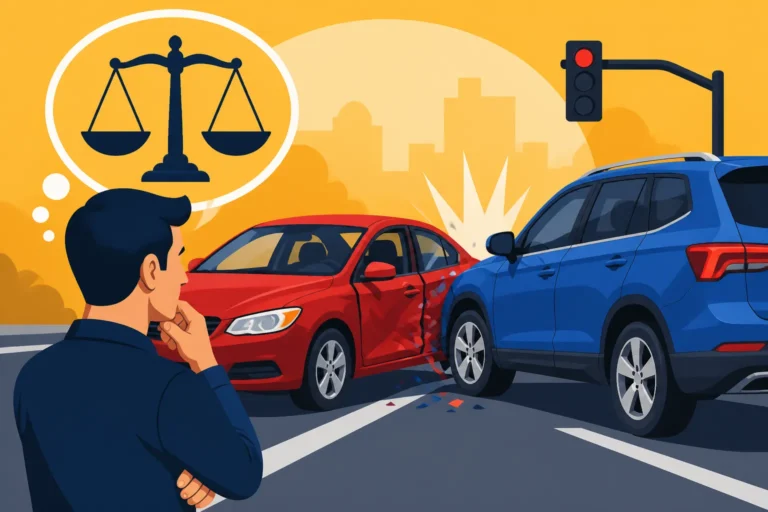
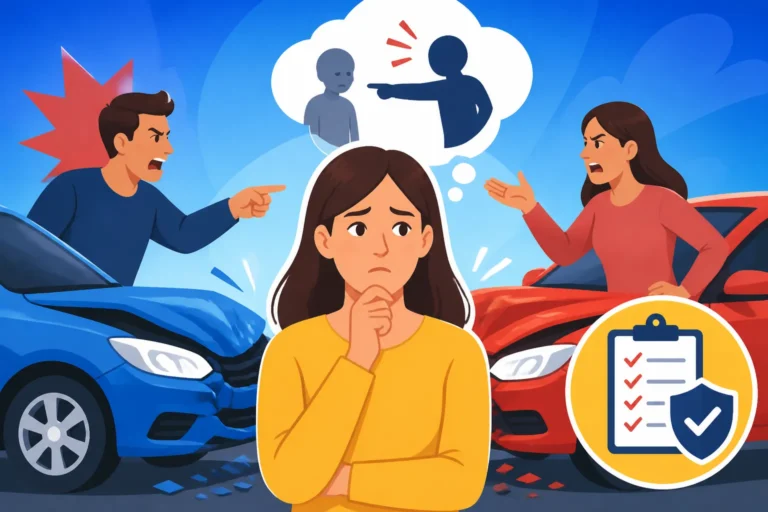
Being involved in any car accident is incredibly jarring, but a chain-reaction rear-end crash? That's a whole new level of confusion and anxiety. You're sitting there, dazed, and suddenly realize your car isn't just hit once, but potentially twice or even three times, often by different vehicles. The immediate question swirling in your head is usually, "Who in the world is at fault for all this?" This guide is here to untangle the complexities of fault in these stressful, multi-vehicle pile-ups, helping you understand how responsibility is typically assigned.
Understanding the Basics of a Chain-Reaction Crash
When we talk about car accidents, most people picture a simple two-car fender bender. But chain-reaction crashes are a different beast entirely. They involve multiple vehicles colliding in a sequential manner, often making it incredibly difficult to pinpoint the exact cause and the precise order of impacts.
What Defines a Chain-Reaction Accident?
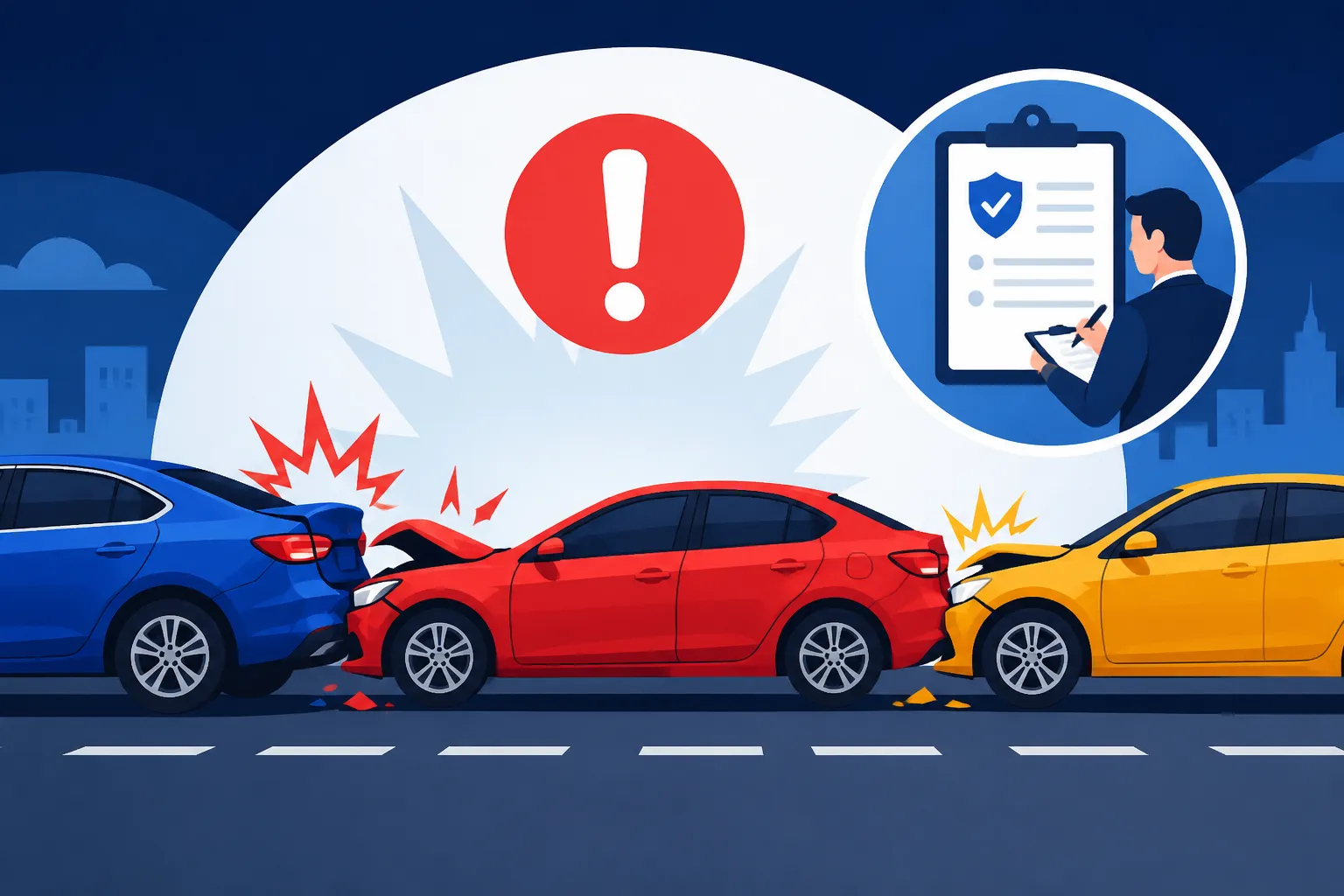
At its core, a chain-reaction accident, especially a rear-end one, is a series of impacts where one collision directly triggers the next. Imagine a line of cars stopped at a red light on a busy street like Wilshire Boulevard in Los Angeles. Suddenly, a distracted driver, let's call them Driver A, slams into the back of Driver B. This initial impact propels Driver B's car forward, causing it to crash into Driver C's car, and potentially pushing Driver C into Driver D. This "domino effect" is the hallmark of a chain-reaction crash. It's not just multiple separate accidents happening in the same vicinity; it's one event cascading into another. The key is that the force from the initial impact, or a lack of subsequent safe driving, leads to further collisions down the line.
Why These Crashes Are So Complex
The sheer number of variables in a chain-reaction accident makes fault determination incredibly complex. You're not just dealing with two drivers' actions, but often three, four, or even more. Each driver's speed, braking time, reaction, and even the condition of their vehicle can play a role. For instance, did Driver B have time to react before being pushed into Driver C? Did Driver C then slam on their brakes, only to be hit by another car from behind (Driver D) before they even hit the car in front of them?
The forces involved are also hard to trace. A car might sustain damage from being hit from behind, and then again from hitting the car in front. Sometimes, a vehicle is struck so hard that it's propelled into another, but the driver of that "pushed" vehicle might still be found partially at fault if they had an opportunity to avoid a secondary collision and failed to do so. This interconnectedness means that disentangling who hit whom, in what order, and who truly bears responsibility for each impact, requires a thorough investigation, often by law enforcement and insurance experts.
The Presumption of Fault in Rear-End Collisions
Even in a complex chain-reaction crash, the legal principles that apply to simpler rear-end collisions still form the foundation of fault determination. Understanding this basic rule is crucial for making sense of the larger picture.
The General Rule: Following Too Closely
The most common understanding in traffic law is that the driver who rear-ends another vehicle is almost always at fault. This is because drivers are expected to maintain a safe following distance, allowing them ample time to react and stop if the car in front of them suddenly brakes or slows down. In states like California, this is codified in Vehicle Code Section 21703, which states that a driver "shall not follow another vehicle more closely than is reasonable and prudent."
The logic is straightforward: if you hit the car in front of you, it's generally presumed you were either not paying attention, driving too fast for conditions, or following too closely. This presumption places a significant burden on the rear driver to prove they were not at fault. For instance, if the lead driver suddenly reverses or has non-functioning brake lights, those could be valid defenses. However, such scenarios are exceptions, not the rule. This primary principle helps simplify the initial analysis of even multi-car pile-ups. For a deeper dive into this, you might want to read our article on Rear-End Collision Fault: Who Is Responsible?.
How This Applies to the First Impact
In a chain-reaction rear-end crash, the "general rule" often points directly to the very last car in the chain as the initiator of the entire event. Imagine again our scenario on Wilshire Boulevard. Driver A, who slams into Driver B, is typically held responsible for that initial impact. Their failure to maintain a safe distance or to pay attention is seen as the catalyst.
This means that if Driver A hits Driver B, and Driver B then hits Driver C because of the force of Driver A's impact, Driver A is often considered primarily at fault for the damages to both Driver B and Driver C. The critical distinction here is whether Driver B's collision with Driver C was an unavoidable consequence of being hit by Driver A. If Driver B had no reasonable opportunity to stop or avoid hitting Driver C after being struck, then Driver A's negligence is seen as the cause of that subsequent collision as well. This tracing of cause and effect is vital in assigning responsibility beyond just the first point of contact.
Unraveling Fault in Multi-Vehicle Scenarios
While the initial impact often points to the last driver in the chain, it's rare that the fault is entirely one-sided in a complex multi-vehicle crash. The actions, or inactions, of the middle and even front vehicles can sometimes play a role in how liability is ultimately distributed.
The "Push" Theory vs. Independent Impacts
This is where things get really nuanced. One of the primary theories in chain-reaction crashes is the "push" theory. This concept posits that the initial striking vehicle (Driver A) hits the vehicle directly in front of it (Driver B) with such force that Driver B is pushed into the vehicle ahead (Driver C). In this scenario, Driver A is often held liable for all damages, as their negligence caused the entire chain of events. Driver B, having been an unwilling participant, is not typically found at fault for hitting Driver C if they were simply propelled forward.
However, things are different with "independent impacts." This occurs when, after the initial collision, there's a subsequent impact that isn't a direct result of being pushed. For example, Driver A hits Driver B, causing damage. Then, sometime later, or perhaps with enough time to react, Driver B then hits Driver C, perhaps because Driver B was still too close to Driver C after the initial impact from Driver A, or panicked and hit the gas instead of the brake. Or, another common scenario: Driver A hits Driver B, and then independently, a separate Driver D, who was behind Driver A, fails to stop and hits Driver A, pushing them even further into Driver B. Each impact needs careful examination. Law enforcement and insurance adjusters will analyze factors like the time between impacts, the damage patterns, and driver statements to determine if a vehicle was merely pushed or if its driver contributed to the subsequent collision.
The Role of the Middle Vehicle(s)
Even if a middle vehicle is struck from behind, their actions can sometimes contribute to the overall fault. While it's less common, a middle driver might share some responsibility if, for instance, they:
- Slammed on their brakes without a legitimate reason: If the car in front of them wasn't stopping, and they suddenly stopped for an unreasonable cause, contributing to the following driver not being able to stop in time.
- Had non-functioning brake lights: This prevents the following driver from receiving a proper warning.
- Made an unsafe lane change: If they suddenly cut into a lane, making it impossible for the car behind them to react.
- Were following the car in front of them too closely: If Driver B was tailgating Driver C, and Driver A hits Driver B, pushing them, Driver B might still be partially at fault for the impact with Driver C if they hadn't maintained a safe distance to begin with.
In states that follow comparative negligence laws, like California or Florida, even if you are mostly a victim, your own percentage of fault for contributing to any part of the chain can reduce the compensation you receive. Our article What Happens If You're Partially at Fault? delves into how this can impact your claim.
The Front Vehicle's Potential Fault
It’s rare, but the very first car in the chain, the one at the front of the line, can sometimes bear a portion of the fault. This isn't the usual scenario, but it can happen if their actions directly contributed to the collision. Examples include:
- Sudden, unwarranted stop: If the driver in the lead vehicle slams on their brakes for no discernible reason (e.g., no obstacle, no traffic light change, just sudden panic or distraction), they could be found partially negligent. This is distinct from stopping due to traffic or a hazard.
- Illegal maneuvers: Making an illegal U-turn or suddenly cutting across multiple lanes of traffic without warning.
- Malfunctioning equipment: As mentioned, having non-functional brake lights, though this would likely be a secondary contributing factor rather than primary fault.
Proving the lead vehicle was at fault is a heavy lift, as the general presumption is against the rear driver. However, witness statements or dashcam footage might support such a claim. This level of detail in fault assignment shows just how intricate these cases can become.
Key Factors in Determining Fault
Because chain-reaction accidents are so complex, determining fault relies heavily on gathering and analyzing a wide array of evidence. It's not just about who hit whom, but also the context, sequence, and contributing factors.
Police Reports and Accident Reconstruction
The first and often most critical piece of evidence is the official police report. When officers arrive at the scene of a chain-reaction crash, they aren't just filing paperwork; they're acting as initial investigators. They will interview all drivers and witnesses, document the position of vehicles, note any observable damage, and often create a diagram of the accident scene. They'll also record any citations issued, which, while not a final determination of civil fault, can strongly indicate who the officer believed was negligent.
For highly complex or severe chain-reaction crashes, accident reconstruction specialists might be brought in. These experts, often former law enforcement or engineers, use scientific principles, physics, and advanced technology to recreate the accident sequence. They analyze skid marks, crush damage, vehicle speeds, and impact angles to determine the precise order of events and the forces involved. Their findings can be instrumental in accurately assigning fault among multiple parties. Our article Police Reports and Car Accident Fault elaborates on the importance of these official documents.
Witness Statements and Dashcam Footage
In a multi-car pile-up, independent witness statements can be invaluable. Unlike the drivers involved, who often have a vested interest in assigning blame elsewhere, unbiased witnesses can provide crucial perspectives on what they saw unfold. They might corroborate a driver's account, or contradict it, shedding light on who initiated the first impact, how fast vehicles were traveling, or if any driver made an unusual maneuver. It’s always important to gather contact information for any witnesses at the scene.
Increasingly, dashcam footage is becoming a game-changer in these situations. A dashcam can provide an irrefutable, real-time recording of the accident, showing exactly what happened, when, and who was responsible for which impact. This video evidence can cut through conflicting statements and prevent finger-pointing, offering a clear, objective account that police and insurance adjusters can rely on. If you or another driver have dashcam footage, make sure it is preserved immediately.
Vehicle Damage and Impact Points
Analyzing the physical damage to each vehicle involved is another cornerstone of fault determination. Expert adjusters and reconstructionists can often "read" the damage to understand the sequence and nature of the impacts. For example:
- Front-end vs. Rear-end Damage: If a car has extensive rear-end damage but no front-end damage, it strongly suggests it was only hit from behind. If it has both, it indicates it was hit from behind and then impacted the vehicle in front.
- Direction of Force: Paint transfers, crumple patterns, and even the direction of twisted metal can reveal the angle and force of an impact, helping to differentiate between being "pushed" and an independent collision.
- Undercarriage Damage: Sometimes, if a car is driven over debris or pushed forcefully, there might be damage underneath that points to the severity and nature of the impact.
This forensic examination of the vehicles, combined with other evidence, helps piece together the puzzle of who hit whom and what ultimately caused each subsequent collision in the chain. Understanding How Fault Is Determined in a Car Accident is crucial, and this includes a thorough review of vehicle damage.
Navigating Insurance Claims and Legal Implications
Once the dust settles, and the initial assessments are made, dealing with the aftermath of a chain-reaction crash involves a complicated dance with insurance companies and, potentially, the legal system. The multi-party nature of these accidents adds layers of complexity that aren't present in simpler collisions.
Dealing with Multiple Insurance Companies
In a chain-reaction crash, you're not just dealing with your own insurance company and the at-fault driver's; you might be interacting with three, four, or even more different insurance providers. Each company will be representing its own policyholder, and their primary goal will be to minimize their payout. This often leads to extensive investigation and sometimes finger-pointing among the insurers themselves.
If you're the victim, you might end up filing a "third-party claim" against the at-fault driver's insurance, or multiple third-party claims against different drivers if fault is split. Alternatively, you might initially file a "first-party claim" with your own insurance company, especially if you have collision coverage or medical payments coverage, and let your insurer pursue reimbursement from the at-fault parties' insurers through a process called subrogation. This can sometimes streamline the process for you, but it doesn't eliminate the underlying complexity. Our guide on How Insurance Companies Determine Who Is at Fault sheds more light on this intricate process.
Comparative and Contributory Negligence
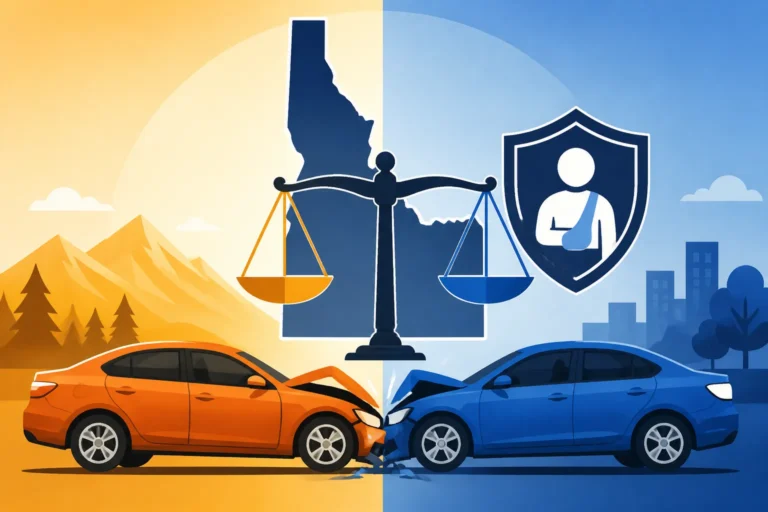
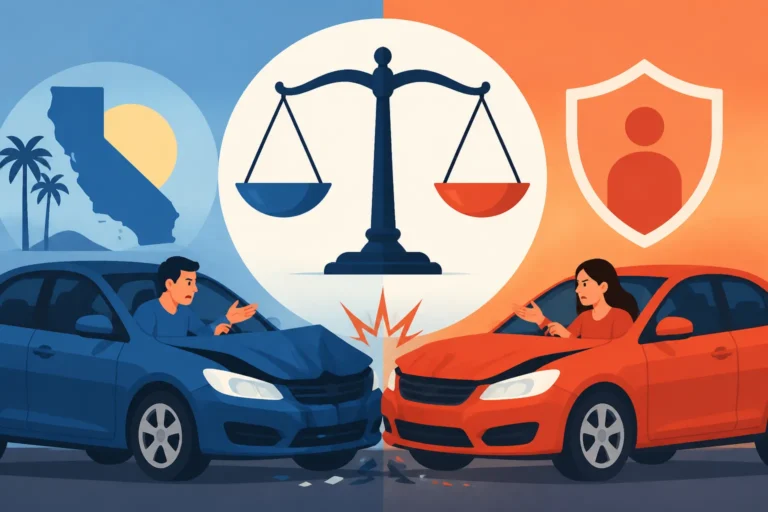
The way fault is legally allocated in a multi-vehicle accident heavily depends on the specific state laws regarding negligence. Most states in the U.S. follow some form of "comparative negligence," meaning that multiple parties can be assigned a percentage of fault. For example, if a jury determines Driver A was 70% at fault, Driver B 20% at fault, and Driver C 10% at fault, their compensation for damages will be reduced by their own percentage of fault.
There are two main types of comparative negligence:
- Pure Comparative Negligence: In states like California, even if you are 99% at fault, you can still recover 1% of your damages from the other party.
- Modified Comparative Negligence: This is more common and comes in two forms: the 50% bar rule and the 51% bar rule. In a 50% bar state (like Colorado), if you are found 50% or more at fault, you cannot recover any damages. In a 51% bar state (like Illinois), if you are 51% or more at fault, you cannot recover.
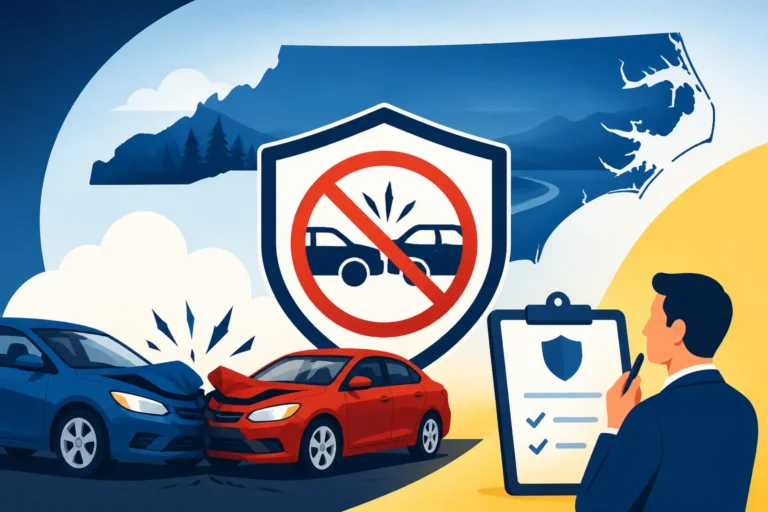
Conversely, a few states (like Maryland and North Carolina) still adhere to "contributory negligence." In these states, if you are found even 1% at fault for the accident, you are completely barred from recovering any damages. This is a very harsh rule and makes proving zero fault critical in those jurisdictions. Understanding Comparative vs Contributory Negligence Explained is crucial if you find yourself in this situation, as it directly impacts your ability to receive compensation. It's also worth knowing Can You Still Get Paid If You're Partly at Fault? to set realistic expectations.
| Scenario | Likely At-Fault Party(s) | Key Factors Considered |
|---|---|---|
| Classic "Push" | Last car in chain (Driver A) | Driver A following too closely/distracted, Driver B propelled into Driver C, minimal time for Driver B to react. |
| Independent Impacts | Driver A, Driver B, Driver D | Driver A hits B. Driver B had time to stop before hitting C but didn't. Separately, Driver D hits A. Multiple distinct acts of negligence. |
| Middle Car Contributes | Driver A, Driver B | Driver A hits B. Driver B slammed brakes without cause, exacerbating impact on C, or had faulty brake lights. |
| Front Car Contributes | Driver A, Driver C | Driver A hits B (primary fault). Driver C made an illegal, sudden stop or maneuver, contributing to initial crash or its severity. |
The Statute of Limitations
No matter how clear fault might seem, or how complex the situation, there's a strict deadline for filing a lawsuit after a car accident, known as the "statute of limitations." This deadline varies significantly by state and type of claim. For instance, in many states, you might have two or three years from the date of the accident to file a personal injury lawsuit, but property damage claims might have a different, sometimes shorter, deadline.
Missing this deadline can be catastrophic, as it generally means you forfeit your right to pursue compensation, regardless of the merits of your case. In a multi-car pile-up, where investigations can take longer and fault is harder to pin down, it's easy for time to slip away. It's essential to be aware of your state's specific statute of limitations and to act promptly. For more specific information, refer to our article on How Long Do You Have to File a Car Accident Claim?.
What to Do If You're Involved
Being caught in a chain-reaction crash is a frightening and disorienting experience. Knowing what steps to take immediately afterward can protect your safety, your rights, and your ability to secure compensation.
Immediate Steps After the Crash
Your safety and the safety of others should always be your top priority. If you're involved in a chain-reaction rear-end crash:
- Check for Injuries: Assess yourself and any passengers for injuries first. If anyone is seriously hurt, call 911 immediately. Even if you feel fine, adrenaline can mask pain, so stay vigilant.
- Move to Safety: If your vehicle is operational and it's safe to do so, move it to the side of the road or out of active traffic. This prevents further accidents. If not, turn on your hazard lights.
- Call the Police: Always call law enforcement for any accident involving injuries, significant property damage, or multiple vehicles. A police report is vital for complex claims. They will help secure the scene and direct traffic.
- Exchange Information: Get the contact, insurance, and vehicle information for every driver involved in the chain. This can be tricky with multiple vehicles, but it's crucial.
- Document the Scene: This is paramount in chain-reaction crashes. Take photos and videos of everything:
- Damage to your vehicle from all angles (front, back, sides).
- Damage to all other vehicles involved, showing specific impact points.
- The overall scene, including traffic signals, road conditions, and any skid marks.
- The position of all vehicles relative to each other.
This detailed documentation can be the difference between a successful claim and a frustrating battle. Our comprehensive guide What to Do After a Car Accident: Step-by-Step (2027) provides even more crucial actions to take.
Gathering Critical Evidence
The chaos of a multi-car accident means evidence can be scattered or easily overlooked. Beyond the immediate steps, make a concerted effort to gather specific, detailed evidence:
- Photographs and Videos: Don't just take one or two pictures. Capture dozens, from wide-angle shots of the entire scene to close-ups of specific damage, license plates, and road conditions. Videos can also be incredibly useful for showing the surrounding environment and the state of all vehicles. Focus on both front and rear damage for every car, as this helps establish the sequence of impacts.
- Witness Information: If anyone saw the crash, get their name and phone number. Ask if they'd be willing to provide a statement to police or insurance.
- Dashcam/CCTV Footage: Ask if any other drivers have dashcams. Look for nearby businesses or traffic cameras that might have recorded the incident. Many modern cars also have built-in event recorders.
- Medical Records: Seek medical attention promptly, even for seemingly minor aches. This creates an official record of any injuries sustained in the accident, which is crucial for your personal injury claim.
The more comprehensive your evidence, the stronger your position when it comes time to determine fault and pursue compensation. For a detailed guide on what to capture, see How to Document a Car Accident Scene.
Communicating with Insurance and Legal Counsel
How you communicate after a chain-reaction crash can significantly impact your claim.
- Be Careful What You Say: Avoid admitting fault, apologizing, or speculating about what happened to other drivers or their insurance adjusters. Stick to the facts. Simply state that you were involved in an accident and exchange information.
- Notify Your Insurer: Report the accident to your own insurance company as soon as possible, even if you believe another party is entirely at fault. Your policy likely requires timely notification.
- Consider Legal Counsel: Given the inherent complexities of chain-reaction crashes and the potential for multiple insurance companies to shift blame, consulting with an experienced car accident attorney is often advisable. A lawyer can help you navigate the complicated fault determination process, deal with multiple insurers, and ensure your rights are protected. They can also explain how comparative negligence laws in your state might affect your compensation. Many offer free consultations, so there's no harm in getting an expert opinion.
Dealing with insurance adjusters can be a minefield, especially when multiple parties are involved. Our article on Dealing With Insurance Adjusters After a Car Accident provides essential tips. And if you're wondering whether you truly need professional help, consider reading Do You Need a Lawyer for a Car Accident? (2026). They can make a substantial difference in ensuring you receive fair compensation.
Disclaimer
Please remember that this article provides general information and insights into car accident claims and fault determination. Every accident is unique, and the specific laws and circumstances of your case will dictate the outcome. This information should not be considered legal advice. For personalized guidance, it is highly recommended to consult with a qualified legal professional.