Who Is at Fault in a T-Bone Accident in California?
Getting into a T-bone accident, also known as a side-impact or broadside collision, can be an incredibly jarring and confusing experience. One moment you're driving along, and the next, your vehicle's side is slammed by another car, leaving you disoriented, potentially injured, and certainly stressed about what comes next. Figuring out who is at fault in such a chaotic situation, especially in a state like California with its unique negligence laws, can feel like an impossible puzzle. This guide will meticulously break down how fault is determined in T-bone accidents in California, offering clarity and actionable steps to help you understand your rights and responsibilities.
Understanding T-Bone Accidents and Their Impact
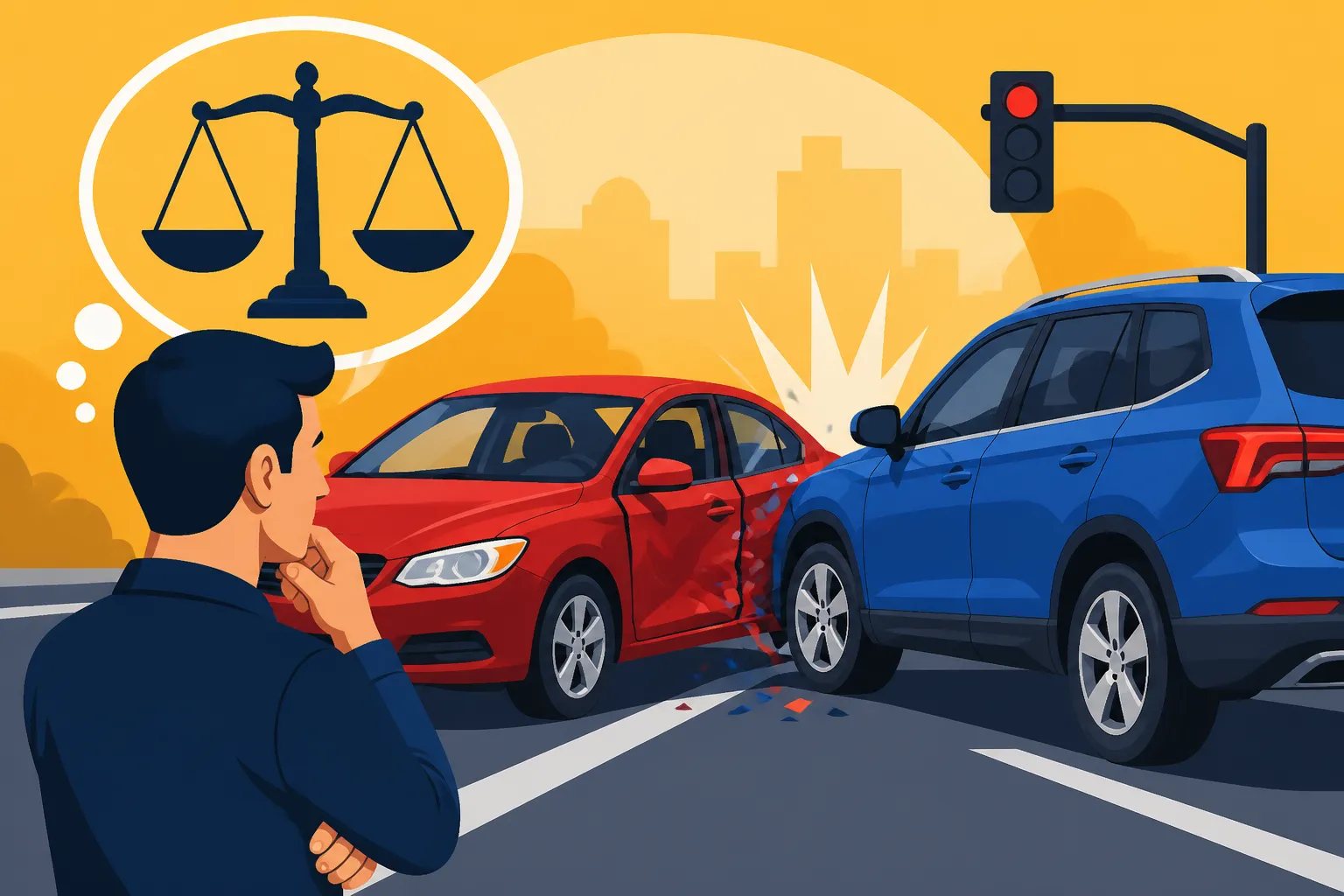
A T-bone accident is one of the most dangerous types of collisions on the road. The very name paints a vivid picture: the front of one vehicle collides directly into the side of another, forming the shape of a "T." These crashes typically occur at intersections and can lead to severe injuries and significant vehicle damage because the side of a car offers far less protection than the front or rear.
What Exactly Is a T-Bone Accident?
Imagine you’re driving through an intersection, and suddenly, from your left or right, a car barrels through, smashing into your driver’s or passenger’s side door. That’s a T-bone. Unlike head-on or rear-end collisions, where vehicles have crumple zones designed to absorb impact, the sides of a car have very little to shield occupants from the force of a direct hit. This lack of protection means that the occupants often bear the brunt of the collision, leading to more serious injuries and a higher risk of fatality.
Common scenarios for T-bone accidents include situations where one driver:
- Runs a red light or stop sign.
- Fails to yield the right-of-way while turning left.
- Is distracted and doesn't notice oncoming traffic or traffic signals.
- Speeds excessively, making it impossible to stop in time.
The sheer force of these impacts can cause vehicles to spin, roll over, or be pushed into other lanes of traffic, creating secondary hazards. The trauma isn't just physical; the sudden, unexpected nature of a side impact can also lead to significant emotional distress.
Why Fault Determination Is Crucial in California
When you're involved in any car accident, especially a T-bone collision, the question of "Who is at fault in a car accident?" becomes paramount. In California, determining fault is not just about assigning blame; it directly impacts your ability to recover compensation for your injuries, medical bills, lost wages, and property damage. California operates under a legal principle known as "pure comparative negligence." This means that even if you are found to be partially responsible for the accident, you can still recover damages from the other party, but your compensation will be reduced by your percentage of fault. For example, if you sustained $100,000 in damages but were found to be 20% at fault, you would only be able to recover $80,000.
This system is why establishing a clear picture of fault is absolutely vital. If you’re involved in a T-bone accident where the other driver ran a red light, but you were also found to be speeding slightly, your compensation might be reduced. Insurance companies will scrutinize every detail to assign percentages of fault, and their initial assessment might not always be in your favor. Understanding how fault is determined is the first step in protecting your financial and physical well-being after such a traumatic event.
Key Factors in Determining Fault in California T-Bone Crashes
T-bone accidents, by their very nature, often involve disputes over who had the right-of-way. California law, like most states, has clear rules governing who is responsible in various traffic situations. When it comes to a T-bone, the immediate focus is almost always on which driver violated these established traffic laws.
Traffic Signals and Right-of-Way Violations
The most common and often clearest indicator of fault in a T-bone accident is a violation of traffic signals or right-of-way rules. Intersections are designed with specific lights, signs, and lanes to manage traffic flow, and when these rules are broken, the results can be catastrophic.
- Red Light Violations: If one driver enters an intersection against a solid red light and collides with another vehicle that had a green light, the driver running the red light is almost universally considered at fault. This seems straightforward, but sometimes drivers might argue they entered on a "stale yellow" or that the other driver sped up to beat the red light. However, generally, a vehicle that enters the intersection after the light has turned red is negligent.
- Stop Sign Violations: Similar to red lights, failing to come to a complete stop at a stop sign or performing a "rolling stop" (not stopping fully before proceeding) can directly cause a T-bone accident. The driver who ignores the stop sign is usually deemed at fault. In cases of four-way stops, the general rule is that the first vehicle to arrive and stop has the right-of-way, or if two vehicles arrive simultaneously, the one on the right goes first. Violating these specific rules can quickly establish liability.
- Yield Signs: Failing to yield the right-of-way when a yield sign is present, particularly when merging or entering a main thoroughfare, can also lead to side-impact collisions. The driver who fails to yield when required will typically bear the blame.
However, it's not always cut and dry. Sometimes, a driver with a green light might still bear some small percentage of fault if, for example, they were excessively speeding or clearly had enough time to avoid the collision but failed to do so due to negligence. This is where California's pure comparative negligence system really comes into play. If a driver with a green light was going 20 mph over the speed limit and could have stopped in time if they had been driving responsibly, they might be assigned a minor percentage of fault.
Driver Negligence and Distracted Driving
Beyond direct traffic law violations, various forms of driver negligence contribute significantly to T-bone accidents. These factors highlight a driver's failure to exercise reasonable care behind the wheel, which is a cornerstone of proving fault.
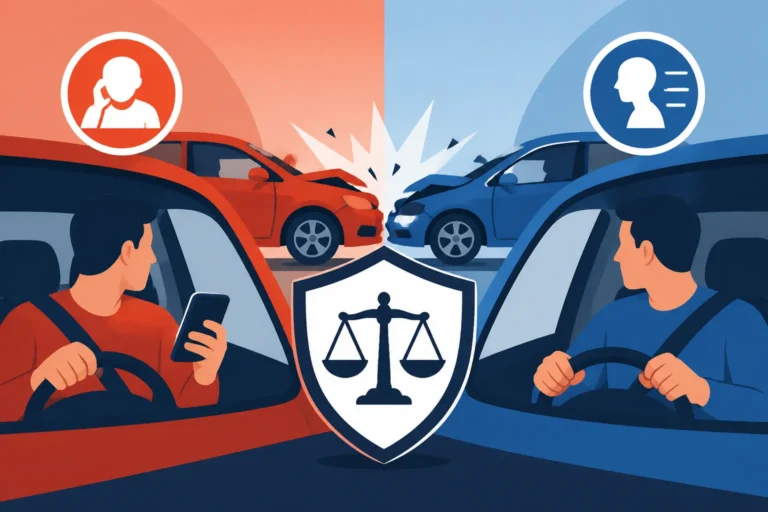
- Distracted Driving: In our modern world, distracted driving is an epidemic. Looking down at a phone to read a text, adjusting the radio, or even engaging in an intense conversation can divert a driver's attention for crucial seconds. Those seconds are all it takes to miss a changing light, a stop sign, or an oncoming vehicle. In California, using a handheld device while driving is illegal, and evidence of such usage (like phone records) can be powerful proof of fault. If a driver was distracted and blew through a red light, causing a T-bone, their distraction would be a primary factor in assigning blame.
- Drunk or Drugged Driving: Driving under the influence of alcohol or drugs severely impairs judgment, reaction time, and perception. A T-bone accident involving an impaired driver almost always places 100% of the fault on that driver, given their illegal and dangerous choices. Police reports will typically include evidence of impairment, like field sobriety tests or blood alcohol content (BAC) results.
- Speeding: Exceeding the posted speed limit, or driving too fast for conditions (e.g., heavy rain, fog), reduces a driver's ability to stop or react to hazards. A driver speeding through a yellow light that turns red, or entering an intersection too quickly to yield, is a prime candidate for causing a T-bone. Even if they technically had the right-of-way, their excessive speed could contribute to fault.
- Fatigued Driving: Drowsy driving can be as dangerous as drunk driving. A fatigued driver might nod off, experience delayed reactions, or simply fail to notice critical traffic cues, leading to a T-bone collision.
When police investigate, they'll look for signs of these negligent behaviors. Witness statements, dashcam footage, and even toxicology reports can all build a case for negligence. If you suspect the other driver was distracted or impaired, it's important to relay this to the investigating officers.
Left Turns and Failure to Yield
Left-turn accidents are a particularly common type of T-bone collision, and they often present complex scenarios for determining fault. In California, as in many states, specific rules govern left turns at intersections, and violating these rules frequently leads to side-impact crashes. If you’re curious about specific rules, you might want to read our full guide on how Left-Turn Accident Fault Rules apply generally.
California Vehicle Code Section 21801 states that a driver turning left must yield the right-of-way to any vehicle approaching from the opposite direction that is "so close as to constitute an immediate hazard." This means:
- Unprotected Left Turns: If you're turning left at an intersection without a green arrow, you must wait until oncoming traffic has cleared or is far enough away to complete your turn safely. If you misjudge the speed of an oncoming vehicle or try to rush the turn, and a T-bone occurs, you will likely be considered at fault. This is a classic "failure to yield" scenario.
- Stale Green or Flashing Yellow Arrows: Sometimes, drivers try to "beat" a changing light, initiating a left turn on a stale green light or a flashing yellow arrow, only for the light to turn red before they clear the intersection. If the light turns red while you are still in the intersection, and you are struck by a vehicle entering on a fresh green light, fault will almost certainly fall on the turning driver.
- "Left-Turn Trap" or Blocked View: In some cases, multiple vehicles waiting to turn left might obstruct the view of oncoming traffic. A driver might pull out partially, not seeing an oncoming car, and get hit. While the turning driver still generally has the burden to ensure the turn is safe, sometimes unique circumstances can lead to a more nuanced fault determination, perhaps involving the design of the intersection or other factors.
It's also worth noting that in certain situations, an oncoming driver who has the right-of-way but is excessively speeding, distracted, or otherwise negligent could be assigned a percentage of fault under California's pure comparative negligence rules. However, the primary burden of avoiding a collision almost always rests with the driver making the left turn.
Proving Fault After a California T-Bone Collision
After the initial shock of a T-bone accident, the next crucial step is to gather the necessary information to prove who was at fault. This is where the details matter, and a methodical approach can make all the difference in your insurance claim and potential legal proceedings. Knowing How Fault Is Determined in a Car Accident is fundamental, but collecting solid evidence is how you actually prove it.
Gathering Evidence at the Scene
The moments immediately following an accident are critical for collecting evidence. What you do or don't do can significantly impact the outcome of your claim. For a detailed guide on post-accident steps, refer to our article on What to Do After a Car Accident: Step-by-Step (2027).
- Photos and Videos: Use your smartphone to document everything. Take wide shots of the entire intersection and the positions of the vehicles. Get close-up photos of vehicle damage, focusing on the points of impact. Crucially, photograph any traffic signals, skid marks, debris on the road, street signs, and even the weather and road conditions. If your car has a dashcam, save the footage immediately. These visual records are often the most objective evidence available and can directly illustrate who entered the intersection illegally or failed to yield.
- Witness Statements: If anyone saw the accident, politely ask for their contact information and if they would be willing to provide a statement. An unbiased third-party account can be invaluable, especially if it corroborates your version of events regarding traffic signals or right-of-way.
- Police Reports: Always call the police after a T-bone accident, especially if there are injuries or significant property damage. A police officer will investigate the scene, interview drivers and witnesses, and document their findings in an official report. While a police report doesn't officially determine legal fault in California, it provides a factual narrative, observations from trained professionals, and potentially citations issued to one of the drivers. This information carries significant weight with insurance companies. Understanding Police Reports and Car Accident Fault can help manage expectations about their role.
- Exchange Information: Get the other driver's name, contact information, insurance details, driver's license number, and vehicle license plate number. Do not discuss fault at the scene, simply collect information.
Remember, time is of the essence. Skid marks fade, debris is cleared, and witnesses move on. Documenting the scene thoroughly is your best defense against unfair blame. For more specific advice on what to capture, see our guide on How to Document a Car Accident Scene.
The Role of Insurance Companies and Adjusters
Once the immediate aftermath of the accident is handled, your interaction will shift to the insurance companies. Both your insurer and the other driver's insurer will launch their own investigations to determine fault.
- Insurance Company Investigations: Adjusters will review police reports, examine photographs, speak with all parties involved, and sometimes even consult accident reconstruction experts for complex T-bone cases. They are looking for evidence to support their client's position and, conversely, to minimize their payout. This is why consistent, clear evidence from the scene is so important. For a deeper dive into how insurers handle this, read about How Insurance Companies Determine Who Is at Fault.
- Dealing with Adjusters: Be prepared for adjusters to ask detailed questions. While it's important to be truthful, be cautious about providing too much speculative information or making statements that could be misconstrued as an admission of fault. Adjusters are trained to protect their company's interests. They might even suggest that you bear some percentage of fault, even if you firmly believe you had the right-of-way. This can be incredibly frustrating. Generally, you don't have to give a recorded statement to the other driver's insurance company. You can find more information on this in our article Do You Have to Give a Recorded Statement?.
- Importance of Documentation: Your medical records, repair estimates, and a detailed log of your pain and suffering are all crucial. The insurance company won't just take your word for it; they need concrete proof of your damages to calculate a settlement.
It’s a misconception that insurance companies are always on your side, even your own. Their primary goal is to resolve claims efficiently and cost-effectively. Having strong evidence and understanding their process is key to a fair outcome.
Understanding California's Pure Comparative Negligence
California’s pure comparative negligence system is a critical concept to grasp when dealing with fault in a T-bone accident. Unlike some states that use a "50% bar rule" (where you can't recover if you're 50% or more at fault), California allows injured parties to recover damages even if they are largely responsible for the accident. The crucial point is that your compensation will be reduced proportionally to your assigned percentage of fault. This is quite different from other systems, so you might want to learn more about Comparative vs Contributory Negligence Explained to see the full spectrum of fault laws.
Let's illustrate with a T-bone example:
Imagine you are making a left turn at a busy intersection in Los Angeles without a protected green arrow. You pull out, misjudging the speed of an oncoming car, and a T-bone collision occurs. Initially, it seems you, the turning driver, are entirely at fault for failing to yield.
However, during the investigation, it's discovered that the oncoming driver was also speeding significantly – say, 15 mph over the limit – and was looking at their phone moments before impact. Under California's pure comparative negligence, fault might be split:
- You, the left-turning driver, might be found 70% at fault for failing to yield.
- The oncoming driver might be found 30% at fault for speeding and distracted driving.
If your total damages (medical bills, lost wages, pain and suffering, vehicle repairs) are $100,000, you would only be able to recover 30% of that amount, which is $30,000, from the other driver's insurance. Conversely, if the other driver had $20,000 in damages, they would only be able to recover $14,000 (70% of their damages) from your insurance.
This system means that even if you are partially responsible for a T-bone accident, you still have a right to seek compensation from the other at-fault party. However, it also means your potential settlement will be reduced. You can learn more about how this works specifically in What Happens If You're Partially at Fault? and how it can directly affect your claim in How Comparative Fault Reduces Your Settlement.
Here's a simplified table to show how this works:
| Scenario Description | Driver A's Action (Turning Left/Entering) | Driver B's Action (Oncoming/Crossing) | Driver A Fault (%) | Driver B Fault (%) | Driver A Recovery (of own damages) | Driver B Recovery (of own damages) |
|---|---|---|---|---|---|---|
| Clear Fault | Runs red light | Has green light | 100% | 0% | 0% | 100% |
| Split Fault (A primary) | Fails to yield left turn | Slight speeding (no green arrow) | 70% | 30% | 30% | 70% |
| Split Fault (B primary) | Has green light | Runs red light, but Driver A also speeding | 20% | 80% | 80% | 20% |
| Shared Negligence | Fails to yield (left turn) | Distracted driving, moderate speed | 50% | 50% | 50% | 50% |
This table illustrates that in California, fault is rarely "all or nothing," especially in complex T-bone scenarios where multiple factors might be at play.
What to Do If You're Involved in a T-Bone Accident in California
Being involved in a T-bone accident is, without a doubt, a terrifying experience. But knowing the immediate steps to take can significantly impact your safety, your health, and the strength of any future claim.
Immediate Steps After the Collision
Your well-being and safety are the absolute top priority after any accident.
- Prioritize Safety: If your vehicle is still operational and it's safe to do so, move it to the side of the road or out of the flow of traffic. Turn on your hazard lights. If your car is too damaged to move, stay inside with your seatbelt on, if safe, and wait for emergency responders.
- Check for Injuries: Assess yourself and your passengers for injuries. Even if you feel fine, the adrenaline might be masking pain. Look for visible injuries on others involved.
- Call 911: Always call 911, especially if there are injuries or significant property damage. Emergency services can provide immediate medical attention, and police officers will respond to create an official accident report. This report is vital for your insurance claim.
- Do NOT Admit Fault: This is a golden rule after any accident. Even a simple "I'm so sorry!" can be misconstrued and used against you by insurance companies. Stick to the facts when speaking with police and the other driver. Exchange information, but avoid discussing who you think was to blame.
- Seek Medical Attention: Even if you feel okay, it's critical to see a doctor as soon as possible after a T-bone accident. Many serious injuries, like whiplash, concussions, or internal injuries, have delayed symptoms. Documenting your medical care early creates a clear record that links your injuries directly to the accident, which is crucial for any personal injury claim.
Remember, the moments after a crash are chaotic. Try to remain calm and follow these steps to protect yourself and your interests.
Protecting Your Claim
Once the immediate scene is secured and medical needs are addressed, the focus shifts to protecting your legal and financial claim.
- Document Everything Meticulously: Keep a detailed record of every doctor's visit, medication, therapy session, and any other medical treatment you receive. Document your physical pain and emotional distress. Keep track of all accident-related expenses, including medical bills, lost wages, rental car costs, and any out-of-pocket expenses. The more thoroughly you document your injuries and damages, the stronger your claim will be.
- Be Cautious with Insurance Companies: While you must notify your own insurance company promptly, be careful when speaking with the other driver's insurer. They may try to get you to settle quickly for a low amount or get you to say something that undermines your claim. It's generally advisable to decline giving a recorded statement to the other insurance company without first consulting with an attorney.
- Consult a Car Accident Lawyer: T-bone accidents, especially in a pure comparative negligence state like California, can be legally complex. Determining fault, understanding your full damages (including future medical costs and pain and suffering), and negotiating with insurance companies can be overwhelming. A car accident lawyer can navigate these complexities, gather evidence, handle communication with insurers, and fight for the full compensation you deserve. They can help you understand whether you need a lawyer for a car accident and evaluate if your case warrants legal representation. Many personal injury attorneys offer free consultations, so there's no harm in discussing your options.
Taking these steps helps ensure that you not only recover physically but also receive fair compensation for all the hardships you endure after a T-bone collision in California.
Disclaimer
Please remember that this article provides general information and guidance regarding T-bone accidents and fault determination in California. It is not intended as legal advice. Every accident is unique, and the specific facts and circumstances of your case will dictate its outcome. If you have been involved in a T-bone accident, it is strongly recommended that you consult with a qualified California car accident attorney to discuss your particular situation and receive personalized legal advice.