Does a Police Report Determine Who Pays?
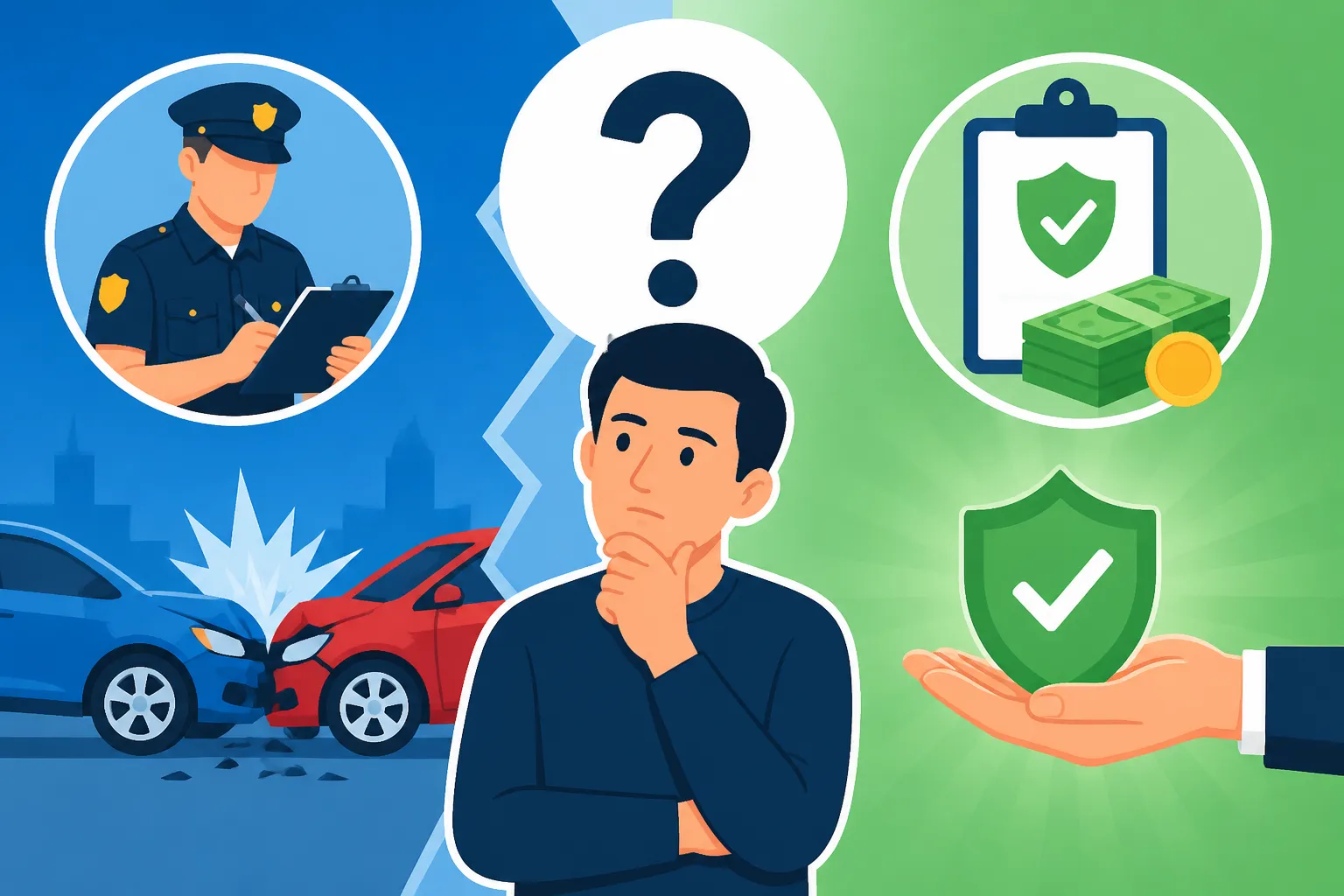
It's a common misconception that a police report is the definitive word on who's at fault after a car accident, and therefore, who ultimately pays for the damages and injuries. Many people feel a sense of relief or dread depending on what the officer writes, believing it's the final judgment. However, the reality of car accident claims and insurance payouts is far more intricate than simply relying on a single document. This guide will walk you through the true role a police report plays in determining financial responsibility and what other crucial factors truly decide who pays.
The Foundational Purpose of a Police Report
When a police officer responds to a car accident, their primary duties are to secure the scene, ensure everyone's safety, and document what occurred. The report they generate is an official record of the incident, but it's important to understand its limitations regarding the financial aspect of your claim.
A Factual Account, Not a Binding Legal Judgment
Think of a police report as a snapshot of the accident scene and the immediate aftermath, as observed and recorded by a trained professional. Officers gather statements from drivers and witnesses, note physical evidence like skid marks or vehicle positions, and record details about the environment. While the officer might include an opinion on fault, or even issue a citation, this isn't the same as a legal determination of liability that insurance companies or courts must abide by. Their job is to document facts, not to make a binding judgment on behalf of future civil disputes or insurance claims. This distinction often surprises people, especially when they've been told by an officer at the scene that the other driver was "clearly at fault." That opinion, while valuable, isn't the final say on who pays.
For Documentation, Safety, and Initial Response
Beyond just gathering facts, police reports serve several immediate and practical purposes. They help to clear the scene safely, manage traffic, and ensure that anyone who needs medical attention receives it promptly. The report formalizes the incident, creating a public record that can be invaluable for various parties. For instance, if there's a serious injury or fatality, the police report forms the basis of any criminal investigation. From a civil perspective, it ensures that there’s an official record of the event, which is vital for any subsequent insurance claim or legal action. Without such a document, proving that an accident even occurred can become a significant hurdle, especially if the other party later denies involvement.
Key Information Contained in a Police Report
A well-detailed police report is a goldmine of information, regardless of whether it explicitly names a "responsible" party. Understanding what details are typically included can help you appreciate its value, even if it doesn't solely dictate who pays.
Driver and Vehicle Specifics
At the most basic level, a police report compiles essential identifying information for everyone involved. This includes the names, addresses, and contact numbers of all drivers and registered owners, along with their driver's license numbers. You’ll also find details about the vehicles involved, such as make, model, license plate numbers, and often the vehicle identification number (VIN). Critically, the report usually includes insurance policy information for all drivers. This section is often the first place insurance adjusters look to identify who they need to contact and with which company they'll be dealing. When you're trying to figure out what to do after an accident, getting this kind of information at the scene is paramount, and the police report consolidates it all.
Accident Details and Officer Observations
This is where the narrative of the accident comes to life. The officer will record the date, time, and precise location of the collision, including street names and cross streets. They'll describe the road conditions (wet, dry, icy), visibility, and weather at the time of the crash. A diagram is often included, illustrating the positions of the vehicles before, during, and after impact, along with any relevant traffic controls like stop signs or traffic lights. The report will also document observable vehicle damage and any physical evidence at the scene, such as skid marks, debris, or fluid leaks. Crucially, many reports will feature an "officer's opinion" section or a narrative detailing their conclusion about how the accident occurred and who they believe violated traffic laws. This opinion, while not legally binding on insurance companies, can heavily influence their initial assessment.
Witness Statements and Citations
If there were any independent witnesses to the accident, their contact information and a summary of their statements will typically be recorded in the police report. Witness accounts can be incredibly powerful in establishing fault, as they offer an objective perspective, unlike the often-biased accounts of the drivers involved. Furthermore, if the officer observed any traffic violations, they might issue citations for offenses like speeding, reckless driving, or failure to yield. A traffic citation can be a strong indicator of fault, but it's still not an automatic "guilty" verdict in the eyes of insurance adjusters. An individual can contest a ticket in traffic court, and the outcome of that court case might further influence the insurance company's liability determination.
How Insurance Companies Utilize Police Reports
Despite popular belief, insurance companies rarely, if ever, make a payment decision based solely on a police report. They conduct their own independent investigation, using the police report as a significant, but not exclusive, piece of the puzzle.
A Significant Piece of Evidence, Not the Sole Factor
When you file a car accident claim, one of the first things the insurance adjuster will ask for is the police report. They use it as a foundational document to begin their investigation. It provides an initial overview of the incident, helps them identify all parties involved, and can offer early clues about liability. However, an insurance company's goal is to determine legal fault based on their policy terms and state laws, which sometimes differs from an officer's on-scene assessment. They're looking for strong evidence to support or refute claims, and while a police report is important, it's just one data point in a broader investigation. The process of How Insurance Companies Determine Who Is at Fault involves many layers of information gathering.
Corroborating Other Evidence
Insurance adjusters are detectives in their own right. They won't just take the police report at face value. Instead, they'll use it to corroborate or challenge other evidence they collect. This often includes:
- Photos and Videos: Visual evidence from the scene can be incredibly powerful, sometimes even contradicting an officer's initial observations if, for example, a critical detail was overlooked in the heat of the moment.
- Witness Statements: Independent witnesses, even if their statements are summarized in the police report, will often be contacted directly by the insurance company for more detailed accounts.
- Medical Records: For bodily injury claims, medical records help establish the extent and nature of injuries, which ties directly into the severity of the crash.
- Vehicle Damage Assessments: The damage to vehicles can tell a story about the point of impact and force involved, offering insights that might not be fully captured in a police narrative.
- Dashcam Footage/Black Box Data: Increasingly, dashcam footage or data from a vehicle's event data recorder (EDR or "black box") can provide irrefutable evidence of how an accident unfolded, often overriding other subjective accounts.
The police report helps the adjuster piece together this larger picture, acting as a valuable cross-reference point.
Impact on Liability Decisions
In scenarios where the police report clearly assigns fault, perhaps by issuing a traffic citation to one driver, it can certainly expedite the insurance company's liability decision. For instance, if an officer cites a driver for failing to stop at a red light, that's strong evidence that the driver was at fault for a collision. Similarly, in a clear-cut Rear-End Collision Fault: Who Is Responsible? scenario, where the rear driver is almost always at fault, a police report detailing this can streamline the process. The same often applies to Left-Turn Accident Fault Rules, where the turning driver typically bears responsibility.
However, even with a clear report, the insurance company will still conduct its due diligence. They want to ensure they aren't paying out claims or accepting liability prematurely, especially if there's any ambiguity or conflicting evidence. The clearer and more consistent the police report is with other available evidence, the faster and more straightforward the liability determination tends to be.
When a Police Report's Influence Wanes
While crucial, a police report isn't always the be-all and end-all. There are specific circumstances where its impact on who pays might be less significant or even subject to challenge.
Disputed or Ambiguous Reports
Not all police reports are created equal. Sometimes, an officer might arrive at a scene after the vehicles have been moved, or witnesses might be scarce or contradictory. In these situations, the report might be less conclusive, perhaps stating "no fault assigned" or simply listing the facts without a clear opinion. This often happens in less severe incidents, such as a parking lot accident where minor damage occurs and there's no immediate danger.
If the report contains conflicting statements, omits key details, or if the officer's opinion is based on incomplete information, it becomes less influential. An experienced insurance adjuster or car accident attorney will look beyond the initial report and rely more heavily on other forms of evidence to piece together what truly happened. If the report itself is vague, it essentially opens the door for a more thorough investigation by the insurance companies involved.
Officer Opinion Versus Legal Fault
This is perhaps one of the most misunderstood aspects of a police report. An officer's opinion on who caused an accident, while valuable, is not a legal determination of fault. It's their assessment based on their training and the information available at the scene. In the eyes of the law, and particularly in civil claims, actual fault is determined by legal principles of negligence, which can be far more complex than a quick on-scene assessment. An officer might issue a citation, but that citation can be challenged in court. If a driver successfully fights a traffic ticket, that outcome can sometimes undermine the initial police report's fault assessment in the context of an insurance claim. Remember, police officers are not judges or juries; their role is law enforcement, not civil liability determination.
No-Fault States and Their Impact
In "no-fault" insurance states, the initial payment structure for medical expenses operates differently, which can alter the immediate relevance of a police report in determining who pays for those specific damages. In a state like Florida or New York, which are What Is a No-Fault State? And Which States Are No-Fault, your own Personal Injury Protection (PIP) insurance typically covers your medical bills and lost wages up to a certain limit, regardless of who caused the accident. This means that for minor injuries, the police report's fault determination might not immediately influence who pays for your initial medical treatment.
However, even in no-fault states, fault still matters for property damage claims (your vehicle repairs) and for serious injuries that exceed the no-fault thresholds, allowing you to pursue a claim against the at-fault driver for additional damages like pain and suffering. So, while a police report might not be the primary determinant for initial medical payouts in these states, its role in establishing fault for other types of damages and more severe injuries remains significant.
Other Factors That Determine Who Pays
If a police report isn't the sole arbiter, what else truly influences who pays after a car accident? The answer lies in a comprehensive review of all available evidence and an understanding of state-specific negligence laws.
Evidence is King: Beyond the Report
In any car accident claim, the quality and quantity of evidence are paramount. While the police report is a great starting point, it's often the other evidence that truly seals the deal for insurance companies or in a courtroom. This includes:
- Photographs and Videos: Visual documentation of the accident scene, vehicle damage, road conditions, and even injuries can be irrefutable. Dashcam footage or footage from nearby security cameras is particularly strong.
- Independent Witness Statements: People who saw the accident but aren't involved offer an unbiased perspective.
- Medical Records and Bills: These documents prove the extent of your injuries and the costs associated with treatment, which are critical for bodily injury claims.
- Traffic Laws: Demonstrating that the other driver violated a specific traffic law (e.g., ran a red light, failed to yield, was speeding) is often a direct path to proving their fault.
- Expert Testimony: In complex cases, accident reconstructionists or medical experts can provide opinions based on scientific analysis.
To truly understand How to Prove the Other Driver Was at Fault, you need to meticulously gather and present all this information. The more compelling and consistent your evidence, the stronger your position in negotiating a settlement.
State Negligence Laws
The laws of the state where the accident occurred play a huge role in determining financial responsibility, especially if both drivers share some degree of fault. States use different systems:
- Pure Comparative Negligence: In these states, you can recover damages even if you are 99% at fault, though your compensation will be reduced by your percentage of fault. So if you're awarded $10,000 but were 20% at fault, you'd receive $8,000.
- Modified Comparative Negligence (50% or 51% Bar Rule): Most states fall into this category. If you are 50% or more at fault (or 51% or more, depending on the specific state), you cannot recover any damages from the other driver. If you are below that threshold, your recovery is reduced by your percentage of fault. This is a crucial distinction that can dramatically impact whether you can recover anything if What Happens If You're Partially at Fault?.
- Contributory Negligence: Only a handful of states still use this strict rule. If you are found to be even 1% at fault for the accident, you are completely barred from recovering any damages.
Understanding Comparative vs Contributory Negligence Explained is critical because even if the police report puts 100% of the blame on the other driver, your actions might still be scrutinized by the insurance company under these state laws, potentially reducing or eliminating your payout.
Insurance Company Investigations
Ultimately, it is the insurance companies themselves, through their adjusters, who make the final decision about who pays based on their own comprehensive investigation. They evaluate the police report, all other evidence, and apply the relevant state laws to the facts. Their adjusters are trained to assess liability, and they often have a team of legal professionals guiding their decisions.
This is why, even if the police report seems favorable to you, you might still face challenges from the other driver's insurance company. They might try to argue that you were partially at fault, or that their insured was not as responsible as the police report suggests. The entire Car Accident Claim Timeline: What to Expect involves this back-and-forth investigation and negotiation.
What to Do If the Police Report Is Incorrect or Missing
Given the importance of a police report, what if it contains errors or, worse, if there was no report filed at all? These situations can complicate your claim, but they aren't necessarily insurmountable roadblocks.
Correcting Errors in the Report
It's entirely possible for a police report to contain factual errors. Officers are human, they work under pressure, and sometimes they mishear statements, misread diagrams, or simply make typos. If you review the report and find an inaccuracy—for example, the wrong location, incorrect vehicle description, or a misstatement of fact from your side—you have the right to request an amendment.
The process typically involves contacting the law enforcement agency that filed the report. You'll need to clearly articulate the error, provide any evidence you have to support your correction (like photos, witness statements, or even a copy of your vehicle registration if the make/model was wrong), and request an official amendment or supplemental report. While a simple typo might be easy to fix, changing an officer's opinion on fault is much harder, as it would require compelling evidence to prove their initial assessment was fundamentally flawed. Be prepared to provide clear, concise reasons for the requested changes.
Building Your Case Without a Report
Sometimes, especially in minor accidents or in states where reporting minor collisions isn't mandatory, a police report might not be filed. This scenario, while less ideal, doesn't mean you can't pursue a claim. It just means you need to be even more diligent in gathering your own evidence.
If What If There Was No Police Report?, your focus shifts entirely to your own documentation. This means:
- Extensive Photos and Videos: Capture everything – vehicle damage, scene conditions, street signs, traffic controls, and any visible injuries.
- Detailed Notes: Write down everything you remember: time, date, location, weather, what happened, who was involved, and any conversations you had.
- Witness Information: Get names, phone numbers, and email addresses of anyone who saw the accident.
- Medical Records: Seek medical attention immediately for any injuries, no matter how minor. This creates an official record of your injuries.
- Communication with the Other Driver: Get their insurance information, driver's license number, and contact details.
Without a police report, your personal collection of evidence becomes the primary foundation for your claim.
Seeking Legal Counsel
Navigating the aftermath of a car accident is complex, even with a clear police report. When the report is ambiguous, incorrect, or entirely absent, the waters can become even murkier. This is often when hiring a car accident attorney becomes invaluable. An attorney can:
- Help Correct a Report: They know the formal procedures to request amendments and can present your case for corrections effectively.
- Investigate on Your Behalf: If the report is flawed or missing, an attorney can conduct their own thorough investigation, collecting evidence you might not even know exists (like traffic camera footage or accident reconstruction data).
- Negotiate with Insurers: They understand how insurance companies operate and can counteract tactics used to reduce your claim, using all available evidence to fight for your rights.
- Navigate State Laws: They are experts in comparative and contributory negligence laws specific to your state and can advise you on how your potential fault might impact your claim.
- Represent You in Court: If negotiations fail, and a lawsuit becomes necessary, your attorney will be prepared to represent you.
While a police report is a very important piece of the puzzle after a car accident, it’s rarely the only thing that determines who pays. Insurance companies will conduct their own investigations, gathering a wide array of evidence and applying complex state laws to decide fault and compensation. Your best approach is always to document everything thoroughly at the scene, understand the role of various pieces of evidence, and consider seeking professional guidance, especially in complex or disputed cases.
| Factor | Role in Determining Who Pays | Influence of Police Report |
|---|---|---|
| Police Report | Provides factual observations, driver/vehicle details, and often an officer's opinion on fault. | High (Initial): Often the starting point for investigation, but not legally binding. |
| Photos/Videos | Visual evidence of scene, damage, and conditions. | High (Corroborating): Can confirm or contradict report's details. |
| Witness Statements | Independent accounts of the accident. | High (Corroborating): Can support or challenge claims in the report. |
| Traffic Citations | Official legal acknowledgment of a traffic violation. | High (Strong Indicator): Strongly suggests fault, though can be challenged in court. |
| State Negligence Laws | Legal framework for assigning fault and limiting recovery (e.g., comparative negligence). | Indirect: Police report influences initial fault assessment, but state law determines how that fault affects payouts. |
| Insurance Investigation | Independent assessment by adjusters using all evidence. | Integral: Police report is a key piece of their overall evidence review. |
| Medical Records | Documentation of injuries, treatment, and prognosis. | Low (Direct Fault): Primarily establishes damages, not fault, but relevant to overall claim value. |
Disclaimer
Please note that this article is intended for informational purposes only and does not constitute legal advice. Car accident claims are complex, and the information provided here may not apply to your specific situation. Laws vary by jurisdiction, and it is always advisable to consult with a qualified legal professional for personalized advice regarding your car accident claim.