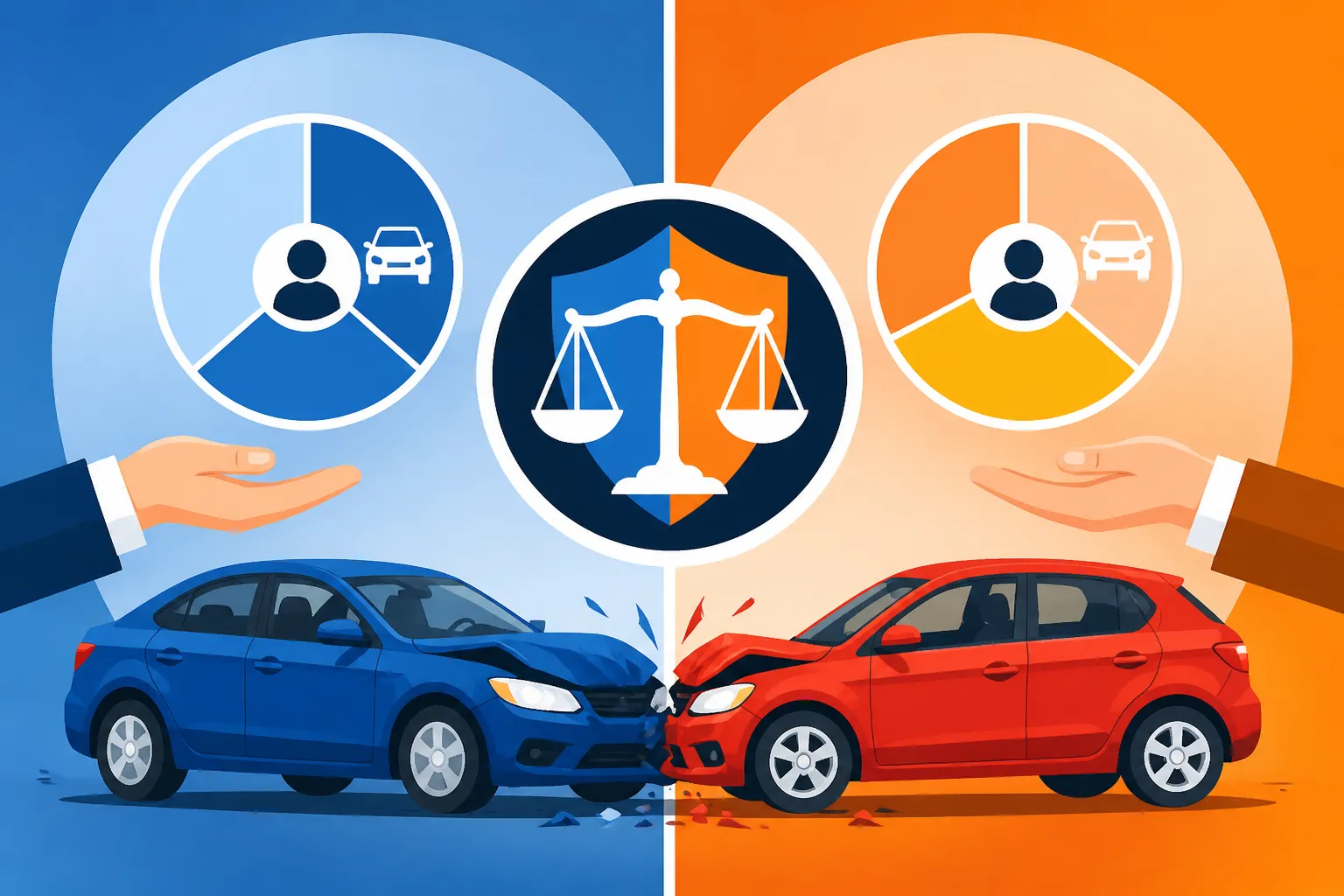
Comparative vs Contributory Negligence Explained
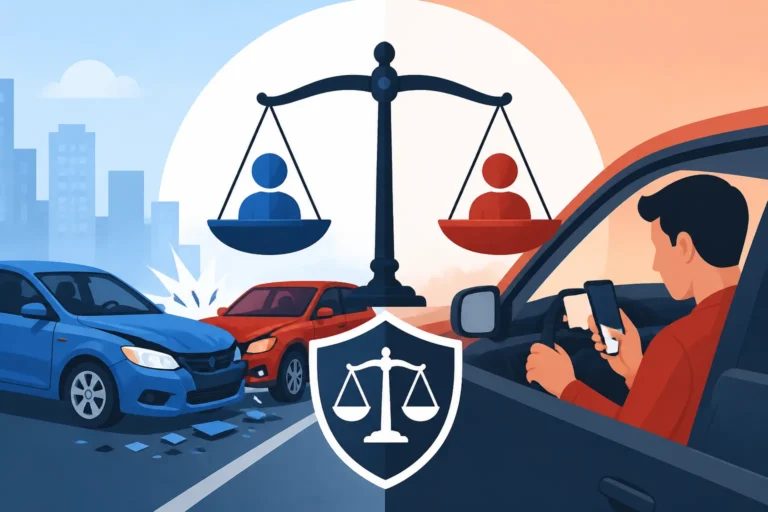
Experiencing a car accident is disorienting and stressful enough, but then you're hit with the confusing legal jargon of "fault." It feels like navigating a maze where every wrong turn could cost you your entire claim. The frustration of not knowing if you'll be able to recover your medical bills, lost wages, or vehicle repair costs simply because of some obscure legal principle is very real. This comprehensive guide is here to demystify those complex legal concepts, specifically breaking down comparative vs. contributory negligence, so you understand how fault is assessed and, crucially, how it impacts your ability to receive compensation after a collision.
Understanding Fault in Car Accidents
When you've been in a car accident, one of the first questions that comes up, often before you've even fully processed what happened, is "Whose fault was it?" It’s a question that looms large because in almost every state, the answer directly dictates who pays for the damages, who covers the medical bills, and ultimately, who bears the financial burden of the aftermath. Understanding the nuances of fault is not just legal speak; it's fundamental to protecting your rights and ensuring you don't end up paying out of pocket for an accident that wasn't primarily your doing.
The Basics of Car Accident Fault
At its core, "fault" in a car accident refers to legal responsibility for causing the collision and the resulting injuries or damages. It's about determining which driver, or drivers, acted negligently and contributed to the crash. Negligence isn't about intent to harm; it simply means someone failed to exercise reasonable care under the circumstances. This could be anything from speeding and running a red light to texting while driving or simply failing to check a blind spot.
Establishing fault is absolutely critical because it forms the bedrock of any insurance claim or personal injury lawsuit. If you can prove the other driver was entirely at fault, their insurance company should be responsible for covering your losses. Conversely, if you are found to be at fault, you could be on the hook for their damages, and your own recovery might be severely limited or even completely barred, depending on where the accident happened. For a deeper dive into the overall process, you might want to read our guide on Who Is at Fault in a Car Accident? Complete Guide (2026).
The Stakes: Why Fault Matters for Your Recovery
The financial implications of fault are immense. Imagine you're rear-ended on the freeway, and your car is totaled, leaving you with whiplash and a stack of medical bills. If the other driver is 100% at fault, their insurance should cover your vehicle's value, your medical treatment, lost wages from time off work, and even your pain and suffering. But what if you were found to be even slightly responsible? Maybe your brake lights weren't working perfectly, or you slowed down too abruptly. That small percentage of fault could potentially slash your compensation or, in some states, eliminate it entirely.
Beyond the immediate financial costs, the determination of fault can also have long-term consequences. It can affect your insurance premiums, your driving record, and even your ability to obtain certain types of employment in the future. The emotional toll of an accident is already significant, and the added stress of a complex fault determination process can feel overwhelming. This is precisely why understanding the legal frameworks of negligence is so important: it empowers you to protect yourself during what is already a very difficult time.
Contributory Negligence: The Strictest Standard
If you've heard the term "contributory negligence," you might already sense it's not a forgiving concept. And you'd be right. This legal doctrine represents the most stringent approach to determining fault in car accidents, placing an incredibly high bar on accident victims to prove they were entirely blameless. It's a system that, while seemingly simple, can lead to incredibly harsh outcomes for individuals who are largely innocent but bear even a sliver of responsibility for a crash.
The "Any Fault, No Recovery" Rule
The core principle of contributory negligence is straightforward, almost brutally so: if you contributed in any way to the cause of the accident, even by a mere 1%, you are completely barred from recovering any damages from the other driver. It doesn't matter if the other driver was 99% negligent and ran a red light at 80 mph; if your actions, however minor, played a role, you receive nothing. This "all or nothing" rule can feel incredibly unfair, especially when your injuries are severe and the other party's negligence was clearly the primary cause.
To illustrate, consider a hypothetical scenario: you're driving through a small town in Maryland, and another driver blows through a stop sign, T-boning your vehicle. You suffer significant injuries. During the investigation, it's discovered that you were technically going 2 mph over the posted speed limit of 25 mph. While the other driver's actions were undeniably the main cause, under pure contributory negligence, your 2 mph over the limit could be deemed a contributing factor, and you could be denied any compensation for your totaled car, medical bills, and lost wages. This legal framework stems from a historical common law principle, asserting that if a plaintiff contributed to their own harm, they shouldn't be able to recover from another. It's a stark contrast to more modern approaches that aim for a fairer distribution of responsibility.
States Still Adhering to Contributory Negligence
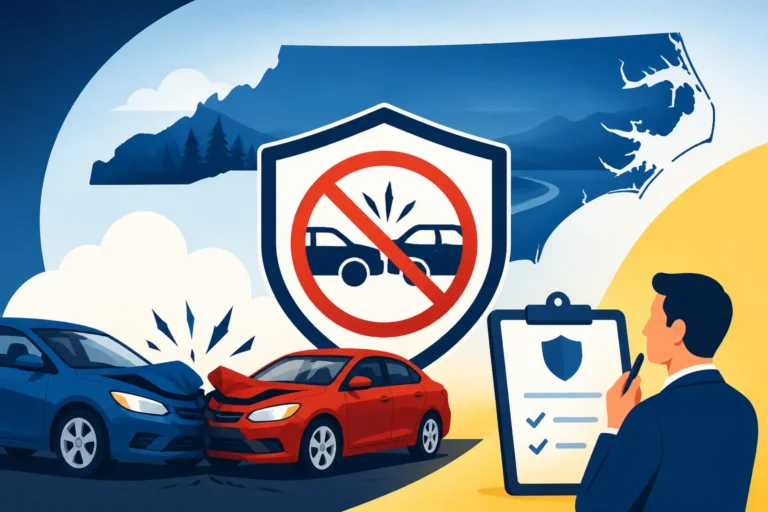
Thankfully, pure contributory negligence is quite rare today. Most states have moved towards a more equitable system. However, a handful of jurisdictions still adhere to this strict rule, making it incredibly important for drivers in these areas to understand the significant implications. Currently, the states that follow a pure contributory negligence rule are Alabama, Maryland, North Carolina, and Virginia, along with Washington D.C. If you have an accident in one of these locations, you are facing a much tougher uphill battle if there's any evidence suggesting you shared even minimal fault.
For instance, an accident on I-65 near Birmingham, Alabama, or on I-81 in Virginia, will be governed by this strict standard. Insurance companies operating in these states are very much aware of these laws and will often aggressively seek out any evidence, no matter how minor, that could place even a tiny percentage of fault on the injured party. Their objective is to find that small contribution from you to completely avoid paying out on a claim. This is a crucial detail for residents and visitors to these states, as the rules dramatically change the approach to handling an accident claim. More detailed information can be found in our post, Contributory Negligence States (Where 1% Fault Bars Recovery).
Navigating a Claim in a Contributory Negligence State
Given the unforgiving nature of contributory negligence, your strategy after an accident in one of these states must be meticulous and proactive. The absolute priority is to gather irrefutable evidence that demonstrates you were 0% at fault. This means documenting everything at the scene: taking extensive photos and videos of all vehicles, road conditions, traffic signs, and any skid marks; getting contact information from every witness; and ensuring the police report accurately reflects the scene and, ideally, places fault squarely on the other driver.
Even minor details can make or break your case. If a police report indicates you received a citation, or if a witness states something that implies shared responsibility, it can jeopardize your entire claim. During negotiations with the insurance company, adjusters will undoubtedly try to pin some level of fault on you, however small, to deny your claim outright. Having a clear, well-documented timeline and strong evidence is your best defense. This is also where legal counsel becomes almost indispensable, as an experienced attorney understands how to counteract these tactics and build a compelling case that aims for a finding of zero fault on your part.
Comparative Negligence: A More Forgiving Approach
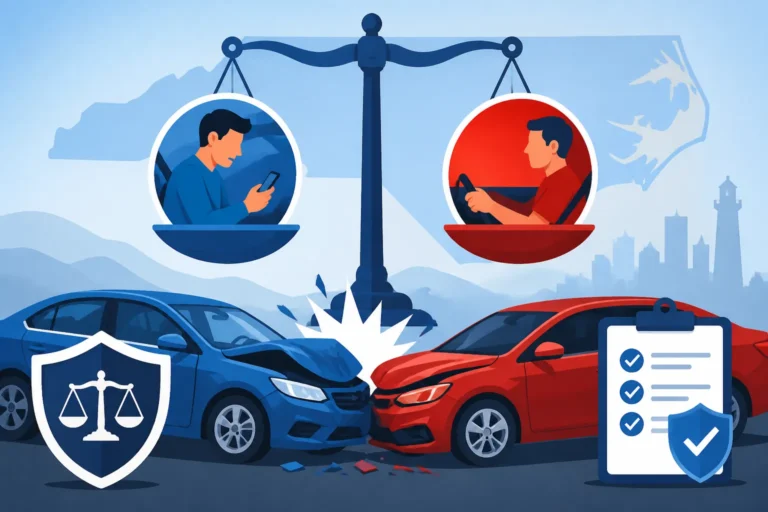
In stark contrast to the harsh "all or nothing" rule of contributory negligence, most states in the U.S. have adopted some form of comparative negligence. This legal doctrine is designed to provide a more equitable resolution to car accident claims where multiple parties share some degree of responsibility. Instead of completely barring recovery for a partially at-fault driver, comparative negligence allows damages to be distributed based on each party's percentage of fault. It's a system that acknowledges the complex realities of accidents, where fault is often not a clear-cut 100/0 split.
The Principle of Shared Responsibility
Under comparative negligence, if you are found to be partially at fault for an accident, your total awarded damages will be reduced by your percentage of fault. This means that if you suffered $10,000 in damages (medical bills, lost wages, vehicle repair) but were found to be 20% responsible for the accident, you would only be able to recover 80% of your damages, or $8,000. The underlying philosophy here is that individuals should only be held responsible for the portion of the damages they actually caused, and victims should still receive some compensation even if they weren't entirely blameless.
This approach feels inherently fairer to many people, as it prevents a scenario where someone with minimal fault walks away with nothing while the highly negligent party faces no financial repercussions. It shifts the focus from an absolute determination of fault to a proportional one, making negotiations with insurance companies more about the percentage of fault than a simple blame game. This system typically requires a detailed investigation to accurately assess each driver's contribution to the crash, leading to a more nuanced outcome. You can learn more about this by reading What Happens If You're Partially at Fault?.
Pure Comparative Negligence States
Within the umbrella of comparative negligence, there are two main variations. The first, and most lenient for the injured party, is pure comparative negligence. In states that follow this rule, you can recover damages even if you are found to be largely responsible for the accident, as long as you are not 100% at fault. Your recovery will simply be reduced by your assigned percentage of fault, no matter how high that percentage is. This means even if you were 90% at fault for an accident, you could still recover 10% of your damages from the other party.
States that embrace pure comparative negligence include California, Florida, New York, Alaska, Arizona, Kentucky, Louisiana, Mississippi, Missouri, New Mexico, Rhode Island, South Dakota, and Washington. For example, if you're in a car accident in Los Angeles, California, and sustain $100,000 in damages, but a jury determines you were 70% at fault, you would still be able to recover $30,000 from the other driver's insurance. This system aims to prevent total financial ruin for someone who, while significantly negligent, was not the sole cause of the accident. It often encourages settlements, as both parties typically have some incentive to negotiate rather than risk a jury assigning a high percentage of fault. Our article Pure Comparative Negligence States Explained offers a more in-depth look.
Modified Comparative Negligence States (The 50% vs 51% Bar)
The second, and more common, form of comparative negligence is modified comparative negligence. This system attempts to strike a balance between the strictness of contributory negligence and the leniency of pure comparative negligence. It operates with a specific threshold: if your percentage of fault exceeds a certain level, you are barred from recovering any damages. There are two primary variations of modified comparative negligence: the "50% Bar Rule" and the "51% Bar Rule."
The 50% Bar Rule
In states following the 50% Bar Rule, you can recover damages as long as your fault is determined to be less than 50%. If you are found to be 50% or more at fault, you cannot recover anything from the other party. So, if you're 49% at fault, you can still claim 51% of your damages. But if you're 50% at fault, your claim is extinguished. This threshold means that the moment your fault equals or exceeds half of the responsibility for the accident, your right to compensation vanishes.
States currently adhering to the 50% Bar Rule include Arkansas, Colorado, Georgia, Idaho, Kansas, Maine, Nebraska, North Dakota, Oklahoma, South Carolina, Utah, West Virginia. Imagine you're involved in a collision in Atlanta, Georgia. If your damages are $20,000 and you are found to be 40% at fault, you can still recover $12,000. However, if the fault assessment comes back at 50%, you'd walk away with nothing. This can create intense disputes over the precise percentage of fault, as even a single percentage point can mean the difference between significant compensation and no recovery at all.
The 51% Bar Rule
The 51% Bar Rule is slightly more forgiving. Under this rule, you can recover damages as long as your fault is 50% or less. You are only barred from recovery if your fault is determined to be 51% or more. This means if you are 50% at fault, you can still recover 50% of your damages. It's only when you become more at fault than the other party that your claim is denied.
A significant number of states follow the 51% Bar Rule, including Arizona, Connecticut, Delaware, Hawaii, Illinois, Indiana, Iowa, Massachusetts, Michigan, Minnesota, Montana, Nevada, New Hampshire, New Jersey, Ohio, Oregon, Pennsylvania, Texas, Vermont, Wisconsin, and Wyoming. Consider an accident in Dallas, Texas. If you suffer $50,000 in damages and are found to be 50% at fault, you could still recover $25,000. But if that percentage shifts to 51%, your claim is barred. The difference between the 50% and 51% bar can be subtle but profoundly impactful. It means that in a "50% bar" state, you effectively cannot be equally at fault, while in a "51% bar" state, you can be equally at fault and still recover. For a deeper understanding of this distinction, check out our guide on Modified Comparative Negligence (50% vs 51% Bar).
How Fault is Actually Determined by Insurance Companies
Understanding the legal frameworks of negligence is one thing, but knowing how these theoretical rules are applied in the real world by insurance companies is another challenge entirely. After an accident, you'll inevitably be dealing with claims adjusters who are tasked with investigating the collision and assigning fault. This isn't just a simple process of pointing fingers; it involves a meticulous collection of evidence, a deep understanding of traffic laws, and often, a bit of negotiation and sometimes even strategic maneuvering.
The Investigation Process
When you report a car accident to your insurance company, or the other driver's, an adjuster is assigned to your case. Their primary role is to investigate and determine liability. This investigation typically begins with collecting basic information: reviewing the police report, speaking with you and the other drivers involved, and gathering contact information for any witnesses. But it often goes far beyond that. Adjusters may ask for photos and videos you took at the scene, review dashcam footage if available, and sometimes even look for traffic camera recordings.
For more complex or severe accidents, the investigation can become even more extensive. This might involve dispatching an accident reconstruction specialist to analyze the physical evidence at the scene, such as skid marks, debris patterns, and vehicle damage. They use scientific principles to piece together exactly how the accident occurred, which in turn helps to establish each driver's contribution. It's a comprehensive process that aims to build a clear picture of negligence, but it's important to remember that adjusters also have their company's bottom line in mind.
Evidence That Shapes Fault Decisions
The determination of fault is highly dependent on the evidence available. Strong, objective evidence is paramount in convincing an insurance company—or eventually, a court—of your version of events and the other driver's negligence.
- Police Accident Reports and Citations: These are often the first piece of evidence an adjuster looks at. While a police report's fault determination isn't legally binding, it carries significant weight. If an officer issues a citation to one driver (e.g., for speeding, running a red light, or improper lane change), it's a strong indicator of fault. However, if there was no police report, it doesn't mean you can't pursue a claim, but it does mean you'll need to rely more heavily on other forms of evidence.
- Witness Statements and Dashcam Footage: Independent witness testimonies can be invaluable, as they provide an unbiased account of the events. Dashcam footage is arguably the most powerful piece of evidence, as it offers a definitive, objective recording of what happened. If you have a dashcam, that footage could be a game-changer in your claim.
- Vehicle Damage and Road Conditions: The type and location of damage on the vehicles involved can tell a story about the impact. For example, damage to the rear of your car usually points to the other driver being at fault in a rear-end collision. Road conditions, such as ice, potholes, or obscured signage, can also play a role in how fault is assigned, influencing whether a driver was truly negligent or reacted to unforeseen circumstances.
- Medical Records: While not directly proving fault for the accident itself, your medical records are critical for proving the extent of your injuries and demonstrating that they were a direct result of the crash, linking the fault to the damages.
For a comprehensive breakdown of how fault is determined, you might find our guide on How Fault Is Determined in a Car Accident extremely helpful.
The Role of Traffic Laws and Precedent
Beyond physical evidence, traffic laws and established legal precedent play a massive role in how fault is assigned. Insurance adjusters and legal professionals rely on these guidelines to interpret the circumstances of a crash.
- Specific Traffic Violations: Breaking a traffic law is often a direct path to being found at fault. For example, if a driver makes an illegal left turn and causes a collision, they will almost certainly be found at fault. Failure to yield, distracted driving (like texting), or driving under the influence are clear indicators of negligence that directly violate traffic statutes.
- Established Rules for Common Accident Types: Over time, legal systems have developed common-sense rules for certain types of accidents. For example, in most rear-end collisions, the trailing driver is presumed to be at fault for following too closely or failing to stop in time. Similarly, specific rules often govern Left-Turn Accident Fault Rules, where the turning driver typically has the responsibility to yield. These precedents provide a starting point for fault determination, though exceptions always exist based on specific circumstances.
- Internal Guidelines of Insurance Companies: Each insurance company also has its own internal guidelines and best practices for assessing fault. While these must align with state laws, they can sometimes lead to slightly different initial fault assessments between insurers. This is where negotiation comes into play, especially when two different insurance companies are involved in a dispute over fault.
The complexities mean that dealing with insurance companies can be challenging, particularly when fault is disputed. Understanding How Insurance Companies Determine Who Is at Fault can give you an edge in these conversations.
The Real-World Impact on Your Car Accident Claim
So, you've been in an accident, fault has been investigated, and a percentage has been assigned. What does this actually mean for your pockets? The impact of fault on your car accident claim is perhaps the most critical takeaway from understanding comparative and contributory negligence. It directly translates to how much compensation you can expect to receive, how difficult your negotiation process will be, and whether pursuing a claim is even financially viable.
Reducing Your Potential Settlement
The most direct impact of being found partially at fault in a comparative negligence state is a reduction in your overall settlement amount. It's a simple, albeit often painful, mathematical equation. Let's say your total damages—including medical expenses, lost wages, vehicle repair, and pain and suffering—are calculated at $50,000.
- If you are found 10% at fault: Your $50,000 settlement would be reduced by 10%, meaning you would receive $45,000.
- If you are found 30% at fault: Your $50,000 settlement would be reduced by 30%, leaving you with $35,000.
This reduction applies to all aspects of your damages, including economic damages like medical bills and lost wages, and non-economic damages such as pain and suffering. For instance, in a system where pain and suffering might be calculated using a multiplier of your medical bills, that entire figure would then be subjected to the fault percentage reduction. This proportional reduction mechanism in comparative fault states is precisely what is explained in our post about How Comparative Fault Reduces Your Settlement.
In contributory negligence states, the reduction isn't proportional; it's absolute. As discussed, even 1% fault means you recover $0, turning a potential substantial settlement into nothing at all. This difference underscores why the specific negligence rules of your state are so incredibly important.
The Burden of Proof and Negotiation
When fault is disputed, the burden of proof falls heavily on you to demonstrate the other driver's negligence and to minimize your own. Insurance adjusters are trained negotiators whose goal is to save their company money. If they can successfully argue that you contributed even a small percentage to the accident in a comparative negligence state, they will reduce their settlement offer accordingly. In a contributory negligence state, they will look for any shred of evidence to put even 1% of fault on you to deny your claim entirely.
This means you need compelling evidence to back up your claim of minimal or zero fault. This could include photos, videos, witness statements, and a consistent account of the accident. It also highlights the importance of being extremely careful with what you say after an accident. Any casual remark or apology could be misconstrued as an admission of fault, which could be used against you. This is why understanding What Is an Admission of Fault (and How to Avoid It)? is so vital in the immediate aftermath of a collision.
The negotiation process itself can be lengthy and contentious. Insurance adjusters might initially offer a lowball settlement, hoping you'll accept it out of desperation or lack of knowledge. They might dispute the severity of your injuries or claim that your pre-existing conditions are the cause of your pain, not the accident. Your ability to counter these arguments effectively relies on solid evidence and a clear understanding of how fault affects your potential recovery.
What if You're Partially at Fault?
If you find yourself in a situation where you're partially at fault, your options and strategy will depend heavily on your state's specific negligence laws.
- In Pure Comparative Negligence states: You still have a strong case for recovery, even if your fault is high. Your primary goal will be to accurately assess your damages and negotiate for the maximum possible settlement, knowing it will be reduced by your fault percentage.
- In Modified Comparative Negligence (50% or 51% Bar) states: Your focus will be on ensuring your fault percentage stays below the threshold. If the insurance company assigns you 50% or 51% (or more) fault, you might need to vigorously dispute their assessment with strong evidence to push your percentage lower. If you cannot get below the bar, your claim will be denied.
- In Contributory Negligence states: If there's any indication you bear any fault, your chances of recovery are slim to none. In these rare circumstances, your best bet is often to rely on your own uninsured/underinsured motorist (UM/UIM) coverage if the other driver was at fault, or personal injury protection (PIP) if you're in a no-fault state, as these policies may pay out regardless of fault.
Regardless of the state, if you're facing a situation where fault is disputed, or you know you might share some responsibility, it's often wise to consult with a car accident lawyer. They can help you understand the nuances of your state's laws, assess the strength of your evidence, and fight to minimize your assigned fault, ultimately maximizing your potential recovery.
Navigating the Complexities: Practical Advice and Next Steps
The aftermath of a car accident is a whirlwind of confusion, pain, and paperwork. It's easy to feel overwhelmed, especially when trying to understand complex legal concepts like comparative and contributory negligence. However, taking specific, proactive steps can significantly improve your chances of a fair outcome, regardless of the fault rules in your state. Being prepared and knowing how to protect your rights is your best defense against feeling lost in the system.
Document Everything at the Scene
The moments immediately following an accident are critical for gathering evidence that will support your claim later. This documentation is vital, especially when fault is being disputed.
- Take Photos and Videos: Use your smartphone to take as many pictures and videos as possible. Capture the damage to all vehicles from multiple angles, the position of the cars, any skid marks, debris on the road, traffic signals, road signs, and the overall weather and road conditions. Don't forget to photograph any visible injuries you or your passengers sustained. The more visual evidence you have, the better.
- Gather Witness Information: If anyone stopped to help or saw the accident, politely ask for their name and contact information. Independent witnesses can provide unbiased accounts that are invaluable when insurance companies try to assign fault.
- Get a Police Report Number: Even for minor accidents, calling the police is often a good idea. They will create an official report, which documents the scene, statements from drivers and witnesses, and potentially an initial determination of fault or citations issued. Make sure to get the report number so you can obtain a copy later. You might want to refer to Police Reports and Car Accident Fault for more information.
- Seek Medical Attention: Even if you feel fine immediately after the accident, it's crucial to get checked out by a doctor. Some injuries, like whiplash or concussions, have delayed symptoms. A medical record from soon after the accident creates a clear link between the collision and any injuries you sustained, making it harder for insurance companies to argue that your injuries were pre-existing or unrelated.
- Keep a Detailed Accident Journal: As soon as you can, write down everything you remember about the accident: the date, time, location, weather, what you saw, what you heard, and any conversations you had with other drivers, witnesses, or police. Continue to document your symptoms, medical appointments, pain levels, and any missed work. This personal record can be incredibly helpful in recalling details later on. For a full guide on what to do, see What to Do After a Car Accident: Step-by-Step (2027).
Communicating with Insurance Companies
Interacting with insurance adjusters can be tricky. Remember, their primary goal is to settle claims for the lowest possible amount, which often means trying to minimize their client's fault or maximize yours.
- Report Promptly, But Be Concise: Notify your own insurance company about the accident as soon as possible. When speaking with them or the other driver's insurer, stick to the facts. Provide the date, time, and location of the accident, and state that you were involved. Avoid speculating about fault or severity of injuries.
- Avoid Recorded Statements (Especially for the Other Party's Insurer): You are generally not obligated to give a recorded statement to the other driver's insurance company. If they ask, politely decline and state that you prefer to communicate in writing or through your attorney. A recorded statement can be used against you, as adjusters are skilled at asking leading questions that might elicit responses that harm your claim.
- Do Not Admit Fault or Apologize: Even an innocent "I'm sorry" can be twisted into an admission of fault by an insurance company. Stick to factual descriptions of what happened. It's perfectly okay to express concern for others without admitting legal responsibility.
- Keep Records of All Communications: Document every phone call, email, and letter you send or receive from insurance companies. Note down the date, time, person you spoke with, and a summary of the conversation. This can be invaluable if disputes arise later.
When to Consider Legal Counsel
While not every minor fender-bender requires an attorney, there are many situations where a car accident lawyer becomes an invaluable ally. Given the complexities of negligence laws and the aggressive tactics sometimes employed by insurance companies, legal representation can significantly impact your outcome.
- Complex Injuries or Significant Damages: If you've suffered serious injuries, require extensive medical treatment, or face long-term disability, a lawyer can help ensure all your damages are properly accounted for, including future medical expenses, lost earning capacity, and significant pain and suffering.
- Disputed Fault: When fault is unclear or the other driver's insurance company is trying to pin the blame on you, an attorney can gather evidence, interview witnesses, and present a compelling case to minimize your fault percentage. This is especially critical in contributory negligence states or modified comparative negligence states where your fault is near the bar.
- Lowball Settlement Offers: Insurance companies often make initial settlement offers that are far below the true value of your claim. An experienced lawyer knows how to negotiate with adjusters and fight for a fair settlement that fully compensates you for your losses.
- Navigating Legal Procedures: Filing a lawsuit, understanding statutes of limitations, and adhering to court rules can be overwhelming. A lawyer handles all legal procedures, allowing you to focus on your recovery.
- Dealing with Aggressive Adjusters: If an adjuster is being uncooperative, dismissive, or trying to pressure you into a quick settlement, an attorney can step in and handle all communications, protecting you from potentially damaging interactions.
A car accident attorney typically works on a contingency fee basis, meaning they only get paid if you win your case, making legal representation accessible even if you can't afford upfront costs. This is often a critical factor in deciding whether you need a lawyer for a car accident.
State-Specific Nuances and Examples
The legal landscape surrounding car accident fault is not uniform across the United States. Each state has its own specific set of laws, meaning that the same accident could lead to drastically different outcomes depending on where it occurred. This patchwork of rules underscores the importance of understanding your local regulations and how they might apply to your situation.
A Deeper Dive into Specific State Laws
Let's look at how the rules might play out in a few distinct state contexts.
- California (Pure Comparative Negligence): Imagine a scenario where you're involved in an accident in San Diego, California. The total damages for both parties amount to $100,000. During the investigation, it's determined that you were 60% at fault because you changed lanes without signaling, but the other driver was 40% at fault because they were speeding. In California's pure comparative negligence system, you would still be able to recover 40% of your damages from the other driver's insurer. If your personal damages were $40,000, you could recover $16,000 ($40,000 * 0.40). Even though you were predominantly at fault, the pure comparative system ensures you still receive some compensation for the portion of the damages you didn't cause. This system places a strong emphasis on proportional recovery, regardless of how high your individual fault percentage climbs.
- Texas (Modified Comparative Negligence – 51% Bar Rule): Now, consider a similar accident in Houston, Texas, with the same $100,000 in total damages. You're again found 60% at fault, and the other driver 40% at fault. Under Texas's 51% bar rule, because your fault (60%) is greater than 50%, you would be completely barred from recovering any damages from the other driver. Even if your personal damages were $40,000, you would receive nothing. The other driver, however, would still be able to recover 60% of their damages from your insurance, as their fault was below the 51% bar. This illustrates the critical impact of that 51% threshold – once you cross it, your claim is extinguished. The difference of just one percentage point can mean receiving thousands of dollars or nothing at all.
- Maryland (Contributory Negligence): Finally, picture the same accident, same fault percentages (you 60% at fault, other driver 40% at fault), but this time it happens in Baltimore, Maryland. In Maryland, a contributory negligence state, because you were found to be 60% at fault (any fault at all), you would be completely barred from recovering any damages from the other driver. The other driver would also be barred from recovering from you, as they too were partially at fault. This "all or nothing" approach often leads to very contentious claims where both sides try to prove the other was 100% at fault, as any shared blame results in zero recovery.
These examples clearly demonstrate how the exact same collision can have vastly different financial outcomes for the injured parties depending on the specific negligence laws of the state where it occurred. It also highlights why the determination of fault is such a heavily contested aspect of car accident claims.
No-Fault States and How They Differ
To add another layer of complexity, some states operate under a "no-fault" insurance system. This is a fundamentally different approach where, after an accident, your own insurance company pays for your medical expenses and lost wages, regardless of who was at fault. This typically comes through a component of your policy called Personal Injury Protection (PIP) or Medical Payments (MedPay) coverage. The idea is to streamline the claims process for minor injuries, reducing the need to prove fault for basic medical costs.
However, "no-fault" doesn't mean fault is entirely irrelevant. In most no-fault states, there are thresholds—either monetary (e.g., medical bills exceed $10,000) or verbal (e.g., suffering a "serious injury" like a broken bone or permanent disfigurement)—that allow an injured party to step outside the no-fault system and file a claim or lawsuit against the at-fault driver. When these thresholds are met, the traditional fault-based rules (like comparative negligence) then come into play for seeking compensation for pain and suffering and other significant damages.
States like Florida, Michigan, New York, and Pennsylvania are examples of no-fault states. So, if you have a minor fender bender in Florida, your PIP coverage would likely cover your initial medical bills. But if you suffered a herniated disc requiring surgery, you might meet the serious injury threshold, allowing you to sue the at-fault driver for additional damages, including pain and suffering. Understanding What Is a No-Fault State? (And Which States Are No-Fault) is crucial for knowing your rights and obligations in these unique jurisdictions. Even in no-fault states, the ultimate determination of fault can significantly impact your ability to recover for long-term injuries or non-economic damages.
| Feature | Contributory Negligence (e.g., MD, VA) | Pure Comparative Negligence (e.g., CA, FL) | Modified Comparative Negligence – 50% Bar (e.g., CO, GA) | Modified Comparative Negligence – 51% Bar (e.g., TX, IL) |
|---|---|---|---|---|
| Recovery if at Fault | No recovery if 1% or more at fault | Can recover, even if 99% at fault | Can recover if less than 50% at fault | Can recover if 50% or less at fault |
| Threshold for Bar | Any fault (1%+) bars recovery | No bar (unless 100% at fault) | 50% or more fault bars recovery | 51% or more fault bars recovery |
| Damage Reduction | No proportional reduction (all or none) | Damages reduced by % of fault | Damages reduced by % of fault (if below 50% bar) | Damages reduced by % of fault (if below 51% bar) |
| "Equal" Fault (50%) | Bars recovery | Recover 50% of damages | Bars recovery | Recover 50% of damages |
| Negotiation Difficulty | Extremely high, zero tolerance for fault | High, focused on precise fault % | High, especially near the 50% threshold | High, especially near the 51% threshold |
Disclaimer
Please remember that this article provides general information and is not a substitute for legal advice. Laws regarding car accidents and negligence are complex and vary significantly by state. It is highly recommended that you consult with a qualified attorney to discuss the specific details of your case and your state's particular laws.