Who Is at Fault in a Rollover Accident in California?
Experiencing a rollover accident in California is a truly terrifying and disorienting event. One moment you're driving, and the next your world is literally turning upside down, often leaving you shaken, injured, and wondering how this could have possibly happened. Beyond the immediate shock and physical pain, the question of "who is at fault?" quickly looms large, adding immense stress to an already overwhelming situation. This comprehensive guide aims to demystify the complexities of fault determination in California rollover accidents, helping you understand the factors involved and what steps you can take to protect your rights.
Understanding Rollover Accidents and Their Causes in California
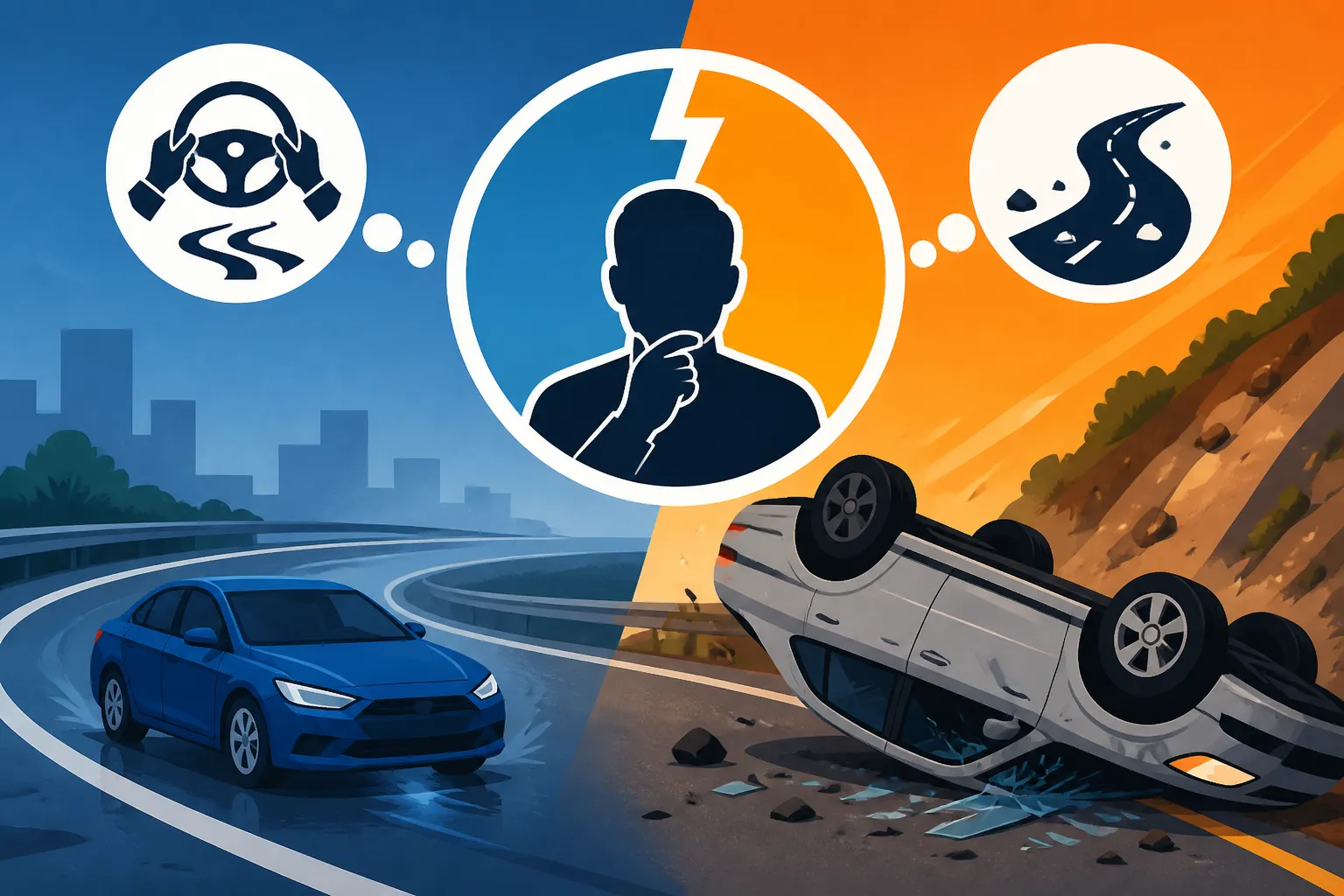
Rollover accidents are distinct from other types of collisions because they involve a vehicle tipping onto its side or roof. While less common than head-on or rear-end collisions, they often result in some of the most severe injuries and fatalities due to the violent forces involved and the potential for occupants to be partially ejected. In California, with its diverse terrain from bustling freeways to winding mountain roads, understanding why these accidents happen is the first step in figuring out who might be responsible.
Common Factors Leading to Rollovers
It's easy to assume a rollover is always the driver's fault, but the reality is far more nuanced. Many elements can contribute to a vehicle losing stability and overturning.
Vehicle Design Characteristics
Certain vehicles have a higher propensity to roll over due to their design. Sport Utility Vehicles (SUVs), pickup trucks, and vans, especially older models, tend to have a higher center of gravity and a narrower track width compared to passenger cars. This design makes them inherently less stable, particularly when performing sudden maneuvers at speed. While modern stability control systems, like those mandated in all new vehicles since 2012, have significantly improved safety, they aren't foolproof. A vehicle's stability can still be compromised by factors like oversized tires, lifts, or heavy loads that further raise its center of gravity. For instance, a family SUV packed to the brim for a camping trip in Yosemite might handle very differently than when it's empty, especially if it encounters an unexpected sharp turn.
Road Conditions and Environmental Factors
The environment you're driving in plays a massive role. Uneven road surfaces, potholes, loose gravel, or sudden dips can upset a vehicle's balance, especially at higher speeds. Consider driving on State Route 1, the Pacific Coast Highway, where sections can be prone to debris from rockslides or have varying shoulder conditions. Poorly maintained roads, sharp curves with inadequate warning signs, or shoulders that drop off significantly can all contribute. Beyond the road itself, weather conditions are a huge culprit. Rain-slicked roads, like those often seen during California's rainy season, reduce tire grip dramatically, making it easier for a vehicle to slide and trip over itself if a wheel catches on a dry patch or curb. High winds, especially in open areas or on bridges, can also destabilize taller vehicles, pushing them off course and potentially leading to a rollover.
Driver Behavior and Errors
Despite external factors, driver behavior remains a primary cause in many rollover accidents. Speeding is perhaps the most significant contributor; physics dictates that the faster a vehicle travels, the less time a driver has to react and the more likely a sudden turn will result in a loss of control. Aggressive driving, such as weaving through traffic on the 405 Freeway or making abrupt lane changes, can also destabilize a vehicle. Distracted driving, whether it's texting while driving through downtown Los Angeles or reaching for something on the floor, takes a driver's attention away from the road, leading to delayed reactions and potentially overcorrecting when danger arises. Driving under the influence of alcohol or drugs severely impairs judgment and reaction time, making drivers far more susceptible to errors that can lead to rollovers. Even simple fatigue can mimic the effects of intoxication, reducing a driver's ability to maintain control.
The Immediate Aftermath and Data Collection
The moments immediately following a rollover are chaotic, but what you do (or don't do) can profoundly impact the fault determination process. Your priority, of course, is safety and seeking medical attention. However, once immediate dangers are addressed, gathering information becomes crucial.
Importance of Accident Scene Preservation
If it's safe to do so, preserving the accident scene as much as possible is vital. This means not moving vehicles unless absolutely necessary for safety, especially if someone is injured or if the vehicles are blocking active traffic lanes. The positions of the vehicles, skid marks, debris fields, and any damage tell a story. When the police arrive, they'll meticulously document the scene, and their observations will form the basis of the official police report. If the scene is altered, it can make accurate accident reconstruction much harder. Remember, first responders and law enforcement officers are trained to assess these situations, so defer to their guidance on when and how to clear the scene. For more information, you can read our guide on what to do after a car accident: Step-by-Step (2026).
Gathering Evidence for Your Claim
While at the scene (again, if safe and your injuries permit), try to collect as much information as possible. Take clear, detailed photos and videos from multiple angles. Capture the damage to all vehicles involved, the surrounding road conditions, traffic signs, tire marks, and any environmental factors like puddles or debris. Get contact and insurance information from all drivers involved. If there were witnesses, their statements can be incredibly powerful; ask for their names and phone numbers. Even after you've left the scene, continue to collect evidence. Keep detailed records of all your medical appointments, treatments, and expenses. Document your lost wages and any other financial impacts. This diligent record-keeping will be essential when you or your legal representative are trying to prove your injuries in a car accident claim.
How Fault Is Determined in California Rollover Accidents
Determining fault in any car accident can be a complex puzzle, but in a rollover, it often involves a deeper dive into contributing factors. California has specific rules that govern how fault is assigned, and understanding them is crucial for anyone involved in such a crash. You might also find it helpful to review our comprehensive guide on Who Is at Fault in a Car Accident? Complete Guide (2026).
California's Comparative Negligence Rule
One of the most important things to know about accident claims in California is that it is a "pure comparative negligence" state. What does this mean for you? Essentially, it means that even if you are found partially responsible for the accident, you can still recover damages from the other at-fault parties. However, your total compensation will be reduced by your percentage of fault.
Explanation of Pure Comparative Negligence
Let's imagine a scenario: You're driving on a winding road in the Santa Monica Mountains, perhaps a bit too fast for the conditions. Suddenly, another driver swerves into your lane without signaling, causing you to overcorrect, hit the shoulder, and your SUV rolls over. An investigation might determine that the other driver was 70% at fault for the unsafe lane change, but you were 30% at fault for exceeding a safe speed for the curve. If your total damages (medical bills, lost wages, pain and suffering) amount to $100,000, under California's pure comparative negligence rules, you would be able to recover $70,000 (70% of $100,000). This system ensures that even if you made a mistake, you're not completely barred from receiving compensation, unlike in "contributory negligence" states where even 1% fault can prevent any recovery. It's a system designed to fairly apportion responsibility, though it can still be frustrating if you feel you were less at fault than determined. For a deeper dive into this concept, you can check out our article on Comparative vs Contributory Negligence Explained.
How Shared Fault Impacts Recovery
The tricky part about shared fault is that insurance companies will always try to maximize the fault placed on you to reduce their payout. They might argue that if you weren't speeding, you would have had more time to react, or that your vehicle's condition contributed to the rollover. This is why thorough evidence and, often, legal representation become so critical. If an insurance adjuster can successfully argue that your fault percentage is higher, it directly decreases the amount you receive. For example, if they could push your fault from 30% to 50%, your $100,000 claim would suddenly only be worth $50,000. Understanding what happens if you're partially at fault is crucial for managing expectations and preparing for negotiations.
Key Evidence in Establishing Fault
Proving fault in a rollover accident usually requires a robust collection of evidence. Unlike a simple fender-bender, the sequence of events leading up to a rollover can be complex, involving multiple variables.
Police Reports and Traffic Citations
One of the first and most important pieces of evidence will be the official police report. When law enforcement responds to a rollover, especially one involving injuries, they conduct a detailed investigation. This includes interviewing drivers and witnesses, examining the scene for skid marks, debris, and vehicle positions, and noting any contributing factors like weather or road conditions. While a police report doesn't definitively assign legal fault, it provides an official, unbiased account of the officer's findings and often includes diagrams and conclusions about potential violations. If a driver receives a traffic citation for speeding, reckless driving, or an illegal maneuver, that citation can be very strong evidence of their negligence. It's an official determination that a traffic law was broken, which often directly correlates to fault. Remember, How fault is determined in a car accident often relies heavily on this initial documentation.
Witness Testimony and Other Evidence
Independent witness testimony can be incredibly valuable, especially if the drivers involved have conflicting accounts. An unbiased third party who saw the accident unfold can provide critical details about speeds, vehicle movements, and specific actions that led to the rollover. Beyond human witnesses, modern vehicles are data powerhouses. Event Data Recorders (EDRs), often called "black boxes," record crucial information in the moments leading up to a crash, such as vehicle speed, brake application, throttle position, seatbelt usage, and even steering input. This data can provide irrefutable evidence of a driver's actions. Furthermore, expert accident reconstruction specialists can analyze all available evidence – photos, videos, EDR data, vehicle damage, and scene measurements – to create a scientific model of how the accident occurred, often pinpointing the exact cause and contributing factors. This level of detail is often necessary when fault is disputed, especially in complex rollover scenarios.
Road and Weather Conditions
As discussed earlier, external conditions can significantly influence how a rollover occurs. Evidence of these conditions can also support or mitigate fault. For instance, if a road was known to have a severe pothole that caused a driver to lose control and roll, photographic evidence of that pothole and records of prior complaints to the city or Caltrans could shift some or all of the blame away from the driver. Similarly, if weather reports confirm extreme winds or torrential rain at the time of the accident, it could explain why a vehicle lost traction, though drivers are still expected to adjust their driving to conditions. Documenting these elements meticulously – through photos, local weather reports, and records of road maintenance – is key to a thorough fault assessment.
Multiple Parties Who Could Be at Fault
While it might seem straightforward that the driver who ended up upside down is at fault, rollover accidents often have a tangled web of contributing factors and potentially multiple responsible parties. California law allows for this possibility, and understanding these different scenarios is vital.
The Driver of the Rolled Vehicle
It's true that in many rollover accidents, the driver of the vehicle that overturned bears at least some responsibility. This is often due to choices made behind the wheel that push the vehicle beyond its stability limits.
Speeding, Reckless Driving, Distracted Driving, DUI
When a driver takes a curve too fast, executes an abrupt lane change without looking, or overcorrects violently after a minor swerve, they can easily cause their vehicle to lose traction and "trip" over itself, leading to a rollover. In California, these behaviors are serious traffic offenses. For instance, a driver speeding on the notoriously curvy Mulholland Drive and then rolling their car would almost certainly be found primarily at fault. Distracted driving, like engaging with a phone while navigating a busy intersection in San Francisco, can lead to delayed reactions and sudden, destabilizing maneuvers. Driving under the influence (DUI) dramatically impairs a driver's ability to judge speed, distance, and maintain vehicle control, making rollovers a frequent and tragic outcome. In such cases, if you were hit by an intoxicated driver who then rolled their vehicle, proving their fault for a drunk driving accident becomes much clearer.
Failure to Maintain Vehicle
Sometimes, the driver's negligence isn't in their driving behavior itself, but in their failure to properly maintain their vehicle. Worn-out tires with insufficient tread depth can significantly reduce grip, making a rollover much more likely, especially on wet or uneven surfaces. Similarly, brake problems, steering issues, or suspension failures that a driver ignored could contribute to a loss of control. Imagine a scenario where a driver's ancient, poorly maintained pickup truck experiences a sudden tire blowout on Interstate 5 due to excessively worn tires. While a blowout is an unexpected event, the driver's neglect in vehicle maintenance could place significant fault on them for the resulting rollover.
Other Drivers Involved
It's entirely possible for another driver to cause your vehicle to roll over, even if they don't directly collide with you or their vehicle doesn't roll itself.
Causing Another Vehicle to Swerve or Brake Suddenly
Picture this: You're driving down the freeway near Irvine, and another car suddenly cuts you off without warning, forcing you to swerve violently or slam on your brakes to avoid a collision. If this evasive action leads your vehicle to trip and roll over, the driver who cut you off could be held primarily responsible for your accident, even if there was no physical contact between the two vehicles. Their negligent act directly initiated the chain of events leading to your rollover. Proving this scenario, however, often requires strong evidence like dashcam footage or reliable witness testimony, as the at-fault driver may deny their actions. This is a common situation in a lane-change accident or a merging accident.
Illegal Maneuvers
Any illegal or reckless maneuver by another driver can indirectly lead to a rollover. Running a red light, making an illegal U-turn, or ignoring a stop sign can force other drivers into defensive actions that cause them to lose control. For example, if a car illegally turns left across oncoming traffic, causing an approaching vehicle to swerve onto the shoulder and roll, the driver making the illegal left turn is almost certainly at fault. This is a classic example of how a Left-Turn Accident Fault can extend to severe consequences like rollovers.
External Factors and Third Parties
Beyond the drivers themselves, other entities can sometimes share the blame for a rollover accident, especially when there are underlying defects or neglected infrastructure.
Vehicle Manufacturer Defects
Occasionally, the design or manufacturing of the vehicle itself can be a contributing factor. Historically, some SUVs gained a reputation for being "rollover prone" due to high centers of gravity. While modern vehicles are much safer, defects can still occur. A faulty tire that blows out unexpectedly, a malfunctioning brake system, or a stability control system that fails could all contribute to a rollover. If an independent investigation or expert analysis reveals that a vehicle component was defective and this defect directly caused the rollover, the vehicle manufacturer or the component manufacturer could be held liable. For instance, if a specific tire model had a known defect leading to tread separation, and this caused a vehicle to roll, the tire manufacturer could be responsible.
Road Design or Maintenance Flaws
The governmental entity responsible for maintaining the road can also be held accountable if their negligence led to the accident. This could include Caltrans for state highways, or a local municipality for city and county roads. Examples of such flaws might be poorly designed curves with inadequate banking, missing or obscured warning signs (especially for sharp turns), dangerous shoulder drop-offs, or persistent road hazards like enormous potholes that haven't been repaired despite repeated complaints. If you rolled your car because a dangerous stretch of road in Big Sur was notoriously unmaintained, and the authorities were aware of the hazard but failed to act, they might share fault. This type of claim is complex and often requires experienced legal counsel, as governmental entities have certain immunities.
Cargo Loading Issues
For commercial vehicles, like large trucks or cargo vans, improper loading can significantly increase the risk of a rollover. If cargo is not properly secured or is unevenly distributed, it can shift during transit, especially on turns or uneven roads. This sudden shift in weight can drastically alter the vehicle's center of gravity and cause it to overturn. In such cases, the trucking company, the shipper, or even the loader of the cargo could be deemed partially or wholly at fault for the rollover.
Navigating the Claims Process After a California Rollover
Dealing with the aftermath of a rollover accident is incredibly stressful, made even more challenging by the complexities of insurance claims and potential legal battles. Knowing what to expect and how to protect yourself is crucial. For detailed steps, refer to our guide on How to File a Car Accident Insurance Claim.
Dealing with Insurance Companies
After a rollover, you'll inevitably be dealing with insurance companies – both your own and potentially the at-fault driver's. It's a system designed to protect their bottom line, so proceed with caution.
What to Expect from Adjusters
Insurance adjusters, whether from your insurer or the other party's, will contact you relatively quickly. Their job is to investigate the claim, but their primary goal is often to minimize the payout. They will ask for your version of events, details about your injuries, and property damage. Be prepared for them to ask for recorded statements. This is where you need to be very careful. While you are generally obligated to cooperate with your own insurance company, you are not usually required to give a recorded statement to the other driver's insurance company. Any statement you make can be used to discredit your claim or shift more fault onto you. They might try to suggest your vehicle's stability was compromised or that you were driving unsafely. They are skilled negotiators, and you're at a disadvantage if you're not fully recovered or informed. For more on this, check out our piece on Dealing With Insurance Adjusters After a Car Accident.
Protecting Your Statements and Information
It's highly advisable to consult with a legal professional before giving any detailed statements, especially recorded ones, to the other party's insurance company. Stick to the basic facts of the accident. Avoid speculating about fault, minimizing your injuries, or discussing specific details you're not absolutely sure about. Politely inform them that you are seeking legal counsel and will have your attorney communicate on your behalf. Remember, they are looking for anything they can use to deny or reduce your claim. Even a seemingly innocent comment like "I'm fine" in the immediate aftermath can be twisted later to suggest your injuries aren't severe. Focus on documenting everything, from the exact time you sought medical attention to how the injuries impact your daily life.
Legal Assistance and Proving Your Case
Given the severe nature and complex fault determination in rollover accidents, seeking legal advice is almost always a good idea.
When a Lawyer Is Essential
For rollover accidents, especially those involving significant injuries or property damage, hiring a car accident lawyer is often essential. An experienced attorney can navigate the complexities of California's comparative negligence laws, gather the necessary evidence (including black box data, accident reconstruction, and expert testimony), and negotiate with aggressive insurance companies on your behalf. They understand How insurance companies determine who is at fault and can challenge unjust fault assessments. If there are multiple parties potentially at fault, such as another driver, a vehicle manufacturer, or a government entity responsible for road maintenance, a lawyer is crucial for identifying all responsible parties and filing appropriate claims or lawsuits. They can also help you understand the full value of your claim, including future medical expenses and pain and suffering, which you might underestimate on your own. For more guidance, read Do You Need a Lawyer for a Car Accident? (2026).
Steps to Take to Strengthen Your Claim
To maximize your chances of a successful claim, here are concrete steps you should take:
- Seek Medical Attention Immediately: Even if you feel okay, some serious injuries like concussions or internal bleeding may have delayed injury symptoms after a car accident. Get checked out by a doctor right away and follow all their recommendations. This creates a vital medical record.
- Document Everything: Keep a detailed journal of your symptoms, pain levels, doctor visits, medications, and how your injuries affect your daily life. Save all medical bills, receipts for expenses related to the accident (like rental cars or prescription co-pays), and records of lost wages.
- Gather All Accident Information: Ensure you have the police report number, contact information for all drivers and witnesses, and photos/videos of the scene and vehicle damage.
- Do Not Admit Fault: Never admit fault or apologize for the accident at the scene or to insurance adjusters. Let the investigation determine fault.
- Limit Communication with the Other Driver's Insurer: As mentioned, be very cautious about what you say to the other insurance company.
- Consult with an Attorney: Get a free consultation to understand your rights and options. An attorney can help you understand how to prove the other driver was at fault.
By taking these proactive steps, you put yourself in the best possible position to navigate the challenging aftermath of a rollover accident and secure the compensation you deserve to aid in your recovery.
| Party Potentially at Fault | Common Contributing Actions in Rollover Accidents | Key Evidence to Prove Fault |
|---|---|---|
| Driver of Rolled Vehicle | Speeding, reckless driving, distracted driving, DUI, abrupt evasive maneuvers, poor vehicle maintenance (e.g., worn tires) | Police report, EDR data, witness testimony, traffic citations, vehicle inspection reports |
| Other Drivers | Cutting off, unsafe lane changes, running red lights/stop signs, forcing evasive action, tailgating | Witness testimony, dashcam footage, police report, traffic citations |
| Vehicle Manufacturer | Defective tires, faulty brakes, stability control system failure, design flaw (e.g., high center of gravity in older models) | Expert mechanical inspection, recall notices, independent accident reconstruction, vehicle specifications |
| Government Entity | Poor road design, inadequate warning signs, unmaintained roads (potholes, debris), dangerous shoulder drop-offs | Road maintenance records, engineering reports, prior complaints, expert witness testimony |
| Cargo Loader/Company | Improperly secured cargo, uneven weight distribution in commercial vehicles | Shipping manifests, loading logs, expert cargo analysis, truck inspection reports |
Disclaimer
Please remember that this article provides general information and insights into car accident claims and fault determination in California. It is not intended as legal advice. Every accident is unique, and the specific facts and circumstances of your case will dictate the applicable laws and potential outcomes. For personalized advice regarding your rollover accident, it is strongly recommended that you consult with a qualified personal injury attorney in California.