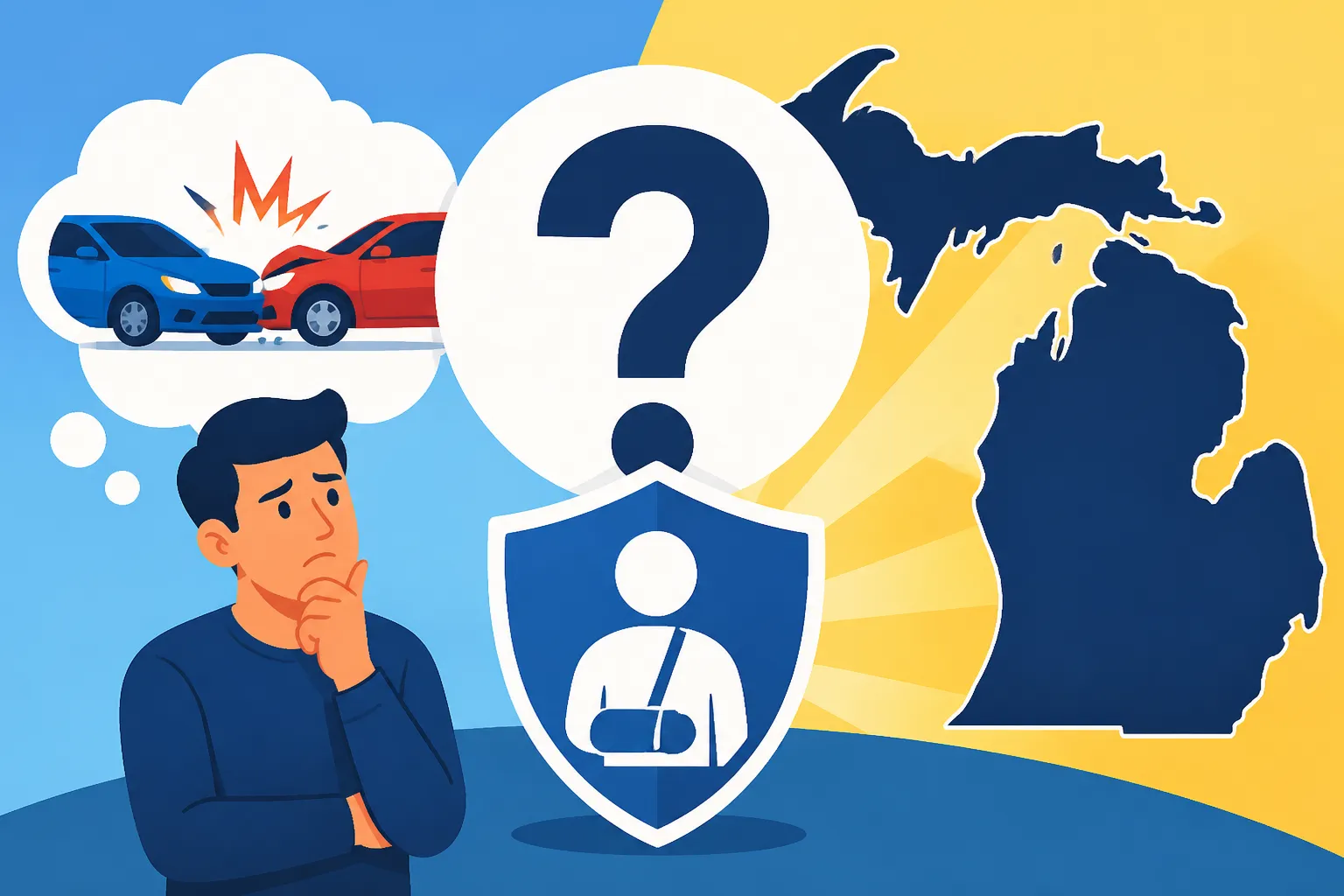
Is Michigan a No-Fault State?
Navigating the aftermath of a car accident is already incredibly stressful, and trying to understand how insurance claims work, especially in a state with unique laws, can feel like trying to solve a puzzle while blindfolded. Many folks are left wondering, "Is Michigan a no-fault state?" and more importantly, "What does that actually mean for me if I've been in a crash?" This guide is here to shed light on Michigan's distinct no-fault insurance system, break down its core components, explain recent changes, and help you understand how it impacts your ability to recover financially and physically after a car accident.
Understanding Michigan's No-Fault System
The term "no-fault" gets thrown around a lot, and it can be really confusing. In simple terms, for car accidents, a no-fault system means that if you're injured in a collision, your own insurance company pays for your medical bills and a portion of your lost wages, regardless of who actually caused the accident. This is a significant departure from "at-fault" states where the insurance of the driver responsible for the crash is generally on the hook for all damages. Michigan implemented its original no-fault system back in the 1970s with the idea of speeding up compensation for injury victims and reducing litigation over minor accidents. It was designed to ensure quick access to vital benefits like medical care and income replacement without getting bogged down in lengthy legal battles over fault.
Before July 2, 2020, Michigan's no-fault system was famous (or infamous, depending on who you asked) for its requirement of unlimited lifetime medical benefits for anyone injured in a car accident, a truly unique feature in the entire country. This meant that if you were severely injured, your auto insurance would cover all reasonably necessary medical care for the rest of your life. While this provided incredible security for accident victims, it also led to some of the highest auto insurance premiums in the nation, causing a lot of frustration for Michigan drivers. The complexity of determining Who Is at Fault in a Car Accident? Complete Guide (2027) still existed for property damage and serious injuries, but the initial medical expenses were handled differently.
What "No-Fault" Really Means for You
When you're involved in a fender bender on I-75 or a more serious crash on a rural Michigan road, the first thing many people instinctively think about is whose fault it was. While fault is still crucial for certain aspects of your claim, under Michigan's no-fault laws, your primary source of compensation for medical expenses and lost wages after a collision is your own Personal Injury Protection (PIP) coverage. This means if you rear-end someone because you weren't paying attention, or if someone blows through a stop sign and T-bones you, your own policy is where you'll generally turn for those initial injury-related costs. This can be a huge relief because it bypasses the often lengthy process of proving the other driver's fault just to get your medical bills covered.
However, "no-fault" doesn't mean "no responsibility" or "no consequences." It specifically applies to bodily injury benefits, not necessarily to property damage or the ability to sue for pain and suffering. For instance, if you're the one who caused a collision and damaged someone else's car, your liability insurance would still be responsible for covering their vehicle repairs. Furthermore, if your injuries are serious enough, you might still have the right to pursue a claim against the at-fault driver for non-economic damages, like pain and suffering. We'll delve into those distinctions a bit later, but it’s crucial to understand that Michigan's no-fault framework is designed to provide immediate care, which can be a lifeline when you're hurt and facing mounting medical expenses. It fundamentally changes the initial Car Accident Claim Timeline: What to Expect for bodily injury.
The Role of Personal Injury Protection PIP
Personal Injury Protection, or PIP, is the cornerstone of Michigan's no-fault system. This is the part of your auto insurance policy that truly embodies the "no-fault" principle. It's designed to pay for essential benefits if you, a member of your household, or even a pedestrian or cyclist hit by your vehicle, are injured in an auto accident. The key here is that these benefits are paid by your own insurance company, regardless of who was negligent in causing the crash.
Prior to the 2020 reforms, all Michigan drivers were required to carry unlimited PIP medical coverage. Now, drivers have several options for their PIP medical coverage, ranging from unlimited to much lower caps, or even opting out under specific conditions. This change was meant to give drivers more control over their premiums, but it also introduced a layer of complexity and potential risk. It’s no longer a one-size-fits-all situation, and understanding your chosen PIP limits is more important than ever.
Key Benefits Covered by PIP:
- Medical Expenses: This is perhaps the most critical benefit. Your PIP covers all reasonable and necessary medical expenses incurred as a result of your car accident injuries. This can include hospital stays, doctor visits, surgeries, rehabilitation, prescription medications, and even in-home nursing care. For those who selected unlimited coverage, this remains true for life. For those with capped policies, the coverage ceases once the cap is met, leaving the injured party to rely on health insurance or other sources.
- Lost Wages (Work Loss): If your injuries prevent you from working, your PIP coverage can compensate you for a portion of the income you lose. Michigan law sets a maximum monthly amount for lost wages, which is adjusted annually. This benefit typically lasts for up to three years from the date of the accident.
- Replacement Services: This covers expenses for services you can no longer perform due to your injuries, like household chores, yard work, or childcare. These are generally reimbursed at a daily rate, up to a certain maximum, for a period of up to three years.
- Funeral and Burial Expenses: In the tragic event of a fatality, PIP benefits also include a specific amount for funeral and burial costs.
It's really important to remember that these PIP benefits are specific to injuries. They don't cover damage to your vehicle or the other driver's property. That falls under different parts of your insurance policy, which we'll touch on next.
Navigating the Components of Michigan's No-Fault Insurance
Michigan's no-fault insurance isn't just about PIP. It's a comprehensive package with several distinct components designed to cover various aspects of an auto accident. When you're dealing with a car accident claim, you're interacting with these different layers of coverage, each with its own purpose and limits. Understanding these pieces is key to managing your claim effectively, especially when considering How Car Accident Insurance Claims Work.
Property Protection Insurance PPI
This is another unique aspect of Michigan's no-fault system. Property Protection Insurance (PPI) covers damage your vehicle causes to other people's property in Michigan, but it explicitly does not cover damage to your own vehicle. It’s an interesting distinction that often surprises new drivers to the state.
For example, if you accidentally swerve and hit a fence, a mailbox, or even another parked vehicle, your PPI coverage will pay for the damage you caused to that property. The coverage limit for PPI is typically $1 million, which might sound like a lot, but it’s there to cover significant damage to structures or multiple parked vehicles. However, if your own car is damaged in the same incident, your PPI won't pay for your repairs. For that, you'd need to have Collision coverage on your own policy, or if the other driver was at fault, their property damage liability insurance might come into play, assuming it's not covered by the no-fault aspects. This separation means you might be filing a claim for your injuries with your own PIP, but a separate claim for property damage you caused to someone else's fence with your PPI.
Residual Liability Bodily Injury and Property Damage
Even in a no-fault state, fault still matters. That's where Residual Liability coverage comes in. This is the traditional bodily injury and property damage liability insurance that you'd find in any at-fault state, but it plays a specific role in Michigan.
- Bodily Injury Liability: This coverage protects you financially if you are at fault for an accident and cause serious injuries to another person. While your PIP covers your initial medical costs and lost wages, if you caused an accident that resulted in another driver or passenger sustaining a "serious impairment of body function" or another "threshold injury," your bodily injury liability coverage would be used to compensate them for non-economic damages like pain and suffering, and any economic damages that exceed their own PIP limits. It's a critical safety net, especially since the 2020 reforms allowed for greater direct lawsuits against at-fault drivers for medical costs exceeding certain PIP caps.
- Property Damage Liability: This covers damage you cause to another person's vehicle if the accident occurs outside of Michigan. Within Michigan, PPI covers non-vehicular property damage, and your regular property damage liability coverage might also cover damage to other vehicles if you are 50% or more at fault (sometimes called "mini-tort"). It's a complex area, but essentially, it ensures you're protected if you're deemed responsible for damaging someone else's stuff.
Michigan's system also includes something called "mini-tort," which allows you to recover up to $3,000 for vehicle damage not covered by your own collision policy, provided you were less than 50% at fault. This helps bridge the gap where your own car isn't repaired by PPI. The importance of understanding What Happens If You're Partially at Fault? really comes into play here.
The Michigan Catastrophic Claims Association MCCA
Before the 2020 reforms, the Michigan Catastrophic Claims Association (MCCA) was a fund that reimbursed insurance companies for PIP medical benefits paid to accident victims that exceeded a certain amount (for example, over $580,000 in 2020). Every driver paid an annual fee to the MCCA as part of their insurance premium. This fund was essential for guaranteeing those unlimited lifetime medical benefits for the most severely injured individuals.
With the 2020 reforms, the role of the MCCA has changed, but it hasn't disappeared. It still exists to cover claims for accidents that occurred before July 2, 2020, where unlimited medical benefits were mandated. For policies issued after that date, the MCCA levy varies depending on the PIP medical coverage level chosen by the policyholder. For those who choose unlimited medical coverage, the MCCA assessment remains part of the premium, ensuring that even if their medical costs soar into the millions, the system is there to support it. For those who opted for lower caps, the MCCA fee is significantly reduced or eliminated. This shift was a major attempt to lower overall insurance costs for Michigan drivers, but it also placed more responsibility on individuals to choose appropriate coverage for their potential future medical needs.
How Michigan's No-Fault System Affects Your Car Accident Claim
So, you've been in an accident in Michigan, and now you're trying to figure out what to do. The Michigan no-fault system dictates the fundamental process of your claim, particularly how you seek compensation for your injuries. It can be a double-edged sword: on one hand, it ensures immediate medical care; on the other, it limits your ability to sue for certain damages unless specific criteria are met. This is why it's so important to understand How Fault Is Determined in a Car Accident, even in a no-fault state, as it still influences parts of your claim.
Claiming Economic Damages Medical Expenses and Lost Wages
As we discussed, your primary recourse for economic damages – essentially, measurable financial losses – like medical expenses and lost wages, is your own Personal Injury Protection (PIP) coverage. This is a huge advantage in getting prompt treatment and financial support while you recover.
- Medical Expenses: You submit your medical bills directly to your auto insurance carrier, and they are obligated to pay all reasonable and necessary expenses up to your chosen PIP medical coverage limit. This includes ambulance rides, emergency room visits, specialist consultations, physical therapy, prescription drugs, and even in-home care.
- Lost Wages: If your doctor takes you off work due to your injuries, you can submit documentation of your lost income to your PIP carrier. They will then pay a portion of your lost wages, up to the statutory maximum, for up to three years.
- Replacement Services: Don't forget those "household replacement services" benefits for things like cleaning, cooking, or childcare that you can't perform yourself because of your injuries. These can really add up and provide much-needed support during recovery.
A critical point to remember, especially after the 2020 reforms, is your PIP medical coverage limit. If you opted for a capped policy (e.g., $250,000 or $50,000) and your medical expenses exceed that cap, you would then need to rely on your private health insurance. If you don't have health insurance, or if your health insurance has high deductibles or doesn't cover all auto accident-related care, you could be left with significant out-of-pocket costs. This is where the distinction between economic vs non-economic damages becomes critical, and it directly impacts your ability to claim future medical expenses.
Suing for Non-Economic Damages Pain and Suffering
This is where "fault" re-enters the picture significantly in Michigan. While your own PIP covers your initial medical bills and lost wages, you generally cannot sue the at-fault driver for additional economic damages unless your medical expenses exceed your PIP cap and are not covered by health insurance. More commonly, if you want to pursue compensation for non-economic damages, such as pain and suffering, emotional distress, or loss of enjoyment of life, you must prove that the at-fault driver caused your injuries and that those injuries meet Michigan's "threshold injury" requirement.
The threshold injury in Michigan requires that you have sustained a "serious impairment of body function." This is often a point of contention and frequently requires legal interpretation. It doesn't mean just any injury; it typically refers to an objectively manifested impairment of an important body function that affects your general ability to lead your normal life. Examples might include a significant spinal injury that limits your mobility, a traumatic brain injury, or severe fractures that require extensive recovery. Minor sprains and strains, while painful, may not always meet this high threshold.
If your injuries do meet the serious impairment threshold, you can then sue the at-fault driver for these non-economic damages. This is typically where a car accident lawyer becomes invaluable, as proving both fault and the severity of your injuries to meet this threshold can be a complex legal battle.
Property Damage Claims and the Mini-Tort
When it comes to vehicle damage, Michigan's system has a few different avenues. As mentioned, your own PPI covers damage you cause to other people's non-vehicle property. But what about damage to your own car?
- Your Own Collision Coverage: If you have collision coverage on your own insurance policy, it will pay for the repairs to your vehicle, regardless of fault, after you pay your deductible. This is the most straightforward way to get your car fixed.
- Mini-Tort Claim: This is a way to recover a limited amount (currently up to $3,000) from the at-fault driver's insurance for damage to your vehicle, even if you have collision coverage. The mini-tort only applies if you were less than 50% at fault for the accident. For example, if someone rear-ends you on Woodward Avenue in Royal Oak, causing damage to your bumper, you can typically recover up to $3,000 from their insurance to help cover your deductible or the full repair cost if it's less than $3,000 and you don't have collision coverage. This part of the claim still requires proving Rear-End Collision Fault: Who Is Responsible?.
- Suing for Vehicle Damage: If your vehicle damage exceeds what your collision policy covers or the mini-tort limit, and the other driver was clearly at fault, you might be able to pursue a claim directly against them for the remaining amount, though this is less common for minor damage.
This multifaceted approach to property damage highlights how Michigan’s system, while “no-fault” for injuries, still relies heavily on traditional fault principles for vehicle damage, especially concerning the mini-tort.
Recent Reforms and Their Impact on Michigan Drivers
The Michigan no-fault auto insurance laws underwent significant reforms effective July 2, 2020. These changes were the most substantial overhaul of the system in decades, aiming to reduce insurance premiums for Michigan drivers, who for years paid some of the highest rates in the nation. However, these reforms also introduced new complexities and choices that drivers must now consider carefully. Understanding these changes is critical for anyone involved in a car accident today. These new rules completely changed what was previously covered under What Is a No-Fault State? (And Which States Are No-Fault).
Optional Personal Injury Protection PIP Medical Coverage
The biggest and most impactful change was the introduction of choices for PIP medical coverage. Before the reforms, unlimited PIP medical was mandatory for every driver. Now, drivers can choose from several options:
- Unlimited Coverage: This is the traditional Michigan benefit, providing lifetime coverage for all reasonable and necessary medical expenses.
- Capped Coverage Options: Drivers can choose coverage limits of $500,000, $250,000, or $50,000. For those with Medicare, there’s an option to opt out of PIP medical entirely, provided they have comparable health insurance that will cover auto accident injuries. Similarly, drivers enrolled in Medicaid may select the $50,000 option if they meet specific criteria.
- Opt-Out: For those with comprehensive health insurance that covers auto accident injuries, or for Medicare enrollees, there's an option to opt out of PIP medical altogether, further reducing their auto insurance premiums.
This flexibility was intended to give drivers more control over their premiums, which many people desperately wanted. However, it places a significant burden on individuals to understand the risks associated with lower coverage levels. If you choose a $250,000 cap and then suffer catastrophic injuries requiring millions in medical care, you could quickly exhaust your auto insurance benefits and be left relying on your private health insurance or facing bankruptcy if you don't have adequate coverage. This makes the decision of How Much Is My Car Accident Settlement Worth? (2026) even more personal.
Fee Schedules and Medical Provider Reimbursement
Another major change was the implementation of a medical fee schedule for health care providers treating auto accident injuries. Previously, there were no set limits on what hospitals and doctors could charge for services related to car crash injuries, which contributed to Michigan's high costs. Now, medical providers are subject to fee limits, generally based on a percentage of what Medicare or Medicaid would pay for similar services.
This change aims to reduce the overall cost of medical care for auto accident victims, which in turn should help keep insurance premiums lower. While beneficial for controlling costs, it also raised concerns among some medical providers about reimbursement rates and their ability to continue providing specialized care for accident victims. For accident victims, it means that the cost of their care should be more standardized, though they still need to ensure their chosen providers are billing correctly and within the established fee schedule.
Increased Bodily Injury Liability Requirements
To balance the changes in PIP, the reforms also mandated higher minimum bodily injury liability coverage limits. This means drivers are now required to carry more coverage to protect themselves if they are found at fault for an accident and cause serious injury or death to another person. The minimum liability limits increased from 20/40/10 (meaning $20,000 per person, $40,000 per accident for bodily injury, and $10,000 for property damage) to 250/500/10 ($250,000 per person, $500,000 per accident for bodily injury, and $10,000 for property damage), with an option to select a lower 50/100/10 limit.
This increase in liability coverage is crucial because with lower PIP caps available, accident victims might more easily exhaust their own PIP benefits and then have the right to sue the at-fault driver for excess medical costs and other damages. The higher minimum liability coverage ensures that the at-fault driver has more insurance protection to cover these potential lawsuits, reducing the risk of individuals being personally liable for massive claims. This is why understanding Economic vs Non-Economic Damages in Injury Claims has become even more vital.
The Impact on Catastrophic Claims
While the MCCA still handles claims from pre-July 2020 accidents that involved unlimited medical benefits, its role for new policies has changed. The reforms effectively ended the universal mandate for unlimited lifetime medical care. For new policies, only those who choose unlimited PIP medical will contribute to and be covered by the MCCA for catastrophic claims. Those who choose capped medical benefits will have their medical care paid up to their chosen limit by their auto insurer, after which their private health insurance or other personal resources would need to cover remaining costs.
This change fundamentally alters the landscape for individuals who suffer severe, long-term injuries in a car accident. While it reduces the overall cost burden on the system, it shifts more financial responsibility to individuals to ensure they have adequate health insurance or have chosen a high enough PIP medical coverage limit to protect themselves from potentially devastating medical bills. It’s a trade-off that Michigan drivers now have to carefully consider.
Here's a quick overview of the PIP medical coverage options under Michigan's new no-fault law:
| PIP Medical Coverage Option | Premium Impact | Covers Medical Bills For Life | Covers Medical Bills Up To Limit | Eligible If |
|---|---|---|---|---|
| Unlimited | Highest | Yes | N/A | Any driver |
| $500,000 | High | No | Yes | Any driver |
| $250,000 | Medium | No | Yes | Any driver |
| $50,000 | Low | No | Yes | Enrolled in Medicaid |
| Opt-Out | Lowest | No | N/A (Relies on Health/Medicare) | Enrolled in Medicare or have qualifying health insurance |
Choosing the right PIP option is a big decision, and it’s always a good idea to discuss it thoroughly with your insurance agent to ensure you understand the implications for your specific situation. Don't be afraid to ask detailed questions about potential coverage gaps or how an accident would affect you under each option. It can feel like a lot to take in, but knowledge is power, especially when it comes to protecting yourself and your family on the road.
Final Thoughts and Next Steps After an Accident
So, to answer the initial question definitively: Yes, Michigan is still a no-fault state, but it's a significantly reformed one. The core principle that your own auto insurance pays your initial medical expenses and lost wages regardless of fault remains, but the details of how much and under what conditions have changed dramatically since July 2020. This shift puts more responsibility on individual drivers to understand their coverage choices and the potential financial implications of an accident.
If you find yourself in the unfortunate position of being involved in a car accident in Michigan, there are several crucial steps you should take to protect your rights and ensure your claim proceeds smoothly. From documenting the scene to seeking medical attention, every action can play a vital role in your recovery. Knowing What to Do After a Car Accident: Step-by-Step (2027) is paramount.
Documenting the Scene and Seeking Medical Care
After any accident, no matter how minor it seems, your first priority should always be safety and seeking medical attention. Even if you feel fine, some injuries, like whiplash or a concussion, have delayed symptoms that might not appear for hours or even days. Getting checked out by a doctor immediately establishes a clear link between the accident and any injuries you may have sustained, which is crucial for your PIP claim.
Equally important is documenting the accident scene. If you're able to safely do so, take photos of vehicle damage, the position of the cars, road conditions, and any visible injuries. Exchange information with the other drivers involved, including names, insurance details, and contact numbers. If the police respond, make sure you get a copy of the police report, as it contains vital information about the incident. Remember, even in a no-fault state, documentation helps support your claim and provides evidence should you need to pursue a lawsuit for pain and suffering.
Filing Your No-Fault Claim Promptly
Once you've addressed immediate safety and medical needs, you need to notify your own auto insurance company about the accident as soon as possible. Michigan law typically requires you to provide written notice of your injury within one year of the accident date to claim PIP benefits. Don't delay; prompt notification ensures your claim isn't jeopardized by missing deadlines.
When you file your claim, your insurance company will assign an adjuster to your case. This individual will be your primary contact for processing your PIP benefits. Be prepared to provide them with all the documentation you gathered at the scene, as well as any medical records and bills. Remember, your own insurance company is responsible for paying your PIP benefits, so cooperating with them is essential.
When to Consider Legal Counsel
While Michigan's no-fault system aims to streamline injury claims, there are many situations where having legal counsel can be incredibly beneficial.
- Serious Injuries: If you've suffered a "serious impairment of body function" that meets the threshold for pain and suffering claims, an experienced car accident attorney can help you navigate the complex legal process of suing the at-fault driver. They can gather evidence, negotiate with insurance companies, and represent you in court if necessary.
- Disputes with Your Insurer: Sometimes, your own insurance company might deny certain medical treatments, dispute the severity of your injuries, or try to cut off your PIP benefits prematurely. In such cases, a lawyer can advocate on your behalf to ensure you receive all the benefits you're entitled to.
- Complex Accidents: Multi-car pileups, accidents involving commercial vehicles, or cases where fault is disputed can become very complicated. A lawyer can help sort through the details and protect your interests.
- Uninsured/Underinsured Drivers: If the at-fault driver has insufficient liability insurance to cover your excess damages (after your PIP cap), an attorney can help you explore options like your own uninsured/underinsured motorist coverage.
Deciding whether you need a lawyer can feel overwhelming, but many attorneys offer free consultations to help you understand your options. It's especially worth considering if you're dealing with Common Car Accident Injuries: Complete Guide (2027) that are severe or long-lasting. Understanding Do You Need a Lawyer for a Car Accident? (2027) can make a significant difference in the outcome of your claim.
Michigan's no-fault system is unique and, post-reform, more complex than ever. While it offers immediate benefits for injuries, it also requires drivers to be more informed and proactive in protecting themselves. By understanding how the system works and taking the right steps after an accident, you can navigate the path to recovery with greater confidence.
Disclaimer
This article is for general informational purposes only and does not constitute professional advice. Laws and regulations vary by location and change over time. Consult a qualified professional for guidance on your specific situation.