Comparative Negligence Laws in Georgia
Finding yourself in a car accident in Georgia is stressful enough, but then comes the bewildering question of who's really at fault and how that impacts your ability to recover damages. It can feel incredibly unfair if you know the other driver was largely to blame, yet you’re being told you played a part too. This guide will walk you through Georgia's specific comparative negligence laws, helping you understand how fault is determined, how it affects your financial recovery, and what steps you can take to protect your claim.
Understanding Georgia's Modified Comparative Negligence System
When an accident happens, it's rare that one person is 100% angelic and the other is 100% evil. Often, both drivers might have done something that contributed, even slightly, to the collision. This is where the concept of comparative negligence comes into play, and understanding how Georgia handles it is absolutely crucial for any car accident claim you might be pursuing. It's not just a legal term; it's a fundamental principle that dictates whether you can recover compensation and, if so, how much.
What is Comparative Negligence?
At its heart, comparative negligence is a legal doctrine that allows an injured party to recover damages even if they were partially at fault for the accident, rather than being completely barred from recovery as in older legal systems. This is a significant shift from "contributory negligence," which used to be the law in many states (and still is in a few). Under strict contributory negligence, if you were found even 1% responsible for the crash, you couldn't get a dime. Talk about a harsh rule, right? It often led to deeply unfair outcomes where minor missteps could cost someone their entire claim, regardless of the other driver's egregious actions.
Thankfully, most states, including Georgia, have moved towards a more equitable system. They recognize that life isn't always black and white, and accidents are often complex. Comparative negligence systems aim to apportion fault and damages more fairly among all parties involved. If you're ever wondering about the nuances between these systems, a detailed look at Comparative vs Contributory Negligence Explained can shed even more light on the historical context and practical differences. It's all about ensuring that responsibility is shared, not entirely shifted, when multiple factors contribute to a crash.
The 50 Percent Bar Rule in Georgia
Georgia operates under a specific type of comparative negligence known as "modified comparative negligence," often referred to as the "50 percent bar rule." This rule is immensely important because it sets a critical threshold for your claim. Here's how it works: you can still recover damages for your injuries and losses even if you were partially at fault for the accident, as long as your percentage of fault is less than 50%.
Let's break that down. If a jury or an insurance adjuster determines that you were 49% at fault, you can still recover 51% of your total damages. Your compensation is simply reduced by your percentage of fault. So, if your total damages (medical bills, lost wages, pain and suffering) are calculated at $100,000, and you're found 49% at fault, you would receive $51,000. It's a direct reduction.
However, if your share of fault is determined to be 50% or more (50% or 51%, for example), you are legally barred from recovering any compensation from the other party. This is why the "50 percent bar" is so critical. Crossing that threshold means your claim is essentially extinguished. This particular detail is often misunderstood, but it's a fundamental aspect of navigating car accident claims in the state. For a deeper dive into how this specific bar rule functions across different jurisdictions, understanding Modified Comparative Negligence (50% vs 51% Bar) can be incredibly helpful. It's a fine line, and where you fall on that line can make all the difference to your recovery.
How Fault is Determined and Its Impact on Your Claim in Georgia
The moment after an accident, many thoughts race through your mind, but one of the most persistent is often, "Whose fault was this?" In Georgia, determining fault isn't always as straightforward as it seems, especially with the 50% bar rule hanging in the balance. It involves a thorough investigation and a careful weighing of all available evidence by various parties. This process can feel overwhelming, but knowing what to expect can empower you to protect your interests.
The Investigation Process After a Crash
After a car accident in Georgia, a multi-faceted investigation typically kicks into gear to establish who is responsible. The first responders, usually the police, play a critical role. They'll assess the scene, speak with drivers and witnesses, and document their findings in a police report. While a police report doesn't officially determine fault for insurance purposes, it provides a crucial initial assessment and valuable details like diagrams, witness contacts, and citations issued. It can significantly influence subsequent fault determinations.
Next, insurance companies get involved. Each driver's insurance adjuster will launch their own investigation. They'll review the police report, interview their policyholder and any witnesses, examine vehicle damage, and potentially consult with accident reconstruction specialists for more complex cases. They're looking for evidence to support their client's position while minimizing their own liability. This is where the rubber truly meets the road, as these adjusters are the ones making the initial decisions about fault percentages. If you want to understand the comprehensive process of how these different pieces of the puzzle come together, our guide on How Fault Is Determined in a Car Accident offers a broader perspective on the entire process. Furthermore, understanding How Insurance Companies Determine Who Is at Fault can give you a vital edge in anticipating their strategies and protecting your claim.
Real-World Scenarios and Fault Allocation
To truly grasp how Georgia's comparative negligence works, it helps to think about specific situations on our busy Georgia roads. Imagine you're driving down I-75 through Atlanta, and traffic suddenly jams. You hit the brakes, but the car behind you doesn't react fast enough and rear-ends you. At first glance, it seems like a clear-cut case of the trailing driver's fault. However, what if you slammed on your brakes unnecessarily, or your brake lights weren't working? These factors, even if minor, could potentially assign you a small percentage of fault. Typically, in a Rear-End Collision Fault: Who Is Responsible?, the rear driver is almost always at fault, but exceptions exist.
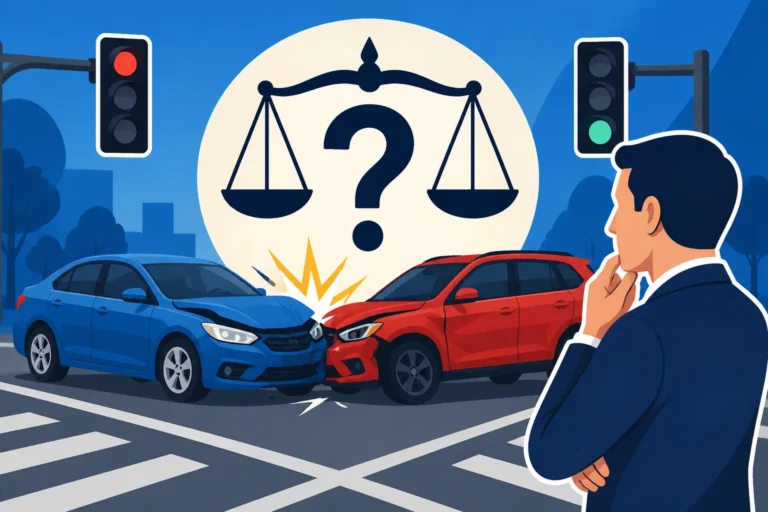
Consider another scenario: a T-bone accident at an intersection in Savannah. One driver runs a red light, undeniably at fault. But what if the other driver, while having the green light, was also speeding significantly? Or perhaps they could have avoided the crash but were distracted by their phone? In such a case, while the red-light runner would bear the majority of the blame, the speeding or distracted driver might be assigned 10% or 20% fault. Their damages would then be reduced by that percentage. These real-world complexities highlight why it's so important to have a clear understanding of What Happens If You're Partially at Fault? and to meticulously document everything after an accident. Every detail can influence the fault allocation and, ultimately, your financial recovery.
The Financial Ramifications of Shared Fault
When you're involved in a car accident in Georgia, the financial implications are often top of mind. Beyond the immediate costs of repairs or medical bills, there's the looming question of how any shared responsibility for the crash will impact your ability to get the compensation you need. Georgia's modified comparative negligence system directly ties your fault percentage to the amount of money you can recover, making it a critical factor in every claim.
How Your Settlement is Reduced
The mathematical reality of Georgia's 50% bar rule is quite stark: if you are found to be less than 50% at fault, your total damages are reduced by your assigned percentage of fault. Let's make this concrete with an example. Suppose you were involved in an accident on Buford Highway, and through the investigation, it's determined that your total damages for medical expenses, lost wages, and pain and suffering amount to $50,000. However, the insurance adjuster or a jury assigns you 20% of the blame for the collision – perhaps you were slightly speeding, or you failed to signal a lane change properly, even though the other driver ran a stop sign.
In this scenario, your $50,000 in damages would be reduced by 20%. So, instead of receiving the full amount, you would only be eligible for 80% of your damages, which comes out to $40,000. This is a direct, dollar-for-dollar reduction based on your assigned fault. It's not a penalty on top of your losses; it's a reduction of your losses. This mechanism is central to how payouts are calculated, and understanding How Comparative Fault Reduces Your Settlement is essential for setting realistic expectations for your claim. The higher your percentage of fault (up to the 49% limit), the less you will ultimately receive.
Navigating a Claim When You're Partially to Blame
It’s completely understandable to feel discouraged if you're told you bear some responsibility for an accident, even if you believe the other driver was primarily at fault. However, don't throw in the towel! In Georgia, being partially at fault does not automatically mean you can't get compensation, provided your fault is below the 50% threshold. The key is how you handle the situation moving forward.
One of the most crucial pieces of advice is to avoid admitting fault at the scene of the accident or to insurance adjusters. Emotions run high after a crash, and you might say something without fully understanding the situation or its legal implications. An offhand apology or a speculative comment about what you might have done could be used against you to increase your assigned fault percentage. Seriously, it's better to stick to the facts and let the investigation determine fault. If you're curious about this, our article on What Is an Admission of Fault and How to Avoid It? goes into much greater detail about safeguarding your statements. Even if you're worried you contributed, know that Can You Still Get Paid If You're Partly at Fault? in Georgia, and focusing on gathering evidence that supports your narrative and mitigates your responsibility is paramount.
Legal Protections and Seeking Guidance in Georgia
Dealing with the aftermath of a car accident is already a complex undertaking, but when comparative negligence enters the picture, it can feel like you're navigating a minefield. The stakes are high, especially with Georgia's 50% bar rule, where even a slight miscalculation of fault can mean the difference between recovering compensation and getting nothing. This is why understanding your legal protections and knowing when to seek professional guidance becomes absolutely invaluable.
The Importance of Evidence Gathering
In any car accident claim, evidence is your best friend. It's the concrete proof that helps establish what happened, who was involved, and to what extent each party contributed to the crash. This is amplified in a comparative negligence state like Georgia, where every piece of evidence can either reduce your assigned fault or increase the other driver's. Don't underestimate the power of documentation right from the scene of the accident.
Start by taking clear, comprehensive photos and videos of everything: all vehicles involved, the accident scene itself, road conditions, traffic signs or signals, and any visible injuries. Exchange contact and insurance information with all drivers, and get contact details for any witnesses present. If you were injured, seek medical attention immediately and keep thorough records of all diagnoses, treatments, and expenses. These medical records are vital not just for proving your injuries but also for demonstrating the severity and impact of the accident. A detailed guide on How to Prove the Other Driver Was at Fault can provide an extensive checklist of what evidence to collect and why it matters. Remember, the more information you have, the stronger your position will be when disputing fault percentages with insurance companies or, if necessary, in court.
When a Lawyer Can Help in a Shared Fault Case
While it might seem tempting to handle a car accident claim on your own, especially if you think it's minor, the complexities of Georgia's comparative negligence laws often make it prudent to consult with an experienced legal professional. This is particularly true if your injuries are significant, if there's a dispute over who caused the accident, or if the insurance company is trying to assign you a high percentage of fault.
A skilled car accident lawyer understands the intricacies of Georgia law and how insurance companies operate. They can independently investigate the accident, gather crucial evidence that you might miss, and build a compelling case to minimize your comparative fault while maximizing the other driver's. They can also effectively negotiate with insurance adjusters who are often trying to settle for the lowest possible amount or shift as much blame as possible onto you. Knowing Do You Need a Lawyer for a Car Accident? is a common question, and in shared fault cases, the answer often leans toward "yes." Furthermore, recognizing When to Hire a Car Accident Lawyer can save you from making critical mistakes that could jeopardize your claim. Their expertise can be the difference between a fair settlement and walking away with far less than you deserve, or even nothing at all if your fault crosses that 50% bar.
Here's a quick look at how Georgia's modified comparative negligence system might play out in common scenarios:
| Scenario Description | Driver A's Action | Driver B's Action | Driver A's Fault % | Driver B's Fault % | Driver A Recovers? | Driver B Recovers? |
|---|---|---|---|---|---|---|
| Rear-End Collision | Stopped at light | Texting, didn't stop | 0% | 100% | Yes (100%) | No |
| Minor Lane Change | Changed lane, didn't signal | Speeding 10 mph over limit | 20% | 80% | Yes (80%) | No |
| Left Turn Accident | Turned left on yellow | Sped up to "beat" light | 60% | 40% | No | Yes (60%) |
| Intersection T-Bone | Ran red light | Slightly distracted by radio | 85% | 15% | No | Yes (85%) |
| Parking Lot Ding | Backing out, didn't see | Speeding through lot | 45% | 55% | Yes (55%) | Yes (45%) |
Disclaimer
Please remember that this article provides general information and insights into comparative negligence laws in Georgia and should not be considered legal advice. Every car accident case is unique, and the outcome depends heavily on the specific facts, circumstances, and applicable laws. If you have been involved in a car accident, it is strongly recommended that you consult with a qualified legal professional to discuss your individual situation and rights.