Who Is at Fault in a Left-Turn Accident in Texas?
It’s a situation many of us in Texas have faced: you're waiting to make a left turn at an intersection, the light turns green, you creep forward, and then BAM – you're T-boned or struck by a vehicle coming straight through from the opposite direction. These types of accidents are incredibly disorienting, and one of the first, most stressful questions that pops into your head is always, "Who in the world is at fault here?" The confusion and anxiety around assigning blame can feel overwhelming, but understanding the specific rules and common scenarios for left-turn accidents in Texas can help you navigate the aftermath. This guide will meticulously break down how fault is typically determined in these tricky situations, empowering you with the knowledge to protect yourself.
Understanding Left-Turn Accidents and the Presumption of Fault in Texas
Left-turn accidents are notoriously complicated, often leading to significant damage and injuries. In many jurisdictions, including right here in Texas, there's a strong initial presumption about who is usually to blame. It’s not always black and white, but knowing the default expectation is your first step in understanding these crashes.
The Presumption of Fault in Left Turns
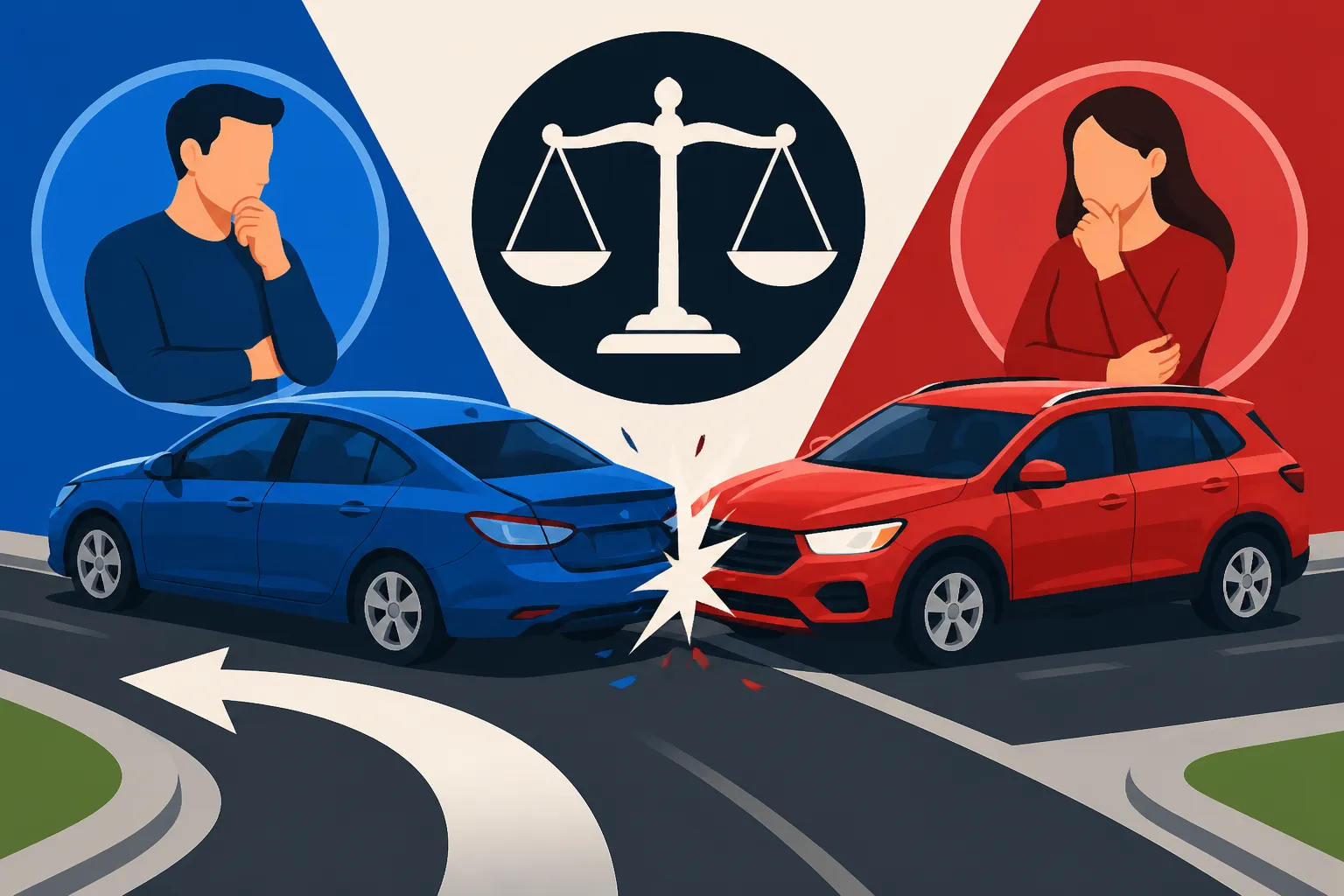
Generally speaking, when a vehicle making a left turn collides with an oncoming vehicle traveling straight through an intersection, the driver making the left turn is presumed to be at fault. This isn't just an arbitrary rule; it's deeply rooted in traffic law regarding the right-of-way. The idea is that the driver turning left has a higher duty to ensure the turn can be completed safely without impeding oncoming traffic. You're entering the path of another vehicle, so the onus is on you to do so responsibly.
Think of it this way: imagine you're waiting to turn left onto South Congress Avenue in Austin. Traffic is flowing steadily, and you're inching forward, waiting for a gap. If you decide to go, and an oncoming car that was already in the intersection or too close to stop collides with you, the law generally assumes you misjudged the situation or failed to yield. This presumption places a heavy burden on the left-turning driver to prove otherwise, which can be challenging, but certainly not impossible. It's a fundamental principle you'll encounter if you ever find yourself saying, "Who Is at Fault in a Car Accident? Complete Guide".
Texas Traffic Laws for Left Turns
Texas Transportation Code lays out specific rules that govern turns, and these are crucial for determining fault in left-turn collisions. The most pertinent rule concerns yielding the right-of-way. Specifically, Texas law dictates that a driver intending to turn left must yield the right-of-way to any vehicle approaching from the opposite direction that is either already in the intersection or so close as to constitute an immediate hazard. This means you can't just nose out into the intersection and expect oncoming traffic to stop for you.
Let's consider a scenario in Dallas: You're at an intersection on Belt Line Road. The light is green. You want to turn left. According to Texas law, you must wait until it's safe to turn. If you initiate your turn and an oncoming vehicle, traveling within the speed limit, hits you, the police and subsequently the insurance companies will likely point to your failure to yield. This "right-of-way" concept is central to understanding how fault is assessed. If you fail to yield, you're essentially violating a fundamental traffic law, making you the primary responsible party. This legal framework forms the bedrock of how police reports and insurance adjusters begin their investigation into the crash.
When the Oncoming Driver Might Be at Fault in a Left-Turn Accident
While the left-turning driver often carries the initial burden of fault, there are absolutely circumstances where the oncoming driver, traveling straight, can be found entirely or partially at fault. These exceptions are critical to understand, as they can shift the legal and financial responsibility significantly. It's not always the person turning left, and knowing these nuances is essential for anyone trying to figure out "How Fault Is Determined in a Car Accident".
Speeding or Reckless Driving by the Oncoming Vehicle
One of the most common ways the straight-going driver can share or take full fault is by speeding or driving recklessly. The duty to yield for a left turn is based on the assumption that oncoming traffic is obeying traffic laws, including the posted speed limit. If an oncoming driver is traveling significantly above the speed limit, it drastically changes the perception of safety for the left-turning driver. What might have appeared to be a safe gap for a turn at 40 MPH becomes a dangerous maneuver if the oncoming car is actually doing 70 MPH in a 45 MPH zone.
Imagine you're turning left on a busy street in Houston. You see a car in the distance, assess that you have plenty of time to complete your turn, and proceed. However, that car turns out to be speeding excessively, closing the distance much faster than a reasonable person would expect, and crashes into you. In this instance, the oncoming driver's excessive speed could make them primarily at fault. Evidence like witness statements, skid marks, or even traffic camera footage (if available) can be crucial in proving that the oncoming driver's speed contributed to the accident.
Running a Red Light or Yellow Light Issues
Another clear-cut situation where the oncoming driver is at fault is when they run a red light. If you begin your left turn on a green light, and an oncoming vehicle blows through a red light and strikes you, their red-light violation makes them unequivocally at fault. This isn't a presumption; it's a direct violation of traffic law.
The "yellow light" scenario, however, can be more complex and often contested. Many people wonder about a "stale yellow" versus a "fresh green." If you start your left turn on a green light, and while you're in the intersection, the light turns yellow, you are generally expected to complete your turn, assuming it's safe to do so. An oncoming driver who then accelerates to "beat the red light" and collides with you might be held partially responsible. However, if you began your turn when the light was already yellow or even red, then the fault shifts back to you. The precise timing of the lights and the actions of both drivers are critical here. Witness testimonies, traffic light cameras, or even dashcam footage become incredibly valuable pieces of evidence in these situations.
Other Factors Impeding a Safe Turn
Beyond speeding and red-light violations, various other factors can shift or share fault to the oncoming driver. These often involve impaired driving or negligence that a left-turning driver couldn't reasonably anticipate.
- Distracted Driving: If the oncoming driver was texting, talking on the phone, or otherwise severely distracted, they might not have reacted appropriately, even if you were technically in their path. A distracted driver might not see you, might not brake in time, or might not take evasive action. Proving distracted driving can be difficult, but witness accounts or cell phone records (obtained through legal means) could support such a claim.
- Driving Under the Influence (DUI/DWI): An intoxicated driver has impaired judgment and reaction times. If an oncoming driver was under the influence of alcohol or drugs and caused the accident, their impairment would likely make them primarily or entirely at fault, even if you were initiating a left turn. This is a severe criminal offense that dramatically impacts civil liability.
- Vehicle Malfunctions: Less common, but still possible, is an oncoming vehicle experiencing a sudden malfunction that contributes to the crash. For example, if their headlights were out at night, making them difficult to see, or if their brakes failed, causing them to be unable to stop, these issues could be a factor in assigning fault. However, proving a vehicle malfunction requires expert analysis and is often challenging.
- Failure to Use Headlights: At dawn, dusk, or during inclement weather, if the oncoming driver failed to use their headlights, making their vehicle less visible, this could be considered a contributing factor to the accident.
In these less common but significant scenarios, gathering comprehensive evidence is paramount to establishing that the oncoming driver's actions or inactions were a direct cause of the collision. This is where detailed documentation of the accident scene can really make a difference.
How Fault Is Determined After a Left-Turn Accident in Texas
Determining fault after any car accident, particularly a left-turn collision, is a multi-faceted process that involves various parties and pieces of evidence. In Texas, this process is influenced by state-specific laws regarding negligence.
Gathering Evidence at the Scene
The moments immediately following an accident are chaotic, but they are also crucial for gathering evidence that will ultimately help determine fault. This is not the time for apologies or admissions of guilt; it's the time for documentation.
- Call the Police: Always call law enforcement, especially if there are injuries, significant damage, or disputes over fault. The police report, while not legally binding on insurance companies, provides an official, third-party account of the incident, including witness statements, diagrams, and citations issued. This report is often the first piece of evidence an insurance adjuster reviews.
- Take Photos and Videos: Use your smartphone to document everything. Capture the position of the vehicles, the extent of the damage, skid marks on the road, traffic signs and signals, road conditions (e.g., rain, debris), and any visible injuries. If you can, take pictures from multiple angles.
- Identify Witnesses: If anyone saw the accident, get their contact information. Independent witnesses can offer unbiased accounts that are invaluable when conflicting stories emerge.
- Exchange Information: Get the other driver's name, contact number, insurance company and policy number, and vehicle information.
- Seek Medical Attention: Even if you feel fine, it's critical to see a doctor immediately. Some injuries, like whiplash or a concussion, have Delayed Injury Symptoms After a Car Accident. Medical records are vital for proving your injuries and linking them to the accident, which is essential for any personal injury claim.
These steps are part of a larger plan you should follow, as outlined in our guide, What to Do After a Car Accident: Step-by-Step (2027).
The Role of the Police Report and Insurance Adjusters
Once the initial scene is cleared, the formal process of fault determination begins.
- Police Reports: A police officer's report will document their observations and may indicate who they believe violated traffic laws by issuing a citation. However, it's vital to remember that a police report's determination of fault is not the final word for insurance companies or courts. It's a significant piece of evidence, but insurance companies conduct their own investigations.
- Insurance Company Investigations: Both your insurance company and the other driver's insurance company will assign adjusters to investigate the claim. These adjusters will:
- Review the police report.
- Examine photos and videos from the scene.
- Interview both drivers and any witnesses.
- Analyze property damage to both vehicles.
- Review medical records related to injuries.
- Potentially reconstruct the accident scene.
Each insurance company will try to protect its financial interests, which can sometimes lead to disputes over fault. Understanding How Insurance Companies Determine Who Is at Fault can help you anticipate their process. If the other driver's insurance company tries to blame you unfairly, it's important to have your evidence ready and potentially seek legal advice.
Texas Comparative Negligence Laws
Texas operates under a "modified comparative negligence" rule with a 51% bar. This means that if you are found to be 51% or more at fault for an accident, you cannot recover any damages from the other driver. If you are found to be 50% or less at fault, you can still recover damages, but your compensation will be reduced by your percentage of fault.
Let's say you were making a left turn, and the insurance investigation determines you were 40% at fault for failing to yield, but the oncoming driver was 60% at fault for speeding. In this scenario, because the other driver is more at fault (60% > 51%), you could still recover 60% of your total damages (medical bills, lost wages, vehicle repair, pain and suffering). However, if the roles were reversed and you were 60% at fault, you would recover nothing.
This rule is a crucial aspect of personal injury claims in Texas and is detailed further in our guide on Modified Comparative Negligence (50% vs 51% Bar). It highlights why even if you were making a left turn, proving the other driver's negligence can be vital for your recovery. Understanding What Happens If You're Partially at Fault? is critical for anyone involved in an accident where fault might be shared.
Steps to Take After a Left-Turn Accident in Texas
The aftermath of a car accident is often stressful and confusing. Knowing what immediate steps to take can significantly impact the outcome of your claim and ensure your well-being.
Prioritizing Safety and Medical Attention
Your safety and health are always the top priority after a collision. Even a minor bump can lead to serious injuries, so never assume you're fine.
- Move to Safety: If your vehicle is operational and it's safe to do so, move it to the side of the road or out of the flow of traffic. Turn on your hazard lights.
- Check for Injuries: Assess yourself and any passengers for injuries. Even if you feel fine, adrenaline can mask pain. If anyone is seriously injured, call 911 immediately.
- Seek Medical Evaluation: This step cannot be stressed enough. Even if you walk away from the scene feeling okay, certain injuries, like whiplash or concussions, may not present symptoms until hours or even days later. A prompt medical examination by a doctor, whether at an urgent care clinic or your primary physician, creates an official record of your condition immediately following the accident. This record is essential not only for your health but also for linking any subsequent medical issues directly to the accident for insurance purposes. Our article, Why You Should See a Doctor After a Car Accident, provides more detail on this critical step.
Documenting the Scene and Exchanging Information
While safety comes first, efficiently documenting the scene comes a close second once you're out of immediate danger. This is your chance to gather crucial evidence.
- Photograph Everything: Use your phone to take pictures and videos of:
- The position of both vehicles after the impact.
- Damage to both vehicles from multiple angles.
- Skid marks on the road.
- Any debris in the roadway.
- Traffic signs, signals, and road markings.
- The weather conditions.
- Visible injuries to yourself or passengers.
- Gather Contact Information: Exchange information with the other driver, including their:
- Full name and contact number.
- Insurance company name and policy number.
- Vehicle make, model, year, and license plate number.
- Driver's license number.
- Look for Witnesses: Ask anyone who saw the accident if they would be willing to provide a statement. Get their names and contact information. An impartial witness can be invaluable, especially if the other driver's account differs from yours.
- Note the Location and Time: Be precise about the street names, intersection, and the exact time the accident occurred.
Our guide on What Information to Exchange After a Car Accident offers a comprehensive checklist for this step.
Reporting the Accident and Dealing with Insurance
Once you've secured the scene and your immediate well-being, it's time to deal with the administrative side of things.
- Report to the Police (if not already done): If the police didn't respond to the scene, you might still need to file an accident report, especially if there was significant damage or injuries. In Texas, accidents resulting in injury, death, or property damage exceeding $1,000 must be reported to the Texas Department of Transportation (TxDOT) within 10 days.
- Notify Your Insurance Company: Even if you believe the other driver is entirely at fault, you should notify your own insurance company as soon as possible. They can guide you through the process and help with immediate needs like a rental car or initial repairs. Be truthful about the facts but avoid admitting fault to anyone, including your insurer.
- Communicate with the Other Driver's Insurer (with caution): The other driver's insurance company will likely contact you. Be very careful what you say. They may try to get you to provide a recorded statement or admit fault. You are generally not obligated to give them a recorded statement without legal counsel. Stick to the facts you know, and avoid speculating or minimizing your injuries. It's often beneficial to consult an attorney before engaging in extensive conversations with the at-fault driver's insurance company. Our detailed article on Dealing With Insurance Adjusters After a Car Accident provides critical advice on how to handle these interactions. Filing a claim can be complex, so reviewing How to File a Car Accident Insurance Claim can also be helpful.
By following these steps, you build a strong foundation for your claim and protect your rights in the often-complicated aftermath of a left-turn accident.
Here's a quick summary table of common left-turn accident scenarios and typical fault assignments in Texas:
| Scenario | Left-Turning Driver's Action | Oncoming Driver's Action | Typical Fault Assignment (Texas) | Key Evidence Needed |
|---|---|---|---|---|
| Standard Left Turn Collision | Turns left into oncoming traffic | Driving straight, obeying laws | Left-turning driver is primarily at fault (failure to yield right-of-way). | Police report, witness statements, vehicle damage, traffic camera footage. |
| Oncoming Driver Speeding | Turns left, believing gap is safe | Driving straight, significantly speeding | Oncoming driver may be partially or primarily at fault (contributory negligence). | Skid marks, witness statements, accident reconstruction, traffic camera speed data. |
| Oncoming Driver Runs Red Light | Turns left on green light | Runs red light | Oncoming driver is entirely at fault. | Police report (citation issued), traffic camera, witness statements, dashcam footage. |
| Oncoming Driver Distracted | Turns left on apparent safe gap | Distracted, fails to react/brake | Oncoming driver may be partially at fault. | Witness statements, cell phone records (if legally obtained), lack of skid marks from oncoming vehicle. |
| Oncoming Driver DUI/DWI | Turns left | Under influence, crashes into turner | Oncoming driver is primarily or entirely at fault. | Police report (arrest/citation for DUI/DWI), toxicology reports, witness statements. |
| "Stale Yellow" Intersection | Initiates turn on green/early yellow | Accelerates through late yellow/early red | Shared fault is common; depends on precise timing and actions of both drivers. | Traffic camera footage, witness timing, light sequence, vehicle speeds. |
Disclaimer
Please remember that this article provides general information and should not be considered legal advice. Every car accident case is unique, and the specific facts and circumstances of your situation will determine the outcome. If you've been involved in a left-turn accident, it is highly recommended that you consult with a qualified personal injury attorney in Texas to discuss your specific case and understand your legal options.