Who Is at Fault in a Single-Car Accident in California?
It's incredibly jarring and confusing to find yourself in a car accident, even more so when it's a single-car incident. You might be sitting there, car crumpled against a guardrail or wrapped around a tree, and the immediate thought isn't just about your safety but also, "Who's going to pay for this?" The idea of being "at fault" when no other vehicle was involved can feel like a strange concept, adding a layer of stress to an already traumatic event. This guide will walk you through how fault is determined in a single-car accident specifically in California, what factors come into play, and what steps you can take to navigate the aftermath.
Understanding a Single-Car Accident in California
When we talk about car accidents, most people picture two vehicles colliding. But a single-car accident, while perhaps less common in public discussion, is a very real and often devastating event. It's when your vehicle crashes without involving another car, truck, or motorcycle. Despite the lack of another driver to point fingers at, the question of fault remains absolutely critical, especially in a state like California.
What Defines a Single-Vehicle Incident?
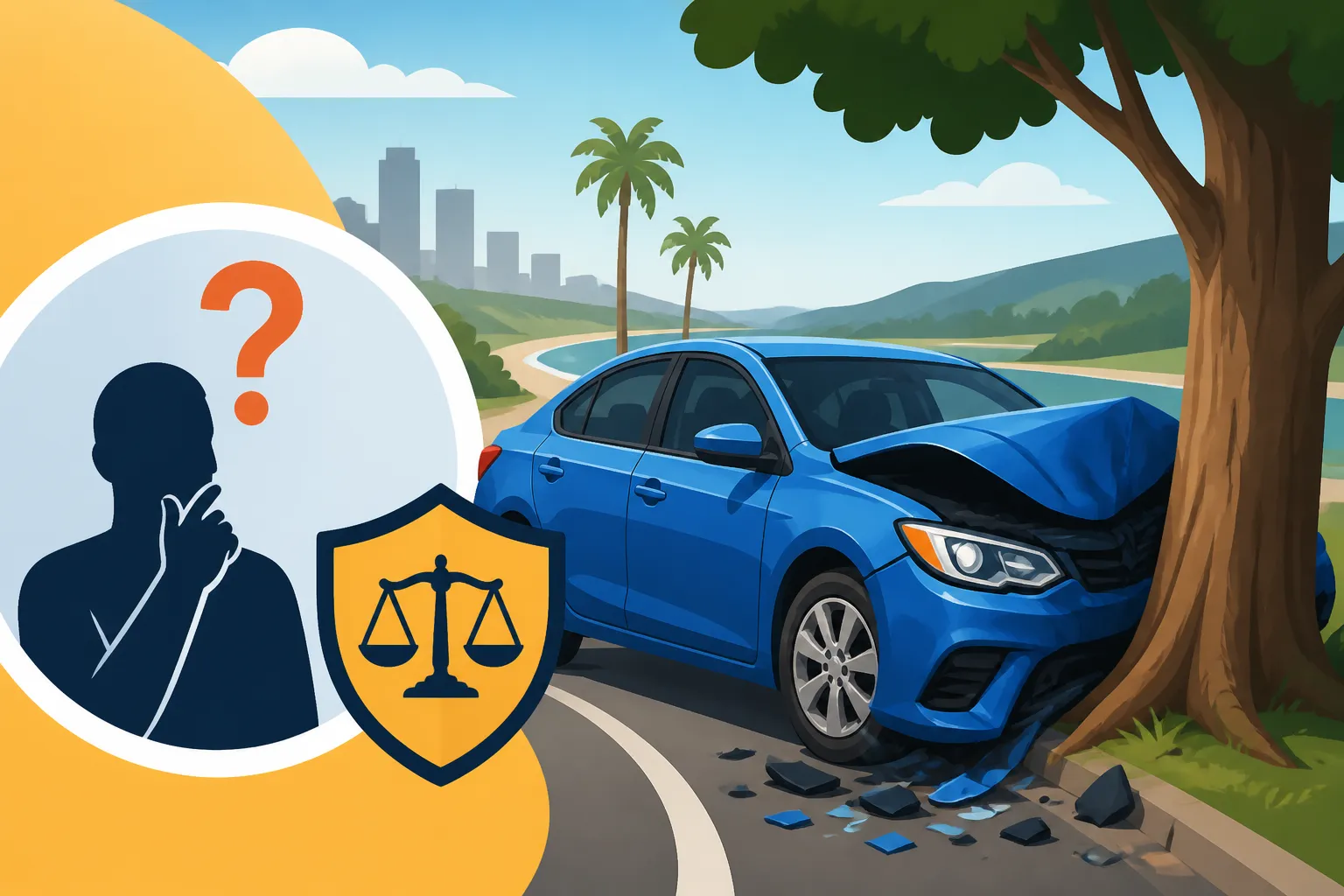
A single-car accident simply means that your vehicle was the only one that directly impacted another object or overturned. This could be hitting a tree, a utility pole, a guardrail, or even skidding off the road into a ditch. It could also involve flipping your car, often due to aggressive maneuvering, overcorrection, or simply losing control. While another vehicle might have indirectly contributed to the event (e.g., they swerved into your lane, causing you to swerve and hit something else), the physical contact was solely between your car and a stationary object or the environment.
The key distinction here is the direct impact. If another car barely clips you, and then you hit a pole, that's typically still considered a multi-vehicle accident in the eyes of insurance and law, even if the other car drove off. However, if another driver's reckless behavior forces you off the road, and you hit a pole without them making contact, it could still be a single-car accident where the other driver is still ultimately deemed at fault. This nuance is precisely what makes determining fault in these situations so complex and often misunderstood.
Why Fault Still Matters Without Another Driver
You might wonder why fault is a big deal if you're the only one involved. "I hit a tree, so obviously it's my fault, right?" Not necessarily, and here's why it matters: insurance coverage and legal liability. In California, which is an "at-fault" state (sometimes referred to as a "tort" state for auto insurance), the party responsible for causing the accident is generally responsible for paying for the damages and injuries that result.
Even if you were the only driver, determining fault dictates whether your own collision coverage kicks in, if your medical payments coverage applies, or if you might even have a claim against another party or entity. For instance, if a poorly maintained road caused you to lose control, the city or county could potentially be held responsible. If a faulty car part led to the crash, the vehicle manufacturer might be liable. Without a clear understanding of fault, you could end up footing the bill for significant repairs and medical expenses, even if the root cause wasn't entirely your doing. This process is often a deep dive into the specifics, trying to understand how insurance companies determine who is at fault.
Common Causes and Contributing Factors
Pinpointing fault in a single-car accident requires a thorough investigation into all possible contributing factors. It's rarely as simple as "the driver made a mistake." Many elements can converge to create the perfect storm leading to a crash.
Driver Error and Negligence
Naturally, driver error is often the most immediate assumption when a single vehicle crashes. This category covers a wide range of actions or inactions that demonstrate negligence behind the wheel. Distracted driving, like texting or fiddling with the radio, is a major culprit. Even a momentary glance away from the road can lead to catastrophic results, especially at highway speeds. Speeding, driving too fast for conditions, or reckless maneuvers are also common examples.
Fatigue and impaired driving, whether due to alcohol, drugs, or even certain prescription medications, drastically reduce reaction times and judgment, making a driver far more prone to losing control. Even something as seemingly benign as aggressive driving – weaving through traffic, tailgating – can lead to a driver overcorrecting and crashing into a barrier when trying to avoid another vehicle. In California, proving these elements often relies on police reports, witness statements, and forensic evidence from the scene. If you're involved in such a situation, understanding what constitutes an admission of fault can be crucial.
Environmental and Road Conditions
Sometimes, the driver is simply a victim of circumstances beyond their immediate control. Poor weather conditions are a prime example. Heavy rain, dense fog, black ice, or even strong winds can make driving incredibly treacherous. Even the most cautious driver can hydroplane on a slick road or lose visibility in a sudden downpour. While drivers are expected to adjust their driving to current conditions, there are instances where the conditions are so severe that they could be considered a primary cause.
Beyond weather, the physical state of the road itself can be a major factor. Potholes, sudden drops, uneven pavement, missing guardrails, or inadequate signage can all contribute to a single-car accident. Imagine hitting a massive pothole that blows out your tire, sending your car veering off the road. In such a scenario, the local municipality responsible for road maintenance could potentially be held liable for your damages. This isn't always an easy claim to pursue, but it's a possibility worth exploring.
Vehicle Malfunctions
Another often overlooked factor in single-car accidents is mechanical failure. While modern cars are generally reliable, defects can occur. A sudden tire blowout due to a manufacturing defect, brake failure, steering system malfunction, or even an issue with the accelerator can cause a driver to lose control instantly. These failures are particularly frightening because they can happen without warning, leaving the driver little to no time to react safely.
Proving a vehicle malfunction requires expert analysis and often involves a deep dive into the car's maintenance history and parts involved. If a defect is found, the manufacturer of the vehicle or the specific faulty part might be considered at fault. This can be a complex legal battle, sometimes leading to product liability claims. It's why preserving the vehicle and any potentially faulty parts after a crash is so important for an investigation.
Actions of Other Drivers
Even without physical contact, another driver can be the root cause of your single-car accident. Picture this: you're driving on the freeway, and another vehicle suddenly swerves into your lane without signaling, forcing you to make an evasive maneuver. You swerve hard to avoid a collision, lose control, and hit the center divider. In this hypothetical, while you didn't physically touch the other car, their negligent driving directly led to your crash.
In such cases, even though it appears to be a single-car accident, the fault actually lies with the "phantom driver" who initiated the dangerous situation. Gathering evidence like witness statements, dashcam footage, or even descriptions of the other vehicle can be critical in proving this scenario. This highlights the importance of always stopping and documenting a car accident scene, even if it seems minor.
How Fault is Determined in California
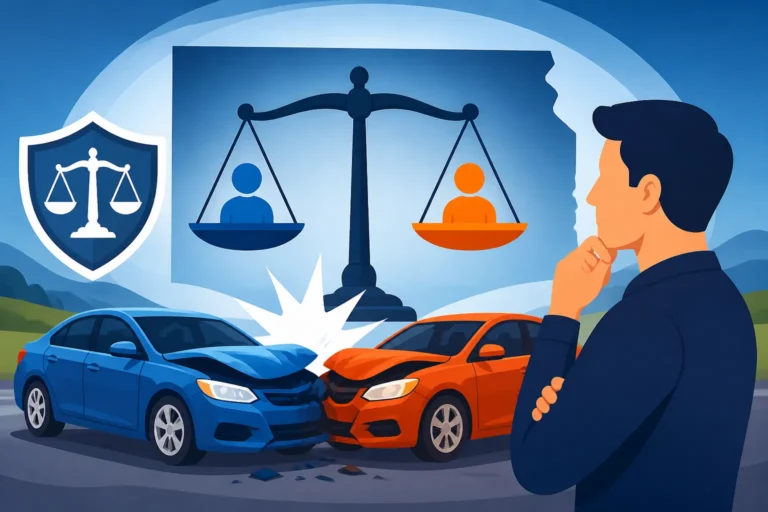
California operates under a "pure comparative negligence" system, which significantly impacts how fault is assigned and how much compensation you can recover, even in a single-car accident. This system can feel a bit complex, but understanding it is key to navigating your claim.
California's Pure Comparative Negligence Rules
In many states, if you're found to be even 1% at fault for an accident, your ability to recover damages might be limited or even completely barred. Not so in California. Our state follows a "pure comparative negligence" rule. What this means is that you can still recover damages for your injuries and losses, even if you are found to be partially at fault for the accident, up to 99%. However, the amount you can recover will be reduced proportionally by your percentage of fault.
For example, if a jury determines that your damages total $100,000, but you were 20% at fault for the single-car accident (maybe you were speeding slightly, but a faulty road design was 80% to blame), you would only be able to recover $80,000. The pure comparative negligence system aims to assign responsibility fairly among all contributing parties. This principle is a cornerstone of how fault works when changing lanes on the highway or in any other accident scenario across the state.
Evidence in Single-Car Accidents
Proving fault in a single-car accident often requires a substantial amount of evidence, especially since there isn't another driver immediately available to blame. The police report is almost always the first and most crucial piece of evidence. This report, compiled by the investigating officers, will detail their assessment of the scene, contributing factors, and initial determination of fault. It's important to remember that a police report doesn't conclusively determine who pays, but it carries significant weight.
Beyond the police report, witness statements can be incredibly valuable. Did anyone see what happened before your car veered off? Dashcam footage or even nearby security camera footage can provide an objective account of the events leading up to the crash. If road conditions were a factor, photographs of potholes, poor signage, or other hazards are essential. For vehicle malfunctions, mechanical inspections and expert testimonies are often required to pinpoint a defect. In cases involving other drivers who fled, even a partial description or license plate number can assist investigators. This is how to prove the other driver was at fault, even in an indirect way.
The Role of Insurance Adjusters
After a single-car accident, your insurance company will assign an adjuster to investigate the claim. Their job is to gather all the available evidence, determine fault, and ultimately decide what portion of your damages they are willing to cover under your policy. In California, if you have collision coverage, it typically covers damage to your vehicle regardless of fault, but your deductible will apply. However, if fault can be shifted to another party (like a city for a bad road or a manufacturer for a faulty part), you might not have to pay your deductible, or you could get it reimbursed.
Dealing with insurance adjusters after a car accident can be tricky, as their primary goal is to protect the company's bottom line. They will look for any reason to assign some degree of fault to you to reduce their payout. They might ask for a recorded statement, which you should approach with caution, as anything you say could be used against your claim. Remember, you don't have to give a recorded statement to the other party's insurer, and it's wise to consult with an attorney before providing one to your own.
The Impact of Fault on Your Claim
Understanding fault is more than just knowing who to blame; it directly impacts your financial recovery for both property damage and personal injuries.
Property Damage and Deductibles
When you're involved in a single-car accident in California, if you have collision coverage as part of your auto insurance policy, your insurance company will typically cover the damage to your vehicle, regardless of whether you were at fault or not. However, you will most likely be responsible for paying your deductible. For example, if your car sustains $10,000 worth of damage and your deductible is $500, the insurance company would pay $9,500, and you'd pay the remaining $500 out of pocket.
The situation changes if you can prove that another party was primarily at fault. If, for instance, a manufacturing defect in your car's brakes led to the accident, you might be able to pursue a claim against the vehicle manufacturer. In this scenario, if successful, their insurance or legal team would be responsible for your vehicle's repairs and you would likely not have to pay your deductible. Similarly, if a poorly maintained road caused the crash, the responsible government entity might cover your property damage. This illustrates how the percentage of fault can significantly impact your out-of-pocket expenses. If your car is totaled, the calculation of average actual cash value will also hinge on fault.
Personal Injury Recovery
Beyond vehicle damage, personal injuries are a major concern in any car accident, and single-car crashes are no exception. Common car accident injuries like whiplash, concussions, or even broken bones can occur from the impact with a stationary object or from the force of the car overturning. In California, if you were found to be 100% at fault for the accident, your primary source of injury compensation would be your own medical payments (MedPay) coverage or your personal health insurance. MedPay can cover medical expenses for you and your passengers, regardless of who caused the accident, up to your policy limits.
However, if you can demonstrate that another party, like a government entity, another driver, or a vehicle manufacturer, was partially or entirely at fault, then you can pursue a personal injury claim against them. Under California's pure comparative negligence rules, even if you were, say, 30% at fault, you could still recover 70% of your total damages from the at-fault party. This can include medical bills, lost wages, and pain and suffering. This is why understanding Who Is at Fault in a Single-Car Accident in California is so important for maximizing your recovery.
Steps to Take After a Single-Car Accident in California
Being prepared can make a huge difference in the aftermath of a single-car accident. Knowing what to do in the chaotic moments that follow a crash can help protect your rights and ensure you gather the necessary evidence.
Prioritize Safety and Seek Medical Attention
Your first priority after any car accident is always safety. If your vehicle is in a dangerous position, and it's safe to do so, move it to the shoulder or a nearby safe location. Turn on your hazard lights. If you're injured, or if there's any doubt about your condition, call 911 immediately. Even if you feel fine, it's crucial to seek medical attention as soon as possible. Many serious car accident injuries, like whiplash or concussions, have delayed injury symptoms after a car accident and may not manifest until hours or even days later. A medical evaluation creates a vital record of your condition, which is essential for any future claims. Always document everything and follow up with medical professionals, even for seemingly minor accidents.
Document the Scene Thoroughly
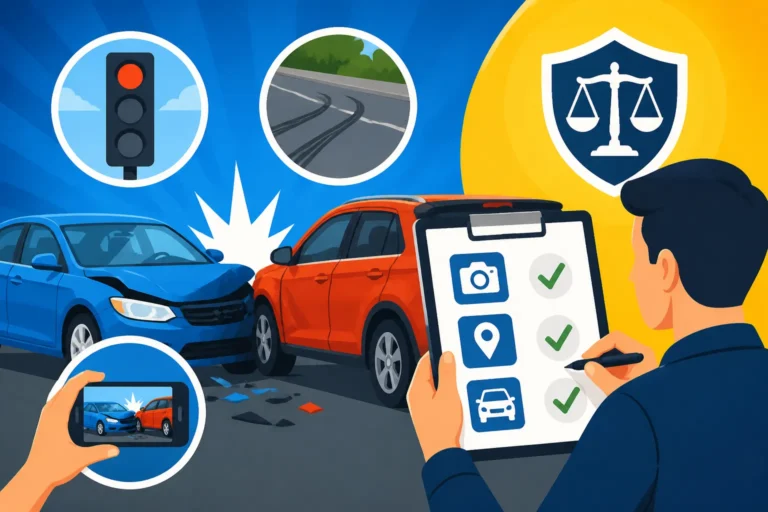
Once safety is addressed, start documenting everything you can. This means taking pictures and videos of the accident scene from multiple angles. Capture the damage to your vehicle, any relevant road conditions (potholes, debris, lack of signage), tire marks, and the object you hit (tree, guardrail, etc.). Note the weather conditions at the time. If there were any witnesses, get their contact information, including names, phone numbers, and email addresses. Even if there's no other vehicle involved, someone might have seen what caused you to lose control. If the accident was caused by another vehicle that fled, try to remember its make, model, color, and any partial license plate number. This comprehensive documentation can be key for how to prove the other driver was at fault, even if they're a phantom driver.
Report the Accident and Inform Your Insurer
In California, you are generally required to report an accident to the California Department of Motor Vehicles (DMV) if it results in injury, death, or property damage exceeding $1,000. This report, known as an SR-1, must be filed within 10 days. Regardless of whether it meets the DMV threshold, you should always contact your insurance company as soon as possible after the accident. Provide them with the details of the incident. Be factual and stick to what you know, but avoid speculating or admitting fault. If you believe another factor (road conditions, mechanical failure, another driver) contributed, make sure to mention it. They will then begin the process of determining fault and processing your claim.
If you suspect you may need assistance navigating the complexities of your claim, especially if you believe another party is at fault, it may be beneficial to speak with a legal professional. While not every accident requires a lawyer, situations involving significant injuries, complex fault determinations, or disputes with insurance companies often benefit from expert guidance. Knowing when to hire a car accident lawyer can significantly impact the outcome of your claim.
| Factor | Typical Initial Assumption of Fault | Potential Shift of Fault | Evidence Needed |
|---|---|---|---|
| Driver Error | High (Driver) | None (unless indirect factors involved) | Police report, witness statements, dashcam, toxicology reports (if suspected) |
| Adverse Weather | High (Driver – for not adjusting) | Medium (if extreme, sudden, or linked to poor road maintenance) | Weather reports, photos of conditions, expert analysis of road conditions |
| Road Conditions | Low (Driver) | High (Local municipality or government agency) | Photos of road defect, maintenance records, expert engineering analysis |
| Vehicle Malfunction | Low (Driver) | High (Vehicle manufacturer, parts manufacturer, repair shop) | Mechanic's report, vehicle inspection, expert forensic analysis, recall notices |
| "Phantom" Driver | Low (Driver) | High (Unidentified other driver) | Witness statements, dashcam, security footage, police investigation (hit-and-run) |
This table illustrates the common starting points for fault determination in single-car accidents and how a thorough investigation can potentially shift that blame to other responsible parties, impacting your recovery.
Disclaimer
Please remember, this information is intended for educational purposes only and does not constitute legal advice. Every car accident case is unique, and the laws regarding fault and liability can be complex, especially in a state with pure comparative negligence like California. It is always recommended to consult with a qualified legal professional to discuss the specific details of your situation.