Is Virginia a No-Fault State?
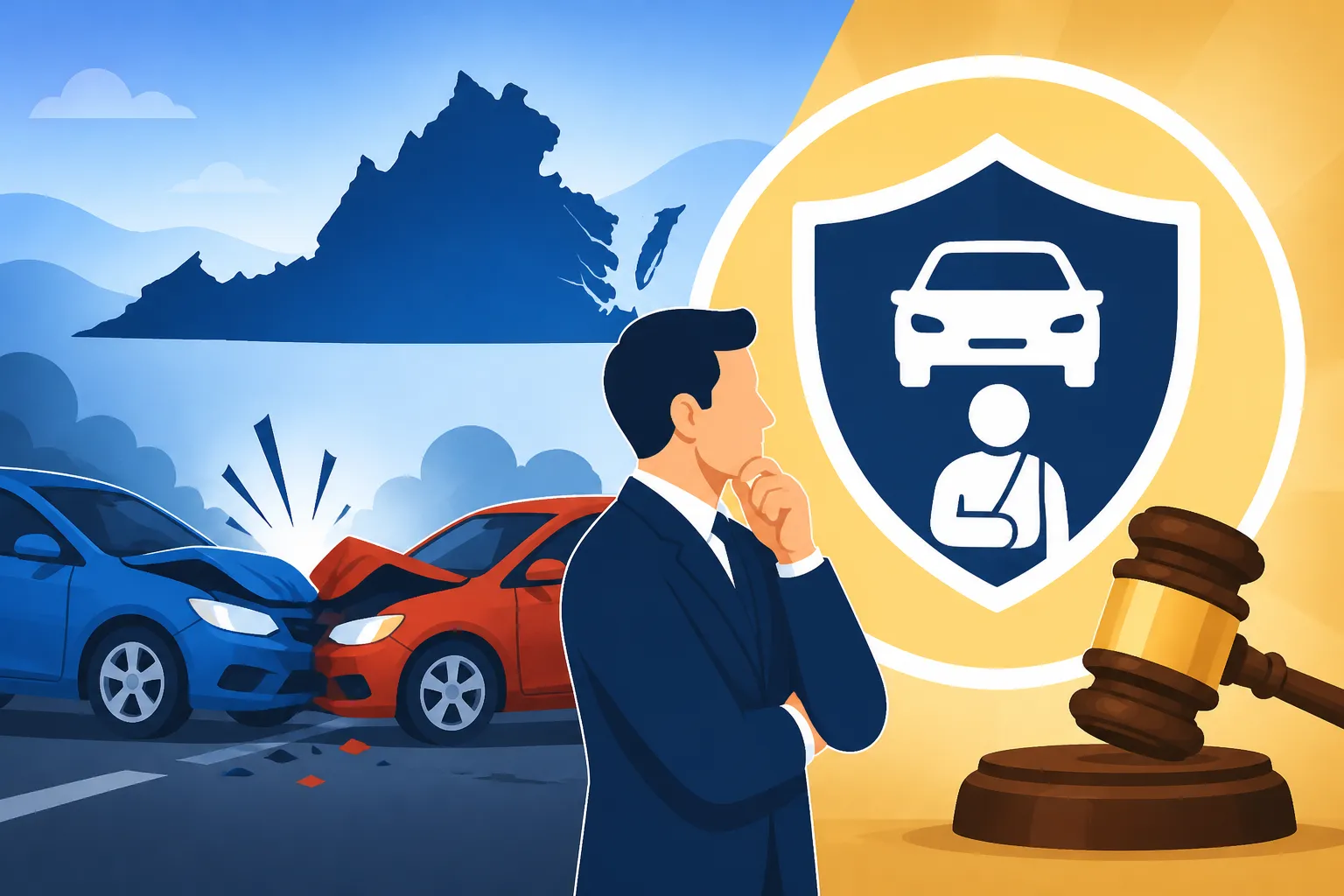
It's completely understandable to feel a bit lost when trying to figure out the ins and outs of car accident laws, especially when every state seems to have its own unique set of rules. You've been in an accident, or maybe you're just trying to be prepared, and you're asking, "Is Virginia a no-fault state?" The short answer is no, Virginia is not a no-fault state. Instead, it operates under an "at-fault" or "tort" system, which significantly impacts how you recover damages after a crash. This guide will walk you through exactly what that means for you, how fault is determined, and what you need to know to navigate the complexities of Virginia's car accident claims.
Understanding Virginia's At-Fault Insurance System
When you hear "at-fault" or "tort" system, it means that the driver who is legally determined to be responsible for causing a car accident is also responsible for paying for the damages and injuries that result from that accident. This might sound straightforward, but in practice, it can get quite complicated. Unlike no-fault states where your own insurance generally pays for your medical expenses regardless of who caused the crash, Virginia requires a clear determination of fault before compensation can be sought from the at-fault driver's insurance.
This system places a heavy burden on the injured party to prove that the other driver was solely responsible for the collision. If you've been in an accident in Virginia, you'll be dealing directly with the at-fault driver's insurance company to seek compensation for your medical bills, lost wages, vehicle damage, and other losses. This can lead to a contentious process, as the at-fault driver's insurer has a vested interest in minimizing their payout, often by trying to shift some or all of the blame onto you. It's a stark contrast to a no-fault system, which aims to streamline initial medical payments and reduce litigation, though it often comes with its own set of challenges and limitations on the ability to sue for pain and suffering. To learn more about how different systems work, you might want to read our guide on what Is a No-Fault State? (And Which States Are No-Fault).
The implications of an at-fault system extend beyond just who pays. It means that every piece of evidence, every witness statement, and every detail from the accident scene becomes critically important. Your ability to recover financially hinges on successfully demonstrating the other driver's negligence. This also means that if you are even slightly responsible for the accident, your claim for damages could be severely impacted, a concept we'll delve into further when discussing contributory negligence, which is a big deal in Virginia.
How Fault is Determined in Virginia Accidents
Determining who is at fault in a car accident in Virginia is often the first and most critical step in the entire claims process. It's not always as simple as it seems, and insurance companies will often conduct their own thorough investigations to assign blame. This investigation typically involves looking at several key pieces of information to piece together what happened.
One of the most important elements in determining fault is the police report. While a police report doesn't officially determine fault in the eyes of the law, it provides an objective account from law enforcement that can carry significant weight with insurance adjusters and in court. Officers will document details like the position of the vehicles, statements from drivers and witnesses, road conditions, and any traffic violations that may have occurred. This is why it's always recommended to call the police after an accident, even if it seems minor, to ensure a report is filed. Understanding the role of a police report is crucial, and you can find more information on it in our article about Police Reports and Car Accident Fault.
Beyond police reports, insurance companies will gather other evidence. This includes photographs of the accident scene and vehicle damage, surveillance footage (if available from nearby businesses or traffic cameras), cell phone records (to check for distracted driving), and sometimes even accident reconstruction experts. They'll also consider common accident scenarios. For instance, in a rear-end collision, the rear driver is almost always considered at fault unless there's a very specific, unusual circumstance. Similarly, for a left-turn accident, the driver making the turn is typically found at fault unless the other driver was speeding or ran a red light. Understanding these common fault rules can help you understand your position, and you can read more about them in our guides like Rear-End Collision Fault: Who Is Responsible? or Left-Turn Accident Fault Rules.
The Role of Evidence and Investigation
When it comes to proving fault, evidence is truly king. The more compelling and comprehensive your evidence, the stronger your case will be. This means that immediately after an accident, if you are able, documenting the scene is paramount. Taking photos and videos from multiple angles, getting contact information from any witnesses, and making notes about the time, weather, and road conditions can make a huge difference.
Insurance companies have teams dedicated to investigating claims and assigning fault, and they are usually very good at it. They will scrutinize every detail, looking for any information that might reduce their client's liability. This is why it's so important for you to be equally diligent in gathering and preserving evidence. What to Do After a Car Accident: Step-by-Step (2026) offers a great checklist to follow right after a collision to help protect your interests. The bottom line is that in Virginia's at-fault system, the burden of proof rests heavily on the person seeking compensation, so a robust investigation and collection of evidence are non-negotiable.
Navigating Contributory Negligence in Virginia
Now, here's where Virginia's car accident laws become particularly strict and, frankly, quite frustrating for many people: the doctrine of contributory negligence. Virginia is one of a handful of states that still adheres to this extremely rigid rule, and it means that if you are found to be even 1% at fault for the accident, you are completely barred from recovering any damages from the other party, no matter how negligent they were. This is a crucial difference compared to most states that follow some form of comparative negligence.
Imagine this scenario: you're driving, and another driver blows through a stop sign, causing a collision. However, the insurance adjuster for the other driver finds out you were driving 5 miles per hour over the speed limit. Under contributory negligence, even though the other driver's action (running a stop sign) was the primary cause of the crash, your minor infraction (speeding) could be argued as contributing to the accident. If the court agrees that your speeding contributed in any way to the collision or your injuries, you could receive nothing. This is a harsh reality for accident victims in Virginia, and it's why proving the other driver was 100% at fault is so incredibly important. For a deeper dive into this concept, check out Contributory Negligence States (Where 1% Fault Bars Recovery).
This rule often leads to aggressive defense tactics from insurance companies. They will scour every detail, looking for any small way to pin even a tiny percentage of fault on you. This could involve questioning your actions, your speed, whether you used your turn signal, or even if you could have taken evasive action to avoid the crash. It's a constant battle to demonstrate that you bore no responsibility for the incident. This is exactly why dealing with insurance adjusters after a car accident can be so challenging and why you need to be extremely careful with what you say and how you present your case.
Protecting Yourself from Contributory Negligence Claims
Given the severity of Virginia's contributory negligence rule, protecting yourself after an accident is paramount. Here are some actionable steps you can take:
- Never admit fault: Do not apologize or make statements that could be interpreted as admitting fault at the accident scene. Stick to the facts.
- Gather exhaustive evidence: As mentioned, photos, videos, witness statements, and police reports are your best friends. The more you have to definitively show the other driver's sole fault, the better.
- Seek medical attention immediately: Any delay in treatment could be used by the opposing party to argue that your injuries weren't directly caused by the accident, or that you didn't mitigate your damages effectively.
- Consult an attorney: Because of the complexity and the high stakes of contributory negligence, having a legal expert on your side is almost always recommended. They can help navigate the nuances and build a strong case to counter any claims of your partial fault. Our guide, Do You Need a Lawyer for a Car Accident? (2027), can help you decide if legal representation is right for your situation.
Virginia's approach to fault is certainly a significant hurdle for accident victims, requiring vigilance and careful strategy to ensure you don't lose out on the compensation you deserve.
Insurance Requirements and Claim Process in Virginia
Understanding Virginia's at-fault system and its strict contributory negligence rule goes hand-in-hand with knowing the state's minimum insurance requirements and how to navigate the claims process. These are the practical steps that you will need to take if you find yourself in a car accident.
Virginia law mandates that all drivers carry a minimum amount of liability insurance. As of January 1, 2025, the minimum liability coverage requirements in Virginia are:
| Coverage Type | Minimum Requirement (Per Person) | Minimum Requirement (Per Accident) | Minimum Requirement (Property Damage) |
|---|---|---|---|
| Bodily Injury Liability | $30,000 | $60,000 | N/A |
| Property Damage Liability | N/A | N/A | $20,000 |
| Uninsured Motorist Bodily Injury | $30,000 | $60,000 | N/A |
| Uninsured Motorist Property Damage | N/A | N/A | $20,000 |
These numbers ensure that there's a basic level of financial protection available for victims when an at-fault driver causes an accident. However, it's often recommended to carry more than the minimum coverage, as accident damages, especially for serious injuries, can quickly exceed these amounts. Uninsured motorist coverage is particularly vital in Virginia, as it protects you if the at-fault driver either has no insurance or insufficient insurance to cover your damages.
Filing an Accident Claim in Virginia
When you're involved in an accident in Virginia, the claims process generally involves these steps:
- Report the accident: Contact law enforcement immediately, especially if there are injuries, significant property damage, or disputes over fault.
- Exchange information: Get contact and insurance details from all parties involved.
- Seek medical attention: Even if you feel fine, see a doctor. Many injuries, like whiplash or concussions, have delayed symptoms after a car accident. Documenting your injuries early is crucial for any personal injury claim.
- Notify your own insurance company: Even if the other driver is at fault, it's generally a good idea to inform your insurer. This doesn't mean you're filing a claim with them, but it keeps them in the loop. Our article, Should You Call Your Insurance If It Wasn't Your Fault?, provides more insight into this step.
- Gather documentation: Collect all evidence you have—photos, witness statements, police report numbers, medical records, and bills.
- File a claim with the at-fault driver's insurance: This is where the core of the at-fault system plays out. You'll submit your evidence and demand compensation for your damages. This process, known as a third-party claim, can be complex. For detailed guidance, read How to File a Car Accident Insurance Claim.
- Negotiate with the insurance adjuster: The adjuster for the at-fault driver's insurance will investigate and likely make a settlement offer. This is where your evidence of fault and damages becomes critical. Be prepared to negotiate, as initial offers are often low.
The whole process can be overwhelming, especially when you're trying to recover from injuries. Because of the strict contributory negligence rule, insurance companies determine who is at fault with intense scrutiny. This means that if there's any perceived weakness in your case, or any indication that you might share even 1% of the blame, they will likely use it to deny your claim entirely. It's an unfortunate reality of Virginia's legal landscape, making informed action and sometimes, legal counsel, indispensable for achieving a fair resolution.
Disclaimer
Please remember that this information is intended for general guidance and informational purposes only, and does not constitute legal advice. Car accident laws are complex and can change. For personalized advice regarding your specific situation, it is always recommended to consult with a qualified legal professional in Virginia.