Who Is at Fault in a Sideswipe Accident in Texas?
Getting into any car accident is jarring, but a sideswipe collision often leaves drivers feeling confused and frustrated about who's actually to blame. It’s not always a clear-cut case, especially when you’re on a busy highway or in a complex merging situation. If you’ve been involved in a sideswipe accident in Texas, understanding the nuances of fault determination is absolutely essential for protecting your rights and ensuring you can pursue a fair claim. This comprehensive guide will walk you through the specific rules and common scenarios for sideswipe accidents in the Lone Star State, helping you navigate the aftermath.
Understanding Sideswipe Accidents
A sideswipe accident, at its core, involves two vehicles traveling in the same or opposite directions, where the sides of the vehicles make contact. These aren't your typical head-on or rear-end crashes, and their nature often makes fault determination a bit more intricate. Many drivers assume they know what happened, but the reality of traffic dynamics and legal definitions can be quite different.
What Exactly Is a Sideswipe Accident?
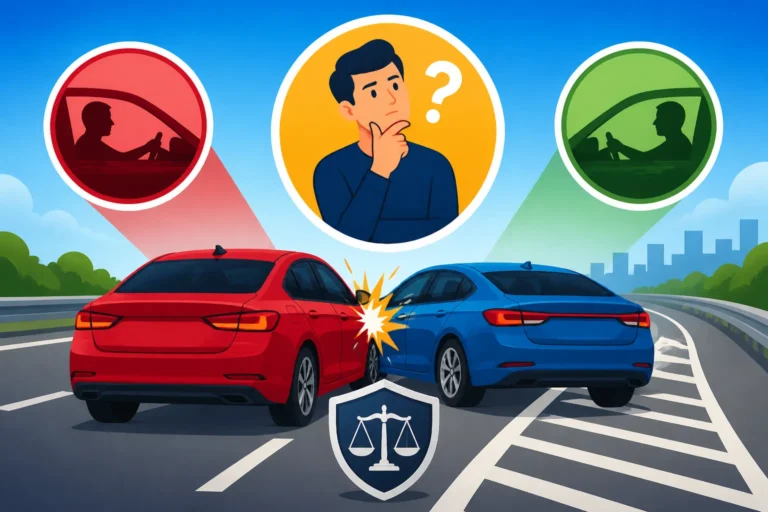
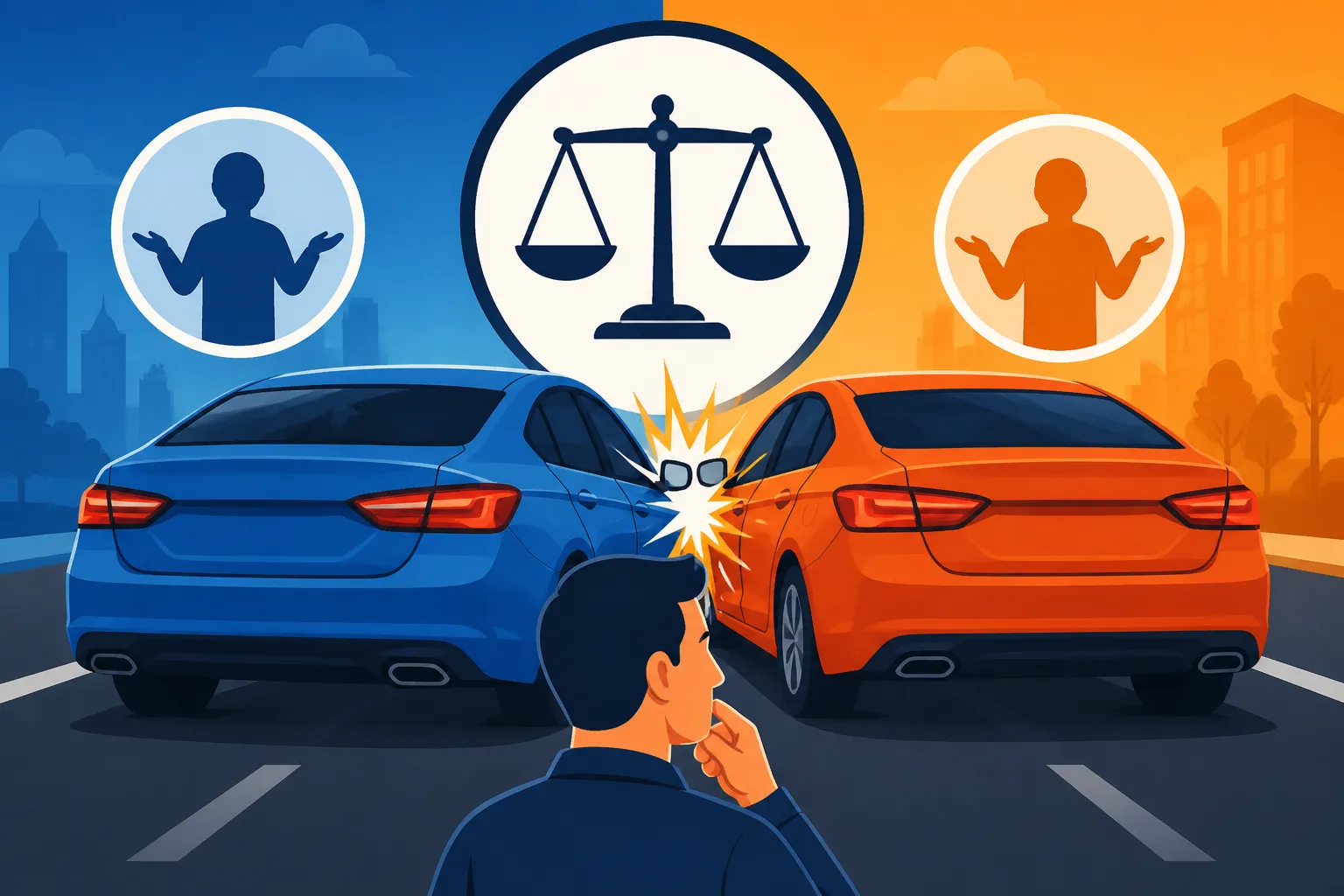
Imagine you're driving down I-35 in Dallas, minding your own business, and suddenly a vehicle in the lane next to you drifts over, scraping along the entire side of your car. That's a sideswipe. It's a type of collision where the sides of two vehicles rub or collide against each other. Unlike a T-bone accident where the front of one car hits the side of another, in a sideswipe, both vehicles are generally moving in a parallel or near-parallel direction. This means they could be traveling in the same direction, such as during a lane change or merging, or even in opposite directions, like two cars scraping each other on a narrow street or bridge. The damage typically runs along the length of one or both vehicles, often involving fenders, doors, and side mirrors.
What makes these accidents particularly tricky is that the impact might feel minor to some, leading drivers to underestimate potential damage or injury. Yet, even a seemingly small scrape can signify a significant underlying incident, potentially indicating distracted driving, aggressive maneuvers, or a failure to check blind spots. The sudden lateral force can also cause drivers to overcorrect, leading to secondary collisions or loss of control, which can escalate a minor sideswipe into something much more serious.
Common Scenarios for Sideswipe Collisions
Sideswipe accidents aren't just random occurrences; they often stem from very specific driving behaviors and road conditions. One of the most common scenarios involves lane changes. Picture this: you're driving on Houston's Loop 610, and another driver decides to switch lanes without checking their blind spot, cutting you off and scraping your vehicle. This is incredibly common and often difficult to prove without solid evidence. The other driver might claim you sped up or were in their blind spot, creating a classic "he said, she said" situation.
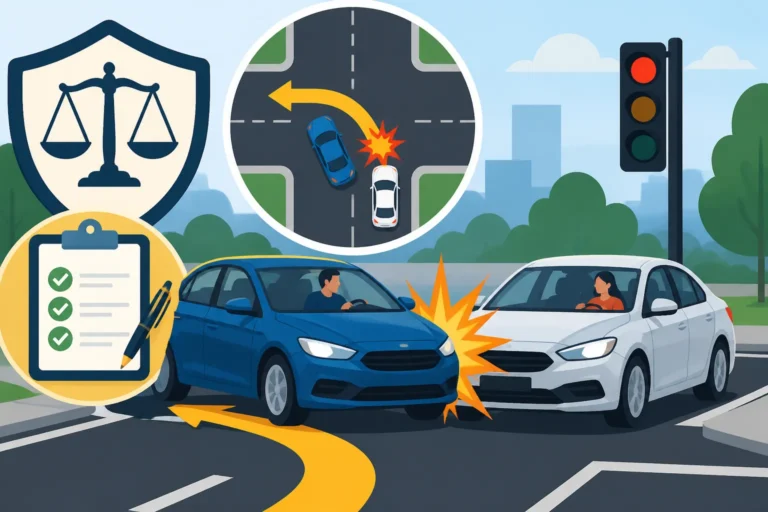
Another frequent cause is merging onto a highway or freeway, especially in areas like the busy interchanges around San Antonio. Drivers entering the flow of traffic are required to yield to vehicles already on the highway, but sometimes both drivers misjudge space or speed, leading to a sideswipe. Similarly, exiting a highway can be a culprit if a driver tries to cut across multiple lanes at the last minute to make their exit. Even on multi-lane city streets, like those in downtown Austin, vehicles might sideswipe each other when turning, especially if one car swings too wide or cuts a corner too sharply. Accidents can also occur on two-lane roads where one vehicle crosses the center line, even slightly, making contact with an oncoming vehicle. Each scenario presents unique challenges for establishing liability and often requires careful investigation.
Texas Fault Laws and Sideswipe Accidents
Texas operates under specific fault laws that significantly impact how car accident claims, including sideswipes, are handled. Understanding these laws is paramount because they directly determine who pays for damages and injuries. It’s not just about what happened, but how the state’s legal framework interprets it.
Texas as an At-Fault State
Unlike some states that use a "no-fault" system, Texas is an "at-fault" state. This means that after a car accident, the person who caused the accident, or their insurance company, is responsible for paying for the damages and injuries of the other parties involved. For a sideswipe accident in Texas, this implies that determining fault is the absolutely critical first step in the claims process. If you were sideswiped by another driver, their insurance would theoretically cover your medical bills, vehicle repairs, and other related expenses.
This system places a strong emphasis on proving who was negligent and whose actions directly led to the collision. If the other driver failed to signal a lane change, was distracted by their phone, or simply wasn't paying attention and drifted into your lane, their negligence makes them at fault. However, if you were the one who attempted an unsafe lane change, the tables turn. The at-fault system can be a double-edged sword: it allows victims to recover full damages from the responsible party, but it also means that if you are found to be at fault, you could be on the hook for significant costs. This is why gathering evidence immediately after the incident, such as photos, witness statements, and police reports, is so vital. You can learn more about What to Do After a Car Accident: Step-by-Step (2027) to ensure you collect the right information.
How Comparative Negligence Applies in Texas
Here's where things can get a bit more complicated in Texas: the concept of modified comparative negligence, often referred to as the "51% rule." In many sideswipe accidents, it's not always a clear-cut 100% one party's fault. Sometimes, both drivers share some degree of responsibility. For instance, if another driver merged into your lane, but you could have honked or swerved to avoid the collision, you might be assigned a small percentage of fault.
Under Texas law, if you are found to be 51% or more at fault for the accident, you cannot recover any damages from the other driver. If, however, you are found to be 50% or less at fault, you can still recover damages, but your compensation will be reduced by your percentage of fault. So, if your damages total $10,000, and you are found 20% at fault, you would only be able to recover $8,000. This is crucial for understanding your potential settlement and is why discussions about What Happens If You're Partially at Fault? are so important. This rule encourages all drivers to exercise reasonable care, even when another driver makes an error, and it often leads to intricate negotiations with insurance companies about the precise percentages of fault. Knowing how Comparative vs Contributory Negligence Explained works can make a huge difference in your claim.
Determining Fault in Texas Sideswipe Accidents
Pinpointing fault in a sideswipe accident requires a careful examination of the circumstances, traffic laws, and available evidence. It’s not about who “feels” responsible, but who is legally accountable based on objective facts.
Evidence Gathering at the Scene
The moments immediately following a sideswipe accident are critical for collecting evidence that can help establish fault. Don't underestimate the importance of documentation, even if the damage appears minor. First and foremost, check for injuries and ensure everyone's safety. Then, if it’s safe to do so, document everything. Take comprehensive photos and videos of both vehicles, showing the points of impact, the extent of the damage, and the surrounding scene, including road conditions, traffic signs, and any skid marks. Make sure to capture the license plates of all involved vehicles.
Gather contact and insurance information from the other driver(s) and any witnesses. Witnesses can be invaluable, as their objective accounts can often break a "he said, she said" deadlock. If the accident caused property damage beyond the vehicles or resulted in injuries, or if there's any dispute over fault, call the police to file an official report. A police report can provide an unbiased account of the scene, though it doesn't always definitively determine legal fault. Remember, in Texas, failing to report an accident that results in injury or significant property damage can lead to legal consequences. This initial information forms the bedrock of your claim and will be analyzed by insurance companies and, if necessary, attorneys.
Key Factors for Fault Determination
When an insurance company, or later a court, tries to figure out How Fault Is Determined in a Car Accident, they look at several key factors specific to sideswipe incidents. The primary question is usually: which driver encroached on the other's lane? This often comes down to traffic laws regarding lane usage and safe merging. For example, if a driver attempts a lane change without adequately clearing their blind spot and sideswipes a vehicle already in that lane, the changing driver is almost certainly at fault. Similarly, if a driver merges onto a highway without yielding to established traffic, and a sideswipe occurs, the merging driver typically bears responsibility.
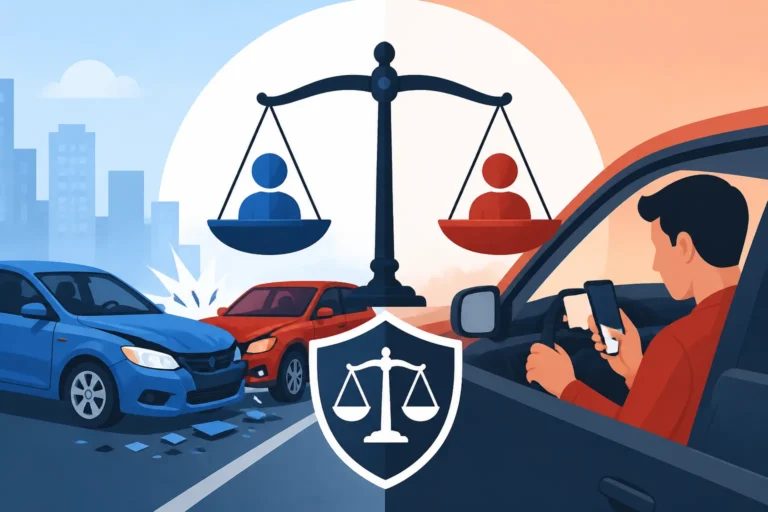
However, it's not always so straightforward. Sometimes, a driver might have been forced to swerve due to another negligent driver (who perhaps left the scene), leading to a sideswipe with an innocent third party. Or, if one driver was speeding excessively or driving recklessly, they might share fault even if they were technically in their own lane. Distracted driving, like texting while driving, is a massive factor; if a driver drifts into another lane because they weren't paying attention, their distraction is direct evidence of negligence. Proving these elements often involves analyzing vehicle damage, witness statements, accident reconstruction reports, and sometimes even dashcam footage or cell phone records. The more specific and detailed the evidence, the clearer the picture becomes for determining liability. You can delve deeper into How Insurance Companies Determine Who Is at Fault.
The Role of Traffic Laws in Sideswipe Cases
Texas has clear traffic laws designed to prevent sideswipe accidents, and these laws are the backbone of fault determination. For instance, Texas Transportation Code Chapter 545, related to "Operation of Vehicles," contains specific rules about safe lane changes, maintaining a single lane, and proper signaling. A driver must ensure a lane change can be made safely and must use turn signals to indicate their intention. Failure to do so and causing a collision almost always places fault on the changing driver.
Consider a common scenario: two cars are attempting to merge into the same lane on a crowded stretch of I-30 near Fort Worth. The vehicle that fails to yield the right-of-way, or the one that tries to squeeze into an insufficient space, would likely be deemed at fault. In cases where a vehicle drifts out of its lane and sideswipes an oncoming car, especially on a two-lane road without a median, crossing the center line in violation of traffic laws is a strong indicator of fault. Even in cases of lane-change accidents, where one driver is aggressively moving between lanes, their violation of safe driving laws can quickly establish their negligence. Understanding these specific statutes is critical because they provide the legal framework for assigning responsibility, guiding both insurance adjusters and legal professionals in their investigations.
Here’s a simplified table illustrating common sideswipe scenarios and typical fault assignments in Texas:
| Sideswipe Scenario | Typical At-Fault Party | Texas Traffic Law Violation | Key Evidence Needed |
|---|---|---|---|
| Unsafe Lane Change | Driver changing lanes | Failure to signal, failure to ensure clear path | Witness statements, dashcam, damage pattern, police report |
| Improper Merging | Merging driver | Failure to yield to existing traffic | Witness statements, dashcam, damage pattern, police report |
| Drifting Out of Lane | Drifting driver | Failure to maintain single lane | Witness statements, dashcam, damage pattern, road markings |
| Turning Wide/Cutting Corner | Driver making the turn | Unsafe turn, failure to stay in lane during turn | Witness statements, surveillance video, damage pattern |
| Cross-Center Line | Driver crossing center line | Driving left of center, failure to maintain single lane | Witness statements, dashcam, damage pattern, road markings |
Proving Your Case After a Sideswipe Accident
Even when you feel certain the other driver caused your sideswipe accident, proving it to an insurance company or in court requires more than just your word. The claims process can be complex, and you need a solid strategy to effectively demonstrate the other party's negligence.
What to Do Immediately After a Sideswipe
After ensuring everyone’s safety and contacting emergency services if necessary, your immediate actions at the scene of a sideswipe accident in Texas are critical. As we discussed earlier, document everything. Take clear photos and videos from multiple angles, capturing the positions of the vehicles, the damage, and any relevant road features like lane markings or debris. Exchange information with the other driver, including their name, contact details, insurance information, and vehicle specifics. It's also important to get contact information from any witnesses who saw the accident unfold. Their testimony can be incredibly persuasive.
Beyond the immediate scene, seek medical attention promptly, even if you feel fine. Injuries from sideswipe accidents, like whiplash or soft tissue damage, might have delayed symptoms. A medical record creates an undeniable link between the accident and your injuries, which is vital for any claim. Also, inform your insurance company about the accident as soon as possible, but be cautious about what you say. Do not admit fault or minimize your injuries. Stick to the facts. This meticulous approach to gathering evidence and seeking care is foundational to building a strong claim and avoiding common pitfalls, which is why resources like What Information to Exchange After a Car Accident are so helpful.
Working with Insurance Companies
Navigating the insurance claims process after a sideswipe accident in Texas can feel like a maze. You'll likely be dealing with both your own insurance company and the other driver's. While your insurer is generally there to help you, their primary goal is still to resolve the claim as efficiently and cost-effectively as possible. The other driver's insurance company, on the other hand, will likely try to minimize their payout, potentially by disputing fault or the extent of your injuries. They may even try to blame you, which is why it's vital to have strong evidence supporting your claim.
When speaking with adjusters, stick to the objective facts. Do not speculate, guess, or admit any form of fault, even if you feel like you could have done something differently. Remember that anything you say can be used against you. It's often advisable to get an official police report if available, as it can carry significant weight. Be prepared to provide all the evidence you collected, from photos and witness statements to medical records and repair estimates. If the insurance company makes a settlement offer, don't feel pressured to accept it immediately. It might be a lowball offer, especially if they are trying to minimize the impact of your injuries or vehicle damage. Understanding how to navigate these conversations and protecting your interests is crucial for Dealing With Insurance Adjusters After a Car Accident.
When Legal Help Becomes Crucial
While you can try to handle a minor sideswipe accident claim on your own, there are many situations where hiring a car accident lawyer becomes not just helpful, but absolutely crucial. If you've sustained significant injuries, if there's a dispute over who is at fault, or if the insurance company is trying to deny your claim or offering a settlement that seems too low, a lawyer can be your strongest advocate. They understand Texas traffic laws and personal injury claims inside and out, and they know how to gather additional evidence, like accident reconstruction reports or expert testimony, to prove your case.
A skilled attorney can also handle all communications with the insurance companies, shielding you from their tactics and ensuring you don't inadvertently say anything that could harm your claim. They can negotiate aggressively on your behalf, calculate the full extent of your damages—including medical bills, lost wages, pain and suffering—and ensure you don't settle for less than you deserve. For complex cases, such as those involving severe injuries or multiple parties, a lawyer can file a lawsuit and represent you in court if a fair settlement cannot be reached. In short, if your sideswipe accident has led to anything more than superficial scratches and minor inconveniences, seriously consider consulting with an attorney to protect your rights and maximize your recovery. This can make all the difference, especially when you need to How to Prove the Other Driver Was at Fault.
Disclaimer
Please remember that this article is intended for informational purposes only and does not constitute legal advice. Every car accident case is unique, and the information provided here may not apply to your specific situation. For personalized advice regarding a sideswipe accident in Texas, it is always recommended to consult with a qualified legal professional.