How Contributory Negligence Works in Maryland
Getting into a car accident is already stressful enough, but when you're in a state like Maryland, the complexities of determining fault can add an entirely new layer of anxiety and frustration. Many people assume that if the other driver was mostly at fault, they'll automatically receive compensation for their damages. However, Maryland operates under a strict legal doctrine known as "contributory negligence," which can completely upend those expectations, leaving even slightly-at-fault individuals with no recourse. This guide will walk you through exactly how contributory negligence works in Maryland, what it means for your car accident claim, and what steps you can take to protect yourself.
The Harsh Reality of Contributory Negligence in Maryland
When you're dealing with the aftermath of a car accident, the last thing you want to hear is that your claim might be completely invalid because of a minor misstep on your part. Yet, in Maryland, this is a very real possibility due to its stringent contributory negligence laws. It's a rule that many find incredibly unfair, especially when compared to how most other states handle accident fault.
Defining the "All or Nothing" Rule
At its core, contributory negligence is an "all or nothing" rule. What this means in practice is brutally simple: if you, the injured party, are found to have contributed in any way to the cause of the accident, even by a tiny percentage, you are barred from recovering any damages from the other driver. Yes, you read that right – even 1% fault on your part can mean you walk away with nothing, regardless of how negligent the other driver was. This stands in stark contrast to the more common system of comparative negligence, which most of the country uses, where fault is apportioned, and your compensation is simply reduced by your percentage of fault. For instance, if you were 10% at fault, your settlement would be reduced by 10%. But not in Maryland.
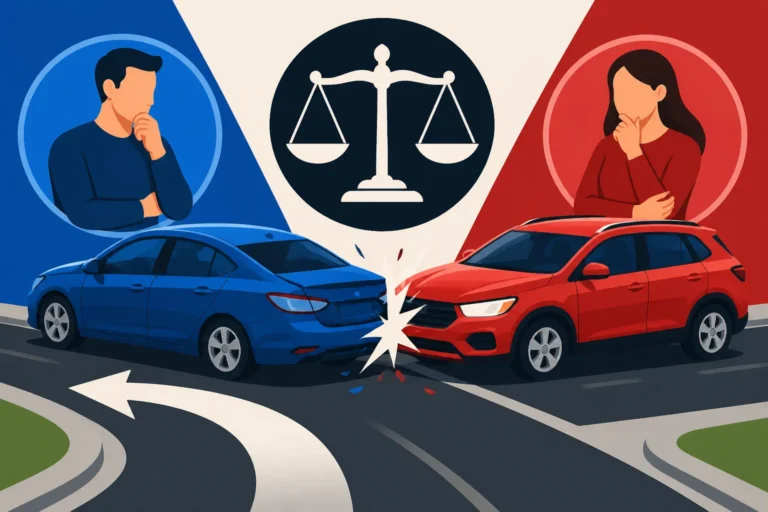
Imagine a scenario where another driver blows through a stop sign, clearly at fault, but you were driving just five miles over the speed limit. Under Maryland's contributory negligence rule, if the insurance company or a court decides that your slight speeding contributed to the accident, even minimally, your claim for injuries and damages could be entirely dismissed. This can be a truly devastating outcome for accident victims who are facing mounting medical bills and lost wages.
Maryland's Place Among the Few
It might surprise you to learn that Maryland is one of only a handful of jurisdictions in the United States that still adheres to this strict contributory negligence doctrine. Most other states have moved towards some form of comparative negligence, recognizing that accidents are often complex and that fault isn't always black and white, or entirely on one person. This makes Maryland an anomaly, and it's precisely why understanding this law is so critical for anyone involved in a car accident here.
The historical roots of contributory negligence go back centuries, stemming from English common law. The idea was to prevent plaintiffs from recovering damages if they had any hand in their own misfortune, however small. While this doctrine has been largely abandoned elsewhere for being too harsh and inflexible in modern traffic conditions, Maryland has steadfastly maintained it. This isn't just an abstract legal concept; it has profound, real-world implications for how car accident claims are processed and settled within the state. Because of this unique legal landscape, navigating a car accident claim in Maryland requires a very specific understanding of the rules and a strategic approach.
How a Small Error Can Derail Your Claim
The strictness of Maryland's contributory negligence law means that even seemingly minor actions on your part leading up to an accident can be used by the opposing side to deny your claim. Consider actions like momentarily checking your rearview mirror, changing lanes without perfectly executing the merge, or even having a tail light that was out, even if these actions weren't the primary cause of the collision. The other driver's insurance company will scrutinize every detail to find any shred of evidence that suggests you contributed to the crash.
For example, let's say you're involved in a rear-end collision, a situation where the rear driver is almost always at fault. However, if the at-fault driver's attorney or insurance adjuster can argue that your brake lights weren't working properly, or that you made an unexpected stop without proper warning, they might try to assert contributory negligence. This seemingly small detail could, in theory, be enough to prevent you from recovering any compensation in a Maryland court. This is why accurately determining Who Is at Fault in a Car Accident? Complete Guide (2027) is so critical in this state. The bar for being considered "contributorily negligent" is incredibly low, making it a powerful defense tool for insurance companies.
Practical Implications for Maryland Car Accident Victims
Understanding the legal definition of contributory negligence is one thing, but seeing how it plays out in real-life car accident claims in Maryland is another. This doctrine doesn't just sit in law books; it actively shapes the strategies of insurance adjusters, attorneys, and ultimately, the outcomes for injured individuals.
Common Scenarios Where Contributory Negligence Arises
In Maryland, the defense of contributory negligence can surface in a wide array of accident types. It's not just about blatant wrongdoing; it's about any perceived contribution.
- Speeding, even slightly: If you were exceeding the speed limit, even by 5-10 mph, and another driver turns in front of you, they might argue that had you been going the posted speed, you could have avoided the collision. This defense often arises in intersection accidents, like a Who Is at Fault in a Left-Turn Accident? scenario.
- Minor Traffic Violations: Did you forget to signal a lane change? Were your headlights not on at dusk? Was your vehicle not up to maintenance standards (e.g., worn tires, faulty brake light)? Even if these issues didn't directly cause the crash, the other side might try to link them as a contributing factor.
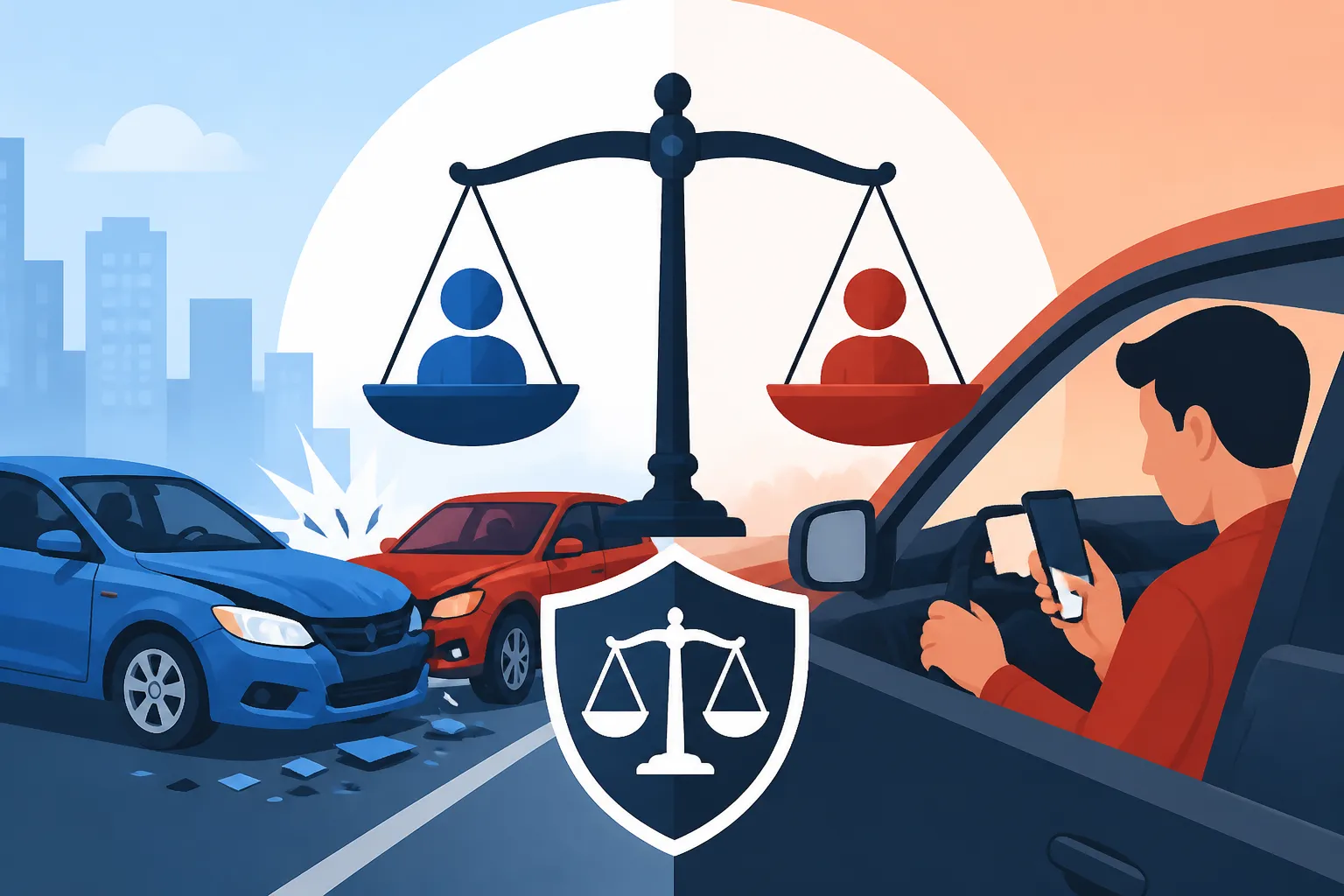
- Distracted Driving: While the other driver might have clearly run a red light, if you were even briefly looking at your phone or adjusting the radio, the defense might claim that your delayed reaction time contributed to the severity of the crash, or your inability to avoid it.
- Failure to Avoid an Accident: This is a tricky one. Even if the other driver was clearly negligent, if it's argued that you had a "reasonable opportunity" to take evasive action (like braking or swerving) and failed to do so, you could be deemed contributorily negligent. This often becomes a point of contention in analyzing How Fault Is Determined in a Car Accident.
These scenarios highlight the crucial need for thorough investigation and evidence gathering from the moment an accident occurs. Every detail can become a battleground, as the stakes are incredibly high for victims seeking compensation.
The Insurer's Defense Strategy
For insurance companies, the contributory negligence rule in Maryland is a powerful tool to limit their payouts. Their adjusters are trained to look for any possible angle to shift even a small sliver of blame onto you. When you're dealing with insurance adjusters after a car accident, you'll quickly realize how aggressively they might pursue this line of defense. They will meticulously analyze police reports, witness statements, accident reconstruction data, and even your own recorded statements to identify anything that could be construed as contributing fault.
Their goal is often to prove that you were even 1% at fault, because if they succeed, they owe you nothing. This often leads to frustrating situations where insurance companies will try to pin the blame on you, even when it feels completely unwarranted. This is why it's so important to be careful about What Is an Admission of Fault (and How to Avoid It)? when communicating with them. They might ask leading questions designed to elicit information that can be twisted against you.
Understanding the Last Clear Chance Doctrine
While Maryland is a contributory negligence state, there is one significant exception that can sometimes save a plaintiff's claim: the "last clear chance doctrine." This doctrine essentially states that if the defendant (the at-fault driver) had the last clear chance to avoid the accident, but negligently failed to do so, then the plaintiff's own contributory negligence might not bar their recovery.
Let's break this down with an example: Imagine you momentarily drift over the center line while driving. You're technically at fault for doing so. However, if an oncoming driver sees you drifting, has ample time and space to safely swerve or slow down to avoid a collision, but instead fails to react and hits you, then the last clear chance doctrine might apply. In this case, even though you were initially negligent, the other driver's subsequent negligence (failing to use their last clear chance to avoid the crash) could allow your claim to proceed.
This doctrine is complex and often heavily litigated. It requires proving several elements:
- The plaintiff (you) was contributorily negligent.
- The defendant (the other driver) knew, or should have known, of your peril.
- The defendant had a clear opportunity to avoid the accident after becoming aware of your peril.
- The defendant failed to take that opportunity.
Successfully arguing the last clear chance doctrine often requires strong evidence and experienced legal representation. It's a nuanced area of law, and it's not a guaranteed "get out of jail free card" for your own negligence. However, it provides a glimmer of hope in an otherwise very rigid legal system for accident victims.
Here's a quick comparison of contributory vs. comparative negligence to help visualize Maryland's unique position:
| Feature | Contributory Negligence (Maryland) | Comparative Negligence (Most States) |
|---|---|---|
| Fault Threshold | Any fault (even 1%) bars recovery | Recovery possible even with partial fault |
| Recovery | All or nothing | Reduced by percentage of fault |
| "Last Clear Chance" | Applicable as a significant exception | Generally not applicable, as fault is already apportioned |
| Impact on Claim | High risk of no compensation | Reduced compensation, but not zero |
Protecting Your Claim in a Contributory Negligence State
Given Maryland's tough stance on contributory negligence, protecting your car accident claim demands proactive measures and strategic thinking from the very beginning. You can't afford to be complacent, assuming fault is obvious.
The Absolute Importance of Evidence and Documentation
After an accident, the quality and quantity of evidence you collect can make or break your claim in Maryland. Every piece of information helps to build a narrative that points solely to the other driver's fault, and crucially, helps to refute any attempts to pin even minor blame on you. For detailed instructions, refer to What to Do After a Car Accident: Step-by-Step (2027).
- Police Reports: Always call the police, even for minor accidents. A police report can document initial observations, witness statements, and sometimes, the officer's preliminary determination of fault. While not always conclusive, it's a critical piece of the puzzle. Learn more about Police Reports and Car Accident Fault.
- Photographs and Videos: Use your phone to take extensive photos and videos of the accident scene. Capture vehicle damage (from multiple angles), road conditions, traffic signs, skid marks, debris, and any visible injuries. Timestamped images can be invaluable.
- Witness Information: Get contact information from anyone who saw the accident. Their unbiased testimony can be incredibly powerful in countering claims of your contributory negligence.
- Medical Records: Seek immediate medical attention, even if you feel fine. Delayed injury symptoms after a car accident are common, and prompt medical documentation creates an undeniable link between the accident and your injuries. Consistent follow-up care is also crucial for proving the extent of your damages.
- Keep a Detailed Journal: Document everything related to the accident: your pain levels, doctors' appointments, missed work, daily limitations, and any conversations with insurance companies. This personal record helps substantiate your claim for both economic and non-economic damages, like pain and suffering.
- Dashcam Footage: If you have a dashcam, its footage can be the ultimate objective evidence, showing exactly what transpired and potentially preventing any false claims about your driving. Many drivers in Maryland now swear by these devices precisely because of the state's stringent fault laws.
Collecting this level of detail is paramount. Without it, you leave yourself vulnerable to the insurance company's efforts to find any contributing factor on your part, which, in Maryland, can lead to a complete denial of your claim.
Navigating Communication with Insurance Companies
After an accident in Maryland, you will undoubtedly be contacted by the other driver's insurance company, and possibly your own. How you handle these conversations is extremely important. Remember, their primary goal is to protect their bottom line, and they will use any information you provide against you.
- Be Polite but Guarded: You don't have to be rude, but you don't have to volunteer information either. Stick to the facts you know for certain.
- Do Not Admit Fault: Never, ever admit fault or make statements that could be interpreted as admitting fault, even if you think you might have done something minor wrong. In Maryland, a small admission could be catastrophic. This relates directly to What Is an Admission of Fault (and How to Avoid It)?.
- Avoid Giving Recorded Statements: You are generally not legally obligated to give a recorded statement to the other driver's insurance company. Politely decline these requests until you've had a chance to consult with an attorney.
- Do Not Speculate: Don't guess about what happened or provide opinions. If you don't know the answer to a question, simply say, "I don't know."
- Limit Details About Your Injuries: Initially, you might not fully understand the extent of your injuries. Simply state that you are injured and seeking medical attention. Giving specific details too early could undermine your claim later if your condition worsens or new symptoms appear.
- Beware of Early Settlement Offers: Insurance companies often try to offer a quick, lowball settlement before you understand the full extent of your injuries and damages. Do not accept anything or sign any releases without discussing it with a legal professional.
Dealing with insurance companies can be incredibly tricky, especially when they are looking for any reason to deny your claim under contributory negligence. It's often best to let an experienced advocate handle these communications on your behalf.
The Role of Legal Counsel in Maryland Accidents
Given the complexities and harshness of Maryland's contributory negligence law, hiring a car accident lawyer isn't just a good idea—it's often essential for protecting your rights and securing fair compensation. An attorney experienced in Maryland personal injury law will understand the nuances of the contributory negligence doctrine and how to effectively counter it.
- Investigating the Accident: Lawyers can conduct independent investigations, gather evidence (including black box data, traffic camera footage, and expert accident reconstruction), and interview witnesses to build a strong case that minimizes any perceived fault on your part. This helps to How to Prove the Other Driver Was at Fault.
- Negotiating with Insurance Companies: An attorney will handle all communications with insurance adjusters, shielding you from their aggressive tactics. They know how to negotiate effectively and will not let the insurance company unfairly blame you or pressure you into accepting a low offer. They are crucial for dealing with situations like What If the Other Driver Blames You?.
- Applying the Last Clear Chance Doctrine: If there's any possibility that the last clear chance doctrine applies to your situation, a lawyer will be adept at arguing it, significantly improving your chances of recovery.
- Litigation if Necessary: If a fair settlement cannot be reached, your attorney can represent you in court, prepared to fight against contributory negligence defenses. They understand the intricacies of Maryland's legal system and how to present your case to a jury.
- Understanding Timelines: There are strict deadlines for filing a car accident claim in Maryland, known as the statute of limitations for car accidents in Maryland. A lawyer will ensure all necessary paperwork is filed correctly and on time.
While many might wonder, Do You Need a Lawyer for a Car Accident?, in a state with contributory negligence like Maryland, the answer is almost always a resounding yes, especially if you have significant injuries or if the other side is trying to place any blame on you. Trying to navigate this complex legal landscape alone can be a grave mistake.
Disclaimer
Please remember that this information is intended for general informational purposes only and does not constitute legal advice. Car accident claims are highly fact-specific, and the outcome of your case will depend on its unique circumstances. It is always recommended to consult with a qualified Maryland personal injury attorney to discuss your specific situation and understand your legal options.