What Happens If the Other Driver Blames You?
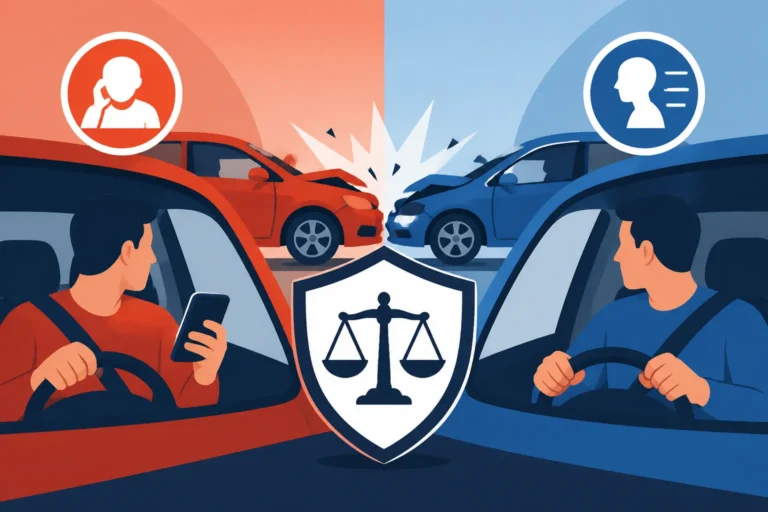
It's incredibly frustrating when you're involved in a car accident and, instead of focusing on what happened, the other driver immediately starts blaming you. This common scenario can leave you feeling confused, stressed, and worried about your car accident claim and future. This comprehensive guide will walk you through exactly what happens when the other driver points fingers, providing clear, actionable steps to protect yourself and your rights.
The Immediate Aftermath: When Blame Gets Thrown Around
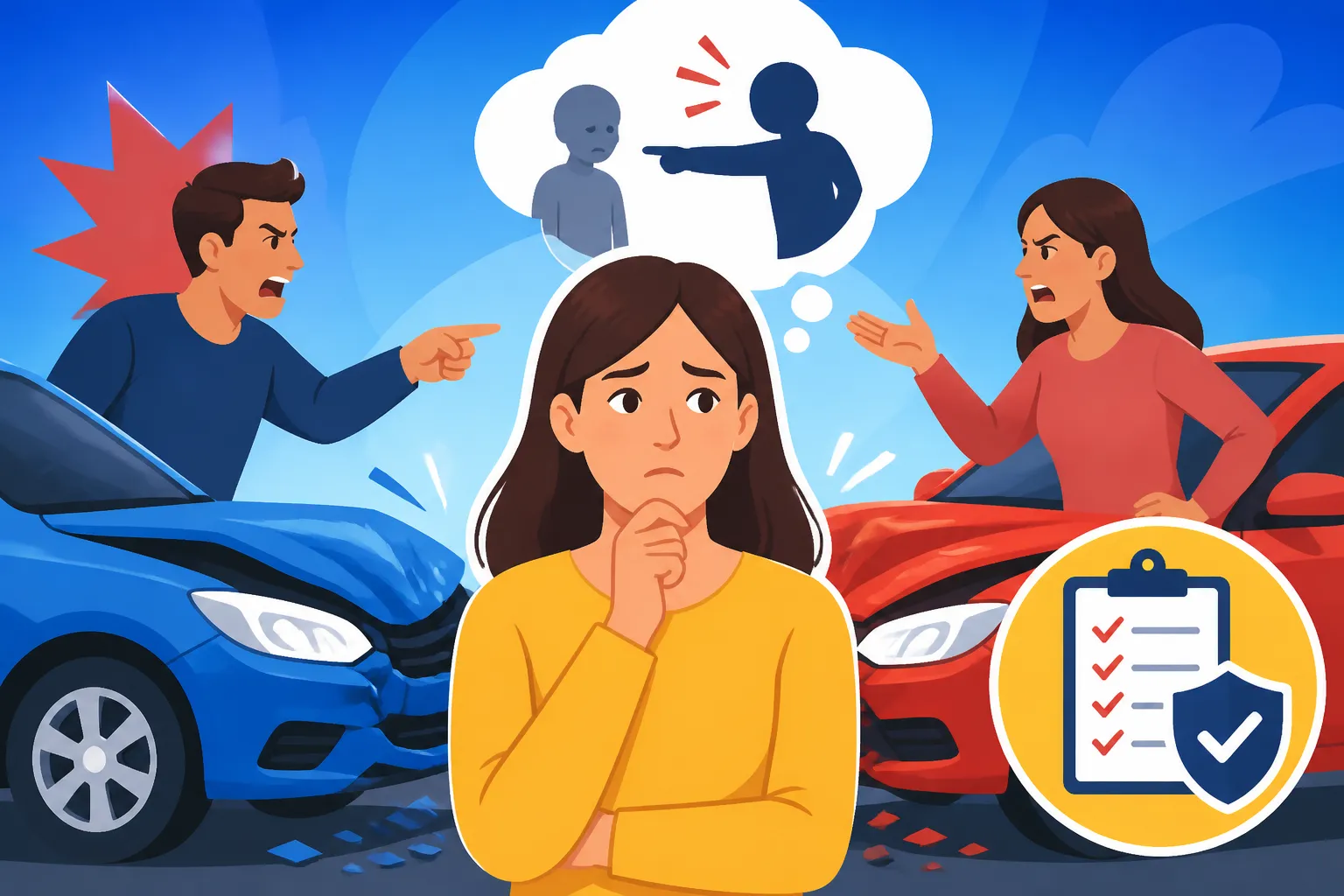
Being in a car accident is already a jarring experience, even a minor fender bender. But when the other driver starts vocally blaming you right there at the scene, it adds a whole new layer of stress and confusion. It’s like being hit twice, once by the impact and then again by the accusation. This immediate finger-pointing can make it hard to think straight and know what to do next.
Initial Reactions and the Stress Factor
When someone starts yelling or firmly stating that you were at fault, your natural reaction might be to get defensive, argue back, or even apologize in an attempt to de-escalate the situation. It’s a human response to conflict. However, getting into a heated debate at the scene rarely helps and can actually hurt your case later on. Your adrenaline is pumping, emotions are high, and neither of you is likely thinking clearly or remembering details accurately. The stress of the moment can also make you forget crucial steps you should be taking to secure evidence.
It's important to recognize these feelings and try to stay calm. Take a deep breath. Remember that whatever is said at the scene, especially in the heat of the moment, isn't the final word on who is responsible. The determination of fault is a process, not an immediate pronouncement. Focus on the immediate safety precautions and evidence collection rather than engaging in a blame game with the other party.
Why Drivers Point Fingers
There are many reasons why another driver might immediately blame you after an accident. Sometimes, they might genuinely believe it was your fault due to their limited perspective of the crash. They might have been distracted, or perhaps the sequence of events was different from what you experienced. In other cases, it could be a subconscious attempt to mitigate their own feelings of guilt or fear of consequences, like increased insurance premiums or legal trouble.
Unfortunately, some drivers are also intentionally deceptive, trying to shift blame to avoid responsibility. They might be uninsured, driving without a valid license, or trying to protect their record. Regardless of their reasons, their accusations are not evidence. It's crucial for you to understand this and not let their assertions intimidate you or make you second-guess your own recollection of events. Your priority is to collect facts, not to win an argument with the other driver.
Understanding "Fault" in Car Accidents
The concept of "fault" is central to any car accident claim, but it's often misunderstood. When someone blames you, they might be using the term loosely, based on their immediate, often biased, perception. However, in the eyes of insurance companies and the law, fault is determined through a much more objective, evidence-based process.
What Is "Fault" Anyway?
In the context of a car accident, "fault" generally refers to legal liability for causing the accident and the resulting damages. It means one or more drivers acted negligently, and that negligence directly led to the collision. Negligence could be anything from speeding, distracted driving, failing to yield, running a stop sign, or driving under the influence. The driver who is found at fault is typically responsible for covering the damages and injuries of the other party through their insurance.
It's not always black and white, though. In many accidents, more than one driver may share some degree of fault. This is where things can get complicated, especially if you're in a state that applies comparative or contributory negligence laws. Understanding this distinction is vital because even if the other driver blames you entirely, the actual determination of fault might tell a different story.
How Fault Is Typically Determined
Insurance companies are the primary entities that determine who is at fault in a car accident, at least initially. They do this by investigating the circumstances of the crash, examining evidence, and applying traffic laws. This isn't just a casual assessment; it's a detailed process involving claims adjusters who are trained to piece together the narrative. Key pieces of evidence include police reports, witness statements, photographs and videos from the scene, vehicle damage, and even traffic camera footage.
When you're dealing with accusations, it’s important to remember that the other driver's opinion holds little weight compared to concrete evidence. What really matters is what the evidence shows. For a deeper dive into this process, you might find our guide on how fault is determined particularly helpful. It explains how adjusters piece together the information to assign responsibility.
The Role of No-Fault States
Not all states handle fault in the same way, and this is a critical distinction if the other driver is blaming you. In what are known as "no-fault" states, your own insurance company typically pays for your medical expenses and lost wages up to a certain limit, regardless of who caused the accident. This is usually covered by your Personal Injury Protection (PIP) coverage. While no-fault laws don't completely eliminate the concept of fault – someone is still technically "at fault" for the collision itself – they do change how initial injury claims are processed.
Even in no-fault states, determining fault is still important for property damage claims or if your injuries are severe enough to meet a state's "serious injury threshold," allowing you to step outside the no-fault system and pursue a claim against the at-fault driver for additional damages like pain and suffering. If you live in a state like Florida or New York, understanding no-fault is crucial to know your rights and how blame might affect your claim differently.
Gathering Evidence to Counter Accusations
When the other driver starts blaming you, your immediate task, after ensuring safety, is to gather as much concrete evidence as possible. This is your best defense against false accusations and will be crucial for proving your side of the story to insurance companies or, if necessary, in court. Don't rely solely on your memory or the other driver's shifting narrative.
Documenting the Accident Scene Meticulously
The accident scene itself is a treasure trove of evidence. As soon as it's safe to do so, start taking photos and videos with your smartphone. Get wide shots showing the overall scene, close-ups of vehicle damage on both cars, skid marks, road conditions, traffic signs or signals, and any debris. If the other driver is blaming you for something specific, like saying you ran a red light, photograph the traffic light in its current state, if possible, or any witnesses to its status.
Pay attention to details that might seem minor at the time but could be critical later. For example, the position of the vehicles after impact can tell an expert a lot about the dynamics of the crash. Take pictures from multiple angles. Write down the exact time, date, and location of the accident. Even a simple drawing of the accident scene, indicating the direction of travel for both vehicles, can be incredibly useful. This initial documentation is invaluable for building your case. You can find more detailed instructions in our article, .
The Importance of Witnesses and Police Reports
Witnesses are unbiased observers whose statements can corroborate your account and contradict the other driver's accusations. If anyone saw the accident happen, politely ask for their contact information – name, phone number, and email. Even if they don't want to get involved, their contact details allow your insurance company or lawyer to reach out later. Their testimony can be the deciding factor when it's your word against the other driver's.
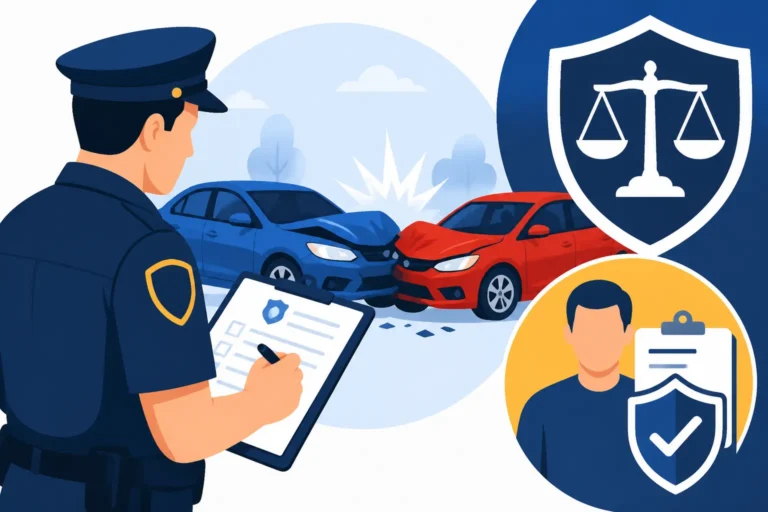
Calling the police, even for minor accidents, is almost always a good idea, especially if there's any dispute over fault. A police officer will investigate, gather statements, and often create an official police reports. While a police report doesn't always definitively assign fault, it provides an objective record of the facts, including the officer's observations, diagrams, and sometimes even citations issued. This official documentation carries significant weight with insurance companies.
Technology as Your Ally
In today's world, technology offers powerful tools for accident reconstruction and evidence gathering. Many vehicles now come equipped with Event Data Recorders (EDRs), often called "black boxes," which record data like speed, braking, and seatbelt usage in the moments before a crash. This information can provide an objective timeline of events. Dashcams are another excellent investment. If you have a dashcam, its footage can be irrefutable proof of what happened, completely countering any false accusations.
Beyond vehicle technology, your smartphone is your best friend. In addition to photos and videos, map applications can show your exact location, and even weather apps can provide historical data for road conditions. Leveraging these technological aids can significantly strengthen your position and help prove the other driver was at fault beyond a shadow of a doubt.
Navigating Insurance Company Interactions
Dealing with insurance companies can feel like walking through a minefield, especially when the other driver is blaming you. It's crucial to understand who to talk to, what to say, and more importantly, what not to say. Your interactions can significantly impact the outcome of your claim.
Your First Call to Your Own Insurer
Even if the other driver is blaming you, and you believe they are clearly at fault, your first call after ensuring safety and gathering initial evidence should be to your own insurance company. Inform them of the accident promptly. This is a standard requirement in most policies and failing to do so could jeopardize your coverage. When you call, stick to the facts. Provide the date, time, location, and a brief, factual description of what happened. Do not speculate, admit fault, or exaggerate your injuries or damages.
Your insurance company is there to protect you. They will open a claim and guide you on the next steps, such as getting your vehicle appraised or starting medical treatment if needed. They will also communicate with the other driver's insurance company on your behalf. This is their job, and you pay them to do it. Let them take the lead in handling the blame game.
Dealing with the Other Driver's Adjuster
It's almost guaranteed that the other driver's insurance adjuster will contact you. They might sound friendly and empathetic, but remember, their primary goal is to protect their client (the at-fault driver) and their company's bottom line. They might try to get you to provide a recorded statement or ask leading questions designed to get you to admit some level of fault or minimize your injuries.
You are generally not obligated to give a recorded statement to the other driver's insurance company, especially not without consulting with a legal professional first. Politely decline any requests for recorded statements or detailed interviews. Simply provide your contact information and tell them your own insurance company will be in touch. If you feel pressured, it's perfectly acceptable to say, "I need to speak with my insurance company and my attorney before providing any statements." This protects your interests and prevents you from inadvertently saying something that could be used against you. More on this topic can be found in our discussion on Do You Have to Give a Recorded Statement?.
Avoiding Admissions of Fault
This is perhaps the most critical piece of advice when the other driver is blaming you: never admit fault at the scene of the accident or to any insurance company representative. Even seemingly innocuous phrases like "I'm so sorry" or "I didn't see you" can be interpreted as an admission of fault and severely harm your claim. You might feel a natural inclination to be polite, but it's important to be careful with your words.
Stick to the facts and avoid speculating or assigning blame. Let the evidence and the official investigation determine who was at fault. If you're unsure about how to communicate without inadvertently admitting fault, consider reviewing our guide on admission of fault. This will provide practical tips on navigating these tricky conversations. Remember, what you say can and will be used to assign responsibility, potentially reducing your settlement or even causing your claim to be denied.
Legal Considerations and Your Rights
When the other driver insists you are to blame, understanding the legal framework surrounding car accidents becomes incredibly important. Depending on where you live, even partial fault can significantly impact your ability to recover damages. Knowing your rights and the laws that apply in your state can empower you to protect your claim.
Understanding Comparative and Contributory Negligence
Not all states handle shared fault in the same way. The legal principles of comparative and contributory negligence dictate how damages are awarded when both drivers share some responsibility for an accident.
- Contributory Negligence: This is a very harsh rule, adopted by only a handful of states (like Alabama, Maryland, North Carolina, and Virginia). If you are found even 1% at fault for an accident in a contributory negligence state, you are completely barred from recovering any damages from the other driver. This means if the other driver successfully blames you even slightly, your claim could be entirely dismissed.
- Comparative Negligence: Most states follow some form of comparative negligence. This system allows you to recover damages even if you are partially at fault, but your compensation will be reduced by your percentage of fault. For example, if you are deemed 20% at fault for an accident with $10,000 in damages, you would only be able to recover $8,000. There are two main types:
- Pure Comparative Negligence: Allows recovery regardless of your percentage of fault, even if you are 99% at fault (your recovery would be 1%).
- Modified Comparative Negligence: Imposes a threshold, usually 50% or 51%. If your fault exceeds this percentage, you cannot recover any damages. If your fault is at or below the threshold, your damages are reduced proportionally.
Understanding these distinctions is paramount when another driver blames you, as it directly impacts your potential compensation. Our detailed explanation on comparative vs contributory negligence offers a deeper insight into these crucial legal concepts.
When a Lawyer Becomes Indispensable
While you can try to handle a car accident claim yourself, when the other driver is blaming you, especially falsely, a personal injury lawyer becomes an invaluable asset. This is often the point where the complexity increases dramatically, and having an expert in your corner can make all the difference. A lawyer understands the nuances of negligence laws, how to gather and present evidence effectively, and how to negotiate with insurance companies who are determined to deny or minimize your claim.
If you're facing accusations, significant injuries, or if the insurance company is giving you a hard time, it's often to hire a car accident lawyer. They can protect your rights, ensure all proper procedures are followed, and fight for the full compensation you deserve. They will investigate the accident, gather evidence, communicate with all parties, and build a strong case to counter the other driver's claims.
Statute of Limitations and Filing a Claim
Every state has a legal deadline for filing a personal injury lawsuit after a car accident, known as the "statute of limitations." This deadline varies significantly from state to state, typically ranging from one to three years, but sometimes more or less depending on the specific circumstances. If you miss this deadline, you will likely lose your right to pursue compensation in court, regardless of how strong your case is or how clearly the other driver was at fault.
The other driver blaming you doesn't stop this clock. Even if you're deep in negotiations with an insurance company, or trying to sort out medical treatment, the statute of limitations continues to tick. This is another area where a lawyer can provide critical guidance, ensuring that all necessary filings and legal actions are taken within the prescribed timeframe. Don't let the stress of being falsely blamed distract you from this crucial legal deadline. Knowing How Long Do You Have to File a Car Accident Claim is essential for preserving your legal options.
Here's a quick look at how comparative negligence might affect your recovery, depending on your state's laws:
| State Type | Your Fault Percentage | Your Recovery | Explanation |
|---|---|---|---|
| Contributory | Any % (e.g., 1%) | $0 | If you are found even slightly at fault, you cannot recover anything. (e.g., Alabama, Maryland) |
| Pure Comparative | 50% | 50% of Damages | Your recovery is reduced by your fault percentage. If damages are $10,000, you get $5,000. (e.g., California, Florida) |
| Pure Comparative | 90% | 10% of Damages | Even if largely at fault, you can still recover a small portion of damages. (e.g., California, Florida) |
| Modified (50% Bar) | 50% | 50% of Damages | If your fault is 50% or less, you recover reduced damages. If damages are $10,000, you get $5,000. (e.g., Arkansas, Colorado) |
| Modified (50% Bar) | 51% | $0 | If your fault is 51% or more, you cannot recover anything. (e.g., Arkansas, Colorado) |
| Modified (51% Bar) | 50% | 50% of Damages | If your fault is 50% or less, you recover reduced damages. If damages are $10,000, you get $5,000. (e.g., Georgia, Illinois) |
| Modified (51% Bar) | 51% | 49% of Damages | If your fault is 50% or less, you recover reduced damages. If damages are $10,000, you get $4,900. (e.g., Georgia, Illinois) |
| Modified (51% Bar) | 52% | $0 | If your fault is 52% or more, you cannot recover anything. (e.g., Georgia, Illinois) |
This table illustrates why it's so important to prevent the other driver's blame from unfairly influencing the official fault determination.
Strategies for Protecting Your Claim
Even after the initial shock and the blame game, your actions in the days and weeks following the accident are crucial for protecting your claim. A strong, well-documented approach can help you overcome false accusations and ensure you receive the compensation you deserve.
Maintaining Clear and Consistent Communication
Once you’ve reported the accident to your own insurance company, let them handle most of the communication with the other driver’s insurer. If you do need to communicate directly, always do so in writing (email or certified mail) so there's a clear record. When speaking on the phone, take detailed notes of who you spoke to, the date and time, and what was discussed.
It's vital to remain consistent in your account of the accident. Don't change your story or add details that weren't initially present. Insurance adjusters are trained to spot inconsistencies, and even minor discrepancies can be used to cast doubt on your credibility, especially if the other driver is already blaming you. Stick to the facts you know to be true, and avoid speculating or guessing. This consistent approach will strengthen your position.
Prioritizing Your Medical Treatment
Even if you feel fine immediately after the accident, or if the other driver's accusations are making you downplay your own potential injuries, it's absolutely critical to seek medical attention. Adrenaline can mask pain, and many common car accident injuries, like whiplash or a concussion, have delayed injury symptoms that may not appear for hours or even days later.
Seeing a doctor promptly creates an official medical record that links your injuries directly to the accident. This documentation is invaluable for your claim, especially when facing accusations of fault. If you delay seeking treatment, the other side might argue that your injuries weren't severe or weren't caused by the accident. Your health is the priority, but documenting that care is a close second. This is how medical bills are typically paid from a settlement, as well.
What Happens If You're Partially at Fault?
Even with the other driver's accusations, the official determination might find that you share some degree of fault. This is where the comparative or contributory negligence rules we discussed earlier come into play. If you are found partially at fault, it doesn't necessarily mean you can't recover any damages, unless you're in a strict contributory negligence state.
For example, in a pure comparative negligence state, if your damages are $20,000 and you are found 30% at fault, you could still recover $14,000 from the other driver's insurance. However, if your state has a modified comparative negligence rule with a 50% bar and you're found 51% at fault, you might recover nothing. This highlights why it's so important to have strong evidence and clear communication to minimize your assigned fault. Understanding what happens if you’re partially at fault can help you set realistic expectations for your claim.
Disclaimer
Please remember that this article provides general information and is not a substitute for professional legal advice. Car accident laws vary by jurisdiction, and the specifics of your situation are unique. It is highly recommended to consult with a qualified personal injury attorney to discuss your specific accident and legal rights.