Is Pennsylvania a No-Fault State?
Trying to figure out car insurance laws after an accident can feel like navigating a maze, especially when you hear terms like "no-fault" and "at-fault" thrown around. It’s even more confusing when states mix and match components of these systems. If you've been in a fender-bender or a more serious crash in Pennsylvania, you might be wondering exactly how your state's laws impact your ability to recover compensation for injuries and damages. This comprehensive guide will clarify Pennsylvania's unique approach to car accident claims and what it means for you.
Pennsylvania's Unique "Choice No-Fault" System
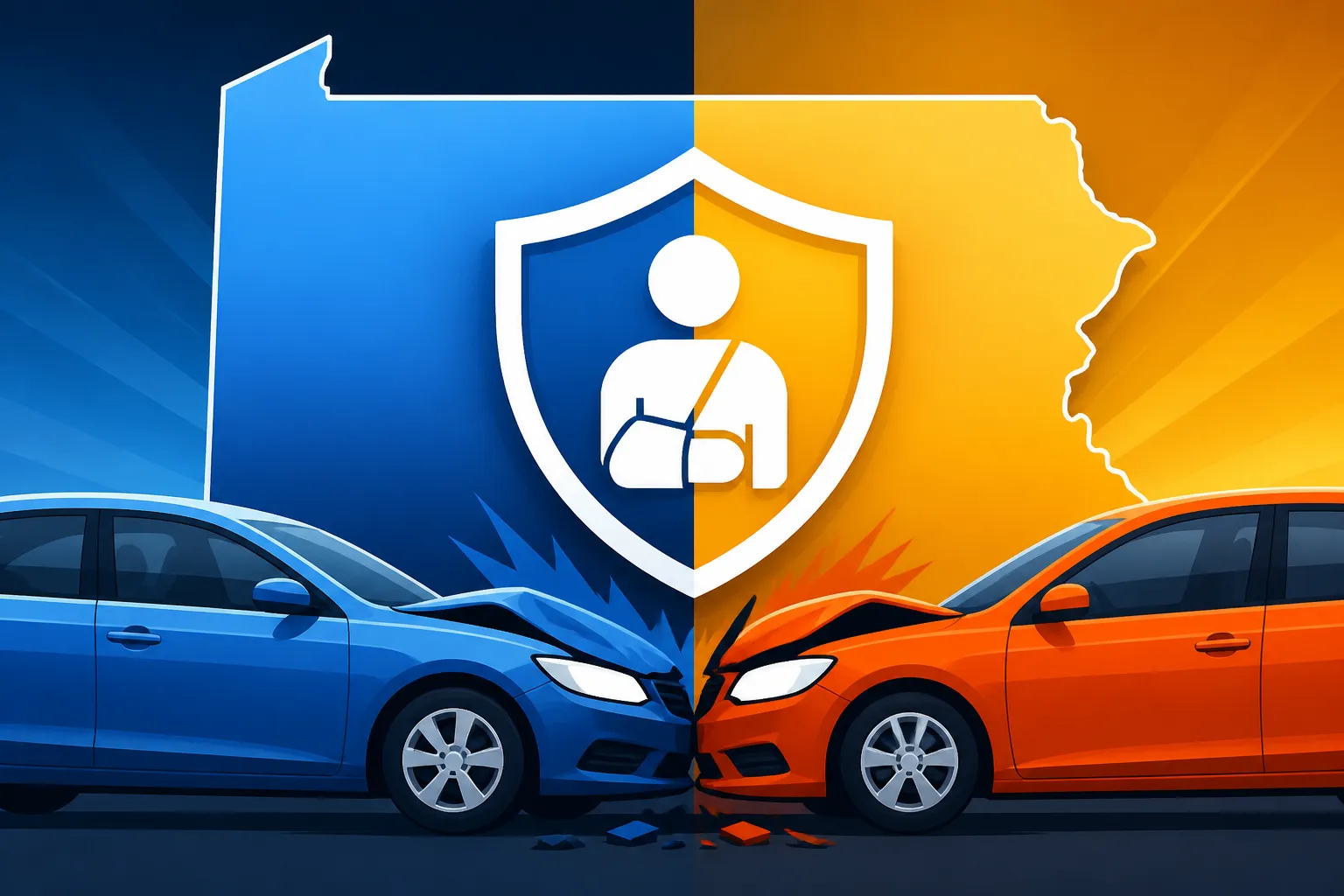
Pennsylvania operates under a "choice no-fault" system, which often catches people off guard. It's not a purely no-fault state like Florida or Michigan, nor is it a traditional "at-fault" or "tort" state like many others. Instead, it offers drivers a choice in how their insurance will handle personal injury claims after an accident. This elective system determines your rights to sue for pain and suffering and how your medical bills are initially paid, regardless of who caused the accident.
The Basics of No-Fault Insurance
In a true no-fault insurance system, each driver typically files a claim with their own insurance company for their medical expenses and lost wages, regardless of who was at fault for the accident. This primary coverage is often called Personal Injury Protection (PIP). The intention behind no-fault laws is to streamline minor injury claims, reduce litigation, and ensure quick access to medical care. It aims to prevent lengthy legal battles over minor injuries, but it usually restricts a driver's ability to sue the at-fault party for non-economic damages like pain and suffering, unless their injuries meet a certain "serious injury" threshold. For a deeper dive into these systems, you might find our guide on what is a no-fault state? (and which states are no-fault) helpful.
The Core Concept of Choice No-Fault
Pennsylvania's choice no-fault system essentially gives you, the policyholder, the power to decide between two distinct tort options when you purchase your car insurance: "limited tort" or "full tort." This choice dictates your right to pursue non-economic damages, such as pain and suffering, from the at-fault driver after an accident. However, regardless of the tort option you choose, Pennsylvania law mandates that your own insurance policy's Personal Injury Protection (PIP) coverage will pay for your medical expenses and some other out-of-pocket costs up to your policy limits, irrespective of who caused the crash. This means that if you're injured, your initial medical bills usually go through your own insurer. This hybrid model can be incredibly confusing for those unfamiliar with it, adding another layer of complexity to an already stressful situation.
Understanding Limited Tort vs. Full Tort Options
The decision between limited tort and full tort is perhaps the most critical choice you make when purchasing car insurance in Pennsylvania. This choice directly impacts your legal rights if you are ever involved in a car accident and sustain injuries. Many people choose limited tort to save money on premiums, only to discover its limitations after an accident.
What is Limited Tort?
Choosing the limited tort option means you agree to restrict your right to sue an at-fault driver for non-economic damages like pain and suffering, mental anguish, or loss of enjoyment of life. While your own PIP coverage will still pay your medical bills and a portion of lost wages, you generally cannot recover additional compensation for pain and suffering unless your injuries meet a specific "serious injury" threshold.
What constitutes a "serious injury" under limited tort can be a point of contention and legal interpretation. Generally, it refers to:
- Death
- Serious impairment of body function (meaning the injury affects important bodily functions, and the impairment is objectively manifested and not just subjective complaints)
- Permanent serious disfigurement
For example, if you sustain a whiplash injury that resolves in a few weeks with physical therapy, you would likely not meet the serious injury threshold under limited tort, even if the experience was painful and disruptive. This means you couldn't sue the at-fault driver for your pain and suffering. However, if that whiplash led to a permanent spinal cord injury, or if you suffered a severe broken bone requiring multiple surgeries and leaving lasting disfigurement, then you would likely have grounds to pursue a claim for pain and suffering, despite having chosen limited tort. The burden of proof to demonstrate a serious injury is on the injured party, and it often requires extensive medical documentation and expert testimony.
The main "pro" of limited tort is that it comes with lower insurance premiums, which can be attractive to budget-conscious drivers. The obvious "con" is the significant limitation on your ability to recover full compensation for your suffering after an accident, potentially leaving you feeling financially short-changed and frustrated, especially if you experience persistent pain that doesn't quite meet the "serious injury" bar.
What is Full Tort?
In contrast, choosing the full tort option preserves your right to sue an at-fault driver for all types of damages, including non-economic damages like pain and suffering, regardless of the severity of your injuries. With full tort coverage, if another driver is deemed responsible for your accident, you can pursue a claim against them for medical expenses, lost wages, property damage, and pain and suffering.
The benefits of full tort are clear: it provides comprehensive legal recourse if you're injured in an accident caused by someone else. You aren't constrained by the "serious injury" threshold, meaning even if you suffer a relatively minor injury that causes you significant discomfort and disruption for a few months, you can still seek compensation for that suffering. This peace of mind often justifies the slightly higher insurance premiums associated with full tort coverage.
While full tort offers broader protection, it does come with a higher premium cost compared to limited tort. For many, the added expense is a worthwhile investment in their ability to recover fully after an accident, both financially and emotionally. Deciding between these two options is a crucial part of securing proper protection, and it's always wise to discuss it thoroughly with your insurance agent.
Making an Informed Decision
Choosing between limited tort and full tort isn't just about saving a few dollars on your monthly premium. It's about evaluating your personal risk tolerance, financial situation, and what kind of protection you truly want if the unthinkable happens. Here's a quick comparison to help visualize the differences:
| Feature | Limited Tort | Full Tort |
|---|---|---|
| Right to Sue for P&S | Restricted to "serious injury" cases only | Unrestricted; can sue for any pain & suffering |
| Medical Expenses | Covered by your own PIP (first-party benefits) | Covered by your own PIP (first-party benefits) |
| Lost Wages | Covered by your own PIP | Covered by your own PIP (can sue for excess) |
| Property Damage | Always handled via at-fault rules | Always handled via at-fault rules |
| Insurance Premiums | Generally lower | Generally higher |
| Peace of Mind | Less, due to restricted legal rights | Greater, due to full legal recourse |
When considering which option is best, think about your driving habits, your health, and your financial ability to absorb potential losses. Are you comfortable with the idea that a significant, but not "serious," injury might leave you unable to recover for your suffering? Or would you prefer to pay a bit more for the full legal right to pursue compensation for all your damages? This is a personal decision that deserves careful thought.
How Fault Still Matters in Pennsylvania
Even with Pennsylvania's unique choice no-fault system, the concept of fault remains incredibly relevant and can significantly impact your claim, especially when it comes to property damage and your ability to pursue a lawsuit for personal injury. While your own PIP coverage pays your initial medical bills regardless of fault, the deeper implications of who is at fault in a car accident? (complete guide 2026) cannot be overstated.
When Can You Sue for Damages?
This is where your tort election really comes into play. If you chose full tort coverage, you retain the right to sue the at-fault driver for all damages, including economic losses (like medical bills beyond your PIP, future lost wages, or out-of-pocket expenses) and non-economic damages (such as pain and suffering), regardless of the severity of your injuries. This means if someone else causes an accident, you have a much broader path to full recovery.
If you chose limited tort, your ability to sue for non-economic damages is, as discussed, generally restricted. You can only pursue a claim for pain and suffering if your injuries meet the "serious injury" threshold or if certain exceptions apply. These exceptions might include:
- The at-fault driver was under the influence of alcohol or drugs.
- The at-fault driver was driving a vehicle registered in another state.
- The at-fault driver intended to injure themselves or others.
- The at-fault driver was uninsured.
- The at-fault driver was driving a commercial vehicle.
Understanding these exceptions is vital, as they can sometimes "pierce" the limited tort election and restore your full rights to sue. However, pursuing such a claim often requires experienced legal counsel to navigate the complexities and prove the exception applies.
Comparative Negligence in Pennsylvania
Pennsylvania follows a modified comparative negligence rule, specifically the "51% bar" rule. This means that if you are found to be 51% or more at fault for the accident, you cannot recover any damages from the other driver. If you are found to be 50% or less at fault, you can still recover damages, but your compensation will be reduced by your percentage of fault. For example, if you sustained $100,000 in damages but were found 20% at fault, you would only be able to recover $80,000. Our article on what happens if you're partially at fault? delves deeper into these scenarios.
This rule is particularly important when considering a third-party claim against the at-fault driver, especially for property damage or if you have full tort coverage. Insurance adjusters will meticulously investigate how fault is determined in a car accident and assign percentages of fault, which can significantly impact your final settlement. This aspect of Pennsylvania law aligns with how comparative vs contributory negligence explained in broader contexts, demonstrating that even in a no-fault-leaning state, individual responsibility for causing a collision remains a critical legal factor.
Property Damage Claims
Here's an important distinction that often surprises people: property damage claims in Pennsylvania are always handled under traditional at-fault rules. Your tort election (limited or full tort) only pertains to personal injury claims. So, if another driver damages your vehicle, regardless of whether you have limited or full tort, their insurance company is responsible for paying for the repairs or the fair market value of your totaled car. You will file a third-party claim against their insurer for vehicle repairs, a rental car, and other property-related losses. If your vehicle is totaled, you might wonder will I get a settlement if my car was totaled?. The answer is typically yes, for the actual cash value of your vehicle.
This means that even if you chose limited tort and suffered minor injuries, you would still be able to pursue the at-fault driver's insurance for the full cost of repairing your vehicle or replacing it.
Practical Steps After an Accident in Pennsylvania
Being involved in a car accident is a jarring experience, and it can be hard to think clearly in the aftermath. Knowing the right steps to take immediately following a crash and in the days that follow can protect your rights and help your claim, whether you have limited or full tort coverage. Our complete guide on what to do after a car accident: step-by-step (2026) offers extensive advice, but here are some Pennsylvania-specific considerations.
Reporting the Accident and Seeking Medical Attention
First and foremost, ensure your safety and the safety of others. If necessary, call 911 for emergency services. Even if the accident seems minor, it's generally advisable to call the police to the scene. A police report can be an invaluable, objective record of the incident, documenting details like road conditions, witness statements, and initial observations about fault. However, remember that police reports and car accident fault are not always the final word on who pays; insurance companies conduct their own investigations.
Secondly, and perhaps most critically for your personal injury claim, seek medical attention immediately, even if you don't feel significantly injured right away. Adrenaline can mask pain, and many common car accident injuries, like whiplash or concussions, can have delayed injury symptoms after a car accident. Prompt medical documentation links your injuries directly to the accident, which is crucial for any insurance claim, especially under limited tort where you might need to prove a "serious injury." Seeing a doctor establishes a clear medical record, which will be vital for substantiating your claims for medical bills and potentially pain and suffering.
Dealing with Insurance Companies
After an accident, you will likely interact with your own insurance company (first-party claim) and potentially the other driver's insurance company (third-party claim). For your personal injury benefits, your own PIP coverage will be the primary payer for your medical treatment and lost wages, regardless of fault. This process is part of how car accident insurance claims work.
When dealing with insurance adjusters after a car accident, be cautious about providing recorded statements to the other driver's insurance company without first consulting with a legal professional. While you generally have a contractual obligation to cooperate with your own insurer, you are not obligated to give a recorded statement to the at-fault driver's insurer. Such statements can sometimes be used against you later, even inadvertently. If you receive a letter from an insurer stating they are investigating your claim but reserving their rights, it might be a reservation of rights letter, signaling potential issues.
Gathering Evidence
The more evidence you can gather at the scene and in the days following the accident, the stronger your claim will be. This includes:
- Photos and Videos: Capture the scene from multiple angles, damage to both vehicles, skid marks, road conditions, traffic signs, and any visible injuries.
- Witness Information: Collect names and contact details of anyone who saw the accident.
- Police Report: Obtain a copy of the official police report as soon as it's available.
- Medical Records: Keep meticulous records of all medical treatment, diagnoses, prescriptions, and therapist visits. This is crucial for proving the extent of your common car accident injuries: complete guide (2026).
- Lost Wage Documentation: If you missed work, gather pay stubs and a letter from your employer confirming your time off.
- Repair Estimates: For property damage, get multiple repair estimates.
Compiling this information systematically helps to build a strong case and can prove how the other driver was at fault, aiding your recovery, especially if you have full tort or meet a limited tort exception. This evidence is crucial whether you choose to file a car accident insurance claim on your own or with the help of a lawyer.
Final Considerations
Navigating a car accident claim in Pennsylvania can be complex due to its unique choice no-fault system. Your initial decision between limited tort and full tort significantly shapes your rights. While your PIP coverage will handle initial medical costs, the ability to sue for pain and suffering hinges on that critical election and whether your injuries meet a serious injury threshold. Property damage, thankfully, remains straightforward under traditional fault rules. Understanding these nuances is key to protecting your financial and physical well-being after a collision. If you find yourself injured in an accident, especially if you have limited tort and believe you've suffered a serious injury, consulting with a qualified attorney can provide invaluable guidance. They can help clarify your options and ensure you receive the compensation you deserve.
Disclaimer
Please remember that this article provides general information and insights into Pennsylvania's car accident and insurance laws. It is not intended as legal advice. Every accident and claim is unique, and the specifics of your situation will dictate the best course of action. For personalized advice regarding your car accident claim, it is always recommended to consult with a qualified legal professional in Pennsylvania.