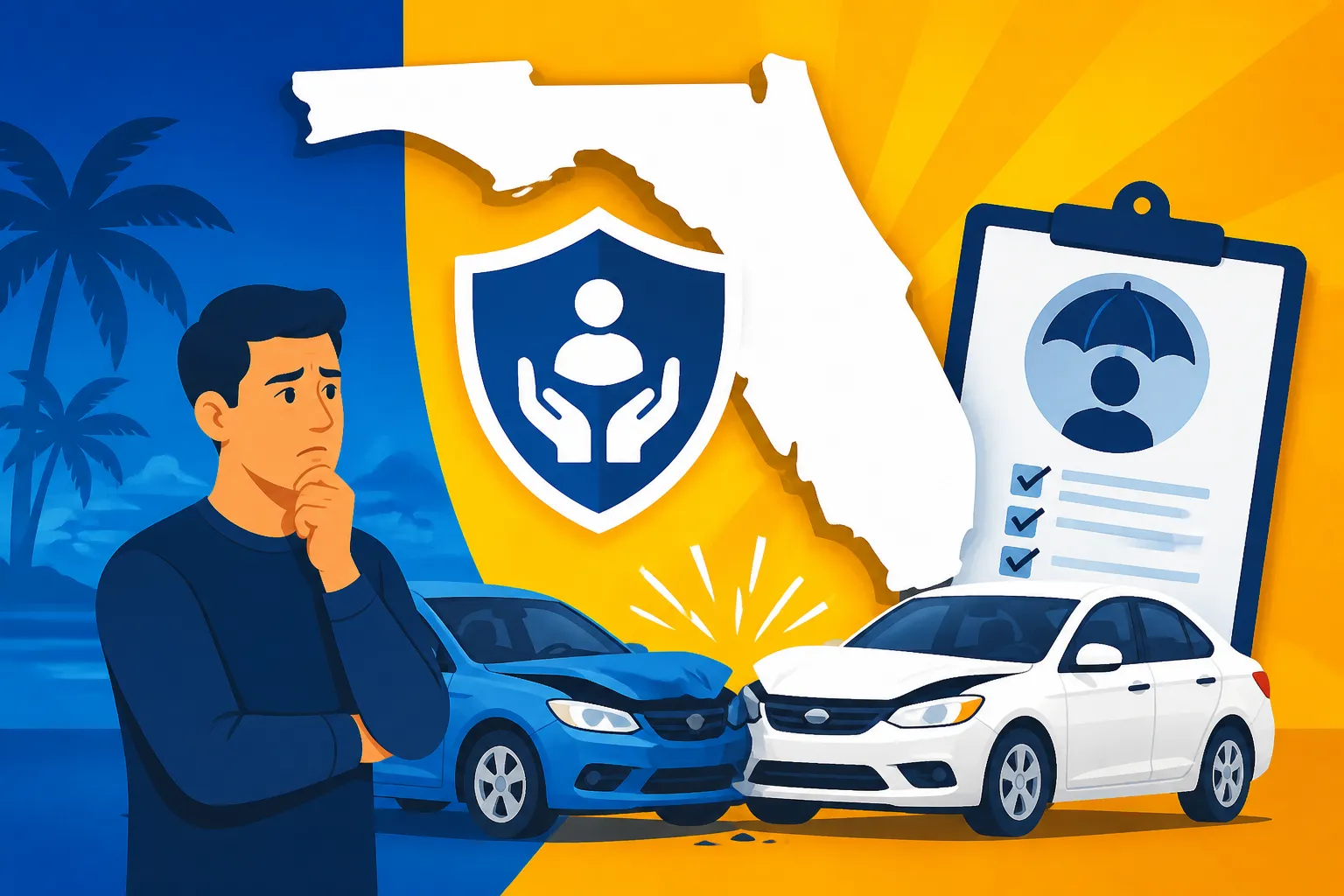
Is Florida a No-Fault State?
Getting into a car accident is one of the most jarring experiences imaginable, and the aftermath can be incredibly confusing, especially when you're trying to figure out who pays for what. Many people in Florida, and even those visiting, wonder about the state's specific laws regarding car accident claims. This guide is here to untangle the complexities of Florida's car insurance system, helping you understand if Florida is truly a "no-fault" state and what that means for your rights and responsibilities after a collision.
Florida's No-Fault System Explained
When you hear the term "no-fault state," it essentially means that after a car accident, your own insurance policy typically pays for certain initial medical expenses and lost wages, regardless of who caused the crash. Florida operates under a modified no-fault system, which can be a bit of a head-scratcher for those used to pure "at-fault" states. The primary goal of a no-fault system is to streamline the process of getting immediate medical treatment and financial support for minor to moderate injuries, reducing the need for lengthy legal battles over fault.
In Florida, the cornerstone of this system is Personal Injury Protection, or PIP coverage. Every driver registered in Florida is legally required to carry PIP insurance. This isn't just a suggestion; it's a mandatory part of your auto policy. The minimum coverage amount is $10,000, and it's designed to cover 80% of your reasonable and necessary medical expenses, 60% of lost wages, and even a death benefit up to $5,000, up to your policy limits, following an accident.
The Role of Personal Injury Protection (PIP)
PIP is the first line of defense for your injuries. Imagine you're driving down I-4 near Orlando, and someone swerves into your lane, causing a fender bender. Even though the other driver was clearly at fault, your own PIP coverage is what kicks in initially to pay for your doctor's visits, hospital stays, prescriptions, and any rehabilitation you might need. This system is designed to get you treatment quickly, without waiting for an investigation into who is to blame. This fundamental aspect is what really defines What Is a No-Fault State? (And Which States Are No-Fault).
One critical detail in Florida's PIP law is the 14-day rule. To be eligible for PIP benefits, you absolutely must seek initial medical treatment for your injuries within 14 days of the accident. This isn't a suggestion; it's a hard deadline. If you wait longer than two weeks to see a doctor, even if your injuries are legitimate, your PIP coverage might deny your claim entirely. This highlights why understanding Delayed Injury Symptoms After a Car Accident is so important, as even seemingly minor aches can develop into serious problems later on. Always prioritize seeking medical attention immediately after a crash, even if you feel okay at first.
Who PIP Coverage Protects
PIP coverage extends beyond just the policyholder. If you're the insured driver, it covers you, any passengers in your vehicle who don't have their own PIP coverage, and even household members (like your spouse or children) who are injured in a car accident, regardless of whether they were in your car, another car, or struck as a pedestrian or bicyclist. This broad coverage makes it a vital safety net for many Floridians.
However, there are limitations. For example, your PIP policy generally won't cover injuries sustained by passengers who do have their own Florida PIP policies. In that scenario, their own PIP would be primary. It’s also crucial to understand that PIP primarily covers medical and wage loss benefits. It does not cover property damage to your vehicle, nor does it typically cover non-economic damages like pain and suffering unless your injuries meet a specific threshold, which we'll discuss next.
When Fault Still Matters in Florida Accidents
While Florida is a no-fault state for initial injury claims, it’s a huge misconception to think that fault becomes irrelevant after a car accident. In fact, understanding How Fault Is Determined in a Car Accident is still incredibly important. If your injuries are severe enough, Florida's no-fault system allows you to "step outside" the no-fault rules and pursue a claim against the at-fault driver for damages beyond what your PIP covers. This is where the concept of fault, and proving it, becomes paramount.
The "Serious Injury" Threshold
To pursue a claim against the at-fault driver for non-economic damages like pain and suffering, emotional distress, or loss of enjoyment of life, your injuries must meet Florida's "serious injury" threshold. This threshold is legally defined and generally includes injuries that result in:
- Significant and permanent loss of an important bodily function.
- Permanent injury within a reasonable degree of medical probability, other than scarring or disfigurement.
- Significant and permanent scarring or disfigurement.
- Death.
If a doctor determines that your injuries meet one of these criteria, you can then hold the at-fault driver responsible for all your damages, including those typically covered by PIP (medical bills, lost wages) that exceed your PIP limits, as well as the non-economic damages. This is a critical point where the system shifts from no-fault to fault-based liability, similar to how claims would operate in an at-fault state for Who Is at Fault in a Car Accident? Complete Guide (2027).
Comparative Negligence and Your Claim
Even if you meet the serious injury threshold and can pursue a claim against the other driver, Florida still uses a modified comparative negligence standard. This means that if you are found to be partially at fault for the accident, your total compensation will be reduced by your percentage of fault. For example, if you sustained $100,000 in damages but were found to be 20% at fault, you would only be able to recover $80,000 from the other driver.
This is a significant difference from contributory negligence states, where being even 1% at fault can completely bar your recovery. Florida's system is more forgiving, allowing you to still recover damages as long as you're not solely responsible. However, it's vital to remember that any percentage of fault assigned to you will directly diminish your settlement. Understanding What Happens If You're Partially at Fault? is crucial for managing expectations and strategizing your claim. This is where the intricacies of Comparative vs Contributory Negligence Explained come into play.
| Feature | No-Fault (PIP) Coverage | Fault-Based Claim (Beyond PIP) |
|---|---|---|
| Payer | Your own insurance company | At-fault driver's insurance company |
| Eligibility | After any accident (up to policy limits) | Only if serious injury threshold is met |
| Covered Damages | Medical bills (80%), lost wages (60%), death benefit | Full medical bills, full lost wages, pain & suffering, emotional distress, etc. |
| Fault Relevance | Not considered for initial payout | Crucial for determining liability and recovery |
| Property Damage | Not covered | Not covered by this claim, handled separately (Property Damage Liability) |
| Mandatory in Florida? | Yes | No (optional, depending on injury severity) |
Navigating Property Damage and Other Types of Claims
It’s essential to clarify that Florida’s no-fault system primarily applies to bodily injuries and associated economic losses (medical bills, lost wages). When it comes to damage to your vehicle, the rules are entirely different and operate under a traditional fault-based system. This distinction is often a source of confusion for drivers. For a broader overview of how different types of claims are categorized, you might want to read Property Damage vs Bodily Injury Claims.
Property Damage Claims
If another driver hits your car and they are at fault, their Property Damage Liability (PDL) insurance is responsible for covering the repairs or replacement value of your vehicle. Florida law requires drivers to carry a minimum of $10,000 in PDL coverage. This is separate from PIP and operates on the principle of How Insurance Companies Determine Who Is at Fault for the collision.
What if the other driver doesn't have enough PDL, or worse, no insurance at all? This is a common and frustrating scenario. In such cases, if you have collision coverage on your own policy, you can file a claim with your insurer to get your car fixed. Your collision coverage will pay for the damage, minus your deductible, and your insurance company will then typically pursue the at-fault driver's insurance (or the driver directly) through a process called subrogation to recover what they paid out. This often means you'll eventually get your deductible back, but it can take time.
Uninsured/Underinsured Motorist Coverage
Another important type of coverage, though optional in Florida, is Uninsured/Underinsured Motorist (UM/UIM) coverage. While Florida's no-fault system handles your initial medical expenses via PIP, what happens if you sustain serious injuries beyond your PIP limits, and the at-fault driver has no bodily injury liability insurance (which is optional in Florida) or not enough to cover your damages?
UM/UIM coverage steps in to protect you in these situations. It covers your medical expenses, lost wages, and pain and suffering beyond your PIP limits if the at-fault driver is uninsured or underinsured. Given the number of uninsured drivers on Florida roads, this coverage can be invaluable, offering a crucial layer of protection against significant financial hardship. It's often highly recommended for Floridians to carry UM/UIM coverage to bridge this potential gap in protection.
Essential Steps to Take After a Florida Car Accident
Knowing the legal framework is one thing, but knowing what to do in the immediate aftermath of an accident in Florida is crucial for protecting your rights and ensuring you can pursue any necessary claims. Following these steps can make a significant difference in your ability to recover compensation, whether through your PIP or a fault-based claim. For a complete guide, consider reviewing What to Do After a Car Accident: Step-by-Step (2027).
Prioritize Safety and Seek Medical Attention
Your health and safety are paramount. Immediately after an accident, if possible, move your vehicle to a safe location. Check yourself and your passengers for injuries. Even if you feel fine, call 911 if there are any injuries, significant property damage, or if the crash involved a hit-and-run. Get medical attention as soon as possible, and remember that critical 14-day window for PIP eligibility. Don't try to tough it out; some Common Car Accident Injuries: Complete Guide (2027) can have delayed symptoms.
Make sure to describe all your symptoms to medical professionals, no matter how minor they seem. This creates a crucial record of your injuries, which is essential for How to Prove Injuries in a Car Accident Claim later on.
Gather Evidence at the Scene
If you are physically able, document everything. Take photos and videos of:
- The scene from multiple angles.
- Damage to all vehicles involved.
- License plates.
- Road conditions, traffic signs, and signals.
- Any visible injuries.
Collect contact information from all drivers and witnesses, including names, phone numbers, and insurance details. If a police officer responds, ask for their name and badge number, and the incident report number. This evidence is vital for determining fault and supporting your claim, especially if you need to How to Prove the Other Driver Was at Fault for a serious injury claim later.
Report to Your Insurance Company
Regardless of fault, you should notify your own insurance company about the accident promptly. Even though Florida is a no-fault state, your insurer needs to know so they can activate your PIP benefits. Be honest and factual, but avoid admitting fault or speculating about what happened. Simply report the facts as you know them. You can read more about How to File a Car Accident Insurance Claim to prepare yourself.
When dealing with insurance adjusters, both your own and the other driver's (if applicable), remember that they are looking out for their company's bottom line. Be cautious about giving recorded statements without consulting an attorney first, especially if you suspect your injuries might be serious. Knowing Dealing With Insurance Adjusters After a Car Accident can save you a lot of headaches.
Consider Consulting an Attorney
If you have suffered significant injuries, especially those that appear to meet Florida's "serious injury" threshold, consulting with a personal injury attorney is highly recommended. An attorney can help you understand your rights, navigate the complexities of Florida's no-fault laws, and determine if you have a viable claim against the at-fault driver. They can assist in gathering evidence, negotiating with insurance companies, and if necessary, filing a lawsuit to ensure you receive the full compensation you deserve. This can often lead to a much better outcome than trying to manage the claim yourself, particularly when trying to understand How Car Accident Insurance Claims Work in detail.
Disclaimer
Please remember that this article provides general information and insights into Florida's no-fault car accident laws. It is not intended as legal advice. Every car accident case is unique, and the specific facts and circumstances of your situation will determine the best course of action. For personalized advice, it is crucial to consult with a qualified Florida attorney who can assess your specific situation and provide guidance tailored to your needs.