How Fault Works When Changing Lanes on the Highway
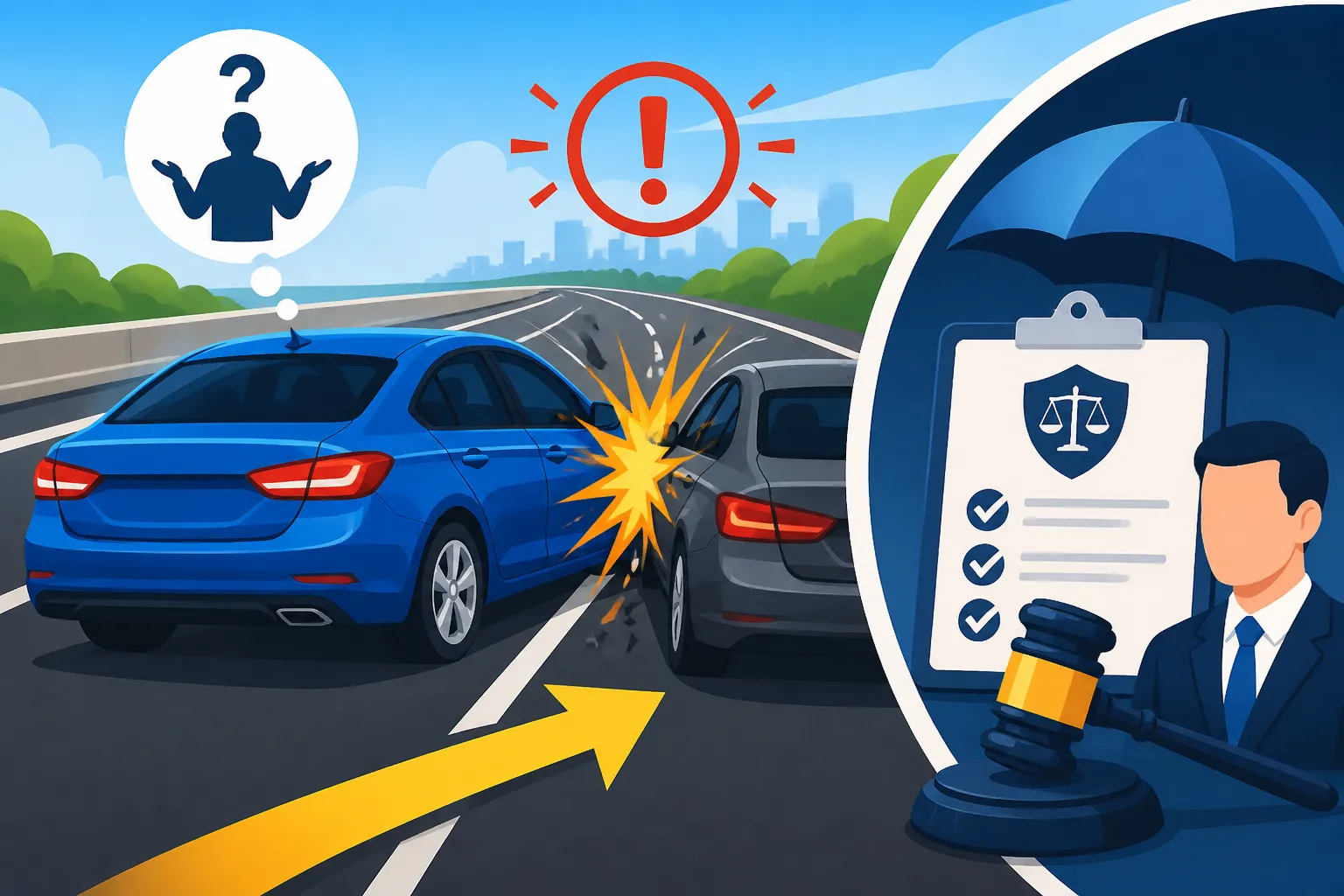
Navigating busy highways, especially during rush hour, can feel like a high-stakes chess game. You’re just trying to get where you’re going, and then suddenly, a quick lane change goes wrong, leaving you with a crumpled fender and a knot of anxiety in your stomach. Figuring out who's actually at fault in these chaotic lane-change accidents can be incredibly confusing, and the thought of dealing with insurance companies can feel overwhelming. This guide is here to break down exactly how fault is determined in those tricky highway lane-change scenarios, offering clarity and practical advice to help you understand your situation.
The Dynamics of Highway Lane Change Accidents
Lane changes on the highway are a common maneuver, but they're also a frequent cause of collisions. When you're traveling at high speeds, even a slight misjudgment or a momentary lapse in attention can lead to significant damage and serious injuries. It's a situation many of us have been in or witnessed, and the immediate aftermath is always a mix of shock and confusion.
Common Scenarios and Why They Happen
Think about it: you're cruising down I-5 near Seattle, trying to get into the left lane to avoid slower traffic, or perhaps you're on I-95 in Florida, merging to exit. Suddenly, another car appears seemingly out of nowhere, or you misjudge the speed of the vehicle next to you. These scenarios unfold in a flash, but they're often the result of a few recurring issues. Common causes include drivers failing to check their blind spots adequately, not signaling a lane change, signaling too late, or simply misjudging the space and speed of other vehicles. Distracted driving, like texting or fiddling with the radio, exacerbates these risks, as does aggressive driving where someone tries to force their way into a lane.
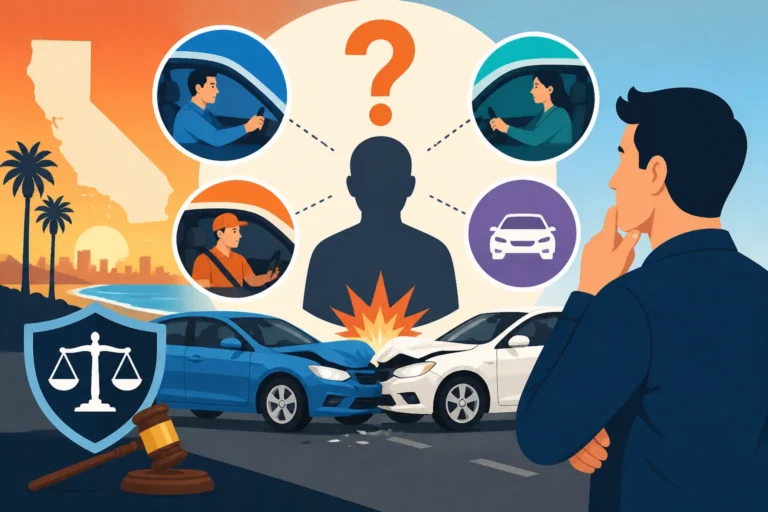
Another frequent problem is when two drivers attempt to merge into the same lane from adjacent lanes at the same time. Picture two cars, one in the far-left lane and one in the far-right, both trying to get into the middle lane simultaneously. It's like a high-speed game of chicken, and often, neither driver fully expects the other to make the same move. These situations are particularly challenging because both drivers might genuinely believe they had the right-of-way or were more advanced in their maneuver.
The Driver's Duty When Changing Lanes
Legally and morally, every driver has a fundamental duty to operate their vehicle safely. When it comes to changing lanes, this duty becomes especially critical. State traffic laws are very clear on this: before moving into an adjacent lane, a driver must ensure the maneuver can be made safely without interfering with the flow of traffic or endangering other vehicles. This isn't just a suggestion; it's a legal requirement designed to prevent accidents.
This duty involves several key steps. First, you must signal your intention to change lanes well in advance. This gives other drivers time to react, whether by adjusting their speed or giving you more room. Second, and crucially, you must check your mirrors and physically turn your head to check your blind spot. We all have those tricky areas our mirrors can't quite catch, and relying solely on them is a recipe for disaster. Failing to properly check a blind spot is a primary reason for many sideswipe and lane change collisions on highways.
Finally, a driver has a duty to yield the right-of-way if another vehicle is already in the lane they intend to occupy, or if moving would create a dangerous situation. You can't just assert your right to change lanes; you must do so responsibly and safely. Understanding this "duty of care" is paramount, as a breach of this duty is often the foundation upon which fault is assigned in a car accident claim.
Determining Fault: Key Factors to Consider
After a highway lane change accident, the question of "Who is at fault in a car accident?" looms large. This isn't just about assigning blame; it's about determining legal responsibility for the damages and injuries that occurred. It's a complex process that insurance companies and, if necessary, courts will undertake by piecing together all available evidence.
Witness Statements and Dashcam Footage
In the chaotic moments following a crash, it can be incredibly difficult to remember everything clearly. This is where objective evidence becomes invaluable. Eyewitnesses, people who saw the accident unfold from a different perspective, can provide crucial details that might clarify exactly what happened. Their statements can corroborate one driver's account or contradict another's, helping to build a clearer picture of the events.
However, perhaps the most definitive piece of evidence in modern accidents is dashcam footage. Many drivers are installing dashcams in their vehicles, and for good reason. A dashcam recording provides an impartial, real-time video account of the moments leading up to, during, and immediately after the collision. If one driver involved in a lane-change accident has dashcam footage clearly showing the other vehicle cutting them off without signaling or failing to yield, it can be incredibly powerful in establishing fault. For instance, if a driver claimed they were already in the lane, but the dashcam shows them veering sharply into an occupied lane, that video evidence can be a game-changer for your car accident claim.
Road Markings and Traffic Laws
The lines on the road aren't just decorative; they are legal instructions, especially on highways. Solid lines, for example, typically indicate that lane changes are prohibited or strongly discouraged, as they often precede exits, on-ramps, or dangerous curves. If a driver crosses a solid line while changing lanes and causes an accident, their violation of this traffic law can be a significant factor in determining fault.
Conversely, broken lines indicate that lane changes are generally permitted, provided they are done safely. However, even with broken lines, the rules of the road still apply. A driver must still signal, check blind spots, and ensure the lane is clear. Beyond lane markings, general traffic laws, such as those governing signaling requirements, yielding the right-of-way, and maintaining a safe following distance, are all scrutinized. If a driver was speeding excessively while making a lane change, for instance, that could also contribute to their share of fault, even if the other driver initiated the lane change.
Damage Patterns on Vehicles
When investigators arrive at the scene or insurance adjusters examine the vehicles later, the physical damage tells a story. The location and type of damage can often reveal the angle of impact and the sequence of events. For a lane-change accident, typical damage might include sideswipe marks along the length of one or both vehicles. If a car attempting to change lanes clips the front fender of the car it was trying to pass, the damage patterns would be consistent with that narrative.
For example, if Vehicle A has damage to its front passenger side fender and Vehicle B has damage to its rear driver's side quarter panel, it might suggest that Vehicle A was attempting to merge into Vehicle B's lane and struck it as it pulled forward. However, if Vehicle A has damage primarily along its driver's side door and Vehicle B has damage along its passenger side, it could indicate that Vehicle B veered into Vehicle A's lane. These details, combined with debris patterns on the road, skid marks, and the final resting positions of the vehicles, are critical clues that help experts reconstruct the accident and ultimately determine how fault is determined in a car accident.
Understanding Comparative Negligence in Lane Change Crashes
It's not always a black-and-white situation where one driver is 100% at fault and the other is completely innocent. In many lane change accidents, especially on busy highways, it's possible that both drivers contributed to the collision in some way. This is where the concept of comparative negligence comes into play, a legal principle that recognizes that fault can be shared.
How Partial Fault Impacts Your Claim
Imagine a scenario: Driver A signals their intention to change lanes, but fails to adequately check their blind spot. Simultaneously, Driver B, who is in the lane Driver A wants to enter, is slightly speeding and not paying full attention to the surrounding traffic. When Driver A attempts the lane change, a collision occurs. In this instance, both drivers arguably bear some responsibility. Driver A failed to ensure the lane was clear, while Driver B's speeding and inattention also contributed to the inability to avoid the crash.
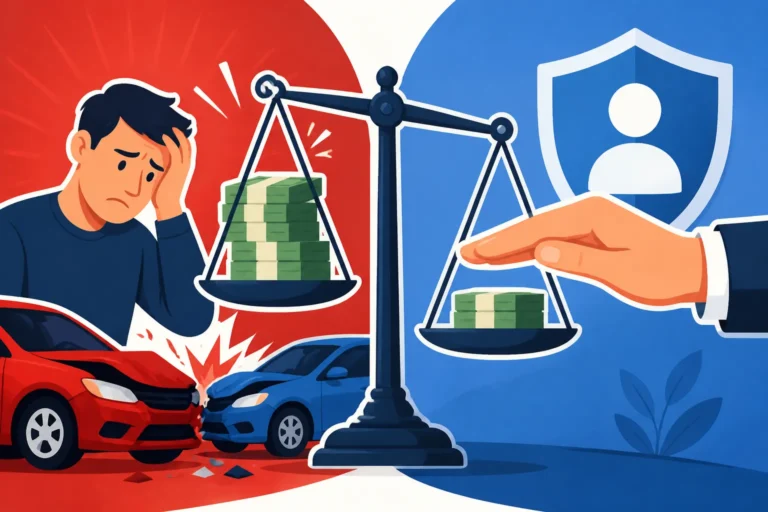
In a state that follows comparative negligence, a jury or an insurance adjuster would assign a percentage of fault to each driver. For example, Driver A might be found 70% at fault, and Driver B 30% at fault. This percentage directly impacts the amount of compensation you can recover. If you were Driver B in this scenario and incurred $10,000 in damages (medical bills, property damage, lost wages), being 30% at fault would mean your recoverable compensation is reduced by 30%. So, instead of receiving $10,000, you would only be able to collect $7,000. This system is designed to allow injured parties to still recover damages, even if they contributed to the accident, but it proportionally reduces their payout based on their level of responsibility. This concept is crucial for anyone wondering, "What happens if you're partially at fault?"
States with Different Comparative Negligence Rules
It's important to understand that not all states apply comparative negligence in the same way. There are two primary forms that dictate how partial fault affects your ability to recover damages:
- Pure Comparative Negligence: In states like California and Florida, you can recover damages even if you are mostly at fault, so long as you are not 100% at fault. If you are 90% responsible for an accident, you can still recover 10% of your damages from the other driver. This system allows for the broadest recovery.
- Modified Comparative Negligence: Most states, including Texas and New York, follow a modified comparative negligence rule, which has a specific bar to recovery.
- 50% Bar Rule: In these states (e.g., Colorado, Wisconsin), you cannot recover any damages if you are found to be 50% or more at fault. If you are 49% at fault, you can recover 51% of your damages, but if you hit 50%, your claim is barred.
- 51% Bar Rule: In other modified comparative negligence states (e.g., Illinois, Ohio), you cannot recover any damages if you are found to be 51% or more at fault. If you are 50% at fault, you can still recover 50% of your damages, but if you are found 51% responsible, you get nothing.
There's also a rarer system called contributory negligence, followed by only a few states like Maryland and Virginia, where if you are found even 1% at fault, you are completely barred from recovering any damages. Understanding your state's specific rules on comparative vs contributory negligence explained is critical, as it drastically impacts your legal options and potential settlement.
| Comparative Negligence Type | Description | Example: $10,000 Damages, 60% At Fault | States (Examples) |
|---|---|---|---|
| Pure Comparative | Can recover damages regardless of fault percentage. | Recovers $4,000 (40% of damages). | California, Florida, New York, Washington |
| Modified (50% Bar) | Cannot recover if 50% or more at fault. | Recovers $0 (since 60% > 50%). | Colorado, Wisconsin, Nebraska, North Carolina |
| Modified (51% Bar) | Cannot recover if 51% or more at fault. | Recovers $4,000 (since 60% > 51% is false; they recover 40% if not 51% or more at fault). Correction: This example should be for 50% fault, not 60% for a positive recovery. If 50% fault, recovers $5,000. If 60% fault, recovers $0. | Illinois, Ohio, Texas, Georgia |
| Contributory | Cannot recover if any fault (1% or more). | Recovers $0 (since 60% > 1%). | Alabama, Maryland, North Carolina, Virginia |
Note: This table is a simplified overview. State laws are complex and can change; always consult with a legal professional regarding your specific jurisdiction.
The Role of the Police Report and Insurance Companies
After the initial shock of a highway lane change accident subsides, the next steps often involve law enforcement and insurance providers. These entities play pivotal roles in how fault works when changing lanes on the highway, but their functions and interpretations of fault can differ. It’s important to understand what each brings to the table.
What a Police Report Does and Doesn't Determine
When a police officer responds to an accident scene, they investigate the incident, interview drivers and witnesses, gather evidence like photos and measurements, and ultimately create a police report. This report often includes the officer's assessment of the accident, sometimes even issuing citations if a traffic law violation is evident. For instance, if a driver failed to signal before changing lanes, they might receive a ticket for an unsafe lane change.
The police report is a highly influential document. It provides an official, third-party account of the accident, detailing who was involved, where it happened, the damage observed, and any statements made at the scene. It's an important piece of evidence when you file your car accident insurance claim. However, it's crucial to understand that while an officer might indicate their opinion on fault or issue a citation, the police report and its findings are not always the final legal determination of fault for civil liability purposes. The officer's role is to enforce traffic laws and document the scene, not to settle civil disputes. So, while a police report can be very persuasive, it doesn't definitively determine who pays in terms of insurance settlements or lawsuits. Insurance companies conduct their own investigations.
How Insurance Companies Investigate Fault
Once an accident claim is filed, insurance companies launch their own investigation to determine liability. This is how insurance companies determine who is at fault. Their primary goal is to assess the risk and financial responsibility involved, aiming to pay out the minimum necessary while adhering to their policyholders' coverage. This process is thorough and multi-faceted.
Insurance adjusters will review all available evidence, which includes the police report, photographs of the scene and vehicle damage, witness statements, and any dashcam footage. They will also speak directly with both drivers involved to get their accounts of the incident. Sometimes, they may even consult with accident reconstruction specialists, particularly in more complex or severe collisions. They’ll look for any inconsistencies in statements, analyze the points of impact on the vehicles, and consider any traffic citations issued. Their findings on fault will directly influence the settlement offers made, so it’s important to be prepared and provide as much evidence as you can to support your side of the story. Dealing with insurance adjusters after a car accident can be a daunting process, and they are trained to look for anything that might minimize their client's liability, including any potential fault on your part.
What to Do After a Lane Change Accident
When you're involved in a highway lane change accident, especially if you're traveling at speed, the immediate aftermath can be disorienting and frightening. Knowing what to do in those critical moments can protect your safety and strengthen your potential car accident claim. Being prepared can make a huge difference in how the entire situation plays out.
Immediate Steps at the Scene
Your safety and the safety of others should always be your top priority. If possible and safe to do so, move your vehicle to the shoulder or an emergency lane to avoid further collisions. Turn on your hazard lights. Check on yourself and any passengers for injuries, and then check on the occupants of the other vehicle. Even if you feel fine, it's wise to assume that injuries might be present.
Next, call 911 immediately. Even for seemingly minor incidents, especially on a busy highway, it's crucial to get law enforcement to the scene. They can manage traffic, ensure safety, and create an official police report. While waiting for emergency services, exchange information with the other driver. This should include names, contact details, insurance company names and policy numbers, and vehicle information (make, model, license plate). However, be extremely careful about what you say. Do not admit fault or apologize, as this can be used against you later by the insurance companies. What is an admission of fault and how to avoid it? It's simply saying things like "I'm so sorry, I didn't see you!" even if you're just being polite. Stick to the facts.
Gathering Evidence for Your Claim
The scene of the accident is a treasure trove of evidence, and it often disappears quickly once vehicles are moved and roads are cleared. So, as soon as it's safe, start gathering information. Use your smartphone to take plenty of photos and videos. Document the damage to all vehicles from multiple angles, the positions of the cars on the road, any skid marks, road debris, and relevant road signs or markings. Capture a wide shot of the accident scene to show the surrounding environment.
Also, look for any potential witnesses. If someone stopped to help or simply observed the crash, politely ask for their name and contact information. Their unbiased account can be invaluable in corroborating your story. If you have a dashcam, make sure the footage is secured and not overwritten. If you don't have one, consider getting one for future protection; they can be incredibly helpful for establishing fault. After leaving the scene, seek medical attention promptly, even if you feel okay. Some injuries, like whiplash or concussions, have delayed injury symptoms after a car accident. Timely medical documentation is essential for how to prove injuries in a car accident claim and linking them directly to the accident. Your doctor's notes, diagnoses, and treatment plans will be crucial evidence. This comprehensive approach to documentation is key to successfully navigating the aftermath and filing a strong claim. You can learn more about the steps to take in the immediate aftermath by reading our guide on what to do after a car accident: step-by-step.
Disclaimer
Please remember that this article provides general information and insights into car accident claims and liability. It is not intended as legal advice. Every accident case is unique, and the laws governing car accidents can vary significantly by state and specific circumstances. For personalized advice regarding your particular situation, you should always consult with a qualified legal professional.