Comparative Negligence Laws in North Carolina
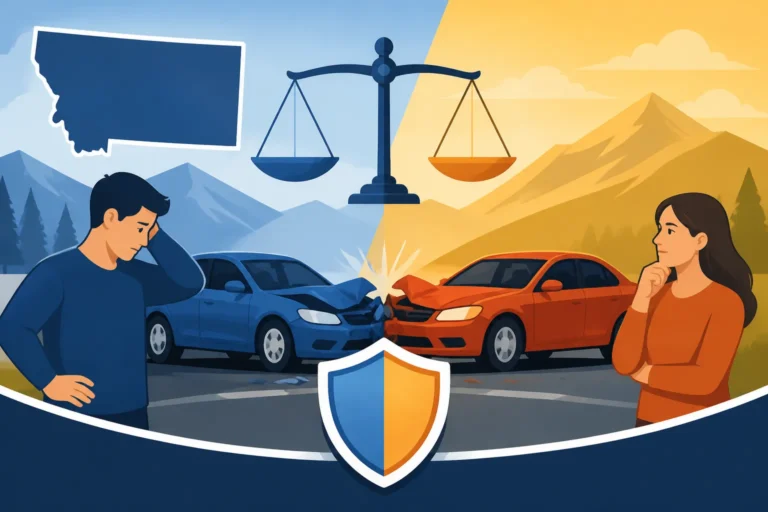
Getting into a car accident is stressful enough, but then you're immediately thrown into a confusing world of insurance claims, medical bills, and trying to figure out who's actually responsible. Many states operate under a system that allows you to recover some damages even if you were partly at fault, which offers a glimmer of hope. However, if you've had an accident in North Carolina, you're likely facing a much stricter reality. This guide will meticulously break down North Carolina's unique contributory negligence laws, explaining exactly what they mean for your car accident claim and how they might impact your ability to receive compensation.
Understanding North Carolina's Strict Contributory Negligence Rule
When you're dealing with the aftermath of a car accident, one of the biggest questions on everyone's mind is, "Who's at fault?" In many places, the answer isn't always black and white, and there are legal mechanisms to account for shared responsibility. But North Carolina, along with a handful of other states, operates under a much older, incredibly strict legal doctrine known as contributory negligence. This rule can feel incredibly unfair to accident victims, and it's a concept that causes a lot of anxiety and frustration because it truly is an "all or nothing" situation.
What Contributory Negligence Means in Practice
Imagine this scenario: you're driving through Raleigh, minding your business, and another driver runs a red light and smashes into your car. Clearly, they're mostly at fault, right? But then, their insurance company investigates and finds out that maybe you were going just a tiny bit over the speed limit, or perhaps your brake lights were flickering slightly. Under North Carolina's contributory negligence rule, if it can be proven that your own negligence contributed to the accident in any way, shape, or form, even by just 1%, you could be completely barred from recovering any damages from the at-fault driver. Yes, you read that right – 1%.
This means that if a jury or an insurance adjuster determines you bear even the slightest responsibility for the crash, you might walk away with nothing for your medical bills, lost wages, vehicle repairs, or pain and suffering. This isn't just a hypothetical; it's a very real challenge that victims face every day across the state, from the busy streets of Charlotte to the quieter roads in Asheville. It's a rule that places an enormous burden on the injured party, and it allows insurance companies a powerful defense tool. For more general information on how responsibility is assigned, you might find our guide on how fault is determined in a car accident helpful, but remember, North Carolina's application is exceptionally rigid.
How This Differs from Comparative Negligence
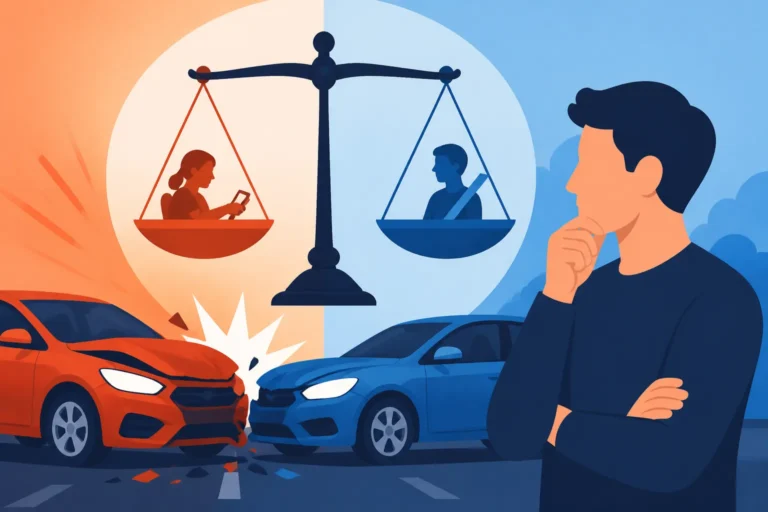
Most states today have moved away from strict contributory negligence and instead employ some form of comparative negligence. This system is designed to allow injured parties to recover damages even if they share some blame for an accident. There are generally two main types of comparative negligence:
- Pure Comparative Negligence: In states with pure comparative negligence, you can recover damages even if you are mostly at fault. Your compensation is simply reduced by your percentage of fault. So, if you're 80% at fault for an accident, you can still recover 20% of your damages from the other driver.
- Modified Comparative Negligence: This is more common. In these states, you can recover damages as long as your fault doesn't exceed a certain threshold, usually 50% or 51%. If you're 50% or less at fault, your damages are reduced proportionally. If you're over that threshold, you recover nothing.
North Carolina stands in stark contrast to both of these. Instead of reducing your recovery, even minor fault eliminates it entirely. This is why understanding this distinction is so critically important for anyone involved in a car accident in North Carolina. It's not about how much you were at fault, but simply if you were at fault at all. This is the essence of Contributory Negligence States (Where 1% Fault Bars Recovery), making North Carolina a particularly challenging state for accident claims.
To better illustrate the dramatic difference, let's look at a simple comparison:
| Scenario | North Carolina (Contributory Negligence) | State with 51% Modified Comparative Negligence |
|---|---|---|
| Your Fault: 10% | 0% Recovery | 90% Recovery (damages reduced by 10%) |
| Your Fault: 49% | 0% Recovery | 51% Recovery (damages reduced by 49%) |
| Your Fault: 50% | 0% Recovery | 50% Recovery (damages reduced by 50%) |
| Your Fault: 51% | 0% Recovery | 0% Recovery (exceeds 51% bar) |
As you can see, the bar for recovery in North Carolina is incredibly low for the defense.
Exceptions to North Carolina's Contributory Negligence Rule
While North Carolina's contributory negligence rule is notoriously strict, there are a few very specific, and often difficult to prove, exceptions that can sometimes allow an injured party to recover damages even if they contributed to the accident. These exceptions are critical to understand, as they represent the only real pathways around the "all or nothing" principle for many claimants.
Last Clear Chance Doctrine
One of the most frequently discussed exceptions to contributory negligence is the last clear chance doctrine. This doctrine applies in situations where, despite your own negligence, the other driver had the "last clear chance" to avoid the accident but failed to do so. It essentially argues that the other driver's failure to prevent the crash, when they had a reasonable opportunity, cancels out your prior minor negligence.
Let's use an example to clarify. Imagine you are driving and, due to a momentary lapse in judgment, your car stalls in the middle of a lane on a busy highway near Greensboro. You're clearly negligent for being in that position. However, if another driver approaches your stalled vehicle from behind, has ample time and space to see you, react, and steer around you, but instead, they are distracted by their phone and plow directly into your car, the last clear chance doctrine might apply. The argument would be that while you were negligent by stalling, the other driver had the "last clear chance" to prevent the collision but didn't take it.
Proving the last clear chance doctrine is a high bar, though. You need compelling evidence to demonstrate that the other driver not only could have avoided the accident but should have, given the circumstances. This usually requires detailed accident reconstruction, eyewitness testimony, and sometimes even expert analysis of factors like visibility, speed, and reaction times. It’s not something insurance companies readily concede, so expect a fight if you try to invoke it.
Willful and Wanton Conduct
Another, even more challenging exception involves the other driver's willful and wanton conduct. This exception arises when the at-fault driver acted with a reckless disregard for the safety of others, demonstrating a level of negligence far beyond simple carelessness. This isn't just about someone making a mistake; it's about them acting with an extreme indifference to the potential harm their actions could cause.
What constitutes "willful and wanton" conduct? Think about instances like extremely aggressive driving, street racing, or driving under the influence of alcohol or drugs. If a driver in Wilmington, for example, is weaving in and out of traffic at excessive speeds, ignoring all road signs, and then causes an accident, their actions might be deemed willful and wanton. In such cases, your own minor contributory negligence might not prevent you from recovering damages.
However, proving willful and wanton conduct is exceptionally difficult. It requires demonstrating that the other driver not only knew or should have known their actions posed a significant risk but chose to proceed anyway, with a conscious disregard for the safety of others. This often involves gathering evidence of their behavior leading up to the crash, such as witness statements, police reports detailing their intoxication, or traffic camera footage. When dealing with extreme cases like this, our article on Fault in a Drunk Driving Accident provides more context on how fault is typically handled. These exceptions are rare, but they are crucial to remember when navigating North Carolina's strict liability rules.
Proving Fault and Navigating a Claim in North Carolina
Given North Carolina's strict contributory negligence rule, establishing fault accurately and decisively is paramount. It’s not enough to simply know the other driver was mostly to blame; you must prove it without any indication that your actions contributed, even minimally. This puts a significant burden on the injured party and makes the claims process particularly challenging.
The Burden of Proof for the Plaintiff
In a car accident claim in North Carolina, the injured party (the plaintiff) bears the initial burden of proving two main things:
- That the other driver was negligent.
- That this negligence directly caused your injuries and damages.
This might sound straightforward, but it’s where the "1% rule" comes into play. If the other side can then introduce evidence that you were also negligent, and that negligence contributed to the accident, they can use that to bar your recovery entirely.
To meet your burden of proof and counter any allegations of your own fault, you need to gather as much evidence as possible immediately after the accident. This includes:
- Police Reports: A police report is often the first crucial piece of evidence. While not always definitive, it can provide an official account of the accident, identify the parties involved, list witnesses, and sometimes offer an initial assessment of fault. Check out our detailed article on Police Reports and Car Accident Fault to understand their role.
- Witness Statements: Independent witnesses can provide invaluable unbiased accounts of what happened. Get their contact information at the scene.
- Photos and Videos: Use your smartphone to document everything: vehicle damage, the accident scene, road conditions, traffic signs, skid marks, and any visible injuries. The more visual evidence, the better.
- Medical Records: Seek immediate medical attention, even for seemingly minor injuries. Medical records establish a link between the accident and your injuries, which is vital for proving damages.
- Dashcam Footage: If you have a dashcam, its footage can be irrefutable evidence of the collision dynamics.
- Traffic Camera Footage: In urban areas like Charlotte or Durham, traffic cameras might have captured the incident.
- Expert Testimony: In complex cases, accident reconstructionists or other experts may be needed to analyze the evidence and testify about how the accident occurred and who was responsible.
The quicker you act to collect this evidence, the stronger your position will be. Delaying can lead to lost evidence, fading memories, and a weakened claim.
When the Other Side Alleges Your Fault
It's an unfortunate but common tactic: after an accident in North Carolina, even if the other driver was clearly at fault, their insurance company will often try to find any reason to allege that you contributed to the crash. This isn't just a strategy to reduce their payout; it's a strategy to deny your claim entirely. It's a frustrating experience to be blamed when you feel you were the victim, and it can leave you feeling helpless. Understanding What Happens If the Other Driver Blames You? is key here.
They might claim you were speeding, that you didn't yield the right-of-way, that your vehicle had an issue, or even that you were distracted. Their goal is simple: prove even 1% of your fault, and they owe you nothing.
This is precisely why you need to be extremely careful in your interactions with insurance adjusters. Avoid making any statements that could be interpreted as admitting fault, even if you’re just being polite. For instance, saying "I'm so sorry that happened" could be twisted into an admission. Stick to the facts and don't speculate or assign blame yourself.
The best defense against allegations of your own fault is thorough documentation and, often, experienced legal representation. A lawyer can help you prepare your case, anticipate the defense's arguments, and effectively counter any attempts to shift blame onto you. They understand the nuances of North Carolina’s strict laws and can protect your right to compensation.
Impact on Your Car Accident Settlement
The unique nature of North Carolina's contributory negligence law has a profound and often devastating impact on car accident settlements. Unlike states where shared fault might lead to a reduced payout, in North Carolina, even minor fault can completely eliminate any compensation. This makes the negotiation and litigation process particularly high-stakes.
Zero Recovery for Contributory Fault
Let's reiterate the core consequence: if you are found to be even slightly at fault for a car accident in North Carolina, you will receive zero compensation for your damages. This means no money for your medical bills, lost income, property damage, or the pain and suffering you endured. It’s an incredibly harsh reality that sets North Carolina apart from the vast majority of other states.
Consider a scenario where you've suffered severe injuries, leading to hundreds of thousands of dollars in medical expenses and lost wages. If the other driver's insurance company can successfully argue that you were 5% negligent – perhaps by not reacting quite fast enough, or by having a slightly worn tire that might have marginally affected your braking distance – your entire claim could be dismissed. This outcome can leave accident victims in dire financial straits, grappling with massive debts that aren't their primary responsibility. It’s a complete game-changer when you're trying to figure out How Car Accident Settlements Are Calculated in this state.
This "all or nothing" approach makes every facet of the accident investigation and claim negotiation incredibly critical. The defense will meticulously search for any shred of evidence to pin even a tiny percentage of fault on you, knowing that it's their golden ticket to avoid paying out. This is why thorough preparation and a robust defense against any allegations of your own negligence are not just advisable, but absolutely essential. It also means that deciding Should You Accept the First Settlement Offer? is an even more complex question in North Carolina.
The Importance of Legal Counsel
Given the extreme consequences of North Carolina's contributory negligence rule, having experienced legal counsel by your side is often not just helpful, but absolutely critical. Navigating this legal landscape without an attorney can be a recipe for disaster for an injured party.
Here’s why a car accident lawyer is so important in North Carolina:
- Fighting Allegations of Contributory Fault: An attorney understands how insurance companies operate and the specific tactics they use to allege contributory negligence. They can proactively gather evidence, interview witnesses, and bring in experts to build a strong case that refutes any claims of your fault. They are skilled at deconstructing the defense's arguments and highlighting the other driver's sole responsibility.
- Understanding Exceptions: They know the rare exceptions, like the last clear chance doctrine or willful and wanton conduct, and can determine if your case qualifies. These are complex legal arguments that are nearly impossible for a layperson to successfully pursue on their own.
- Evidence Collection and Preservation: Lawyers have the resources and expertise to conduct a thorough investigation, ensuring all critical evidence is collected and preserved properly. This might include obtaining accident reports, traffic camera footage, black box data from vehicles, or expert witness reports. Our guide on How to Prove the Other Driver Was at Fault underscores the importance of this.
- Negotiation with Insurance Companies: Insurance adjusters are trained negotiators who work to minimize payouts. With the contributory negligence rule as their ultimate weapon, they can be particularly aggressive in North Carolina. An attorney can handle all communications, protecting you from inadvertently saying something that could harm your claim and ensuring your rights are protected throughout the negotiation process.
- Court Representation: If a fair settlement can't be reached, your lawyer will be prepared to take your case to court. They will present your case to a jury, arguing against allegations of contributory negligence and fighting for the compensation you deserve.
For those wondering, "Do you need a lawyer for a car accident?", the answer in North Carolina is almost always a resounding yes. The stakes are simply too high to go it alone. Many people also worry about the expense, but learning about "How Much Does a Car Accident Lawyer Cost?" can ease concerns, as most personal injury attorneys work on a contingency fee basis, meaning they only get paid if you win. Given the complexities, consulting a lawyer early on, as discussed in When to Hire a Car Accident Lawyer, is a smart move.
Disclaimer
Please remember that the information provided in this article is for general informational purposes only and does not constitute legal advice. Car accident laws are complex and vary by jurisdiction, and every accident case is unique. It is crucial to consult with a qualified attorney in North Carolina to discuss the specific details of your situation and receive personalized legal guidance. Relying solely on general information may not be sufficient to protect your rights or achieve a favorable outcome in your car accident claim.