Can You Still Get Paid If You’re Partly at Fault?
Getting into a car accident is already a nightmare, but what happens when you’re told you might actually be partly to blame? It's a frustrating, confusing situation that many drivers face, often leaving them wondering if there's any hope for recovering damages at all. This comprehensive guide will walk you through the complexities of shared fault, explaining how different state laws impact your ability to get paid, and what steps you can take to protect your claim.
Understanding "Fault" in a Car Accident Claim
When you're involved in a car accident, one of the first things everyone wants to know is, "Who's at fault?" It's a natural question, but the answer isn't always as straightforward as it seems. In the heat of the moment, it can feel like someone must be 100% responsible, but the legal and insurance world often sees things in shades of gray.
More Than Just Black and White
Imagine this scenario: You're driving a little faster than the speed limit on a suburban street. Suddenly, a car pulls out from a side street directly into your path, clearly failing to yield. You slam on your brakes, but it’s too late, and you collide. Who’s at fault? Your initial reaction might be, "The other driver! They didn't yield!" And you'd be right – they certainly contributed to the crash.
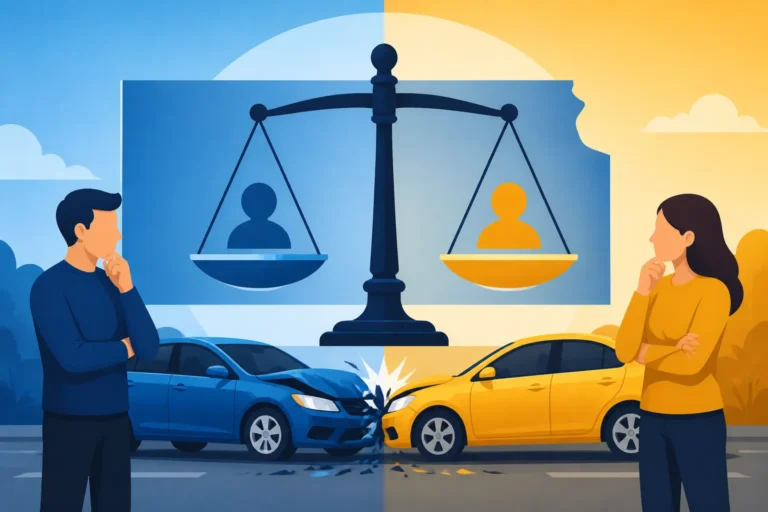
However, an investigation might also point out that you were exceeding the posted speed limit. While not the primary cause, your excessive speed might have prevented you from stopping in time or made the impact worse. In this situation, it’s not just one person’s fault; both drivers share some degree of responsibility. This shared responsibility is a common element in many car accident claims, leading to complex discussions about how much each party contributed to the incident. It’s this nuanced understanding of multiple contributing factors that often determines the outcome of a claim.
The Role of Investigation
Determining fault is a meticulous process undertaken by various parties. Law enforcement officers, insurance adjusters, and even legal teams will gather evidence to paint a clear picture of what happened. This isn't just about collecting initial statements; it delves much deeper. They look at physical evidence from the scene, like skid marks, vehicle damage, and the final resting positions of the cars. They'll also review police reports and gather statements from eyewitnesses who saw the accident unfold.
Increasingly, dashcam footage from involved vehicles or nearby businesses plays a crucial role, offering an objective view of the moments leading up to the crash. All this information is compiled and analyzed to assign a percentage of fault to each driver involved. This assignment can feel incredibly subjective, and it's where the real battle over compensation often begins. The percentages assigned directly influence how much, if anything, you might recover, making the investigation phase incredibly important. You can learn more about How Fault Is Determined in a Car Accident in our comprehensive guide.
Comparative Negligence vs. Contributory Negligence
The ability to get paid when you're partly at fault hinges entirely on the specific laws of the state where the accident occurred. There are two primary legal frameworks that dictate how shared fault affects your financial recovery: contributory negligence and comparative negligence. Understanding which system applies to your situation is absolutely critical.
Contributory Negligence States: A Harsh Reality
Let's start with the least forgiving system: contributory negligence. In states that follow this rule, if you are found to be even 1% responsible for causing the accident, you are completely barred from recovering any damages from the other driver. Yes, you read that right – even the slightest fault on your part means you walk away with nothing, regardless of how negligent the other driver might have been. It's an all-or-nothing system that can feel incredibly unfair, especially when the other driver was clearly the primary cause of the collision.
Imagine you were involved in that earlier scenario where the other driver failed to yield, causing a T-bone accident, but it was later determined you were driving 5 mph over the limit. In a contributory negligence state, that seemingly minor transgression, that 1% of fault, could completely prevent you from recovering for your significant medical bills, lost wages, and vehicle damage. This antiquated system, still used in a handful of states like Alabama, Maryland, North Carolina, and Virginia, along with the District of Columbia, places a heavy burden on the injured party. It's a legal framework that can leave victims feeling utterly abandoned, even when justice seems to demand otherwise. For a deeper dive into this system, check out our guide on Contributory Negligence States (Where 1% Fault Bars Recovery), or specifically How Contributory Negligence Works in Maryland.
Comparative Negligence: A More Common Approach
Thankfully, most states have moved away from the harsh realities of contributory negligence and adopted some form of comparative negligence. This system acknowledges that accidents are often complex, and fault isn't always a singular thing. Instead, it allows injured parties to recover damages even if they share some responsibility for the accident. The core idea is that your compensation will simply be reduced by the percentage of fault assigned to you.
This approach is seen as much fairer, as it allows for a more equitable distribution of financial responsibility based on each party's contribution to the crash. Instead of losing everything, you still have the opportunity to recoup a portion of your losses, making it a much more common and accepted legal standard across the country. However, even within comparative negligence, there are different variations that can significantly impact your claim, which we'll explore next. If you want to understand the fundamental differences between these systems, our article on Comparative vs Contributory Negligence Explained provides a comprehensive overview.
Diving Deeper into Comparative Negligence
Once you know your state operates under comparative negligence, the next step is to understand which type of comparative negligence it follows. This distinction is crucial, as it determines how much fault you can bear while still being eligible for compensation.
Pure Comparative Negligence: When Everyone Gets a Piece
The most lenient form of shared fault is pure comparative negligence. In states that adhere to this rule, you can recover damages no matter how high your percentage of fault is, even if you are mostly to blame for the accident. The only catch is that your total awarded damages will be reduced by your assigned percentage of fault. So, if you are found to be 90% at fault for a collision, you can still recover 10% of your total damages from the other driver.
Let's break that down with an example. Say you're involved in a car accident in a state like California or Florida, both of which follow pure comparative negligence. Your total damages for medical bills, lost wages, and pain and suffering are determined to be $100,000. However, the investigation concludes that you were 70% at fault because you were making an illegal U-turn, while the other driver was 30% at fault for speeding. Under pure comparative negligence, you would still be able to recover 30% of your $100,000 in damages, meaning you'd receive $30,000. Conversely, the other driver, being 30% at fault, could recover 70% of their damages from you. This system ensures that each party bears financial responsibility directly proportionate to their contribution to the accident. Understanding Pure Comparative Negligence States Explained can help you determine if your state applies this rule, and if you're in the Golden State, you can read more about Comparative Negligence Laws in California.
Modified Comparative Negligence: The 50% and 51% Bars
While pure comparative negligence is quite forgiving, most states that use a comparative fault system employ what's known as modified comparative negligence. This system introduces a threshold: if your fault reaches or exceeds a certain percentage, you are barred from recovering any damages. There are two common variations of this rule: the "50% Bar Rule" and the "51% Bar Rule."
The 50% Bar Rule: In states following this rule, if you are found to be 50% or more at fault for the accident, you cannot recover any damages from the other party. If your fault is determined to be less than 50%, your damages are reduced by your percentage of fault. For example, if your total damages are $50,000 and you are found to be 40% at fault, you can recover $30,000 ($50,000 – 40%). But if you're found 50% at fault, you get nothing. States like Arkansas, Colorado, Maine, and North Dakota use the 50% bar.
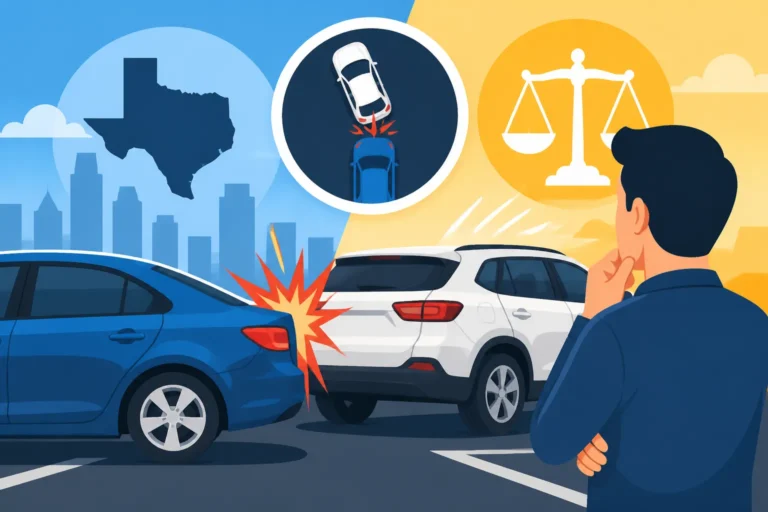
The 51% Bar Rule: This rule is a bit more forgiving than the 50% bar. Under the 51% bar rule, you can still recover damages as long as your fault is 50% or less. If your fault is determined to be 51% or more, then, like the 50% bar, you are completely prohibited from recovering anything. So, if your damages are $50,000 and you're 50% at fault, you can still recover $25,000 ($50,000 – 50%). But if that percentage creeps up to 51%, your claim is extinguished. This system is prevalent in many states, including Connecticut, Illinois, Indiana, Iowa, Massachusetts, Michigan, Ohio, Pennsylvania, and Texas.
The distinction between these two rules is incredibly important, as a single percentage point can make the difference between recovering a substantial sum and receiving nothing at all. Knowing your state's specific rule is vital for setting realistic expectations for your claim. Our guide on Modified Comparative Negligence (50% vs 51% Bar) delves into these nuances, and you might also find it helpful to understand What Does 50/50 Fault Mean for Your Claim? if your case is teetering on that critical threshold.
To make it easier, here's a quick overview of how common states handle shared fault:
State Negligence System Description Example States
This guide will explore how insurance companies assign percentages of fault, how these percentages affect your settlement, and the important steps you can take to protect your rights and maximize your potential compensation.
How Your Claim Changes with Shared Fault
It's clear by now that being partly at fault doesn't necessarily mean your claim is dead in the water, unless you're in a strict contributory negligence state. However, it absolutely changes the financial landscape of your recovery. The key takeaway here is that your level of responsibility will directly influence the amount of money you ultimately receive.
The Impact on Your Settlement Amount
The most significant consequence of being found partly at fault is the reduction of your car accident settlement amount. This isn't just a minor tweak; it's a direct, proportional cut based on the percentage of blame assigned to you. For instance, if your total damages – which include everything from medical bills and lost wages to pain and suffering – are calculated at $100,000, and you are found to be 20% at fault for the crash, your maximum recoverable amount would be $80,000. That 20% isn't just ignored; it's deducted from what you would have otherwise received.
This reduction applies across the board to all categories of damages you might be claiming. Your reimbursement for medical treatment, the income you lost from being unable to work, and even the compensation for your physical pain and emotional distress will all be proportionally decreased. This is why disputing fault percentages, even seemingly small ones, can have a massive financial impact on your final payout. Every percentage point matters, as it directly reduces the amount of money that will end up in your pocket to help you recover and rebuild after the accident. For a deeper understanding of how these calculations work, refer to our article on How Comparative Fault Reduces Your Settlement and How Much Is My Car Accident Settlement Worth? (2026).
Dealing with Your Own Insurance
Even when you are found partly at fault, your own insurance policies can provide a crucial safety net. This is where your collision coverage, if you have it, can come into play for vehicle damage. If you're 20% at fault and the other driver's insurance is only paying for 80% of your car's repair, your collision coverage can cover the remaining 20% (minus your deductible, of course). Similarly, your Medical Payments (MedPay) or Personal Injury Protection (PIP) coverage (if you're in a no-fault state) can help cover your initial medical expenses regardless of who was at fault.
It's important to remember that if your own insurance company pays for damages that were ultimately the other driver's responsibility, they will often seek reimbursement from the at-fault driver's insurer through a process called subrogation. This means your insurer tries to recover what they paid out, potentially recouping your deductible as well. While dealing with your own insurance company might feel counterintuitive when you believe the other driver is primarily at fault, it can be a vital step to ensure your immediate needs are met. Many people wonder Should You Call Your Insurance If It Wasn't Your Fault?, and the answer is usually yes, especially if there's any chance of shared fault.
What to Do If You're Blamed (Even Partially)
Being blamed, even partially, for an accident can be incredibly stressful. Your immediate actions, or lack thereof, can significantly impact the outcome of your claim. It's crucial to understand how to navigate the situation effectively to protect your right to compensation.
Don't Admit Fault at the Scene
This is perhaps the most critical piece of advice anyone can give you after an accident, especially if there's any ambiguity about fault. The moments immediately following a collision are chaotic and emotionally charged. You might be shaken up, confused, or even feeling guilty. In such a state, it's easy to blurt out "I'm so sorry!" or make statements like "I didn't see them!" These seemingly innocent apologies or admissions can be misconstrued and later used by insurance companies as direct evidence that you admitted fault.
Remember, you are not a trained accident reconstructionist, and you don't have all the facts in the immediate aftermath. Stick to factual statements when talking to the other driver or police, such as exchanging insurance and contact information. Do not speculate, do not apologize, and do not accept blame. Let the investigation process objectively determine fault. Your goal is to gather information, ensure everyone's safety, and then contact the appropriate professionals. Our detailed guide on What Is an Admission of Fault (and How to Avoid It)? provides crucial strategies for protecting yourself in these situations.
Gather Evidence and Document Everything
The more evidence you have, the stronger your position will be, even if you are partially at fault. Your goal here is to collect as much objective information as possible to support your version of events and potentially reduce any percentage of fault assigned to you. Start by taking numerous photos and videos of the accident scene from various angles. Capture the damage to both vehicles, any skid marks, road conditions, traffic signs or signals, and any debris on the road. Don't forget to photograph the surrounding area, including intersections or landmarks.
Additionally, get contact information for any witnesses who saw the crash. Their impartial accounts can be invaluable. If a police report was filed, make sure to get a copy, as it often contains initial assessments and details that can be crucial to your claim. Thorough documentation serves as an objective record, making it harder for insurance companies to unfairly pin a higher percentage of fault on you. Every detail you collect helps build your case and ensures a more accurate determination of fault. For a comprehensive checklist, refer to How to Document a Car Accident Scene and understanding the value of a Police Reports and Car Accident Fault can be very beneficial.
Seek Medical Attention Promptly
Your health is, without a doubt, the top priority after any car accident. However, seeking prompt medical attention also plays a critical role in protecting your financial recovery, especially when fault is being debated. Even if you feel okay initially, or only have minor aches and pains, it's wise to get checked out by a doctor as soon as possible. Some serious injuries, like whiplash or concussions, can have delayed symptoms that don't manifest until hours or even days later.
When you delay medical treatment, insurance companies can use that gap in time to argue that your injuries weren't caused by the accident, or that they weren't as severe as you claim. They might suggest that you were injured elsewhere or that you're exaggerating. By getting a medical examination quickly, you create an official record linking your injuries directly to the car accident. This medical documentation is essential evidence to prove the extent of your damages, regardless of your assigned fault percentage. Don't give the insurance company an easy reason to deny or devalue your claim; prioritize your health and your legal standing by seeing a doctor without delay. We always recommend consulting our guide on Why You Should See a Doctor After a Car Accident after any collision.
Navigating the Insurance Company's Stance
Dealing with insurance companies after an accident, especially when shared fault is involved, can feel like an uphill battle. It's important to approach these interactions with a clear understanding of their motivations and how to protect your interests.
Expect Pushback and Lowball Offers
It's a harsh truth, but insurance companies are businesses first and foremost. Their primary goal is to minimize payouts to protect their bottom line. When there's any ambiguity about fault, they will almost always try to assign a higher percentage of blame to you, even if it's not entirely accurate. Why? Because every percentage point of fault they can shift to you directly reduces the amount they have to pay out. They're looking for any angle – whether it's your speed, a minor lane deviation, or even the condition of your tires – to argue for shared responsibility.
This often manifests in lowball settlement offers, where they present a figure that is significantly less than what your claim is truly worth. They might hope you're desperate, uninformed, or simply want to resolve the matter quickly. Don't be surprised or disheartened by this. It's a common tactic. The key is to be prepared, understand the true value of your damages, and know that you don't have to accept their initial offer. For strategies on how to respond when this happens, our article How to Deal With a Lowball Insurance Offer offers practical advice, and you can also learn more about Dealing With Insurance Adjusters After a Car Accident.
The Value of Legal Counsel
When you're dealing with a car accident where fault is shared, having a skilled car accident lawyer by your side can be an absolute game-changer. This isn't just about fighting; it's about leveling the playing field. An experienced attorney understands the nuances of comparative and contributory negligence laws specific to your state. They know how insurance companies operate and are adept at negotiating fiercely on your behalf.
Your lawyer will meticulously review all the evidence, including police reports, medical records, and witness statements, to build the strongest possible case for reducing your assigned fault percentage. They can challenge the insurance company's assessment of fault, preventing them from unfairly diminishing your compensation. Furthermore, a lawyer can accurately calculate the full extent of your damages, including future medical expenses and pain and suffering, ensuring that no stone is left unturned in maximizing your settlement. Most personal injury lawyers work on a contingency fee basis, meaning you don't pay anything upfront, and they only get paid if they win your case, making legal representation accessible. In complex cases involving shared fault, a lawyer is often an invaluable asset in protecting your rights and securing the compensation you deserve. You can explore this topic further in our guides Do You Need a Lawyer for a Car Accident? (2026) and When to Hire a Car Accident Lawyer.
Disclaimer
Please remember that this information is for educational purposes only and does not constitute legal advice. Car accident claims are highly specific to individual circumstances and state laws. It is always recommended to consult with a qualified legal professional to discuss your particular situation.