Comparative Negligence Laws in California
Getting into a car accident is one of those incredibly stressful experiences nobody wants to face. Beyond the immediate shock and potential injuries, a huge worry often kicks in: "Whose fault was this, and how is it going to affect my ability to recover from my losses?" This question becomes even more complex when both drivers might share some blame. This comprehensive guide will walk you through the specifics of comparative negligence laws in California, helping you understand how fault is assessed and how it impacts your car accident claim and potential settlement.
Understanding Comparative Negligence in California
When you're involved in a car accident in California, the question of fault isn't always black and white. Unlike some other states where even a tiny bit of blame can stop you from getting any compensation, California operates under a system that's a bit more forgiving, and frankly, more realistic. It acknowledges that in many crashes, multiple parties might have contributed to what happened, even if one person is clearly more at fault.
Pure Comparative Negligence Defined
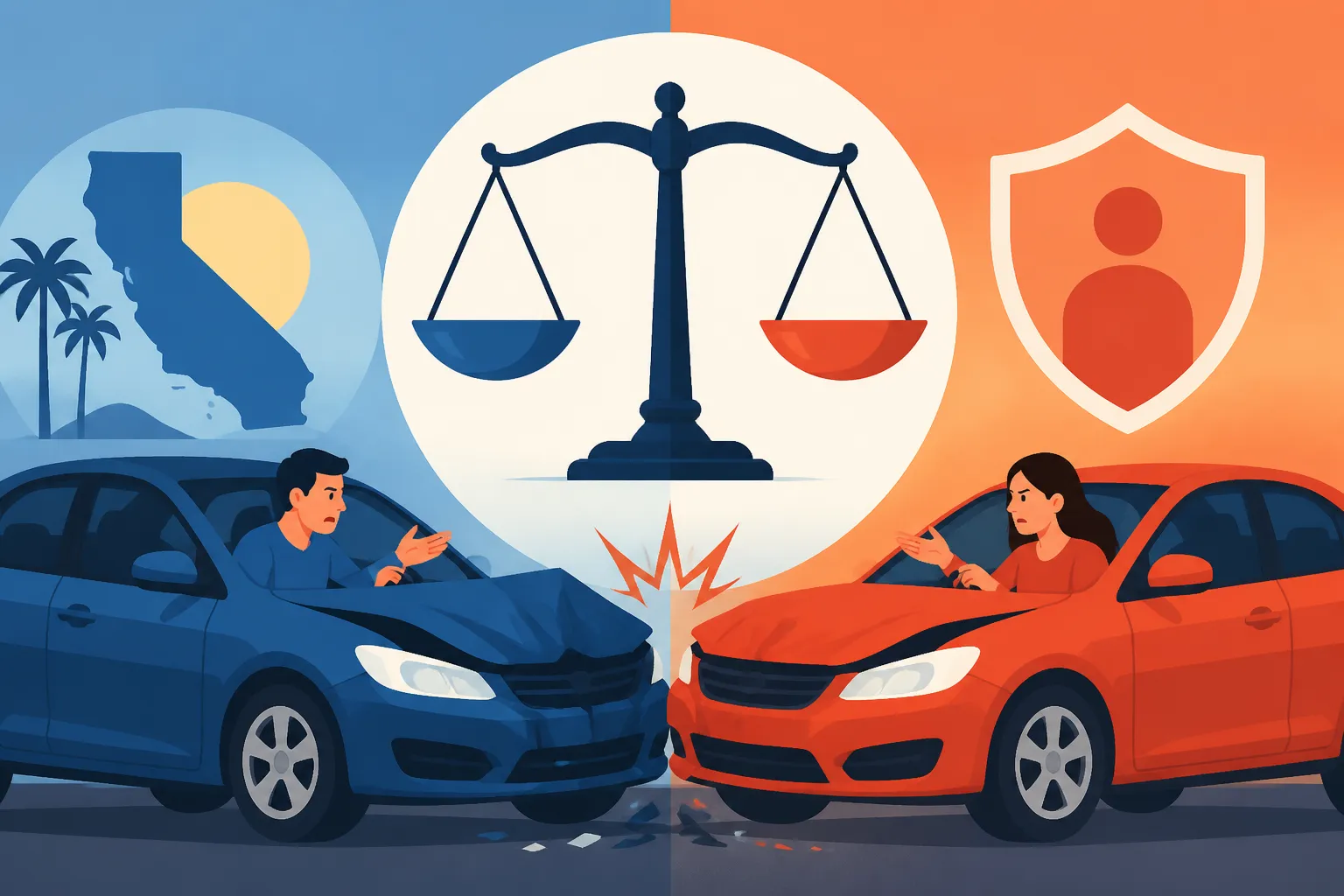
California is what's known as a "pure comparative negligence" state. What this essentially means is that even if you, as an injured party, are found to be partially responsible for causing the accident, you can still recover damages from the other at-fault driver. Your compensation will simply be reduced by your percentage of fault. For example, if a jury decides your total damages are $100,000, but you were 20% at fault for the accident, you would still be able to recover $80,000 from the other driver's insurance or through a lawsuit. This system allows for a more equitable distribution of responsibility and compensation. It recognizes that being partially negligent shouldn't automatically bar you from receiving financial relief for the harm you've suffered. This is a critical distinction, and one that often surprises people who are unfamiliar with how different states approach shared fault. To dive deeper into the basics of determining who is responsible, you can read our guide on how fault is determined in a car accident.
Think of a scenario where you're driving slightly above the speed limit, say 5 mph over, and another driver suddenly pulls out of a driveway directly into your path without looking. While the other driver is clearly the primary cause of the collision, a jury might determine that your slight speeding contributed 10% to the severity of the impact or reduced your reaction time. Under pure comparative negligence, you'd still recover 90% of your damages. This system is designed to prevent a situation where someone with significant injuries gets nothing just because they made a minor error that contributed to the incident. It truly aims for a fair outcome based on each party's degree of culpability.
How It Differs from Other Systems
It's helpful to understand how California's pure comparative negligence system stands apart from other types of fault laws used across the United States. Primarily, it's often contrasted with "modified comparative negligence" and "contributory negligence" systems, both of which can be far less forgiving for injured parties who share any degree of fault. Understanding these differences can really highlight why California's system can be more favorable to accident victims. We have a detailed explanation of comparative vs contributory negligence explained if you want to learn more about the national landscape.
In states that follow modified comparative negligence, there's a threshold for fault. Typically, this means you can only recover damages if your percentage of fault is either 50% or less, or 51% or less, depending on the specific state law. If your fault exceeds that threshold – say you're found to be 51% at fault in a "50% bar" state – you recover nothing. This can be a huge hurdle for accident victims, as even a slight edge in fault can completely derail their claim. Imagine being 51% at fault with $100,000 in damages; you'd walk away with zero under this system, which feels quite harsh if the other driver was also substantially negligent.
Then there's the even stricter system: contributory negligence. This rule is only followed in a handful of states, but it's incredibly harsh. Under contributory negligence, if you are found to be even 1% at fault for an accident, you are completely barred from recovering any damages from the other party. It's an all-or-nothing approach that places a heavy burden on accident victims to be entirely blameless. This strict interpretation can lead to unfair outcomes, especially in complex accidents where fault is genuinely shared. The beauty of California's pure comparative negligence is its flexibility and commitment to ensuring that negligent parties contribute to the damages they cause, regardless of the victim's own minor missteps. This ensures that even if you're partially at fault, you can still get paid if you're partly at fault.
How Your Fault Impacts Your Claim
One of the most anxiety-inducing parts of a car accident claim in California, especially when there's shared blame, is trying to figure out how your perceived fault will actually translate into real numbers on your settlement. It's not just an academic exercise; your percentage of fault directly affects the amount of compensation you'll ultimately receive for your injuries, property damage, and other losses. This is why knowing how this calculation works and what to expect is so vital.
Calculating Your Percentage of Fault
Determining fault after a car accident is rarely straightforward, and it involves a thorough investigation of all the circumstances surrounding the crash. Insurance companies, law enforcement, and sometimes even a jury will look at various factors to assign a percentage of fault to each driver involved. This isn't just a random number pulled out of thin air; it's based on evidence, witness statements, and traffic laws. For a more comprehensive understanding of who might be held responsible in a broader context, consider reading Who Is at Fault in a Car Accident? Complete Guide (2026).
Typically, after an accident, the insurance adjusters from both sides will begin their own investigations. They'll look at the police report, if one was filed, review photos and videos from the scene, interview witnesses, and examine vehicle damage. Sometimes, they might even consult with accident reconstruction specialists. For instance, in a rear-end collision, the rear driver is almost always considered at fault because they are expected to maintain a safe following distance. However, if the lead car suddenly slammed on their brakes for no reason, or had non-functional brake lights, the fault might be shared. This is where the intricacies of how insurance companies determine who is at fault really come into play. Every piece of evidence helps paint a picture of how the accident occurred and who contributed to it. Without solid evidence, proving your case, or minimizing your fault, becomes much harder. This is why documentation, from the moment of the crash, is absolutely critical.
The Impact on Your Settlement Payout
Once a percentage of fault has been assigned, either through negotiation with insurance companies or by a court, it directly impacts your final settlement or award. Under California's pure comparative negligence rules, your total damages are simply reduced by the percentage of fault attributed to you. This means if you have $50,000 in medical bills, lost wages, and pain and suffering, but you're found 10% at fault, your recoverable amount drops to $45,000. It's a proportional reduction that ensures you're compensated for the other driver's negligence, minus your own contribution.
Let's illustrate with an example: Sarah was involved in a T-bone accident at an intersection in downtown Los Angeles. She claims the other driver ran a red light, but the other driver insists Sarah made an illegal left turn. After investigation, it's determined that the other driver did indeed run a red light, but Sarah was also distracted by her phone for a moment before the collision. A judge or jury might assign the other driver 80% fault and Sarah 20% fault. If Sarah's total damages, including medical expenses, lost income, and pain and suffering, come out to $150,000, she would then be eligible to receive 80% of that amount, which is $120,000. This system allows for nuances in responsibility, ensuring that even if Sarah made a mistake, she isn't completely denied compensation for the majority of the damages caused by the other driver's significant negligence. This highlights how comparative fault reduces your settlement. This is why when dealing with insurance adjusters after a car accident, it's crucial to understand this calculation, as they will undoubtedly use it to try and minimize their payout.
| Fault Allocation | Total Damages | Recoverable Amount (California) |
|---|---|---|
| You: 0% / Other: 100% | $100,000 | $100,000 (100% recovery) |
| You: 25% / Other: 75% | $100,000 | $75,000 (75% recovery) |
| You: 50% / Other: 50% | $100,000 | $50,000 (50% recovery) |
| You: 75% / Other: 25% | $100,000 | $25,000 (25% recovery) |
| You: 90% / Other: 10% | $100,000 | $10,000 (10% recovery) |
As you can see, even with a high percentage of your own fault, there's still a chance to recover something, which is the hallmark of California's pure comparative negligence system.
Practical Steps After a California Accident
When you've just been in a car accident in California, especially one where fault might be shared, the moments immediately following the crash can feel chaotic and overwhelming. It's easy to forget what you need to do, but taking the right steps can significantly impact your ability to successfully navigate the comparative negligence rules and protect your right to compensation. These actions are crucial for gathering the necessary evidence and establishing a clear picture of what happened. For a detailed roadmap of what to do, refer to our guide on what to do after a car accident: step-by-step (2026).
Documenting the Accident Scene
The very first thing you should do, once you've ensured everyone's safety and called for emergency services if needed, is to start documenting everything. The more information you can gather at the scene, the better position you'll be in to protect your claim, especially when comparative negligence is a factor. This evidence is what will later be used to determine fault percentages. Don't rely solely on the police report, as sometimes those can be incomplete or miss crucial details from your perspective.
Start by taking plenty of photos and videos with your phone. Capture the overall scene, showing the position of all vehicles involved before they are moved, if possible. Get close-up shots of vehicle damage, skid marks on the road, traffic signs, road conditions, and any debris. If there are any visible injuries, document those too. Make sure to photograph license plates, the other driver's insurance card, and their driver's license. Gather contact information from any witnesses, as their unbiased accounts can be invaluable. Even small details, like the weather conditions or time of day, can become important pieces of the puzzle when assigning fault. Remember, every piece of data can either support your claim or help minimize any fault attributed to you, so it's wise to be as thorough as possible. This meticulous documentation can be instrumental in proving the other driver was at fault.
Dealing with Insurance Companies
After the initial shock of the accident, you'll inevitably find yourself dealing with insurance companies. This is where understanding comparative negligence is especially critical, as adjusters will often try to pin some degree of fault on you to reduce their payout. It's a common tactic, and being prepared can make all the difference. When filing your claim, make sure you understand how to file a car accident insurance claim properly.
When you speak with your own insurance company, provide them with an accurate account of the accident, including all the details you've documented. However, when it comes to the other driver's insurance company, it's wise to be very cautious. They are not on your side, and anything you say can potentially be used to argue for a higher percentage of fault on your part. Avoid admitting any fault, apologizing, or speculating about what might have happened. Stick to the verifiable facts. If an adjuster asks for a recorded statement, politely decline until you've had a chance to speak with an attorney. An admission of fault (and how to avoid it) can severely damage your claim. The adjusters are experts at their job, and they know how to ask leading questions that might inadvertently put you in a worse position. Remember, your job is to protect your interests, and sometimes that means being reserved with the information you provide, especially to the opposing party's insurer. Knowing how much is my car accident settlement worth? (2026) can also help you understand the stakes involved.
Disclaimer
Please note that this article provides general information about comparative negligence laws in California and is not intended as legal advice. Car accident claims are highly fact-specific, and the outcome of any individual case can vary based on unique circumstances. It is always recommended to consult with a qualified legal professional to discuss the specifics of your situation and understand your legal rights and options.