Who Is at Fault in a Backing-Up Accident in Texas?
There’s nothing quite like that jolt of panic when you hear a crunch and realize you’ve backed into another vehicle. Backing-up accidents, whether in a crowded Texas grocery store parking lot, a tight residential driveway, or even just parallel parking on a busy street, are incredibly common. It’s disorienting, frustrating, and often leaves you wondering: "Whose fault was that, anyway?" This guide is here to break down how fault is typically determined in backing-up accidents in Texas, helping you understand your rights and responsibilities.
Understanding Basic Fault Principles in Texas
When you get into any kind of fender bender, especially one that happens while you're backing up, the first thing that often comes to mind is who's going to pay for the damage. In Texas, like many other states, the answer hinges on fault. This can feel like a high-stakes game of blame, but there are clear legal principles at play.
Texas as an At-Fault State
Texas operates under an "at-fault" or "tort" insurance system. What does that really mean for you? Simply put, the person who is determined to be responsible for causing the car accident is also responsible for paying for the damages and injuries that result. This payment usually comes from their auto liability insurance policy. It's not like some "no-fault" states, where your own insurance company would pay for your medical bills regardless of who caused the crash. Here in Texas, if you cause it, you're on the hook, and vice-versa. This system is crucial because it means establishing fault isn't just an academic exercise; it directly impacts who covers the costs of repairs, medical bills, lost wages, and other related expenses. Understanding this fundamental difference between an What Is a No-Fault State? (And Which States Are No-Fault) and an at-fault state like Texas is the first step in navigating any accident claim.
Comparative Negligence and How It Applies
Now, things can get a little more complicated than a simple "you're 100% at fault" or "they're 100% at fault." Texas adheres to a modified comparative negligence rule, sometimes referred to as the "51% bar rule." This legal principle acknowledges that sometimes both drivers might share some responsibility for an accident. If you are found to be partially at fault for the accident, your ability to recover compensation for your damages will be reduced by your percentage of fault. For example, if your damages total $10,000, but you were found to be 20% at fault, you would only be able to recover $8,000 from the other driver's insurance.
The "51% bar" part is where it gets critical: if you are found to be 51% or more at fault for the accident, you are completely barred from recovering any damages from the other party. You would not be able to collect anything, even if the other driver also bore some responsibility. This rule is designed to ensure that the primary cause of the accident doesn't benefit from the negligence of others. This is why accurately determining How Fault Is Determined in a Car Accident and precisely calculating the percentage of fault can be a huge battle with insurance companies, and it’s a concept that significantly impacts What Happens If You're Partially at Fault? and ultimately, your potential settlement.
Determining Fault in Backing-Up Accidents Specifically
Backing up often feels like a simple maneuver, but it carries a higher risk because of limited visibility and the expectation that a backing driver will yield. This inherent disadvantage for the backing driver plays a huge role in how fault is assigned in these kinds of collisions.
The Presumption of Fault for Backing Drivers
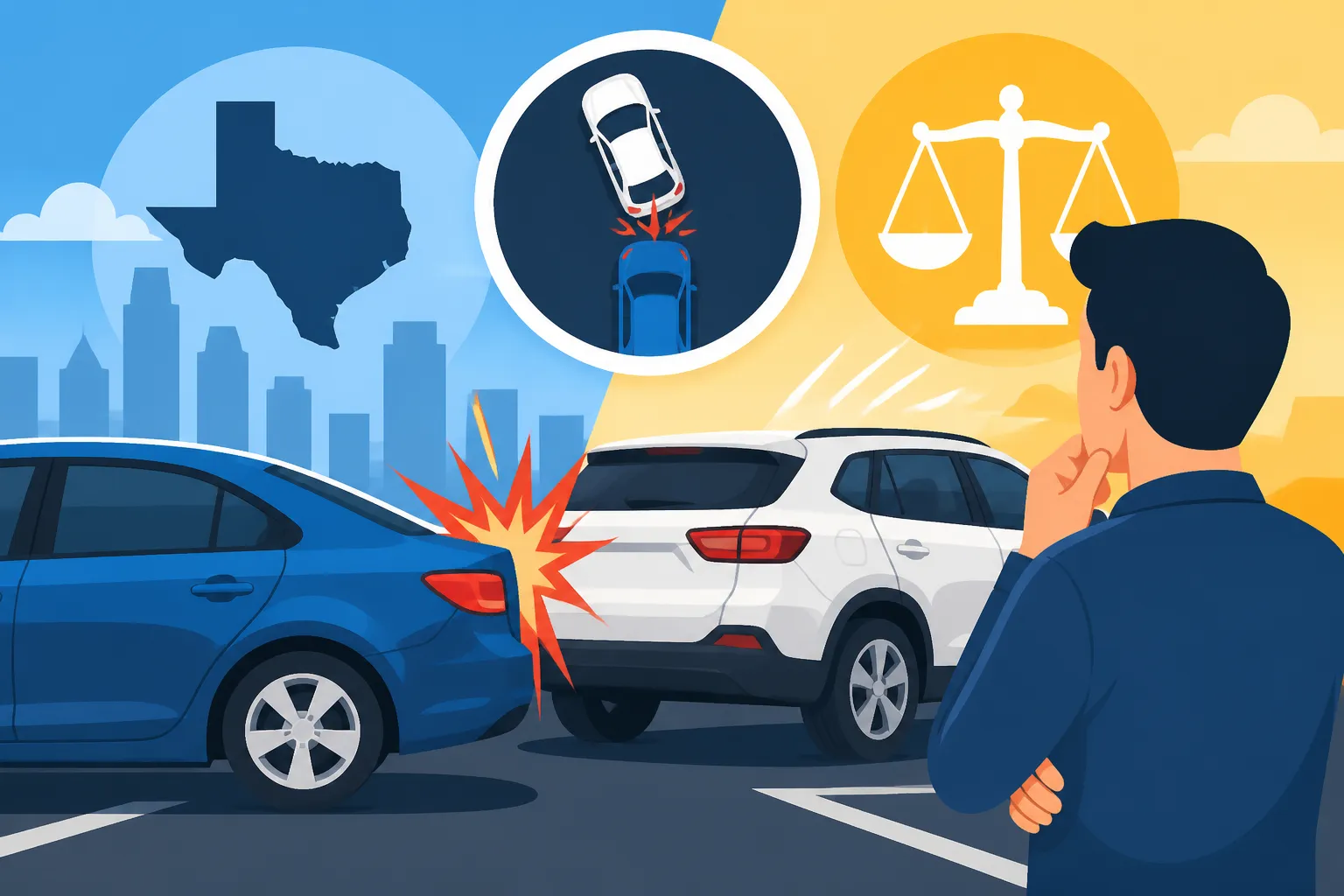
When it comes to backing-up accidents, the general rule of thumb, and indeed the legal presumption, is that the driver who is backing up is primarily at fault. Why? Because drivers have a legal duty to ensure their path is clear before moving their vehicle in reverse. This means actively checking mirrors, looking over their shoulder, and even using a backup camera or having someone guide them if necessary. Whether you're pulling out of a parking space at The Domain in Austin, reversing down a quiet residential street in Houston, or backing out of your own driveway, the onus is on you to do so safely.
This presumption means that if you back out of a parking space and hit a car driving down the aisle, or if you reverse into a pedestrian crossing behind you, the burden of proof will largely fall on you to show why you weren't entirely at fault. It's a tough spot to be in, and insurance adjusters are well aware of this legal standard.
Common Scenarios and Nuances
While the backing driver is often presumed at fault, specific circumstances can introduce nuances and even shift some of the blame. It's rarely black and white, and every detail matters.
Backing Out of a Parking Spot or Driveway into Moving Traffic
This is perhaps the most common backing-up scenario and usually the clearest in terms of fault. If you're backing out of a parking space or a driveway onto a street or into an active lane of traffic, you are almost always considered at fault if you collide with a vehicle that is already in motion in that lane. The moving traffic has the right-of-way. Drivers exiting a private drive or parking space have a duty to yield to all traffic on the roadway. This means waiting until the path is completely clear, even if it feels like forever. If you creep out slowly and still get hit, the insurance company will likely point to your failure to yield.
Two Cars Backing Into Each Other
Ah, the classic double-reverse scenario – two vehicles backing out of opposing parking spaces or driveways at the same time and hitting each other. This one can get complicated and often leads to a shared fault determination, perhaps even 50/50. However, it’s not always perfectly split. Factors like which driver initiated backing first, the speed of each vehicle, and whether one driver had a clearer line of sight than the other can influence the final fault percentage. For instance, if one car had already almost cleared their spot and was struck by a car just beginning to back up, the initial backing driver might bear less fault. This is a prime example of where What Does 50/50 Fault Mean for Your Claim? really comes into play.
Car Backing Up Hits a Stationary Object or Person
This scenario almost unequivocally places fault on the backing driver. Whether it's a parked car, a light pole, a shopping cart, or, tragically, a person, the driver operating the vehicle in reverse is expected to be aware of their surroundings. This is the very essence of the duty to ensure a clear path. Unless there's an extraordinary circumstance (e.g., a person intentionally ran behind a clearly reversing vehicle in a malicious act), the backing driver will bear full responsibility for the collision and any resulting damages or injuries.
Car Backing Up Hits a Car Illegally Parked or Stopped
This is a trickier one, and while the backing driver is still generally found at fault, the illegally parked or stopped vehicle might bear some comparative fault. For example, if you're backing out of a tight parallel parking spot in Dallas and you clip a car that is illegally double-parked, you're still primarily at fault because you were the one in motion. However, the insurance adjuster might argue that the double-parked car contributed to the accident by creating an unsafe condition, making it more difficult to see or maneuver. In such cases, the fault percentage for the backing driver might be slightly reduced, but they would still carry the majority of the blame. This is where How Comparative Fault Reduces Your Settlement becomes a critical consideration.
Role of Visibility and Blind Spots
It’s easy to say "I didn't see them!" when you're backing up, especially with today's larger vehicles and more obscured rear visibility. However, limited visibility, blind spots, or external factors like bad weather conditions (think Texas thunderstorms or the rare ice storm) do not typically excuse the backing driver from their duty of care. If your view is obstructed, you are expected to take extra precautions.
This might mean getting out of your vehicle to check, rolling down windows, or even asking a passenger to guide you. The advent of backup cameras and parking sensors has made backing up easier, but it has also arguably raised the expectation for drivers to use these tools responsibly. Relying solely on a backup camera, without also checking your mirrors and physically turning to look, can still lead to accidents where you're deemed at fault. The technology is an aid, not a complete replacement for driver vigilance.
Evidence Collection to Prove or Disprove Fault
In the aftermath of a backing-up accident, especially one in Texas, emotions can run high. But what you do (or don't do) immediately after the incident can significantly impact the fault determination and your insurance claim. Gathering the right evidence is absolutely crucial, whether you believe you're completely innocent or you know you made a mistake.
Immediate Steps at the Accident Scene
The moments right after a crash are chaotic, but it's vital to prioritize safety and documentation. First and foremost, check for injuries. Even if you feel fine, adrenaline can mask pain. If anyone is hurt, call 911 immediately. Move your vehicles to a safe location if possible, but only if doing so won't put anyone else in danger or destroy critical evidence.
Once safe, start documenting everything. This is where your smartphone becomes your best friend. Take clear, well-lit photos and videos from multiple angles. Get close-ups of the damage to both vehicles, wider shots showing their positions relative to each other and the surrounding environment (parking lines, street signs, driveways), and any skid marks or debris. Don't forget photos of the license plates and any visible injuries. Exchange information with the other driver: names, contact details, insurance information, and vehicle specifics. It's often recommended to contact the police, even for what seems like a minor incident. In Texas, law enforcement will often respond to accidents in private parking lots if there are injuries, significant property damage, or disputes over fault. A police report, even if it doesn't officially assign fault, can be invaluable for your insurance claim, providing an objective record of the scene and driver statements. Police Reports and Car Accident Fault explains this in more detail.
Key Evidence for Backing-Up Accidents
The more evidence you have, the stronger your position will be when dealing with insurance companies. For backing-up accidents, specific types of evidence are particularly powerful:
- Witness Statements: Did anyone see what happened? Other drivers, pedestrians, or even store employees might have witnessed the collision. Get their names and contact information. An independent third-party account can be incredibly persuasive.
- Surveillance Footage: This is gold for backing-up accidents. Many businesses, homes, and even municipal parking structures have security cameras. If your accident happened in a store parking lot in say, Plano, or near someone's Ring doorbell camera, politely ask if footage is available. Act quickly, as footage is often overwritten.
- Point of Impact: The location of the damage on both vehicles can tell a story. For instance, if your car has damage on the very rear bumper and the other car has damage on its front fender, it often supports the claim that you backed into them. However, if your car has side damage from the other vehicle, it might suggest the other driver was also backing up or moving at an angle.
- Police Reports: As mentioned, a formal police report can provide an objective account from law enforcement. While the officer might not declare official fault, their diagrams, observations, and recorded statements can be powerful evidence for insurance companies when they How Insurance Companies Determine Who Is at Fault.
- Dashcam Footage: This is becoming increasingly common and can be a definitive piece of evidence. If you or the other driver had a dashcam, the footage could instantly resolve any dispute about who backed into whom or how the accident occurred.
Collecting as much of this evidence as possible will greatly streamline your How to File a Car Accident Insurance Claim and provide a clear picture of what transpired.
What Happens After Fault is Determined?
Once the dust settles and the initial investigation concludes, the process shifts to dealing with insurance companies and potentially seeking compensation for your damages. This phase can be just as stressful as the accident itself, if not more so, especially when there are injuries involved.
Insurance Company Investigations
After you've reported the accident and submitted your evidence, the insurance companies get to work. Both your insurer and the other driver's insurer will likely launch their own investigations. They'll review the police report, examine the photos and videos you provided, and possibly even send an adjuster to inspect the damage to both vehicles. They might also want to take recorded statements from everyone involved. It’s important to be careful what you say during these statements, as an accidental admission of fault could severely jeopardize your claim. Understanding What Is an Admission of Fault (and How to Avoid It)? is crucial.
Their primary goal is to determine fault based on the available evidence and the laws of Texas. This is where all those details about parking lot maneuvers, duty to yield, and comparative negligence come into play. They'll be looking for any information that points to who was primarily responsible for the collision. Be prepared for this process to take some time; it's rarely an overnight decision.
Potential Impact on Your Claim and Insurance
The outcome of the fault determination has significant consequences for your financial recovery and your future insurance rates.
How Fault Affects Your Settlement Amount
If you are found to be 0% at fault, the other driver's insurance company should cover all your economic damages (medical bills, lost wages, vehicle repairs) and non-economic damages (pain and suffering). However, if you are found to be partially at fault, your settlement amount will be reduced by your percentage of fault, thanks to Texas's modified comparative negligence rule. Remember, if you're found to be 51% or more at fault, you generally won't be able to recover anything from the other driver. This is a primary reason why assessing How Much Is My Car Accident Settlement Worth? (2026) is so dependent on the fault determination.
Increases in Insurance Premiums
Regardless of fault, sometimes just filing a claim can cause your insurance rates to increase. However, if you are determined to be at fault for the backing-up accident, it is highly likely that your premiums will go up at your next renewal. Insurance companies view at-fault accidents as an indicator of higher risk, and they adjust rates accordingly. The specific increase will depend on your insurance provider, your driving history, the severity of the accident, and your policy details.
When to Consider Hiring a Lawyer
If fault is disputed, if you sustained significant injuries, or if the insurance company is offering you a lowball settlement, it's often a good idea to consult with a personal injury attorney. An experienced lawyer understands the nuances of Texas accident law and can help you gather evidence, negotiate with insurance adjusters, and ensure you receive fair compensation. They can challenge unfair fault determinations and advocate for your best interests. Many people wonder Do You Need a Lawyer for a Car Accident? (2027), and in complex backing-up scenarios or cases with substantial damages, the answer is often yes. Dealing With Insurance Adjusters After a Car Accident can be intimidating, and a lawyer can be a powerful ally.
Here's a quick overview of common backing-up scenarios and typical fault:
| Scenario | Typical Fault Assignment | Explanation |
|---|---|---|
| Backing out of spot/driveway into moving traffic | Backing Driver (100%) | Duty to yield to through traffic; often clear-cut fault. |
| Two cars backing into each other | Often 50/50, or shared | Both drivers had a duty to ensure clear path; exact split depends on specific circumstances. |
| Backing up hits stationary object/person | Backing Driver (100%) | Driver has full responsibility for being aware of surroundings. |
| Backing up hits illegally parked/stopped car | Backing Driver (majority) | Still at fault for being in motion, but illegally parked car might bear minor comparative fault for obstruction. |
| Backing up hits another car already backing | Shared, highly situational | Similar to two cars backing into each other, but emphasis on who initiated and visibility. |
Disclaimer
Please remember that this article provides general information and insights into car accident claims and fault determination in Texas backing-up accidents. It is not a substitute for professional legal advice. Every accident is unique, and the specifics of your situation can significantly impact the outcome. For personalized guidance regarding your car accident claim, it is always recommended to consult with a qualified attorney in your area.