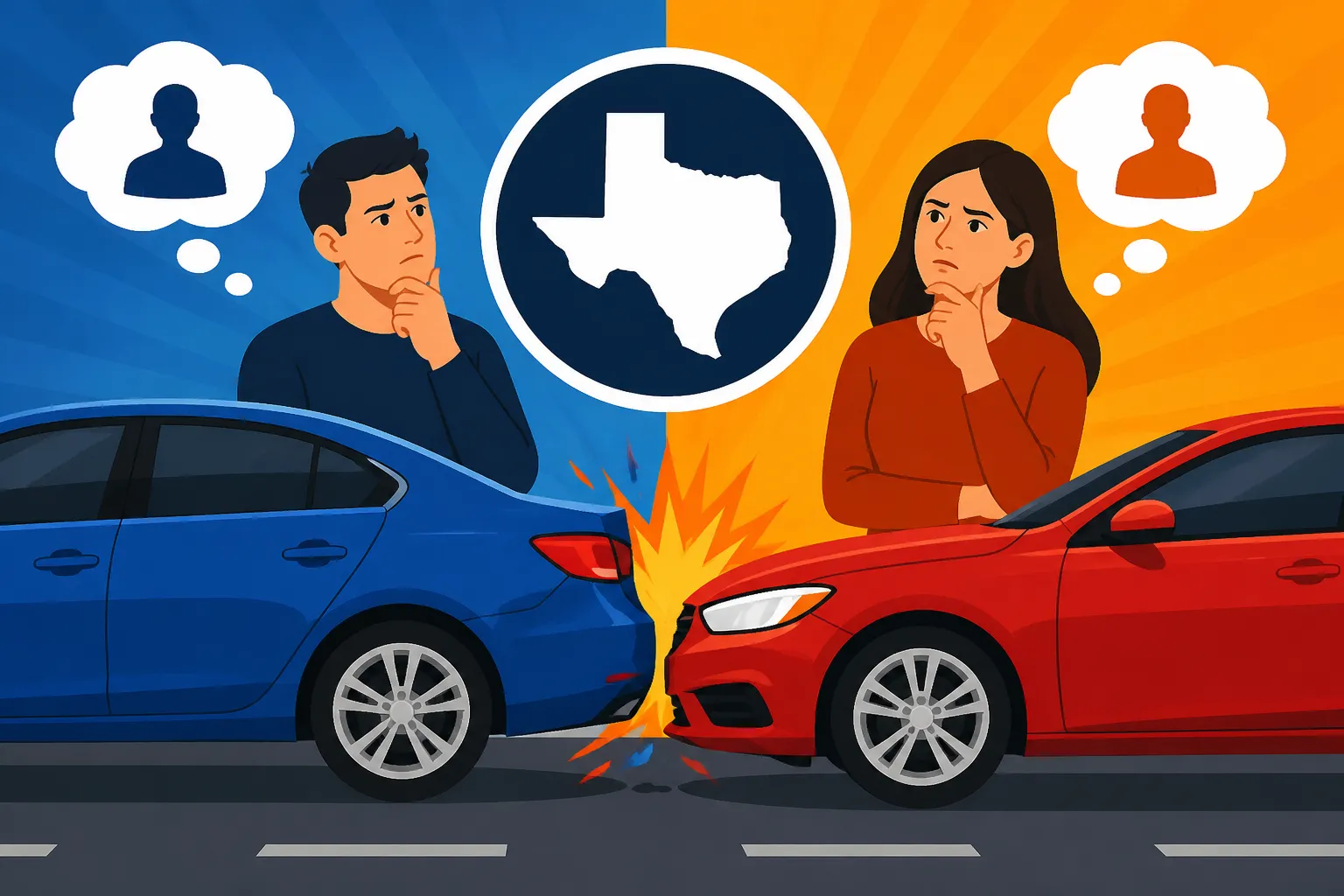
Who Is at Fault in a Rear-End Accident in Texas?
Getting into a car accident is always a jarring, stressful experience, and a rear-end collision can be particularly frustrating. Often, you might feel like the fault is obvious – the person behind you clearly hit you, right? But in Texas, like anywhere else, things aren't always so black and white, and figuring out exactly who is at fault in a rear-end accident in Texas involves understanding specific traffic laws and how evidence is weighed. This guide will walk you through the nuances of fault determination for rear-end crashes in the Lone Star State, helping you understand what to expect.
The Presumption of Fault in Texas Rear-End Accidents
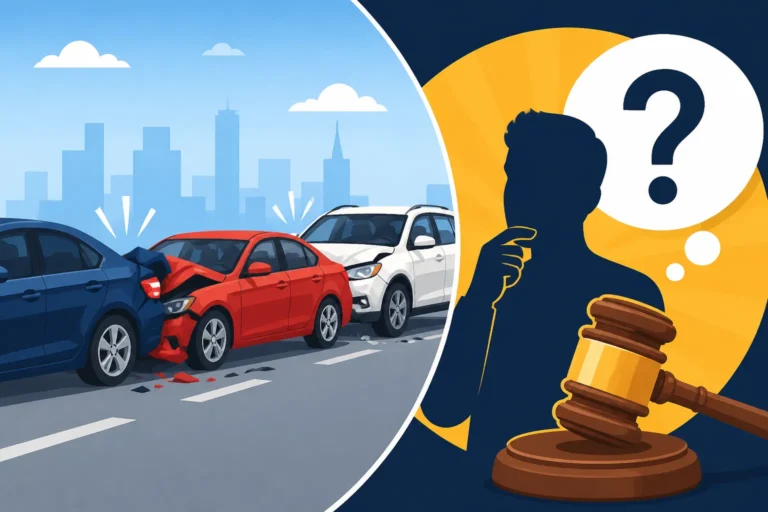
In the vast majority of rear-end collision cases in Texas, there's a strong presumption that the driver who rear-ended the vehicle in front of them is at fault. This isn't just a common understanding; it's rooted deeply in Texas traffic laws and the principles of safe driving. Drivers are expected to maintain a safe following distance and be aware of the traffic conditions ahead, allowing them ample time to react to any changes.
This presumption means that if you're the one who got hit from behind, the burden often falls on the rear driver to prove why they aren't entirely to blame. It's a fundamental aspect of driving that we should always be prepared for the car in front of us to stop, whether suddenly or gradually. This expectation aims to prevent the very type of chain reaction collisions that rear-end accidents represent.
The "Follow Too Closely" Rule
One of the primary reasons the rear driver is usually found at fault stems from the "follow too closely" rule. Texas Transportation Code § 545.062 specifically states that an operator shall, if following another vehicle, maintain a safe distance between the two vehicles so that the operator can safely stop without colliding with the preceding vehicle or veering into another vehicle, object, or person. This isn't just a suggestion; it's a legal requirement.
What "safe distance" means isn't always a hard-and-fast number, but it generally implies enough space to react to sudden braking or unexpected stops. Factors like speed, road conditions (rain, ice), visibility, and vehicle weight all play a role in determining what constitutes a safe following distance. If the rear driver failed to maintain this distance, they violated the law, and that violation is usually considered direct evidence of their negligence and fault.
Texas Traffic Laws and Rear-End Collisions
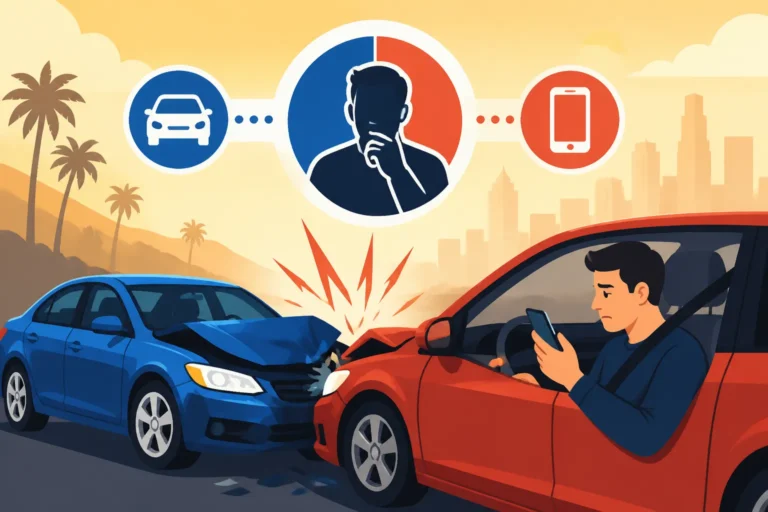
Beyond the "follow too closely" rule, other general traffic laws in Texas reinforce the rear driver's responsibility. These include obligations to drive at a safe speed, keep a proper lookout, and maintain control of your vehicle. When a driver rear-ends another, it often implies a failure in one or more of these areas. For example, if a driver was distracted by their phone or not paying attention to the road, they might not have reacted in time, even if they theoretically had enough following distance.
The police report will often include details about contributing factors, which can point to these violations. While a police officer's determination of fault isn't legally binding, it carries significant weight with insurance companies. Understanding Police Reports and Car Accident Fault is crucial here. They will look at statements from both drivers, witness accounts, and physical evidence at the scene like skid marks, point of impact, and vehicle damage to piece together the sequence of events and assign fault according to these established traffic principles.
When the Lead Driver Can Be at Fault in Texas
While the presumption weighs heavily against the rear driver, it's not an absolute rule. There are specific, though less common, situations where the lead driver (the one who was hit) might bear some, or even all, of the responsibility for a rear-end collision in Texas. These scenarios usually involve some form of negligence on the part of the lead driver that directly contributed to the crash.
It's a misconception to think that simply being rear-ended means you're automatically free from fault. Texas, like many states, operates under a modified comparative negligence system, meaning fault can be shared. If the lead driver's actions were unusual or unexpected and directly led to the collision, the fault determination can shift.
Unsafe Lane Changes or Sudden Stops Without Cause
One of the most common exceptions to the rear-driver-at-fault rule occurs when the lead driver makes an unsafe or sudden maneuver that the following driver could not reasonably anticipate or avoid, even with a safe following distance. For instance, if a driver abruptly swerves into your lane from another lane and then immediately slams on their brakes, causing you to hit them, their unsafe lane change could be considered a contributing factor to the accident.
Another example is a "brake check," where a driver intentionally and suddenly brakes hard with no legitimate traffic reason, simply to provoke the driver behind them. While proving intent can be challenging, if evidence (like dashcam footage or witness testimony) supports such an action, the lead driver could be found negligent. Similarly, if a driver stops suddenly in a high-speed zone for no discernible reason (e.g., stopping on a highway to look at something off-road), they could share fault. It's about whether the following driver had a reasonable chance to avoid the collision.
Malfunctioning Vehicle Lights or Signals
Imagine driving at night, and the car in front of you suddenly stops, but their brake lights aren't working. In such a scenario, the lead driver's malfunctioning equipment could contribute significantly to the accident. Texas law requires vehicles to have operational brake lights, turn signals, and other safety equipment. If a lead driver's brake lights are out, and this directly prevents the following driver from realizing the vehicle is decelerating, it can shift some degree of fault.
It's not an automatic pass for the rear driver, as they still have a responsibility to maintain a safe distance and be aware of their surroundings. However, the lack of crucial warning signals from the lead vehicle introduces an element of unforeseen danger. In these cases, evidence of the non-functioning lights, perhaps through police investigation or post-accident vehicle inspection, becomes vital in arguing shared fault. This demonstrates the importance of vehicle maintenance in preventing accidents and assigning liability.
Driving Under the Influence or Distracted Driving by the Lead Driver
While less common, there are scenarios where the lead driver's impairment or distraction can contribute to a rear-end accident. For example, if the lead driver is intoxicated or severely distracted and their erratic driving or sudden, inexplicable braking directly causes the rear driver to collide with them, this behavior could be considered a factor in assigning fault.
Consider a situation where a lead driver is weaving excessively or making sudden, unpredictable stops due to being under the influence or texting heavily. If a following driver, despite maintaining a safe distance, is unable to react to these highly irregular movements, some fault could potentially be attributed to the lead driver's dangerous conduct. Such situations are complex and often require thorough investigation and possibly legal intervention to accurately determine the proportion of fault. The principle remains: all drivers have a duty to operate their vehicles safely and responsibly.
How Fault is Determined in Texas
Determining fault in a car accident, especially a rear-end collision in Texas, isn't always straightforward. It involves a meticulous process of gathering and evaluating evidence to piece together the events leading up to the crash. This process is crucial because the percentage of fault assigned to each driver directly impacts their ability to recover damages under Texas's modified comparative negligence laws.
It's not just about one person pointing fingers; it's about objective evidence, witness accounts, and the application of traffic laws. Understanding How Fault Is Determined in a Car Accident is fundamental to protecting your claim and ensuring a fair outcome.
Gathering Evidence at the Scene
The moments immediately following an accident are critical for collecting evidence that can later prove invaluable in determining fault. If you're involved in a rear-end collision in Texas, and it's safe to do so, document everything you can. Take photographs and videos of the scene, including damage to both vehicles, the positions of the cars, skid marks, road conditions, traffic signals, and any relevant signage. These visual records provide an unbiased account of what happened.
Don't forget to get contact information from any witnesses who saw the accident unfold. Their testimony can corroborate your version of events or contradict the other driver's. If the police respond, make sure they create a report. While not always legally conclusive, a police report will contain important details, observations, and potentially an initial assessment of fault that insurance companies and courts often consider. Remember, it's essential to collect as much objective information as possible before the scene is cleared.
The Role of Texas Insurance Companies
Once an accident claim is filed, insurance companies step in to investigate and determine fault. This is where the initial evidence you gathered becomes incredibly important. Each company will assign an adjuster who reviews all available information, including police reports, driver statements, witness statements, photographs, and vehicle damage assessments. They are looking for evidence to support or refute negligence on the part of their policyholder and the other driver. For a deeper dive into this process, read about How Insurance Companies Determine Who Is at Fault.
Insurance adjusters will apply Texas traffic laws to the facts of the case. They'll consider factors like whether a safe following distance was maintained, if an unsafe lane change occurred, or if any vehicle equipment was malfunctioning. They might even use accident reconstruction experts for complex cases. It’s important to remember that insurance companies operate with their own interests in mind, which is why having thorough documentation and being careful with your statements is paramount.
Understanding Modified Comparative Negligence in Texas
Texas operates under a "modified comparative negligence" rule, specifically the 51% bar rule. This means that you can still recover damages even if you are partially at fault for an accident, as long as your fault is determined to be 50% or less. If you are found to be 51% or more at fault, you cannot recover any damages from the other driver.
Let's say you were rear-ended, but the insurance company determines you were 20% at fault because your brake lights were slightly dim. If your total damages were $10,000, you would only be able to recover $8,000 (your $10,000 minus 20% for your own fault). This system highlights why establishing fault percentages is so crucial in Texas. It's not an all-or-nothing situation, but rather a calculation that directly impacts your potential settlement. Understanding What Happens If You're Partially at Fault? and Modified Comparative Negligence 50% vs 51% Bar can help you navigate these complex situations.
Here’s a simplified breakdown of how fault percentages might influence a claim in Texas:
| Driver A's Fault Percentage | Driver B's Fault Percentage | Driver A's Recovery (from B's Damages) | Driver B's Recovery (from A's Damages) | Example Scenario |
|---|---|---|---|---|
| 0% | 100% | Full | None | Rear driver (B) indisputably following too closely. |
| 25% | 75% | 75% | None | Driver A made a slightly sudden stop, but B was still too close. |
| 50% | 50% | 50% | None | Driver A made a sudden, unexpected lane change, and Driver B was slightly distracted. |
| 51% | 49% | None | 49% | Driver A brake-checked Driver B, causing the collision, though Driver B could have reacted marginally better. |
| 100% | 0% | None | Full | Driver A intentionally backed into Driver B, who was legally stopped. |
Note: "Full" recovery means the full amount of damages minus their own fault percentage, if any. "None" means no recovery due to exceeding the 50% fault threshold.
What to Do After a Rear-End Accident in Texas
The aftermath of any car accident can be chaotic and confusing, and a rear-end collision is no different. Knowing the right steps to take immediately after the crash and in the days that follow can significantly impact your safety, your health, and the strength of your car accident claim in Texas. Proactive measures can prevent further injury and ensure you collect the necessary information.
It's common to feel overwhelmed, but having a clear plan can help. Remember, your priority is always safety and well-being, followed by protecting your legal rights. For a comprehensive guide on the immediate aftermath, check out What to Do After a Car Accident: Step-by-Step (2027).
Immediate Steps for Your Safety and Claim
First and foremost, assess yourself and any passengers for injuries. Even if you feel fine, some injuries like whiplash or a concussion might have delayed symptoms. If anyone is injured or the vehicles are severely damaged, call 911 immediately. Move your vehicle to a safe location if possible, out of the flow of traffic, to prevent further accidents. If your car is inoperable, turn on your hazard lights.
Once safety is secured, begin documenting the scene. Take as many photos and videos as possible from different angles, showing vehicle damage, road conditions, skid marks, traffic signs, and the overall environment. Exchange information with the other driver: name, contact information, insurance details, driver's license number, and vehicle make/model/license plate. Do not admit fault or get into arguments about who is to blame. Focus on factual information gathering. If there are witnesses, get their contact details too.
Reporting the Accident and Seeking Medical Attention
Even for seemingly minor rear-end fender benders, it's wise to report the accident to the police, especially if there's any injury, significant property damage, or dispute over fault. A police report creates an official record of the incident and can provide an impartial account of the scene. You'll also need to notify your insurance company as soon as reasonably possible, even if you believe the other driver is entirely at fault. Your policy likely requires timely reporting.
Crucially, seek medical attention immediately, even if you don't feel pain right away. Many common car accident injuries, like whiplash or certain back injuries, can have a delayed onset of symptoms. A medical professional can diagnose injuries and create an official record of your condition, which is vital for your claim. Delaying medical care can make it harder to prove that your injuries were directly caused by the accident, weakening your case. Read more about Why You Should See a Doctor After a Car Accident to understand its importance.
Communicating with Insurance and Legal Counsel
After a rear-end accident in Texas, both your insurance company and the other driver's insurer will likely contact you. Be cautious in your communications. While you should cooperate with your own insurer, be very careful what you say to the other driver's adjuster. Avoid giving recorded statements without consulting with an attorney, and never speculate about the cause of the accident or the extent of your injuries. Stick to the facts you gathered at the scene. For guidance on interacting with adjusters, see Dealing With Insurance Adjusters After a Car Accident.
If you've suffered injuries or there's a dispute over fault, it's highly advisable to consult with a car accident lawyer. An attorney experienced in Texas car accident claims can help you understand your rights, navigate the complexities of fault determination and the insurance claims process, and ensure you receive fair compensation. They can deal with the insurance companies on your behalf, allowing you to focus on your recovery. Deciding whether you need professional legal help is a big step, and learning whether you need a lawyer for a car accident can provide valuable insight.
Disclaimer
Please remember that this article provides general information and insights into Texas car accident claims and fault determination. It is not intended as legal advice. Every accident is unique, and the specifics of your situation can significantly impact the outcome of your claim. For personalized advice regarding your car accident, it is always recommended to consult with a qualified attorney in Texas.