Who Is at Fault in a Multi-Car Accident in Texas?
Getting involved in a multi-car accident in Texas is an incredibly stressful and confusing experience. Suddenly, you're not just dealing with one other driver, but potentially many, each with their own story and their own insurance company trying to point fingers. It's a chaotic situation that leaves most people wondering, "Who is actually to blame here, and what does it mean for my claim?" This guide is designed to demystify fault determination in multi-car pileups in Texas, helping you understand the complex legal landscape and how to navigate it.
Understanding Multi-Car Accidents in Texas
Multi-car accidents, often called pileups, are arguably the most complicated type of collision to untangle. Unlike a simple fender-bender between two vehicles, these incidents involve a cascade of events, making it challenging to pinpoint exactly who caused what and when. Texas, being an "at-fault" state, adds another layer of complexity to the mix, as every driver's contribution to the crash must be carefully assessed.
What Makes Multi-Car Accidents So Complicated?
Imagine a sudden slowdown on I-35 near Dallas, or a slick spot on I-45 approaching Houston, leading to a chain reaction. One car hits another, which then pushes into a third, and so on. In these scenarios, the initial impact might be clear, but the subsequent impacts can be a blur. Drivers might react by swerving, braking hard, or even accelerating, all contributing to the larger incident.
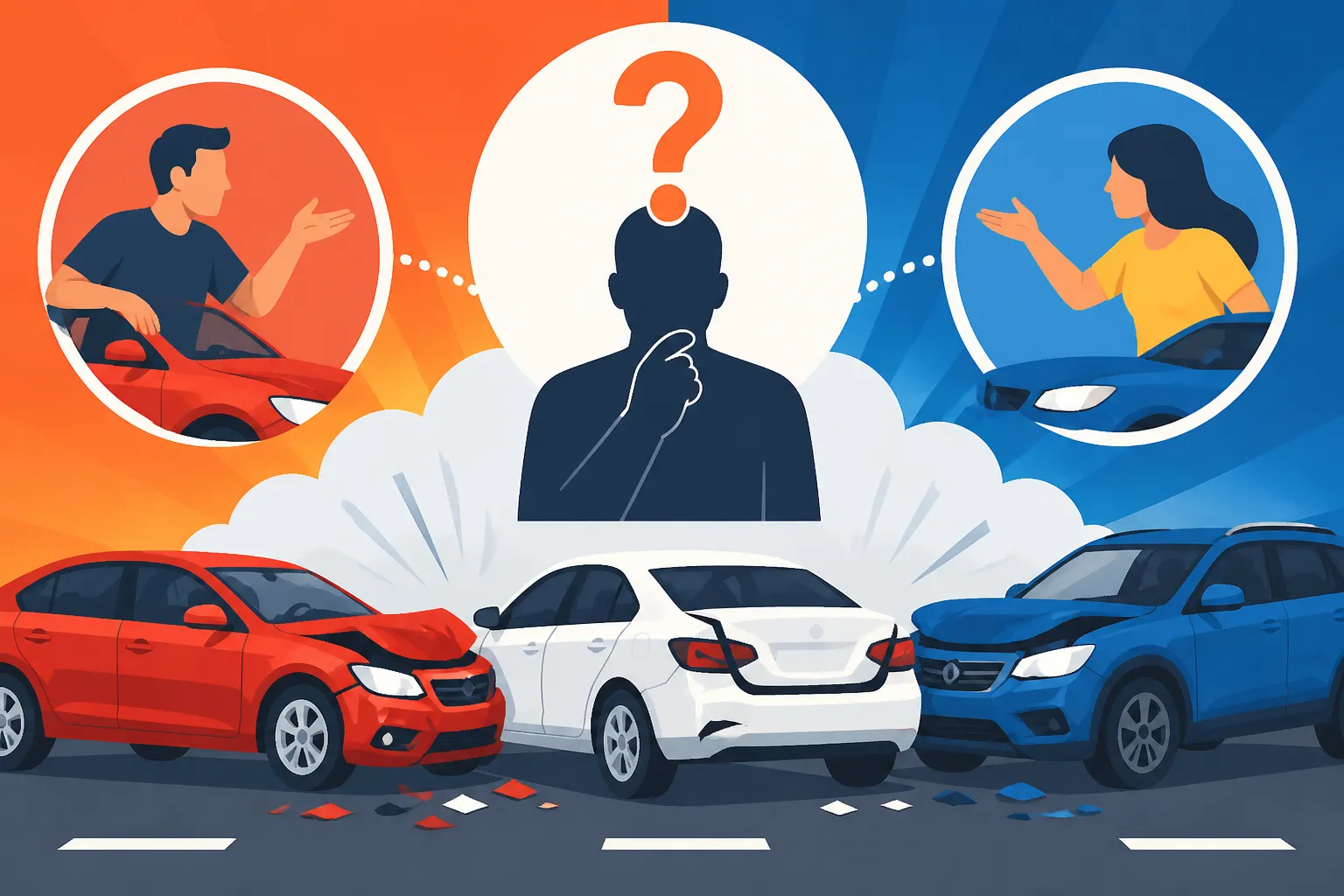
The difficulty lies in the sheer number of variables: multiple drivers, multiple vehicles, differing speeds, various points of impact, and often, conflicting accounts of what happened. You might have one driver claiming they were rear-ended, which propelled them into the car in front, while the driver behind them insists that car stopped too suddenly. Witnesses might only see parts of the event, and even the police can struggle to piece together the full narrative. This makes the question of who is at fault in a car accident incredibly nuanced, especially in a multi-car scenario.
The Role of Texas as an At-Fault State
Texas operates under an "at-fault" or "tort" insurance system. What this means for you is that the driver (or drivers) who caused the accident is financially responsible for the damages and injuries of the other parties involved. This is a crucial distinction, especially when you consider how multi-car accidents are handled in other parts of the country. For example, some states operate under what's called a no-fault system, where each driver's insurance typically covers their own medical expenses, regardless of who caused the crash. However, in Texas, establishing fault is paramount because it directly dictates whose insurance company will pay for what.
In a multi-car accident in Texas, instead of just identifying a single at-fault driver, investigators and insurance adjusters often have to determine the percentage of fault for each driver involved. This percentage can then significantly impact how much compensation you can recover. It’s not just about proving someone else was at fault; it’s about proving how much they were at fault relative to everyone else, including yourself.
How Fault Is Determined in a Multi-Car Accident in Texas
Determining fault in a multi-car accident in Texas is a meticulous process that involves gathering as much evidence as possible and then applying the state's specific legal framework. It's not a quick decision, and it often requires detailed investigation to ensure a fair outcome for everyone involved.
Gathering Evidence at the Scene
The moments immediately following a multi-car crash are often chaotic and overwhelming. However, this is also a critical time for collecting evidence that will be vital in determining fault. Your ability to calmly gather information, even amidst the stress, can make a huge difference.
- Police Reports: The very first step, if possible, is to call the police. A police report and car accident fault are closely linked in Texas. The responding officers will investigate the scene, interview drivers and witnesses, and document their findings in an official report. While not always the final word on fault for insurance purposes, this report carries significant weight and often provides an initial assessment of the crash. Officers will note factors like citations issued, road conditions, and any observed violations, all of which contribute to understanding the dynamics of the accident.
- Witness Statements: In a multi-car pileup, eyewitnesses can be invaluable. Drivers are often too shaken or focused on their immediate situation to see the whole picture. Independent witnesses who saw the entire sequence of events unfold can offer crucial, unbiased perspectives. Make sure to get contact information for any witnesses present.
- Photographs and Videos: If you are physically able and it is safe to do so, document the scene extensively. Take photos and videos from multiple angles, capturing all vehicles involved, their positions, damage, road conditions, traffic signs, skid marks, and any debris. Modern smartphones make this easier than ever, and these visual records can provide irrefutable evidence.
- Driver Information: Despite the confusion, exchange insurance and contact information with all other drivers involved. This includes names, phone numbers, insurance company names, and policy numbers. This information is critical for initiating the claims process.
Applying Texas's Modified Comparative Negligence Rule
Once the evidence is gathered, the tricky part begins: assigning percentages of fault. Texas follows a "modified comparative negligence" rule, specifically the "51% Bar Rule." This rule is incredibly important for anyone involved in a car accident claim in Texas, especially a complex multi-car one.
Here’s how it works: you can still recover damages even if you were partially at fault for the accident, but only if your percentage of fault is 50% or less. If a jury or insurance adjuster determines you were 51% or more responsible for the crash, you cannot recover any compensation from the other drivers. If your fault is 50% or less, your recoverable damages will be reduced by your percentage of fault. For example, if your total damages are $10,000 and you are found 20% at fault, you can only recover $8,000 (100% – 20% = 80%; 80% of $10,000 = $8,000). This system directly answers the question of what happens if you're partially at fault, and it can significantly impact your final settlement.
In a multi-car accident, this rule can become even more intricate. Imagine a four-car pileup. Driver A brakes suddenly for no reason. Driver B, following too closely, rear-ends Driver A. Driver C, texting and not paying attention, rear-ends Driver B, pushing B into A again. Driver D, driving too fast, then rear-ends Driver C. In this scenario, fault might be distributed as follows:
- Driver A: 10% (for sudden, unjustified braking)
- Driver B: 20% (for following too closely)
- Driver C: 50% (for distracted driving and following too closely)
- Driver D: 20% (for speeding)
Each driver's ability to recover depends on their assigned percentage. Driver C, with 50% fault, might still recover 50% of their damages from the others, but if their fault was deemed 51%, they would get nothing. This is precisely how the modified comparative negligence (50% vs 51% bar) rule plays out in real-world scenarios.
Common Scenarios and Fault Assignments
Multi-car accidents often stem from common scenarios, but the fault isn't always as straightforward as it seems.
- Chain-Reaction Rear-End Crashes: This is perhaps the most common multi-car accident. Often, the driver who initiated the chain reaction by rear-ending the vehicle in front of them is assigned a significant portion of fault. However, drivers further down the chain who also rear-ended vehicles might share some blame if they were following too closely or driving too fast for conditions. For instance, if you were rear-ended while stopped, the driver behind you is almost always at fault. But in a multi-car scenario, if you then hit the car in front of you, the initial impact might be the primary cause, but your distance from the vehicle ahead could also be scrutinized. This is a prime example of why fault in a chain-reaction rear-end crash can be incredibly complex.
- Sudden Lane Changes or Swerving: A driver suddenly swerving into another lane without signaling or checking their blind spots can trigger a multi-car accident as other drivers react to avoid a collision. The swerving driver would likely bear a substantial portion of the fault.
- Driving Too Fast for Conditions: Especially in bad weather, driving faster than conditions allow can lead to a loss of control, causing a ripple effect throughout traffic. If slick roads contributed to the pileup, the question of who is at fault in bad weather (rain, snow, ice) will often fall on those drivers who failed to adjust their speed accordingly.
- Distracted Driving: Texting, eating, or being otherwise inattentive behind the wheel is a major cause of accidents. If a driver’s distraction leads them to miss a sudden stop or a change in traffic, causing them to crash into another vehicle and initiate a pileup, they would be heavily at fault. This highlights the dangers and fault implications of distracted driving (texting) accidents.
Here’s a simplified table illustrating potential fault distributions in common multi-car scenarios in Texas:
| Scenario | Primary Driver Action(s) Contributing to Fault | Secondary Driver Action(s) Contributing to Fault | Typical Fault Distribution (Example) |
|---|---|---|---|
| Chain-Reaction Rear-End | Initial rear-ender (following too closely) | Subsequent rear-enders (following too closely) | Driver 1: 70%, Driver 2: 20%, Driver 3: 10% |
| Sudden Lane Change Pileup | Driver swerving without caution | Other drivers (speeding, distracted) | Swerving Driver: 80%, Other Driver: 20% |
| Bad Weather Pileup | Driver exceeding safe speed for conditions | Other drivers (same issue, or distracted) | Driver 1 (fastest): 60%, Driver 2: 40% |
| Interstate Lane Closure Accident | Driver failing to merge properly/safely | Drivers in merging lane (speed, inattention) | Merging Driver: 65%, Other Driver: 35% |
This table provides a general idea, but every accident is unique, and fault determination will always depend on the specific facts and evidence gathered.
Key Factors Influencing Fault Decisions in Multi-Car Crashes
When you're caught in a multi-car accident, the stakes are high. Getting fault wrong can mean the difference between recovering compensation for your injuries and property damage, or being left with significant bills. Therefore, understanding the primary factors that influence fault decisions is critical.
The Police Report and Official Investigations
The police report is often the bedrock of any car accident investigation. When officers arrive at a multi-car accident scene, their primary goal is to ensure safety, assess injuries, and then begin to reconstruct what happened. They'll look at:
- Point of Impact: Where did the vehicles hit each other? This can indicate speed, direction, and whether a driver failed to stop or yield.
- Vehicle Positions: The final resting places of the vehicles can tell a story about the forces involved and the sequence of events.
- Skid Marks and Debris: These physical clues on the road surface provide insights into braking, swerving, and the severity of impacts.
- Witness Accounts: As mentioned before, officers will interview anyone who saw the crash.
- Citations Issued: If an officer issues a traffic ticket for speeding, reckless driving, or failure to maintain a safe distance, this strongly suggests a violation contributed to the crash and places fault on that driver.
While the police report isn't a definitive legal ruling on fault, insurance companies and courts give it significant weight. It helps establish a preliminary understanding of the accident dynamics. However, sometimes these reports can be incomplete or miss crucial details, especially in a complex multi-car incident. That's why it's important to know that a police report doesn't always determine who pays, and further investigation might be needed.
Witness Statements and Dashcam Footage
In a multi-car accident, where multiple drivers have conflicting accounts, objective evidence becomes golden.
- Eyewitnesses: People who were not involved in the crash but observed it from a safe distance can offer impartial details. They might have seen who initiated the first impact, which car swerved, or if a driver was visibly distracted. The credibility of a witness is often scrutinized, but multiple consistent accounts can solidify a picture of fault.
- Dashcam Footage: With the rise of dashcams, more drivers are capturing real-time video of their journeys. If any vehicle involved (or even a passing vehicle) has dashcam footage of the multi-car accident, this can be incredibly powerful. It offers an undeniable, objective record of what transpired, eliminating guesswork and conflicting statements. This kind of evidence can be a game-changer in proving how fault is determined in a car accident. If you have a dashcam, make sure the footage is preserved immediately after the incident.
Driver Actions and Violations
Ultimately, fault often boils down to specific actions (or inactions) of the drivers involved. Texas law requires drivers to operate their vehicles safely and responsibly. When a driver deviates from these duties, they can be found at fault.
- Following Too Closely: This is a huge factor in chain-reaction rear-end crashes. Drivers are expected to maintain a safe distance from the vehicle in front of them, allowing enough time to react and stop. Failure to do so is a common cause of multi-car pileups.
- Speeding: Exceeding the speed limit or driving too fast for road conditions (rain, fog, construction) reduces reaction time and increases stopping distance, making a multi-car accident more likely and more severe.
- Distracted Driving: We all know how tempting it is to glance at a phone or fiddle with the radio, but even a few seconds of inattention can lead to disaster. If a driver was texting, talking on the phone, or otherwise distracted, especially in heavy traffic, they would likely be found at fault for their role in the collision. A distracted driving (texting) accident can trigger a large multi-car pileup, with severe consequences for the at-fault driver.
- Failure to Yield: This could involve failing to yield at an intersection, when merging, or when changing lanes. If a driver attempts to merge into traffic on a busy highway without properly checking mirrors or signaling, causing others to brake or swerve, they would be heavily responsible.
- Reckless Driving: Exhibiting aggressive behaviors like weaving through traffic, road rage, or deliberately endangering other drivers will almost certainly lead to a finding of high fault if those actions contribute to a multi-car crash.
Each of these actions can contribute to how fault is determined, and in a multi-car accident, several drivers might be found to have engaged in one or more of these negligent behaviors, leading to a complex distribution of blame.
Navigating the Claims Process After a Texas Multi-Car Accident
So, you've been involved in a multi-car accident in Texas, and you have some idea of how fault might be distributed. Now comes the often frustrating and confusing part: dealing with the aftermath and trying to get your life back on track. The claims process after a multi-car incident is rarely straightforward.
Dealing with Multiple Insurance Companies
One of the biggest headaches in a multi-car accident is the sheer number of insurance companies involved. Each driver likely has their own insurer, and each insurer's primary goal is to protect their client (and their bottom line). This means you might be contacted by several different insurance adjusters, all asking for your statement, often trying to find ways to reduce their client's liability or even shift blame onto you.
- Conflicting Interests: You could find yourself in a situation where one insurance company blames their driver for the initial impact, but another company argues that a different driver’s subsequent actions worsened the outcome. This can lead to a lot of back-and-forth, sometimes feeling like a game of "hot potato" with responsibility.
- Providing Statements: Be very cautious about what you say to other drivers' insurance adjusters. While you are generally obligated to cooperate with your own insurance company, you are not required to give a recorded statement to other insurers. Anything you say can potentially be used against you to minimize your claim or assign you a higher percentage of fault. It's best to be brief and stick to the facts without speculating or admitting fault. Learning how to deal with insurance adjusters after a car accident is crucial, especially when multiple companies are involved.
- Your Own Insurer: Even if you believe another driver is 100% at fault, it's usually a good idea to notify your own insurance company. They can help guide you through the process and will often initiate a claim on your behalf against the at-fault parties. They also have a vested interest in helping you recover, especially if you carry uninsured/underinsured motorist coverage or collision coverage that might kick in if the other parties' limits aren't sufficient or if fault is disputed for an extended period.
Understanding Your Potential Settlement
Once fault is established (or at least mostly agreed upon by the various parties), the focus shifts to compensation. In Texas, your settlement amount will be directly impacted by the modified comparative negligence rule. This means that if you are found to be 20% at fault, your total damages will be reduced by 20%. This is how comparative fault reduces your settlement.
Your settlement for a car accident claim typically includes several categories of damages:
- Economic Damages (Special Damages): These are quantifiable losses, meaning they have a specific dollar amount attached to them.
- Medical Expenses: This covers everything from emergency room visits and ambulance rides to physical therapy, prescription medications, and future medical care related to your injuries. You can claim both past and future medical expenses.
- Lost Wages: If your injuries prevented you from working, you can claim the income you lost. This includes salary, commissions, bonuses, and even lost vacation time if you had to use it for recovery.
- Property Damage: This covers the cost of repairing or replacing your vehicle, as well as any damaged personal property inside your car.
- Other Out-of-Pocket Expenses: This could include rental car fees, transportation to medical appointments, or even household services you had to pay for because you were unable to perform them yourself.
- Non-Economic Damages (General Damages): These are more subjective and harder to quantify, representing the intangible losses you suffered.
- Pain and Suffering: This compensates you for the physical pain, discomfort, and emotional distress caused by your injuries.
- Mental Anguish: This covers psychological impacts like anxiety, fear, depression, or PTSD resulting from the accident.
- Loss of Enjoyment of Life: If your injuries prevent you from engaging in hobbies, activities, or aspects of daily life you once enjoyed, you can claim damages for this loss.
Understanding the difference between economic vs non-economic damages explained fully helps you appreciate the full scope of what you can claim. In a multi-car accident, these damages can accumulate quickly, and accurately calculating them, especially when multiple parties contribute to your injuries, is complex.
When to Seek Legal Counsel
Given the intricate nature of fault determination, the multiple parties involved, and the complexities of dealing with several insurance companies and Texas's comparative negligence laws, hiring a personal injury attorney after a multi-car accident is almost always a good idea.
- Expert Navigation of Fault: A lawyer specializing in car accidents understands exactly how fault is determined in a car accident in Texas. They can conduct their own independent investigation, gather crucial evidence (like accident reconstruction reports or expert witness testimony), and build a strong case to prove the other drivers' liability and minimize your own. They are adept at navigating the modified comparative negligence rules and arguing for the lowest possible percentage of fault for you.
- Dealing with Insurers: Your attorney will handle all communication with the various insurance companies, protecting you from common tactics used to undermine your claim. They know what information to share, what to hold back, and how to negotiate effectively to get you a fair settlement. This is especially vital when dealing with insurance adjusters after a car accident, who might try to confuse or pressure you.
- Maximizing Your Settlement: Lawyers are experienced in accurately calculating the full extent of your damages, including future medical costs and pain and suffering, which can be difficult for an individual to quantify. They will fight to ensure you receive maximum compensation for all your losses. Many people wonder, "Do you need a lawyer for a car accident?", and in complex multi-car crashes, the answer is almost always yes. Their expertise can significantly impact how comparative fault reduces your settlement and ensure you get what you deserve.
Disclaimer
Please remember, this guide provides general information about fault determination in multi-car accidents in Texas and should not be considered legal advice. Every accident is unique, and the specific facts and circumstances of your case will dictate the outcome. For personalized advice regarding your situation, it is always recommended to consult with a qualified personal injury attorney in Texas.