Average Settlement for a Backing-Up Accident
Getting into a car accident is always a jarring experience, but a backing-up accident can feel particularly frustrating. Often, these incidents happen in seemingly low-speed situations like parking lots or driveways, yet they can still lead to unexpected vehicle damage, whiplash, or other injuries, leaving you wondering who's truly at fault and how much compensation you can expect. This guide will meticulously break down the typical settlement amounts for backing-up accidents, explain the factors that influence these figures, and help you understand the claims process.
Understanding Backing-Up Accidents and Fault
Backing up often feels like a simple maneuver, something we do daily without a second thought. However, the limited visibility and tight spaces involved make it a common source of fender benders and, unfortunately, more serious collisions. When a backing-up accident happens, one of the first questions on everyone's mind is, "Whose fault was it?" The answer isn't always as straightforward as it seems, and it significantly impacts any potential settlement.
Common Scenarios for Backing-Up Accidents
Backing-up accidents manifest in various ways, each with its own nuances in determining fault. Think about these common scenarios, which most of us have either experienced or witnessed:
- Parking Lot Collisions: This is perhaps the most frequent type. Imagine you're backing out of a parking space, slowly, carefully, and suddenly, boom! Another car backing out of an adjacent space, or even driving down the lane, collides with you. Or perhaps you back out and hit a parked car. These chaotic environments, especially during busy shopping hours at places like a Westfield mall or a bustling Kroger parking lot, are hotbeds for such incidents. The limited space, distraction from other drivers, and unexpected pedestrian movements all contribute to the risk.
- Driveway Disasters: We've all done it: backing out of our own driveway, maybe a bit too quickly, only to clip a passing car on the street or even a mailbox. The challenge here is often reduced visibility due to fences, bushes, or parked cars on the street. Sometimes, a child's toy left in the driveway, or even a pet, can cause a driver to swerve unexpectedly while backing up, leading to a collision.
- Rear-End Collisions While Backing Up: This less common but equally frustrating scenario occurs when a vehicle backs up into another car that is stopped or moving behind it, perhaps in a traffic jam where someone mistakenly shifts into reverse, or a delivery truck backing up to a loading dock. It's a clear cut case when a car backs into another that is stationary, but if both vehicles were in motion, even if one was backing, the fault determination can become a bit murkier.
These scenarios highlight that even minor backing maneuvers carry risks, and understanding the context is crucial for establishing fault.
How Fault Is Typically Determined
Establishing who is at fault in a car accident is paramount, especially in backing-up scenarios. Generally, the driver who is backing up is often, but not always, found to be primarily at fault. This is because drivers are expected to ensure the path is clear before and during their reverse maneuver. They have a duty of care to yield to traffic that is already in motion or stationary.
However, it's not a black-and-white rule. Factors like where the impact occurred on both vehicles, witness statements, and traffic laws all play a significant role. For instance, if you're backing out slowly and another driver speeds through a parking aisle or backs out recklessly into your path, fault might be shared or even shift to the other driver. In such cases, things like broken tail lights or dents on a specific side of your vehicle can be critical evidence. Insurance adjusters will meticulously examine all available information. To get a deeper understanding of this process, you might find our guide on How Fault Is Determined in a Car Accident very helpful.
The Role of Evidence in Proving Fault
In any car accident claim, and especially with backing-up incidents where perspectives can differ wildly, solid evidence is your best friend. Without it, you're often left with a "he-said, she-said" situation, which insurance companies absolutely love to use to their advantage. Here’s what makes a difference:
- Police Reports: Even for seemingly minor backing-up accidents, especially if there's any injury or significant damage, calling the police is a good idea. A police officer can objectively document the scene, interview drivers and witnesses, and potentially issue citations, all of which lend significant weight to your claim. While a police report doesn't definitively determine who pays, it heavily influences the insurance company's decision.
- Photos and Videos: In today's world, almost everyone has a smartphone. After an accident, if you're able and it's safe, take copious photos and videos. Document the position of the vehicles, damage to both cars, skid marks, road conditions, traffic signs, and any surrounding elements that might have obstructed views (like bushes or pillars). A quick video walk-around can capture the entire scene.
- Witness Statements: An independent witness can be incredibly valuable. If anyone saw the accident, get their contact information. Their unbiased account can be the deciding factor when conflicting stories arise.
- Dashcam Footage: Increasingly, drivers are installing dashcams. If either vehicle involved had a dashcam running, that footage can provide irrefutable evidence of how the accident unfolded, who was backing up, and at what speed.
- Surveillance Footage: In parking lots, many businesses have security cameras. Don't hesitate to ask if there's footage available. It might just capture the entire incident, clearing up any ambiguity.
Gathering as much of this evidence as possible is crucial for establishing a clear picture of fault and preventing the other driver or their insurance company from unfairly blaming you.
Factors Influencing a Backing-Up Accident Settlement
Understanding what influences a settlement amount is like peering into a complex equation where every variable matters. While there's no single "average" figure that applies to every backing-up accident, knowing these factors will give you a clearer picture of what your claim might be worth.
Types of Damages You Can Claim
When you're involved in a backing-up accident, the goal of a settlement is to compensate you for all the losses you've incurred. These losses, legally known as "damages," typically fall into two main categories: economic and non-economic.
- Economic Damages: These are the quantifiable, out-of-pocket expenses directly resulting from the accident. They're usually easy to calculate because there are bills and receipts. This includes things like:
- Medical Bills: From emergency room visits, doctor appointments, physical therapy, prescription medications, and even future medical treatment.
- Lost Wages: If your injuries prevent you from working, you can claim the income you've lost. This includes salary, commissions, bonuses, and even lost opportunities for promotions or raises.
- Property Damage: The cost to repair or replace your vehicle, including any diminished value if your car is repaired but is now worth less due to its accident history.
- Rental Car Costs: If you needed a rental car while yours was being repaired.
- Miscellaneous Expenses: Any other out-of-pocket costs like transportation to medical appointments, home modifications for severe injuries, or even childcare expenses if you were too injured to provide care.
- Non-Economic Damages: These are the more subjective and often harder-to-quantify losses that impact your quality of life. They don't come with a bill, but they are very real and can significantly affect a settlement amount. This category encompasses:
- Pain and Suffering: This is a broad term covering physical pain, discomfort, and emotional distress caused by the injuries. It includes chronic pain, mental anguish, and discomfort during daily activities. Our guide on Pain and Suffering: How It's Calculated dives deeper into this often-misunderstood aspect of claims.
- Emotional Distress: Beyond physical pain, the psychological toll of an accident can be profound, leading to anxiety, depression, fear of driving, or even PTSD.
- Loss of Enjoyment of Life: If your injuries prevent you from participating in hobbies, sports, or family activities you once enjoyed, this can be claimed.
- Loss of Consortium: In cases of severe injury, a spouse might claim for the loss of companionship, affection, and support.
Both economic and non-economic damages are critical components of your total settlement. Understanding these distinctions is crucial, as explored further in Economic vs Non-Economic Damages in Injury Claims.
Severity of Injuries and Medical Treatment
The most significant factor influencing any car accident settlement, including those from backing-up incidents, is the nature and severity of your injuries. A minor bump that results in no physical harm will naturally lead to a much smaller settlement than an accident causing significant injury.
- Minor Injuries: These might include soft tissue injuries like mild whiplash, strains, or bruises. While uncomfortable, they often resolve within a few weeks or months with conservative treatment like physical therapy or chiropractic care. Settlements for these types of injuries tend to cover medical bills, some lost wages, and a modest amount for pain and suffering.
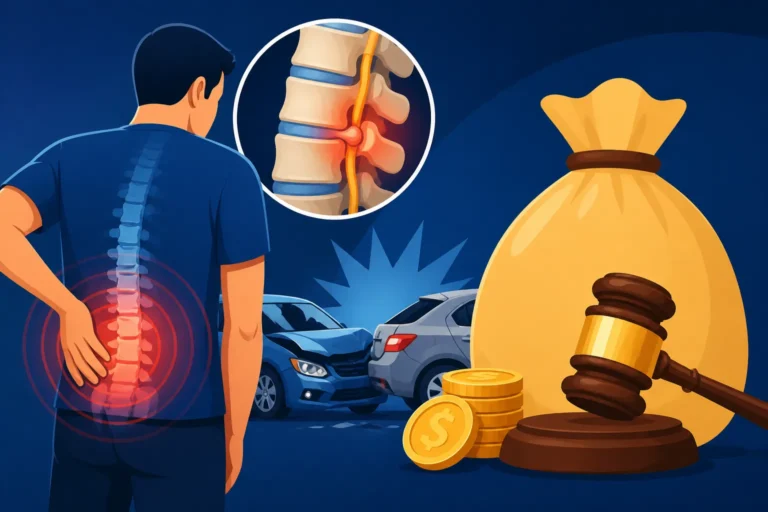
- Moderate Injuries: This category could involve more severe whiplash, herniated discs, fractures that don't require surgery, or concussions. These injuries often require more extensive medical treatment, longer recovery times, and might lead to more significant lost wages and a higher degree of pain and suffering. For example, a herniated disc from a car accident can significantly disrupt daily life.
- Severe/Catastrophic Injuries: These are life-altering injuries such as spinal cord damage, traumatic brain injuries, major fractures requiring surgery, or extensive internal injuries. Such injuries often necessitate long-term medical care, multiple surgeries, extensive rehabilitation, and can result in permanent disability or chronic pain. Settlements for these injuries are substantially higher, accounting for lifelong medical expenses, significant lost earning capacity, and immense pain and suffering.
The key takeaway here is that the more extensive and long-lasting your injuries, and the more medical treatment they require, the higher your potential settlement will be. This is why it's so important to seek medical attention immediately after an accident, even if you feel fine, as some injuries, like those related to a Traumatic Brain Injury (TBI) From a Car Accident, can have delayed symptoms.
Impact on Your Daily Life and Work
Beyond the immediate medical bills and lost wages, an accident can cast a long shadow over your everyday existence. The extent to which your injuries disrupt your normal routine, personal life, and professional capabilities plays a significant role in determining your non-economic damages and, consequently, your overall settlement.
Consider these aspects:
- Loss of Enjoyment of Life: Did you love hiking, gardening, or playing with your kids? If your injuries prevent or severely limit these activities, that’s a real loss that deserves compensation. For instance, if a back injury from a backing-up accident means you can no longer comfortably sit through a movie or go for a long drive, that impacts your quality of life.
- Household Chores and Personal Care: Are you unable to clean your house, cook meals, or even take care of personal hygiene without assistance? The cost of hiring help or the burden placed on family members can be factored into your claim.
- Educational or Career Setbacks: If your injuries force you to miss classes, delay graduation, or prevent you from pursuing certain career opportunities, these long-term financial and personal impacts are crucial considerations. Lost earning capacity is a distinct claim from lost wages, focusing on future potential.
- Emotional and Psychological Distress: The trauma of an accident, even a "minor" backing-up one, can lead to anxiety, depression, or fear of driving, requiring psychological counseling. This emotional toll is a legitimate component of pain and suffering.
A detailed record of how your life has changed, from needing help with groceries to missing a child's soccer game, provides compelling evidence of the true impact of the accident.
Calculating the Average Settlement for Backing-Up Accidents
It's nearly impossible to give a definitive "average" settlement figure for a backing-up accident because every case is unique. Factors like the state's fault laws, the specifics of the collision, and the extent of damages can cause settlements to vary wildly from a few hundred dollars for minor property damage to hundreds of thousands for severe, life-altering injuries. Instead of a single number, it's more helpful to understand the components that build a settlement amount.
Economic Damages: The Tangible Costs
As we discussed, economic damages are the measurable financial losses. These are the easiest to calculate and form the baseline of any settlement.
Let's look at a hypothetical example: Sarah is backing out of a parking space at a grocery store in Sacramento, California, and collides with Mark, who was driving through the aisle. Sarah admits fault.
| Damage Category | Example Expenses | Amount |
|---|---|---|
| Vehicle Repair | Repair to bumper, fender, tail light on Mark's car; paint job, labor | $2,500 |
| Medical Treatment | ER visit for Mark (whiplash diagnosis), follow-up with PCP, 6 weeks physical therapy | $4,800 |
| Lost Wages | Mark missed 3 days of work due to pain and physical therapy appointments | $720 |
| Rental Car | Mark needed a rental car for 5 days while his car was repaired | $250 |
| Total Economic Damages | $8,270 |
This table illustrates how economic damages accumulate. These are the "hard costs" that insurance companies typically pay without much dispute, assuming fault is clear and documented.
Non-Economic Damages: The Intangible Toll
This is where things get more subjective and complex. Non-economic damages, like pain and suffering, emotional distress, and loss of enjoyment of life, don't have a fixed price tag. Insurance companies and legal professionals often use various methods to assign a monetary value to these losses.
One common method is the "multiplier method." Here, your total economic damages are multiplied by a number, typically ranging from 1.5 to 5 (or sometimes higher for severe injuries). The multiplier chosen depends on the severity and duration of your injuries, the impact on your life, and the strength of your evidence.
Continuing with Mark's example:
- Total Economic Damages: $8,270
- Multiplier: For moderate whiplash and 6 weeks of PT, an insurance adjuster might apply a multiplier of 2.5 to 3. Let's use 2.5 for this example.
- Non-Economic Damages Calculation: $8,270 (Economic Damages) x 2.5 (Multiplier) = $20,675
So, Mark's estimated total settlement might look like this:
- Total Economic Damages: $8,270
- Total Non-Economic Damages: $20,675
- Estimated Total Settlement: $28,945
It's crucial to understand that this is just one example, and a lot hinges on negotiation with the insurance company. They will always try to minimize the multiplier and, therefore, the non-economic damages. This is one area where having legal representation can make a significant difference in maximizing your car accident settlement.
How Comparative Fault Can Affect Your Payout
One of the most disheartening realities after an accident is when the other party, or their insurance company, tries to pin some of the blame on you. This is where comparative fault comes into play, and it can significantly reduce your potential payout. States like California operate under a "pure comparative negligence" rule, meaning you can recover damages even if you're 99% at fault, but your compensation will be reduced by your percentage of fault. Other states follow "modified comparative negligence" rules (like the 50% or 51% bar), where if you're found to be above a certain percentage of fault, you might not recover anything. And then there are a few "contributory negligence" states where even 1% fault bars recovery entirely.
Imagine in our earlier example that while Sarah was backing up, Mark was slightly distracted on his phone (distracted driving). An investigation might determine that while Sarah was primarily at fault (70%), Mark's distraction contributed (30%).
Here's how that would change Mark's settlement:
- Estimated Total Settlement (without comparative fault): $28,945
- Mark's Percentage of Fault: 30%
- Reduction due to Comparative Fault: $28,945 x 0.30 = $8,683.50
- Adjusted Settlement Amount: $28,945 – $8,683.50 = $20,261.50
As you can see, being found partially at fault can drastically reduce what you ultimately receive. This is why it's so important to gather all possible evidence to prove the other driver was at fault and to avoid making any admissions of fault at the scene. Understanding How Comparative Fault Reduces Your Settlement is vital in these situations.
Navigating the Claims Process for Backing-Up Accidents
Getting through the aftermath of an accident can feel like a maze. Knowing the steps to take and what to expect from insurance companies can empower you and protect your right to fair compensation.
Initial Steps After the Accident
Your actions immediately following a backing-up accident are crucial for both your safety and the strength of your future claim. Don't underestimate these initial moments.
- Ensure Safety: First and foremost, check on everyone involved. If anyone is injured, call 911 immediately. If possible and safe, move your vehicles out of the flow of traffic to prevent further incidents. Turn on your hazard lights.
- Exchange Information: Get the other driver's name, contact information, insurance company and policy number, driver's license number, and vehicle information (make, model, license plate). Share your information in return.
- Document the Scene Thoroughly: As mentioned earlier, this is where your smartphone becomes an invaluable tool. Take photos and videos of everything: vehicle damage, the position of the cars, road conditions, traffic signs, and any visible injuries. If there are witnesses, get their contact details. Remember, you can't have too much documentation.
- Contact the Police: Even for what seems like a minor backing-up collision, especially if there's damage beyond a simple scratch or any injury, calling the police is highly advisable. A police report provides an official, unbiased account of the incident, which is incredibly helpful for insurance claims.
- Seek Medical Attention: This is critical, even if you feel fine. Adrenaline can mask pain, and some injuries, like whiplash or concussions, have delayed symptoms. A prompt medical examination creates an official record of your injuries linked directly to the accident, which is vital for any bodily injury claim. Our guide on What to Do After a Car Accident: Step-by-Step (2027) offers a comprehensive checklist for these crucial first hours.
Dealing with Insurance Companies
After the initial shock, you'll inevitably be dealing with insurance companies – both your own and the other driver's. This can be a challenging and often frustrating part of the process.
- Notify Your Own Insurer: Even if the accident wasn't your fault, it's wise to inform your own insurance company promptly. They can guide you through the process, especially if the other driver's insurance is unresponsive or denies liability. Depending on your policy, they might cover immediate costs like a rental car or medical payments.
- Be Cautious with the Other Driver's Insurer: The other driver's insurance adjuster works for their company, not for you. Their primary goal is to minimize their payout. Be polite but cautious.
- Do NOT Give a Recorded Statement: You are not legally obligated to give a recorded statement to the other driver's insurance company. These statements are often used to find inconsistencies or elicit admissions of fault that can hurt your claim.
- Do NOT Discuss Fault: Avoid admitting fault or speculating about the cause of the accident. Stick to the facts you observed. Remember, what you say can and will be used against you. Reviewing What Is an Admission of Fault (and How to Avoid It)? is a must before speaking with adjusters.
- Limit Information Sharing: Provide only the essential facts (date, time, location, involved parties). Do not share your medical records or sign any releases without consulting with a legal professional.
- Document All Communications: Keep a detailed log of every phone call, email, and letter, including the date, time, person you spoke with, and a summary of the conversation. This record can be invaluable if disputes arise.
- Be Patient, but Persistent: Insurance claims can take time. However, don't let your claim fall by the wayside. Follow up regularly, but always maintain a polite and professional demeanor. If your claim is taking too long or you're facing a lowball offer, it might be time to consider professional help. Our article on Dealing With Insurance Adjusters After a Car Accident provides more in-depth strategies.
When to Consider Legal Counsel
You might be wondering if you truly need a lawyer for a backing-up accident, especially if it seems minor. While not every fender bender requires legal intervention, there are specific situations where a car accident lawyer can be invaluable.
- Significant Injuries: If you've sustained more than just minor bumps and bruises – think whiplash requiring ongoing physical therapy, herniated discs, fractures, or concussions – a lawyer can ensure all your medical costs (past, present, and future) and pain and suffering are adequately compensated. They understand the nuances of Common Car Accident Injuries: Complete Guide (2027).
- Disputed Fault: If the other driver or their insurance company is trying to place blame on you, a lawyer can investigate, gather evidence, and present a compelling case to prove their client's innocence or minimize their fault. This is especially true if you are facing questions like What Happens If the Other Driver Blames You?
- Lowball Settlement Offers: Insurance companies are in the business of saving money. If you receive an offer that seems too low, a lawyer can negotiate on your behalf, often securing a much higher settlement than you could achieve alone. They know how much more than medical bills insurance will pay and how to counter a low settlement offer.
- Complex Cases: If there are multiple vehicles involved, if the at-fault driver was uninsured, or if the accident involves a commercial vehicle (like a delivery truck), the case can become complex very quickly. A lawyer has the expertise to navigate these complexities.
- Feeling Overwhelmed: The stress of dealing with injuries, vehicle repairs, lost income, and aggressive insurance adjusters can be immense. A lawyer can take this burden off your shoulders, allowing you to focus on your recovery.
A consultation with a personal injury lawyer is often free, and they can assess the merits of your case and advise you on the best course of action. This decision is thoroughly explored in our guide, Do You Need a Lawyer for a Car Accident? (2026). Ultimately, while it may seem like an additional step, legal representation often leads to a more favorable and just outcome for accident victims.
Disclaimer
Please remember that this information is intended for general informational purposes only and does not constitute legal advice. Every car accident case is unique, and the outcome depends on specific facts, local laws, and the evidence available. It is strongly recommended to consult with a qualified legal professional to discuss the specifics of your situation and to obtain advice tailored to your individual circumstances.