How Much Is a Neck Injury Settlement Worth in California?
Suffering a neck injury in a car accident can throw your whole life into disarray. One moment you're driving along, and the next, you're grappling with pain, medical appointments, and the confusing maze of insurance claims. It's frustrating, overwhelming, and frankly, nobody prepares you for it. Many people find themselves wondering, "How much is a neck injury settlement worth in California?" This guide is here to break down the complexities, offer realistic insights into potential settlement values, and help you understand the journey ahead, focusing specifically on what you can expect right here in California.
Understanding Neck Injuries After a Car Accident
When you're involved in a car accident, even a seemingly minor fender-bender, the forces at play can wreak havoc on your neck. It’s not just about the immediate pain; neck injuries can lead to long-term discomfort, limit your mobility, and impact every aspect of your daily life. It’s completely normal to feel confused and worried about what comes next, especially when your body isn't cooperating like it used to.
The Spectrum of Neck Injuries
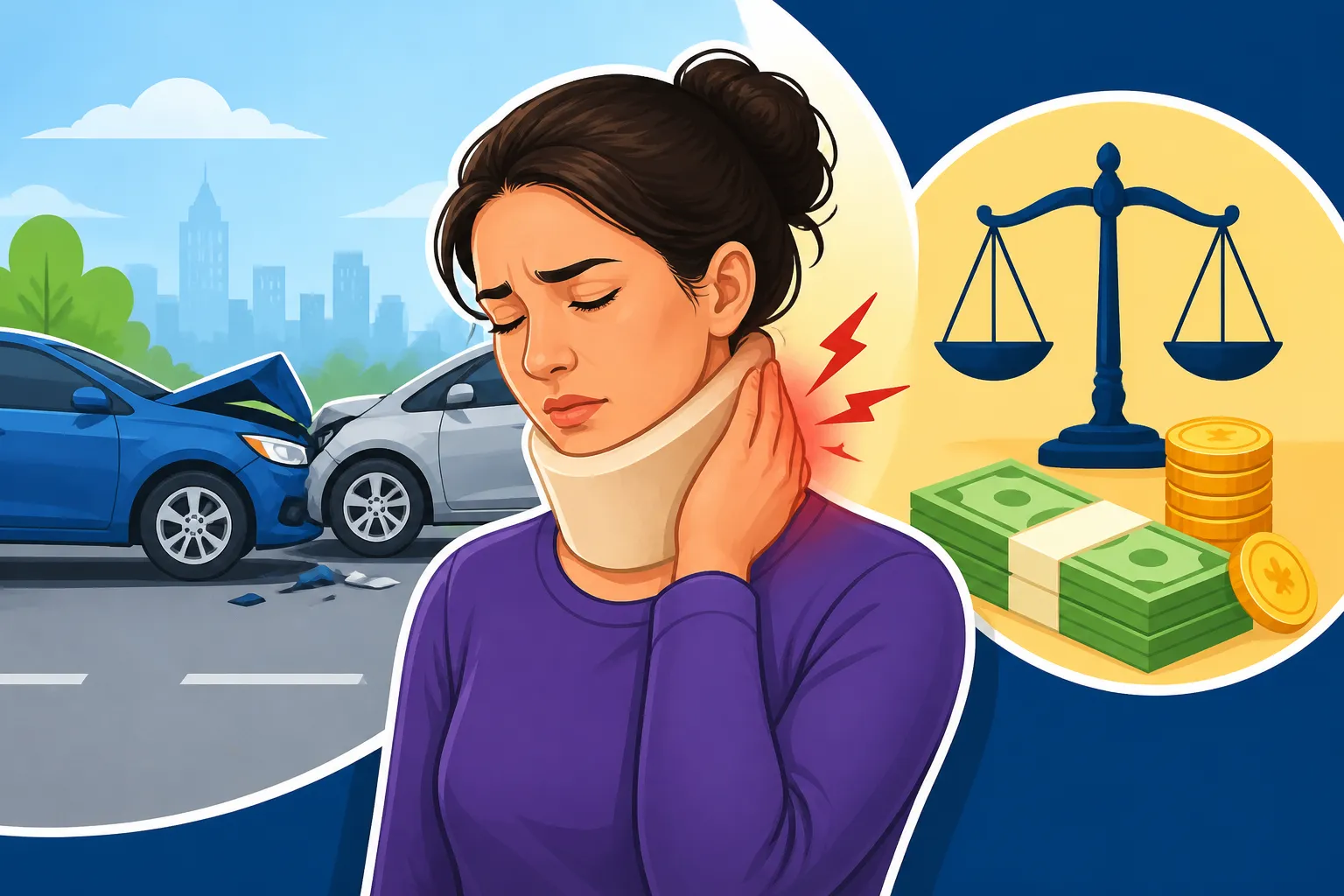
Neck injuries from car accidents run the gamut from relatively mild to profoundly debilitating. It’s not a one-size-fits-all situation, and the type and severity of your injury will play a massive role in your settlement value.
One of the most common, yet often misunderstood, is whiplash. This happens when your head is suddenly jolted back and forth, like the crack of a whip, straining the muscles, ligaments, and tendons in your neck. While often dismissed, whiplash can cause persistent pain, stiffness, headaches, and even dizziness. Then there are more serious issues, such as herniated or bulging discs, where the soft cushions between your vertebrae are damaged, potentially pressing on nerves and causing radiating pain, numbness, or weakness in your arms. Spinal fractures, nerve damage, and even dislocations are other severe possibilities that require extensive medical intervention and can dramatically alter your quality of life. Each of these conditions comes with its own set of treatments, recovery times, and implications for your future health. For a broader perspective on various physical traumas, it's crucial to understand Common Car Accident Injuries: Complete Guide (2027).
The Sneaky Nature of Delayed Symptoms
Here’s a common frustration many people face: you might feel okay right after the accident, perhaps a bit shaken, but no immediate searing pain. Then, a day or two later, or even a week down the line, that stiffness in your neck turns into an unbearable ache, headaches become constant, and moving your head feels like a monumental task. This phenomenon of delayed symptoms is incredibly common with neck injuries. Adrenaline from the crash can mask pain, and inflammation can take time to set in.
It's vital not to ignore these delayed symptoms. Many people mistakenly think that because they didn't feel pain immediately, their injury isn't serious or isn't related to the accident. This couldn't be further from the truth. Always seek medical attention as soon as you notice any discomfort, no matter how minor it seems. This not only protects your health but also creates an official record of your injury, which is critical for any future claim. Understanding Neck Injuries After a Car Accident in detail can help you identify symptoms and the proper course of action.
The Undeniable Importance of Medical Documentation
Let’s be real, dealing with doctors and appointments is the last thing you want to do when you’re in pain. But when it comes to a neck injury settlement, thoroughly documenting your medical journey is paramount. Every doctor’s visit, every diagnostic test (X-rays, MRIs, CT scans), every physical therapy session, and every prescription needs to be recorded.
These records serve as objective proof of your injury, its severity, and the treatment required. Without this paper trail, it becomes incredibly difficult to prove the extent of your damages to the insurance company or, if necessary, to a court. Detailed medical records help establish a clear link between the accident and your injury, combating any attempts by the other side to argue that your pain is pre-existing or unrelated. This comprehensive documentation forms the backbone of How to Prove Injuries in a Car Accident Claim.
Factors Influencing Neck Injury Settlement Value in California
Calculating a settlement for a neck injury isn't a simple equation. It's a complex process involving numerous variables, and in California, specific legal frameworks add another layer to the mix. To get a realistic picture of How Much Is My Car Accident Settlement Worth? (2026), you need to consider how each of these factors will influence your unique situation.
The Severity of Your Injury and Its Medical Implications
The most significant factor influencing your settlement is, understandably, the actual injury itself. A mild whiplash that resolves with a few weeks of chiropractic care will typically yield a far different settlement than a cervical disc herniation requiring surgery and months of physical therapy.
Consider the diagnosis: Is it a soft tissue strain, or is there structural damage like a fracture or disc compression? The treatment pathway is also critical. Did you need emergency room care, specialist consultations, pain management injections, surgery, or ongoing physical therapy? The more invasive and extensive the treatment, generally, the higher the value. Furthermore, the prognosis plays a huge role. Are you expected to make a full recovery, or will you have permanent limitations, chronic pain, or require future medical care? These long-term implications significantly increase the value of your claim, as they represent future suffering and expenses.
Economic Damages: The Tangible Costs
Economic damages are the straightforward, quantifiable losses you incur due to your neck injury. These are the "receipts" that prove your financial burden.
- Medical Expenses: This includes everything from the ambulance ride and emergency room visit to specialist fees, diagnostic imaging, prescription medications, physical therapy, rehabilitation, and even potential future surgeries or long-term care. Keep meticulous records of all medical bills, co-pays, and out-of-pocket expenses. Understanding How Medical Bills Are Paid From a Settlement is crucial for tracking these costs.
- Lost Wages and Earning Capacity: If your neck injury prevents you from working, even for a short period, you can claim lost wages. This isn't just your hourly rate or salary; it can also include lost bonuses, commissions, and benefits. For those with severe, long-term injuries, it might also encompass lost earning capacity, meaning the difference in what you could have earned versus what you will earn due to permanent disability or limitations. Imagine being a construction worker with a severe neck injury; your ability to perform your job might be permanently compromised, leading to a substantial claim for diminished earning capacity.
- Other Out-of-Pocket Expenses: Don't forget costs like transportation to medical appointments, home modifications if your injury requires them, or even hiring help for household tasks you can no longer perform. These seemingly small expenses can add up quickly.
Non-Economic Damages: The Intangible Toll
This is where things get a bit more subjective but are often a substantial part of a neck injury settlement in California. Non-economic damages compensate you for the intangible losses that don't come with a price tag, but deeply impact your life.
- Pain and Suffering: This is for the actual physical pain you endure, from the moment of the accident through your recovery and any chronic pain you might experience. It also covers the emotional distress, anxiety, and mental anguish caused by the injury and the accident itself. Imagine the frustration of not being able to pick up your child, enjoy hobbies, or even sleep comfortably. California law recognizes this suffering as a legitimate component of your damages. For a deeper dive into quantifying this, refer to Pain and Suffering: How It's Calculated.
- Loss of Enjoyment of Life: This refers to the inability to engage in activities you once loved due to your injury. If you were an avid surfer in San Diego, a hiker in the Sierras, or simply enjoyed playing with your grandchildren, and your neck injury prevents these activities, you can claim for this loss.
- Emotional Distress: The psychological impact of a car accident and a debilitating injury can be profound. This includes anxiety, depression, fear, frustration, and even PTSD. While harder to quantify, therapists' notes and personal journals detailing your emotional struggles can provide valuable evidence.
Distinguishing between Economic vs Non-Economic Damages Explained is a fundamental aspect of building a robust claim.
California's Comparative Negligence Rule
Here’s a crucial point for anyone involved in a car accident in the Golden State: California operates under a pure comparative negligence system. What does this mean for your neck injury settlement? It means that even if you are found partially at fault for the accident, you can still recover damages from the other driver, but your settlement will be reduced by your percentage of fault.
For example, if the total damages for your neck injury are calculated at $100,000, but it’s determined that you were 20% at fault for the collision, your final settlement would be reduced by 20%, bringing your recovery down to $80,000. This is a critical detail that insurance companies will always try to leverage, and it can significantly impact your final payout. Understanding Comparative Negligence Laws in California is essential to protect your claim.
Insurance Policy Limits
No matter how severe your injuries or how high your calculated damages, your recovery is often capped by the at-fault driver's insurance policy limits. If the other driver only carries the minimum liability coverage (e.g., $15,000 for bodily injury per person in California), and your damages far exceed that amount, collecting the full value can be challenging.
In such cases, you might need to explore other avenues, such as your own uninsured/underinsured motorist (UM/UIM) coverage, if you have it. This coverage kicks in when the at-fault driver either has no insurance or insufficient insurance to cover your damages.
Calculating Your Neck Injury Settlement in California
The process of How Car Accident Settlements Are Calculated can feel like a mystery, but understanding the underlying principles can empower you. While there's no magic "neck injury settlement calculator," insurers and legal professionals use a combination of methods to arrive at a figure.
The Role of the Multiplier Method
For pain and suffering (non-economic damages), a common approach is the "multiplier method." This involves taking your total economic damages (medical bills, lost wages) and multiplying them by a factor, usually between 1.5 and 5. The multiplier chosen depends on the severity of your injury, the permanence of your pain, and the overall impact on your life.
- Lower Multiplier (1.5-2x): Might be used for minor soft tissue injuries with a quick recovery, limited medical treatment, and little impact on daily life.
- Medium Multiplier (3x): Often applies to more moderate injuries, like a severe whiplash that requires extended physical therapy or a bulging disc causing significant pain but not requiring surgery.
- Higher Multiplier (4-5x): Reserved for severe, debilitating injuries such as herniated discs requiring surgery, fractures, chronic pain, nerve damage, or injuries resulting in permanent impairment or long-term disability.
So, if your economic damages total $20,000 for a moderate neck injury (say, extensive physical therapy and lost wages), and a multiplier of 3 is applied, your non-economic damages would be $60,000. Add this to your economic damages, and you get a total of $80,000. Remember, this is a starting point, and negotiation always plays a part.
The Power of Strong Evidence
A high settlement value isn't just about the injury; it's about the evidence you present to support your claim. Insurance companies are businesses, and they will look for any reason to minimize their payout. This is where your diligent documentation shines.
- Medical Records: As mentioned, these are paramount. They must clearly link your injury to the accident and detail your diagnosis, treatment, and prognosis.
- Police Report: A police report, especially one that clearly places fault on the other driver, is a critical piece of evidence. While not definitive on fault, it holds significant weight.
- Witness Statements: Eyewitness accounts can corroborate your version of events and add credibility.
- Photos and Videos: Pictures of the accident scene, vehicle damage, and even your visible injuries (bruising, swelling, medical devices like neck braces) can be incredibly compelling.
- Personal Journal: A daily journal detailing your pain levels, limitations, emotional state, and how the injury impacts your daily life can provide powerful subjective evidence for your pain and suffering claim.
Navigating the Negotiation Process
Once you have a clear understanding of your damages, the real work begins: negotiating with the insurance company. Be prepared for their initial offer to be significantly lower than what you believe your claim is worth. This is a common tactic. They are hoping you'll be eager to settle and accept a quick, low payout.
Knowing How to Negotiate a Car Accident Settlement involves being informed, patient, and prepared to justify every component of your demand. You’ll need to present a comprehensive demand package outlining all your damages, supported by your evidence. If negotiations stall or you feel overwhelmed, this is often the point where many people decide to seek legal counsel.
Navigating the Settlement Process for Neck Injuries
The journey from accident to settlement can be long and arduous, especially when dealing with a neck injury that impacts your daily life. Having a clear roadmap of the process can help alleviate some of the stress.
Immediate Steps After the Accident
Your actions immediately following a car accident in California are critical, both for your health and for the strength of your claim.
First and foremost, seek medical attention immediately, even if you feel fine. As we discussed, neck injury symptoms can be delayed. Getting checked out by a doctor ensures that any injuries are diagnosed early and documented. If possible, call the police to the scene, especially if there's significant damage or injuries. Their report can be invaluable. Exchange information with the other driver, including names, insurance details, and contact numbers. Take photos and videos of the accident scene, vehicle damage, and any visible injuries. Document everything, and don't make any statements admitting fault, even a casual "I'm so sorry."
Filing an Insurance Claim
Once you've addressed your immediate safety and medical needs, you'll need to file a claim. In California, you typically file a third-party claim with the at-fault driver's insurance company. You'll need to provide them with the basic details of the accident and your injuries. Be prepared for them to ask for a recorded statement. While you must cooperate, you are generally not legally obligated to give a recorded statement to the other driver's insurance company without first consulting with an attorney. What you say can be used against you, so caution is advised.
Your own insurance company might also need to be notified, particularly if you have specific coverage like Med-Pay or Uninsured Motorist coverage that could come into play.
When to Consider Legal Representation
Many people wonder, Do You Need a Lawyer for a Car Accident? (2026) The answer often depends on the complexity and severity of your situation. For a minor fender-bender with no injuries, you might be able to handle the claim yourself. However, with a neck injury, especially one requiring ongoing treatment, pain and suffering, or lost wages, a lawyer can be a game-changer.
An experienced car accident attorney in California understands the nuances of personal injury law, the tactics insurance companies employ, and how to accurately value your claim, including the often-underestimated non-economic damages. They can negotiate on your behalf, gather necessary evidence, and ensure that your rights are protected. They know how to effectively counter lowball offers and, if necessary, take your case to court. For significant injuries that impact your long-term health and financial well-being, their expertise is invaluable.
The Statute of Limitations in California
It's a harsh reality, but there are strict deadlines for filing a personal injury lawsuit in California, known as the statute of limitations. Generally, you have two years from the date of the accident to file a lawsuit for personal injury. If you miss this deadline, you will almost certainly lose your right to pursue compensation, regardless of the severity of your neck injury or the clear fault of the other driver.
There are some rare exceptions to this rule, but it’s best not to rely on them. Two years might seem like a long time, but between medical treatments, recovery, and negotiations, time can fly by. It's another strong reason to consult with an attorney sooner rather than later, as they can help ensure all deadlines are met. Being aware of the Statute of Limitations for Car Accidents in California is paramount for any accident victim.
| Factor | Impact on Neck Injury Settlement | Notes |
|---|---|---|
| Injury Severity | Direct Correlation | More severe injuries (fractures, herniated discs, nerve damage) requiring extensive treatment (surgery, long-term rehab) will yield higher settlements than minor soft tissue strains. Objective medical evidence is key. |
| Medical Expenses | Direct Correlation | Total cost of past, present, and future medical care. This includes ER visits, doctor consultations, diagnostic tests, medications, physical therapy, and any specialized treatments. Detailed billing and future medical projections (often from specialists) are crucial. |
| Lost Wages/Income | Direct Correlation | Income lost due to inability to work. Includes salary, wages, bonuses, commissions, and benefits. For permanent disabilities, lost earning capacity (future income loss) is also considered. Documentation from employer and financial statements are essential. |
| Pain and Suffering | Significant Impact | Compensation for physical pain, emotional distress, mental anguish, and loss of enjoyment of life. Often calculated using a multiplier (1.5x-5x) applied to economic damages. Highly subjective but supported by medical records, therapist notes, and personal accounts. |
| Comparative Negligence | Potential Reduction | In California, if you are found partially at fault for the accident, your total settlement will be reduced by your percentage of fault. For example, 20% fault means a 20% reduction in your awarded damages. |
| Insurance Policy Limits | Upper Limit | The maximum amount recoverable from the at-fault driver's insurance policy. If your damages exceed these limits, recovery can be challenging unless you have strong uninsured/underinsured motorist (UM/UIM) coverage on your own policy. |
| Quality of Legal Counsel | Indirect but Crucial | An experienced car accident attorney can significantly impact the outcome by properly valuing the claim, expertly negotiating with insurers, gathering robust evidence, and, if necessary, litigating the case effectively. They ensure all legal nuances, like What Happens If You Miss the Statute of Limitations?, are addressed correctly. |
| Impact on Daily Life | Contributes to Non-Economic | How the injury affects hobbies, family life, household chores, sleep, and overall well-being. This feeds directly into the pain and suffering component. Personal journals and testimonials from loved ones can help illustrate this impact. |
Disclaimer
Please remember that this information is intended for general guidance only and does not constitute legal advice. Every car accident case is unique, and the value of your neck injury settlement will depend on the specific facts and circumstances surrounding your situation. It is always recommended to consult with a qualified personal injury attorney in California to discuss your particular case and understand your legal options.