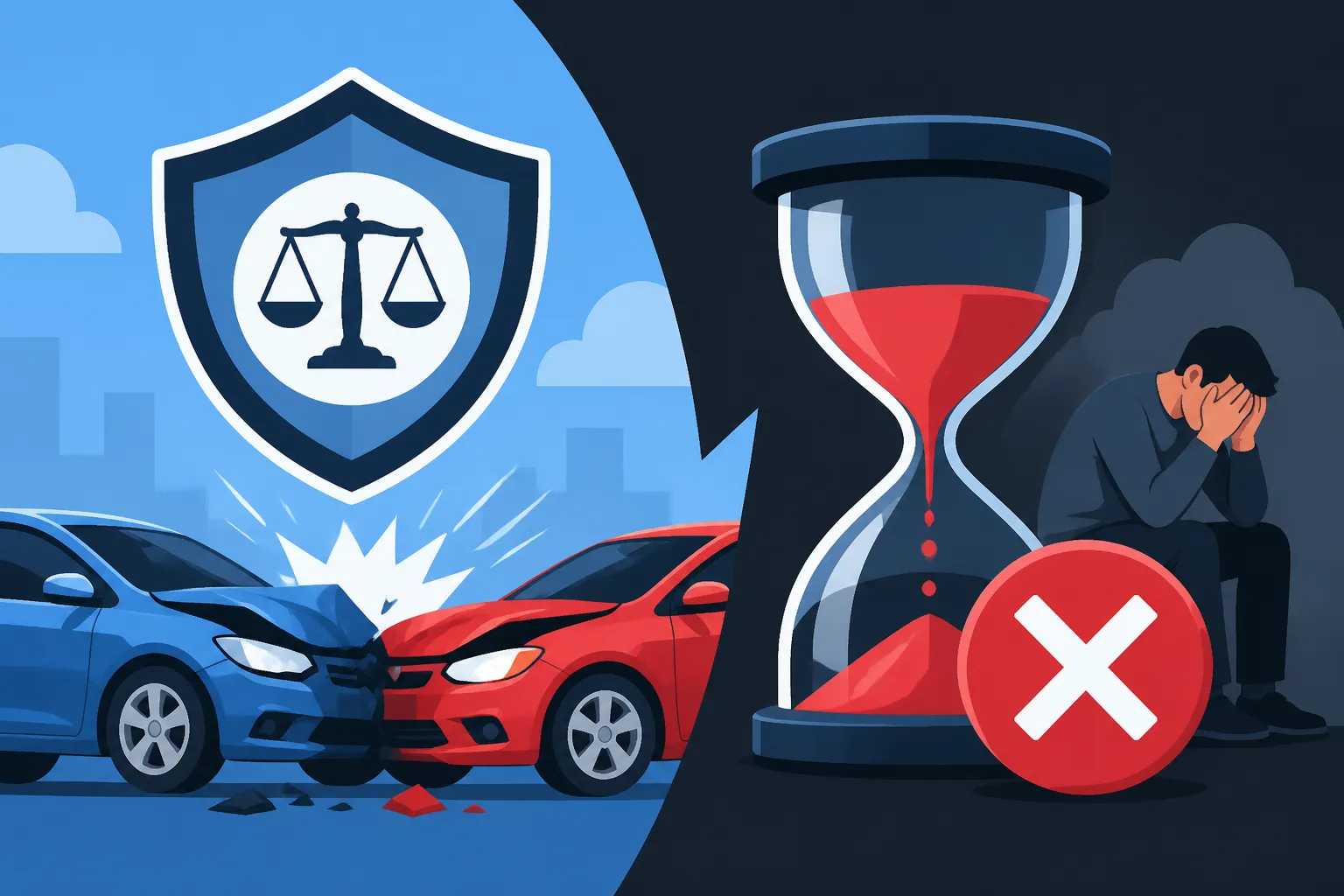
What Happens If You Miss the Statute of Limitations?
Getting into a car accident is stressful enough, but navigating the aftermath, especially when it comes to legal deadlines, can feel overwhelming. Many people are so focused on recovery and vehicle repairs that they unknowingly let critical time slip away, only to discover there's a strict legal window for pursuing a claim. Missing this crucial deadline, known as the statute of limitations, can have devastating consequences, potentially costing you any chance of recovering compensation for your injuries and damages. This guide will walk you through exactly what happens if you find yourself in this unfortunate situation and explore the very limited avenues that might still be open to you.
The Absolute Importance of the Statute of Limitations
When you're dealing with the chaos and pain that follow a car accident, legal deadlines are probably the last thing on your mind. You're trying to heal, get your car fixed, and just get back to some semblance of normal. However, there's a strict legal clock ticking from the moment your accident occurs, and it's called the statute of limitations. This isn't just some suggestion; it's a hard and fast rule set by state law that dictates how long you have to file a lawsuit to seek compensation for your injuries and damages. If you miss it, you generally lose your right to pursue that claim in court, regardless of how strong your case might have been. It’s a gut-wrenching reality for many accident victims.
Defining the Statute of Limitations for Car Accidents
At its core, the statute of limitations is a legal time limit. Imagine a stopwatch that starts counting down the second your car accident happens. In most states, for personal injury claims arising from car accidents, this window is typically two or three years, though it can vary significantly from one jurisdiction to another. For example, some states like California generally give you two years from the date of the injury to file a personal injury lawsuit, while others, like New York, provide three years. This isn't just about notifying your insurance company; it's about initiating formal legal proceedings in a court of law.
This deadline applies to civil lawsuits, which means if you want to sue the at-fault driver for negligence to recover things like medical expenses, lost wages, and pain and suffering, you must file that lawsuit within this timeframe. It’s a critical distinction from reporting the accident to your own insurance, which often has much shorter reporting requirements, usually within days or weeks of the incident. Understanding this difference is paramount, as many people mistakenly believe that simply informing their insurer is enough to protect their future legal rights. A quick search about Statute of Limitations for Car Accidents by State can reveal the specific timeline for your location, but it's always best to consult with a legal professional.
Why These Deadlines Exist
You might wonder why such stringent deadlines are in place, especially when accident victims are often at their most vulnerable. The rationale behind statutes of limitations is multi-faceted, serving several key purposes within the legal system. Firstly, they are designed to ensure fairness and prevent endless legal uncertainty. Without these limits, someone could theoretically bring a lawsuit decades after an incident, making it incredibly difficult for the defendant to gather evidence, locate witnesses, or even remember the details accurately. Memories fade, evidence gets lost, and witnesses move on.
Secondly, these laws promote diligence. They encourage injured parties to pursue their claims within a reasonable timeframe, ensuring that disputes are resolved while the evidence is fresh and readily available. This helps streamline the judicial process and prevents courts from being bogged down by stale claims that are hard to prove or defend. Lastly, they offer a sense of finality. Once the statute of limitations has passed, both parties can generally move forward without the lingering threat of a lawsuit. While it can feel incredibly unfair to an injured person who missed the deadline, the legal system prioritizes these principles of fairness, efficiency, and finality for all involved.
The Harsh Reality of Missing the Deadline
Let’s be blunt: missing the statute of limitations for your car accident claim is often a death knell for your case. It’s a harsh truth, and one that many people only discover after it's too late. The legal system, while often designed to be just, is also built on strict procedural rules, and the statute of limitations is one of the most unforgiving. When that clock runs out, the courthouse doors, metaphorically speaking, slam shut on your ability to seek justice through a lawsuit.
Your Case Is Almost Certainly Barred
The most direct and devastating consequence of missing the statute of limitations is that your personal injury lawsuit will almost certainly be legally barred. This means that if you try to file a lawsuit in court after the deadline has passed, the defendant (the at-fault driver or their insurance company) will simply file a motion to dismiss your case based on the expired statute of limitations. And, in nearly all circumstances, the judge will grant that motion. It’s a procedural knockout, not even requiring a deep dive into the facts of your accident or the severity of your injuries.
Imagine you've suffered a significant back injury, requiring extensive physical therapy and even surgery, and you've lost months of income. You've diligently collected all your medical bills and pay stubs. You believe you have an open-and-shut case against the driver who T-boned you because they ran a red light. However, if you attempt to file your lawsuit just one day after your state's two-year deadline, all that evidence and the undeniable truth of your suffering become irrelevant to the court. The legal system simply won't hear your case. This is why understanding How Long Do You Have to File a Car Accident Claim? is critical from the very beginning.
Loss of Leverage with Insurance Companies
Even if you haven't formally filed a lawsuit, missing the statute of limitations drastically changes your bargaining position with insurance companies. Before the deadline, the at-fault driver's insurance company knows you have the option to sue if they don't offer a fair settlement. This threat of litigation is a powerful motivator for them to negotiate in good faith and offer a reasonable sum. However, once that deadline passes, the leverage shifts entirely.
An insurance company, like Geico or State Farm, is in the business of minimizing payouts. If they know you can no longer legally compel their insured to pay through a lawsuit, they have little to no incentive to offer you any compensation at all. They might simply deny your claim outright or offer a minuscule "nuisance" settlement that barely covers a fraction of your damages, knowing you have no legal recourse to demand more. Their legal team is constantly monitoring these deadlines, and they will use an expired statute of limitations as a definitive reason to close your file without payment. It's a harsh economic reality that underscores the importance of prompt legal action. This is also why many people consult a lawyer to understand How Insurance Companies Determine Who Is at Fault and how best to proceed.
Impact on Different Claim Types
While the primary concern is usually the personal injury claim, missing the statute of limitations can affect other types of claims related to your car accident as well. The legal framework can differentiate between various types of damages.
Personal Injury Claims
As discussed, personal injury claims are the most directly impacted. These claims cover the bodily harm you've suffered, including medical expenses (past and future), lost wages, loss of earning capacity, pain and suffering, emotional distress, and loss of enjoyment of life. For these types of damages, the statute of limitations is typically quite strict. If you can't file a lawsuit for these injuries, you lose the ability to seek compensation from the at-fault driver's insurance or from the driver directly. This can leave you personally responsible for thousands, or even hundreds of thousands, of dollars in medical debt and lost income, a truly devastating financial blow for accident victims.
For instance, if you sustained a herniated disc from a car accident and required surgery, the costs can quickly spiral into tens of thousands of dollars. If your state's statute of limitations passes before you file, you might be left footing the bill yourself. Even if you have strong evidence to prove the other driver was 100% at fault, the legal door is closed. This is why attorneys often emphasize the urgency of protecting your claim. If you're wondering Do You Need a Lawyer for a Car Accident?, this critical deadline is a primary reason to consider one.
Property Damage Claims
Property damage claims, which cover the cost of repairing or replacing your vehicle, often have a slightly different statute of limitations than personal injury claims, though they can sometimes be the same. In many states, the deadline for property damage is longer than for personal injury, but it's not always the case. For example, in Texas, the statute of limitations for both personal injury and property damage is generally two years. However, in California, while personal injury is two years, property damage often falls under a three-year statute for "damage to personal property."
It’s important not to assume that just because your car is fixed or totaled, your property damage claim is entirely resolved. Sometimes, there might be remaining diminished value claims (the loss in value your car experiences after being repaired from an accident) or other specific damages that you would still need to pursue. Again, if this specific deadline is missed, the at-fault driver's insurance company has no legal obligation to pay for your repairs or total loss, leaving you to cover the costs out of pocket or through your own collision coverage, which could still impact your premiums.
Understanding the Rare Exceptions and Tolling
While the rule is generally rigid, there are exceedingly rare circumstances where the statute of limitations might be "tolled" (paused) or an exception might apply. These are not common occurrences and should never be relied upon, but it's important to understand that the law isn't always absolutely black and white. However, these exceptions are usually very specific and require strong legal arguments.
Minor Victims
One of the most common exceptions to the typical statute of limitations involves minors. If the injured party in a car accident is under the age of 18, the statute of limitations is often "tolled" until they reach the age of majority. This means the clock typically doesn't start ticking until their 18th birthday. For example, if a 10-year-old is injured in a car crash in a state with a two-year statute of limitations, they would generally have until their 20th birthday (18 + 2 years) to file a lawsuit.
This exception is rooted in the legal principle that minors are not considered competent to make legal decisions on their own behalf. They cannot hire a lawyer or initiate a lawsuit without an adult guardian. This provision ensures that children who suffer injuries due to someone else's negligence are not unfairly disadvantaged by a ticking clock they cannot control. However, even with a minor, it’s always advisable for parents or guardians to pursue claims promptly to gather evidence and ensure the child's future needs are met, rather than waiting years.
The Discovery Rule
Another, less common, exception is known as the "discovery rule." This rule applies in situations where the injury or its cause was not immediately apparent at the time of the accident. Instead of the statute of limitations beginning on the date of the accident, it starts when the injured person discovers or reasonably should have discovered their injury and its connection to the accident. This is particularly relevant for certain types of injuries that have delayed symptoms, such as some traumatic brain injuries (TBIs), spinal injuries, or conditions like PTSD.
For example, a person might experience a fender bender and feel fine, but months later, chronic pain or neurological issues develop, which doctors link directly to the initial accident. In such a scenario, the discovery rule might allow the statute of limitations to begin from the date of diagnosis, rather than the date of the crash. However, proving that an injury genuinely couldn't have been discovered earlier can be challenging. Insurance companies and defense attorneys often argue that a reasonable person would have sought medical attention sooner. This is where diligent documentation of medical symptoms and treatment, as well as a compelling argument from a knowledgeable attorney, becomes crucial. Understanding Delayed Injury Symptoms After a Car Accident is key to recognizing when this rule might apply.
Defendant Concealment or Absence
In very rare instances, if the at-fault driver actively concealed their identity, fled the state, or purposely avoided service of the lawsuit, the statute of limitations might be tolled during the period of concealment or absence. This is not common in everyday car accidents, but it can arise in complex scenarios, such as hit-and-run incidents where the perpetrator is not immediately identified. If the at-fault driver intentionally makes it impossible for the injured party to file a lawsuit, courts may grant an extension.
However, proving intentional concealment or absence is a high bar. Simply being difficult to locate or having incorrect contact information isn't usually enough. There must be evidence of a deliberate effort to evade the legal process. These scenarios are exceptions to the rule, not the norm, and they absolutely require expert legal guidance to navigate. Never assume these exceptions apply without speaking to a qualified car accident lawyer.
What If You're Nearing the Deadline? Actionable Steps
If you're reading this and realizing that the statute of limitations for your car accident claim is fast approaching, don't panic, but recognize the extreme urgency of your situation. Time is of the essence, and swift action is paramount. Even if you're just weeks or days away from the deadline, there might still be a chance to protect your legal rights.
Contact a Car Accident Lawyer Immediately
This is not the time for hesitation or DIY legal work. If you are anywhere near the statute of limitations deadline, your very first and most critical step is to contact an experienced car accident lawyer immediately. Seriously, pick up the phone right now. Many personal injury attorneys offer free initial consultations, and a service like LegalMatch can help connect you with qualified lawyers in your area quickly. They will assess your case, determine the exact statute of limitations that applies to your situation, and advise you on the feasibility of filing a lawsuit before time runs out.
Even if you've been handling your claim directly with the insurance company, a lawyer can jump in and try to file the necessary paperwork to preserve your claim. They understand the intricacies of court filings, the correct documents to prepare, and the specific procedures that must be followed to properly initiate a lawsuit. This isn't just about drafting a letter; it's about adhering to strict legal protocols that, if mishandled, can still lead to your case being dismissed. A lawyer can often file a complaint (the initial lawsuit document) to "toll" or pause the statute of limitations, even if they don't have all the evidence perfectly organized yet. This buys time to gather further information and pursue a more comprehensive claim. Deciding When to Hire a Car Accident Lawyer can literally be the difference between compensation and nothing at all in these situations.
Gather All Available Documentation
While your lawyer will guide you on what's needed, you can help expedite the process by gathering all documentation you currently possess related to the accident. Every piece of information can be crucial, especially when time is short. This includes:
- Police Report: The official record of the accident.
- Medical Records: All bills, treatment notes, diagnoses, and prognoses related to your injuries.
- Photos and Videos: Any images or videos taken at the scene of the accident, showing vehicle damage, road conditions, or injuries.
- Witness Information: Names, phone numbers, and statements from anyone who saw the accident.
- Insurance Information: Details for all involved parties.
- Lost Wage Documentation: Pay stubs, employment records, or letters from your employer detailing missed work.
- Communication with Insurance Companies: Any emails, letters, or notes from phone calls with adjusters.
Having these documents ready will allow your attorney to quickly evaluate the strengths and weaknesses of your case and prepare the necessary filings with minimal delay. This proactive step can shave precious hours or days off the preparation time, which can be invaluable when you're racing against the clock. When you go for your consultation, knowing What to Bring to a Car Accident Lawyer Consultation will streamline the process significantly.
Understand the "Worst Case" Scenario
It’s important to enter this urgent phase with realistic expectations. While a lawyer will do everything they can, there are no guarantees, especially if the deadline is exceptionally close or has already technically passed. If the statute of limitations has indeed expired, your lawyer will be upfront about the limited options available. They may still explore possibilities like reviewing whether any of the rare exceptions apply, or if there's any avenue to claim against your own insurance policies, such as uninsured/underinsured motorist (UM/UIM) coverage, which might have its own separate, potentially longer, filing deadlines.
In some cases, if the statute of limitations has passed, your best financial recourse might be limited to what your own personal injury protection (PIP) or medical payments (MedPay) coverage offers, or relying on your health insurance to cover your medical bills. While not ideal, it’s crucial to understand the legal boundaries and plan accordingly. The sooner you understand these limitations, the better you can make informed decisions about your financial and physical recovery.
Navigating the Aftermath When the Deadline Is Missed
Even if you’ve sadly missed the statute of limitations, all hope isn’t necessarily lost for all aspects of your recovery, though your ability to sue the at-fault driver for personal injury will be severely curtailed. It's a tough pill to swallow, but understanding your remaining options is crucial.
Reviewing Your Own Insurance Coverage
The most important step after realizing you've missed the deadline for a third-party claim is to meticulously review your own car insurance policy. Depending on the type of coverage you have and the state you live in (especially if you're in a no-fault state), you might still have avenues for compensation.
-
Personal Injury Protection (PIP) / Medical Payments (MedPay): These coverages pay for your medical expenses and, in some cases, lost wages, regardless of fault. Critically, they usually have their own separate reporting and filing deadlines, which might be shorter than the statute of limitations for personal injury lawsuits, but also might offer a small window still open after the lawsuit deadline has passed. If you didn't file for these benefits earlier, check your policy or speak to your insurer immediately. These benefits can be a lifeline for covering immediate medical costs even if you cannot sue the at-fault driver. For example, in a no-fault state like Florida, PIP coverage is mandatory and can pay up to $10,000 for medical expenses and lost wages, even if you miss the ability to sue for additional damages. Understanding What Is a No-Fault State? (And Which States Are No-Fault) can provide further insight.
-
Collision Coverage: This covers the damage to your own vehicle, regardless of fault. While most people use this immediately after an accident, if your property damage claim also wasn't resolved, you could still try to file under your collision coverage, subject to your deductible.
-
Uninsured/Underinsured Motorist (UM/UIM) Coverage: This is for situations where the at-fault driver either has no insurance or insufficient insurance. Some states have specific rules and deadlines for UM/UIM claims, which could sometimes be different from the personal injury lawsuit statute of limitations. However, many UM/UIM policies also require you to notify your insurer of the intent to make a claim within a reasonable time or align their deadlines with the personal injury statute. It's a complex area that definitely warrants a detailed review of your policy with an expert.
It's vital to remember that each of these coverages has its own specific terms, conditions, and deadlines. A thorough review of your policy documents is essential, and often, an attorney can help you understand the nuances and potential remaining claims you might have.
Exploring Other Legal Avenues (Limited Scope)
While suing the at-fault driver directly for personal injury is usually off the table, there might be other extremely limited legal avenues, although these are rare and typically involve complex situations.
-
Workers' Compensation Claims: If your car accident occurred while you were working (e.g., driving for work, commuting in certain circumstances), you might have a workers' compensation claim. These claims have entirely different filing deadlines than personal injury claims and are governed by workers' comp laws, not car accident statutes. For example, if you were a delivery driver for Amazon and got into an accident, your state's workers' compensation system might offer benefits for medical treatment and lost wages, regardless of the car accident statute of limitations.
-
Government Claims: If the accident was caused, in part, by a government entity (e.g., poorly maintained road, faulty traffic light), there are often very short notice of claim deadlines (sometimes as little as 30-180 days) that must be met before you can sue a government entity. If those were missed, it's usually too late. However, if the statute of limitations for the general car accident claim passed but a separate government claim was still potentially viable and within its own specific deadline (unlikely, but theoretically possible), a lawyer would investigate.
-
Structured Settlement Review: If your car accident resulted in a settlement that includes periodic payments, and you've missed some payments or believe the terms are not being upheld, this is a separate contractual issue with its own legal remedies and deadlines, distinct from the initial personal injury claim.
These alternative avenues are highly specific and depend heavily on the unique facts of your accident and injury. They are not a substitute for missing the main personal injury statute of limitations but represent distinct types of claims with their own rules.
Preventing This Scenario in the Future
Nobody ever intends to miss a critical legal deadline, but the complexities of recovering from an accident, coupled with a lack of legal knowledge, often lead to this unfortunate outcome. Being proactive and understanding the process can save you immense heartache and financial burden down the road.
Act Quickly After an Accident
The single most effective way to prevent missing the statute of limitations is to act quickly after a car accident. This doesn't mean you have to file a lawsuit the next day, but it does mean taking essential steps to protect your potential claim.
- Seek Medical Attention Immediately: Even if you feel fine, some serious injuries like whiplash or a concussion can have delayed symptoms. Getting checked out by a doctor not only protects your health but also creates an official medical record of your injuries linked to the accident. This documentation is crucial for any future claim.
- Document Everything: Take photos and videos of the accident scene, vehicle damage, and your injuries. Gather witness contact information. Keep a detailed log of all medical appointments, treatments, medications, and how your injuries are affecting your daily life. Also, record all communication with insurance companies.
- Report the Accident: Report the accident to your own insurance company as soon as possible, even if you believe it wasn't your fault. Most policies require prompt notification. Also, if there was significant damage or injury, ensure a police report was filed.
- Consult a Lawyer Early: Even for seemingly minor accidents, it's wise to get a free consultation with a car accident lawyer. They can explain your rights, outline the relevant deadlines for your state (like those in Statute of Limitations for Car Accidents in California or Statute of Limitations for Car Accidents in Texas), and help you understand whether your case warrants legal representation. This initial conversation doesn't commit you to anything but provides invaluable guidance. Many platforms like LegalMatch make finding a reputable attorney straightforward and efficient.
When you're dealing with the initial shock and injury, the idea of legal action feels overwhelming. However, these early steps are foundational to any successful claim and significantly reduce the risk of later missing deadlines. Understanding What to Do After a Car Accident: Step-by-Step (2027) is a comprehensive guide to these initial actions.
Maintain Clear Communication with Legal Counsel
If you do decide to hire an attorney, maintaining open and honest communication with them is paramount. Your legal team is working on your behalf, but they need your cooperation and information to do their job effectively.
- Be Responsive: Answer calls, emails, and requests for information promptly. Delays on your part can slow down the legal process and, in extreme cases, contribute to missing deadlines if crucial information isn't provided.
- Disclose Everything: Be completely transparent about your injuries, pre-existing conditions, prior accidents, and any communication you've had with insurance companies. Hiding information can severely jeopardize your case later on.
- Understand Your Role: While your lawyer handles the legal heavy lifting, you're still an active participant. This includes attending medical appointments, following treatment plans, and avoiding social media posts that could harm your claim.
Your lawyer will keep track of all relevant deadlines, including the statute of limitations for your personal injury and property damage claims. They will ensure that all necessary legal documents are prepared and filed with the court within the prescribed timeframes. This is one of the most significant benefits of having legal representation: taking the burden of procedural compliance off your shoulders so you can focus on healing. If you are ever unsure about your case or the process, always remember to ask your legal counsel or if you need help deciding Should You Talk to a Lawyer Before the Insurance Company?.
Set Personal Reminders As a Backup
While your attorney is responsible for tracking deadlines, it doesn't hurt to have your own personal reminders as a backup. In the age of digital calendars and reminder apps, setting an alert for a few months before your state's statute of limitations is a smart, proactive measure. For instance, if your state has a two-year statute, set a reminder for 18 months after the accident date. This gives you a gentle nudge to check in with your lawyer, confirm the status of your case, or, if you haven't hired one yet, to start seriously looking into legal representation. This is especially useful for understanding How Soon Should You Contact a Lawyer After an Accident? if you haven't already.
This isn't about micromanaging your legal team, but about empowering yourself with knowledge and an extra layer of protection. Knowing the specific date allows you to ask targeted questions and remain informed, ensuring that you're an active participant in your recovery and claim process.
Key Differences: Reporting vs. Filing a Lawsuit
One of the biggest misconceptions that leads people to miss the statute of limitations is confusing the act of reporting an accident with filing a formal lawsuit. These are two distinctly different legal actions with different deadlines and implications.
Reporting the Accident to Insurance
Immediately after an accident, your priority should be to report it to your insurance company. This is a contractual obligation under most insurance policies. The timeframe for reporting is usually much shorter than the statute of limitations for filing a lawsuit – often a matter of days or weeks. Failing to report an accident promptly to your own insurer can result in them denying coverage for your damages, even if you were not at fault. This initial report simply notifies them of the incident and allows them to begin their internal claims process. It does not initiate a lawsuit against the at-fault driver. This step is about securing your own benefits, such as collision coverage or PIP/MedPay, and informing your provider. Many people ask, What Happens If You Don't Report an Accident?, and the answer is usually not good for your claim.
Filing a Personal Injury Lawsuit
In stark contrast, filing a personal injury lawsuit is a formal legal action initiated in civil court. This involves drafting a "complaint" (or petition), outlining the legal basis for your claim, specifying the damages you seek, and formally serving it to the at-fault driver. This is the action to which the statute of limitations applies. This process is complex, requires adherence to specific court rules, and is usually handled by a legal professional. While reporting the accident to your insurer or even the other driver's insurer (a third-party claim) might feel like you're "doing something," it's not the same as filing a lawsuit. If your case is not settled amicably out of court, a lawsuit is the only way to legally compel the at-fault party to pay for your damages beyond what their insurance company voluntarily offers. This is why How Car Accident Insurance Claims Work is crucial to understand early in the process.
Common Car Accident Deadlines & Their Purpose
| Action Type | Typical Deadline (varies by state) | Purpose & Implication | Consequences of Missing |
|---|---|---|---|
| Report to Your Own Insurer | Days to weeks (e.g., 30 days) | Contractual obligation; initiate claim for own policy benefits (collision, PIP/MedPay, UM/UIM) | Potential denial of your own policy benefits |
| Report to Police | Immediate to 10 days | Official record of accident, fault determination assistance, insurance reference | May complicate fault determination; some states require reports |
| File a Personal Injury Lawsuit | 1-4 years (e.g., CA: 2 yrs, NY: 3 yrs) | Seek compensation from at-fault party for injuries, pain & suffering, lost wages | Lawsuit permanently barred, no legal recourse for compensation |
| File a Property Damage Lawsuit | 1-6 years (often same as PI, but can differ) | Seek compensation for vehicle repair/replacement, diminished value from at-fault party | Lawsuit permanently barred for property damage |
Disclaimer
Please note that this information is intended for educational and informational purposes only and does not constitute legal advice. Car accident laws, including statutes of limitations, vary significantly by state and can be complex. It is crucial to consult with a qualified car accident lawyer in your jurisdiction to discuss the specifics of your case and obtain personalized legal guidance. Do not rely solely on the information presented here when making legal decisions.