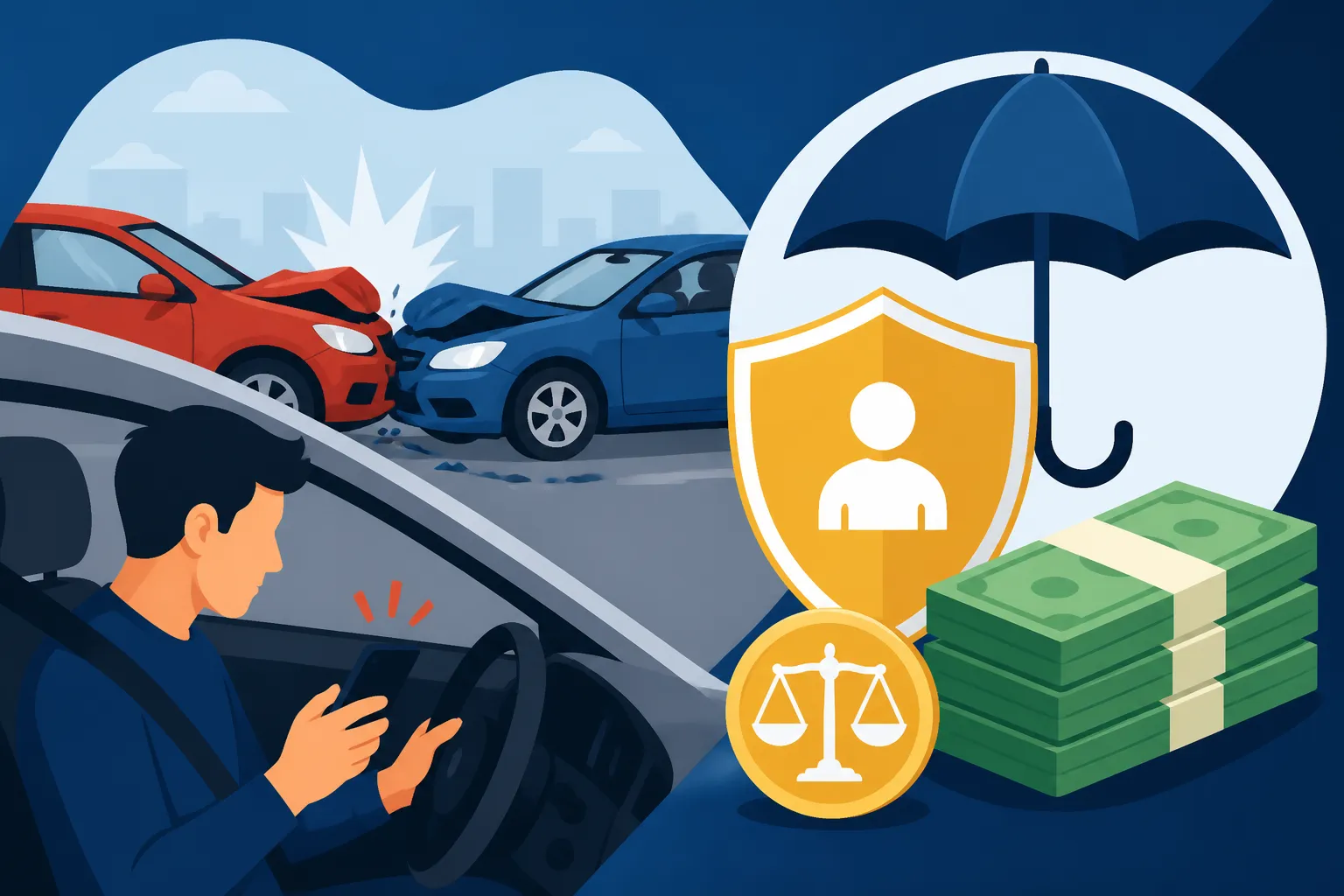
Average Settlement for a Distracted Driving Accident
Experiencing a car accident is jarring enough, but when you realize the other driver was completely tuned out, perhaps scrolling social media or texting a friend, it adds a whole new layer of frustration and anger. You're left with the physical pain, the emotional shock, and a car that might be totaled, all because someone couldn't put their phone down. This guide is here to shed light on what you can expect from a distracted driving accident settlement, delving into the factors that influence how much you might receive and what steps you can take to ensure you're fairly compensated.
Understanding Distracted Driving and Its Impact on Claims
Distracted driving isn't just a minor annoyance; it's a dangerous epidemic on our roads, leading to countless preventable accidents. When someone is operating a vehicle while their attention is somewhere else entirely, the consequences can be devastating.
What Constitutes Distracted Driving?
At its core, distracted driving is any activity that diverts a driver's attention away from the primary task of driving. We often immediately think of texting and driving, and that's absolutely a major one. But it's so much more than just a phone. It could be someone fiddling with their GPS, reaching for something on the floor, eating a messy burger, applying makeup, or even getting engrossed in a conversation with passengers or looking at something outside the car that isn't related to the road ahead.
Imagine you're driving down a busy street in Los Angeles. Suddenly, a car veers into your lane without warning. You swerve, hit the brakes, but it's too late. As you look over, you see the driver of the other vehicle fumbling with their phone, perhaps trying to answer a call or quickly check a notification. This isn't just careless; it's a deliberate choice to engage in an activity that takes their eyes, hands, or mind off the road. When this happens, establishing who is at fault in a car accident becomes significantly clearer, as the distraction often points directly to negligence.
The crucial part here is recognizing that any activity that pulls a driver's focus, even for a split second, can lead to a collision. That split second is often all it takes to miss a sudden stop, a pedestrian, or a change in traffic flow.
The Immediate Aftermath of a Distracted Driving Crash
The moments right after a crash are chaotic, filled with adrenaline, confusion, and often, pain. When you've been hit by a distracted driver, there's often an added layer of disbelief and anger. You might remember seeing them looking down just before impact, or maybe they admitted to checking their phone.
Your first priority, of course, is safety and medical attention. Beyond that, it's absolutely critical to start gathering evidence immediately. If the other driver was clearly distracted, like the person you saw checking their phone, this information needs to be noted in the police report. Officers often observe signs of distraction, like a cell phone on the seat or the driver's demeanor. Witness statements are golden here too – did anyone else see them on their phone? What about dashcam footage from your car or a nearby business? Even if you think it's a minor fender-bender, it's wise to follow all the steps outlined in a guide like What to Do After a Car Accident: Step-by-Step (2026).
These details are vital because they form the foundation of your claim. Without clear evidence that distraction played a role, it can be harder to prove the other driver's heightened negligence. Remember, the immediate aftermath sets the stage for everything that follows in your pursuit of compensation.
Why Distracted Driving Makes Settlements Unique
Distracted driving accidents often lead to a more straightforward determination of fault. When a driver is clearly engaged in a non-driving activity, it strongly indicates negligence. This clarity can significantly impact your claim. Insurance companies generally have a harder time disputing liability when there's compelling evidence of distraction, like cell phone records confirming texting at the time of the crash or witness testimony. This means the negotiation process might focus more heavily on the extent of your damages rather than who was responsible.
Furthermore, in some cases, evidence of extreme distraction (like continuous texting or watching a video) can even lead to what are known as punitive damages. These aren't just to compensate you for your losses, but to punish the at-fault driver for their reckless behavior and deter others from doing the same. While rare, the potential for punitive damages underscores how seriously the legal system views distracted driving. Understanding how fault is determined in a car accident is crucial, but with distracted driving, that determination often leans heavily in favor of the victim.
Key Factors Influencing Distracted Driving Accident Settlements
Trying to pin down an "average" settlement for a distracted driving accident can feel like chasing a moving target. The truth is, there's no single average, because every accident is a unique snowflake of circumstances, injuries, and financial impacts. However, certain key factors consistently drive the value of any car accident settlement, and they're especially impactful in distracted driving cases.
Severity of Injuries and Medical Expenses
This is, without a doubt, the heaviest hitter when it comes to determining settlement value. Your physical well-being and the costs associated with restoring it form the bedrock of your claim. We're talking about everything from immediate emergency room visits to ongoing physical therapy, specialist consultations, prescription medications, and even potential future surgeries or long-term care needs.
Consider someone who suffers a debilitating traumatic brain injury (TBI) after being rear-ended by a driver looking at their phone. This isn't just a few doctor visits; it's potentially years of cognitive therapy, neurological appointments, and an inability to return to their previous job. The medical bills alone could easily climb into the hundreds of thousands of dollars. Compare that to a case where someone experiences whiplash, which, while painful and disruptive, might resolve with a few weeks of chiropractic care. The financial compensation needed for these two scenarios will be drastically different.
A comprehensive guide on Common Car Accident Injuries: Complete Guide (2027) can give you a clearer picture of the types of injuries that commonly occur and their typical treatments. It's critical to document every single medical appointment, every prescription, and every bill. Even if you're experiencing what seems like a minor ache, it's important to seek prompt medical attention, as some severe injuries, like certain concussions or herniated discs, might have delayed injury symptoms after a car accident. If you don't establish a clear link between the accident and your medical treatment, it can be much harder to claim these costs later.
Economic vs Non-Economic Damages
When we talk about what goes into a settlement, we're broadly looking at two categories of damages: economic and non-economic.
-
Economic Damages are the tangible, quantifiable financial losses you've incurred. This is the easy stuff to put a dollar figure on. Think of:
- Medical Expenses: All the bills from hospitals, doctors, therapists, medications, and medical devices.
- Lost Wages: The income you've missed out on because your injuries prevented you from working. This isn't just your paycheck; it includes bonuses, commissions, and even missed opportunities for promotions.
- Property Damage: The cost to repair or replace your vehicle, and any other personal property damaged in the crash.
- Out-of-Pocket Expenses: Things like transportation to medical appointments, childcare while you're recovering, or even special adaptive equipment you might need.
-
Non-Economic Damages are much harder to quantify because they refer to the intangible losses that don't come with a bill. These are often the largest component of a severe injury claim. This includes:
- Pain and Suffering: The physical pain you endured from the injuries, treatment, and recovery.
- Emotional Distress: The psychological impact, such as anxiety, depression, fear of driving again, or even PTSD.
- Loss of Enjoyment of Life: How your injuries have prevented you from participating in hobbies, family activities, or just enjoying your daily life.
Proving economic damages requires meticulous record-keeping. For non-economic damages, it often involves journals detailing your daily pain levels, emotional state, and how your life has changed. Insurance companies use various methods, like the "multiplier method," to calculate pain and suffering, often based on the total economic damages. Understanding the nuances of economic vs non-economic damages in injury claims is vital for a comprehensive settlement.
Evidence of Distraction and Liability
In a distracted driving accident, the clearer the evidence of distraction, the stronger your case for liability. This isn't just about proving that an accident happened, but specifically that the other driver's distraction was the direct cause. How to prove the other driver was at fault often hinges on uncovering this critical evidence.
Key pieces of evidence include:
- Police Reports: These are invaluable. If the officer observed the other driver admit to distraction, or if they cited the driver for a distracted driving offense (like texting while driving), this provides official documentation.
- Witness Statements: Eyewitnesses who saw the other driver looking down at their phone or otherwise distracted immediately before the collision are incredibly powerful.
- Cell Phone Records: Subpoenaed phone records can show if the other driver was actively texting, calling, or using data at the precise moment of the crash. This is often a smoking gun.
- Dashcam Footage: If you or a nearby vehicle had a dashcam, this visual evidence can unequivocally show the other driver's actions.
- Driver Admissions: Sometimes, a distracted driver will actually admit to being distracted at the scene. While this is an admission of fault, it's something you should never do yourself. Remember, what is an admission of fault (and how to avoid it)? is a crucial piece of knowledge to protect your claim.
The stronger your evidence of distraction, the less room the insurance company has to argue about fault, which can significantly streamline negotiations and potentially increase your settlement amount.
Exploring Average Settlement Ranges for Distracted Driving Cases
It's natural to wonder, "What's the average settlement for a distracted driving accident?" But as a veteran lifestyle blogger in the car accident claim space, I have to be brutally honest with you: there's truly no one-size-fits-all answer. The "average" can range from a few thousand dollars for minor property damage and a quick recovery to well over six or even seven figures for catastrophic injuries.
General Ranges and Why They Vary So Widely
While I can't give you a precise average, we can talk about general ranges based on injury severity:
- Minor Accidents (Few Thousand to Tens of Thousands): These typically involve low-impact collisions, soft tissue injuries like whiplash or minor sprains, and limited property damage. Medical treatment is usually conservative (chiropractic, physical therapy) and recovery is relatively quick. For example, if you were rear-ended at a stop light in Phoenix by a driver who was looking at their phone, and you only had minor neck stiffness for a few weeks, your settlement would likely fall into this lower range.
- Moderate Accidents (Tens of Thousands to Low Six Figures): These cases involve more significant injuries like herniated discs, concussions, or broken bones that require more extensive medical treatment, potentially including surgery or prolonged therapy. Lost wages might be a significant factor here due to a longer recovery period. The pain and suffering component also increases considerably.
- Severe/Catastrophic Accidents (Hundreds of Thousands to Multi-Millions): These are the truly life-altering accidents, often involving traumatic brain injuries, spinal cord damage, severe disfigurement, or permanent disability. These settlements must account for lifelong medical care, loss of future earning capacity, significant pain and suffering, and a profound loss of enjoyment of life.
The reason for this vast range comes down to the unique combination of factors we discussed: the specific injuries sustained, the full extent of medical treatment required (past, present, and future), the impact on your ability to work, and the emotional toll the accident has taken. Furthermore, how comparative fault reduces your settlement can also play a role; if you are found to be even partially at fault, your compensation can be proportionally reduced.
Impact of State Laws and Insurance Policies
Where your accident occurs and the types of insurance involved are massive pieces of the settlement puzzle. Car accident laws vary dramatically from state to state, and these differences can fundamentally alter your claim.
- At-Fault vs. No-Fault States: Some states, like Florida and New York, operate under a "no-fault" system. What is a no-fault state? (And Which States Are No-Fault) means that your own insurance company (through Personal Injury Protection or PIP coverage) pays for your initial medical expenses and lost wages, regardless of who caused the accident. This system aims to speed up minor claims. However, if your injuries are severe enough to meet certain thresholds (like a serious injury or a specific dollar amount in medical bills), you can then step outside the no-fault system and pursue a claim against the at-fault distracted driver for additional damages, including pain and suffering. In contrast, in "at-fault" states (like California or Texas), the at-fault driver's insurance is responsible for all your damages from the outset.
- Minimum Insurance Coverage: Every state mandates minimum liability insurance coverage. For instance, in Texas, drivers are generally required to carry at least $30,000 for bodily injury per person, $60,000 for bodily injury per accident, and $25,000 for property damage. If the distracted driver only has minimum coverage and your damages far exceed those limits, collecting full compensation can become a challenge. This is where your own Uninsured/Underinsured Motorist (UM/UIM) coverage becomes a lifesaver.
- Your Own Insurance Policies: Your own auto policy might provide additional protection. Medical Payments (MedPay) or PIP coverage can help cover medical bills regardless of fault. UM/UIM coverage is incredibly important if the distracted driver is uninsured or their policy limits are too low to cover your full damages.
Navigating these state-specific laws and understanding the intricacies of different insurance policies is complex, and it’s a big reason why legal guidance is often beneficial.
The Role of Negotiation and Legal Representation
After a distracted driving accident, the at-fault driver's insurance company is not on your side, no matter how friendly the adjuster seems. Their primary goal is to pay out as little as possible. This is where the art of negotiation comes into play, and why having strong legal representation can be a game-changer.
Insurance adjusters are skilled negotiators. They might try to downplay your injuries, suggest you're partially at fault, or offer a lowball settlement early on, hoping you'll accept out of desperation. They have vast resources and experience on their side. They might question the necessity of your medical treatment or argue that your pain and suffering isn't as severe as you claim.
This is precisely why learning how to negotiate a car accident settlement is so important. An experienced car accident attorney understands these tactics. They can:
- Gather and Present Evidence: A lawyer knows exactly what evidence is needed to prove the distracted driver's fault and the full extent of your damages, including future medical costs and lost earning capacity.
- Communicate with Insurers: They will handle all communications with the insurance company, shielding you from their aggressive tactics and ensuring you don't inadvertently say anything that could harm your claim.
- Accurately Value Your Claim: Lawyers have access to vast databases and expertise to properly calculate the true value of your claim, including a realistic assessment of pain and suffering, which is a significant component in most serious injury cases.
- Negotiate for Max Compensation: They know how to counter low offers effectively, present compelling arguments, and push for the maximum possible settlement. If a fair settlement can't be reached, they are prepared to take your case to court.
While some minor claims might be manageable on your own, especially if there's no serious injury, for anything beyond a superficial bump, a lawyer's expertise often results in a significantly higher payout than you could achieve alone, even after their fees.
Maximizing Your Settlement After a Distracted Driving Accident
No one ever plans to be in an accident, let alone one caused by a distracted driver. But if it happens, there are definite steps you can take to protect your rights and ensure you receive the fullest possible compensation for your injuries and losses. It’s all about being proactive and thorough.
Documenting Everything Meticulously
From the moment the accident occurs, you need to become a meticulous record-keeper. This isn't just a suggestion; it's absolutely crucial for building a strong claim.
- At the Scene: Take photos and videos of everything – the position of the vehicles, damage to both cars, skid marks, road conditions, traffic signs, and any visible injuries. Get contact information for witnesses, and make sure the police report is filed, especially noting if the other driver seemed distracted.
- Medical Records: This is perhaps the most important documentation. Keep every single record from every doctor's visit, specialist consultation, physical therapy session, chiropractor appointment, and mental health therapy. Hold onto all prescription receipts and bills for medical devices. These documents are the irrefutable proof of your injuries and the costs of treating them.
- Expense Receipts: Keep a detailed log and receipts for any out-of-pocket expenses related to the accident – transportation to appointments, parking fees, childcare costs, lost items, and anything else you had to pay for due to the crash.
- Pain Journal: Start a daily journal describing your pain levels, how your injuries are affecting your daily life, your emotional state, and any limitations you're experiencing. This helps document your pain and suffering: how it's calculated, providing a tangible record of your intangible losses.
- Lost Wage Documentation: Obtain letters from your employer detailing missed workdays, lost income, and any changes to your employment status or responsibilities due to your injuries.
The more detailed and organized your documentation, the harder it is for insurance companies to dispute the validity and extent of your claim.
Seeking Prompt Medical Attention
This cannot be stressed enough: seek medical attention immediately after a car accident, even if you feel fine. Adrenaline can mask pain, and many serious injuries, like concussions, whiplash, or internal bleeding, might not present symptoms for hours or even days. This is precisely why understanding delayed injury symptoms after a car accident is so important.
When you delay medical care, insurance companies can argue that your injuries weren't caused by the accident, or that you're exaggerating their severity. They might suggest that if you were truly hurt, you would have seen a doctor sooner. Seeing a medical professional promptly creates an immediate, official link between the accident and your injuries.
Follow all your doctor's recommendations diligently. If they prescribe physical therapy, go to every session. If they recommend follow-up appointments, schedule them. Gaps in treatment or failure to follow medical advice can also be used by insurance companies to minimize your claim, suggesting you're not as injured as you say or that you contributed to your prolonged recovery. Your health is paramount, and consistent medical care is your best advocate.
Avoiding Common Pitfalls
The period after a car accident is fraught with potential missteps that can significantly harm your settlement. Being aware of these common pitfalls can save you a lot of grief and money.
- Do Not Admit Fault: Even if you think you might have contributed in some way, never admit fault at the scene of the accident or to an insurance adjuster. Let the facts and the investigation speak for themselves. What is an admission of fault (and how to avoid it)? explains this crucial point. Anything you say can and will be used against you.
- Avoid Giving Recorded Statements: The other driver's insurance company will likely ask you to give a recorded statement. Politely decline. You are not legally obligated to provide one. These statements are primarily designed to gather information they can later use to deny or devalue your claim.
- Don't Settle Too Quickly: Initial settlement offers are often low, especially if you haven't completed your medical treatment. Accepting an offer too soon means you might waive your right to claim future medical expenses or unforeseen complications. Wait until you have reached maximum medical improvement (MMI) and have a full understanding of all your damages before considering any offer.
- Don't Post on Social Media: Anything you post online can be scrutinized by insurance companies. Pictures of you smiling at a barbecue or engaging in physical activities, even if you're in pain, can be used to argue that your injuries aren't as severe as you claim. It's best to keep your social media private or avoid posting about the accident and your recovery altogether.
Staying informed and cautious will protect your right to a fair settlement.
Factors Affecting Distracted Driving Accident Settlement Value
| Factor | Description | Impact on Settlement Value |
|---|---|---|
| Injury Severity | Type and extent of physical and psychological injuries (e.g., whiplash, TBI, broken bones, PTSD). | High: Directly correlates with medical costs and pain & suffering. |
| Medical Expenses | Past, present, and future costs of medical treatment, rehabilitation, prescriptions, and assistive devices. | High: Tangible, easily quantifiable financial loss. |
| Lost Wages | Income lost due to inability to work during recovery, including future earning capacity. | High: Direct financial impact, often substantial for severe injuries. |
| Pain & Suffering | Physical pain, emotional distress, mental anguish, and loss of enjoyment of life. | High: Significant non-economic component, multiplier often applied. |
| Evidence of Distraction | Clear proof the other driver was distracted (e.g., cell phone records, witness testimony, police report). | High: Strengthens liability, can lead to higher offers or punitive damages. |
| State Laws | Comparative/contributory negligence rules, no-fault vs. at-fault systems, minimum insurance requirements. | Moderate to High: Can reduce or cap potential recovery. |
| Insurance Policy Limits | Amount of coverage held by the at-fault driver and your own UM/UIM policies. | Moderate to High: Maximum recoverable amount often capped by policy limits. |
| Legal Representation | Presence and experience of a personal injury attorney. | Moderate to High: Can significantly increase final settlement through expert negotiation and litigation. |
| Jury Verdict Potential | Likelihood and potential outcome if the case goes to trial. | Moderate: Influences negotiation leverage for both sides. |
| Pre-existing Conditions | Any prior injuries or health issues that might be argued to be the cause of current symptoms. | Moderate: Can complicate claims, requiring strong medical evidence. |
Disclaimer
Please remember that this article provides general information and insights into car accident claims and settlements. It is not a substitute for professional legal advice. Every accident case is unique, and the information presented here may not apply to your specific situation. We strongly recommend consulting with a qualified personal injury attorney to discuss the details of your claim and understand your legal rights and options.