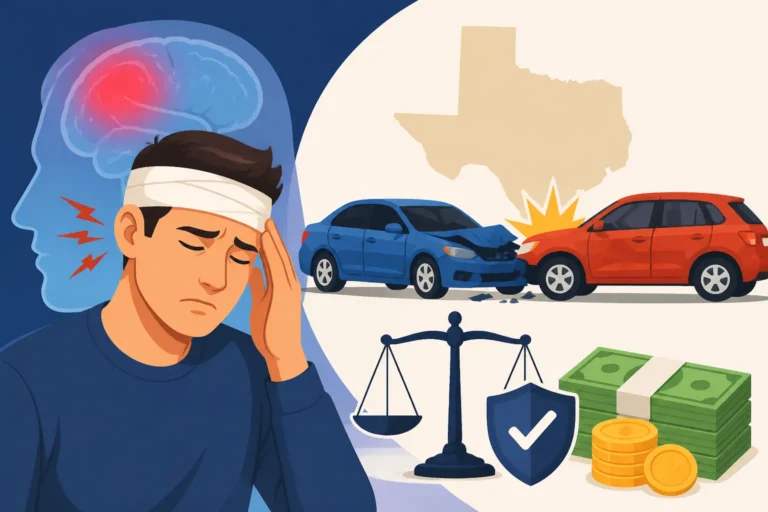
Average Settlement for PTSD From a Car Accident
Experiencing a car accident is traumatic enough, but when the dust settles and the physical injuries start to heal, sometimes the invisible wounds remain. Many people find themselves struggling with deep emotional distress, flashbacks, or an overwhelming sense of fear long after the crash, which can be signs of Post-Traumatic Stress Disorder (PTSD). Understanding how this profound psychological impact translates into a car accident settlement can feel like navigating a maze, especially when you're already grappling with your mental health. This guide is here to shed light on what goes into determining the average settlement for PTSD stemming from a car accident, helping you understand the value of your suffering and the path to recovery.
Understanding PTSD After a Car Accident
When we talk about the aftermath of a car accident, most people immediately think of broken bones, whiplash, or cuts and bruises. But the impact often runs far deeper, leaving a psychological scar that can be just as debilitating, if not more so. Post-Traumatic Stress Disorder (PTSD) is a very real, diagnosable mental health condition that can develop after experiencing or witnessing a terrifying event, and a car accident certainly fits that description. It's not just about being "shaken up"; it's a persistent, often overwhelming disruption to your daily life.
What Exactly Is Car Accident PTSD?
Car accident PTSD occurs when the brain struggles to process the trauma of the collision, leading to a host of intrusive symptoms. It's not a sign of weakness; it's a physiological response to an abnormal, terrifying event. Imagine driving down a familiar street and suddenly, without warning, you're faced with a violent impact, the sound of screeching tires, shattering glass, and the fear of serious injury or even death. This kind of event can rewire your brain's threat response system, making you constantly on edge, even when you're physically safe. The Diagnostic and Statistical Manual of Mental Disorders (DSM-5) outlines specific criteria for a PTSD diagnosis, and seeing a qualified mental health professional is crucial for this assessment.
Common Symptoms and How They Impact Life
The symptoms of PTSD can manifest in various ways, often making everyday tasks feel like insurmountable challenges. You might experience intrusive memories, like vivid flashbacks of the crash, or recurring nightmares that rob you of peaceful sleep. Many individuals develop avoidance behaviors, such as refusing to drive or ride in cars, especially near the accident scene, or avoiding conversations about the incident. This avoidance can severely limit your freedom and independence. You might also notice negative changes in thinking and mood, such as persistent negative beliefs about yourself or the world, emotional numbness, a loss of interest in activities you once enjoyed, or feelings of detachment from others. Finally, heightened arousal symptoms are common, including being easily startled, feeling constantly hypervigilant, having difficulty concentrating, or experiencing irritability and angry outbursts. These symptoms collectively make it incredibly difficult to maintain a normal routine, affecting work, relationships, and overall quality of life. For more detail on the specific psychological impacts, you might find our guide on PTSD and Emotional Distress After a Car Accident particularly helpful.
Factors Influencing PTSD Settlement Amounts
Determining the "average" settlement for PTSD from a car accident is notoriously complex because every individual's experience is unique. There's no one-size-fits-all number. Instead, a constellation of factors comes into play, each significantly influencing the final payout. It's not just about the diagnosis itself, but the severity of your symptoms, the intensity of your treatment, and how profoundly this condition has altered your life.
Severity of the PTSD and Its Impact on Daily Life
The more severe and debilitating your PTSD symptoms are, the higher the potential settlement. For example, someone who experiences occasional anxiety in traffic is likely to receive less compensation than someone whose PTSD is so severe they cannot leave their home, hold a job, or maintain relationships. The key here is proving the impact. Has your PTSD led to job loss or a significant reduction in earning capacity? Are you unable to engage in hobbies or social activities you once loved? Does it affect your ability to care for your children or maintain your household? These real-world consequences are vital in demonstrating the true extent of your suffering. Imagine a chef in Los Angeles who develops severe PTSD after a multi-car pileup on the 101 Freeway. The constant noise of a bustling kitchen, the sudden movements, and the high-pressure environment become unbearable, forcing him to quit his job. His settlement would likely reflect the loss of a specialized career, future earnings, and the profound disruption to his identity and financial stability.
Medical Treatment and Documentation
Consistent and thorough medical documentation is paramount when claiming damages for PTSD. This isn't just about showing up for a few therapy sessions; it's about a clear, continuous record of your diagnosis, symptoms, treatment plan, and progress (or lack thereof). This includes psychiatric evaluations, therapy notes, medication prescriptions, and any hospitalizations related to your mental health. The type and duration of treatment also play a significant role. Are you undergoing long-term cognitive-behavioral therapy (CBT), eye movement desensitization and reprocessing (EMDR), or pharmaceutical treatment? The cost and necessity of these treatments will be factored into your economic damages. Insurance companies will scrutinize your medical records, looking for gaps in treatment or inconsistencies that could undermine your claim. Without robust documentation, it becomes incredibly difficult to prove the link between the accident and your PTSD, or the necessity of your ongoing care. Our guide on How to Prove Injuries in a Car Accident Claim elaborates on this crucial aspect.
State Laws and Fault Determination
The state where your accident occurred can significantly impact your PTSD settlement due to varying fault laws. Some states follow "at-fault" systems, meaning the at-fault driver's insurance is primarily responsible for all damages, including psychological ones. Other states are "no-fault," requiring you to first seek compensation from your own insurance for medical expenses, regardless of who caused the accident. Furthermore, states have different rules regarding comparative or contributory negligence. For instance, in a pure comparative negligence state like California, even if you are found 90% at fault, you can still recover 10% of your damages. However, in a contributory negligence state like Maryland or North Carolina, if you are found even 1% at fault, you may be entirely barred from recovering any compensation. This determination of Who Is at Fault in a Car Accident? Complete Guide (2027) is a foundational step, as your ability to recover any damages, including those for PTSD, hinges on it. These legal frameworks directly influence how much you can claim and from whom, making the location of the accident a critical factor in your settlement.
Calculating Damages for PTSD
When it comes to calculating the financial value of a PTSD claim, it's not simply a matter of adding up a few bills. Car accident settlements aim to compensate you for both the tangible losses you've incurred and the intangible suffering you've endured. For PTSD, which is often an "invisible" injury, both categories can be substantial and require careful calculation.
Economic Damages: Tangible Losses
Economic damages are the easily quantifiable financial losses that result directly from your PTSD. These are the "receipts and bills" that prove your financial strain.
- Medical and Therapeutic Costs: This is often the most straightforward component. It includes all past and future expenses related to treating your PTSD, such as psychiatrist visits, psychologist or therapist sessions, EMDR therapy, prescription medications (e.g., antidepressants, anti-anxiety drugs), hospitalizations if necessary, and any specialized trauma-focused treatments. It's crucial to account for not just what you've already paid, but what you will need in the future. A mental health professional can provide a prognosis and estimate future treatment costs, which is vital for a comprehensive claim.
- Lost Wages and Diminished Earning Capacity: If your PTSD prevents you from working, or forces you into a lower-paying role, you can claim lost wages. This includes income you've already missed and projected future earnings you'll lose due to your condition. For example, if your PTSD makes it impossible to perform your job as a long-haul truck driver, your lost earning capacity would be significant. This also applies if you have to take a less demanding, lower-paying job or can only work part-time. The calculation needs to consider your age, profession, and career trajectory before the accident.
- Other Out-of-Pocket Expenses: Don't overlook smaller, but still significant, costs. This could include transportation expenses to and from therapy appointments, childcare costs incurred because you're too symptomatic to care for your children, or even home modifications if your PTSD leads to agoraphobia and you need to create a safer, more contained environment. Every legitimate expense directly tied to your PTSD and the accident should be documented and included.
Non-Economic Damages: Intangible Suffering
This is where the calculation becomes more subjective, yet incredibly important for PTSD. Non-economic damages compensate you for the pain, suffering, and overall negative impact on your life that doesn't come with a direct bill.
- Pain and Suffering: This category accounts for the emotional anguish, mental distress, anxiety, fear, and psychological torment that PTSD inflicts. Because there's no fixed price tag for suffering, insurance companies and courts often use a "multiplier" method to calculate this. They'll take your total economic damages and multiply them by a number, typically between 1.5 and 5 (or even higher in severe cases), depending on the severity and duration of your PTSD. The more severe and long-lasting your PTSD, the higher the multiplier. The constant dread, the inability to sleep, the intrusive thoughts – these are all components of pain and suffering. You can learn more about this calculation in our article Pain and Suffering: How It's Calculated.
- Loss of Enjoyment of Life: This damage component addresses how your PTSD has stripped away your ability to enjoy activities and aspects of life you once cherished. If you can no longer attend concerts, travel, participate in sports, or even enjoy simple family outings due to your symptoms, that loss can be compensated. It's about the diminution of your quality of life. For instance, if you were an avid hiker but now panic at the thought of being away from home due to anxiety attacks, that is a significant loss of enjoyment.
- Emotional Distress: While overlapping with pain and suffering, emotional distress specifically refers to the ongoing psychological trauma you experience, which can be acute and chronic. This includes depression, anxiety, humiliation, and fright. This component of your claim addresses the psychological impact beyond physical pain, encompassing the entire spectrum of negative emotions and mental states caused by your PTSD. For a comprehensive overview of how damages are categorized, refer to Economic vs Non-Economic Damages Explained.
Here's a simplified table illustrating how various factors might influence the different types of damages for a PTSD claim:
| Factor | Economic Damages Impact (Tangible) | Non-Economic Damages Impact (Intangible) | Overall Settlement Effect |
|---|---|---|---|
| Severity of PTSD | Higher treatment costs, greater lost wages | Increased pain & suffering multiplier, greater loss of enjoyment | Substantially higher |
| Treatment Duration/Intensity | Direct correlation to medical bill amounts | Demonstrates sustained suffering, supports higher multiplier | Moderate to high increase |
| Impact on Work/Life | Direct lost wages, diminished earning capacity | Significant loss of enjoyment, emotional distress | High increase, especially for long-term impacts |
| Age of Claimant | Younger claimants may have higher future lost wages/medical costs | May influence perceived duration of suffering | Younger claimants generally higher |
| Clear Documentation | Proof for all expenses | Substantiates severity of suffering for higher multiplier | Crucial for any recovery; lack can severely reduce or deny claim |
Navigating the Claims Process for PTSD
The claims process for any car accident injury can be daunting, but when you're dealing with the complexities of PTSD, it can feel particularly overwhelming. Insurance companies, unfortunately, are often skeptical of "invisible injuries," making it even more crucial to approach your claim strategically and with thorough preparation.
Documenting Your PTSD Journey
From the moment you suspect PTSD, meticulous documentation is your best friend. This starts with seeking professional medical help immediately. Don't delay seeing a doctor, even if your physical injuries seem minor at first, as Delayed Injury Symptoms After a Car Accident are common, especially psychological ones. A general practitioner can refer you to a mental health specialist, such as a psychiatrist, psychologist, or licensed therapist. Their diagnosis, treatment notes, and prognosis are the bedrock of your claim. Keep a detailed journal of your symptoms, how they fluctuate, and how they impact your daily life, work, and relationships. Note specific instances of flashbacks, panic attacks, avoidance behaviors, and any changes in mood or sleep patterns. Include dates, times, and descriptions. This personal account, combined with professional medical records, creates a compelling narrative of your suffering. Save all receipts for medical appointments, prescriptions, co-pays, and any related expenses. This comprehensive record is essential for proving both the existence and the severity of your PTSD.
Dealing with Insurance Adjusters
Insurance adjusters are trained to minimize payouts, and they often view psychological injuries with a critical eye, sometimes suggesting that your symptoms are exaggerated or pre-existing. It's common for them to offer a lowball settlement early in the process, hoping you'll accept before fully understanding the long-term impact of your PTSD. Be cautious about what you say, and avoid making recorded statements without legal counsel. Insurance adjusters might try to get you to admit partial fault or downplay your injuries. Remember, their primary goal is to protect their company's bottom line, not necessarily your well-being. They may request access to your entire medical history, not just accident-related records, to look for any pre-existing conditions they can blame for your current state. This is where legal guidance becomes invaluable. Understanding How Insurance Companies Determine Who Is at Fault can give you an edge in these conversations.
The Value of Legal Representation
Given the complexities of proving PTSD and negotiating with insurance companies, hiring a qualified car accident lawyer is often the most beneficial step you can take. A lawyer specializing in personal injury claims understands how to gather the necessary evidence, including expert testimonies from mental health professionals, to substantiate your PTSD diagnosis and its impact. They can effectively calculate both your economic and non-economic damages, ensuring that future medical costs and lost earning capacity are thoroughly considered. More importantly, they will handle all communications and negotiations with the insurance company, shielding you from their tactics and advocating fiercely for your rights. Trying to manage a complex PTSD claim while simultaneously battling debilitating symptoms is incredibly difficult, if not impossible. A lawyer can significantly increase your chances of securing a fair settlement that truly reflects the extent of your suffering. Our comprehensive guide, Do You Need a Lawyer for a Car Accident? (2027), offers further insights into when legal counsel is most critical.
Submitting a robust demand letter, supported by all your medical records, therapist notes, a detailed account of your daily struggles, and an expert opinion on your prognosis, is a critical step in the claims process. This letter outlines your case, your injuries, and the compensation you are seeking. Without professional guidance, accurately valuing your claim and presenting it persuasively can be a monumental task, often leading to a much lower settlement than you deserve for the profound impact PTSD has had on your life. For a deeper understanding of the entire process from the accident scene to resolution, you should review What to Do After a Car Accident: Step-by-Step (2027).
Disclaimer
Please remember that the information provided in this article is for general informational purposes only and does not constitute legal advice. Every car accident and personal injury claim is unique, and the potential for a PTSD settlement varies significantly based on individual circumstances, evidence, and applicable state laws. It is crucial to consult with a qualified personal injury attorney in your jurisdiction for advice tailored to your specific situation.