How Much Is a Concussion Settlement Worth in Texas?
Experiencing a car accident can be a terrifying and disorienting event, and when it results in a concussion, the aftermath can feel overwhelming. Many folks in Texas who've suffered a head injury in a collision find themselves wondering, "How much is this concussion settlement worth?" It's a valid, pressing question, and the answer, unfortunately, isn't always straightforward. This guide aims to pull back the curtain on the complexities of concussion settlements in Texas, helping you understand the factors that impact your potential compensation and empowering you to navigate the path forward.
Understanding a Concussion After a Car Accident
Let's face it, when most people think of car accident injuries, they often picture broken bones or visible lacerations. But some of the most insidious and impactful injuries are the invisible ones, and a concussion certainly falls into that category. It’s not just "getting your bell rung"; it's a serious brain injury that can dramatically alter your life, at least temporarily, and sometimes, much longer.
What Exactly Is a Concussion?
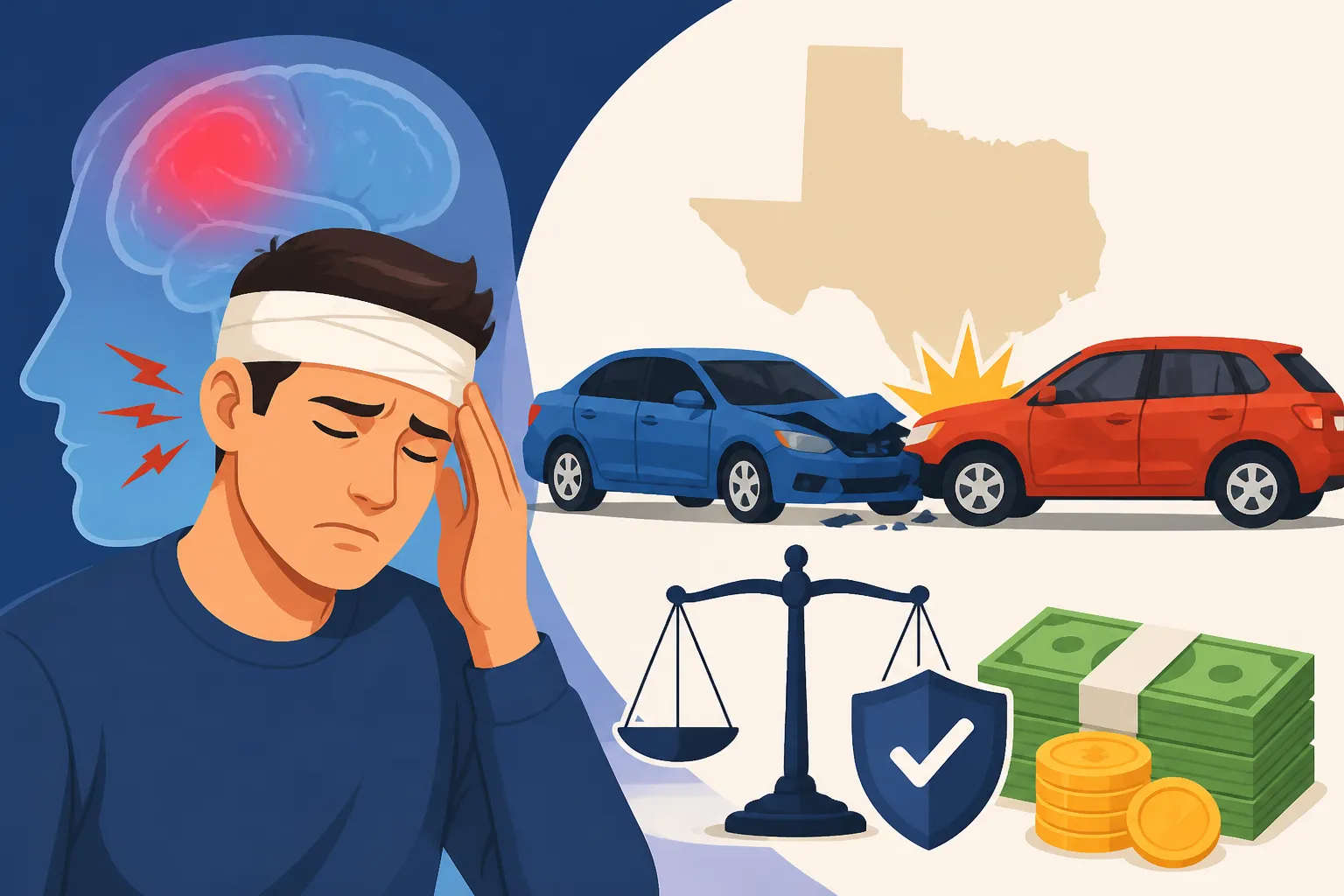
At its core, a concussion is a type of traumatic brain injury (TBI) caused by a bump, blow, or jolt to the head, or by a hit to the body that causes the head and brain to move rapidly back and forth. This sudden movement can cause the brain to bounce around or twist in the skull, stretching and damaging brain cells and creating chemical changes. Unlike what you might see in movies, you don't need to lose consciousness to have suffered a concussion. In fact, most concussions occur without a loss of awareness.
The tricky part about concussions is that their symptoms aren't always immediate. You might feel fine at the scene of the accident, exchange information, and go home, only for a headache, dizziness, confusion, or sensitivity to light and sound to creep in hours or even days later. This phenomenon of delayed injury symptoms after a car accident is incredibly common with head injuries and can complicate initial assessments. It's why doctors always emphasize monitoring for these signs even after a seemingly minor bump.
The range of symptoms can vary widely, from mild and fleeting to severe and long-lasting, significantly impacting daily life. Common concussion symptoms after a car accident can include headaches, nausea, memory problems, difficulty concentrating, irritability, changes in sleep patterns, and even mood swings. Because these symptoms aren't always visible, proving the extent of your injury to an insurance company or in court can be a real challenge without proper medical documentation and consistent follow-up.
Common Causes of Concussions in Vehicle Collisions
Car accidents are a prime culprit for concussions due to the violent forces involved. Even a seemingly minor fender-bender can generate enough force to cause a significant head injury. The mechanics of a crash often involve rapid acceleration and deceleration, leading to the brain sloshing inside the skull.
One of the most frequent mechanisms is the "whiplash effect" in rear-end collisions. While whiplash is commonly associated with neck injuries, the sudden, violent snapping motion of the head can easily cause the brain to impact the inside of the skull, leading to a concussion. It's a common injury when you're hit from behind while stopped, for instance. Your body might be restrained by the seatbelt, but your head can still whip forward and back.
Direct impact is another clear cause. This could be your head hitting the steering wheel, dashboard, side window, or even the headrest with enough force. Even if the impact doesn't break the skin, the internal trauma can be severe. The deployment of airbags, while designed to save lives, can also contribute to concussions, especially if you are too close to the airbag when it deploys or if the deployment force itself causes a significant jolt to the head and body. Each of these scenarios can lead to the delicate brain tissue suffering damage, underscoring why immediate medical evaluation is crucial after any significant impact.
The Texas Legal Landscape for Car Accident Concussion Claims
Navigating a personal injury claim after a car accident, especially one involving a concussion, can feel like wandering through a legal maze. Texas has specific laws that govern how these cases proceed, particularly when it comes to determining fault and the timeframe you have to act. Understanding these rules is absolutely essential for anyone pursuing a concussion settlement.
Texas's At-Fault Insurance System
Texas operates under an "at-fault" insurance system. This means that if you're injured in a car accident, the driver who caused the accident (the at-fault driver) and their insurance company are responsible for paying for your damages. This differs significantly from "no-fault" states where your own insurance would cover initial medical expenses regardless of who caused the crash. Because Texas is an at-fault state, proving who is at fault in a car accident is paramount to your claim.
The challenge, particularly with injuries like concussions, often lies in demonstrating the other driver's negligence and establishing a direct link between their actions and your injury. For instance, if another driver was distracted driving (texting) and swerved into your lane, causing a collision, you would need to show their distraction led to the crash, which in turn led to your concussion. This might involve police reports, witness statements, and even cell phone records.
Furthermore, Texas employs a "modified comparative negligence" rule, often referred to as the 51% bar rule. What this means for your concussion claim is crucial: you can still recover damages even if you were partially at fault for the accident, as long as your fault is not greater than 50%. If a jury determines you were 51% or more responsible for the crash, you cannot recover any compensation from the other driver. If, for example, you were found to be 20% at fault, your total settlement amount would be reduced by 20%. This is why it's so important to have a clear understanding of what happens if you're partially at fault.
Statutes of Limitations for Injury Claims in Texas
Time is truly of the essence when pursuing a car accident concussion claim in Texas. The state imposes strict deadlines, known as statutes of limitations, for filing personal injury lawsuits. Generally, in Texas, you have two years from the date of the car accident to file a lawsuit for personal injuries, which includes concussions. This might sound like a long time, but it can pass by remarkably quickly when you're focusing on recovery, medical appointments, and dealing with everyday life.
Missing this deadline can be devastating, as it usually means you forfeit your right to pursue compensation, regardless of the severity of your concussion or the clarity of the other driver's fault. There are very limited exceptions to this rule, primarily involving minors or individuals with certain mental incapacities, but these are rare. Therefore, it is strongly advised to seek legal counsel well before this two-year period is up.
This two-year window applies specifically to filing a lawsuit in court. The process of filing an insurance claim, negotiating with adjusters, and attempting to settle out of court often begins much sooner. However, if those negotiations don't pan out, or if the insurance company denies your claim, you must still ensure that a lawsuit is filed before the statute of limitations expires to preserve your legal rights. This strict timeframe underscores why it's vital to begin documenting everything and understanding how long you have to file a car accident claim in Texas as soon as possible after your accident.
Key Factors Influencing Concussion Settlement Value in Texas
Determining the worth of a concussion settlement in Texas isn't about pulling a number out of thin air. It's a complex calculation based on a multitude of individual circumstances surrounding your injury, your recovery, and the accident itself. There are several categories of damages that contribute to the overall settlement amount, and each one requires meticulous documentation and proof.
Severity and Duration of the Concussion
The severity of your concussion and how long its symptoms last are perhaps the most significant drivers of your settlement value. A mild concussion that resolves within a few weeks with minimal intervention will typically yield a lower settlement than a severe concussion leading to post-concussion syndrome or long-term cognitive issues. Doctors use various scales to assess the initial severity, but the true impact often becomes clear over time.
Consider two hypothetical Texans: Sarah and Mark. Sarah suffered a concussion in a minor fender bender in Dallas. She had a headache for a week, some sensitivity to light, and felt a bit "off." After two weeks of rest and light activity, her symptoms mostly resolved. Her medical bills were minimal, and she missed a few days of work. Mark, on the other hand, was involved in a more severe collision on the I-35 in Austin. His concussion symptoms, including debilitating headaches, severe dizziness, and memory problems, persisted for months, leading to a diagnosis of post-concussion syndrome. He required extensive treatment, including neurological evaluations, physical therapy, and cognitive therapy, and was unable to return to his high-stress job for nearly six months. Clearly, Mark's claim, with its prolonged recovery, extensive medical needs, and significant impact on his life, would be valued much higher than Sarah's.
It's also crucial to consider how a concussion can sometimes evolve into a more serious traumatic brain injury (TBI) if not properly managed or if symptoms persist. When doctors diagnose something like post-concussion syndrome, which can involve chronic headaches, dizziness, and cognitive impairment, the financial and personal toll dramatically increases. This long-term impact on your quality of life and ability to perform daily tasks directly influences the non-economic damages portion of your settlement.
Economic Damages: Tangible Losses
Economic damages are the quantifiable, out-of-pocket expenses you incur due to your concussion. These are often easier to calculate because they come with receipts, bills, and pay stubs. Collecting every piece of documentation related to these losses is absolutely critical for proving your claim.
-
Medical Expenses: This is usually the largest component of economic damages in a concussion claim. It includes everything from the initial emergency room visit or urgent care trip, follow-up appointments with your primary care physician, specialist visits (neurologists, neuropsychologists, ophthalmologists, ENTs), physical therapy, occupational therapy, cognitive therapy, prescription medications, diagnostic tests (MRI, CT scans, fMRI), and any future medical expenses anticipated for long-term recovery or management of lingering symptoms. For example, if you need ongoing cognitive rehabilitation at a facility in Houston, those costs will be factored in.
-
Lost Wages and Earning Capacity: If your concussion symptoms prevent you from working, you are entitled to compensation for lost income. This includes wages, bonuses, commissions, and even missed opportunities for promotion. If the concussion results in long-term cognitive impairment that affects your ability to perform your job duties or pursue your chosen career path, you can also claim lost earning capacity. This looks at the difference between what you could have earned over your lifetime versus what you will earn due to the permanent effects of the injury. For someone whose job heavily relies on mental acuity, like a software engineer or a pilot, this could be a substantial figure.
Beyond the direct medical costs and lost income, economic damages can also include other out-of-pocket expenses directly related to your injury. This might encompass transportation costs to and from medical appointments, modifications to your home if your injury creates new accessibility needs, or even the cost of hiring help for household tasks you can no longer perform due to your concussion. Keeping meticulous records of all these expenses is paramount for building a strong claim.
Non-Economic Damages: Intangible Losses
While economic damages cover your financial losses, non-economic damages address the more personal and subjective impact your concussion has had on your life. These are often referred to as "pain and suffering" and are much harder to quantify because they don't come with a bill. However, they are a very real and often substantial part of any car accident settlement.
-
Pain and Suffering: This encompasses the physical pain you endure from the concussion, such as chronic headaches, dizziness, or sensitivity. But it also includes the emotional and mental anguish that often accompanies a brain injury. Concussions can lead to significant psychological distress, including anxiety, depression, irritability, and PTSD, which can severely impact a person's quality of life. The daily struggle with these symptoms, the inability to participate in activities you once enjoyed, and the constant worry about your recovery all fall under this category.
-
Loss of Enjoyment of Life: Imagine you loved hiking the trails outside San Antonio or regularly played guitar with friends, but now your concussion symptoms make these activities impossible or excruciating. The inability to pursue hobbies, engage in social activities, or enjoy everyday life due to your concussion is a compensable loss. This damage acknowledges that your life has been diminished by the injury, extending beyond just physical discomfort to the broader reduction in your overall happiness and fulfillment.
Because these damages are subjective, insurance companies and courts often use multipliers or per diem methods to calculate their value, usually based on the severity and duration of your economic damages. A severe concussion with long-lasting effects will typically warrant a higher multiplier for pain and suffering than a mild, quickly resolved concussion. Documenting your pain and how your life has changed daily can be incredibly powerful in proving these intangible losses, which are thoroughly explained in guides about economic vs non-economic damages explained.
The Role of Evidence and Documentation
Without solid evidence, even the most debilitating concussion claim can be dismissed or undervalued. In personal injury cases in Texas, the burden is on the injured party to prove their damages. This means collecting and preserving every piece of information related to your accident and subsequent injury.
-
Medical Records: These are the cornerstone of your concussion claim. Detailed records from every doctor's visit, specialist consultation, diagnostic test (like CT scans or MRIs that might rule out other issues or show subtle changes), therapy sessions, and prescription history are vital. These records document the diagnosis of your concussion, the severity of your symptoms, the course of your treatment, and any prognoses for long-term recovery. They serve as objective proof that you sought and received appropriate medical care, and they help correlate your symptoms directly to the accident. Your medical records prove your injuries.
-
Accident Reports and Witness Statements: The official police report from the car accident provides an initial, impartial account of the crash, including details of fault, vehicle damage, and any immediate injuries reported. While a police report doesn't definitively determine who pays, it carries significant weight. Witness statements can corroborate your version of events and provide additional evidence of the accident's severity or the other driver's negligence. Even photos and videos taken at the scene can provide crucial context.
-
Personal Logs and Journals: Beyond formal documentation, keeping a personal journal detailing your daily symptoms, how they affect your life, your pain levels, and any emotional distress can be incredibly helpful. This personal account can put a human face on your claim, illustrating the real, day-to-day impact of your concussion, especially when discussing pain and suffering. Notes on missed work, canceled social events, or even simple struggles like reading or watching TV because of headaches or light sensitivity can be invaluable. This comprehensive collection of evidence, from the moment of impact to the ongoing recovery, provides a robust foundation for your concussion settlement claim.
| Damage Type | Description | Examples (Texas context) | How It Affects Settlement Value |
|---|---|---|---|
| Economic | Quantifiable, measurable financial losses incurred due to the concussion. | ER bills in Dallas, neurologist visits in Houston, prescription costs, physical therapy, lost wages from missed work in Austin. | Direct reimbursement for actual costs; easily verifiable with receipts and statements. |
| Non-Economic | Subjective, non-monetary losses that impact quality of life and well-being. | Chronic headaches, dizziness, anxiety, depression, inability to enjoy hobbies (e.g., hiking in Big Bend), sleep disturbances. | Harder to quantify, often calculated using multipliers based on economic damages, severity, and duration of suffering. |
Navigating the Settlement Process for a Concussion Claim
The journey from car accident to settlement can be a winding road, especially when a concussion is involved. It’s not just about proving the other driver was at fault; it’s about meticulously demonstrating the full extent of your concussion's impact on your life, financially, physically, and emotionally. Understanding the steps involved and knowing what to expect can empower you to protect your rights and pursue the compensation you deserve.
Initial Steps After a Concussion Accident
Your actions immediately following a car accident where you suspect a concussion can significantly influence the success of your future claim. These initial steps are crucial for both your health and your legal standing.
First and foremost, seek immediate medical attention, even if you feel fine. As we've discussed, concussion symptoms can be delayed, and what seems like a minor bump at the scene can develop into a serious injury hours or days later. Get checked out by paramedics, go to the emergency room, or visit an urgent care center in your local Texas community. Documenting this initial visit creates an official record that connects your injury directly to the accident, which is vital for how to prove injuries in a car accident claim. Don't brush off any symptoms, no matter how subtle; a thorough medical evaluation is your best defense against future claims that your injuries weren't caused by the accident.
Secondly, report the accident to the police and your insurance company. Even for seemingly minor accidents, having a police report can be invaluable. This report often includes details like the date, time, location, involved parties, and a preliminary assessment of fault, offering an official, third-party account of the event. Then, promptly notify your own insurance company, even if you believe the other driver is entirely at fault. While it might seem counterintuitive to call your own insurer if it wasn't your fault, this allows them to begin their internal process and can provide you with coverage benefits you might be entitled to, such as medical payments coverage. The sooner both authorities and insurers are aware, the better documented your case becomes. Remember, knowing what to do after a car accident is critical.
Dealing with Insurance Companies
Interacting with insurance companies after a concussion accident can be one of the most frustrating and bewildering parts of the entire process. Their primary goal is to minimize payouts, and they often employ tactics designed to do just that.
One common tactic is requesting a recorded statement. While it might sound innocuous, providing a recorded statement without legal counsel can inadvertently harm your claim. You might unintentionally say something that could be misconstrued or used against you later, especially when dealing with the cognitive fog a concussion can cause. It's almost always best to decline a recorded statement until you've consulted with an attorney. Additionally, insurance adjusters might try to offer a quick, lowball settlement early on. They know you're likely stressed, facing medical bills, and eager for resolution. However, accepting a quick offer often means settling for far less than your claim is truly worth, especially since the full extent and long-term impact of a concussion may not be clear for weeks or months. How much is a car accident settlement worth really depends on waiting until you reach maximum medical improvement.
When an adjuster calls, be polite but firm. Stick to the facts you know. Provide basic information about the accident, but avoid discussing your injuries in detail or speculating about fault. Remember, anything you say can be used in their assessment of your claim. Keep a detailed log of all communications with insurance companies, including who you spoke to, the date and time, and a summary of the conversation. This record-keeping, alongside consistent communication with your medical providers and legal team, forms a comprehensive strategy for effectively dealing with insurance adjusters after a car accident.
Why Legal Representation Matters
For a serious injury like a concussion, particularly in an at-fault state like Texas, hiring a car accident lawyer can be a game-changer. While you can certainly attempt to navigate the claims process yourself, the complexities of proving a concussion, valuing its impact, and negotiating with seasoned insurance companies often prove too much for an individual already focused on recovery.
A personal injury attorney specializing in car accidents understands the nuances of Texas law, including comparative negligence rules and how to properly calculate all economic and non-economic damages associated with a concussion. They know how to effectively counter insurance company tactics, gather robust evidence (including expert medical testimony if needed), and present a compelling case for maximum compensation. This includes knowing how pain and suffering is calculated and effectively arguing for it. They can ensure all aspects of your injury, from current medical bills to future lost earning capacity and chronic pain, are properly valued.
Moreover, having an attorney allows you to focus on your recovery. They handle all communication with insurance adjusters, negotiate on your behalf, and prepare all necessary legal documents. In many cases, having a lawyer signals to the insurance company that you are serious about your claim, often leading to a more favorable outcome than if you tried to manage it alone. While the idea of lawyer fees can be daunting, many car accident lawyers work on a contingency fee basis, meaning they only get paid if they win your case, which removes the upfront financial burden. This makes legal representation accessible and often proves to be an invaluable investment in securing a fair settlement for your concussion.
Disclaimer
Please remember that the information provided in this article is for general informational purposes only and does not constitute legal advice. Every car accident and concussion injury claim is unique. It is crucial to consult with a qualified personal injury attorney in Texas to discuss the specifics of your situation and receive advice tailored to your individual circumstances.