Comparative Negligence Laws in Nebraska
Experiencing a car accident is never a pleasant ordeal, but the aftermath often brings a whole new layer of stress, especially when you're trying to figure out who's to blame and what that means for your ability to recover financially. Many drivers in Nebraska find themselves confused by the state's unique approach to fault, wondering if even a small misstep on their part could completely derail their claim. This comprehensive guide will meticulously break down Nebraska's comparative negligence laws, helping you understand how fault is determined, how it impacts your compensation, and what steps you can take to protect your rights.
Understanding Comparative Negligence in Nebraska
When a car accident happens, it's rare that one driver is 100% spotless while the other is entirely at fault. Often, both drivers might have contributed in some way, big or small, to the collision. This is where the legal concept of "comparative negligence" comes into play. It's a system designed to allocate responsibility among parties involved in an accident and then adjust damages accordingly. States adopt different variations of this concept, and Nebraska has its own specific rules that every driver should understand.
Nebraska's Modified Comparative Negligence 50% Bar Rule
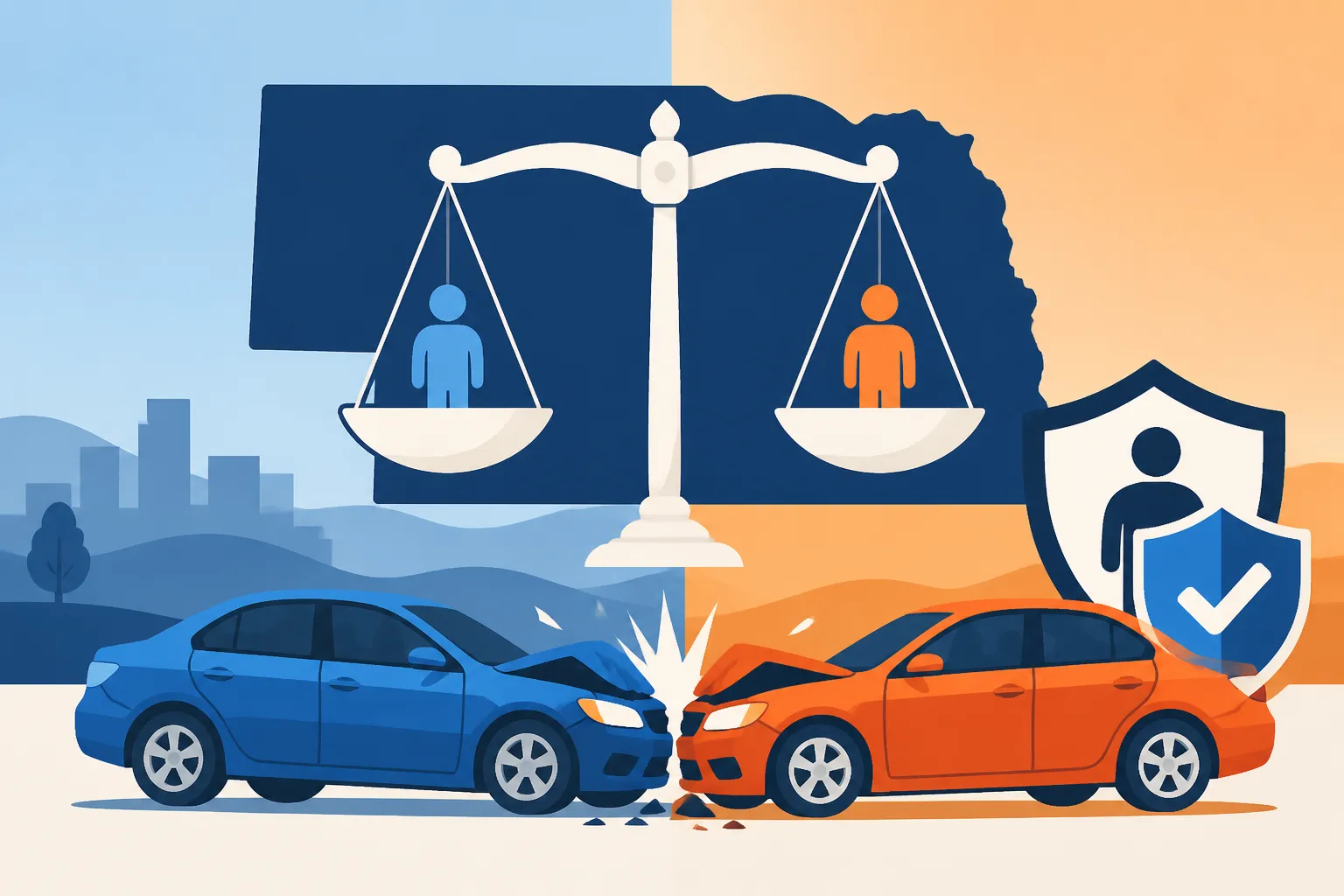
Nebraska operates under a specific version of comparative negligence known as "modified comparative negligence," with a crucial 50% bar. This means that if you are found to be at fault for 50% or more of the accident, you are legally barred from recovering any damages from the other party. It's a strict cutoff, and it can dramatically impact your ability to get compensation for your injuries, medical bills, and property damage. This is a very different system compared to states with "pure comparative negligence," where you can recover damages even if you're 99% at fault (though your award would be significantly reduced). It's also distinct from "contributory negligence" states, which completely bar recovery if you are found even 1% at fault. Nebraska's law is a middle ground, but that 50% threshold is a critical point.
For instance, imagine you're driving along Dodge Street in Omaha, and another driver runs a red light, hitting your car. Most people would assume they're 100% at fault. However, if an investigation reveals you were slightly speeding, or perhaps didn't react as quickly as an "ordinarily prudent driver" might have, the other driver's insurance company might try to argue you were, say, 10% or 20% at fault. Under Nebraska's 50% bar rule, if your fault is determined to be 49% or less, you can still recover, but your total compensation will be reduced by your percentage of fault. If they successfully argue you were 50% at fault, your claim for damages against them would be completely denied. This makes understanding and challenging fault assessments incredibly important. For a deeper dive into the general principles, you might want to read more about comparative vs contributory negligence explained.
How Your Fault Percentage Impacts Your Compensation
The math behind Nebraska's comparative negligence rule is straightforward but unforgiving. Once your percentage of fault is determined – whether through negotiation with insurance companies or, if necessary, by a jury in a courtroom – that percentage directly impacts your potential settlement.
Let's say you've been in a collision near Lincoln's Haymarket District, and the total damages for your injuries, lost wages, and car repair are calculated to be $100,000.
- Scenario 1: You are found 20% at fault. The other driver is 80% at fault. Your total damages of $100,000 will be reduced by 20% (your share of fault). So, you would be eligible to recover $80,000.
- Scenario 2: You are found 40% at fault. The other driver is 60% at fault. Your $100,000 in damages will be reduced by 40%. You would receive $60,000.
- Scenario 3: You are found 50% at fault. The other driver is 50% at fault. Because Nebraska has a 50% bar, you would be entitled to zero compensation from the other party. Your claim would be completely denied.
This demonstrates why the allocation of fault is often the most heavily contested aspect of a car accident claim in Nebraska. Even a few percentage points can mean the difference between recovering a significant portion of your damages or walking away with nothing. It's also worth noting that Nebraska is not a no-fault state, meaning the at-fault driver's insurance typically pays for damages. To understand how comparative fault reduces your settlement in more detail, it's helpful to explore that topic specifically.
The insurance companies for both parties will conduct their own investigations to assign a percentage of fault, and their initial assessments might differ significantly. This is a common point of contention, and it's where accurate documentation and strong evidence become absolutely crucial.
How Fault is Assessed in a Nebraska Car Accident
Determining fault in a car accident in Nebraska is rarely as simple as pointing fingers. It involves a thorough investigation of the incident, gathering various pieces of evidence, and often, legal interpretation of traffic laws and driver responsibilities. Both insurance companies and, if necessary, legal teams will meticulously review every detail to build a case for their client's position.
Gathering Critical Evidence to Establish Fault
Immediately after an accident, the steps you take are vital for establishing fault later on. The more comprehensive your documentation, the stronger your position will be when dealing with insurance companies and potential legal disputes. One of the first things people often consider is calling the police, and for good reason. A police report, while not a final determination of civil fault, provides an objective account of the scene, including details like driver statements, witness information, weather conditions, and visible damage. This report can be a powerful piece of evidence in your favor. You can learn more about police reports and car accident fault and how fault is determined in a car accident generally.
Beyond the police report, consider these key pieces of evidence:
- Photos and Videos: Use your smartphone to capture the scene from multiple angles. Photograph vehicle damage, skid marks, road conditions, traffic signs or signals, and any relevant debris. Don't forget photos of any visible injuries.
- Witness Statements: If there were any bystanders who saw the accident, get their contact information. Their unbiased accounts can be invaluable, especially if the other driver's story contradicts yours.
- Medical Records: Seek medical attention immediately, even if you feel fine. Some injuries, like whiplash or concussions, might have delayed symptoms. Comprehensive medical records link your injuries directly to the accident and demonstrate the severity of your pain and suffering.
- Traffic Laws: Understanding which traffic laws were violated (e.g., speeding, running a red light, failure to yield) can help establish negligence.
- Expert Testimony: In complex cases, accident reconstruction specialists or medical experts might be brought in to provide testimony on how the accident occurred or the extent of your injuries.
All these elements work together to create a clear picture of how the accident happened and who bears responsibility. Remember, documenting everything is key to supporting your claim and navigating Nebraska's 50% comparative negligence rule effectively.
The Role of Insurance Companies in Fault Determination
After an accident, the insurance companies for all involved parties will launch their own investigations to determine fault. This is not a neutral process; each insurance adjuster's primary goal is to protect their company's bottom line. They will analyze the police report, review photographs, interview drivers and witnesses, and consider any traffic citations issued. Based on their findings, they will assign a percentage of fault to each driver involved.
This is where dealing with insurance adjusters after a car accident can become tricky. The other driver's insurance company will often try to minimize their insured's fault and maximize yours, particularly if they believe you might reach the 50% fault threshold, which would absolve them of any payout responsibility. They might ask for recorded statements, hoping you'll inadvertently say something that can be used against you. It's crucial to be truthful but cautious in your communications, and never admit fault or speculate about what happened. Their initial assessment is just that – an assessment – and it's often negotiable, especially if you have strong evidence to counter their claims. If you believe the insurance company is unfairly blaming you, remember that you have options.
Navigating Your Claim with Nebraska's Laws
Dealing with the aftermath of a car accident in Nebraska, especially with the state's comparative negligence laws, can feel like a labyrinth. Knowing the practical steps to take and what challenges you might face can make a significant difference in the outcome of your claim.
Immediate Steps After an Accident on Nebraska Roads
The moments immediately following a car accident are critical, not just for your safety but also for preserving your rights under Nebraska's fault laws. Here's a quick rundown of what you should do:
- Ensure Safety: Move your vehicle to a safe location if possible, and check on yourself and any passengers. If anyone is injured, call 911 immediately.
- Contact Law Enforcement: Even for seemingly minor accidents, it's wise to call the police. An official police report provides an impartial record of the incident, which is incredibly valuable for insurance claims.
- Exchange Information: Get the other driver's name, contact information, insurance details, driver's license number, and license plate number. Do not discuss fault or apologize, as this could be misconstrued as an admission of guilt.
- Document the Scene: Take photos and videos of everything: vehicle damage, road conditions, traffic signs, skid marks, and any visible injuries. Get contact information from any witnesses.
- Seek Medical Attention: Even if you feel fine, see a doctor as soon as possible. Some injuries have delayed symptoms, and a medical evaluation creates an official record linking your injuries to the accident. This is crucial for proving damages later. If you're wondering what to do after a car accident step-by-step, there's more detailed information available.
- Report to Your Insurance Company: Notify your own insurance company promptly, even if you believe the other driver was entirely at fault.
By meticulously following these steps, you'll be well-prepared to navigate the complexities of fault determination in Nebraska.
Understanding Your Rights and Potential Challenges
Nebraska's 50% comparative negligence rule means that your claim can be significantly reduced or even completely denied if your percentage of fault is too high. This is where challenges often arise. What happens if the other driver blames you unfairly? Or if the insurance company assigns you a higher percentage of fault than you believe is fair?
It's common for insurance companies to try to shift blame. They might scrutinize your actions, looking for any way to argue that you contributed to the accident. For example, if you were in a left-turn accident, they might argue you failed to yield, even if the other driver was speeding. This makes the negotiation process critical. Your immediate post-accident actions, like gathering thorough evidence, will be your best defense.
If you find yourself in a situation where you're struggling to prove the other driver was at fault, or if the insurance company is making a lowball offer because they're assigning you too much blame, it might be time to consider whether you need a lawyer for a car accident. A skilled attorney understands Nebraska's specific laws and can help you collect and present evidence effectively, challenge unfair fault assessments, and negotiate with insurance adjusters on your behalf. They can also explain what happens if you're partially at fault and how that impacts your overall claim.
Below is a table summarizing how Nebraska's comparative negligence rule directly affects your ability to recover damages:
| Your Percentage of Fault | Impact on Recovery | Example (for $10,000 in damages) |
|---|---|---|
| 0% | Full recovery | $10,000 |
| 1% – 49% | Reduced recovery | $10,000 – (Your % of Fault) |
| 50% or more | No recovery | $0 |
This table clearly illustrates the absolute importance of keeping your assessed fault below that 50% threshold in Nebraska. If your claim goes to court, a jury would ultimately decide the fault percentages, and their decision would be binding.
Disclaimer
Please remember that this article provides general information and is not intended as legal advice. Car accident claims are complex and depend heavily on the specific facts of your case and current laws. It is always recommended to consult with a qualified legal professional for advice tailored to your individual situation.