Do Most Car Accident Cases Go to Court?
When you've been in a car accident, one of the biggest worries often lurking in the back of your mind is the daunting prospect of ending up in court. The idea of testifying, facing judges, and navigating complex legal jargon can feel overwhelming, adding immense stress to an already difficult situation. This comprehensive guide is here to demystify the process, explain when car accident cases do and don't typically go to court, and empower you with the knowledge to understand your options and rights.
The Reality of Car Accident Cases and Court
It’s a common misconception, fueled by TV dramas and movies, that every car accident claim leads to a dramatic courtroom showdown. In reality, that's far from the truth. The vast majority of car accident claims, even those involving significant injuries, are resolved without ever setting foot inside a courtroom for a trial. This understanding can be a huge relief for anyone feeling anxious about potential litigation.
Settlement vs. Lawsuit: The Big Picture
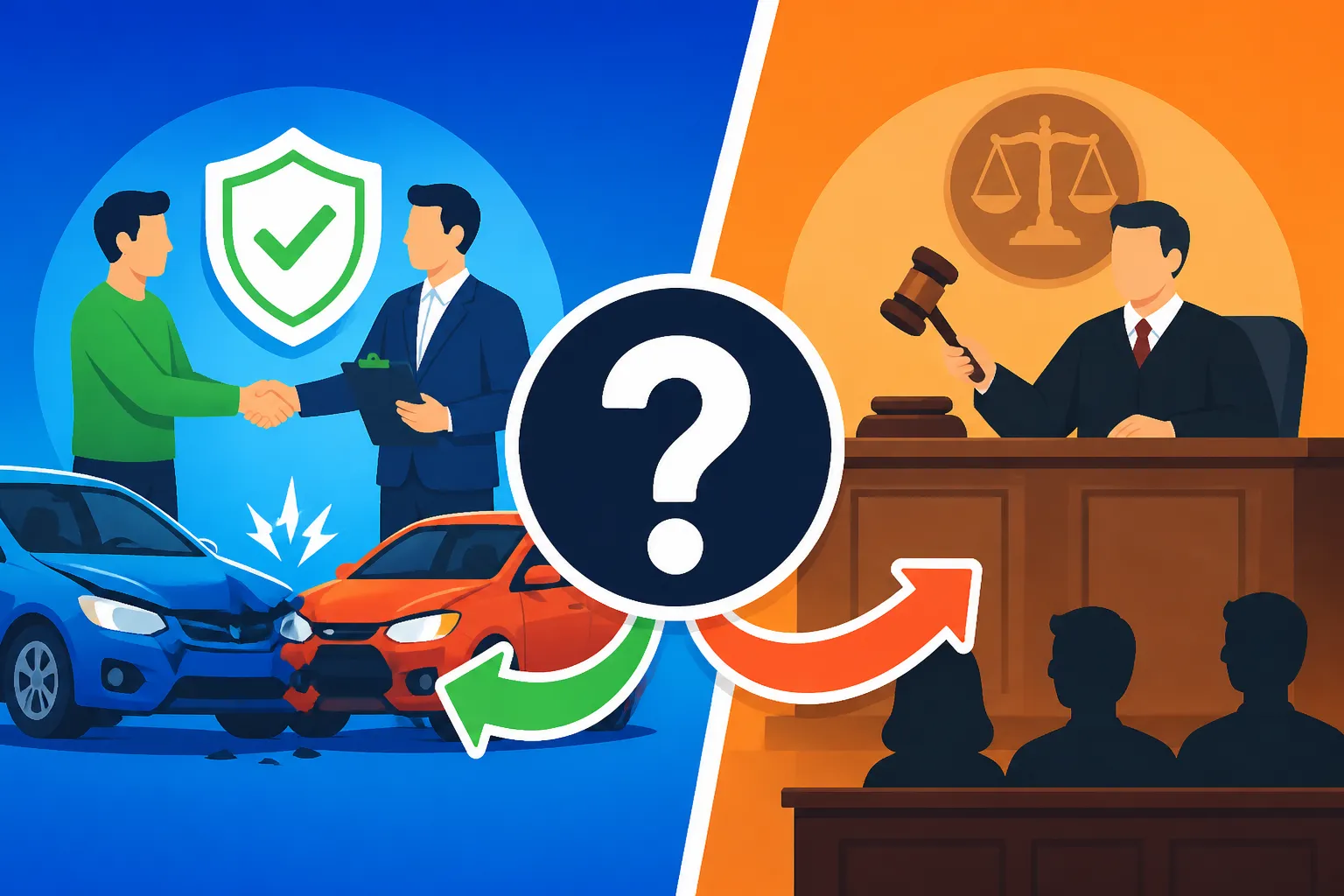
At its core, a car accident claim boils down to seeking compensation for the damages you've suffered, whether those are medical bills, lost wages, vehicle repairs, or pain and suffering. The preferred method for resolving these claims is almost always through a settlement. A settlement is essentially an agreement between the injured party (you) and the at-fault party's insurance company (or sometimes your own), where you agree to accept a certain amount of money in exchange for releasing them from further liability. It's a pragmatic approach designed to resolve disputes efficiently and avoid the time, expense, and uncertainty of a trial.
A lawsuit, on the other hand, is a formal legal action initiated when a settlement cannot be reached. It means filing a complaint with the court, which then sets in motion a structured legal process that could eventually lead to a trial. While a lawsuit is a necessary step in some cases, it's often viewed as a last resort because of the considerable resources—time, money, and emotional energy—it demands from all involved parties. Insurance companies, in particular, often prefer to settle out of court to avoid the unpredictable nature and substantial costs of litigation.
Why Most Cases Don't Go to Trial
There are several compelling reasons why the overwhelming majority of car accident cases are settled outside of court. First and foremost, trials are incredibly expensive. Legal fees, expert witness costs, court filing fees, and other administrative expenses can quickly mount, sometimes exceeding the actual value of the claim. Both sides, the plaintiff and the defense, typically have a strong financial incentive to avoid these costs.
Secondly, trials are unpredictable. Even with strong evidence, a jury's decision can be swayed by various factors, and there's no guarantee of a favorable outcome. A settlement offers a degree of certainty; both parties know exactly what they are getting or giving up, which removes the significant risk associated with leaving the decision in the hands of a judge or jury. This predictability is often preferred, especially when the facts of the case are relatively clear, or the financial stakes are high but not astronomical.
Finally, the timeline for a lawsuit can be incredibly long. From filing the initial complaint to actually going to trial could take months, or even years, depending on the complexity of the case and the court's calendar. For accident victims who need compensation for medical bills and lost income, waiting years for a resolution is often not feasible. Settlements provide a much faster resolution, allowing individuals to receive their compensation and move forward with their lives sooner. Understanding this fundamental preference for settlement helps to contextualize why most cases never see the inside of a courtroom.
When a Lawsuit Becomes Necessary
While settling out of court is the goal, there are certainly situations where a lawsuit becomes not just an option, but a vital next step to secure fair compensation. It's usually when all other avenues of negotiation have been exhausted and a fair resolution seems impossible through informal means. These situations often involve significant disagreements over fault, the extent of injuries, or the proper valuation of a claim.
Stubborn Insurance Companies and Lowball Offers
One of the most common reasons a car accident claim might escalate to a lawsuit is a fundamental disagreement with the insurance company. Insurance adjusters are trained to protect their company's bottom line, and sometimes this means offering a settlement amount that is far below what your claim is truly worth. If you've diligently followed all the steps for filing a car accident insurance claim, provided ample documentation of your injuries and damages, and still received a ridiculously low offer that doesn't even cover your medical expenses, a lawsuit might be your only recourse.
Imagine you've suffered a herniated disc from a car accident, requiring extensive physical therapy and potentially surgery. Your medical bills alone are $25,000, and you've missed weeks of work. The insurance company might offer $10,000, claiming your injuries were pre-existing or that the accident impact couldn't have caused such severe damage. This kind of "lowball" offer is a frustrating reality for many accident victims. When you're dealing with insurance adjusters after a car accident, they might try to diminish the value of your claim, making it seem like you have no other choice but to accept. However, a lawsuit can signal to the insurance company that you are serious and prepared to fight for what you deserve, often prompting them to re-evaluate their stance.
Complex Liability or Severe Injuries
Another scenario where a lawsuit might be inevitable is when the circumstances of the accident are complex, making it difficult to clearly establish who is at fault in a car accident. For instance, in a multi-car pileup or a complicated intersection accident, multiple parties might bear some degree of responsibility. In such situations, insurance companies might dispute their client's share of fault, leading to a stalemate in negotiations. Each insurer might point fingers at others, making it nearly impossible to agree on a settlement without a court's intervention to clarify liability.
Furthermore, cases involving severe, long-term, or catastrophic injuries almost always carry a higher probability of ending up in court. When injuries like a traumatic brain injury (TBI) from a car accident or spinal cord injury from a car accident result in permanent disability, ongoing medical care, and a significant loss of earning capacity, the financial stakes are incredibly high. The future costs of care, adaptive equipment, and lost income can easily run into the hundreds of thousands or even millions of dollars. Insurance companies are much more likely to dispute these large claim valuations, pushing them towards litigation to attempt to reduce their payout. Calculating how much is my car accident settlement worth can become incredibly complex in these situations, often requiring expert testimony that only a formal legal process can effectively accommodate.
When Negotiations Fail
Ultimately, if a fair and reasonable settlement simply cannot be reached through direct negotiation or alternative dispute resolution methods like mediation, a lawsuit becomes the default path. You and your attorney might have spent weeks or months exchanging demands, presenting evidence, and engaging in back-and-forth discussions with the insurance company. You might even have attempted mediation, where a neutral third party tries to facilitate a resolution. However, if the insurance company remains unyielding in their low offers, or if there's a fundamental disagreement on key facts or legal interpretations, then the only way to compel them to pay fair compensation is to initiate legal proceedings.
It's important to remember that even after a lawsuit is filed, there's still ample opportunity for settlement. Many cases settle during various stages of litigation, such as after the discovery phase or just before trial. The act of filing a lawsuit often serves as a powerful leverage point, demonstrating your commitment to pursuing justice and forcing the insurance company to take your claim more seriously. The timeline for a car accident lawsuit can vary greatly, but often, the formal process itself can prompt a resolution before a trial ever begins.
The Process of a Car Accident Lawsuit
If your car accident case does move beyond initial settlement negotiations and into the legal system, it follows a structured, multi-stage process. This isn't a quick sprint but rather a marathon with distinct phases, each designed to bring the parties closer to a resolution, whether through settlement or a trial.
Initial Filing and Discovery
The first official step in a lawsuit is the filing of a complaint with the appropriate civil court. This document, prepared by your car accident lawyer, formally states your claims against the at-fault driver (the defendant), outlines the damages you've suffered, and requests compensation. Once filed, the defendant is served with the complaint and must respond within a set timeframe. This marks the beginning of what is known as the "discovery" phase, a critical period where both sides gather and exchange information pertinent to the case.
Discovery involves several methods:
- Interrogatories: Written questions sent by one party to the other, which must be answered under oath. These often delve into details about the accident, injuries, medical history, and financial losses.
- Requests for Production of Documents: Demands for specific records, such as medical bills, medical records, employment records, repair estimates, police reports, and insurance policies. This is where you would really work to prove your injuries in a car accident claim.
- Depositions: Oral testimonies given under oath outside of court, usually in a lawyer's office, where witnesses and parties are questioned by the opposing counsel. For example, you might be deposed about the details of the crash, your pain and suffering, and the impact on your daily life.
- Requests for Admissions: Written requests asking the opposing party to admit or deny certain facts or the authenticity of documents, which helps narrow down contested issues.
This phase can be extensive, often lasting several months, as both sides dig deep to understand the strengths and weaknesses of each other's arguments. It's also a time when expert witnesses, like accident reconstructionists or medical professionals, might be brought in to provide their assessments.
Mediation, Arbitration, and Pre-Trial Conferences
Even after a lawsuit is filed and discovery is underway, the legal system strongly encourages parties to resolve their disputes without a full trial. This is where alternative dispute resolution (ADR) methods like mediation and arbitration come into play.
- Mediation: This is a non-binding process where a neutral third party (the mediator) facilitates communication and negotiation between the disputing parties. The mediator doesn't make a decision but helps both sides understand each other's positions, explore solutions, and work towards a mutually acceptable settlement. Mediation is often mandatory in many jurisdictions before a case can proceed to trial, as it has a high success rate in resolving disputes. It can be particularly helpful when dealing with a lowball insurance offer.
- Arbitration: Unlike mediation, arbitration can be binding or non-binding. In arbitration, a neutral third party (the arbitrator) hears arguments and reviews evidence from both sides, much like a judge. The arbitrator then issues a decision, which, if binding, is legally enforceable. Arbitration is less formal than a trial but still results in a definitive outcome.
- Pre-Trial Conferences: These are meetings with the judge and attorneys for both sides, typically held closer to the trial date. The judge will often encourage settlement, review the progress of the case, address any outstanding issues, and set parameters for the upcoming trial. These conferences provide another opportunity for a settlement to be reached, as the realities of a trial become more immediate.
Many cases settle during or after these ADR processes. For example, if you've explored options like LegalMatch to find an experienced attorney, they will often guide you through these steps, using the information gathered during discovery to strengthen your position in mediation or arbitration.
The Trial Itself
If all attempts at settlement and alternative dispute resolution fail, the case will eventually proceed to a full trial. This is the stage that most people imagine when they think of a lawsuit, though, as we've discussed, it's the least common outcome.
A civil trial for a car accident typically involves:
- Jury Selection (Voir Dire): If it's a jury trial, potential jurors are questioned to ensure impartiality.
- Opening Statements: Both attorneys present an overview of their case, outlining what they intend to prove.
- Presentation of Evidence: This is the core of the trial, where attorneys present witness testimony, expert opinions, and physical evidence (like photos, videos, medical records, and police reports). Your attorney will work to demonstrate how the other driver was negligent and how their actions led to your injuries and damages. This is also where you or other witnesses might provide testimony.
- Cross-Examination: Opposing attorneys question witnesses to challenge their credibility or statements.
- Closing Arguments: Attorneys summarize their case and persuade the judge or jury to rule in their favor.
- Jury Deliberation (if applicable): The jury retires to consider the evidence and reach a verdict. In a bench trial, the judge makes the decision.
- Verdict and Judgment: The jury or judge delivers the decision, which determines liability and the amount of compensation, if any, awarded to the plaintiff.
Trials are demanding, lengthy, and can take anywhere from a few days to several weeks. The emotional toll can be significant, and the outcome is never guaranteed. This is precisely why both sides generally prefer to reach a settlement before this stage. However, for serious cases where justice demands it, a trial is the necessary path.
Factors Influencing a Court Appearance
Several critical factors weigh heavily on whether a car accident case will ultimately proceed to court for a trial or be resolved through settlement. Understanding these can help you anticipate the likely trajectory of your own claim.
State Laws and "No-Fault" Systems
The specific laws of the state where the accident occurred play a significant role. Some states operate under a "no-fault" system, while others adhere to "at-fault" or "tort" systems. In a no-fault state, like Florida, Michigan, or New York, your own insurance company generally pays for your medical expenses and lost wages, regardless of who caused the accident, up to a certain limit. To file a lawsuit against the at-fault driver in a no-fault state, your injuries typically need to meet a certain "threshold" of severity (e.g., permanent injury, significant disfigurement, or specific levels of medical expenses). If your injuries don't meet this threshold, your options for suing are limited, and your case is less likely to go to court.
Conversely, in at-fault states, the driver who caused the accident is responsible for all damages. This opens the door more readily to a personal injury lawsuit if negotiations with the at-fault driver's insurance company fail. However, even in at-fault states, comparative negligence laws can affect whether a lawsuit is viable. For example, in states with modified comparative negligence, if you are found to be 50% or 51% or more at fault, you might be barred from recovering any damages, which would certainly impact the decision to pursue a lawsuit. It's crucial to understand your state's specific laws, as they dictate the framework within which your claim will be handled.
The Severity of Damages and Injuries
As briefly touched upon earlier, the extent and severity of the damages and injuries sustained are paramount. Minor fender benders, resulting in only property damage and perhaps a few chiropractor visits for whiplash, are almost always resolved through settlements. The costs are relatively low, and the facts are usually straightforward.
However, when injuries are severe, leading to substantial medical bills, long-term disability, chronic pain, or significant lost earning capacity, the financial stakes escalate dramatically. A brain injury, spinal cord damage, or multiple broken bones from a car accident can easily result in damages exceeding an insurance policy's standard limits or lead to massive disputes over future medical costs and lost income. In these high-value cases, insurance companies are more inclined to fight tooth and nail to minimize their payout. This often pushes these claims towards litigation, as proving the full extent of such complex damages often requires extensive medical records, expert medical testimony, and detailed financial analysis that are best presented in a court setting. The more serious the injury, and the higher the associated costs, the greater the likelihood of needing a legal team to help determine how much is a car accident settlement worth and pursuing that amount through a lawsuit.
Quality of Evidence and Witness Credibility
The strength and clarity of the evidence also heavily influence whether a case is likely to go to court. If there is overwhelming evidence clearly demonstrating the other driver's fault – such as a police report citing them, clear dashcam footage, multiple credible eyewitnesses, and undisputed medical records – then the insurance company is far more likely to offer a fair settlement. Why would they risk going to trial and losing badly when the evidence is so stacked against them?
However, if the evidence is sparse, contradictory, or relies heavily on one person's word against another's, then liability becomes less clear. For example, in a Left-Turn Accident Fault Rules, it can sometimes be difficult to definitively assign fault without strong evidence. If there are no independent witnesses, conflicting statements, or questions about the credibility of the parties involved, the insurance company might feel they have a stronger defense in court. They might believe they can cast enough doubt on your claims to reduce or deny compensation. In such scenarios, a lawsuit might be necessary to formally present the available evidence, depose witnesses, and let a judge or jury weigh the facts to determine fault and damages. The more ambiguous the situation, the greater the chance a court will need to step in to untangle the details.
How to Navigate Potential Litigation
Facing the possibility of a car accident lawsuit can feel like a daunting challenge. However, with the right approach and a clear understanding of the resources available to you, navigating potential litigation becomes much more manageable. The key is to be proactive, informed, and to seek expert guidance when needed.
The Role of an Experienced Car Accident Lawyer
If your car accident claim is complex, involves significant injuries, or if the insurance company is being uncooperative, one of the most crucial steps you can take is to consult with an experienced car accident lawyer. A skilled attorney plays a multifaceted role in managing your claim and guiding you through the legal process, significantly increasing your chances of a favorable outcome. They understand the nuances of personal injury law, the tactics insurance companies employ, and how to build a strong case.
Here’s what a good car accident lawyer brings to the table:
- Legal Expertise: They know the relevant laws, statutes of limitations, and court procedures in your state. For instance, they'll know about Comparative Negligence Laws in California if you're in that state, or how Contributory Negligence States (Where 1% Fault Bars Recovery) can impact a claim.
- Investigation and Evidence Gathering: Lawyers will conduct their own thorough investigation, gathering all necessary evidence, including police reports and car accident fault documentation, medical records, witness statements, and expert testimony. They can help prove how to prove the other driver was at fault.
- Negotiation Skills: Attorneys are adept negotiators. They can effectively communicate with insurance companies, present your demand letter, and fight for a fair settlement. They know how to counter a low settlement offer and advocate for your best interests.
- Litigation Readiness: Should negotiations fail, your lawyer will be prepared to file a lawsuit and represent you in court. They handle all the paperwork, deadlines, and court appearances, alleviating a huge burden from your shoulders. They understand how a car accident lawsuit works (if you don't settle) and can explain each step.
- Valuation of Damages: They can accurately assess the full extent of your damages, including economic (medical bills, lost wages, property damage) and non-economic (pain and suffering, emotional distress) losses. This expertise is vital for knowing how car accident settlements are calculated.
Many personal injury lawyers work on a contingency fee basis, meaning you don't pay upfront fees, and they only get paid if they win your case. This makes legal representation accessible to everyone, regardless of their financial situation. If you're wondering, "Do you need a lawyer for a car accident?", the answer is often a resounding yes, especially when injuries are substantial or liability is disputed.
Preparing for Court: What to Expect
If your case does head towards court, preparation is key. While your lawyer will handle the heavy lifting of legal strategy and procedural matters, there are things you, as the claimant, will need to do to support your case.
- Maintain Detailed Records: Continue to keep meticulous records of all medical appointments, treatments, medications, and any out-of-pocket expenses related to your injuries. Also, document any days you miss from work and any limitations on your daily activities. The more thorough your documentation, the stronger your claim will be.
- Attend All Appointments: It’s critical to follow your doctor’s recommendations and attend all medical appointments and therapy sessions. Gaps in treatment can be used by the defense to argue that your injuries weren't as severe as claimed or that you failed to mitigate your damages.
- Be Honest and Consistent: Whether in depositions or on the witness stand, always be truthful and consistent in your statements about the accident, your injuries, and their impact on your life. Any inconsistencies can severely damage your credibility.
- Practice Your Testimony: Your attorney will help you prepare for depositions and potential trial testimony. This involves reviewing the facts of the case, discussing potential questions, and practicing how to answer clearly and confidently.
- Understand the Timeline: Be prepared for the legal process to take time. Car accident cases can sometimes last for months or even years, especially if they involve serious injuries or complex legal issues. Patience and perseverance are essential.
Knowing what to expect and actively participating in your case's preparation will not only make the process less stressful but also significantly strengthen your position if the case goes to trial.
Tools and Resources for Finding Legal Help
Finding the right legal representation is paramount. It’s not just about finding any lawyer, but finding one who has specific experience in car accident claims and a strong track record of success. Fortunately, there are many resources available to help you in your search.
- Online Legal Directories: Websites like LegalMatch allow you to describe your case and connect with qualified attorneys in your area who specialize in personal injury law. This can be an efficient way to find lawyers who are interested in taking on your specific type of case.
- State Bar Associations: Most states have a bar association that provides lawyer referral services. These services can help you find attorneys who are licensed and in good standing in your jurisdiction.
- Personal Referrals: Asking friends, family, or colleagues for recommendations can also be a valuable way to find a trusted attorney. While personal referrals are helpful, always conduct your own research to ensure the lawyer is a good fit for your specific needs.
- Free Consultations: Many personal injury attorneys offer free initial consultations. This is a critical opportunity to discuss your case, ask questions, and gauge if the attorney is the right fit for you. It's a chance to ask what questions to ask a car accident lawyer and assess their expertise.
When you're choosing a car accident lawyer, don't hesitate to interview several candidates. Ask about their experience with cases similar to yours, their approach to negotiation and litigation, and their fee structure. A well-chosen attorney can make all the difference in achieving a positive outcome for your car accident claim.
What If You're Partially at Fault?
The question of fault is rarely black and white in an accident, and it's common for both drivers to share some degree of responsibility. This concept, known as comparative negligence, can significantly impact whether a case goes to court and how much compensation you might ultimately receive. It’s a point of contention that often leads to prolonged negotiations or, indeed, litigation.
How Comparative Negligence Works
Most states in the U.S. follow some form of comparative negligence. This legal doctrine allows an injured party to recover damages even if they were partially at fault for the accident, but their compensation is reduced by their percentage of fault. There are generally two types:
- Pure Comparative Negligence: In states like California and Florida, you can recover damages no matter how much you were at fault, though your award will be reduced proportionally. So, if you're found 80% at fault, you can still recover 20% of your damages.
- Modified Comparative Negligence: Most states use a modified version, often with a "50% bar" or "51% bar."
- 50% Bar Rule: In these states (like Colorado or Wisconsin), if you are found 50% or more at fault, you cannot recover any damages. If you're 49% at fault, you can recover 51% of your damages.
- 51% Bar Rule: In these states (like Georgia or Texas), if you are found 51% or more at fault, you cannot recover any damages. If you're 50% at fault, you can still recover 50% of your damages.
Then there are a few states that still follow Contributory Negligence Laws, where if you are found even 1% at fault, you are completely barred from recovering any damages. This rule is very harsh and makes it extremely difficult for accident victims to get compensation if they contributed in any way to the crash.
The challenge comes in determining these percentages. Insurance companies will almost always try to assign a higher percentage of fault to you to reduce their payout. This often leads to disputes where experts, such as accident reconstructionists, are called upon to analyze the crash and assign percentages. When these percentages are hotly contested, especially in modified comparative negligence states where being just a few percentage points higher can mean losing all compensation, the case is far more likely to end up in court. The court then becomes the arena to officially decide who is at fault and to what degree. You can still get paid if you're partly at fault, but navigating this often requires legal expertise.
When 50/50 Fault Creates a Stalemate
The concept of 50/50 fault is particularly tricky. If both drivers are equally responsible for an accident, it can create a legal stalemate, especially in states with modified comparative negligence. In a 50% bar rule state, if you're deemed 50% at fault, you might receive nothing. In a 51% bar state, you'd still get 50% of your damages. This difference in outcome can dramatically alter the willingness of parties to settle or go to trial.
Imagine a T-bone accident where both drivers claim they had a green light. Without clear witness testimony or traffic camera footage, it could easily be a 50/50 split on liability. Each insurance company might refuse to offer a settlement, claiming their insured is not liable or that the other driver is primarily at fault. This kind of gridlock often forces the case into the court system, where a judge or jury must ultimately decide the percentages of fault. What does 50/50 fault mean for your claim? It means a complex battle over liability and potentially a need for judicial intervention to break the deadlock and secure any compensation.
Settlement vs. Lawsuit: A Decision Matrix
Deciding whether to settle or pursue a lawsuit is a significant choice with various implications. It's not a decision to be taken lightly and should always be made in close consultation with your attorney. Here’s a breakdown of what each path generally entails.
| Feature | Settlement | Lawsuit (leading to trial) |
|---|---|---|
| Control | High – Parties mutually agree on terms. | Low – Judge or jury dictates outcome. |
| Cost | Generally lower – Avoids extensive legal fees. | Potentially very high – Extensive legal and court costs. |
| Timeframe | Shorter – Weeks to months. | Much longer – Months to several years. |
| Privacy | Private – Terms are often confidential. | Public – Court records are generally accessible. |
| Risk | Low – Certainty of outcome. | High – Unpredictable outcome (win, lose, or less than desired). |
| Emotional Toll | Lower – Less confrontational. | Higher – Stressful depositions, testimony, and uncertainty. |
| Finality | Immediate and binding once signed. | Final after appeals process concludes. |
When considering how to negotiate a car accident settlement, the goal is always to achieve a fair outcome without the stress and expense of court. However, there are times when an insurance company refuses to offer a reasonable amount, making a lawsuit a necessary evil. If you're dealing with What Happens If You Can't Agree on a Settlement?, your attorney will guide you through this decision, weighing the pros and cons of pushing forward with litigation versus accepting a less-than-ideal settlement offer. The decision often hinges on the strength of your evidence, the severity of your injuries, and your willingness to endure a prolonged legal battle for potentially greater compensation.
Disclaimer
Please remember that this article provides general information and should not be considered legal advice. Car accident claims are complex, and the laws governing them vary by jurisdiction. It is always recommended to consult with a qualified personal injury attorney to discuss the specifics of your situation and understand your legal rights and options.