What to Do If Hit by an Uninsured Driver in Colorado
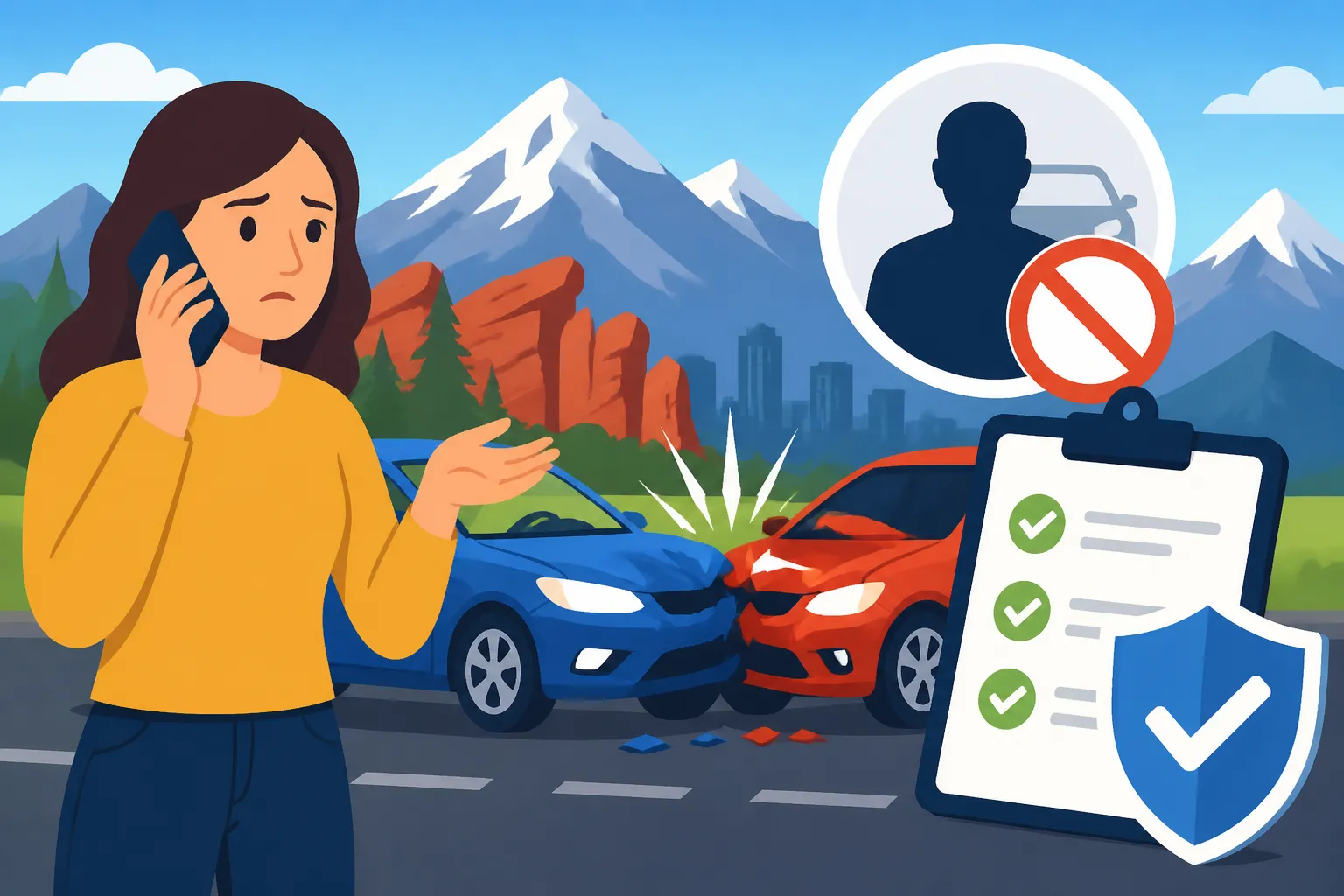
Getting into a car accident is stressful enough, but discovering the at-fault driver doesn't have insurance? That's a whole new level of frustration and anxiety. It can feel like you've hit a brick wall, leaving you wondering how you're supposed to cover medical bills, car repairs, and lost wages. This guide is here to walk you through exactly what to do if you find yourself in this incredibly difficult situation in Colorado, outlining your options and offering practical steps to protect yourself financially and physically.
Understanding the Uninsured Driver Predicament in Colorado
The moment you realize the other driver lacks insurance, a wave of panic can easily set in. It's a gut-wrenching feeling that can quickly turn from concern about your vehicle to deep worry about your financial well-being, especially if you or your passengers are injured. This isn't just a minor inconvenience; it's a significant hurdle that many people unfortunately face on Colorado roads.
The Immediate Aftermath: Shock and Uncertainty
When the dust settles after a collision, the first thing everyone typically does is exchange insurance information. Imagine the sinking feeling when the other driver hesitates, fumbles, or outright admits they don't have coverage. You might feel a mix of anger, confusion, and fear – fear for your recovery, fear for your vehicle, and fear for your bank account. It’s completely normal to feel overwhelmed and lost at this point. You might be thinking, "What now? Am I just out of luck?"
The immediate uncertainty can be paralyzing. You're likely still processing the accident itself, dealing with adrenaline, and possibly pain. Adding the complication of an uninsured driver on top of everything else can make it feel like an impossible situation. But take a deep breath; while challenging, it's not hopeless. There are specific avenues available to you, particularly within Colorado's insurance framework, that can provide a path forward. The key is knowing what those avenues are and how to navigate them effectively.
Colorado's Insurance Requirements and What They Mean
Colorado, like most states, mandates that all drivers carry a minimum amount of auto liability insurance. This isn't just a suggestion; it's the law. Currently, the minimum liability coverage in Colorado is typically:
- $25,000 for bodily injury per person: This covers medical expenses, lost wages, and pain and suffering for one person injured in an accident you cause.
- $50,000 for bodily injury per accident: This is the maximum amount your insurance will pay for all injuries in a single accident you cause.
- $15,000 for property damage per accident: This covers damage to another person's vehicle or property if you are at fault.
These requirements exist to ensure that victims of accidents have a means of recovery. However, despite these laws, a significant number of drivers on the road still choose to drive without any insurance at all. This might be due to financial hardship, forgetfulness, or a blatant disregard for the law. Whatever their reason, when an uninsured driver causes an accident, it leaves the injured party in a tough spot. Without their liability insurance to pay for your damages, you have to look elsewhere for compensation. This is where understanding your own insurance policy becomes absolutely critical. It's your first, and often best, line of defense against the financial fallout of an uninsured driver accident.
Your Options When the At-Fault Driver Is Uninsured
When you're hit by an uninsured driver, it quickly becomes apparent that you can't rely on their non-existent policy to cover your expenses. This is where your own insurance coverage truly steps up to protect you. It's a common misconception that if the other driver has no insurance, you're simply out of luck. In many cases, your own policy has built-in protections designed precisely for this scenario.
Tapping into Your Own Uninsured Motorist UM Coverage
This is, without a doubt, the most important piece of your own insurance puzzle when dealing with an uninsured driver. Uninsured Motorist (UM) coverage is specifically designed to protect you and your passengers if you're involved in an accident with an at-fault driver who doesn't have liability insurance. In Colorado, insurance companies are generally required to offer UM/UIM (Underinsured Motorist) coverage as part of your policy, though you can decline it in writing. Opting for this coverage is almost always a wise decision, especially considering the number of uninsured drivers on the road.
Here's how UM coverage typically works:
- Bodily Injury (UMBI): This part of your UM coverage will pay for your medical expenses, lost wages, pain and suffering, and other injury-related costs up to your policy limits, just as if the uninsured driver had a liability policy themselves. For example, if you have $100,000 in UMBI coverage, your insurance company would cover your bodily injury damages up to that amount. This is a lifesaver when you're facing serious injuries after a crash.
- Property Damage (UMPD): Some UM policies also include coverage for damage to your vehicle. If you have UMPD, it will cover the cost of repairing or replacing your car, often with a deductible similar to your collision coverage. It’s essential to check your policy for both UMBI and UMPD components.
Filing a claim under your UM coverage means you are essentially filing a "first-party claim" with your own insurance company, even though they are stepping into the shoes of the at-fault driver. This can sometimes feel counterintuitive, as you might think your own insurer will always be on your side. While they are contractually obligated to pay out under your UM policy, they are still an insurance company, and their goal is to pay the minimum amount necessary. This is why having strong documentation and perhaps even legal representation can be beneficial, even when dealing with your own insurer. When figuring out who is at fault in a car accident, your insurance company will conduct its own investigation, similar to how they would if you were filing against another driver's policy.
Exploring Other Personal Coverage Options
Beyond UM coverage, you might have other components in your auto insurance policy that can help cover the immediate aftermath of an accident with an uninsured driver. These can provide a vital safety net for specific types of damages.
- Medical Payments (MedPay) Coverage: This is another crucial coverage often included or offered in Colorado auto insurance policies. MedPay acts as a no-fault coverage, meaning it pays for your medical expenses and those of your passengers, regardless of who was at fault for the accident. It kicks in quickly and can cover things like ambulance rides, emergency room visits, doctor appointments, and even co-pays and deductibles from your health insurance. In Colorado, insurers must offer at least $5,000 in MedPay coverage, and you must decline it in writing if you don't want it. This is a fantastic resource to get immediate medical bills paid while other aspects of your claim are being processed, which can take a considerable amount of time.
- Collision Coverage: If you have collision coverage, it will pay for the damage to your vehicle, regardless of who was at fault. While you will likely have to pay your deductible first, your insurance company may then seek to recover that deductible from the at-fault uninsured driver (a process called subrogation). If they successfully recover funds, you could get your deductible back. This coverage is specifically for your car, not your injuries, but it's essential for getting your vehicle repaired or replaced promptly.
- Rental Car Reimbursement: Many comprehensive policies offer rental car reimbursement, which can cover the cost of a rental vehicle while yours is being repaired. This can be a huge relief, especially if your car is totaled or requires extensive repairs, allowing you to maintain your daily routine without interruption.
It's important to remember that these coverages have their own limits and deductibles. Reviewing your policy carefully or speaking with your agent about what you have is a crucial step after an accident.
Pursuing the Uninsured Driver Directly
While your own insurance coverages offer the most straightforward path to recovery, you also have the legal right to pursue the at-fault uninsured driver directly for damages. This usually means filing a personal injury lawsuit against them in civil court. However, it's vital to approach this option with a healthy dose of realism.
The primary challenge with suing an uninsured driver is that they often lack the financial assets to pay a judgment. They might not have insurance because they couldn't afford it, which typically means they also don't have significant savings, property, or a high-paying job. This situation is often referred to as being "judgment-proof." Even if you win your lawsuit and are awarded a large sum, actually collecting that money can be incredibly difficult, if not impossible. You could end up with a piece of paper (a judgment) that has little real-world value.
Methods to collect on a judgment might include wage garnishment, placing liens on property, or seizing assets. However, many states have protections that prevent people from losing everything, such as limits on how much can be garnished or exemptions for primary residences. The process of suing and then attempting to collect can also be time-consuming, expensive, and emotionally draining, often requiring the assistance of an attorney. While it might offer a sense of justice, it rarely provides the financial recovery you need unless the uninsured driver happens to have substantial hidden assets. This is why your Uninsured Motorist coverage truly is your best bet for financial recovery in Colorado.
Step-by-Step Action Plan After the Accident
When you've been hit by an uninsured driver, the immediate steps you take at the scene and in the days following are crucial. This isn't just about documenting the incident; it's about building a strong foundation for any potential claim, especially since you'll likely be dealing with your own insurance company for coverage.
Prioritizing Safety and Documentation
The moments right after an accident are chaotic, but focusing on safety and thorough documentation is paramount. Your actions here can significantly impact the success of your claim.
First and foremost, prioritize your safety and the safety of others. Move your vehicle to the side of the road if possible and safe to do so. Check yourself and your passengers for injuries. Even if you feel fine, adrenaline can mask pain, so a quick assessment is always wise. The next critical step is to call 911. In Colorado, you should report any accident that results in injury, death, or property damage exceeding $1,000. For an uninsured driver incident, you absolutely want a police report. Police reports and car accident fault are closely linked, as the report often provides an official account of the incident and preliminary fault determination, which will be invaluable for your insurance claim.
While waiting for law enforcement, begin documenting everything you can. If you're able, take photos and videos of the accident scene from multiple angles. Capture damage to both vehicles, skid marks, road conditions, traffic signs, and any visible injuries. The more visual evidence you have, the better. You should also collect information from the other driver: their name, contact information, driver's license number, license plate number, and vehicle make/model. Even if they don't have insurance, this information is still important for the police report. Furthermore, if there were any witnesses, ask for their contact information. Their unbiased account can be incredibly helpful later on. This thorough documentation is key to proving the other driver was at fault and to building a solid case for your damages.
Notifying Your Insurance Company
Once you've ensured safety and gathered initial documentation, your next immediate priority is to notify your own insurance company. Many policies have clauses requiring prompt notification of an accident. Delaying could potentially jeopardize your claim.
When you call your insurer, be factual and stick to the observable details. State clearly that you were involved in an accident and that the other driver appears to be uninsured. Avoid speculating about fault or making statements that could be interpreted as an admission of fault. For example, instead of saying, "I might have been going a little fast, and then they just pulled out," say, "The other vehicle turned left in front of me, and a collision occurred." Remember, dealing with insurance adjusters after a car accident can be a complex process, even when it's your own company. They are looking for reasons to minimize payouts.
When discussing your damages, especially if you have Uninsured Motorist coverage, your insurance company will open a claim under that policy. They will investigate the accident, determine who is at fault in a car accident, and assess your damages. This process will include assigning an adjuster who will communicate with you. Be cooperative but cautious. You'll need to provide them with all the information you collected at the scene, including the police report number, photos, and witness statements. This early notification sets the claims process in motion and allows your insurer to begin their investigation and assess your entitlement to coverage.
Seeking Medical Attention and Documenting Injuries
One of the most critical steps after any car accident, especially one involving an uninsured driver, is to seek prompt medical attention. This cannot be stressed enough, even if you feel okay or only have minor aches. Adrenaline often masks injuries, and some serious conditions, like whiplash or a concussion, may have delayed injury symptoms that don't appear for hours or even days after the crash.
Visiting a doctor ensures that any injuries are properly diagnosed and treated. This is not only vital for your health but also for the strength of your car accident claim. Medical records are the primary way to prove injuries in a car accident claim. If you wait too long to see a doctor, the insurance company might argue that your injuries weren't caused by the accident, making it much harder to get compensation.
Be sure to follow all your doctor's recommendations, attend all appointments, and keep a detailed record of your symptoms, treatments, medications, and any pain you experience. Documenting your physical recovery and limitations over time will be invaluable evidence. Keep copies of all medical bills and receipts, as these will form a significant part of your economic damages. Even if you're only filing a claim with your own insurance under UM, thorough medical documentation is essential to demonstrate the full extent of your injuries and their impact on your life, directly affecting how much your car accident settlement is worth.
Navigating the Claims Process and Potential Hurdles
Even with your own Uninsured Motorist (UM) coverage, dealing with an insurance claim can be a bumpy road. It's not always a straightforward path, and you might encounter challenges that require persistence and a clear understanding of your rights.
Understanding Policy Limits and Deductibles
When you're hit by an uninsured driver, your UM coverage steps in, but it's not limitless. Every policy has specific limits, which dictate the maximum amount your insurance company will pay out for your injuries and, if applicable, property damage. For example, if you have $50,000 in UM bodily injury coverage, that's the most you can receive from your insurer for your medical bills, lost wages, and pain and suffering, even if your actual damages exceed that amount. It's crucial to know these numbers. If your damages are significantly higher than your UM limits, you might find yourself with insufficient compensation to cover all your losses.
Deductibles also play a role, especially if you're using UMPD (Uninsured Motorist Property Damage) or collision coverage for your vehicle repairs. You'll typically have to pay this out-of-pocket amount before your insurance company starts paying. For example, if you have a $500 collision deductible and your car needs $3,000 in repairs, you'd pay the first $500, and your insurer would cover the remaining $2,500. Sometimes, if your insurance company successfully recovers money from the uninsured driver, they might reimburse your deductible. However, this is not a guarantee and depends entirely on the at-fault driver's ability to pay.
| Coverage Type | What It Covers | Deductible? | Primary Use in Uninsured Driver Accidents |
|---|---|---|---|
| Uninsured Motorist Bodily Injury | Medical expenses, lost wages, pain and suffering for you/passengers | No (usually) | Your injuries when at-fault driver is uninsured |
| Uninsured Motorist Property Damage | Damage to your vehicle caused by an uninsured driver | Yes (typically) | Your vehicle damage when at-fault driver is uninsured |
| Medical Payments (MedPay) | Medical expenses for you/passengers, regardless of fault | No | Immediate medical bills, regardless of fault |
| Collision Coverage | Damage to your vehicle from a collision, regardless of fault | Yes | Your vehicle damage when at-fault driver is uninsured (if no UMPD) |
| Rental Car Reimbursement | Cost of a rental car while your vehicle is being repaired or replaced | No (coverage limits apply) | Transportation during vehicle repair/replacement |
The Role of a Car Accident Lawyer
You might think that if you're dealing with your own insurance company, you don't need legal representation. However, when to hire a car accident lawyer, especially in an uninsured motorist claim, is a question many people face. Even though it's your own insurer, they are still a business, and their primary goal is to minimize their payouts. They might dispute the extent of your injuries, the necessity of your medical treatment, or even the fault of the uninsured driver.
A car accident lawyer can be an invaluable asset in these situations. They understand the complexities of insurance policies, Colorado law, and how insurance companies operate. A lawyer can:
- Negotiate on your behalf: They will communicate with your insurance company, ensuring your rights are protected and you receive a fair settlement under your UM coverage.
- Maximize your settlement: They know how to properly calculate all your damages, including future medical expenses, lost earning capacity, and pain and suffering, to ensure you don't leave money on the table. How much is my car accident settlement worth? A lawyer can help you answer this by thoroughly assessing all your damages.
- Handle disputes: If your insurance company denies your claim or offers a lowball settlement, a lawyer can challenge their decision, potentially taking the case to arbitration or even court if necessary.
- Navigate the process: The legal and insurance processes can be confusing and time-consuming. A lawyer handles the paperwork, deadlines, and legal strategy, allowing you to focus on your recovery.
- Explore other avenues: While often difficult, a lawyer can also advise you on the feasibility of pursuing the uninsured driver directly for any damages exceeding your UM policy limits.
Do you need a lawyer for a car accident involving an uninsured driver? While not always strictly required, having one can significantly improve your chances of a fair outcome and reduce your stress during an already challenging time. Most personal injury lawyers work on a contingency fee basis, meaning they only get paid if you win your case, making legal assistance accessible even if you can't afford upfront costs.
Common Challenges and How to Overcome Them
Dealing with an uninsured driver accident can throw a variety of curveballs your way. Being prepared for these challenges can help you navigate them more effectively.
- Disputes Over Fault: Even with an uninsured driver, your own insurance company might try to argue that you were partially at fault for the accident. In Colorado, we follow a modified comparative negligence rule (the 50% bar). This means if you are found to be 50% or more at fault, you cannot recover any damages. If you're found less than 50% at fault, your compensation will be reduced by your percentage of fault. Your insurer might try to assign you a higher percentage of fault to reduce their payout under your UM policy. This is where thorough documentation, witness statements, and the police report become critical evidence to prove the other driver was solely or primarily at fault.
- Insurance Company Lowball Offers: It's common for insurance companies, even your own, to start with a low settlement offer. They might downplay your injuries, question the necessity of your treatment, or undervalue your non-economic damages like pain and suffering. Don't feel pressured to accept the first offer. This is precisely where a lawyer excels, knowing how to counter a low settlement offer and negotiate for a fair amount.
- The Emotional Toll of the Process: Beyond the physical injuries and financial stress, dealing with a car accident and a complex insurance claim can take a significant emotional toll. Frustration, anxiety, and even anger are common feelings. Remember to prioritize your mental well-being throughout this process. Don't hesitate to seek support from friends, family, or even a therapist if needed. Having a legal professional handle the intricacies of the claim can also significantly reduce your burden, allowing you to focus on healing.
By understanding these potential hurdles and proactively addressing them with preparation, documentation, and expert guidance, you can significantly improve your chances of a positive outcome when hit by an uninsured driver in Colorado.
Disclaimer
Please remember, the information provided in this guide is for informational purposes only and does not constitute legal advice. Every car accident case is unique, and the laws governing insurance claims can be complex. It is highly recommended to consult with a qualified personal injury attorney in Colorado to discuss the specifics of your situation and understand your legal rights and options.