Is California a No-Fault State?
Getting into a car accident is stressful enough without having to decipher confusing legal jargon about how fault works and what it means for your ability to recover damages. Many folks are left wondering if their state operates under a "no-fault" system, which can drastically change how they pursue compensation after a crash. This guide aims to clear up that confusion specifically for drivers in California, walking you through exactly how the state's fault system impacts your car accident claim.
Understanding No-Fault Versus At-Fault Systems
The terms "no-fault" and "at-fault" get thrown around a lot in the world of car insurance and accident claims, and it's easy to feel lost in the shuffle. But understanding which system your state uses is absolutely crucial because it dictates how you seek compensation for your injuries and property damage after a collision. Let's break down what each one really means for you.
What No-Fault Insurance Really Means
When a state operates under a no-fault insurance system, it essentially means that after an accident, each driver first files a claim with their own insurance company for their medical expenses and lost wages, regardless of who caused the crash. Think of it like this: if you're in a fender bender in a no-fault state like Florida or New York, your own Personal Injury Protection (PIP) coverage would kick in to cover your medical bills up to a certain limit, even if the other driver ran a red light. The idea behind no-fault is to streamline the claims process, reduce lawsuits, and ensure that injured parties receive prompt medical care without waiting for fault to be determined.
However, there's a catch. In most no-fault states, you're usually restricted from suing the at-fault driver unless your injuries meet a certain "threshold" of severity, which varies from state to state. This threshold can be based on the type of injury (e.g., a broken bone) or the dollar amount of your medical bills. This system aims to prevent minor claims from bogging down the courts, but it can also be frustrating if your injuries are significant but don't quite meet that specific definition. For a deeper dive into this, check out our guide on what is a no-fault state? (And Which States Are No-Fault).
The At-Fault System Explained
Now, let's talk about the at-fault system, also known as a "tort" system, which is what most states, including California, use. In an at-fault system, the driver who is determined to be responsible for causing the accident is financially liable for the damages. This means if someone else causes a crash that injures you and damages your car, you would typically pursue compensation from their insurance company or, in some cases, directly from them.
This system places a strong emphasis on proving fault. After an accident, investigators, insurance adjusters, and sometimes even lawyers will gather evidence to figure out exactly who was negligent. Once fault is established, the at-fault driver's insurance is expected to cover the other party's medical expenses, lost wages, property damage, and even pain and suffering. This can often lead to a more complex and potentially longer claims process, as insurance companies on both sides might dispute who is truly to blame. Understanding who is at fault in a car accident? Complete Guide (2026) is paramount in such a system.
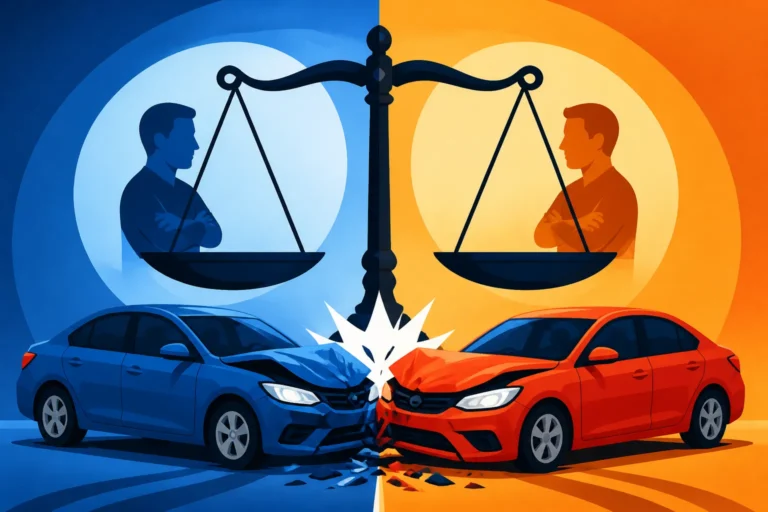
Here's a quick comparison of the two systems:
| Feature | No-Fault System | At-Fault (Tort) System |
|---|---|---|
| Initial Medical Payout | Your own insurance (PIP) pays first. | At-fault driver's insurance pays (after fault determination). |
| Right to Sue | Limited; usually requires meeting an injury threshold. | Generally unrestricted; you can sue the at-fault driver. |
| Types of Damages | Primarily medical bills, lost wages (from your own insurer). | Medical bills, lost wages, property damage, pain and suffering (from at-fault party). |
| Complexity of Claim | Simpler for minor injuries. | Often more complex, requiring fault determination. |
| Legal Disputes | Fewer small personal injury lawsuits. | More potential for disputes over fault and damages. |
California's Car Accident Fault System
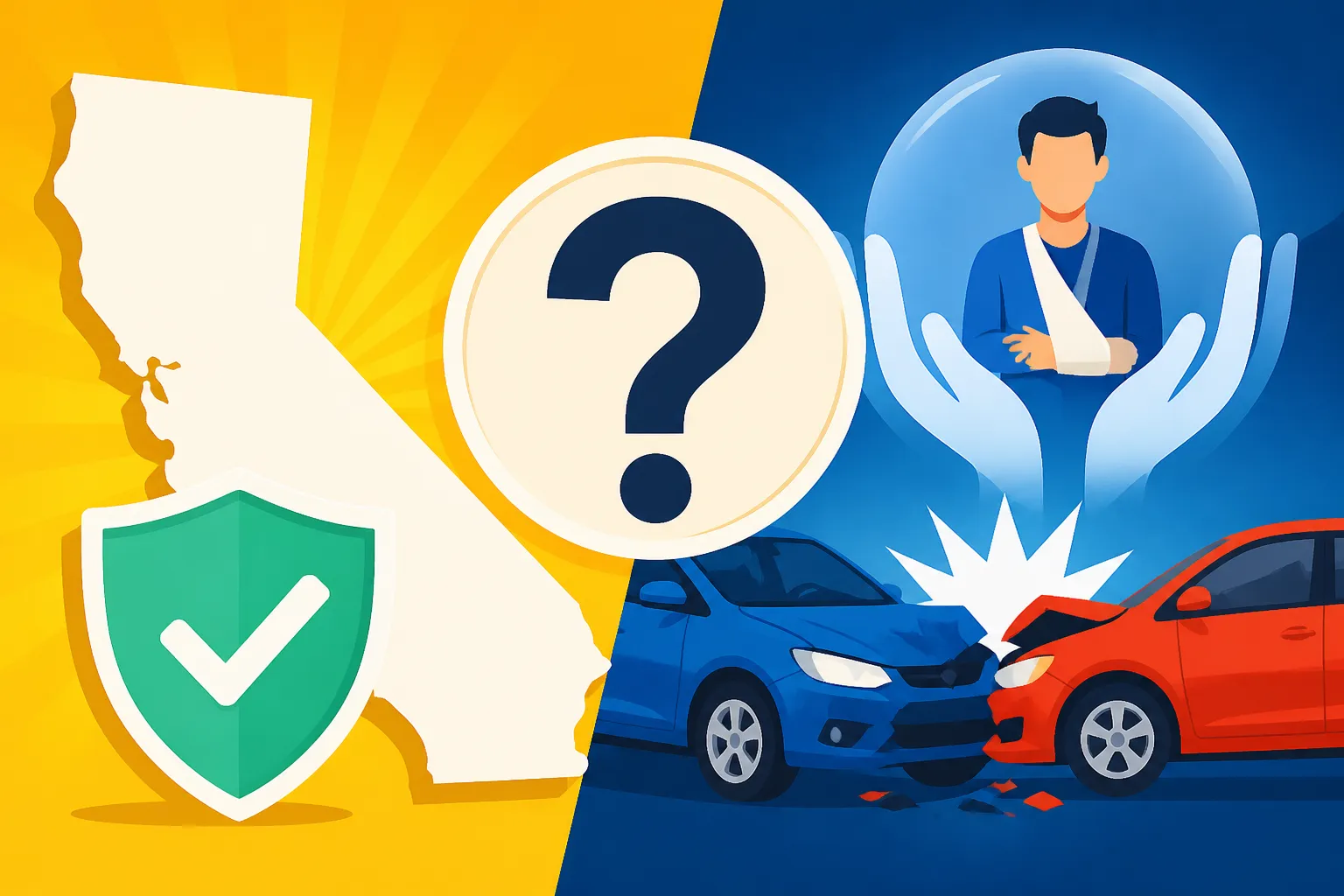
So, where does California fit into all of this? The short and sweet answer is: California is an at-fault state. This means that if you're involved in a car accident within the Golden State, the person who caused the accident is legally responsible for paying for the damages, including injuries, property damage, and other losses. This has significant implications for how you approach your claim and what steps you need to take.
How Fault Is Determined in California
In California's at-fault system, proving who is to blame is the cornerstone of any accident claim. This isn't always as straightforward as it sounds, especially when multiple vehicles are involved or circumstances are ambiguous. Insurance companies will launch their own investigations, but the burden of proof often falls on the party seeking compensation. They'll look at a variety of factors to determine liability:
- Police Reports: While not always definitive, a police report often includes an officer's assessment of the accident, diagrams, witness statements, and citations issued, all of which can strongly influence fault determination. Our guide on Police Reports and Car Accident Fault explains this in detail.
- Witness Statements: Independent witnesses who saw the accident unfold can provide invaluable, unbiased accounts.
- Photographs and Videos: Pictures of the accident scene, vehicle damage, skid marks, road conditions, and traffic signs can offer crucial visual evidence. Dashcam footage is becoming increasingly vital.
- Traffic Laws: A violation of a traffic law, such as running a red light, speeding, or making an illegal turn, is often a clear indicator of fault. For instance, understanding Left-Turn Accident Fault Rules can be critical in specific scenarios.
- Expert Analysis: In complex cases, accident reconstruction specialists might be brought in to analyze physics and data to piece together what happened.
It's important to remember that just because someone seems at fault doesn't mean the insurance company will automatically agree. They are in the business of minimizing payouts, so they will scrutinize every detail. Learning how insurance companies determine who is at fault is essential knowledge.
The Impact of Comparative Negligence in California
One of the most important nuances of California's at-fault system is its use of "pure comparative negligence." This legal doctrine means that even if you are partially to blame for an accident, you can still recover damages from the other at-fault party. However, your total compensation will be reduced by your percentage of fault.
Let's imagine a scenario: You're driving down a busy street in Los Angeles, and another driver abruptly changes lanes without signaling, hitting your car. While it seems clear they're mostly at fault, an investigation reveals you were also going slightly over the speed limit. A jury or insurance adjuster might determine the other driver was 80% at fault, but you were 20% at fault because of your speed. If your total damages (medical bills, lost wages, vehicle repair, pain and suffering) amount to $10,000, under pure comparative negligence, your recovery would be reduced by 20%, meaning you'd receive $8,000.
This system is different from "modified comparative negligence" (where you can't recover if you're more than 50% or 51% at fault) or "contributory negligence" (where even 1% fault bars any recovery). California's pure comparative negligence system is designed to allow individuals to recover some damages even if they share some responsibility, which is a key protection for accident victims. For a full explanation of this, you'll want to read about Comparative vs Contributory Negligence Explained and, more specifically, the Comparative Negligence Laws in California. The question of what happens if you're partially at fault? is a common and important one that this system addresses.
What This Means for Your California Car Accident Claim
Navigating a car accident claim in an at-fault state like California requires a clear understanding of the process. It's not just about getting your car fixed; it's about making sure your medical bills are covered, your lost income is accounted for, and your pain and suffering are recognized.
Reporting Requirements and Initial Steps
First things first, after any accident in California that results in injury, death, or property damage exceeding $1,000, you are legally required to report it to the California Department of Motor Vehicles (DMV) within 10 days using a form called SR-1. Failing to do so can lead to suspension of your driving privileges. This is separate from reporting to the police, which is also highly recommended, especially if there are injuries or significant damage. Getting a prompt police report helps establish a clear record of the incident.
Beyond official reports, the immediate steps you take at the scene are critical:
- Ensure Safety: Move vehicles to a safe location if possible, and check on all parties involved.
- Exchange Information: Get the other driver's name, contact details, insurance information, vehicle make/model, and license plate number.
- Document the Scene: Take photos and videos of the vehicles, the accident scene, any visible injuries, and road conditions. This visual evidence will be invaluable for establishing how fault is determined in a car accident.
- Seek Medical Attention: Even if you feel fine, some injuries have delayed symptoms after a car accident. Seeing a doctor ensures your well-being and creates a medical record, which is crucial for any personal injury claim. Our guide Common Car Accident Injuries: Complete Guide (2026) can help you understand what to look for.
- Notify Your Insurer: You should inform your own insurance company promptly, even if the accident wasn't your fault. They can help you with initial steps, advise on coverage, and guide you through how to file a car accident insurance claim.
Remember, every piece of documentation you collect and every step you take can support your claim in California's at-fault system. The sooner you act, the better positioned you'll be. Also, be mindful of the statute of limitations; there are strict deadlines for how long you have to file a car accident claim in California.
Recovering Damages in an At-Fault State
In California, because it's an at-fault state, you can pursue both "economic" and "non-economic" damages from the negligent driver's insurance company. This is a huge advantage compared to no-fault states where non-economic damages are often limited or unavailable unless specific injury thresholds are met.
-
Economic Damages: These are quantifiable financial losses. They include things like:
- Medical Expenses: Past and future bills for doctor visits, hospital stays, medication, therapy, rehabilitation, and assistive devices.
- Lost Wages: Income you've lost because you couldn't work due to your injuries. This also extends to future lost earning capacity if your injuries have long-term impacts on your ability to work.
- Property Damage: The cost to repair or replace your vehicle, as well as damage to any other personal property (e.g., cell phone, laptop) that was in your car.
- Other Out-of-Pocket Expenses: Costs for things like rental cars, transportation to medical appointments, or help with household tasks you can no longer perform.
-
Non-Economic Damages: These are more subjective, non-monetary losses that impact your quality of life. In California, these can be a significant part of your settlement and include:
- Pain and Suffering: This encompasses physical pain, discomfort, and emotional distress caused by the accident and your injuries. It also covers the mental anguish, fear, anxiety, and inconvenience you experience.
- Loss of Enjoyment of Life: If your injuries prevent you from engaging in hobbies, activities, or daily routines you once enjoyed.
- Disfigurement or Impairment: Compensation for permanent scarring, loss of bodily function, or other lasting physical changes.
Calculating how much is my car accident settlement worth? (2026) requires a careful assessment of both economic and non-economic damages. The at-fault system allows for a much broader range of compensation, but it also means you'll likely need to build a strong case to prove the full extent of your losses. This is often where consulting with a legal professional becomes invaluable, especially when dealing with insurance adjusters who may try to minimize your claim. Many people wonder, Do you need a lawyer for a car accident? (2026) in California, the answer is often yes, particularly for significant injuries. They can help you prove your injuries and navigate the complex process of securing fair compensation under the state's at-fault rules.
Disclaimer
Please remember that this information is intended for educational purposes only and does not constitute legal advice. Car accident laws are complex and can vary based on specific circumstances. It is always best to consult with a qualified legal professional for advice tailored to your individual situation.