Who Is at Fault in a Distracted Driving Accident in California?
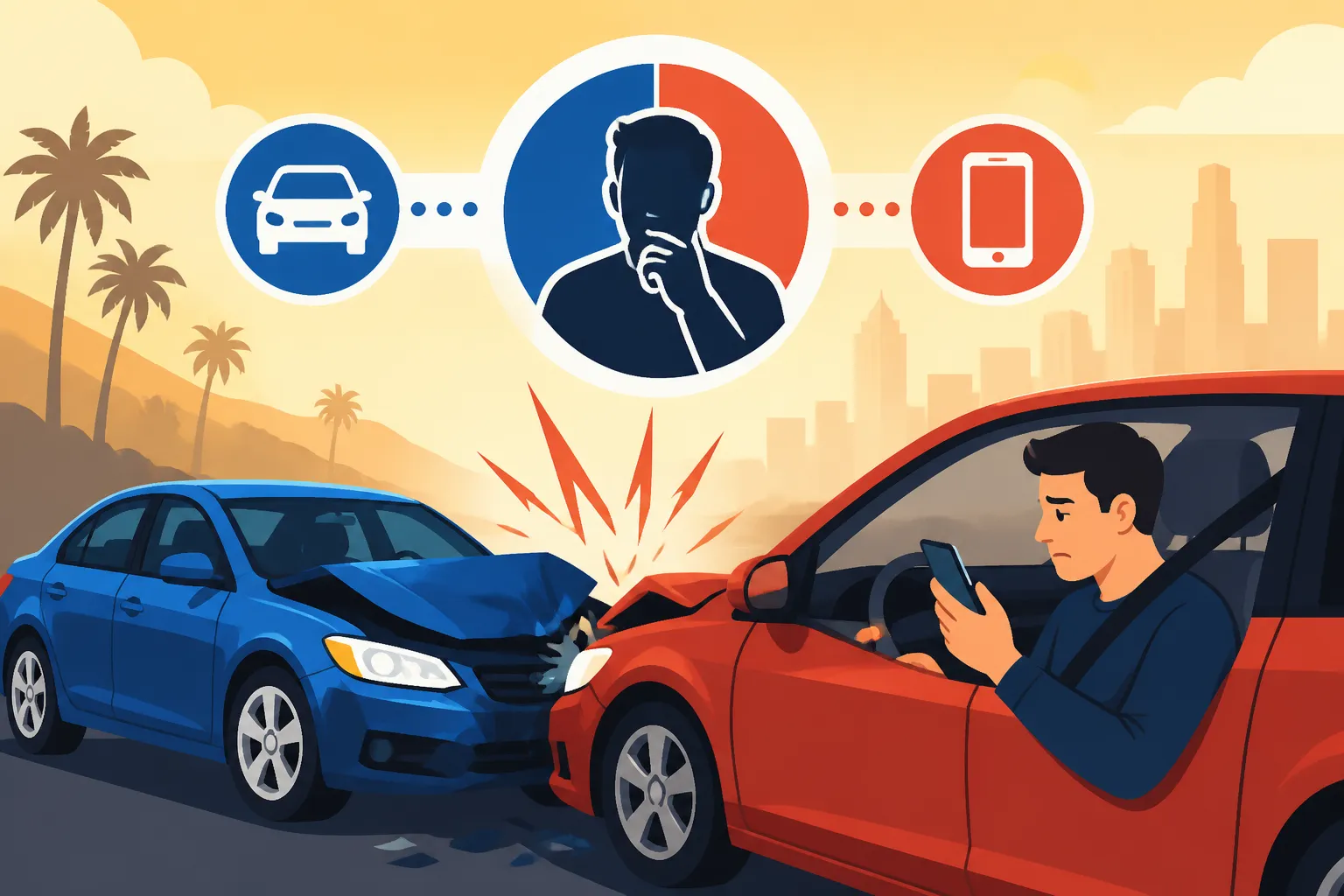
It’s a terrifying moment: you’re driving along, minding your own business, and suddenly, another driver swerves, runs a red light, or just isn’t paying attention, causing an accident. In today’s world, distracted driving is an all-too-common culprit, leaving victims not only with physical injuries and vehicle damage but also with the daunting task of figuring out who’s responsible. This guide will walk you through exactly how fault is determined in a distracted driving accident here in California, helping you understand your rights and the steps you need to take.
Understanding Distracted Driving in California Law
When we talk about distracted driving, most people immediately think of texting. And yes, that's a huge part of it, but the definition is actually much broader under California law. It encompasses anything that diverts a driver's attention from the primary task of driving. This distraction can be visual, manual, or cognitive, and all three types are equally dangerous.
What Constitutes Distracted Driving?
In California, distracted driving is specifically addressed by several Vehicle Code sections. The most commonly cited is the hands-free law, but it goes beyond that. For instance, California Vehicle Code 23123.5 makes it illegal to drive a motor vehicle while holding and operating a handheld wireless telephone or electronic wireless communication device. This means no texting, no scrolling through social media, and no looking up directions while holding your phone. Even if you're just picking it up to glance at it, you could be in violation.
But distractions aren't limited to cell phones. Think about all the other things that take your eyes and mind off the road:
- Eating or drinking: Spilling coffee can cause a sudden swerve.
- Grooming: Trying to fix your hair or apply makeup in the rearview mirror is a recipe for disaster.
- Adjusting navigation or radio: Fiddling with a GPS or trying to find the perfect song can be just as distracting as a phone call.
- Talking to passengers or tending to children/pets: These can quickly escalate into major distractions, especially in an emergency.
- Daydreaming or being lost in thought: While not explicitly illegal like phone use, a lack of focus can still be negligence.
Essentially, if an activity prevents a driver from safely operating their vehicle and reacting to road conditions, it can be considered a distraction, even if it's not a direct violation of a specific code. This broader understanding is crucial when you're trying to prove fault in an accident.
California's Specific Distracted Driving Laws
California has been at the forefront of combating distracted driving. As mentioned, the hands-free law (Vehicle Code 23123.5) is a big one. It states that a person shall not drive a motor vehicle while holding and operating a handheld wireless telephone or electronic wireless communications device. There are some exceptions, such as using it for emergency purposes or in certain specific work-related scenarios, but for most everyday driving, your phone needs to be mounted or used hands-free.
Beyond phones, California also has general negligence laws that apply. Every driver has a duty of care to operate their vehicle safely and avoid causing harm to others. When a driver is distracted and that distraction leads to an accident, they have breached that duty of care. This breach forms the legal basis for holding them responsible.
Consider a scenario where a driver is intensely focused on programming their GPS device, glancing down for extended periods. Even if they're not holding a cell phone to their ear, their attention is clearly diverted from the road. If they then rear-end another car because they didn't see it slow down, their actions would likely be considered distracted driving and a breach of their duty of care. This distinction is vital because even if no specific "distracted driving ticket" is issued, the behavior itself can be used to establish fault.
The Legal Framework for Fault
In California, determining fault in a car accident, especially one involving distracted driving, hinges on the concept of negligence. To successfully prove that the other driver was at fault due to distraction, you generally need to demonstrate four key elements:
- Duty of Care: The other driver owed you a legal duty to operate their vehicle safely. This is a given for all drivers on the road.
- Breach of Duty: The other driver breached that duty by acting negligently. In a distracted driving case, this means they failed to pay proper attention to the road because they were distracted. For example, by texting while driving on a busy Los Angeles freeway.
- Causation: The other driver's breach of duty directly caused your accident and injuries. Their distraction wasn't just present, it was the reason the crash happened.
- Damages: You suffered actual damages as a result of the accident, such as medical bills, lost wages, vehicle repair costs, or pain and suffering.
If you can demonstrate these four elements, then legally, the other driver is likely to be found at fault. California operates under a pure comparative negligence system, which we’ll dive into more later, but for now, understand that proving these elements is the first and most critical step in your car accident claim. Knowing Who Is at Fault in a Car Accident? Complete Guide (2027) is a complex process, but these foundational principles apply across the board.
Proving Fault in a California Distracted Driving Accident
Alright, you've been in an accident, and you strongly suspect the other driver was distracted. How do you go about proving it? This is often the trickiest part, as distracted drivers rarely admit to their actions, and concrete evidence isn't always obvious. However, with diligence and the right steps, you can build a strong case.
Gathering Critical Evidence at the Scene
The moments immediately following an accident are chaotic, but they are also crucial for collecting evidence. What you do right after the crash can significantly impact your ability to prove the other driver's distraction.
First and foremost, prioritize safety. If possible, move your vehicle to a safe location. Then, check for injuries – your own and those of any passengers. If anyone is injured, call 911 immediately. Even if it seems minor, it's always best to err on the side of caution.
Once safety is addressed, start gathering information. Take as many photos and videos as you can with your phone. This includes:
- Damage to both vehicles: Capture different angles, close-ups, and overall shots.
- The accident scene: Show road conditions, traffic signs, skid marks, debris, and the positions of the vehicles.
- The other driver's vehicle interior: This might seem invasive, but if you can discreetly get a shot that shows a phone in their hand, or a dashboard cluttered with devices, it could be incredibly valuable.
- The other driver themselves: If they appear disoriented, flustered, or are still holding their phone, try to capture it, though always prioritize your safety.
Next, get the contact information of any witnesses. People who saw the crash might have noticed the other driver looking at their phone or behaving erratically just before impact. Their testimony can be incredibly powerful. Ask them directly if they saw what the other driver was doing.
Finally, call the police to the scene, especially if there are injuries, significant property damage, or you suspect distracted driving. A police report, while not always definitive on fault, can be a crucial piece of evidence. The responding officer will document their observations, witness statements, and possibly even issue citations. For more on this, see Police Reports and Car Accident Fault.
Post-Accident Investigative Steps
The investigation doesn't end at the accident scene. Sometimes, the most compelling evidence of distracted driving comes to light days or weeks later.
One of the most potent pieces of evidence can be the other driver's cell phone records. While you can't just request these directly, an attorney can often subpoena them if a lawsuit is filed. These records can show if the driver was actively texting, making a call, or using data (like social media or navigation apps) at the exact time of the accident. This is a very direct way to prove they were engaged in a distracting activity.
Beyond phone records, consider these investigative avenues:
- Dashcam or surveillance footage: Many vehicles now have dashcams. If the other driver had one, or if nearby businesses (like a gas station in San Jose or a retail store in Sacramento) had surveillance cameras pointed towards the road, that footage could capture the moments leading up to the crash and show the other driver's actions. Your attorney can help secure this.
- Social media activity: Sometimes, drivers inadvertently post about their distracted driving before or even after an accident. While less common, checking public profiles might yield clues.
- Vehicle Event Data Recorders (EDRs): Modern cars often have EDRs (sometimes called "black boxes") that record data like speed, braking, and steering input in the seconds before a crash. While not directly proving phone use, unusual data patterns could suggest a lack of attention.
As you can see, gathering evidence is a multi-faceted process, and it often requires persistence and professional help. When trying to determine How Fault Is Determined in a Car Accident, every piece of evidence matters.
The Role of the Police Report
After a car accident in California, especially one where fault is disputed or injuries are involved, a police report is almost always generated. This document is invaluable, but it’s important to understand what it is and isn’t.
A police report is an official document created by the responding law enforcement officer. It typically includes:
- Basic accident details: Date, time, location, parties involved.
- Officer's observations: Road conditions, weather, damage to vehicles, presence of skid marks.
- Statements from drivers and witnesses: What everyone told the officer at the scene.
- Citations issued: If the officer observed a traffic violation, like illegal cell phone use or failure to yield, they will issue a ticket.
- The officer's opinion on fault: This is often based on their assessment of the scene and statements.
While the officer's opinion on fault is important, it is not legally binding. It’s their professional assessment, but insurance companies and courts will ultimately make their own determination based on all available evidence. However, a police report can heavily influence how an insurance company views the initial claim. If the report clearly states the other driver was cited for a distracted driving violation (e.g., California Vehicle Code 23123.5 for handheld phone use), it provides strong preliminary evidence in your favor.
Conversely, if the report assigns fault to you, even if you believe the other driver was distracted, it can create an uphill battle. This is why it’s critical to provide your full account to the officer at the scene and, if you disagree with their initial findings, to gather additional evidence. Learning What Happens If the Other Driver Blames You? is vital in these situations, and a comprehensive police report can be a powerful tool for your side. Remember, the report is a starting point, not the final word.
How California's Comparative Negligence Affects Your Claim
California is one of the few states that operates under what's called "pure comparative negligence." This legal doctrine is incredibly important in car accident claims, especially when there's a possibility that both drivers might share some degree of responsibility. It can significantly impact how much compensation you can recover.
Pure Comparative Negligence Explained
In a nutshell, pure comparative negligence means that even if you are partially at fault for an accident, you can still recover damages from the other at-fault party. The amount you can recover, however, will be reduced by your percentage of fault. There's no bar to recovery, even if you are found to be 99% at fault. This is quite different from other systems, like modified comparative negligence (50% or 51% bar) or contributory negligence (where even 1% fault can prevent recovery entirely).
Let's say you're driving in San Diego and get into a distracted driving accident where the other driver was clearly looking at their phone. However, it's later determined that you were slightly speeding at the time. Under California's pure comparative negligence, a jury or insurance adjuster might decide that the other driver was 90% at fault for texting, but you were 10% at fault for speeding.
The beauty of California's system for injured parties is that it allows for compensation even in situations where fault isn't entirely clear-cut. It acknowledges that accidents are rarely black and white, and often, multiple factors contribute. For a deeper dive into this, check out Pure Comparative Negligence States Explained.
How Shared Fault Reduces Your Settlement
Understanding that your settlement will be reduced by your percentage of fault is critical for managing expectations. Let's revisit our example:
- Total damages (medical bills, lost wages, pain and suffering, vehicle repair) are calculated at $100,000.
- The other driver is found to be 90% at fault due to distracted driving.
- You are found to be 10% at fault due to slight speeding.
In this scenario, because you were 10% at fault, your recoverable damages would be reduced by 10%. So, instead of receiving the full $100,000, you would receive $90,000 ($100,000 – 10%).
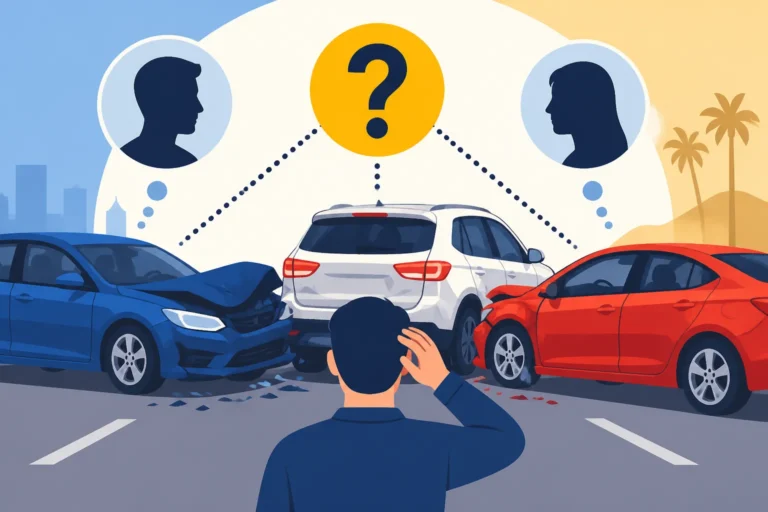
This system can become even more complex in multi-car pileups or situations where it’s harder to pinpoint a primary cause. For instance, if you were in a chain-reaction rear-end crash on the I-5 near Irvine, and multiple drivers were distracted, the fault might be distributed among several parties. Each driver's negligence contributes, and your recovery would be adjusted accordingly. This is a key aspect of How Comparative Fault Reduces Your Settlement.
It’s important to note that insurance companies will always try to assign some percentage of fault to you to reduce their payout. This is where strong evidence and, often, legal representation become invaluable.
What If the Other Driver Blames You Unfairly?
It's a common tactic: even when the other driver was clearly distracted and caused the accident, they might try to turn the tables and blame you. Perhaps they'll claim you stopped too suddenly, or that your brake lights weren't working. This is a frustrating but expected part of the car accident claim process.
Here’s how to navigate it:
- Stick to the facts: When talking to police or insurance adjusters, provide a clear, concise account of what happened. Do not speculate or admit any fault. Saying "I think maybe I could have…" can be used against you.
- Present your evidence: This is where all those photos, witness statements, and potential dashcam footage come into play. If you have evidence that directly contradicts their claims, it’s powerful. For guidance on this, refer to How to Prove the Other Driver Was at Fault.
- Challenge their claims: If the other driver claims you were speeding, but your vehicle's EDR or a witness states otherwise, present that information.
- Consult an attorney: If the other driver or their insurance company is unfairly blaming you, it’s almost always a good idea to speak with a car accident lawyer. They are skilled at negotiating with insurance companies and can build a robust case to counter false accusations, especially when it comes to proving distracted driving. They understand the nuances of What Happens If You're Partially at Fault? and can fight to protect your right to fair compensation.
Remember, the insurance company's goal is to pay out as little as possible. If they can shift even a small percentage of fault onto you, it directly benefits their bottom line. Being prepared to defend your position is key.
The Insurance Claim Process and Distracted Driving
Navigating the insurance claim process after a distracted driving accident can feel like a maze, especially when you're dealing with injuries and vehicle damage. Knowing what to expect and how to approach interactions with insurance adjusters can make a significant difference in the outcome of your claim.
Dealing with Insurance Adjusters
Insurance adjusters, whether from your company or the at-fault driver's, are professionals trained to investigate claims and assess liability. While they may sound friendly and empathetic, remember that their primary role is to protect the insurance company's financial interests.
Here are some crucial tips for dealing with them:
- Be cautious with your statements: Never admit fault, even in a small way. Avoid speculating or making assumptions. Stick to the verifiable facts. For example, if they ask how you're feeling, you can say "I'm in pain, and I'm seeing a doctor," rather than "I'm mostly okay, just a little sore." What you say can and will be used to minimize your injuries or assign partial fault.
- Do not give a recorded statement without legal advice: This is a big one. Insurance companies love recorded statements because they can pick apart your words later. If asked for one, politely decline and state that you'd prefer to consult with an attorney first.
- Provide necessary information, but don't overshare: You'll need to provide details about the accident, your vehicle, and your insurance. However, you don't need to hand over every single medical record immediately or discuss your long-term prognosis.
- Document everything: Keep a detailed log of all communications with insurance adjusters, including names, dates, times, and summaries of conversations. This paper trail is invaluable.
It's common for adjusters to try and settle claims quickly, especially if the fault seems clear. However, accepting a quick settlement, particularly for injuries, can be a mistake if you don't fully understand the extent of your damages. Many injuries, like whiplash or a concussion, have Delayed Injury Symptoms After a Car Accident that may not manifest for days or even weeks. Once you sign a release, you typically can't seek more compensation, even if new symptoms appear. Always remember that Dealing With Insurance Adjusters After a Car Accident requires a strategic approach.
Strategies for a Successful Claim
To ensure your claim for a distracted driving accident in California is as successful as possible, a proactive and organized approach is key.
- Seek Medical Attention Immediately: Even if you feel fine after the crash, see a doctor. This creates an official record of your injuries, which is vital for your claim. Delayed treatment can make it harder to prove your injuries were caused by the accident. Medical records are essential for proving How Medical Records Prove Your Injuries.
- Document All Damages: Keep meticulous records of all expenses related to the accident: medical bills, pharmacy receipts, therapy costs, receipts for vehicle repairs, rental car expenses, and any lost wages. If your car is declared a total loss, understand how to calculate its market value.
- Gather Strong Evidence of Distraction: As discussed, this includes photos, witness statements, police reports, and potentially phone records or surveillance footage. The more specific evidence you have of the other driver's distraction, the stronger your case.
- Understand Your Policy: Review your own insurance policy to understand your coverage limits and what types of damages are covered. This is important for both first-party and third-party claims.
- Consider Legal Counsel: Distracted driving claims, especially those involving significant injuries, can be complex. A car accident attorney in California can help you gather evidence, negotiate with insurance companies, understand California's pure comparative negligence laws, and ensure you pursue the maximum possible compensation. They know How Insurance Companies Determine Who Is at Fault and can advocate on your behalf. For many, asking Do You Need a Lawyer for a Car Accident? (2027) leads to a resounding "yes" when the other party was clearly at fault but won't admit it.
Common Challenges and How to Overcome Them
Despite your best efforts, you might encounter some common hurdles during your distracted driving accident claim.
- Denial of Distraction: The other driver will almost certainly deny they were distracted. This is where your specific evidence (witness statements, cell phone records, officer’s observations) becomes paramount. Without concrete proof, it can become a "he said, she said" situation.
- Lowball Settlement Offers: Insurance companies frequently offer a quick, low settlement, hoping you'll take it to avoid a lengthy process. This is almost always less than what your claim is truly worth, especially if you have significant injuries. Do not accept it. Your attorney can help you understand the full value of your claim and negotiate for a fair settlement.
- Assignment of Partial Fault to You: As California is a pure comparative negligence state, the other driver's insurance company will often try to assign some percentage of fault to you to reduce their payout. They might claim you were speeding, didn't brake in time, or contributed in some other way. This is where your precise account of the accident and strong evidence can counter their assertions. If What to Do If Insurance Blames You Unfairly becomes your reality, a lawyer is your strongest advocate.
- Delays in the Process: Insurance claims can sometimes drag on. Be patient but persistent. Follow up regularly, keep records, and don't hesitate to involve your attorney if you feel your claim is being unnecessarily delayed.
By being prepared for these challenges and having a solid strategy, you increase your chances of a successful outcome, holding the distracted driver accountable for their negligence and securing the compensation you deserve.
Types of Evidence for Distracted Driving Accidents
To help you visualize the different types of evidence and their impact, here's a table summarizing common evidence you can use in a distracted driving claim in California.
| Type of Evidence | Description | Strength in Proving Distraction | Accessibility & Collection Notes |
|---|---|---|---|
| Police Report | Official report by law enforcement; includes officer observations, statements, and potential citations. | Medium to High (especially if a citation for phone use issued) | Collected by police at the scene. Request a copy from the police department after a few days. |
| Witness Statements | Accounts from third-party observers who saw the accident or the driver's actions just prior. | High (especially if they observed direct distraction) | Collect contact info at the scene. Follow up with a written statement if possible. |
| Photos/Videos | Images of scene, damage, road conditions, and potentially the other driver/their phone at the scene. | Medium to High (visual proof is powerful) | Taken by you or witnesses at the scene. Ensure clear, time-stamped images. |
| Cell Phone Records | Data showing call, text, or data usage at the time of the accident. | Very High (direct, undeniable proof) | Requires a subpoena, typically obtained by an attorney after a lawsuit is filed. |
| Dashcam/Surveillance | Video footage from a dash camera in your car, the other car, or nearby security cameras. | Very High (visual evidence of driver's actions) | Check your own vehicle. Ask nearby businesses for footage. An attorney can subpoena if needed. |
| Driver Admissions | The other driver admits to being distracted (e.g., "I was just looking at my GPS"). | Very High (direct confession) | Note down any admissions immediately. Best if witnessed by police or another party. |
| Vehicle EDR Data | Electronic data recorded by the car's "black box" (speed, braking, steering) in moments before impact. | Medium (indirect, but can show lack of reaction) | Requires specialized equipment to download, usually done by experts or attorneys. |
| Social Media Posts | Public posts from the other driver indicating distraction or admitting to it. | Low to Medium (rare, but can be compelling if found) | Requires online investigation. Screenshots are important. |
Disclaimer
Please note that this article provides general information and does not constitute legal advice. Car accident claims are highly dependent on the specific facts and circumstances of each case, as well as the laws of the applicable jurisdiction. It is always recommended to consult with a qualified personal injury attorney in California for advice tailored to your individual situation.