Who Is at Fault in a Head-On Accident in Texas?
There's almost nothing more terrifying on the road than seeing an oncoming vehicle suddenly swerve into your lane. Head-on collisions are, without a doubt, among the most devastating types of car accidents, often leading to severe injuries, extensive property damage, and tragically, sometimes even fatalities. The immediate aftermath is a whirlwind of chaos and trauma, but once the dust settles, a critical question emerges: Who is at fault? In Texas, determining fault in a head-on accident is a complex process with significant implications for your ability to recover damages, and understanding the nuances is crucial to navigating the difficult road ahead. This guide will walk you through how fault is typically determined in head-on collisions in the Lone Star State, helping you understand your rights and the steps you need to take.
Understanding Head-On Collisions and Their Severity
When two vehicles collide front-to-front, the forces involved are exponentially higher than in other types of accidents, as the kinetic energy of both vehicles combines. This isn't your average fender bender in a parking lot; these are high-impact events that reshape lives in an instant.
The Devastating Impact of Head-On Crashes
The sheer physics of a head-on collision mean that the occupants of both vehicles are subjected to incredible G-forces, often resulting in catastrophic injuries. Think about it: the sudden, abrupt deceleration from highway speeds to zero in a fraction of a second can cause internal organs to strike the rib cage or skull, leading to devastating consequences. Common car accident injuries from head-on collisions include traumatic brain injuries (TBI), severe spinal cord damage, broken bones (often compound fractures), internal bleeding, punctured lungs, and extensive facial injuries. It's not uncommon for survivors to face multiple surgeries, lengthy rehabilitation, and a lifetime of chronic pain.
Beyond the physical wounds, the psychological trauma can be equally profound. Victims often grapple with Post-Traumatic Stress Disorder (PTSD), anxiety, and depression, making it incredibly difficult to return to normal life. The vehicles themselves are typically totaled, reduced to mangled heaps of metal that are barely recognizable. The financial toll, between emergency medical care, ongoing therapy, lost income, and vehicle replacement, can be astronomical, leaving families in a precarious position.
Why Fault Matters More in Severe Accidents
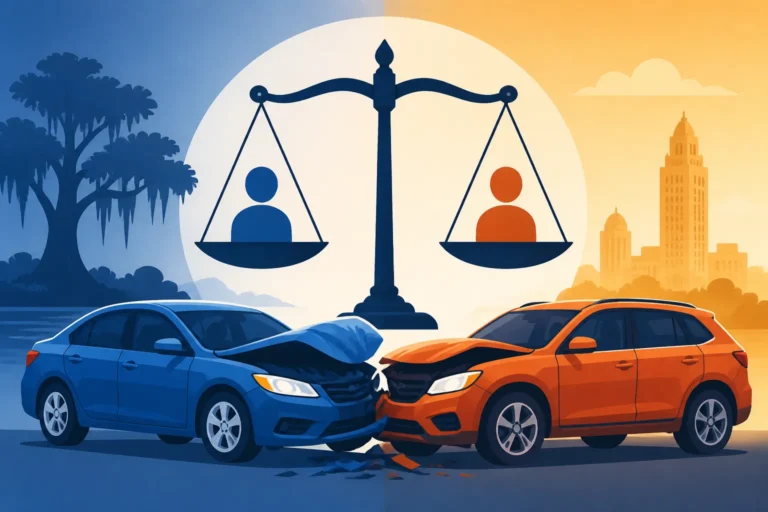
In an accident with such devastating outcomes, the question of fault isn't just a technicality; it's the gateway to compensation for untold suffering. Because head-on collisions almost invariably result in severe injuries and massive financial losses, determining who is legally responsible becomes paramount. In Texas, an "at-fault" insurance system means that the driver deemed responsible for causing the accident is financially liable for the damages incurred by the other parties.
If you are the victim of a head-on collision caused by another driver, proving their fault is the key to recovering compensation for your medical bills, lost wages, pain and suffering, and other damages. Conversely, if you are found to be at fault, you could be on the hook for the other party's damages, and your own ability to recover will be severely limited or even eliminated, depending on the specifics of the case. This stark reality underscores why fault determination in these high-stakes accidents is so crucial and often fiercely contested by insurance companies. For a more general understanding of this critical topic, you might want to read our comprehensive guide on Who Is at Fault in a Car Accident? Complete Guide.
Texas Laws and Fault Determination in Head-On Accidents
The legal framework in Texas plays a significant role in how fault is assigned and how that assignment impacts your ability to recover damages. Understanding these laws is foundational to navigating the aftermath of a head-on collision.
Texas as an "At-Fault" State
Texas operates under an "at-fault" or "tort" insurance system. This means that if you're involved in a car accident, the person who caused the accident is responsible for the damages. Unlike "no-fault" states, where your own insurance generally covers your initial medical expenses regardless of who caused the crash, in Texas, you'll typically file a claim against the at-fault driver's insurance company to seek compensation for your injuries and property damage. This principle applies directly to head-on accidents: whoever is found responsible for driving into the oncoming lane will almost certainly bear the financial brunt of the collision.
This system places a strong emphasis on establishing liability. Every piece of evidence, every witness statement, and every detail gathered at the scene will be scrutinized to build a clear picture of who caused the crash. The initial shock and confusion after such a traumatic event can make this difficult, but it's absolutely vital.
Modified Comparative Negligence in Texas
While the at-fault driver is responsible, Texas also employs a legal doctrine called "modified comparative negligence" with a 51% bar. What does this mean for a head-on collision? It means that if both drivers are found to share some degree of fault for the accident, your ability to recover compensation will be affected. Specifically, if you are found to be 51% or more at fault for the accident, you cannot recover any damages from the other driver.
If you are found to be less than 51% at fault, you can still recover damages, but your total compensation will be reduced by your percentage of fault. For example, if a jury determines your total damages are $100,000, but you were 20% at fault for the head-on accident (perhaps you were speeding slightly, contributing to the severity, though not the cause), you would only be able to recover $80,000. This is a critical point, especially in complex head-on accidents where multiple factors might be at play. Understanding this rule, often referred to as the 51% Bar Rule, is crucial. You can learn more about this by exploring our article on Modified Comparative Negligence (50% vs 51% Bar).
Presumptions of Fault in Head-On Collisions
In most head-on collisions, fault is fairly straightforward because one driver has almost always violated a fundamental rule of the road. The most obvious scenario is when a vehicle crosses the centerline or median and enters the opposing lane of traffic. In such cases, there's a strong legal presumption that the driver who crossed into the wrong lane is at fault. This is because every driver has a duty to maintain their lane and avoid driving into oncoming traffic.
However, "presumption" doesn't always mean absolute certainty. While rare, there can be exceptions or contributing factors that complicate this. For instance, what if the other driver swerved into your lane to avoid a sudden, unforeseen hazard that you yourself created? Or what if a defective part in their vehicle caused them to lose control? These situations, while less common, are why a thorough investigation is always necessary. The initial assessment by law enforcement or even a clear-cut physical location of impact doesn't always tell the whole story, which is why skilled investigators and legal counsel are often crucial to unraveling the truth.
Common Scenarios Leading to Head-On Collisions and Fault
Head-on collisions are rarely random events; they are almost always the result of a specific, often negligent, action by one driver. Identifying these actions is key to assigning fault.
Driving on the Wrong Side of the Road
This is arguably the most unambiguous scenario for assigning fault in a head-on collision. When a driver knowingly or unknowingly operates their vehicle against the flow of traffic, they are almost certainly considered 100% at fault. This can happen on divided highways where a driver mistakenly enters an exit ramp as an entrance, or on smaller two-lane roads where confusion, distraction, or impairment leads to crossing into the wrong lane. Imagine driving on a dimly lit rural road near San Antonio and suddenly seeing headlights coming straight at you in your lane – that driver is violating one of the most basic rules of the road.
Factors contributing to driving on the wrong side of the road often include severe intoxication (drunk driving), extreme fatigue (falling asleep at the wheel), profound distraction (like texting while driving, taking your eyes off the road for too long), or, in rare cases, a medical emergency that incapacitates the driver. Elderly drivers, or those unfamiliar with the road signs, might also mistakenly drive the wrong way, particularly on complex highway interchanges. Regardless of the underlying reason, the act of driving on the wrong side of the road places the vast majority, if not all, of the fault squarely on that driver.
Crossing the Centerline or Median
Another prevalent cause of head-on collisions involves a driver veering out of their lane and across the centerline or median into oncoming traffic. This differs from driving entirely on the wrong side of the road as it often involves a momentary lapse or loss of control rather than sustained incorrect lane usage. Such incidents can occur for a variety of reasons:
- Speeding: Taking a curve too fast can cause a driver to lose control and drift into the opposing lane.
- Distracted Driving: A moment looking at a phone, adjusting the radio, or reaching for something can lead to a vehicle drifting over the line.
- Impaired Driving: Alcohol or drug impairment severely reduces reaction time and judgment, making it easy to cross the centerline.
- Aggressive Driving: Reckless maneuvers, such as unsafe overtaking on a two-lane road, can force a head-on collision.
- Road Hazards or Bad Weather: While sometimes a defense, swerving drastically to avoid a pothole or debris, or losing control on icy roads, if done negligently, can still result in fault if the driver could have reacted more safely or was driving too fast for conditions.
For example, a driver traveling on Highway 290 west of Austin, distracted by their phone, drifts into the oncoming lane and strikes another vehicle head-on. In this situation, the distracted driver would likely be found at fault for failing to maintain their lane and operating their vehicle safely.
Impaired or Distracted Driving
The consequences of driving under the influence of alcohol or drugs, or engaging in distracted driving, are severe and often directly lead to head-on collisions. In Texas, driving while intoxicated (DWI) is a serious criminal offense, and if it results in an accident, fault is almost automatically assigned to the impaired driver. Their judgment, reaction time, and ability to control the vehicle are compromised, making them a lethal hazard on the road.
Similarly, distracted driving, particularly texting while driving, has become an epidemic. Even a few seconds of looking away from the road can result in a vehicle drifting across the centerline or failing to perceive an oncoming threat, leading to a head-on impact. Texas law prohibits texting while driving statewide, reinforcing the negligence of such actions. If it can be proven that a driver was impaired or distracted at the time of a head-on collision, this evidence becomes incredibly powerful in establishing their sole fault for the accident. The police report and subsequent investigation will usually delve deep into these factors.
Driver Fatigue or Medical Emergencies
While less malicious than impaired or distracted driving, driver fatigue can be equally dangerous. Falling asleep at the wheel is a tragically common cause of head-on collisions, especially on long stretches of highway or during late-night hours. If a driver falls asleep and drifts into the oncoming lane, they will almost certainly be held liable for the resulting accident. The law expects drivers to be sufficiently rested to operate a vehicle safely.
Medical emergencies present a more nuanced situation. If a driver experiences a sudden, unforeseeable medical event (like a heart attack, stroke, or epileptic seizure) that causes them to lose control of their vehicle and cross into oncoming traffic, they might argue that they were not negligent because the event was beyond their control. This is often referred to as the "sudden medical emergency defense." However, this defense is difficult to prove and has strict limitations. The medical event must have been truly sudden and unforeseeable, with no prior warning or history. If a driver knew they had a condition that could cause incapacitation and chose to drive anyway, they would likely still be found at fault. For example, a driver in Dallas with a known history of seizures who failed to take their medication and then had a seizure at the wheel would still face a high likelihood of being found at fault.
Proving Fault After a Head-On Accident in Texas
Establishing fault in any car accident can be challenging, but in the traumatic aftermath of a head-on collision, it's even more critical and requires a meticulous approach. The severity of these crashes means that disputes over fault can be intense, as the financial stakes are exceptionally high.
Gathering Critical Evidence at the Scene
The moments immediately following a head-on collision are chaotic, but if you are physically able, gathering evidence at the scene is paramount. This initial documentation can be invaluable for proving fault later on.
- Call 911: Always call emergency services. Police will respond, secure the scene, and often generate a police report. Paramedics will assess injuries.
- Photographs and Videos: Use your phone to take extensive photos and videos of the accident scene. Capture the positions of all vehicles, damage to both cars, road conditions, skid marks, traffic signs, debris, and any visible injuries. The more visual evidence, the better.
- Witness Information: If there are any witnesses, obtain their names and contact information. Their impartial accounts can be incredibly powerful in corroborating your version of events, especially if the other driver attempts to shift blame.
- Exchange Information: Get the other driver's insurance information, driver's license number, license plate, and contact details. Do not discuss fault or apologize, as this could be misconstrued as an admission of fault. For a detailed step-by-step guide on what to do, refer to our article on What to Do After a Car Accident: Step-by-Step (2027).
- Dashcam Footage: If you or a witness had a dashcam, that footage is often irrefutable evidence. Dashcams are becoming increasingly common and can definitively show how the accident unfolded.
- Accident Reconstruction: In severe head-on collisions, accident reconstruction specialists might be brought in by insurance companies or your legal team. These experts analyze physical evidence, vehicle data recorders, and other factors to scientifically determine the sequence of events and impact points, providing a clear picture of fault.
The Role of Law Enforcement and Accident Reports
When police respond to a head-on collision in Texas, their primary role is to secure the scene, ensure public safety, and investigate any potential criminal activity (like DWI). They will interview drivers and witnesses, gather initial evidence, and complete a Texas Peace Officer's Crash Report (CR-3). This report documents critical factual information, such as the date, time, location, involved parties, vehicle information, and often includes a diagram of the accident scene and a narrative description of what occurred.
While a police report can be a very strong piece of evidence in determining fault, it's important to understand its limitations. The officers on the scene are there to document facts and enforce traffic laws, not to definitively determine civil liability. The report may state who received a citation for a traffic violation (like failure to maintain a single lane or reckless driving), which strongly points to fault. However, the report often includes an "officer's opinion" section, which insurance companies may or may not fully accept as the final word on fault. Still, the factual details within the report are crucial for building your case. You can learn more about this by reading our article on Police Reports and Car Accident Fault.
How Insurance Companies Investigate Fault
After a head-on collision, both your insurance company and the other driver's insurer will launch their own investigations into fault. Insurance adjusters are trained to gather information that supports their client's position and minimizes payouts. They will:
- Review Police Reports: They will obtain and scrutinize the CR-3 report for any details that could assign blame.
- Interview Parties and Witnesses: Adjusters will contact everyone involved, including drivers, passengers, and eyewitnesses, to get their statements. Be cautious about giving recorded statements to the other driver's insurance company without legal advice, as these can be used against you.
- Examine Photos and Videos: Visual evidence is critical for adjusters to understand the impact and positions of vehicles.
- Assess Vehicle Damage: The type and location of damage on the vehicles can provide clues about the angle of impact and which driver encroached upon the other's lane.
- Consult Experts: For severe accidents, they might hire their own accident reconstructionists or medical experts to challenge claims of injury or fault.
It's important to remember that insurance companies operate with their own financial interests at heart. Even if fault seems clear-cut to you, they may try to find ways to assign partial fault to you to reduce their payout under Texas's modified comparative negligence rule. This is where having your own thorough documentation and, often, legal representation, becomes essential to ensure your rights are protected. For deeper insights into this process, consider reading How Insurance Companies Determine Who Is at Fault.
Navigating the Aftermath: What to Do
Surviving a head-on collision is a traumatic experience, and the steps you take immediately afterward, and in the weeks that follow, can significantly impact your physical recovery and your ability to secure compensation.
Prioritizing Safety and Medical Attention
Your health and safety are paramount after any car accident, but especially after a head-on collision due to their inherent severity.
- Immediate Safety: If physically able, move yourself and any passengers to a safe location away from traffic. Turn on your hazard lights.
- Call 911: As mentioned, this ensures police response and, critically, paramedics. Even if you feel "okay," the adrenaline rush can mask serious injuries.
- Seek Medical Care: Whether you're transported from the scene or drive yourself, get a thorough medical evaluation as soon as possible. Some severe injuries, like internal bleeding or certain types of traumatic brain injury, may not present immediate symptoms. Delayed injury symptoms after a car accident are very real, and waiting too long to seek medical attention can not only harm your health but also weaken your injury claim, as the insurance company might argue your injuries weren't directly caused by the accident. Follow all medical advice and attend all follow-up appointments.
Documenting Everything for Your Claim
The process of filing a car accident claim is highly reliant on documentation. Every injury, every expense, and every communication should be meticulously recorded.
- Medical Records: Keep detailed records of all your medical treatments, diagnoses, prescriptions, therapy sessions, and doctor's visits. These records are the backbone of proving your injuries and how they relate to the accident. Our article on How Medical Records Prove Your Injuries provides more guidance on this.
- Expenses: Keep track of all accident-related expenses: medical bills, prescription costs, transportation to appointments, car repair or replacement costs, and any other out-of-pocket expenses.
- Lost Wages: Obtain a letter from your employer detailing any time missed from work due to your injuries and treatment. If your injuries impact your ability to earn at the same level in the future, this also needs to be documented.
- Communication Log: Maintain a log of all communications with insurance adjusters, including dates, times, names of individuals you spoke with, and a summary of the conversation. Be cautious about what you say, and never admit fault or minimize your injuries. For guidance on how to avoid accidentally admitting fault, see What Is an Admission of Fault (and How to Avoid It)?.
Seeking Legal Guidance
Given the catastrophic nature of head-on collisions and the complexities of Texas's fault laws, consulting with an experienced car accident attorney is almost always advisable. Insurance companies are formidable adversaries, and they have vast resources dedicated to minimizing their payouts.
- Navigating Complexities: An attorney can help you understand the intricacies of Texas law, properly value your claim (including pain and suffering, lost wages, and future medical costs), and build a strong case for fault against the negligent driver. They can gather additional evidence, interview witnesses, and negotiate with insurance adjusters on your behalf.
- Protecting Your Rights: Your lawyer will act as your advocate, ensuring that the insurance company treats you fairly and doesn't try to unfairly shift blame or offer a lowball settlement. They understand how much is your car accident settlement worth? and will fight to maximize your compensation.
- Peace of Mind: With a legal professional handling the legal battles, you can focus on your recovery without the added stress of dealing with insurance paperwork, deadlines, and negotiations. Knowing your rights are protected can be invaluable during such a difficult time. You can learn more about when it's appropriate to hire legal help in our guide, Do You Need a Lawyer for a Car Accident? (2026).
Summary of Head-On Accident Fault Scenarios in Texas
To help you quickly understand common fault determinations in head-on collisions in Texas, here's a brief summary:
| Scenario Leading to Head-On Collision | Typical Fault Determination in Texas | Key Considerations |
|---|---|---|
| Driving on Wrong Side of Road | Almost always 100% at fault for the wrong-way driver. | Often linked to impairment (DWI), extreme fatigue, or severe distraction. Strong evidence for negligence. |
| Crossing Centerline/Median | Driver who crossed the line is typically at fault. | Can be caused by speeding, distracted driving, aggressive maneuvers, or impairment. Less common if caused by unavoidable emergency or sudden defect. |
| Impaired Driving (DWI/Drugs) | Impaired driver is almost always 100% at fault. | Criminal charges often accompany civil liability. Evidence of impairment is strong for fault. |
| Distracted Driving (e.g., Texting) | Distracted driver is almost always 100% at fault. | Evidence like phone records or witness statements can prove distraction. Violates Texas texting-while-driving law. |
| Driver Fatigue (Fell Asleep) | Driver who fell asleep is typically 100% at fault. | Drivers have a duty to be rested. Proving they fell asleep often relies on witness testimony or admissions. |
| Sudden Medical Emergency | Can be complex; may not be at fault if truly unforeseeable. | Extremely difficult defense to prove. Must be sudden, without warning, and completely incapacitating. |
| Swerving to Avoid Obstacle | Depends on context; may still be at fault if action was negligent. | If the swerve was reckless or avoidable, or if the obstacle was caused by their own negligence, they could still be at fault. |
Disclaimer
Please remember that this article provides general information and is not a substitute for professional legal advice. Every car accident case is unique, and the information presented here may not apply to your specific situation. If you have been involved in a head-on accident in Texas, it is strongly recommended that you consult with a qualified personal injury attorney to discuss the details of your case and understand your legal options.