Who Is at Fault in a Hit-and-Run Accident in California?
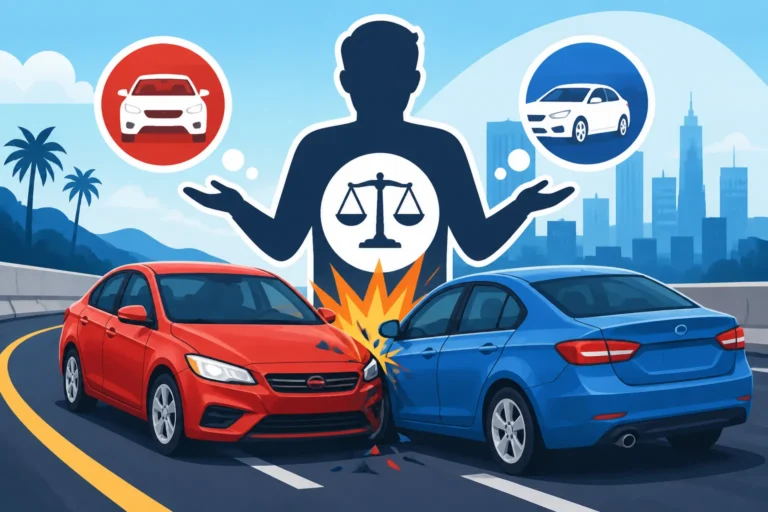
Dealing with the aftermath of a car accident is already a nightmare, but when the other driver speeds off into the sunset, leaving you with a damaged vehicle and potentially serious injuries, it feels like an absolute betrayal. You're left shaking, confused, and wondering: who is at fault, and more importantly, how on earth do you even begin to get compensation in a hit-and-run accident in California? This guide is designed to walk you through the complexities of determining fault and navigating the claims process when the responsible party is nowhere to be found, offering practical advice and a clear understanding of your rights in the Golden State.
Understanding What Constitutes a Hit-and-Run in California
First things first, let's define what we're actually talking about. A hit-and-run isn't just someone leaving the scene because they're rude; it's a specific legal offense in California, and it carries serious consequences for the fleeing driver if they are caught. For you, the victim, understanding this legal framework is crucial to knowing your next steps.
Legal Definition and Driver Responsibilities
In California, Vehicle Code Section 20002 states that any driver involved in an accident resulting in property damage must stop at the scene, locate the owner of the damaged property (or leave a note with their contact and vehicle information), and provide identifying details. If there's an injury or death, California Vehicle Code Section 20001 kicks in, requiring drivers to stop, provide identification, and render reasonable assistance to anyone injured, which can include arranging for transportation to medical treatment. Failing to do any of these things, whether it's a minor fender-bender in a parking lot or a serious collision on the freeway, is considered a hit-and-run. It's a criminal offense, a misdemeanor for property damage only, and a felony if someone is injured or killed.
The frustration here is palpable, right? Most of us are taught to pull over, exchange information, and wait for the authorities. But when the other person completely disregards that fundamental responsibility, it leaves you in a tough spot. They’ve essentially shirked their duty, making your recovery process infinitely more challenging. The law is clear on what should happen, but the reality is often far messier.
Why Drivers Flee the Scene
It's natural to wonder why someone would just drive away. Is it pure malice? Usually, it's driven by panic and a fear of consequences. While it's no excuse, common reasons why drivers flee include:
- No Insurance: A significant number of drivers on the road are uninsured or underinsured. They know that if they stop, they'll face fines, license suspension, and be personally liable for damages, so they take off. This is a common and incredibly frustrating scenario for victims.
- Driving Under the Influence (DUI): If a driver has been drinking or using drugs, they're likely trying to avoid a DUI charge, which carries severe penalties, including jail time, heavy fines, and loss of driving privileges.
- Driving Without a Valid License: They might have a suspended license, an expired license, or no license at all. Getting caught would mean immediate legal trouble.
- Outstanding Warrants or Criminal Activity: Some drivers flee because they have outstanding warrants, are driving a stolen vehicle, or have other illegal substances or activities in the car. The accident exposes them to law enforcement, which they desperately want to avoid.
- Fear of Increased Insurance Premiums: While not as severe as the other reasons, some drivers might bolt to avoid their insurance rates skyrocketing or to prevent being dropped by their provider.
Understanding these motivations doesn't make the situation any less frustrating, but it helps explain why someone would make such a terrible decision. It's not about you personally; it's about their own desperate attempt to escape accountability.
How Fault is Determined in California Hit-and-Run Accidents
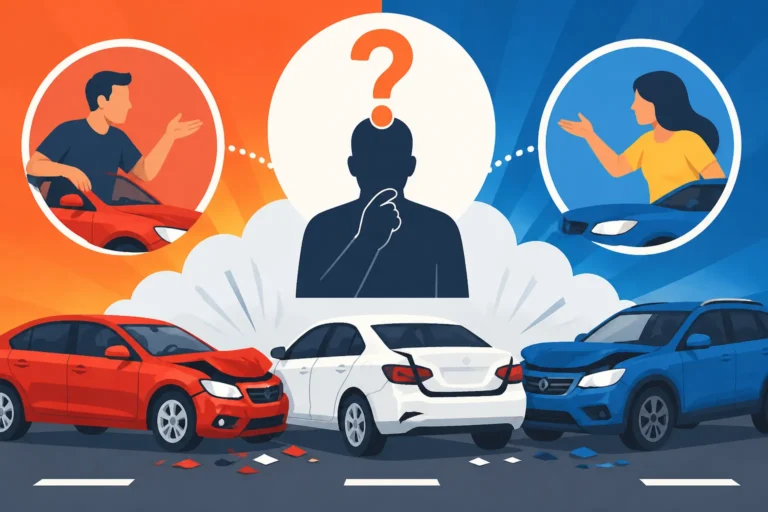
Determining fault in a hit-and-run accident in California adds a layer of complexity because a key player — the at-fault driver — is absent. Normally, you'd exchange information, maybe a police report would be filed, and insurance companies would hash it out. But without the other driver, the process becomes about proving your case with the evidence you can gather.
The Role of Evidence and Witnesses
When the other driver is gone, the burden of proof largely falls on you, the victim. This is where gathering detailed evidence at the scene becomes absolutely paramount. Don't underestimate the power of seemingly small details. Think about the advice often given in a guide like "What to Do After a Car Accident: Step-by-Step (2026)"; those steps are even more critical here.
Here's what you need to focus on:
- Photographs and Videos: Immediately and safely document everything. This means photos of your damaged vehicle from multiple angles, the surrounding area, road conditions, traffic signs, and any skid marks. If you can get a photo of the fleeing vehicle, even if it's just a blurry shot of their license plate or a unique identifying feature (like a bumper sticker or a dent), that is gold. Dashcam footage or footage from nearby businesses (security cameras) can be a game-changer.
- Witness Statements: Did anyone else see what happened? Bystanders, other drivers, pedestrians, or even people in nearby shops might have witnessed the accident or seen the fleeing vehicle. Get their contact information immediately. Their testimony can corroborate your story and provide crucial details about the other vehicle or driver that you might have missed. A police report will often include witness information if available.
- Police Report: Even if the damage is minor, you absolutely must file a police report for a hit-and-run. The police will create an official record of the incident, which is vital for your insurance claim. They might also be able to canvass the area for surveillance footage or leads. Without an official report, your insurance company may be skeptical of your claim. This is a critical point that links to the importance of "What If There Was No Police Report?" in a standard accident.
- Vehicle Debris: If the fleeing vehicle left behind any parts (like a piece of a bumper, a shattered headlight lens, or paint chips), collect them safely. These can sometimes be used to identify the make, model, and even color of the other car, or even lead to forensic analysis if the police pursue it.
The more detailed and specific you can be with your evidence, the stronger your position will be when dealing with your own insurance company.
California's Pure Comparative Negligence System
California operates under a "pure comparative negligence" system. What this means is that even if you are found to be partially at fault for an accident, you can still recover damages from the other party, though your recovery will be reduced by your percentage of fault. This is explained further in "Pure Comparative Negligence States Explained." For example, if you sustained $10,000 in damages but were deemed 20% at fault, you could still recover $8,000.
Now, apply this to a hit-and-run: while the fleeing driver is unequivocally at fault for leaving the scene, the initial collision itself might have involved some degree of shared responsibility. For instance, if you were making a left turn and the hit-and-run driver was speeding through a yellow light, an investigation (if they were caught) might assign some fault to both parties for the initial impact. However, in a hit-and-run where the other driver is unknown, the focus shifts to proving that their actions caused the damage and injuries, not yours. Your insurance company, when you file a claim under your own policy, will still assess whether you contributed to the accident in any way, even without the other driver present. This is part of "How Insurance Companies Determine Who Is at Fault."
The good news is, in a true hit-and-run, the act of fleeing itself strongly implies the other driver's culpability for the collision, or at least their desire to avoid responsibility. It can be challenging, but clear evidence of the fleeing vehicle's actions before impact helps to solidify your position that they were primarily responsible for causing the collision.
Navigating Your Claim When the At-Fault Driver is Unknown
This is often the most stressful part: you know you're not at fault, you have damages, but there's no one to point fingers at directly. This is where your own insurance policy becomes your best friend, particularly your Uninsured Motorist (UM) coverage.
Utilizing Uninsured Motorist Coverage
In California, insurance companies are required to offer Uninsured Motorist (UM) and Underinsured Motorist (UIM) coverage, and you must specifically decline it in writing if you don't want it. If you have this coverage, it's your primary recourse in a hit-and-run scenario. UM coverage effectively steps in as if it were the fleeing driver's liability insurance.
- Uninsured Motorist Bodily Injury (UMBI): This covers your medical expenses, lost wages, pain and suffering, and other injury-related damages up to your policy limits. This is crucial if you sustained injuries in the accident.
- Uninsured Motorist Property Damage (UMPD): This covers the repair or replacement of your vehicle, often with a deductible. Some policies include this, while others may require collision coverage for vehicle damage. It's essential to check your specific policy.
If you have UM/UIM coverage, you'll be filing a "first-party claim" with your own insurance company. This is different from filing a claim with the other driver's insurance, as outlined in "How to File a Car Accident Insurance Claim." It's essentially like "What to Do If the Other Driver Has No Insurance," but in this case, it's because the driver is unknown. Without this coverage, recovering damages for your injuries and property damage can be incredibly difficult, often leaving you to cover expenses out of pocket unless the at-fault driver is eventually found.
The Importance of a Police Report
We touched on this earlier, but it bears repeating: filing a police report is not optional in a hit-and-run. California law requires you to report hit-and-run accidents to law enforcement. More importantly, your insurance company will almost certainly require a police report to process your Uninsured Motorist claim. They need an official record that a hit-and-run actually occurred.
When you contact the police, be prepared to provide as much detail as possible about the incident, including:
- The exact location, date, and time of the accident.
- A description of the other vehicle (make, model, color, any distinguishing features, partial license plate number).
- A description of the other driver, if you saw them.
- Details of the damage to your vehicle.
- Information about any injuries you or your passengers sustained.
- Contact information for any witnesses.
Even if the police can't immediately find the fleeing driver, their report serves as official documentation that validates your claim with your insurance company. Without it, you might face significant hurdles. You can often file a report online for minor incidents, or call 911 (or the non-emergency line for less urgent situations). Remember, this step is absolutely critical for your future claim.
Steps to Take Immediately After a Hit-and-Run
When the shock of a hit-and-run wears off, a wave of panic can set in. What should you do right now? Here's a clear, actionable list of steps:
- Safety First: Pull over to a safe location if you can. Turn on your hazard lights. Check yourself and any passengers for injuries. Even minor aches can be signs of injuries like whiplash, which might have delayed symptoms after a car accident.
- Call the Police: As discussed, this is paramount. Report the hit-and-run immediately. Provide them with all the details you can remember.
- Gather Evidence at the Scene: If it's safe to do so, start collecting evidence. Take photos and videos of your vehicle's damage, the accident scene, road conditions, and any relevant surroundings. Look for security cameras on nearby buildings. This directly aligns with "How to Document a Car Accident Scene."
- Look for Witnesses: Ask anyone nearby if they saw what happened. Get their names and contact information.
- Do Not Pursue the Other Driver: While your instinct might be to chase them down, do not do it. This can be dangerous and put you at risk of another accident or confrontation. Let law enforcement handle the pursuit.
- Contact Your Insurance Company: Report the accident to your own insurance company as soon as possible. Be honest and provide all the details you have, including that you've filed a police report. They will guide you through filing a claim using your Uninsured Motorist coverage.
- Seek Medical Attention: If you feel any pain or discomfort, see a doctor immediately. Even if you think your injuries are minor, some common car accident injuries like concussions or soft tissue damage may not be immediately apparent. Documenting your injuries early is crucial for any potential bodily injury claim.
- Keep Detailed Records: Maintain a file with all accident-related documents: the police report number, witness contact info, photos, medical bills, repair estimates, and communication with your insurance company. This thoroughness is vital throughout the "Car Accident Claim Timeline: What to Expect."
Following these steps will significantly strengthen your position and make the claims process much smoother, even without the other driver present.
Dealing with the Insurance Company and Potential Challenges
Even when you're the clear victim of a hit-and-run, dealing with your own insurance company for a first-party claim isn't always straightforward. They have their own procedures and interests, and you need to be prepared for some scrutiny.
Proving Your Case to Your Insurer
When you file an Uninsured Motorist claim, your insurance company will want to verify that a hit-and-run actually occurred and that the "uninsured driver" (in this case, the unknown fleeing driver) was indeed at fault. This is where all that evidence you gathered comes into play.
- Provide the Police Report: This is often the first thing they'll ask for. Ensure you have the official report number and, if possible, a copy of the report itself.
- Share All Evidence: Submit all your photos, videos, witness statements, and any debris collected from the scene. The more tangible evidence you have, the harder it is for them to dispute the incident.
- Be Consistent: When you describe the accident to the police, to witnesses, and to your insurance adjuster, maintain a consistent narrative. Any discrepancies, even minor ones, can raise red flags.
- Document Your Injuries: If you have bodily injuries, your medical records are paramount. Show that you sought treatment promptly and followed your doctor's recommendations. This substantiates your claim for medical expenses and pain and suffering. This directly relates to how to "Prove Injuries in a Car Accident Claim."
Remember, while your insurer is your company, they are also a business. They want to ensure claims are legitimate before paying out. Your thoroughness in documentation will be your strongest asset in proving your case.
Common Insurance Company Tactics and How to Respond
Even with a strong case, you might encounter some challenges when dealing with your own insurer regarding a hit-and-run claim. They might not be trying to actively deny you, but they might seek to minimize their payout.
- Skepticism Without a Police Report: If you didn't file a police report, or if the report lacks details, your insurer might be hesitant. They may argue they can't verify the hit-and-run element. This is why "What Happens If You Don't Report an Accident?" highlights potential pitfalls.
- Response: Always file a police report. If the initial report is sparse, consider if you can add more details or if the police can supplement it.
- Disputing Fault: While the other driver fled, making them at fault for leaving, your insurer might still try to argue that you contributed to the initial collision. For example, if you claim the other driver cut you off, but there's no independent evidence, they might suggest you weren't paying full attention.
- Response: Reiterate the evidence you have. If you have witness statements or dashcam footage, this will be incredibly helpful. Be firm but polite, focusing on the facts.
- Lowball Settlement Offers: For both property damage and bodily injury, your insurer might make an initial offer that seems low compared to your actual damages or suffering.
- Response: Never accept the first offer without careful consideration, especially if you have significant injuries. Understand "How Car Accident Settlements Are Calculated" and be prepared to negotiate. Present all your medical bills, repair estimates, and documentation for lost wages or pain and suffering. If you're struggling to get a fair offer, it might be time to ask, "Do You Need a Lawyer for a Car Accident? (").
- Requiring Recorded Statements: Your insurance company will likely ask you to give a recorded statement.
- Response: While you generally have a duty to cooperate with your own insurer, be cautious. Stick to the facts you know. Avoid speculation, admitting fault, or minimizing your injuries. Some people prefer to consult an attorney before giving a recorded statement.
- Delays in Processing: Claims, especially complex ones like hit-and-runs, can take time.
- Response: Be proactive but patient. Follow up regularly, but politely. Keep records of all your communications, including dates and names of who you spoke with. If the delays become unreasonable, and you have exhausted all avenues for communication, legal advice might be needed.
Navigating these challenges requires persistence and a good understanding of your rights under your policy and California law. If you find yourself overwhelmed or believe your insurance company isn't treating you fairly, it might be beneficial to seek legal counsel to advocate on your behalf.
Here’s a quick summary of the immediate actions you should take after a hit-and-run accident in California:
| Action | Description | Importance |
|---|---|---|
| Ensure Safety | Move to a safe location if possible; activate hazard lights. Check for injuries to yourself and passengers. | Prevents further harm, prioritizes well-being. |
| Call 911 (or police) | Report the hit-and-run immediately. Provide details like location, time, vehicle description, and driver description. Get an incident number. | Creates official record, crucial for insurance claim, police investigation. |
| Gather Evidence | Take photos/videos of damage, accident scene, road conditions, skid marks, and any debris. Look for nearby surveillance cameras. Collect witness contact info. | Strengthens your claim, helps identify the fleeing driver, proves negligence. |
| Do Not Pursue | Resist the urge to chase the fleeing vehicle. | Avoids putting yourself in danger or escalating the situation. |
| Contact Your Insurer | Report the accident to your own insurance company ASAP. Inform them it was a hit-and-run and you have a police report. | Initiates the claims process, especially for Uninsured Motorist coverage. |
| Seek Medical Care | See a doctor, even for minor symptoms. Get all injuries documented. | Ensures proper treatment, creates medical records vital for injury claims. |
| Keep Records | Maintain a file of all documents: police report, photos, medical bills, repair estimates, communication logs. | Organized documentation is key for proving your case and navigating the claims process efficiently. |
Remember, a hit-and-run accident is frustrating and scary, but by following these steps and understanding California's laws and your insurance policy, you can navigate the aftermath and work towards a fair resolution.
Disclaimer
Please remember that this article provides general information and is not a substitute for legal advice. Laws can change, and every accident case is unique. If you have been involved in a hit-and-run accident in California, it is always recommended to consult with a qualified attorney to discuss your specific situation and understand your legal options.