Who Is at Fault in a Merging Accident in California?
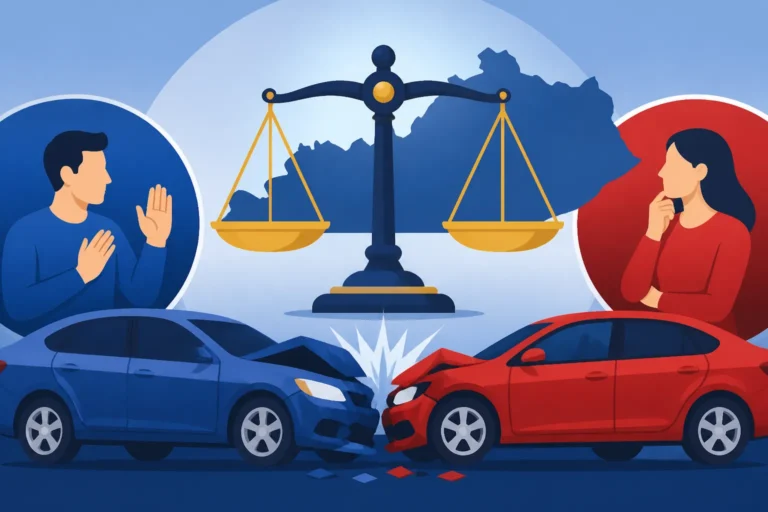
Merging onto a busy California freeway or highway can be stressful enough on a good day. But when an accident happens during that critical moment, it throws everything into chaos, leaving you wondering who in the world is actually responsible. The rules for determining fault in a merging accident can feel like a tangled mess, especially with so much conflicting advice out there. This guide is here to untangle that mess, providing clear, realistic insights into how fault is typically assigned in merging accidents specifically within the state of California.
Understanding Merging Accidents and California Law
Merging accidents are a unique breed of collision because they often involve multiple moving vehicles interacting in a confined space, usually at higher speeds. California's sprawling network of freeways, like the 405 in Los Angeles or I-80 in the Bay Area, are prime locations for these types of incidents, making it crucial for drivers to understand their legal obligations.
The Basic Rules of Merging in California
At its heart, merging safely in California is all about yielding and adapting to traffic conditions. The California Vehicle Code (CVC) lays out clear expectations for drivers, though interpreting them in the heat of the moment or after a collision can be challenging.
When you're entering a highway or freeway from an on-ramp, California Vehicle Code (CVC) Section 21804 is your guiding star. It explicitly states that "the driver of a vehicle about to enter or cross a highway from any public or private property, or from an alley, shall yield the right-of-way to all traffic, as defined in Section 620, approaching on the highway so continuously as to constitute an immediate hazard." While this section specifically mentions entering a highway from "property," it's often interpreted broadly to include on-ramps where drivers are essentially entering the flow of traffic. The underlying principle is that the driver entering the main flow of traffic has the primary responsibility to yield to those already on the highway. This means you need to adjust your speed, find a safe gap, and make sure your entry doesn't force existing traffic to brake or swerve aggressively.
However, the responsibility isn't entirely one-sided. Drivers already on the main highway also have a duty to drive reasonably and safely. If you're on the freeway and see a vehicle trying to merge, while you technically have the right-of-way, you can't just speed up or intentionally block them. That's where common sense and the general duty of care come into play. A real-life scenario might involve a driver entering the I-5 North from an on-ramp near Oceanside. They see an opening, but the driver already in the far-right lane speeds up to close the gap, causing a collision. Even though the merging driver should yield, the existing driver’s aggressive action could shift some blame.
"Duty of Care" in Merging Situations
Every driver on the road in California owes a "duty of care" to others. This isn't just a fancy legal term; it's a fundamental expectation that you will operate your vehicle in a way that avoids foreseeable harm to others. This duty applies universally, including during merging maneuvers.
For the driver attempting to merge, the duty of care means more than just looking for a gap. It involves carefully checking mirrors, using turn signals well in advance, adjusting speed to match traffic, and ensuring there's enough space to enter the lane safely without cutting anyone off. It’s about being patient and not forcing your way into traffic, even if you feel rushed. For example, if you're merging onto Highway 101 in San Francisco during rush hour, you might need to slow down significantly or even stop at the end of the ramp to wait for a safe opening, rather than trying to squeeze into a tiny space.
Conversely, drivers already established on the highway also have a duty of care towards merging vehicles. This means not only maintaining a safe following distance but also being aware of surrounding traffic, including vehicles on on-ramps. While you're not legally obligated to make space, a responsible and careful driver might consider adjusting their speed or moving into an adjacent lane (if safe to do so) to facilitate smooth merging. This proactive approach can prevent accidents and maintain traffic flow. Imagine you're cruising down I-15 near Temecula, and you see a car struggling to merge from an on-ramp. If you have a clear left lane, shifting over is a good example of exercising your duty of care to help prevent a potential collision, even if you technically have the right-of-way. Neglecting this duty, such as by aggressively speeding up to prevent a merger, could certainly be considered negligence and affect how fault is determined.
Common Scenarios and Fault Determination
Determining fault in a merging accident often comes down to who had the primary responsibility to yield and whose actions directly contributed to the collision. However, the nuances of each situation in California can significantly alter this determination.
Driver Entering the Highway or Freeway
In most merging accident scenarios where a driver is entering a highway from an on-ramp, the driver entering is often found to be primarily at fault. This stems directly from CVC 21804, which places the onus on the merging driver to yield.
Consider a situation on the 580 Freeway eastbound near Oakland. A driver on the on-ramp misjudges the speed of an approaching semi-truck in the right lane. Believing they have enough time, they accelerate and attempt to merge, but the truck is closer than anticipated. The truck driver has to slam on their brakes, and a collision occurs. In this instance, the merging driver would likely be found at fault because they failed to yield to the established traffic flow. Their error in judgment directly led to an unsafe maneuver. It's their responsibility to ensure a safe entry, which includes accelerating or decelerating appropriately within the acceleration lane to match the speed of freeway traffic before fully merging. If an acceleration lane is short, or traffic is particularly heavy, the merging driver must exercise even greater caution. This often means waiting for a clear and safe opening, even if it means coming to a near stop at the end of the ramp.
Driver Already on the Highway or Freeway
While the merging driver usually carries the heavier burden of responsibility, drivers already on the highway are not entirely absolved. They too have a duty of care, and their actions can contribute to or even cause a merging accident.
A common scenario where an existing highway driver might be found at fault, or partially at fault, involves impeding traffic. Let's say you're on the I-8 in San Diego, and a car is merging from an on-ramp. Instead of maintaining your speed or gently moving to an open lane on your left, you intentionally speed up to close the gap, essentially boxing out the merging vehicle. If a collision occurs, your aggressive and unreasonable action could shift fault towards you. You are expected to drive reasonably and not to intentionally create a hazard or prevent safe merging where possible. Another scenario might involve an existing driver who is distracted, perhaps texting while driving, and fails to notice a merging vehicle until it’s too late to react safely. Although the merging driver still has a duty to yield, the distracted driver's negligence could be a contributing factor. This highlights why understanding who is at fault in a lane-change accident, even on a freeway, can sometimes be complicated and why police reports and accident investigations are so important.
Lane Changes Within the Highway
It's important to distinguish between merging from an on-ramp and changing lanes within the highway. While similar in action, the specific rules and fault determinations can differ. California Vehicle Code Section 22107 governs lane changes, stating: "No person shall turn a vehicle from a direct course or move right or left upon a roadway until such movement can be made with reasonable safety and then only after the giving of an appropriate signal in the manner provided in this chapter in the event any other vehicle may be affected by the movement."
This means that any driver changing lanes, whether to make space for a merging vehicle or simply to move to a different lane, must do so safely and signal their intentions. Imagine two cars driving on the 91 Freeway in Orange County. Driver A is in the middle lane and decides to move to the right lane. At the exact same moment, Driver B, who was in the far-right lane, also decides to move into the middle lane. Both drivers signal, but they collide as they converge in the middle lane. In this situation, fault could be split, or one driver could be primarily at fault if they failed to check their blind spot thoroughly or initiated the lane change when it wasn't reasonably safe. This type of incident often requires detailed analysis of witness statements, traffic camera footage, or even black box data from vehicles to determine who initiated the unsafe maneuver.
Here's a quick comparison of common merging accident scenarios:
| Scenario Type | Driver at Fault (Often Primary) | Contributing Factors for Other Driver | Example |
|---|---|---|---|
| On-Ramp Merge (entering freeway) | Driver entering freeway | Existing driver speeding up/blocking | Driver from on-ramp cuts off freeway traffic, causing a collision. |
| Freeway Lane Change (two lanes) | Driver initiating lane change | Lack of signal, excessive speed | Car in middle lane moves right into a car already established in the right lane (or vice versa). |
| Two Drivers into Same Lane | Both (often split fault) | Failure to check blind spot, no signal | Driver A from left lane and Driver B from right lane both attempt to move into the center lane at the same time and collide. |
| Existing Driver Impedes | Existing driver on freeway | Merging driver's initial failure to yield | Driver on freeway deliberately accelerates to prevent a merging car from entering, causing the merging car to hit the barrier or another vehicle. |
Factors Influencing Fault and Evidence in California
When a merging accident happens, especially in a bustling place like California, the immediate aftermath can be a whirlwind. But what you do right then and there can have a huge impact on how fault is eventually determined.
Gathering Key Evidence at the Scene
After any car accident, particularly a merging collision, collecting as much evidence as possible at the scene is paramount. This information will be crucial for insurance companies and, if necessary, legal proceedings to establish How Fault Is Determined in a Car Accident.
First and foremost, photos and videos are your best friends. Use your phone to document everything from multiple angles: the position of the vehicles, damage to both cars, skid marks on the road, traffic signs, road conditions, and any relevant landmarks. Don't forget to capture debris patterns, which can sometimes indicate the point of impact. If you have a dash cam, that footage can be incredibly valuable, offering an objective view of what transpired. Many newer cars, like some Toyota or Honda models, even have built-in recording capabilities that can be activated after an impact.
Next, witness statements are gold. If anyone saw the accident, get their contact information – name, phone number, email. A neutral third-party account can often provide unbiased clarity, especially when both drivers have conflicting stories. Their perspective on who signaled, who accelerated, or who failed to yield can be pivotal.
While not always definitive in assigning fault, a police report is still a vital piece of evidence. Officers responding to the scene will document their observations, diagram the accident, and often include preliminary fault findings or citations issued. For a detailed look at this, you might want to read more about Police Reports and Car Accident Fault. Even if law enforcement doesn't issue a citation, their factual observations about vehicle positions and damage can be incredibly helpful for investigators.
Finally, collect driver and insurance information from all parties involved. Get names, phone numbers, driver's license numbers, license plate numbers, and insurance policy details. This ensures you have all the necessary information to file a claim.
How Comparative Negligence Works in California
One of the most important aspects of fault determination in California, especially for merging accidents where responsibility can often be shared, is the state's "Pure Comparative Negligence" system. This is a crucial concept to grasp because it directly impacts your ability to recover damages if you're found to be partly at fault.
In simple terms, pure comparative negligence means that a driver can recover damages for their injuries and property loss even if they are partially at fault for the accident, but their recovery will be reduced by their percentage of fault. There's no bar to recovery, unlike in some other states where even 1% fault can prevent you from getting any compensation. You can learn more about this by exploring resources on Pure Comparative Negligence States Explained.
Let's illustrate with an example: imagine a merging accident on the CA-17 highway near San Jose. The driver merging from the on-ramp failed to yield properly and is found to be 75% at fault. However, the driver already on the highway was distracted by their phone and could have avoided the collision if they had been paying full attention, so they are found to be 25% at fault. If the total damages (medical bills, lost wages, pain and suffering, vehicle repair) for the merging driver amount to $10,000, they would only be able to recover $2,500 (25% of the total damages) from the other driver's insurance, because their own 75% fault reduces their payout. Conversely, if the highway driver's damages were $20,000, they could recover $15,000 (75% of their damages) from the merging driver's insurance.
This system means that even if you bear some responsibility for a merging accident, you might still be entitled to compensation for a portion of your losses. It also means that insurance companies will go to great lengths to try and assign a higher percentage of fault to you to reduce their payout. Understanding How Comparative Fault Reduces Your Settlement is essential for navigating this process effectively.
Navigating the Claims Process After a California Merging Accident
Once the initial shock of a merging accident in California wears off, you're faced with the daunting task of navigating the insurance claims process. This can be complex, and knowing what to expect and how to protect your interests is vital.
Dealing with Insurance Companies
After any accident, one of the first things you'll do is deal with insurance companies – both your own and the other driver's. Their primary goal, understandably, is to protect their bottom line, which often means minimizing payouts. Understanding How Insurance Companies Determine Who Is at Fault is crucial here.
When you speak with an adjuster, whether from your insurer or the other party's, remember that anything you say can be used in their fault assessment. This is why it's incredibly important not to admit fault or even hint at it. Stick to the facts: what you saw, what happened, and avoid speculating or apologizing. For example, instead of saying, "I'm so sorry, I didn't see you there," which could be construed as an admission of fault, state, "I was merging and a collision occurred." This difference might seem minor, but it can be significant. It's often advisable to learn about What Is an Admission of Fault and How to Avoid It? before these conversations.
Insurance companies will investigate the accident by reviewing police reports, witness statements, photographs, and any available dashcam footage. They'll also consider California Vehicle Codes related to merging and lane changes. They might try to argue that you failed to yield adequately, even if the other driver was also negligent. Be prepared for them to question your version of events and to try to assign a higher percentage of fault to you, especially in California's comparative negligence system.
When to Consider Legal Counsel
While some minor fender-benders can be handled directly with insurance, a merging accident, particularly one involving injuries or significant property damage, often warrants speaking with an experienced personal injury attorney. Knowing Do You Need a Lawyer for a Car Accident? is a great first step in making this decision.
You should seriously consider legal counsel if:
- There are injuries: Even seemingly minor injuries like whiplash can have long-term effects and significant medical costs. An attorney can help ensure all your medical expenses, lost wages, and pain and suffering are properly documented and included in your claim.
- Fault is disputed: If the other driver or their insurance company is refusing to accept responsibility, or if they are trying to assign a high percentage of fault to you, a lawyer can gather evidence and build a strong case to prove How to Prove the Other Driver Was at Fault.
- The insurance company offers a low settlement: Insurance companies are notorious for offering lowball settlements initially. An attorney understands the true value of your claim and can negotiate aggressively on your behalf.
- Complex circumstances: If there were multiple vehicles involved, bad weather, or unique road conditions, determining fault can become incredibly complicated. An attorney has the expertise to dissect these situations.
- Significant property damage: Beyond just dents, if your car is totaled or requires extensive repairs, ensuring you receive fair compensation can be challenging.
In California, there's a strict time limit, known as the statute of limitations, for filing a personal injury lawsuit after a car accident. Generally, you have two years from the date of the accident to file. Missing this deadline means you forfeit your right to pursue compensation in court. An attorney will be well-versed in the Statute of Limitations for Car Accidents in California and can help you meet all critical deadlines. Consulting with an attorney early in the process, ideally after seeking medical attention for any injuries, can help protect your rights and ensure you don't inadvertently jeopardize your claim. For a complete overview of the process, you might find "What to Do After a Car Accident: Step-by-Step (2026)" to be a valuable resource. Filing a claim in California also has specific requirements, so understanding "How to File a Car Accident Claim in California" is also highly recommended.
Disclaimer
Please remember that this information is intended for general educational purposes only and should not be considered legal advice. Car accident claims are highly fact-specific, and the laws governing them can be complex and subject to interpretation. It is always recommended to consult with a qualified legal professional for advice regarding your specific situation.