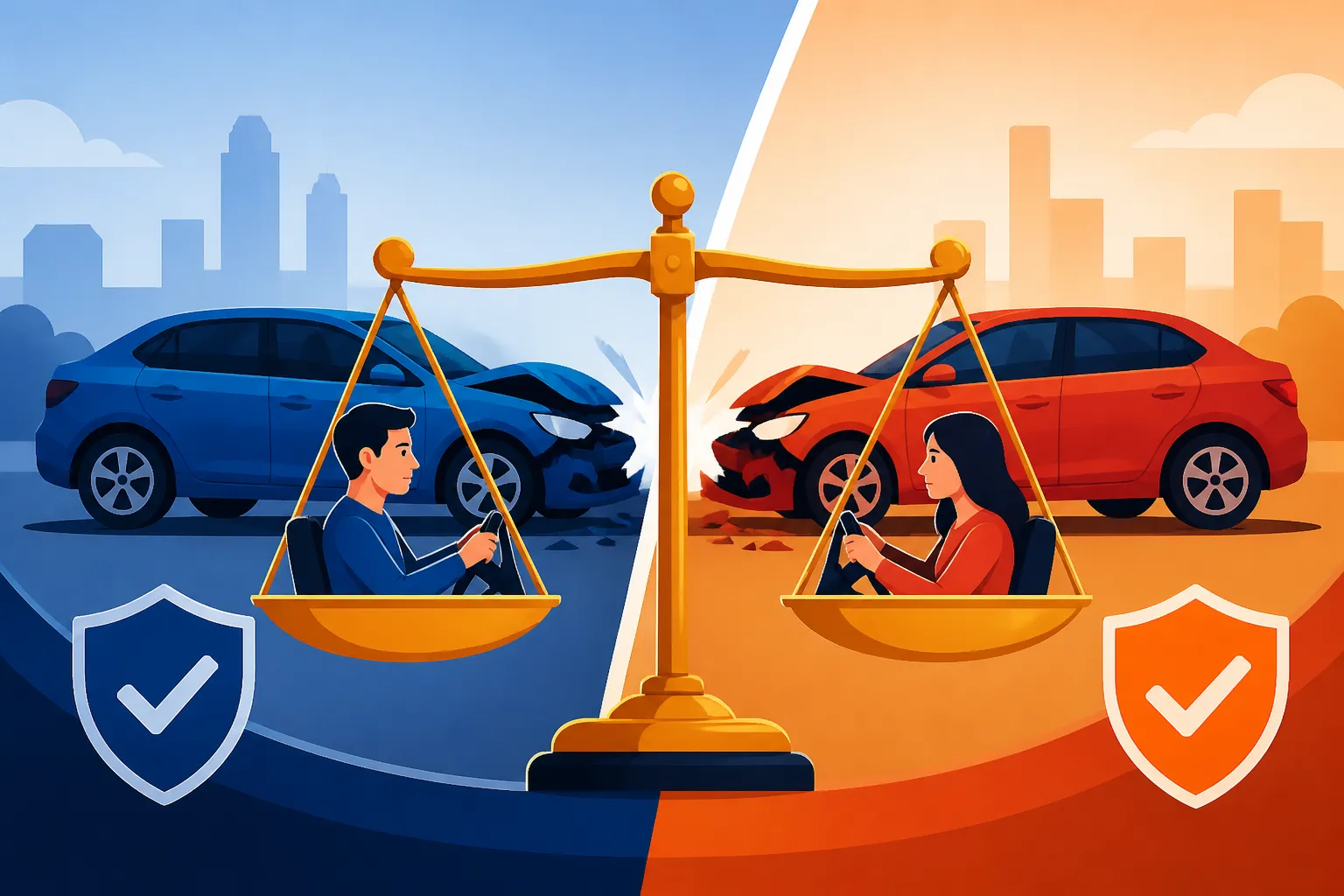
Comparative Negligence Laws in New York
It's incredibly frustrating when you've been in a car accident and then find yourself tangled in questions of who's truly at fault, especially when it feels like blame might be shared. Navigating insurance claims and potential settlements can become even more complex when multiple drivers seem to have contributed to the crash. This comprehensive guide aims to shed light on New York's specific comparative negligence laws, explaining how they work and what they mean for your car accident claim.
Understanding Comparative Negligence in Car Accidents
When a car accident happens, our first instinct is often to point fingers and figure out who is entirely to blame. But in the real world, collisions are rarely that simple. Often, multiple factors and actions from different drivers might have played a role. This is where the concept of comparative negligence comes into play, a legal principle designed to fairly distribute responsibility when more than one party shares some fault.
What "Fault" Really Means When Multiple Drivers Are Involved
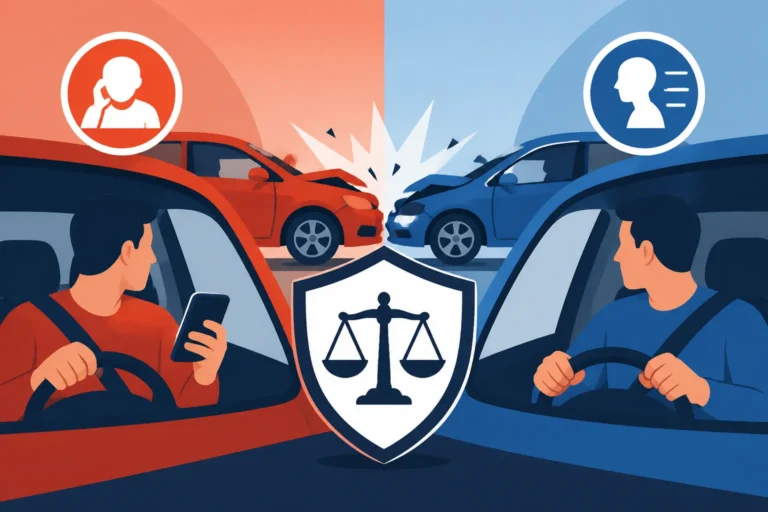
The idea of "fault" in a car accident isn't always a black-and-white situation. Imagine a scenario: you're driving slightly over the speed limit, maybe just 5 or 10 miles an hour, and another driver suddenly runs a stop sign, T-boning your vehicle. Is it entirely their fault for running the stop sign, or does your minor speeding also bear some responsibility for the severity of the impact or your inability to react in time? These are the kinds of nuanced questions that arise.
In many accidents, it's not about one person being 100% at fault and the other being 0%. Instead, both parties might have contributed in some way, however small. This shared responsibility can be incredibly stressful for accident victims. The thought of being told you're even partially to blame can feel unfair, especially when you know the other driver was clearly reckless. It can make you worry about your ability to recover damages for your medical bills, lost wages, and vehicle repairs. However, understanding that shared fault doesn't necessarily mean you're out of luck is crucial, thanks to laws like comparative negligence.
How Pure Comparative Negligence Works in New York
New York operates under a "pure comparative negligence" system. This is a crucial detail, as not all states handle shared fault in the same way. What pure comparative negligence means for you as an accident victim in New York is that you can still recover damages for your injuries and losses even if you are found to be partially at fault for the accident, no matter your percentage of fault.
Let's break that down with an example. Suppose you suffered $100,000 in damages (including medical bills, lost wages, and pain and suffering) from a car accident. If it's determined that you were 20% at fault for the crash and the other driver was 80% at fault, New York's pure comparative negligence rule allows you to recover 80% of your total damages from the other driver's insurance. In this case, you would be able to claim $80,000. Even if you were found to be 90% at fault, you could still recover 10% of your damages. This differs significantly from "modified comparative negligence" states (which typically bar recovery if you're 50% or 51% or more at fault) or "contributory negligence" states (where even 1% fault can completely bar you from recovering anything). It's a system designed to ensure that victims are compensated for the portion of their losses that another party caused.
Calculating Your Claim with New York's Comparative Negligence Rule
The practical application of New York's pure comparative negligence rule comes down to two main factors: accurately determining each party's percentage of fault and then calculating how that percentage impacts the final settlement amount. It sounds straightforward, but as you can imagine, getting to those numbers can be a bit of a battle.
Determining Your Percentage of Fault
After an accident, the big question becomes: "Who decides what percentage of fault I have?" This determination often starts with the insurance adjusters representing each party. They will investigate the accident, collecting evidence such as police reports, witness statements, photographs of the accident scene and vehicle damage, and sometimes even accident reconstruction reports or black box data from vehicles. Each detail can either support or undermine a claim of fault. For instance, if the police report notes that you failed to signal a lane change, that could contribute to a finding of partial fault on your part.
However, it's important to remember that an insurance adjuster's determination is not the final word, especially if there's a dispute. If you and the other driver's insurance companies can't agree on fault percentages, the matter might move into negotiations with attorneys, or even, in rare cases, to a courtroom where a judge or jury would ultimately decide. This process of figuring out who is at fault in a car accident can be incredibly complex and depends heavily on the quality and availability of evidence. It's why meticulously documenting everything at the scene of the accident is so vital, and why understanding the various contributing factors is key.
Impact on Your Potential Car Accident Settlement
Once a percentage of fault is assigned, it directly influences the value of your car accident settlement. As mentioned, under pure comparative negligence, your total damages are reduced by your percentage of fault. This reduction applies to all types of damages you might be claiming, including both economic and non-economic damages.
Economic damages are the tangible, easily quantifiable losses like your medical bills, prescription costs, lost wages from time off work, and property damage to your vehicle. Non-economic damages, on the other hand, are more subjective and cover things like pain and suffering, emotional distress, loss of enjoyment of life, and disfigurement. While it might seem counter-intuitive, both categories of damages are subject to the same percentage reduction based on your shared fault.
For example, let's say a jury determines your total damages are $75,000. This includes $25,000 in medical bills and lost wages (economic damages) and $50,000 for pain and suffering (non-economic damages). If that same jury finds you 30% at fault for the collision, your $75,000 total award will be reduced by 30%. This means you would ultimately receive $52,500. This calculation is a fundamental part of how car accident settlements are calculated in New York and directly impacts the compensation you can expect. Understanding the difference between economic vs non-economic damages explained can help you anticipate how these reductions will play out across different aspects of your claim.
Navigating the Claims Process When You're Partially at Fault in New York
It's one thing to understand the legal theory of comparative negligence, and another to actually go through the claims process when you know or suspect you might be partly at fault. The entire experience can feel overwhelming, and many people worry that any admission of fault, however small, will destroy their chances of recovery.
What Happens When the Other Driver Blames You
It's a common tactic: after an accident, the other driver, or their insurance company, will try to shift as much blame as possible onto you. They might argue you were speeding, distracted, or simply not paying attention. This can feel incredibly frustrating and even intimidating, especially if you're already dealing with injuries and the stress of the accident itself. You might start second-guessing yourself, wondering if you really did contribute more than you initially thought.
When the other driver blames you, it doesn't automatically mean your claim is dead in the water in New York. Because of pure comparative negligence, their accusations simply mean there will be a negotiation about the percentages of fault. Your job, and the job of your legal team if you choose to hire one, is to present evidence that minimizes your fault and maximizes the other party's. This often involves gathering evidence like traffic camera footage, independent witness statements, and even expert testimony if the case is complex. Understanding what happens if the other driver blames you is the first step in effectively countering their claims.
The Role of Insurance Companies and Your Rights
Insurance companies are masters at applying comparative negligence rules to their advantage. When you file a claim, especially a third-party claim against the other driver's insurance, their adjusters will conduct their own investigation. They are looking for any evidence they can find to assign you a higher percentage of fault, thereby reducing the amount they have to pay out. They might ask for a recorded statement or try to get you to admit fault. This is why it's incredibly important to be careful about what you say.
You have rights during this process. You are not obligated to give a recorded statement to the other driver's insurance company. In fact, doing so without first consulting with an attorney can often harm your claim. Your own insurance company also has a role to play, particularly if you have collision coverage for your vehicle or personal injury protection (PIP) for your medical bills, which operates on a no-fault basis in New York up to certain limits. Regardless, remember that insurance companies determine who is at fault based on the evidence they collect, and their initial assessment is not always final. Protecting your rights and being mindful of what you say can significantly impact the outcome, making it crucial to understand what is an admission of fault and how to avoid it.
| Type of Negligence System | Description | Impact on Recovery in New York |
|---|---|---|
| Pure Comparative Negligence | Allows a plaintiff to recover damages regardless of their percentage of fault, with their award reduced proportionally. | New York operates under this system. You can recover damages even if you are 99% at fault, though your award will be heavily reduced. |
| Modified Comparative Negligence (50% Bar) | Allows recovery if the plaintiff is 49% or less at fault. If they are 50% or more at fault, they cannot recover any damages. | Not applicable in New York. This system is used in states like Colorado and Arkansas. |
| Modified Comparative Negligence (51% Bar) | Allows recovery if the plaintiff is 50% or less at fault. If they are 51% or more at fault, they cannot recover any damages. | Not applicable in New York. This system is common in states like Texas and Florida. |
| Contributory Negligence | Bars the plaintiff from recovering any damages if they are found to be even 1% at fault for the accident. | Not applicable in New York. This strict system is only used in a handful of states, such as Alabama and Maryland. |
Practical Strategies for Car Accident Victims in New York
Dealing with the aftermath of a car accident, especially when questions of fault arise, can be daunting. However, there are concrete steps you can take to protect your rights and ensure you have the best possible chance of fair compensation under New York's comparative negligence laws. Being prepared and proactive is your best defense.
Documenting the Accident Scene and Your Injuries
The moments immediately following an accident are critical for gathering evidence. Even if you're shaken up, try to take as many photos and videos as possible of the accident scene, vehicle damage, road conditions, traffic signs, and any visible injuries. Exchange information with all involved parties and gather contact details from any witnesses. This evidence is invaluable in establishing the sequence of events and proving fault. A police report, while not definitive on fault, will often contain objective observations and witness information. Remember, what to do after a car accident: step-by-step guidance emphasizes the importance of documentation.
Equally important is documenting your injuries and seeking immediate medical attention, even if you feel fine at the scene. Some injuries, like whiplash or a concussion, have delayed symptoms after a car accident. Medical records are the backbone of any personal injury claim, providing objective proof of your injuries, the treatment you received, and the impact on your life. Without proper medical documentation, it becomes incredibly difficult to prove injuries in a car accident claim, regardless of fault. Keep a detailed log of all your symptoms, medical appointments, medications, and how your injuries affect your daily activities.
When to Consider Legal Counsel
Given the complexities of New York's pure comparative negligence system and the often aggressive tactics of insurance companies, seriously considering legal counsel is usually in your best interest. An experienced car accident lawyer understands how insurance companies determine who is at fault and can help you gather the necessary evidence, negotiate with adjusters, and build a strong case. They can protect you from making statements that could harm your claim and ensure all aspects of your damages are accurately calculated, including future medical expenses and lost earning capacity.
Many people hesitate to hire a lawyer because they worry about costs. However, most car accident lawyers work on a contingency fee basis. This means they only get paid if you win your case, and their fee is a percentage of your final settlement or award. So, the question isn't usually "How much does a car accident lawyer cost?", but rather, "How much more can a lawyer help me recover, even after their fees, especially when navigating partial fault?" A skilled attorney can often secure a significantly higher settlement, even with comparative fault, than you might achieve on your own, making it well worth the investment to protect your rights and maximize your compensation.
Disclaimer
Please remember that this article provides general information and insights into comparative negligence laws in New York for car accident claims. It is not a substitute for professional legal advice. Every car accident case is unique, and the specifics of your situation will dictate the best course of action. If you have been involved in a car accident, it is highly recommended to consult with a qualified attorney in New York to discuss your particular circumstances and legal options.