Total Loss Explained: What Happens When Your Car Is Totaled
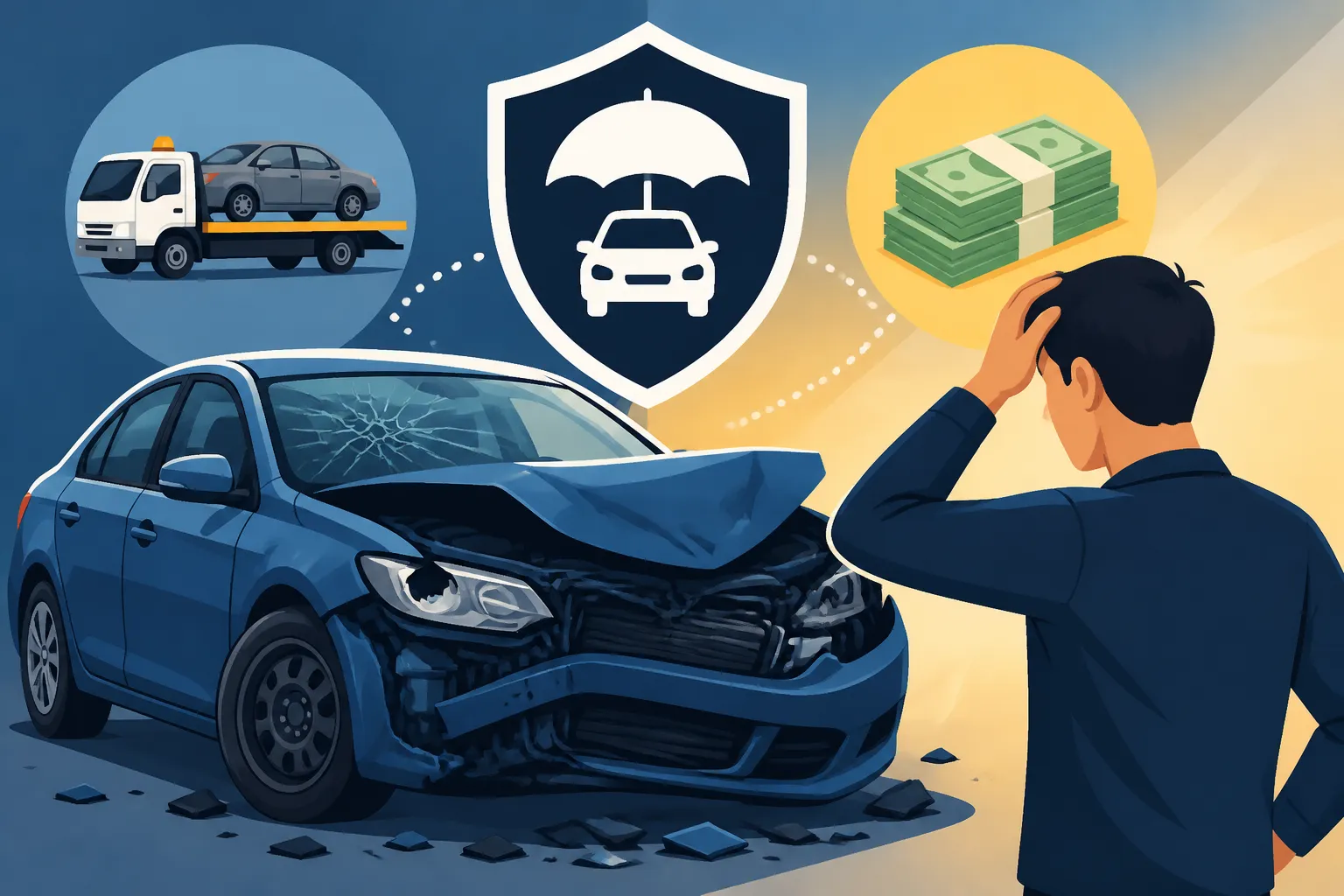
That crushing feeling when you see your car after an accident and it's… well, it's just not right. It’s more than a dent or a broken headlight; it looks like it might be beyond saving. This is a moment of intense frustration and uncertainty for so many drivers. You're left wondering if it's fixable, what the insurance company will say, and how on earth you'll get back on the road. This comprehensive guide is here to demystify the entire concept of a "total loss" after a car accident, walking you through what it means, how it's determined, and every step of the process you'll face.
Understanding What a "Total Loss" Really Means
When your car is involved in a severe accident, the term "total loss" gets thrown around a lot by tow truck drivers, mechanics, and especially insurance adjusters. But what does it truly mean for you and your vehicle? It's not always about your car being completely smashed into an unrecognizable heap, although sometimes it certainly feels that way. More often, it's an economic decision that insurance companies make based on a specific formula.
The Basics of the Total Loss Definition
At its core, a total loss, often called "totaled," means that the cost to repair your vehicle to its pre-accident condition, plus its salvage value (what a junkyard or parts dealer would pay for it in its damaged state), exceeds the car's actual cash value (ACV) just before the accident. Think of it this way: if your car was worth $10,000 before the crash, and the repairs would cost $8,000, plus the salvage yard would give $3,000 for the wreck, then the total repair-related costs ($8,000) are less than the ACV. However, if the repairs were $9,000 and the salvage value was $2,000, the sum ($11,000) would exceed the ACV, making it a total loss. This might sound complicated, but the main takeaway is that your car is considered a total loss when it's simply not economically sensible to fix it.
This definition is crucial because it changes how your insurance claim proceeds dramatically. Instead of paying for repairs, your insurer will offer you a settlement for the car's value. It’s a bitter pill to swallow, especially if you had a strong emotional attachment to your vehicle or had just put a lot of money into it. However, from the insurance company's perspective, it’s a purely financial calculation designed to minimize their payout while fulfilling their obligation to you under your policy.
It’s important to remember that a "total loss" doesn't necessarily mean your car is physically destroyed. It could still look largely intact, but perhaps the frame is bent, or there's extensive damage to critical, expensive components like the engine, transmission, or advanced safety systems. Even seemingly minor damage can lead to a total loss if the repair costs, especially with today's complex vehicle technologies, add up quickly.
Economic Total Loss vs. Actual Total Loss
While most people use "total loss" as a catch-all, there are actually two main ways an insurance company might classify your vehicle as such: an economic total loss and an actual total loss. Understanding the distinction can help you grasp the insurance process a little better, even if the end result—your car being totaled—feels the same.
An economic total loss is by far the most common scenario. This is when the insurer calculates that the cost of repairs, combined with what the damaged vehicle would fetch at a salvage auction, surpasses its pre-accident actual cash value (ACV). Many states also have specific "total loss thresholds" that dictate this. For instance, in some states, if the repair costs alone hit 70% or 75% of the ACV, the car is automatically considered a total loss, even if the repair costs don't quite equal the ACV. This threshold varies significantly from state to state. For example, in California, insurers often use a total loss formula, considering repair costs plus salvage value against ACV, while other states like Texas might have a 100% threshold for repair costs. This financial reality can be incredibly frustrating, especially if you believe your car could easily be repaired and put back on the road.
An actual total loss, on the other hand, is when the vehicle is so severely damaged that it is physically impossible or completely impractical to repair it. Imagine a car that's been completely engulfed in flames, swept away in a flood, or crushed beyond recognition in a multi-car pileup. In these extreme cases, there's no question about the economics; the vehicle simply cannot be made whole again. While less common, an actual total loss immediately triggers the total loss claims process without the complex calculations involved in an economic total loss.
The distinction matters because it impacts the initial assessment and the straightforwardness of the decision. With an actual total loss, there's little room for debate. With an economic total loss, the calculations and thresholds can sometimes be challenged, which we'll discuss later. Ultimately, whether it's an economic or actual total loss, the path forward involves the insurance company taking possession of your vehicle and compensating you for its value.
How Insurance Companies Determine a Total Loss
The moment your car is deemed a total loss by the insurance company, it can feel like a cold, hard blow. Many drivers are left scratching their heads, wondering exactly how this decision was made. It's not a snap judgment; it's a methodical process involving detailed assessments, specialized software, and specific state regulations. Let's pull back the curtain on how insurance companies arrive at this conclusion.
The Role of the Adjuster and Vehicle Inspection
The process of determining a total loss typically begins with an insurance adjuster. After you report the accident and initiate your claim, an adjuster will be assigned. Their primary role is to investigate the incident, assess the damage, and ultimately determine the financial impact for the insurance company. This usually involves a physical inspection of your vehicle, often at a tow yard, a repair shop, or sometimes even at your home if the damage is less severe but still substantial.
During this inspection, the adjuster will meticulously document all damage, both apparent and potentially hidden. They'll take numerous photos, note specific broken parts, and often use specialized software to estimate repair costs. They're looking beyond the crumpled fenders; they're checking for structural damage to the frame, issues with the engine, transmission, suspension, and increasingly, damage to complex electronic systems and sensors. Sometimes, an initial estimate might suggest repairs are feasible, but once the body shop starts disassembling the vehicle, more extensive, hidden damage is uncovered, which can quickly push it into total loss territory.
The adjuster's job is not just to estimate repairs but to understand the overall condition of the vehicle prior to the accident. They'll consider mileage, pre-existing damage, and any modifications you might have made. Their report forms the basis of the total loss decision, and it's their assessment of the damage, labor costs, and parts replacement that directly feeds into the calculation of whether your car is economically repairable or not. It’s a thorough, albeit often intimidating, process for policyholders. If you're wondering how the entire system works, a good read is our guide on How Car Accident Insurance Claims Work.
Calculating Actual Cash Value (ACV)
One of the most critical components in determining a total loss, and certainly in calculating your eventual settlement, is the Actual Cash Value (ACV) of your vehicle. This is not what you paid for the car, nor is it the replacement cost for a brand-new identical model. The ACV is essentially what your vehicle was worth in the open market, just moments before the accident occurred. It's the fair market value.
Insurance companies use sophisticated tools and databases, such as CCC One, Audatex, and Mitchell, to calculate the ACV. These systems analyze a multitude of factors, including:
- Make, Model, and Year: Basic vehicle identification.
- Mileage: Higher mileage typically means lower ACV.
- Condition: Wear and tear, interior condition, exterior flaws.
- Features and Options: Special packages, upgrades, or unique features can increase ACV.
- Recent Sales Data: Crucially, they compare your car to similar vehicles that have recently sold in your local geographic area. This is why a car's value can fluctuate based on regional markets.
The biggest factor that often surprises people is depreciation. Vehicles lose value rapidly over time due to age, mileage, and wear and tear. Your $30,000 car from three years ago might only have an ACV of $18,000 today, purely due to depreciation. This is a tough pill to swallow because you've maintained it well, but the market simply doesn't value it the same as it once did. Understanding how they arrive at this number is key to managing your expectations and, if necessary, challenging their valuation. You can dive deeper into this specific calculation by reading How Insurance Companies Calculate Total Loss ACV.
The Total Loss Formula and State Thresholds
Once the repair estimate and the actual cash value (ACV) are established, the insurance company applies a specific formula or adheres to state-mandated thresholds to make the final "total loss" determination. This is where the legal and financial rules of the game come into play.
Most states use what's known as the "total loss formula" (TLF), which compares the cost of repairs plus the salvage value of the damaged vehicle against its ACV. If (Cost of Repairs + Salvage Value) ≥ ACV, then the vehicle is declared a total loss. This formula ensures that it's financially more sensible for the insurer to pay out the ACV rather than repair a car that would ultimately cost more than it's worth.
However, many states also implement statutory "total loss thresholds." These thresholds simplify the decision. For example:
- 70% Threshold: In some states, if the estimated cost of repairs reaches or exceeds 70% of the vehicle's ACV, it's automatically considered a total loss, regardless of the salvage value.
- 75% Threshold: Other states might use a slightly higher threshold, like 75%.
- 100% Threshold: In states like Texas, the repair costs must equal or exceed 100% of the ACV for it to be a total loss. However, even in 100% threshold states, insurers often declare total losses at a lower percentage if it's economically beneficial for them, or if severe structural damage makes a safe repair unlikely.
This variance in state thresholds means that a vehicle totaled in one state might be repairable in another. It's a complex patchwork of regulations that directly impacts whether you get your car back fixed or a check for its value. This is a primary frustration for many drivers: they feel their car is fixable, but the numbers, as defined by state law and insurance policy, say otherwise. Being aware of your state's specific rules can provide valuable context as you navigate the claims process.
The Process After Your Car is Declared a Total Loss
Learning your beloved car is a total loss can be incredibly disheartening. You've gone from dealing with the shock of an accident to the unsettling reality that your vehicle is, for all intents and purposes, gone. But the process doesn't end there. There are crucial steps that follow, involving notification, financial settlements, and the transfer of ownership that you'll need to navigate.
Notification and Initial Offer from the Insurer
Once the insurance company's adjuster has completed their assessment and determined your vehicle is a total loss, they will formally notify you. This notification often comes via a phone call, followed by a written letter or email detailing their findings. This communication will usually include the estimated Actual Cash Value (ACV) of your vehicle and their initial settlement offer. It’s a moment that often brings a mix of relief (that the uncertainty is over) and disappointment (because the offer might not meet your expectations).
The initial offer will typically outline the ACV they've calculated, deduct your policy's deductible (if you're making a first-party claim through your own collision coverage), and sometimes include other costs like sales tax for a replacement vehicle (depending on your state's laws and your policy). It's incredibly important to review this offer thoroughly. Don't feel pressured to accept it on the spot. This is a critical juncture where your informed decision-making can make a real difference.
Many drivers find this initial offer to be lower than what they believe their car was worth. This is a common source of frustration, as insurance companies, like any business, aim to minimize payouts. It's essential to understand the breakdown of their valuation, including the comparable vehicles they used, the mileage adjustment, and any condition deductions. This transparency is your right, and it forms the foundation for any potential negotiation. Remember, dealing with insurance adjusters after a car accident can be a tricky dance, so staying informed is your best defense.
Transferring Vehicle Title and Ownership
Once you agree to the total loss settlement, a crucial administrative step is the transfer of your vehicle's title and ownership to the insurance company. This is a necessary part of the process, as the insurer is now compensating you for the loss of your vehicle and will typically take possession of the damaged car. The insurance company then sells the vehicle at a salvage auction to recoup some of their costs.
You'll be required to sign over the title of your vehicle to the insurance company. If you have an outstanding loan on the car, the process is a bit different. The insurance company will typically send the settlement check directly to your lienholder (the bank or finance company) first. If the settlement amount is greater than what you owe, the difference will then be paid to you. However, if you owe more than the ACV of the car, you'll be responsible for paying the remaining balance on your loan. This is where gap insurance becomes invaluable, as it covers that "gap" between what you owe and the car's ACV.
It's vital to ensure all paperwork is correctly completed and submitted to your state's Department of Motor Vehicles (DMV) or equivalent agency. This ensures that the vehicle is no longer registered in your name, which protects you from any future liabilities related to the car. Your insurer will guide you through this process, providing the necessary forms and instructions. Don't overlook this step, as failing to transfer the title properly can lead to headaches down the road.
Managing Rental Cars and Loan Payoffs
The period immediately following a total loss declaration can be chaotic, especially when it comes to transportation and financial obligations. Your first concern is likely how you'll get around, and your second is often how you'll handle any outstanding car loans.
Regarding transportation, if your policy includes rental car reimbursement coverage, you'll likely have access to a rental vehicle for a specified period after the accident. However, this coverage usually has limits, both in daily cost and total duration. It's common for rental car coverage to cease a few days after the insurance company makes their total loss offer. This can put immense pressure on you to quickly accept the offer and find a replacement vehicle. Make sure you understand your policy's specifics on Rental Car Reimbursement After an Accident to avoid unexpected bills. You don't want to be stuck paying out of pocket for a rental car for weeks if your claim takes longer than anticipated.
When it comes to loans, if you have one, the insurance company's total loss settlement check will generally be made out to both you and your lender (the lienholder). As mentioned, the lender will be paid first, and any remaining funds will go to you. If your car was relatively new or you made a small down payment, you might find yourself in a situation where the ACV payout is less than your outstanding loan balance. This is known as being "upside down" or having "negative equity." This is precisely the scenario gap insurance is designed for. If you don't have gap insurance, you will be personally responsible for paying the difference to your lender, which can be a significant financial burden on top of losing your car. This often feels like a double whammy and can be a source of intense financial stress.
What Your Settlement Will Cover
When your car is declared a total loss, the insurance company will offer you a settlement. This isn't just a random number; it's a calculation based on your policy, the car's value, and state regulations. Understanding what this settlement is designed to cover, and what it might not cover, is essential for managing your expectations and protecting your financial interests.
The Core Components of a Total Loss Payout
The primary component of a total loss payout is the Actual Cash Value (ACV) of your vehicle. As we discussed, this is the fair market value of your car immediately before the accident, taking into account its age, mileage, condition, and local market trends. This amount forms the baseline of your compensation.
Beyond the ACV, in many states, your total loss settlement should also include funds for sales tax and title transfer fees for a replacement vehicle. This is crucial because if you're buying a comparable used car to replace your totaled one, you'll incur these costs again. Some states mandate this, while others only require it under specific circumstances, or it might be covered based on your policy language. It’s always worth asking your adjuster about this and confirming it in writing.
From this gross amount (ACV + sales tax/title fees), your deductible will be subtracted if you're filing a claim under your own collision coverage. For example, if your car's ACV is $15,000 and you have a $500 deductible, your net payout would be $14,500 (plus any applicable sales tax/fees). If the other driver was clearly at fault and their insurance company is paying, your deductible typically wouldn't apply, as you're making a third-party claim against their policy. This can make a significant difference in your final take-home amount. Our guide on How Car Accident Settlements Are Calculated provides more detail on these calculations.
Additional Coverages That Can Help
While the ACV and sales tax are the main elements of a total loss settlement, several other coverages you might have on your policy can provide crucial financial relief during this stressful time. These aren't always standard, so checking your policy is vital.
Rental car reimbursement is a common additional coverage that can literally keep you moving. After your vehicle is totaled, you're suddenly without transportation. This coverage pays for a rental car up to a certain daily limit and for a specific number of days or total dollar amount. As mentioned earlier, this coverage often ends a few days after the total loss offer is made, so you need to be prepared to act quickly. Knowing your limits here is paramount to avoiding out-of-pocket expenses.
Towing and storage fees for your damaged vehicle are also typically covered if you have collision or comprehensive coverage. After an accident, your car might be towed from the scene to an impound lot or a repair facility. These fees can add up quickly, especially if your vehicle sits for a while awaiting inspection. Your insurance should cover these reasonable costs as part of the total loss process, ensuring you're not left with an unexpected bill for moving your wrecked car.
Perhaps the most important additional coverage for many drivers is gap insurance. If you have a car loan or lease, and your vehicle is totaled, gap insurance pays the difference between your car's ACV and the remaining balance on your loan or lease. This prevents you from being stuck owing thousands of dollars on a car you no longer possess. It’s a lifesaver for many who drive newer vehicles or financed them with little to no down payment. Without it, the financial hit of a total loss can be devastating.
Understanding Deductibles and Depreciation
Dealing with a total loss claim often highlights two frequently misunderstood aspects of auto insurance: deductibles and depreciation. These two factors profoundly impact the amount you actually receive in a total loss settlement.
Your deductible is the amount of money you've agreed to pay out of pocket before your insurance coverage kicks in. When your car is declared a total loss and you're filing a claim through your own collision coverage (first-party claim), this deductible will be subtracted from your settlement amount. So, if your ACV is $20,000 and your deductible is $1,000, your gross settlement will be $19,000 before other adjustments. If the accident was not your fault and the other driver's insurance is paying (third-party claim), you typically won't pay a deductible. This is why fault determination is so important in a car accident.
Depreciation is often the most frustrating aspect for car owners. It's the decrease in value of your vehicle over time due to age, mileage, wear and tear, and market conditions. While you might feel your 5-year-old car is still worth close to what you paid, the insurance company will value it based on what a similar car would sell for today, not what you purchased it for new. For example, if you bought a car for $25,000 five years ago and it's well-maintained, it might only have an ACV of $12,000-$14,000 today. This significant drop in value means that your total loss settlement, while fair from an ACV perspective, might not be enough to buy a brand-new, identical replacement. This financial reality can be incredibly tough to accept, especially when you feel like you've meticulously cared for your vehicle.
Disagreeing with the Insurance Company's Valuation
It's an all-too-common scenario: your car is totaled, and the insurance company presents you with a settlement offer that feels insultingly low. You know your car was worth more, you kept it in pristine condition, and you just had new tires put on last month! This feeling of being undervalued is incredibly frustrating, but it's not necessarily the final word. You have the right to challenge the insurance company's valuation.
Why Valuations Can Differ
There are several reasons why the insurance company's Actual Cash Value (ACV) assessment might differ from your own perception of your car's worth. Understanding these discrepancies is the first step in building your case for a higher settlement.
Firstly, insurance companies are businesses, and like any business, they aim to manage costs. This means their valuation methods, while based on industry standards, can sometimes lean towards the lower end of the market spectrum. They might use comparable sales data that doesn't fully reflect the premium condition of your specific vehicle or might overlook unique features.
Secondly, the valuation software used by insurers (like CCC One, Audatex, Mitchell) is powerful, but it's not perfect. It relies on databases that may not capture every nuance of your car. For instance, if you had a rare trim package, specific aftermarket upgrades (like a high-end sound system or custom wheels), or exceptional maintenance records that prolonged the life and value of certain components, these might not be fully factored into the automated ACV calculation. An independent appraiser might see these as adding significant value, whereas the software might treat it as a generic model.
Finally, local market differences can play a role. While the software tries to use comparable sales in your geographic area, sometimes the "comparable" vehicles might not truly reflect the local demand or specific condition of cars in your community. A car might fetch a higher price in a bustling city market compared to a rural area, and the software's data points might not perfectly align with these hyper-local dynamics. The goal is to ensure the valuation is fair and accurate for your specific vehicle in your specific market.
How to Gather Your Own Evidence for a Higher Value
If you believe the insurance company's total loss offer is too low, don't just accept it. You have the right to dispute it and provide evidence to support a higher valuation. The key is to be proactive and thorough in your research.
Start by conducting your own research on your vehicle's value. Utilize reputable sources like:
- NADAguides (National Automobile Dealers Association): Often considered the industry standard for valuing used cars.
- Kelley Blue Book (KBB): Another widely recognized source for vehicle valuations.
- Edmunds.com: Provides comprehensive pricing and reviews.
When using these tools, be honest about your car's pre-accident condition, mileage, and features to get the most accurate estimate. Don't simply pick the highest number; aim for a realistic "retail" or "private party" value.
Next, compile a list of comparable vehicles for sale in your local area. Look at online marketplaces (like AutoTrader, CarGurus, local dealership websites, Craigslist) for cars of the same make, model, year, trim, and similar mileage that were listed before your accident. Take screenshots or printouts of these listings, noting their asking prices. This directly challenges the comparable sales data the insurance company may have used.
Crucially, gather documentation proving the excellent condition and any upgrades of your car. This includes:
- Maintenance records: Show consistent oil changes, tire rotations, and repairs that kept your car running smoothly.
- Receipts for recent repairs or upgrades: New tires, brakes, a recent engine tune-up, or aftermarket accessories all add value.
- Photos of your car before the accident: Clear pictures showing the interior and exterior in excellent condition can counter claims of excessive wear and tear.
Presenting this organized evidence to your adjuster demonstrates that you've done your homework and are serious about getting a fair settlement. This process is essentially how you prove the other driver was at fault and ensure fair compensation.
The Negotiation Process
Once you've gathered your evidence, it's time to engage in negotiations with the insurance company. This can feel daunting, but approaching it strategically can yield positive results.
Start by presenting your collected evidence clearly and concisely to your adjuster. Explain why you believe their initial valuation is incorrect, referencing your comparable sales, appraisal data, and documentation of your car's condition and features. Be specific about the additional value you believe these elements add. For instance, you might say, "Your valuation report lists similar models, but none had the premium sound system or the brand-new set of Michelin tires I just installed last month, which added $1,200 in value. Here are the receipts and listings for cars with similar features."
It's important to be persistent but polite. Adjusters handle many claims, and a calm, fact-based approach is often more effective than an emotional one. They might counter with a slightly higher offer or ask for more details. This back-and-forth is normal. If the adjuster isn't budging, you can ask to speak with their supervisor or request a formal review of your claim.
If negotiations stall and you still feel the offer is unreasonably low, you have further options. You can consider filing a complaint with your state's Department of Insurance. They can sometimes mediate disputes or investigate if the insurer isn't adhering to fair practices. In some cases, if the dispute is significant, or if there are also complex injury claims involved, it might be time to consult with an attorney. A lawyer experienced in car accident claims can help you understand your rights, evaluate your case, and negotiate on your behalf. They can also advise you on whether to accept the first settlement offer or if further legal action is warranted. Sometimes, understanding What Happens If You Can't Agree on a Settlement? can give you the courage to stand firm.
Options for Keeping a Totaled Vehicle
While most people let the insurance company take their totaled vehicle, there might be situations where you want to keep it. Perhaps it holds sentimental value, you're a mechanic who can fix it cheaply, or you just want to salvage it for parts. However, keeping a totaled car comes with its own set of challenges, particularly regarding its title and future use.
Understanding the "Salvage Title"
If your insurance company declares your vehicle a total loss and you decide to keep it, you won't retain its original "clean" title. Instead, the vehicle will be issued a salvage title. This is a critical distinction with significant implications. A salvage title indicates that the vehicle has been declared a total loss by an insurance company due to accident damage, theft, or natural disaster, and the cost of repairs exceeded a certain percentage of its pre-damage value.
A salvage title is essentially a permanent red flag on your car's history. It immediately signals to potential buyers and future insurers that the vehicle sustained extensive damage. This drastically reduces the car's market value, even if you meticulously repair it. Most reputable dealerships won't accept a salvage-titled vehicle as a trade-in, and private buyers are often very wary.
Furthermore, getting insurance coverage on a salvage-titled vehicle can be challenging and expensive. Many insurance companies are hesitant to provide full collision and comprehensive coverage for these cars because their value is difficult to assess, and they carry a higher risk profile for future mechanical or structural issues. You might only be able to secure liability coverage. If you’re considering keeping a totaled vehicle, you must understand that the salvage title dramatically impacts its future resale value and insurability.
The Buyback Process and Deductions
If you opt to keep your totaled vehicle, the insurance company will adjust your settlement accordingly. This is known as a "salvage retention" or "owner retention" process. Essentially, the insurer will deduct the vehicle's "salvage value" from your total loss payout. The salvage value is what the insurance company would have received by selling the damaged car at a salvage auction.
For example, if your car's Actual Cash Value (ACV) was determined to be $15,000, and the salvage value is $2,000, and you have a $500 deductible:
- If the insurer takes the car, you get: $15,000 (ACV) – $500 (Deductible) = $14,500.
- If you keep the car, you get: $15,000 (ACV) – $500 (Deductible) – $2,000 (Salvage Value) = $12,500.
The $2,000 deduction for salvage value means you're receiving less cash upfront, but you get to keep the physical car. People typically choose this option for a few reasons:
- Sentimental Value: The car might have been a family heirloom or hold deep personal significance.
- Parts Car: It might be worth more to you as a source of parts for another identical vehicle you own.
- Mechanical Expertise: If you're a skilled mechanic and can perform the repairs yourself for a fraction of the cost, it might be economically viable, though this is rare.
However, carefully weigh the reduced payout against the costs and hassles of repairing, titling, and insuring a salvage vehicle. It’s a decision that requires a clear understanding of your skills, resources, and long-term intentions for the vehicle.
Rebuilding and Retitling a Salvage Vehicle
Deciding to keep a totaled car and attempting to rebuild it is a significant undertaking that goes far beyond just fixing the visible damage. It involves a complex process of repairs, inspections, and retitling, varying considerably by state.
Once you take possession of your salvage-titled vehicle, you'll need to undertake all necessary repairs to make it roadworthy and safe. This means addressing all the damage that led to the total loss declaration – often extensive structural, mechanical, or safety system repairs. You’ll be responsible for all parts and labor costs, and remember, these were deemed too expensive by the insurance company in the first place. You will need to keep meticulous records of all repairs, including receipts for parts and labor, as these will be required later.
After repairs are completed, your vehicle typically must undergo a rigorous salvage inspection by your state's Department of Motor Vehicles (DMV) or a certified authority. This inspection verifies that the car has been rebuilt correctly, using legitimate parts, and meets all safety standards. For instance, in California, you'd deal with the Bureau of Automotive Repair and the DMV. This is not a superficial check; it's designed to ensure the car is safe for public roads.
If the vehicle passes inspection, your salvage title can then be converted to a rebuilt or restored title. This "rebuilt" designation will always remain on the title, signaling its past total loss status. While it allows you to register and drive the car legally, it still carries all the challenges associated with a salvage vehicle, including significantly reduced resale value and potential difficulties in obtaining full-coverage insurance. Think long and hard before committing to this path; for most people, it's simply not worth the time, expense, and ongoing headaches.
The Impact on Your Insurance and Future Driving
Experiencing a total loss isn't just about losing your car; it also has lasting effects on your insurance premiums and how you approach future vehicle purchases. It's a financial and logistical shake-up that requires careful consideration and planning.
Will Your Premiums Go Up?
This is one of the most common and immediate concerns after any car accident, and especially after a total loss: will your insurance rates skyrocket? The short answer is, very likely, yes, particularly if you were found to be at fault for the accident.
If you were deemed at fault, your insurance company paid out a substantial sum for your totaled vehicle (and potentially for damages and injuries to other parties). From their perspective, this indicates you're a higher risk driver. Your premiums will almost certainly increase upon renewal. The exact amount of the increase will depend on several factors, including:
- Severity of the accident: A total loss, by definition, is a severe accident.
- Your driving record: A clean record prior to this accident might mitigate the increase slightly.
- Your state's laws: Some states have regulations limiting how much premiums can increase after an accident.
- Your specific insurer: Different companies have different underwriting algorithms.
- Accident forgiveness programs: If you have this coverage, your first at-fault accident might be waived without a premium increase.
Even if you were not at fault, your premiums could still see a slight bump. Some insurance companies may raise rates for any claim, regardless of fault, viewing it as an increased risk simply because you were involved in an accident. However, these increases are generally much smaller than those for at-fault accidents. If you're wondering about this specific concern, you can read more on Will Your Insurance Rates Go Up After a Claim?. It's always a good idea to shop around for new insurance quotes after a total loss, regardless of fault, to ensure you're getting the best possible rate.
Finding a Replacement Vehicle
After receiving your total loss settlement, the next pressing matter is finding a replacement vehicle. This can be a challenging process, as the reality often clashes with expectations.
It’s crucial to understand that your total loss settlement, based on your car's Actual Cash Value (ACV), is generally intended to compensate you for the market value of your used vehicle, not to buy a brand-new identical replacement. Unless you had a specific "new car replacement" add-on to your policy (which is rare and expensive), you won't get enough to simply drive off the lot in a brand-new car. This can be a rude awakening for many drivers who expect a full replacement. The goal is to put you in a similar financial position you were in before the accident, meaning you could buy a comparable used car.
Here are some tips for finding a replacement:
- Set Realistic Expectations: Understand that you're likely looking for a comparable used vehicle within your settlement budget.
- Research Thoroughly: Use resources like Kelley Blue Book, NADAguides, and local dealership websites to research values of similar used cars.
- Consider Your Needs: Re-evaluate what you truly need in a vehicle. Can you downsize or choose a less feature-rich model to stay within budget?
- Be Prepared for the Market: The used car market fluctuates, and prices can be high. Be patient and cast a wide net in your search.
- Factor in Additional Costs: Remember to budget for sales tax, registration fees, and potentially higher insurance premiums for your new car.
This process often involves significant compromise and can feel rushed, especially if your rental car coverage is about to expire. Give yourself enough time to make an informed decision, even if it means relying on friends, family, or public transit for a short period.
Emotional and Practical Aftermath
Beyond the financial and logistical hurdles, a total loss can also take an emotional toll. Your car is often more than just a mode of transport; it's a part of your daily life, a symbol of independence, and sometimes even a source of cherished memories. Losing it unexpectedly can evoke a range of emotions, from sadness and frustration to anxiety about the future.
The stress of losing a car is real. You might feel a sense of violation from the accident itself, followed by the grief of losing an expensive asset. The disruption to your routine can be immense. Suddenly, you're figuring out how to get to work, school, or run errands without your reliable vehicle. This practical challenge often exacerbates the emotional strain. It’s important to acknowledge these feelings and not dismiss them.
Dealing with the practical aftermath involves more than just finding a new car. You'll need to update your insurance policy with your new vehicle, possibly adjust your budget for car payments or higher premiums, and ensure all old loan accounts are properly closed. If you had personal items in the totaled car, you'll need to retrieve them before the insurer takes possession, and remember that your auto insurance typically doesn't cover these personal belongings; that usually falls under your homeowner's or renter's insurance.
It’s essential to focus on moving forward. Take a deep breath, lean on your support system, and methodically tackle each step of the process. While it's a challenging time, the aim is to get you back on your feet and back on the road with a new vehicle that meets your needs. Starting with a clear understanding of the total loss process, as outlined here, is the first and most crucial step in that journey.
Important Legal Disclaimer
Please remember, the information provided in this guide is intended for general informational purposes only and does not constitute legal or financial advice. Car accident claims, total loss determinations, and insurance policies are complex and vary significantly based on individual circumstances, your specific insurance policy, and state laws. It is always recommended to consult with a qualified legal professional, insurance expert, or financial advisor for advice tailored to your specific situation. Do not rely solely on this information when making decisions about your car accident claim.